

- Industry Size (2025)
- USD 1.2 Bn
- Forecast (2035)
- USD 1.8 Bn
- CAGR (2025 to 2035)
- 4.1%
Demand for Bed Linen in Japan Forecast and Outlook 2025 to 2035
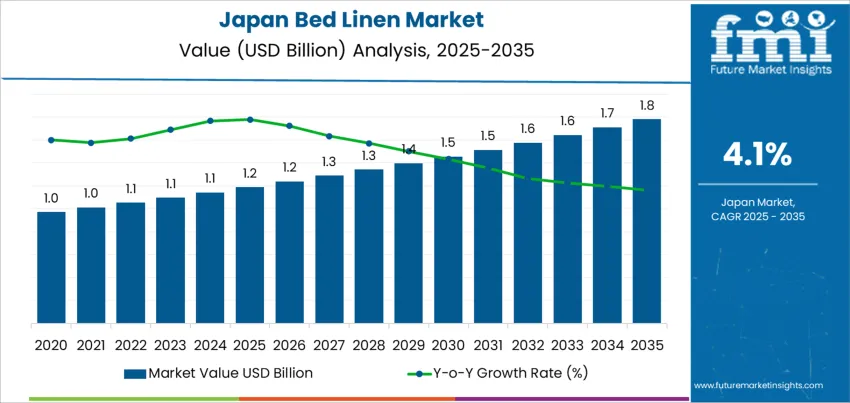
The demand for bed linen in Japan is expected to grow from USD 1.2 billion in 2025 to USD 1.8 billion by 2035, reflecting a compound annual growth rate (CAGR) of 4.1%. Bed linen, including sheets, pillowcases, blankets, and duvet covers, remains an essential component of the Japanese household and hospitality sector. As consumer preferences evolve and disposable income increases, the demand for high-quality, durable, and aesthetically pleasing bed linen is expected to rise steadily. The demand for premium, eco-friendly, and organic bed linen will also be a key driver, as more consumers prioritize eco-friendly products that align with health and wellness trends.
In Japan, a combination of traditional values and modern living habits is influencing the bedding industry. The country's strong appreciation for cleanliness, comfort, and quality sleep is driving consumer interest in premium bedding products. As wellness and self-care become more important to the Japanese consumer, there is an increasing focus on the quality of sleep, which in turn boosts the demand for high-quality bed linen that offers comfort, durability, and aesthetic appeal. Furthermore, the trend toward minimalism and modern, stylish interiors is fueling the preference for contemporary bed linen designs that enhance the overall bedroom ambiance.
Quick Stats of the Demand for Bed Linen in Japan
- Demand for Bed Linen in Japan Value (2025): USD 1.2 billion
- Demand for Bed Linen in Japan Forecast Value (2035): USD 1.8 billion
- Demand for Bed Linen in Japan Forecast CAGR (2025-2035): 4.1%
- Demand for Bed Linen in Japan Key Segments: Cotton, Poly Cotton, Polyester, Microfibre, Linen
- Demand for Bed Linen in Japan Key Growth Regions: Kyushu & Okinawa, Kanto, Kansai, Chubu, Tohoku, Rest of Japan
- Demand for Bed Linen in Japan Top Players: Welspun Group, Tempur Sealy International, American Textile Company, Brooklinen, Boll & Branch
What is the Growth Forecast for the Demand for Bed Linen in Japan through 2035?
From 2025 to 2030, the demand for bed linen in Japan is expected to grow from USD 1.2 billion to USD 1.5 billion, adding USD 300 million in value. This period will experience significant growth, driven by the expanding middle class, increased disposable income, and growing consumer interest in high-quality and eco-friendly bedding options. The demand for premium bed linen will rise as wellness and lifestyle trends increasingly influence consumer purchasing decisions. The hospitality sector’s continued focus on improving guest experiences will also support the growth of the bed linen industry.
From 2030 to 2035, the demand will continue to rise from USD 1.5 billion to USD 1.8 billion, contributing USD 300 million in value. While growth may moderate slightly during this phase as the industry matures, the demand for luxurious, eco-friendly, and durable bed linen will continue to drive adoption. The focus on premium materials, such as organic cotton and other eco-friendly fabrics, will remain strong. As the Japanese population increasingly seeks comfort and quality sleep, bed linen will remain a key product, supported by both domestic and hospitality industry demand.
Demand for Bed Linen in Japan Key Takeaways
| Metric | Value |
|---|---|
| Demand for Bed Linen in Japan Value (2025) | USD 1.2 billion |
| Demand for Bed Linen in Japan Forecast Value (2035) | USD 1.8 billion |
| Demand for Bed Linen in Japan Forecast CAGR (2025-2035) | 4.1% |
Why is the Demand for Bed Linen in Japan Growing?
The demand for bed linen in Japan is growing due to the increasing focus on home décor, comfort, and hygiene, as well as the rising interest in premium and high-quality bedding products. Bed linen, including sheets, pillowcases, blankets, and duvet covers, is essential for maintaining comfort and cleanliness in households and hospitality settings. As consumer preferences shift towards more luxurious and personalized bedding options, the demand for high-quality and innovative bed linen is rising.
A key driver of this growth is the increasing demand for home and personal comfort. With the growing trend of spending more time at home, especially post-pandemic, consumers are investing in products that enhance their home environment. Bed linen is a critical element in achieving optimal sleep quality, and as people become more health-conscious, they are prioritizing the quality of their bedding. Furthermore, Japan's aging population is contributing to the demand for comfortable and easy-to-care-for bed linen, as older individuals are increasingly looking for bedding solutions that provide both comfort and practicality.
The growing focus on durability is influencing the bed linen industry. Consumers are increasingly seeking eco-friendly and organic fabrics, such as cotton and linen, for their bedding needs. The demand for eco-friendly, non-toxic, and hypoallergenic bed linen is growing as people become more aware of the environmental impact of their purchases. With advancements in fabric technology and growing interest in premium and environmentally friendly bedding options, the demand for bed linen in Japan is expected to continue its steady growth through 2035.
What is the Segment-Wise Analysis of Demand for Bed Linen in Japan?
Demand for bed linen in Japan is segmented by material, size, pattern, and region. By material, demand is divided into cotton, poly cotton, polyester, microfibre, and linen, with cotton holding the largest share at 38%. The demand is also segmented by size, including queen, single, double, and king, with queen-sized bed linen leading at 34%. In terms of pattern, demand is spread across floral, abstract, geometric, striped, checkered, and modern patterns. Regionally, demand is distributed across Kyushu & Okinawa, Kanto, Kansai, Chubu, Tohoku, and the Rest of Japan.
How Does Cotton Dominate the Demand for Bed Linen in Japan?
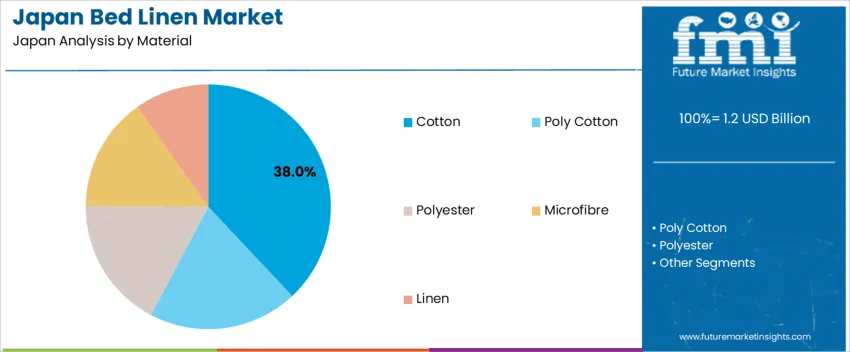
Cotton accounts for 38% of the demand for bed linen in Japan, primarily due to its comfort, breathability, and natural properties. Cotton bed linen is prized for its softness, moisture-wicking ability, and durability, which makes it the preferred choice for consumers seeking high-quality and comfortable bedding. Its hypoallergenic nature appeals to people with sensitive skin or allergies, expanding its popularity across various demographics. In Japan, where attention to detail and quality is essential, cotton’s luxurious feel and easy maintenance further enhance its dominance in the bed linen industry. The growing trend of eco-conscious living and durability boosts the appeal of cotton as a natural and biodegradable material. As consumers continue to prioritize comfort and environmentally friendly products, cotton remains the top material choice for bed linen in Japan, ensuring its continued dominance in the industry.
Why Does Queen-Sized Bed Linen Lead the Demand in Japan?
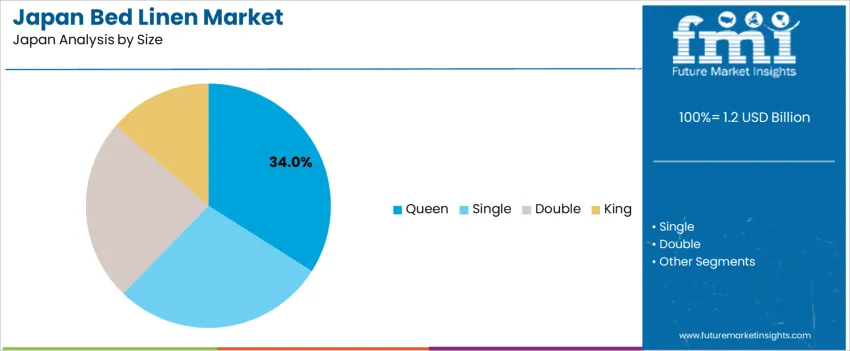
Queen-sized bed linen accounts for 34% of the demand in Japan, driven by its ideal fit for many households and modern sleeping arrangements. The queen size strikes a perfect balance between providing ample space for comfort and fitting into a wide range of bedroom sizes. It is often chosen by couples or individuals who prefer a larger sleeping surface but do not require the size of a king bed. In Japan, where apartments and homes are often smaller compared to Western countries, the queen size is seen as the ideal option for many bedrooms. The queen size is versatile and well-suited for a range of bedding patterns and materials, making it popular across various demographics. As home design trends evolve and consumers continue to prioritize comfort and space efficiency, the demand for queen-sized bed linen is expected to remain strong in Japan.
What are the Key Trends, Drivers, and Restraints in Demand for Bed Linen in Japan?
Bed linen products such as sheets, mattress covers, duvet covers, pillowcases, and blankets are used widely in households and hospitality. Rising interest in high‑quality, comfortable, and hypoallergenic bedding, along with an aging population seeking better sleep solutions, is driving demand. The growing awareness of home décor and the adoption of Western‑style interior trends are leading to interest in premium and coordinated bedding sets. The expansion of e‑commerce platforms and consumer willingness to invest in better home textiles also contribute to this demand.
Why is Demand for Bed Linen Growing in Japan?
Demand for bed linen is rising as Japanese households and hospitality businesses place greater value on comfort, hygiene, and aesthetic appeal in bedding. With many people spending more time at home, especially with remote work, there is a greater desire for comfortable and visually pleasing bedding. The aging population’s preference for easy-care and comfortable linens adds to the demand. Higher disposable incomes allow more consumers to purchase premium bed linen, such as cotton or linen. Home décor trends also encourage the purchase of coordinated bed linen sets, making bedding a functional and lifestyle product. This demand is reinforced by the growing desire for higher-quality sleep environments and aesthetically designed homes.
How are Technological & Industry Innovations Driving Bed Linen Demand in Japan?
Technological innovations in textile manufacturing and product design are driving demand for bed linen in Japan. New fabrics are being developed that are softer, more breathable, hypoallergenic, or antimicrobial, addressing the needs of health-conscious consumers and the aging population. The use of eco-friendly materials and eco-friendly production methods is gaining popularity as environmental awareness rises. The expansion of online retail platforms has made it easier for consumers to access a wider variety of bedding options, including premium and specialty bed linen. Customization options and diverse designs allow consumers to match bedding with their home décor, boosting the attractiveness of modern bed linen offerings in the industry.
What are the Key Challenges and Risks That Could Limit Bed Linen Demand in Japan?
Several challenges may limit the growth of bed linen demand in Japan. Premium bed linen, especially imported options, often comes with higher prices, which may deter price-sensitive consumers. Volatility in raw material costs, such as for cotton, can lead to price increases or supply disruptions. Industry saturation in certain segments, like cotton bed linen, has also shown signs of slowing growth. In smaller homes or among younger households with tighter budgets, bed linen may not be a priority purchase. Furthermore, minimalistic interior preferences or a desire for multifunctional furniture could reduce demand for coordinated bedding sets, limiting the growth potential in some consumer segments.
What is the Regional Demand Outlook for Bed Linen in Japan?
| Region | CAGR (%) |
|---|---|
| Kyushu & Okinawa | 5.2% |
| Kanto | 4.7% |
| Kansai | 4.2% |
| Chubu | 3.7% |
| Tohoku | 3.2% |
| Rest of Japan | 3.1% |
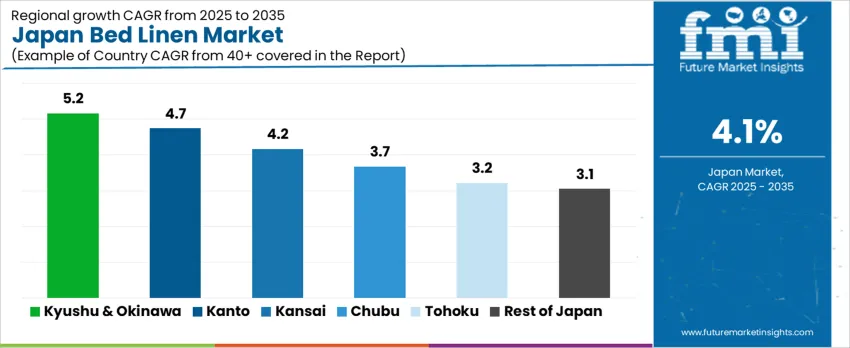
Demand for bed linen in Japan is growing steadily, with Kyushu & Okinawa leading at a 5.2% CAGR, driven by tourism and the hospitality industry. Kanto follows with a 4.7% CAGR, supported by a large consumer base and a focus on eco-friendly products. Kansai shows a 4.2% CAGR, fueled by its growing tourism and residential sectors. Chubu experiences a 3.7% CAGR, driven by urbanization and the hospitality sector. Tohoku and the Rest of Japan see moderate growth at 3.2% and 3.1% CAGR, respectively, with increasing adoption of quality home textiles and eco-friendly products. As consumer demand for comfort, quality, and durability rises, the demand for bed linen will continue to grow across Japan.
How is Demand for Bed Linen Growing in Kyushu & Okinawa?
Kyushu & Okinawa leads the demand for bed linen, growing at a 5.2% CAGR. The region’s tourism industry, particularly in Okinawa, drives the need for premium bed linen in hotels, resorts, and vacation rentals. As the number of luxury accommodations increases, so does the demand for high-quality bedding solutions. Kyushu & Okinawa’s expanding residential industry, particularly in urban areas, contributes significantly to this demand, with consumers investing in comfortable and durable bedding. The growing focus on eco-friendly products and local production also supports the shift toward eco-friendly and organic bed linen. The region’s focus on durability, coupled with a thriving hospitality sector, ensures that demand for bed linen will continue to grow steadily, driven by both tourism and residential needs.
Why is Demand for Bed Linen Rising in Kanto?
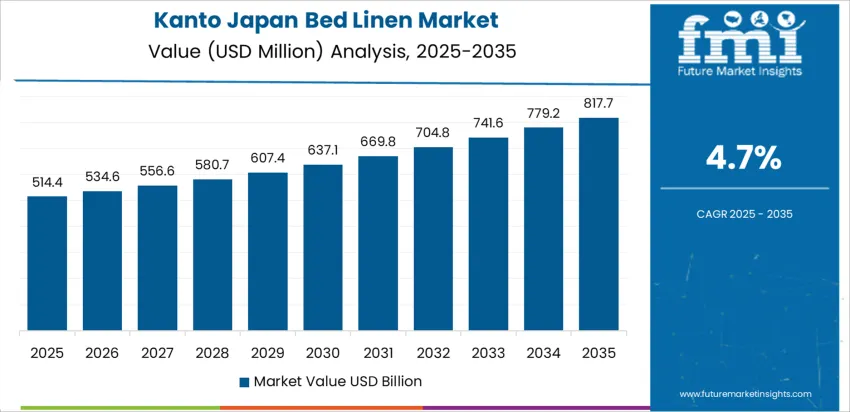
Kanto is experiencing steady demand for bed linen, with a 4.7% CAGR, driven by its large population, particularly in Tokyo. The region’s growing residential housing and real estate industries contribute to the rising demand for quality bedding products. The hospitality sector in Kanto, including hotels, guesthouses, and vacation rentals, also drives significant demand for premium bed linen. As durability becomes increasingly important, consumers in Kanto are looking for eco-friendly, organic bed linen options. The region's modern lifestyle, with a focus on comfort and quality, further boosts the need for high-performance bedding. As consumer preferences shift towards environmentally responsible products, demand for eco-friendly bed linen in Kanto will continue to rise, supporting the ongoing growth of the industry in the region.
How is Demand for Bed Linen Expanding in Kansai?
Kansai is seeing moderate demand for bed linen, with a 4.2% CAGR. The region’s tourism and hospitality sectors, particularly in Osaka and Kyoto, contribute significantly to the demand for bed linen as hotels, inns, and other accommodation types expand. Kansai’s residential industry is growing, with consumers seeking high-quality, comfortable bedding. The region’s focus on traditional and modern design elements in home décor further influences demand for stylish yet functional bed linen. Kansai’s increasing interest in durability and eco-friendly products also boosts demand for organic bed linen, particularly in the hospitality industry. As Kansai continues to grow as a hub for tourism and modern living, demand for bed linen is expected to remain steady and increase in line with these expanding sectors.
Why is Demand for Bed Linen Growing in Chubu?
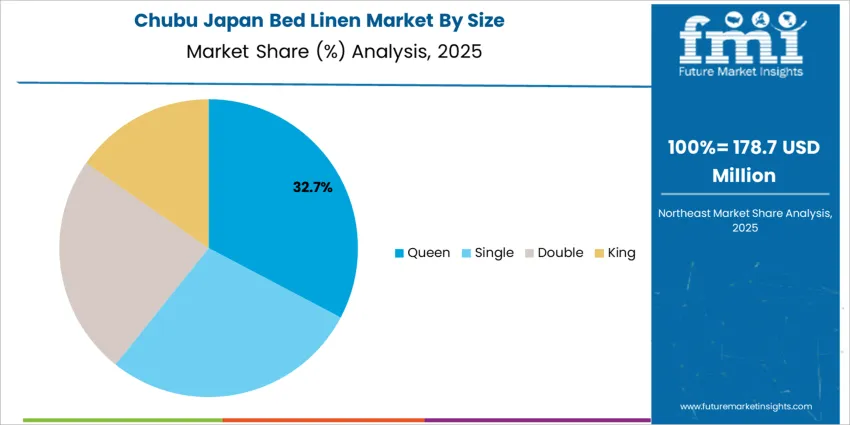
Chubu is experiencing steady demand for bed linen, with a 3.7% CAGR, driven by its strong industrial base and growing residential sector. The increasing urbanization of Chubu, particularly in cities like Nagoya, is contributing to the rising demand for home textiles, including bed linen. The region’s hospitality sector, although smaller compared to Kanto and Kansai, is also expanding, particularly in the tourism and accommodation industries, contributing to the need for high-quality bed linen. The region’s rising focus on comfort, style, and durability is driving the adoption of eco-friendly bed linen products. As both residential and commercial demand for bedding solutions continues to rise, Chubu’s bed linen industry will continue to grow steadily, supported by a combination of factors including tourism and consumer demand for eco-friendly products.
How is Demand for Bed Linen Expanding in Tohoku?
Tohoku is seeing moderate demand for bed linen, with a 3.2% CAGR. Although the region's industry for bed linen is smaller compared to more urbanized areas, demand is growing steadily. Tohoku’s expanding tourism sector, particularly in local inns and hotels, drives the need for high-quality bed linen. The region’s focus on improving infrastructure and attracting tourists is also contributing to this growth, as more accommodations upgrade their offerings. As consumers in Tohoku increasingly prioritize comfort and quality in their home environments, demand for durable and premium bed linen continues to rise. The growing trend of durability, with an increasing focus on eco-friendly and organic products, also plays a role in boosting demand in the region. As Tohoku continues to modernize its living standards, demand for bed linen is expected to grow steadily.
Why is Demand for Bed Linen Steady in the Rest of Japan?
The Rest of Japan is experiencing steady demand for bed linen, with a 3.1% CAGR. While the demand in rural areas is smaller compared to urban regions, the growing adoption of quality home textiles in smaller cities and towns is contributing to steady growth. Local tourism continues to rise, and smaller hotels and inns are upgrading their accommodations, increasing the demand for high-quality bedding. As consumers in the Rest of Japan focus on durability and eco-friendly home products, the demand for organic and environmentally friendly bed linen is also growing. As these areas continue to modernize and prioritize comfort and durability in their lifestyles, demand for high-quality and durable bed linen will remain steady, ensuring continued industry growth.
What is the Competitive Landscape of Bed Linen Demand in Japan?
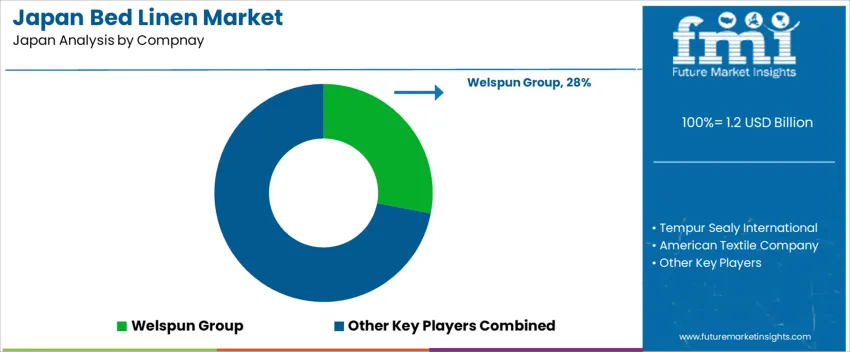
The demand for bed linen in Japan continues to rise, fueled by growing consumer interest in comfort, home aesthetics, and quality sleep environments. The bed linen segment dominates the home-textile industry, accounting for a significant share of total home-textile demand. As lifestyles evolve, many households are investing in higher-quality bedding, including bed sheets, pillowcases, duvet covers, and mattress covers, often with a focus on comfort, softness, hygiene, or premium feel. Key demographic and lifestyle trends are driving this growth, particularly as Japan’s aging population increasingly values bedding that offers comfort, ease of care, and skin-friendly materials.
Leading companies in the bed linen industry in Japan include Welspun Group, Tempur Sealy International, American Textile Company, Brooklinen, and Boll & Branch. Welspun Group holds a significant industry share of 28.0%, offering a broad range of high-quality bed linen products that balance comfort, durability, and affordability. Tempur Sealy International is well-regarded for its premium bed linen that complements its popular sleep products. American Textile Company offers a wide variety of bedding solutions, while Brooklinen and Boll & Branch focus on premium, eco-friendly, and luxury linens. These brands provide a mix of comfort, style, and durability to meet the varied needs of Japanese consumers.
The growth of the bed linen industry in Japan is driven by factors such as the increasing focus on sleep quality, the desire for luxurious and comfortable bedding, and rising consumer awareness of health and wellness. Companies are competing by offering products made from breathable, hypoallergenic, and eco-friendly materials. The shift toward e-commerce is also influencing the industry, with direct-to-consumer models becoming more popular, making it easier for consumers to access a wide range of products. As the demand for premium and eco-friendly linens continues to rise, companies that innovate with high-quality, comfort-oriented, and environmentally conscious bedding solutions will continue to lead the industry.
Key Players in Japan Bed Linen Demand
- Welspun Group
- Tempur Sealy International
- American Textile Company
- Brooklinen
- Boll & Branch
Scope of Report
| Items | Values |
|---|---|
| Quantitative Units (2025) | USD billion |
| Material | Cotton, Poly Cotton, Polyester, Microfibre, Linen |
| Size | Queen, Single, Double, King |
| Pattern | Floral, Abstract, Geometric, Striped, Checkered, Modern |
| Region | Kyushu & Okinawa, Kanto, Kansai, Chubu, Tohoku, Rest of Japan |
| Countries Covered | Japan |
| Key Companies Profiled | Welspun Group, Tempur Sealy International, American Textile Company, Brooklinen, Boll & Branch |
| Additional Attributes | Dollar sales by material, size, and pattern; regional CAGR and adoption trends; demand trends in bed linen; growth in consumer preference for eco-friendly and comfortable materials; vendor offerings in premium and budget-friendly bed linens; industry standards and regulatory influences |
Japan Bed Linen Demand by Key Segments
Material:
- Cotton
- Poly Cotton
- Polyester
- Microfibre
- Linen
Size:
- Queen
- Single
- Double
- King
Pattern:
- Floral
- Abstract
- Geometric
- Striped
- Checkered
- Modern
Region:
- Kyushu & Okinawa
- Kanto
- Kansai
- Chubu
- Tohoku
- Rest of Japan
Frequently Asked Questions
How big is the demand for bed linen in Japan in 2025?
The demand for bed linen in Japan is estimated to be valued at USD 1.2 billion in 2025.
What will be the size of bed linen in Japan in 2035?
The market size for the bed linen in Japan is projected to reach USD 1.8 billion by 2035.
How much will be the demand for bed linen in Japan growth between 2025 and 2035?
The demand for bed linen in Japan is expected to grow at a 4.1% CAGR between 2025 and 2035.
What are the key product types in the bed linen in Japan?
The key product types in bed linen in Japan are cotton, poly cotton, polyester, microfibre and linen.
Which size segment is expected to contribute significant share in the bed linen in Japan in 2025?
In terms of size, queen segment is expected to command 34.0% share in the bed linen in Japan in 2025.
Preview the report firsthand - request a free sample
Get SampleGet the brochure for pricing and purchase details.
Get PDFTable of Content
- Executive Summary
- Japan Market Outlook
- Demand-side Trends
- Supply-side Trends
- Technology Roadmap Analysis
- Analysis and Recommendations
- Market Overview
- Market Coverage / Taxonomy
- Market Definition / Scope / Limitations
- Market Background
- Market Dynamics
- Drivers
- Restraints
- Opportunity
- Trends
- Scenario Forecast
- Demand in Optimistic Scenario
- Demand in Likely Scenario
- Demand in Conservative Scenario
- Opportunity Map Analysis
- Product Life Cycle Analysis
- Supply Chain Analysis
- Investment Feasibility Matrix
- Value Chain Analysis
- PESTLE and Porter’s Analysis
- Regulatory Landscape
- Regional Parent Market Outlook
- Production and Consumption Statistics
- Import and Export Statistics
- Market Dynamics
- Japan Market Analysis 2020 to 2024 and Forecast, 2025 to 2035
- Historical Market Size Value (USD Million) Analysis, 2020 to 2024
- Current and Future Market Size Value (USD Million) Projections, 2025 to 2035
- Y-o-Y Growth Trend Analysis
- Absolute $ Opportunity Analysis
- Japan Market Pricing Analysis 2020 to 2024 and Forecast 2025 to 2035
- Japan Market Analysis 2020 to 2024 and Forecast 2025 to 2035, By Material
- Introduction / Key Findings
- Historical Market Size Value (USD Million) Analysis By Material , 2020 to 2024
- Current and Future Market Size Value (USD Million) Analysis and Forecast By Material , 2025 to 2035
- Cotton
- Poly Cotton
- Polyester
- Microfibre
- Linen
- Y-o-Y Growth Trend Analysis By Material , 2020 to 2024
- Absolute $ Opportunity Analysis By Material , 2025 to 2035
- Japan Market Analysis 2020 to 2024 and Forecast 2025 to 2035, By Size
- Introduction / Key Findings
- Historical Market Size Value (USD Million) Analysis By Size, 2020 to 2024
- Current and Future Market Size Value (USD Million) Analysis and Forecast By Size, 2025 to 2035
- Queen
- Single
- Double
- King
- Y-o-Y Growth Trend Analysis By Size, 2020 to 2024
- Absolute $ Opportunity Analysis By Size, 2025 to 2035
- Japan Market Analysis 2020 to 2024 and Forecast 2025 to 2035, By Pattern
- Introduction / Key Findings
- Historical Market Size Value (USD Million) Analysis By Pattern, 2020 to 2024
- Current and Future Market Size Value (USD Million) Analysis and Forecast By Pattern, 2025 to 2035
- Floral
- Abstract
- Geometric
- Striped
- Checkered
- Modern
- Y-o-Y Growth Trend Analysis By Pattern, 2020 to 2024
- Absolute $ Opportunity Analysis By Pattern, 2025 to 2035
- Market Structure Analysis
- Competition Dashboard
- Competition Benchmarking
- Market Share Analysis of Top Players
- By Regional
- By Material
- By Size
- By Pattern
- Competition Analysis
- Competition Deep Dive
- Welspun Group
- Overview
- Product Portfolio
- Profitability by Market Segments (Product/Age /Sales Channel/Region)
- Sales Footprint
- Strategy Overview
- Marketing Strategy
- Product Strategy
- Channel Strategy
- Tempur Sealy International
- American Textile Company
- Brooklinen
- Boll & Branch
- Welspun Group
- Competition Deep Dive
- Assumptions & Acronyms Used
- Research Methodology


