

- Industry Size (2025)
- USD 77.7 Mn
- Forecast (2035)
- USD 113.1 Mn
- CAGR (2025 to 2035)
- 3.8%
Demand for Beef Flavors in Japan Forecast and Outlook 2025 to 2035
The demand for beef flavors in Japan is projected to grow from USD 77.7 million in 2025 to USD 113.1 million by 2035, reflecting a compound annual growth rate (CAGR) of 3.8%. Beef flavors are commonly used in the food and beverage industry, particularly in ready-to-eat meals, sauces, soups, and seasonings. The increasing consumer demand for convenient, flavorful, and protein-rich food options, coupled with innovations in flavoring technologies, is expected to drive the steady growth of this market in Japan.
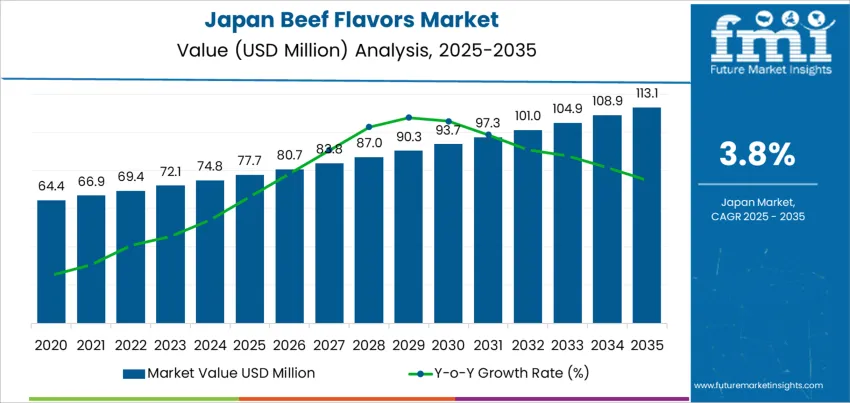
The market will experience consistent growth, starting at USD 77.7 million in 2025, with incremental increases each year. By 2026, demand will rise to USD 80.7 million, and by 2027, it will reach USD 83.8 million. The growth will continue, reaching USD 87.0 million by 2028, USD 90.3 million by 2029, and USD 93.7 million by 2030. By 2035, the demand for beef flavors is forecasted to reach USD 113.1 million, driven by expanding applications in the processed food and seasoning industries.
Quick Stats of the Demand for Beef Flavors in Japan
- Demand for Beef Flavors in Japan Value (2025): USD 77.7 million
- Demand for Beef Flavors in Japan Forecast Value (2035): USD 113.1 million
- Demand for Beef Flavors in Japan Forecast CAGR (2025 to 2035): 3.8%
- Demand for Beef Flavors in Japan Nature: Natural (64%)
- Demand for Beef Flavors in Japan Key Growth Regions: Kyushu & Okinawa, Kanto, Kansai, Chubu, Tohoku, Rest of Japan
- Demand for Beef Flavors in Japan Key Players: Givaudan, Kerry Group, Symrise AG, Firmenich, International Flavors & Fragrances (IFF)
What is the Growth Forecast for the Beef Flavors Industry in Japan through 2035?
The beef flavors market in Japan is expected to experience steady growth through 2035. From USD 77.7 million in 2025, the market will gradually increase to USD 80.7 million in 2026, USD 83.8 million in 2027, and USD 87.0 million by 2028. By 2029, demand will rise to USD 90.3 million, with continued growth in the 2030s. By 2035, the demand for beef flavors is projected to reach USD 113.1 million, reflecting ongoing demand for flavor-enhancing products in the food and beverage sector.
The half-decade weighted growth analysis indicates a gradual and steady increase in the demand for beef flavors over the forecast period. From 2025 to 2030, the market will experience a total growth of approximately USD 16.0 million. This steady increase reflects ongoing demand driven by the need for beef flavoring in both commercial food production and consumer-level convenience foods. The weighted growth highlights a consistent upward trend without significant spikes, indicating that beef flavor demand will rise steadily across the forecast period. As the food industry continues to innovate and offer more diverse flavoring options, the market will continue to grow in a balanced manner, with the greatest absolute increase seen towards the latter part of the decade.
Key Takeaways of Beef Flavors Industry in Japan
| Metric | Value |
|---|---|
| Industry Sales Value (2025) | USD 77.7 million |
| Industry Forecast Value (2035) | USD 113.1 million |
| Industry Forecast CAGR (2025 to 2035) | 3.8% |
Why is the Demand for Beef Flavors in Japan Growing?
Demand for beef flavors in Japan is rising because food producers and manufacturers increasingly aim to deliver familiar meaty taste and umami in convenience foods, ready to eat meals, sauces, snacks, and processed foods. As lifestyles become busier and consumption of processed or convenience foods grows, there is stronger need for flavor solutions that provide consistent beef taste without requiring fresh meat. The trend toward convenience and ready to eat meals supports use of beef flavor preparations in instant noodles, soups, meal kits, and seasonings. Because many Japanese consumers appreciate savory, meat rich taste but may not always cook fresh beef at home, producers rely on beef flavors to provide that taste affordably and with long shelf life. In addition the rise in processed food consumption and demand for taste and convenience fosters adoption of beef flavor ingredients in a variety of product categories across retail and food service.
At the same time changes in the meat flavoring industry and demand for variety and innovation support growth. Providers of beef flavors in Japan are improving flavor quality and authenticity through advanced flavor creation methods. These methods help produce realistic beef taste, even in plant based or meat free products, which meets demand from consumers seeking familiar taste with different dietary preferences. As interest increases in affordable, shelf stable and easy to prepare foods, beef flavors offer a way to deliver traditional meaty taste in processed or vegetarian/alternative protein foods. Given growing processed food demand, evolving consumer tastes, and convenience consumption patterns, demand for beef flavors in Japan is expected to rise steadily.
What Is the Current State of the Demand for Beef Flavors in Japan in Terms of Nature and Packaging?
The demand for beef flavors in Japan is primarily driven by nature and packaging. The leading nature is natural, which accounts for 64% of the market share, while bottle packaging is the most common, capturing 28% of the demand. Beef flavors are used widely in the food and beverage industry to enhance the taste profile of products such as seasonings, sauces, snacks, and ready-to-eat meals. As consumers continue to seek more natural and authentic food experiences, the demand for natural beef flavors, along with convenient packaging, remains strong in Japan.
How Is Natural Beef Flavor Leading the Demand for Beef Flavors in Japan?
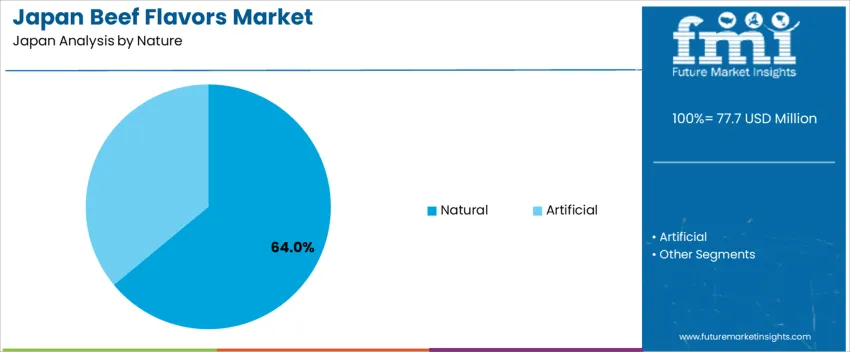
Natural beef flavor leads the demand for beef flavors in Japan, holding 64% of the market share. Natural beef flavors are derived from real beef ingredients through processes such as roasting, grilling, or fermentation, which provide a rich, authentic taste. With the growing trend of clean-label products and consumer preference for natural ingredients, natural beef flavors are becoming increasingly popular in a variety of food products, including sauces, seasonings, soups, and snacks. These flavors are valued for their ability to enhance taste without the use of artificial additives or preservatives.
The demand for natural beef flavors is driven by the increasing consumer focus on healthy eating, where natural ingredients are prioritized over synthetic alternatives. Japanese consumers are becoming more aware of the ingredients in their food, pushing food manufacturers to opt for more natural, authentic flavorings. As the trend towards clean labels and natural ingredients continues to grow, the demand for natural beef flavors in Japan is expected to remain dominant, particularly in premium and health-conscious food products.
How Is Bottle Packaging Leading the Demand for Beef Flavors in Japan?
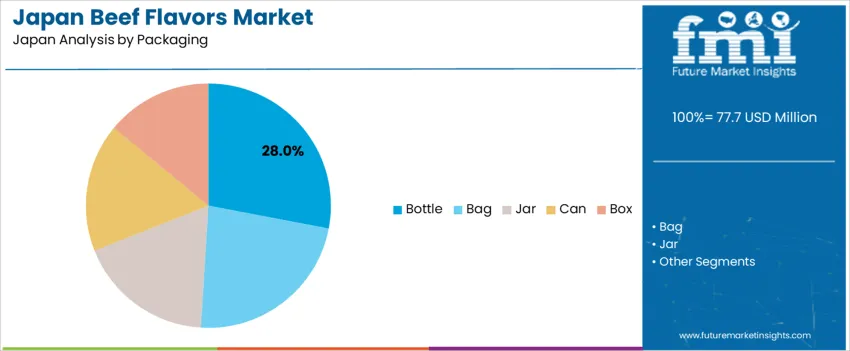
Bottle packaging leads the demand for beef flavors in Japan, accounting for 28% of the market share. Bottle packaging is commonly used for liquid-based beef flavorings, such as sauces, marinades, and seasonings, providing convenience for both consumers and food manufacturers. Bottles offer ease of storage, pouring, and portion control, making them a preferred choice for products that need to be used in varying amounts.
The demand for bottle packaging in the beef flavor sector is driven by its practicality and versatility. Bottles are widely used for both household consumption and in food service settings, offering convenience and maintaining the quality of liquid beef flavors. As the popularity of sauces, condiments, and seasonings grows in Japan, particularly with the increasing demand for ready-to-use cooking products, bottle packaging is expected to continue leading the market for beef flavors. With the continued focus on convenience and high-quality products, bottle packaging remains a staple in the beef flavor industry.
What is the Summary of Demand for Beef Flavors in Japan?
Demand for beef flavors in Japan is rising as consumer preference for beef-based dishes and processed foods grows. Beef flavoring is used in a wide range of products, including ready meals, snacks, seasonings, and alternative proteins. The demand is driven by the need for consistent taste, longer shelf life, and versatility in various food categories. As lifestyles become busier and the convenience food market expands, beef flavors provide solutions to maintain the desired taste and enhance the consumer experience across multiple segments of the food industry.
What are the Drivers of Demand for Beef Flavors in Japan?
The demand for beef flavors in Japan is driven by several factors. First, there is a strong and ongoing preference for beef-based products in Japan, particularly in convenience foods, ready-to-eat meals, and snacks. Second, the increasing popularity of processed meat and the growing demand for meat-flavored snacks like jerky and chips also support beef flavor usage. Third, consumers' preference for umami-rich, savory flavors drives the demand for beef flavors, especially in both traditional and fusion cuisines. Finally, the rise in plant-based and meat substitute products that mimic beef taste is further boosting demand for beef-flavor additives.
What are the Restraints on Demand for Beef Flavors in Japan?
Despite growing demand, there are several restraints. One major restraint is the shift toward plant-based diets, with more consumers reducing meat consumption, thereby limiting demand for beef flavors. Health concerns regarding processed foods, additives, and preservatives may also deter some consumers from purchasing beef-flavored products. Additionally, the increasing popularity of clean-label products could limit the demand for flavor-enhanced meat products, as consumers opt for simpler, more natural ingredients. Finally, the higher cost of producing beef-flavored products could reduce demand, particularly in price-sensitive market segments.
What are the Key Trends Influencing Demand for Beef Flavors in Japan?
Key trends include the increasing demand for convenience and ready-to-eat meals, where beef flavors are essential for maintaining consistent taste. Another trend is the rise of plant-based and alternative-protein products, which often require beef flavor additives to simulate real meat taste. The growth of clean-label and natural products also influences the demand for beef-flavored solutions, with manufacturers focusing on healthier, more transparent ingredients. Lastly, consumers' desire for stronger umami flavors in both traditional and fusion cuisine is shaping the market, making beef-flavored products more appealing.
What is the Regional Demand Outlook for Beef Flavors in Japan?
The demand for beef flavors in Japan is projected to grow across various regions, with Kyushu & Okinawa leading at a CAGR of 4.8%. Kanto follows closely at 4.4%, supported by the region’s large food and beverage sector. Kansai is expected to grow at 3.9%, while Chubu, Tohoku, and the Rest of Japan show more modest growth, with CAGRs of 3.4%, 3.0%, and 2.8%, respectively. These differences reflect regional consumer preferences, the strength of local food industries, and the growing trend of incorporating savory, meat based flavors in various products.
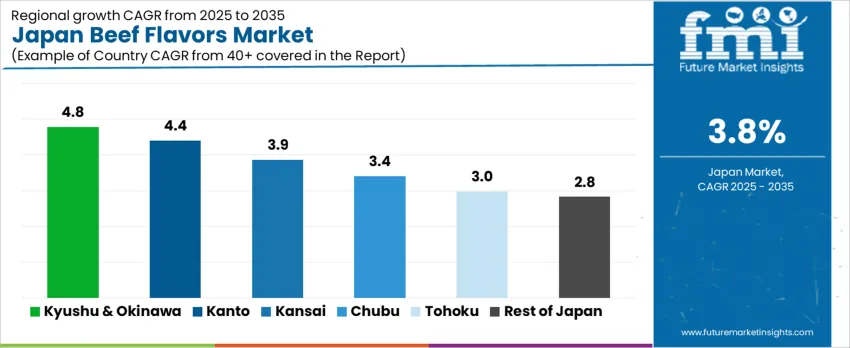
| Region | CAGR (%) |
|---|---|
| Kyushu & Okinawa | 4.8 |
| Kanto | 4.4 |
| Kansai | 3.9 |
| Chubu | 3.4 |
| Tohoku | 3.0 |
| Rest of Japan | 2.8 |
What Drives Demand for Beef Flavors in Kyushu & Okinawa?
In Kyushu & Okinawa, the demand for beef flavors is forecast to grow at a CAGR of 4.8%. Kyushu is known for its rich culinary tradition, including dishes like beef-based hotpots, and Okinawa’s local cuisine features strong savory flavors, which are boosting the demand for beef flavors in both traditional and modern dishes. Additionally, Kyushu’s tourism industry drives the demand for beef flavors in prepared foods, snacks, and packaged items targeted at tourists seeking regional specialties. The growing trend of savory and umami flavors in processed foods, such as seasonings, sauces, and snacks, is also contributing to the rise in demand for beef flavors. As consumers in Kyushu & Okinawa continue to seek bold, meat based flavors in their food products, demand for beef flavors is expected to remain strong.
Why is Demand for Beef Flavors Rising in Kanto?
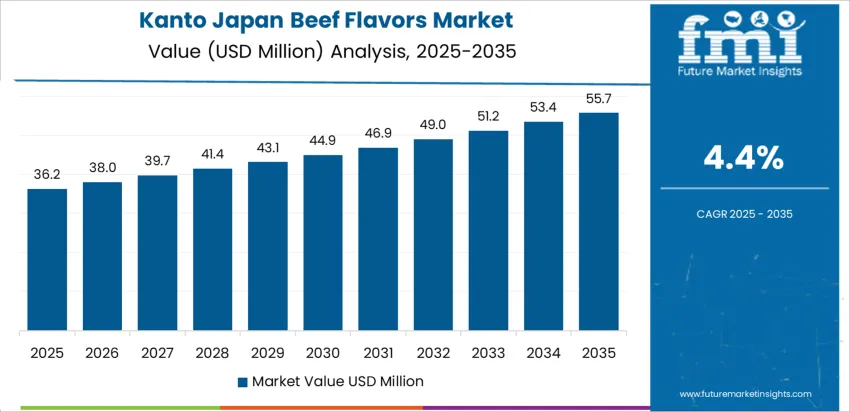
In Kanto, the demand for beef flavors is expected to grow at a CAGR of 4.4%, driven by the region’s large food and beverage industry and diverse consumer base. Kanto, which includes Tokyo and its surrounding metropolitan areas, has a high concentration of food producers and consumers who are increasingly seeking complex, savory flavors in processed foods. As Japan’s urban center, Kanto experiences a high demand for convenience foods, including ready to eat meals, snacks, and sauces, where beef flavors are widely used to enhance taste. The growing trend of incorporating meat derived flavors into plant based products is also gaining traction in Kanto, further fueling the demand. The region’s large population, coupled with an increasing interest in gourmet and savory food experiences, makes it a key market for beef flavors.
What Supports Growth in Kansai (Kinki)?
In Kansai, the demand for beef flavors is projected to grow at a CAGR of 3.9%. Kansai, including cities like Osaka and Kyoto, is known for its rich food culture, with dishes such as yakiniku (grilled beef) and beef-based hot pots being staples. The local food industry, including restaurants, food processors, and snack manufacturers, increasingly uses beef flavors to cater to the region’s preference for savory and umami-rich tastes. As food trends evolve, Kansai’s growing interest in natural and authentic flavors is driving the adoption of beef flavors in both traditional and new product categories. Additionally, Kansai’s significant foodservice industry continues to contribute to the demand for beef flavors in seasonings, sauces, and ready to eat meals.
How is Demand for Beef Flavors Evolving in Chubu?
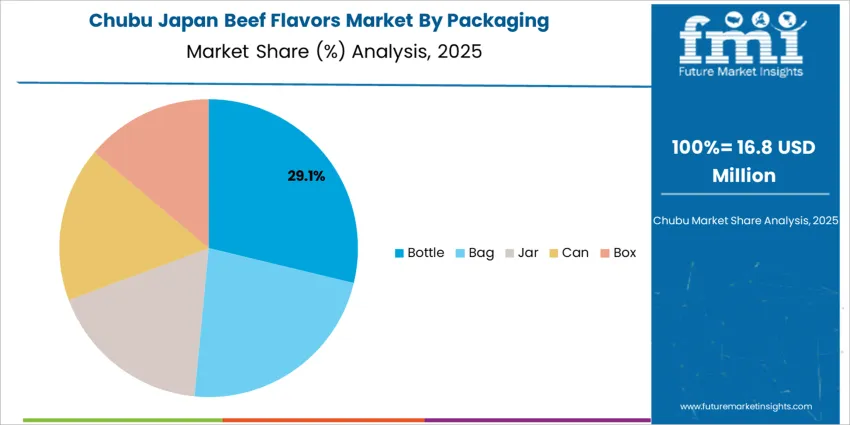
In Chubu, the demand for beef flavors is expected to grow at a CAGR of 3.4%. The region has a strong culinary tradition, particularly with beef dishes such as miso katsu (fried pork cutlet with miso) and various stews, which supports the use of beef flavors in local food products. As Chubu’s food and beverage manufacturers innovate to meet growing consumer demands for savory and authentic flavors, beef flavors are increasingly incorporated into seasonings, sauces, and convenience foods. The region’s moderate demand growth is reflective of steady interest in traditional meats and savory flavors in both fresh and processed foods. As consumer preferences continue to evolve, the demand for beef flavors in Chubu is expected to rise in line with broader food industry trends.
What Factors Influence Beef Flavor Demand in Tohoku?
In Tohoku, the demand for beef flavors is projected to grow at a CAGR of 3.0%. Tohoku has a smaller but growing food industry, with an increasing interest in regional culinary experiences. While the region’s cuisine traditionally emphasizes seafood and vegetables, there is a steady rise in demand for beef flavors as consumers increasingly seek meat based tastes in processed foods. Tohoku’s relatively lower population density and smaller food production base result in slower growth compared to urbanized regions. However, the rising consumer interest in savory and umami flavors, combined with the growing trend of convenience foods and packaged products, is contributing to incremental demand growth for beef flavors. As food manufacturers in Tohoku continue to diversify their product offerings, the demand for beef flavors will continue to grow at a moderate pace.
How is the Demand for Beef Flavors Growing in the Rest of Japan?
In the Rest of Japan, the demand for beef flavors is expected to grow at a CAGR of 2.8%, reflecting slower adoption compared to more urbanized regions. This area includes rural and smaller urban centers where the adoption of beef flavors in food products is more gradual. Despite the slower pace of growth, there is a rising interest in savory flavors in prepared meals, snacks, and sauces. As food trends spread to smaller markets, the use of beef flavors in processed food products like ready to eat meals, seasonings, and marinades is expected to rise steadily. While the growth rate is moderate, the overall demand for beef flavors in the Rest of Japan will continue to benefit from consumer awareness of the rich taste and umami benefits that beef flavors provide in various food applications.
What is the Competitive Landscape for the Beef Flavors Market in Japan?
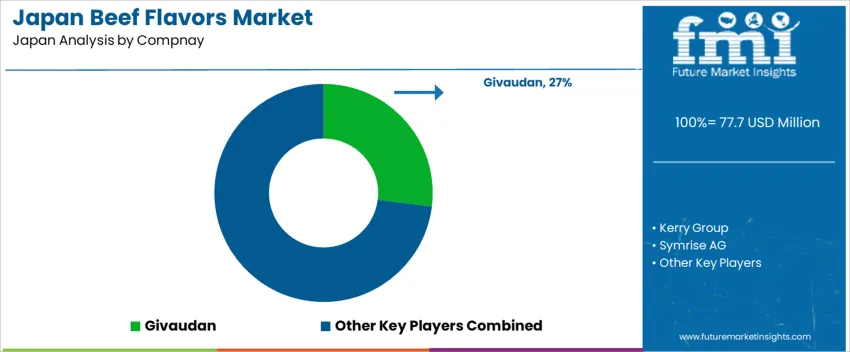
The demand for beef flavors in Japan remains strong, driven by a preference for rich, savory, and umami packed ingredients in a variety of food products. Givaudan, holding approximately 27% of the market share, is the leading player in this sector, followed by notable companies such as Kerry Group, Symrise AG, Firmenich, and International Flavors & Fragrances (IFF). These companies cater to a wide range of products, including soups, sauces, snacks, ready to eat meals, and meat alternatives. The competition in this space revolves around enhancing flavor authenticity, aligning with local taste profiles, and offering innovative solutions for processed and convenience foods.
To differentiate themselves, these companies focus on a mix of strategies such as product quality, natural flavor enhancement, and adaptability to market trends. Givaudan stands out with its advanced technology in flavor creation, blending natural and artificial flavors to replicate the complex taste of beef. Kerry Group emphasizes clean labels and transparency, appealing to consumer demand for more natural ingredients. Symrise AG and Firmenich work to create flavors that match beef’s natural profile while also catering to plant based and alternative protein segments. IFF maintains competitiveness by offering both traditional beef flavors and innovative products that meet the growing demand for plant based substitutes. The beef flavors market is increasingly driven by innovation in flavor profiles, clean labeling, and regulatory compliance, with firms continuously enhancing their offerings to meet consumer preferences for authentic, versatile, and sustainably sourced flavors.
Key Players of the Beef Flavors Industry in Japan
- Givaudan
- Kerry Group
- Symrise AG
- Firmenich
- International Flavors & Fragrances (IFF)
Scope of the Report
| Items | Details |
|---|---|
| Quantitative Units | USD Million |
| Regions Covered | Japan |
| Nature | Natural, Artificial |
| Packaging | Bottle, Bag, Jar, Can, Box |
| Distribution Channel | B2B (Direct Sales), B2C (Indirect Sales) |
| Key Companies Profiled | Givaudan, Kerry Group, Symrise AG, Firmenich, International Flavors & Fragrances (IFF) |
| Additional Attributes | The demand for beef flavors in Japan is influenced by the growing trend for savory, umami-rich flavors in the food and beverage industry, with both natural and artificial options being offered. Natural beef flavors are increasingly preferred due to rising consumer demand for clean-label and natural ingredients. Packaging options are diverse, ranging from bottles and jars to bags, cans, and boxes, catering to different customer needs in both the food manufacturing and retail sectors. The distribution channels are split between B2B direct sales, which cater to food manufacturers, and B2C indirect sales, which serve retail and end-consumers. Key companies like Givaudan, Kerry Group, and IFF lead the market with innovative beef flavor solutions used in a wide range of applications, including soups, sauces, and seasonings. The market is expected to grow as demand for flavored products and premium ingredients rises across Japan. |
Key Segments of the Demand for Beef Flavors in Japan
Nature:
- Natural
- Artificial
Packaging:
- Bottle
- Bag
- Jar
- Can
- Box
Distribution Channel:
- B2B (Direct Sales)
- B2C (Indirect Sales)
Region:
- Kyushu & Okinawa
- Kanto
- Kansai
- Chubu
- Tohoku
- Rest of Japan
Bibliography
- Flavor and Extract Manufacturers Association. (2024). Interim FEMA GRAS list for flavoring substances including beef flavors. FEMA GRAS Program Publications.
- Food and Agriculture Organization of the United Nations and World Health Organization. (2023). Codex and JECFA evaluations relevant to flavoring agents used in foods. Codex and JECFA Publications.
- Japan Food Additives Association. (2023). Guidance on food additive use including flavorings in Japanese food products. JFAA Technical Publications.
- International Organization of the Flavor Industry. (2023). Good manufacturing practice for flavourings used in food and beverage applications. IOFI Guidance Documents.
Frequently Asked Questions
How big is the demand for beef flavors in Japan in 2025?
The demand for beef flavors in Japan is estimated to be valued at USD 77.7 million in 2025.
What will be the size of beef flavors in Japan in 2035?
The market size for the beef flavors in Japan is projected to reach USD 113.1 million by 2035.
How much will be the demand for beef flavors in Japan growth between 2025 and 2035?
The demand for beef flavors in Japan is expected to grow at a 3.8% CAGR between 2025 and 2035.
What are the key product types in the beef flavors in Japan?
The key product types in beef flavors in Japan are natural and artificial.
Which packaging segment is expected to contribute significant share in the beef flavors in Japan in 2025?
In terms of packaging, bottle segment is expected to command 28.0% share in the beef flavors in Japan in 2025.
Preview the report firsthand - request a free sample
Get SampleGet the brochure for pricing and purchase details.
Get PDFTable of Content
- Executive Summary
- Japan Market Outlook
- Demand-side Trends
- Supply-side Trends
- Technology Roadmap Analysis
- Analysis and Recommendations
- Market Overview
- Market Coverage / Taxonomy
- Market Definition / Scope / Limitations
- Market Background
- Market Dynamics
- Drivers
- Restraints
- Opportunity
- Trends
- Scenario Forecast
- Demand in Optimistic Scenario
- Demand in Likely Scenario
- Demand in Conservative Scenario
- Opportunity Map Analysis
- Product Life Cycle Analysis
- Supply Chain Analysis
- Investment Feasibility Matrix
- Value Chain Analysis
- PESTLE and Porter’s Analysis
- Regulatory Landscape
- Regional Parent Market Outlook
- Production and Consumption Statistics
- Import and Export Statistics
- Market Dynamics
- Japan Market Analysis 2020 to 2024 and Forecast, 2025 to 2035
- Historical Market Size Value (USD Million) Analysis, 2020 to 2024
- Current and Future Market Size Value (USD Million) Projections, 2025 to 2035
- Y-o-Y Growth Trend Analysis
- Absolute $ Opportunity Analysis
- Japan Market Pricing Analysis 2020 to 2024 and Forecast 2025 to 2035
- Japan Market Analysis 2020 to 2024 and Forecast 2025 to 2035, By Nature
- Introduction / Key Findings
- Historical Market Size Value (USD Million) Analysis By Nature , 2020 to 2024
- Current and Future Market Size Value (USD Million) Analysis and Forecast By Nature , 2025 to 2035
- Natural
- Artificial
- Y-o-Y Growth Trend Analysis By Nature , 2020 to 2024
- Absolute $ Opportunity Analysis By Nature , 2025 to 2035
- Japan Market Analysis 2020 to 2024 and Forecast 2025 to 2035, By Packaging
- Introduction / Key Findings
- Historical Market Size Value (USD Million) Analysis By Packaging, 2020 to 2024
- Current and Future Market Size Value (USD Million) Analysis and Forecast By Packaging, 2025 to 2035
- Bottle
- Bag
- Jar
- Can
- Box
- Y-o-Y Growth Trend Analysis By Packaging, 2020 to 2024
- Absolute $ Opportunity Analysis By Packaging, 2025 to 2035
- Japan Market Analysis 2020 to 2024 and Forecast 2025 to 2035, By Distribution Channel
- Introduction / Key Findings
- Historical Market Size Value (USD Million) Analysis By Distribution Channel, 2020 to 2024
- Current and Future Market Size Value (USD Million) Analysis and Forecast By Distribution Channel, 2025 to 2035
- B2B (Direct Sales)
- B2C (Indirect Sales)
- Y-o-Y Growth Trend Analysis By Distribution Channel, 2020 to 2024
- Absolute $ Opportunity Analysis By Distribution Channel, 2025 to 2035
- Market Structure Analysis
- Competition Dashboard
- Competition Benchmarking
- Market Share Analysis of Top Players
- By Regional
- By Nature
- By Packaging
- By Distribution Channel
- Competition Analysis
- Competition Deep Dive
- Givaudan
- Overview
- Product Portfolio
- Profitability by Market Segments (Product/Age /Sales Channel/Region)
- Sales Footprint
- Strategy Overview
- Marketing Strategy
- Product Strategy
- Channel Strategy
- Kerry Group
- Symrise AG
- Firmenich
- International Flavors & Fragrances (IFF)
- Givaudan
- Competition Deep Dive
- Assumptions & Acronyms Used
- Research Methodology


