

- Industry Size (2025)
- USD 43.3 Mn
- Forecast (2035)
- USD 62.5 Mn
- CAGR (2025 to 2035)
- 3.8%
Demand for Benzyl Trimethyl Ammonium Chloride in Japan Forecast and Outlook 2025 to 2035
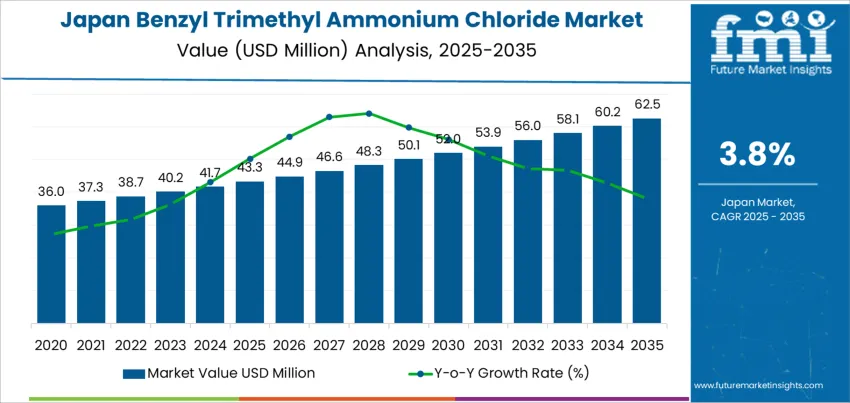
The demand for benzyl trimethyl ammonium chloride in Japan is projected to grow from USD 43.3 million in 2025 to USD 62.5 million by 2035, reflecting a compound annual growth rate (CAGR) of 3.8%. Benzyl trimethyl ammonium chloride is used in a variety of industries, including personal care, cosmetics, and cleaning products, due to its properties as a surfactant, antimicrobial agent, and conditioning agent. As the demand for safe, effective, and multifunctional chemicals continues to rise, particularly in the personal care and hygiene sectors, the market for benzyl trimethyl ammonium chloride is expected to experience steady growth.
The market will see incremental growth over the forecast period, starting at USD 43.3 million in 2025 and increasing to USD 44.9 million in 2026, USD 46.6 million in 2027, and USD 48.3 million in 2028. By 2029, demand will reach USD 50.1 million, with continued growth expected through the 2030s. By 2035, the demand for benzyl trimethyl ammonium chloride is forecasted to reach USD 62.5 million, driven by expanding applications in personal care, cosmetics, and household products.
Quick Stats of the Demand for Benzyl Trimethyl Ammonium Chloride in Japan
- Demand for Benzyl Trimethyl Ammonium Chloride in Japan Value (2025): USD 43.3 million
- Demand for Benzyl Trimethyl Ammonium Chloride in Japan Forecast Value (2035): USD 62.5 million
- Demand for Benzyl Trimethyl Ammonium Chloride in Japan Forecast CAGR (2025 to 2035): 3.8%
- Demand for Benzyl Trimethyl Ammonium Chloride in Japan Form: 63% Liquid
- Demand for Benzyl Trimethyl Ammonium Chloride in Japan Key Growth Regions: Kyushu & Okinawa, Kanto, Kansai, Chubu, Tohoku, Rest of Japan
- Demand for Benzyl Trimethyl Ammonium Chloride in Japan Key Players: Merck KGaA, SACHEM Inc., Tatva Chintan Pharma Chem Ltd., Novo Nordisk Pharmatech A/S, Stepan Company
What is the Growth Forecast for the Benzyl Trimethyl Ammonium Chloride Industry in Japan through 2035?
The market for benzyl trimethyl ammonium chloride in Japan is expected to experience steady growth over the next decade. Starting at USD 43.3 million in 2025, the market will rise to USD 44.9 million in 2026 and USD 46.6 million in 2027. By 2029, demand will increase to USD 50.1 million, with further expansion to USD 52.0 million by 2030 and USD 53.9 million by 2031. By 2035, the demand for benzyl trimethyl ammonium chloride is projected to reach USD 62.5 million, driven by ongoing demand in industries such as personal care, cleaning products, and healthcare.
The inflection point mapping for the benzyl trimethyl ammonium chloride market in Japan shows a gradual increase in demand throughout the forecast period, with no sudden shifts or rapid acceleration. Early growth (2025–2029) will be steady, with incremental increases year over year. The first notable inflection point is expected around 2029, where the demand will rise at a faster pace compared to the earlier years, reflecting the wider adoption of these chemicals in emerging applications within the personal care and healthcare industries.
After 2029, the growth rate may moderate slightly as the market reaches a more mature stage, but continued steady growth is expected through 2035. The inflection point around 2029 marks a slight acceleration in the adoption of benzyl trimethyl ammonium chloride, driven by increased product diversification and demand across various sectors.
Key Takeaways of Benzyl Trimethyl Ammonium Chloride Industry in Japan
| Metric | Value |
|---|---|
| Industry Sales Value (2025) | USD 43.3 million |
| Industry Forecast Value (2035) | USD 62.5 million |
| Industry Forecast CAGR (2025 to 2035) | 3.8% |
Why is the Demand for Benzyl Trimethyl Ammonium Chloride (BTMAC) in Japan Growing?
Demand for BTMAC in Japan is rising because this chemical serves multiple functional roles across industries including water treatment, disinfection, personal care and industrial processes. BTMAC belongs to a class of chemicals known as quaternary ammonium compounds (QACs), which are widely used for antimicrobial, surfactant, and phase transfer purposes. The increasing emphasis on hygiene, sanitation and water purification - in municipal systems, industrial wastewater treatment and commercial cleaning - supports steady demand for BTMAC as a disinfectant and water treatment agent. As water management and environmental regulations remain strict in Japan, BTMAC is used to help meet treatment and disinfection standards.
In addition, BTMAC finds demand in personal care and household cleaning product formulations, as well as in chemical synthesis and industrial processes. Its surfactant and antimicrobial properties make it useful in disinfectants, sanitizers, fabric softeners, and other cleaning agents. As consumer awareness of hygiene and cleanliness increases - especially in the wake of global health concerns - manufacturers prefer reliable compounds like BTMAC for products such as surface disinfectants, laundering agents, and industrial scale cleaning solutions. At the same time industrial users leverage BTMAC’s role in manufacturing, chemical synthesis and water treatment systems. Given its versatility and the broad array of applications across household, industrial and commercial sectors, demand for BTMAC in Japan appears likely to grow steadily in coming years.
What Is the Current State of the Demand for Benzyl Trimethyl Ammonium Chloride in Japan in Terms of Form and Concentration?
The demand for benzyl trimethyl ammonium chloride in Japan is driven by form and concentration. The leading form is liquid, capturing 63% of the market share, while the dominant concentration is 100% benzyl trimethyl ammonium chloride, accounting for 58% of the demand. This chemical compound is commonly used in various applications, including disinfectants, fabric softeners, and in the manufacturing of personal care products, due to its surfactant and antimicrobial properties. As industries continue to focus on effective chemical solutions, the demand for benzyl trimethyl ammonium chloride in Japan remains significant.
How Is Liquid Form Leading the Demand for Benzyl Trimethyl Ammonium Chloride in Japan?
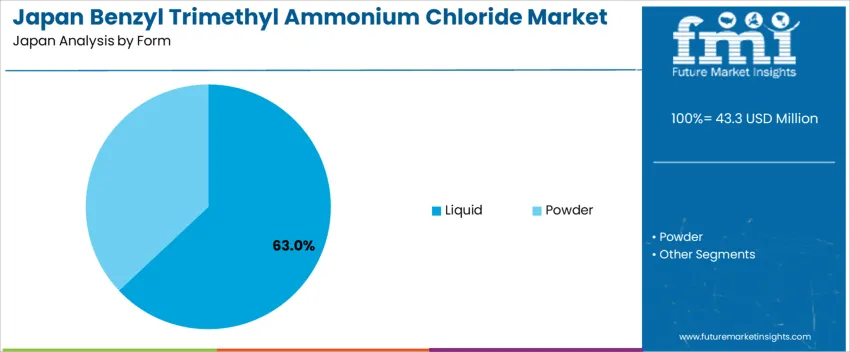
Liquid form leads the demand for benzyl trimethyl ammonium chloride in Japan, holding 63% of the market share. The liquid form of benzyl trimethyl ammonium chloride is preferred due to its ease of use in various applications, including cleaning products, disinfectants, and personal care formulations. Its liquid state allows for better mixing and formulation with other ingredients, ensuring uniformity and effectiveness in the final product. In addition, liquid benzyl trimethyl ammonium chloride is easier to handle and incorporate into industrial processes, making it ideal for large-scale production and commercial use.
The demand for liquid benzyl trimethyl ammonium chloride is driven by its versatile applications across industries. It is commonly used in the production of fabric softeners, disinfectants, and personal care products like shampoos and conditioners, where it functions as a conditioning agent, surfactant, and antimicrobial agent. With its broad range of uses and efficient application, liquid benzyl trimethyl ammonium chloride remains the dominant form in Japan, particularly in the commercial and industrial sectors.
How Is 100% Benzyl Trimethyl Ammonium Chloride Leading the Concentration Demand in Japan?
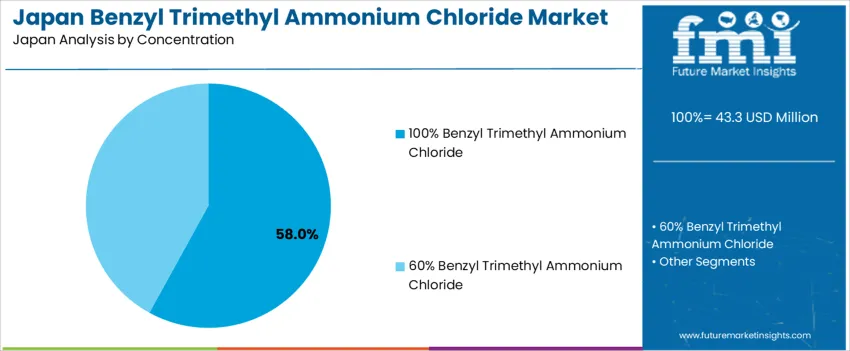
100% benzyl trimethyl ammonium chloride leads the demand for this chemical in Japan, accounting for 58% of the market share. The 100% concentration is preferred for applications that require high potency and effectiveness, such as in the formulation of disinfectants, antimicrobial agents, and industrial cleaners. This high-concentration form allows for more precise control over the strength and performance of the final product, making it ideal for industries that rely on strong and reliable chemical agents for cleaning, sanitization, and conditioning.
The demand for 100% benzyl trimethyl ammonium chloride is driven by the need for potent and highly effective chemical solutions in a variety of industrial applications. It is especially favored in commercial cleaning products, hospital-grade disinfectants, and high-performance personal care items. As the demand for more effective and concentrated chemical solutions grows, particularly in healthcare, personal care, and industrial cleaning sectors, 100% benzyl trimethyl ammonium chloride will continue to dominate the market in Japan, providing essential antimicrobial and conditioning properties.
What is the Summary of Demand for Benzyl Trimethyl Ammonium Chloride in Japan?
The demand for benzyl trimethyl ammonium chloride in Japan is driven by its widespread use in various industries, including healthcare, personal care, water treatment, and industrial processes. This compound is known for its antimicrobial, disinfectant, and preservative properties, making it essential in applications such as cleaning agents, shampoos, and sanitizers. As consumer awareness around hygiene increases, particularly in healthcare and public sectors, the demand for such effective and versatile compounds is expected to rise. Additionally, the growing preference for eco-friendly alternatives in various products further supports the market for benzyl trimethyl ammonium chloride.
What are the Drivers of Demand for Benzyl Trimethyl Ammonium Chloride in Japan?
Key drivers for the growing demand for benzyl trimethyl ammonium chloride in Japan include rising hygiene awareness, especially following the global pandemic, which has increased the demand for disinfectants and sanitizers across healthcare, commercial, and public spaces. Additionally, the compound's widespread use in personal care products such as shampoos, conditioners, and facial cleansers is another major driver. The growing demand for effective antimicrobial and preservative agents in water treatment and wastewater management systems further supports demand. Furthermore, the increasing consumer preference for environmentally friendly and sustainable products is encouraging the development of natural alternatives to traditional disinfectants, driving innovations in product formulations that include benzyl trimethyl ammonium chloride.
What are the Restraints on Demand for Benzyl Trimethyl Ammonium Chloride in Japan?
Despite its effectiveness, there are some restraints on the demand for benzyl trimethyl ammonium chloride in Japan. One of the key concerns is the growing scrutiny over the environmental impact of quaternary ammonium compounds (QACs), particularly their potential toxicity to aquatic ecosystems and the persistence of residues in wastewater. Regulatory pressures on environmental safety may limit their widespread adoption in certain markets. Additionally, there is increasing consumer demand for products with minimal chemical additives, which may reduce the appeal of benzyl trimethyl ammonium chloride in the personal care and household product sectors. Furthermore, the higher cost of producing QAC-based formulations may deter use in cost-sensitive markets.
What are the Key Trends Influencing Demand for Benzyl Trimethyl Ammonium Chloride in Japan?
A key trend influencing the demand for benzyl trimethyl ammonium chloride in Japan is the increasing adoption of environmentally conscious, clean-label products. Consumers are seeking products with fewer chemicals, driving innovation toward more sustainable and less harmful disinfectants and preservatives. Additionally, the growing market for eco-friendly household products and personal care items, particularly those that are antimicrobial, supports the demand for QACs. Another important trend is the increased focus on hygiene and safety, especially in healthcare and food industries, where disinfectant and preservative agents are essential. Finally, regulatory changes and concerns about chemical residues in wastewater are prompting the industry to develop safer, biodegradable alternatives that maintain efficacy while minimizing environmental impact.
What is the Regional Demand Outlook for Benzyl Trimethyl Ammonium Chloride in Japan?
The demand for Benzyl Trimethyl Ammonium Chloride (BT TMA Cl) in Japan shows moderate but steady growth across regions, with the highest CAGR of 4.7% in Kyushu & Okinawa. Kanto follows with 4.3%. The Kansai (Kinki) region exhibits a CAGR of 3.8%. Chubu, Tohoku, and the Rest of Japan show lower but positive growth at 3.3%, 2.9%, and 2.8% respectively. These regional differences reflect varying levels of industrial activity, water treatment demand, hygiene product consumption, and regulatory or environmental pressures across Japan.
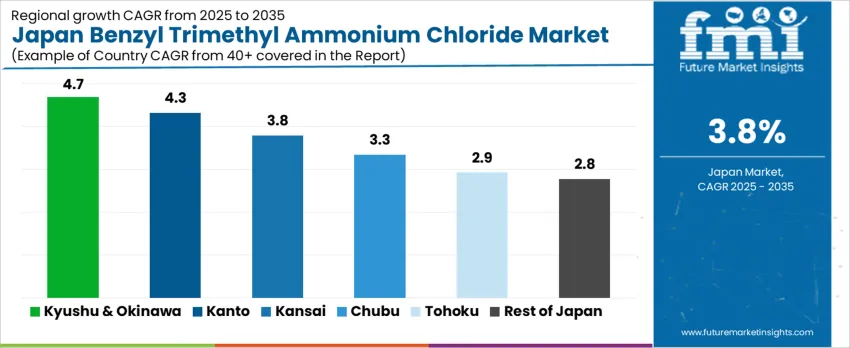
| Region | CAGR (%) |
|---|---|
| Kyushu & Okinawa | 4.7 |
| Kanto | 4.3 |
| Kansai (Kinki) | 3.8 |
| Chubu | 3.3 |
| Tohoku | 2.9 |
| Rest of Japan | 2.8 |
What drives demand for Benzyl Trimethyl Ammonium Chloride in Kyushu & Okinawa?
In Kyushu & Okinawa, the demand for Benzyl Trimethyl Ammonium Chloride is forecast to grow at a CAGR of 4.7%. This region likely benefits from a combination of industrial, water treatment, and hygiene needs. BT TMA Cl serves as a quaternary ammonium compound used in disinfectants, sanitizers, water treatment formulations, and industrial cleaning agents. The region’s coastal geography and associated water and environmental management needs may increase demand for disinfectants that help treat water or sanitize facilities. Additionally, regional industries-perhaps including food processing, aquaculture, or manufacturing-may require such chemicals for sanitation and microbial control. As environmental standards and hygiene demands rise, this supports increasing use of BT TMA Cl in both municipal water treatment and industrial hygiene applications in Kyushu & Okinawa.
Why is demand rising in Kanto?
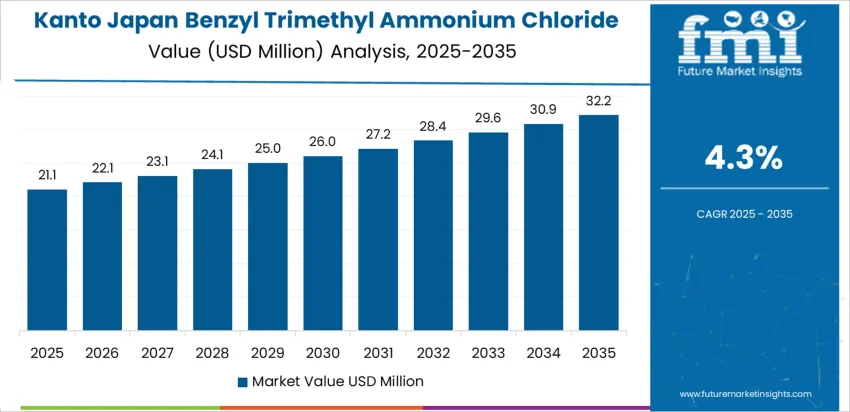
Kanto, with its dense population, urban infrastructure, and industrial concentration, sees projected demand growth for Benzyl Trimethyl Ammonium Chloride at 4.3%. The compound’s broad applications-especially in disinfectants, sanitizers, surface cleaners, and possibly water treatment or industrial hygiene products-match the high demand for sanitation and chemical processing in a metropolitan and industrial region. Urban centers generate demand for consumer hygiene products, institutional sanitization (hospitals, public transport, commercial buildings), and maintenance of water and wastewater treatment systems. The need for reliable disinfectants and surfactants in dense population areas supports steady BT TMA Cl usage in Kanto.
What supports moderate growth in Kansai (Kinki)?
In Kansai, the demand for Benzyl Trimethyl Ammonium Chloride is projected at a CAGR of 3.8%. The region’s mix of urban, manufacturing, and industrial activity offers a stable market for disinfectants, water treatment chemicals, and industrial cleaning agents. As businesses, manufacturing units, and municipal services operate, there is steady consumption of antimicrobial surfactants and disinfectants. Additionally, as regulations around hygiene and water quality persist, the use of chemicals like BT TMA Cl for cleaning, disinfection, and water treatment remains relevant. The moderate growth reflects a market that is mature but still expanding due to ongoing demand for sanitary and industrial chemical applications.
How is the demand evolving in Chubu?
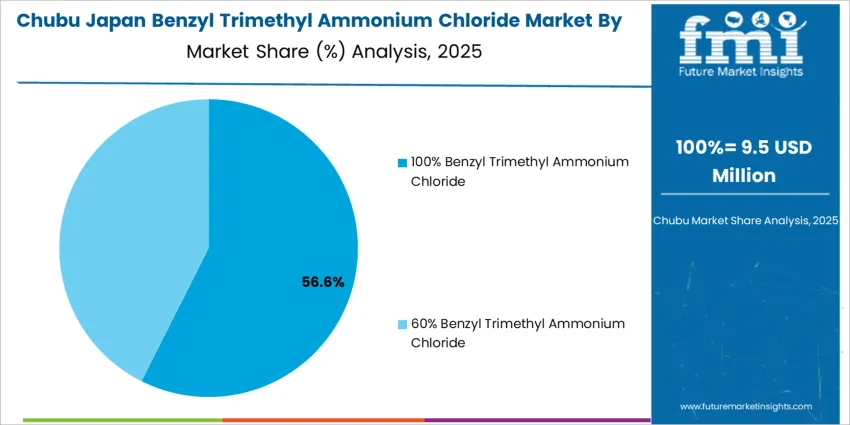
In Chubu, the demand for Benzyl Trimethyl Ammonium Chloride is expected to grow at 3.3% annually. The region’s industrial base and perhaps modest urban centers create demand for disinfectants, cleaning agents, and water treatment chemicals. Industries may require surfactants and antimicrobial agents for manufacturing hygiene, wastewater treatment, and process sanitation. As awareness of hygiene and environmental safety increases, and as regulatory standards for industrial and municipal wastewater treatment tighten, the use of BT TMA Cl is likely to increase gradually in Chubu, supporting consistent but moderate growth.
What factors influence demand in Tohoku?
In Tohoku, projected demand grows at 2.9% annually. This slower pace likely reflects relatively lower industrial density and lesser demand for large-scale water treatment or industrial cleaning compared to urban areas. Nonetheless, some demand exists from municipal water management, smaller industries, or household/consumer cleaning products. As hygiene standards and environmental regulations spread more evenly across Japan, even regions with lower industrial concentration like Tohoku may see gradual increases in consumption of antimicrobial and disinfectant chemicals such as BT TMA Cl.
How is demand expected to grow in the Rest of Japan?
In the Rest of Japan, the projected CAGR is 2.8%. This slower growth may stem from lower population density, fewer large-scale industrial or commercial operations, and reduced demand for industrial-grade disinfectants or water-treatment chemicals. Nonetheless, demand persists through small scale industries, local water treatment needs, agriculture, or household cleaning and hygiene products in rural and semi urban areas. As environmental awareness and hygiene practices increase, gradual adoption of disinfectants and surfactants will sustain slow but steady growth in these regions.
How Are Companies Competing in the Demand for Benzyl Trimethyl Ammonium Chloride in Japan?
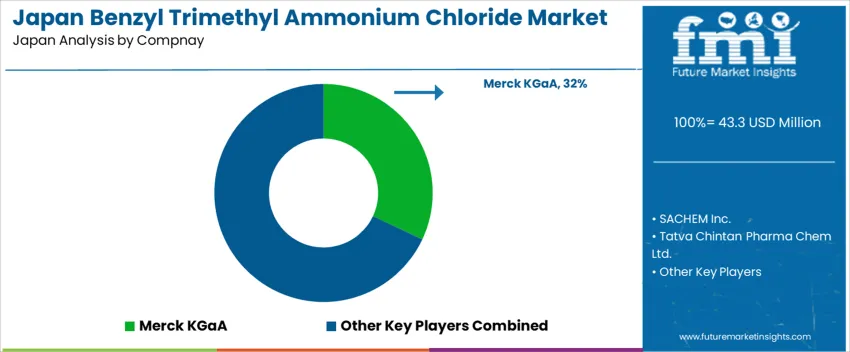
Demand for benzyl trimethyl ammonium chloride (BTMAC) in Japan is driven by its widespread use in sectors such as water treatment, surface disinfection, industrial cleaning, and chemical synthesis. Leading suppliers in this market include Merck KGaA (about 32% share), along with SACHEM Inc., Tatva Chintan Pharma Chem Ltd., Novo Nordisk Pharmatech A/S, and Stepan Company. These firms supply BTMAC in liquid or powder form for uses that include disinfectants, surfactants, phase transfer catalysis, and water treatment chemicals.
Competition in this market focuses on product purity, reliability of supply, regulatory compliance, and versatility of applications. Suppliers emphasize high purity BTMAC suitable for sensitive chemical synthesis, water treatment, and industrial processes. Stability under a range of pH and chemical conditions is another important factor, especially for use in water treatment and industrial cleaning systems. There is also demand for formulations that comply with strict safety and environmental regulations in Japan. Some providers offer tailored grades of BTMAC for disinfectant use, for use as catalysts in polymer or chemical manufacturing, or for water treatment agents that must meet local compliance standards.
Suppliers that combine high quality supply, flexibility of form (liquid, powder, concentrated or diluted), and robust technical and regulatory support tend to perform better. As Japanese industries continue to require dependable antimicrobial, surfactant, and chemical processing agents, these companies aim to maintain and expand their share in the BTMAC market.
Key Players of the Benzyl Trimethyl Ammonium Chloride Industry in Japan
- Merck KGaA
- SACHEM Inc.
- Tatva Chintan Pharma Chem Ltd.
- Novo Nordisk Pharmatech A/S
- Stepan Company
Scope of the Report
| Items | Details |
|---|---|
| Quantitative Units | USD Million |
| Regions Covered | Japan |
| Form | Liquid, Powder |
| Concentration | 100% Benzyl Trimethyl Ammonium Chloride, 60% Benzyl Trimethyl Ammonium Chloride |
| Applications | Oilfields, Agrochemicals, Polymers, Pharmaceuticals, Personal Care and Cosmetics |
| Key Companies Profiled | Merck KGaA, SACHEM Inc., Tatva Chintan Pharma Chem Ltd., Novo Nordisk Pharmatech A/S, Stepan Company |
| Additional Attributes | The demand for Benzyl Trimethyl Ammonium Chloride in Japan is driven by its diverse applications across industries such as oilfields, agrochemicals, polymers, pharmaceuticals, and personal care. The form and concentration of the product are crucial for its use, with both liquid and powder forms available in concentrations like 100% and 60% Benzyl Trimethyl Ammonium Chloride. In oilfields, it is often used as a surfactant, while in agrochemicals, it serves as an important component in formulations. In personal care and cosmetics, its ability to act as a conditioning agent makes it a key ingredient. Companies like Merck KGaA and Stepan Company are key players in the Japanese market, supplying high-quality Benzyl Trimethyl Ammonium Chloride for various industrial applications. The market is expected to grow as demand rises for more specialized and effective chemicals in these sectors. |
Demand for Benzyl Trimethyl Ammonium Chloride in Japan
Form:
- Liquid
- Powder
Concentration:
- 100% Benzyl Trimethyl Ammonium Chloride
- 60% Benzyl Trimethyl Ammonium Chloride
Applications:
- Oilfields
- Agrochemicals
- Polymers
- Pharmaceuticals
- Personal Care and Cosmetics
Region:
- Kyushu & Okinawa
- Kanto
- Kansai
- Chubu
- Tohoku
- Rest of Japan
Bibliography
- Sigma Aldrich. (2025). Benzyltrimethylammonium chloride safety data sheet and properties. Sigma Aldrich Safety Data Sheet Publications.
- Thermo Fisher Scientific. (2010). Benzyltrimethylammonium chloride safety data and handling guidance. Thermo Fisher Scientific Safety Data Sheet Publications.
- European Chemicals Agency. (2023). Substance information and classification for benzyltrimethylammonium chloride. ECHA Regulatory Information Publications.
- Organisation for Economic Co-operation and Development. (2023). Test guidelines for chemical safety and environmental hazard evaluation. OECD Test Guidelines Publications.
Frequently Asked Questions
How big is the demand for benzyl trimethyl ammonium chloride in Japan in 2025?
The demand for benzyl trimethyl ammonium chloride in Japan is estimated to be valued at USD 43.3 million in 2025.
What will be the size of benzyl trimethyl ammonium chloride in Japan in 2035?
The market size for the benzyl trimethyl ammonium chloride in Japan is projected to reach USD 62.5 million by 2035.
How much will be the demand for benzyl trimethyl ammonium chloride in Japan growth between 2025 and 2035?
The demand for benzyl trimethyl ammonium chloride in Japan is expected to grow at a 3.8% CAGR between 2025 and 2035.
What are the key product types in the benzyl trimethyl ammonium chloride in Japan?
The key product types in benzyl trimethyl ammonium chloride in Japan are liquid and powder.
Which concentration segment is expected to contribute significant share in the benzyl trimethyl ammonium chloride in Japan in 2025?
In terms of concentration, 100% benzyl trimethyl ammonium chloride segment is expected to command 58.0% share in the benzyl trimethyl ammonium chloride in Japan in 2025.
Preview the report firsthand - request a free sample
Get SampleGet the brochure for pricing and purchase details.
Get PDFTable of Content
- Executive Summary
- Japan Market Outlook
- Demand-side Trends
- Supply-side Trends
- Technology Roadmap Analysis
- Analysis and Recommendations
- Market Overview
- Market Coverage / Taxonomy
- Market Definition / Scope / Limitations
- Market Background
- Market Dynamics
- Drivers
- Restraints
- Opportunity
- Trends
- Scenario Forecast
- Demand in Optimistic Scenario
- Demand in Likely Scenario
- Demand in Conservative Scenario
- Opportunity Map Analysis
- Product Life Cycle Analysis
- Supply Chain Analysis
- Investment Feasibility Matrix
- Value Chain Analysis
- PESTLE and Porter’s Analysis
- Regulatory Landscape
- Regional Parent Market Outlook
- Production and Consumption Statistics
- Import and Export Statistics
- Market Dynamics
- Japan Market Analysis 2020 to 2024 and Forecast, 2025 to 2035
- Historical Market Size Value (USD Million) Analysis, 2020 to 2024
- Current and Future Market Size Value (USD Million) Projections, 2025 to 2035
- Y-o-Y Growth Trend Analysis
- Absolute $ Opportunity Analysis
- Japan Market Pricing Analysis 2020 to 2024 and Forecast 2025 to 2035
- Japan Market Analysis 2020 to 2024 and Forecast 2025 to 2035, By Form
- Introduction / Key Findings
- Historical Market Size Value (USD Million) Analysis By Form , 2020 to 2024
- Current and Future Market Size Value (USD Million) Analysis and Forecast By Form , 2025 to 2035
- Liquid
- Powder
- Y-o-Y Growth Trend Analysis By Form , 2020 to 2024
- Absolute $ Opportunity Analysis By Form , 2025 to 2035
- Japan Market Analysis 2020 to 2024 and Forecast 2025 to 2035, By Concentration
- Introduction / Key Findings
- Historical Market Size Value (USD Million) Analysis By Concentration, 2020 to 2024
- Current and Future Market Size Value (USD Million) Analysis and Forecast By Concentration, 2025 to 2035
- 100% Benzyl Trimethyl Ammonium Chloride
- 60% Benzyl Trimethyl Ammonium Chloride
- Y-o-Y Growth Trend Analysis By Concentration, 2020 to 2024
- Absolute $ Opportunity Analysis By Concentration, 2025 to 2035
- Japan Market Analysis 2020 to 2024 and Forecast 2025 to 2035, By Applications
- Introduction / Key Findings
- Historical Market Size Value (USD Million) Analysis By Applications, 2020 to 2024
- Current and Future Market Size Value (USD Million) Analysis and Forecast By Applications, 2025 to 2035
- Oilfields
- Agrochemicals
- Polymers
- Pharmaceuticals
- Personal Care And Cosmetics
- Y-o-Y Growth Trend Analysis By Applications, 2020 to 2024
- Absolute $ Opportunity Analysis By Applications, 2025 to 2035
- Market Structure Analysis
- Competition Dashboard
- Competition Benchmarking
- Market Share Analysis of Top Players
- By Regional
- By Form
- By Concentration
- By Applications
- Competition Analysis
- Competition Deep Dive
- Merck KGaA
- Overview
- Product Portfolio
- Profitability by Market Segments (Product/Age /Sales Channel/Region)
- Sales Footprint
- Strategy Overview
- Marketing Strategy
- Product Strategy
- Channel Strategy
- SACHEM Inc.
- Tatva Chintan Pharma Chem Ltd.
- Novo Nordisk Pharmatech A/S
- Stepan Company
- Merck KGaA
- Competition Deep Dive
- Assumptions & Acronyms Used
- Research Methodology


