

- Industry Size (2025)
- USD 4.1 Bn
- Forecast (2035)
- USD 10.0 Bn
- CAGR (2025 to 2035)
- 9.3%
Demand for Cloud Kitchen in Japan Forecast and Outlook 2025 to 2035
The demand for cloud kitchens in Japan is expanding rapidly, with a projected value of USD 4.1 billion in 2025, growing to USD 10.0 billion by 2035, reflecting a strong 9.3% CAGR. Key segments driving this growth include the independent cloud kitchens, which account for 56% of demand. These kitchens are favored for their flexibility, lower overhead, and ability to cater to a wide range of food options. This model is particularly popular in urban areas like Kanto and Kansai, where demand for delivery services is on the rise. Aggregator-based cloud kitchens and hybrid models also contribute to the growth, with the aggregator model facilitating a connection between restaurants and food delivery platforms, driving efficiency and industry penetration.
Quick Stats of the Demand for Cloud Kitchen in Japan
- Demand for Cloud Kitchen in Japan Value (2025): USD 4.1 billion
- Demand for Cloud Kitchen in Japan Forecast Value (2035): USD 10.0 billion
- Demand for Cloud Kitchen in Japan Forecast CAGR (2025-2035): 9.3%
- Demand for Cloud Kitchen in Japan Leading Type: Independent Cloud Kitchen
- Demand for Cloud Kitchen in Japan Key Growth Regions: Kyushu & Okinawa, Kanto, Kansai, Chubu, Tohoku, Rest of Japan
- Demand for Cloud Kitchen in Japan Top Players: Rebel Foods, Kitopi, CloudKitchens, Ghost Kitchens Private Limited, Luckin Coffee (Sgp) Pte. Ltd.

The demand is also segmented by food type, with fast food and casual dining leading the way, catering to the high demand for convenience and affordability in urban populations. The healthy/diet food segment is also on the rise, driven by increasing health-consciousness among consumers. Individual consumers make up 51% of demand, as convenience and ease of ordering meals online become a standard in Japan. Other significant end-users include corporate offices, food service providers, and small restaurants, which leverage cloud kitchens for efficient food production and delivery. The business models supporting these trends include aggregator-based platforms, brand-owned kitchens, and franchise models, which allow operators to scale and meet the increasing demand for delivery-only food services. These segments are supported by technological innovations in order management systems, real-time tracking, and food preparation technologies, further enhancing the efficiency and scalability of cloud kitchens across Japan.
Demand for Cloud Kitchen in Japan Key Takeaways
| Metric | Value |
|---|---|
| Demand for Cloud Kitchen in Japan Value (2025) | USD 4.1 billion |
| Demand for Cloud Kitchen in Japan Forecast Value (2035) | USD 10.0 billion |
| Demand for Cloud Kitchen in Japan Forecast CAGR (2025-2035) | 9.3% |
Why is the Demand for Cloud Kitchen in Japan Growing?
The demand for cloud kitchens in Japan is growing as the food delivery industry continues to expand, fueled by changing consumer behaviors and technological advancements. Cloud kitchens, also known as ghost kitchens or virtual kitchens, are facilities optimized for preparing food exclusively for delivery or takeout. With the rise of food delivery platforms and increased demand for convenience, cloud kitchens provide a cost-effective solution for restaurants and food businesses. These kitchens allow operators to focus on food production without the overhead costs of maintaining a physical storefront, enabling them to reach a wider audience with minimal investment.
The growth in demand is also driven by Japan’s evolving food culture, which is increasingly centered around delivery and on-the-go dining. As more consumers opt for convenience, cloud kitchens are able to meet the growing need for fast, quality food delivered to homes and offices. Japan’s busy urban population, particularly in metropolitan areas, has contributed to the rise of online food ordering and delivery services, further boosting the demand for cloud kitchens.
Technological innovations in logistics, order management systems, and food preparation processes are also enhancing the efficiency and scalability of cloud kitchens, allowing businesses to operate more effectively. The growing interest in specialized cuisines and niche food offerings is another factor driving cloud kitchen adoption. These kitchens can easily accommodate various food concepts, offering diverse and customized options to meet consumer preferences. As food delivery continues to gain popularity and demand for convenience increases, the cloud kitchen sector in Japan is expected to experience substantial growth through 2035.
What is the Segment-Wise Analysis of Demand for Cloud Kitchen in Japan?
Demand for cloud kitchens in Japan is segmented by type, end-user, business model, food type, and region. By type, independent cloud kitchens lead at 56%, followed by aggregator-based cloud kitchens, hybrid cloud kitchens, kitchen pods, and commissary/shared kitchens. In terms of end-users, individual consumers account for 51%, with corporate offices, food service providers, small restaurants, and food chains contributing to the demand. The business models for cloud kitchens include aggregator-based platforms, brand-owned cloud kitchens, independent operator models, kitchen-as-a-service, and franchise models. In terms of food type, demand is divided among fast food, casual dining, fine dining, healthy/diet food, and ethnic cuisine. Regionally, demand spans across Kyushu & Okinawa, Kanto, Kansai, Chubu, Tohoku, and the rest of Japan, with varying preferences in each area.
How Do Independent Cloud Kitchens Lead the Demand for Cloud Kitchens in Japan?
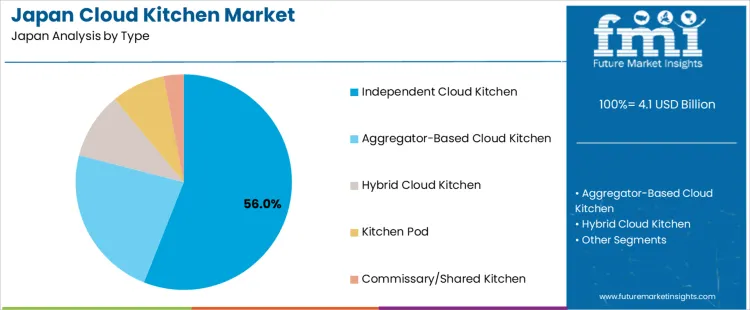
Independent cloud kitchens account for 56% of the demand for cloud kitchens in Japan, driven by their flexibility and cost-effectiveness. Independent operators have more control over their brand, menu, and operations, allowing them to cater to a diverse range of consumer needs. This business model appeals to entrepreneurs and food innovators looking to enter the industry with low overhead costs and minimal initial investment. Independent cloud kitchens are particularly popular in urban areas like Kanto and Kansai, where demand for delivery-based food services is rapidly growing. The rise of food delivery platforms and the increasing preference for convenience have also contributed to the demand for independent cloud kitchens, as they provide a faster and more affordable way to reach consumers. With the growing trend towards online food delivery and the shift in consumer habits, independent cloud kitchens continue to lead the industry for cloud kitchens in Japan.
Why Does Individual Consumers Lead the Demand for Cloud Kitchens in Japan?

Individual consumers account for 51% of the demand for cloud kitchens in Japan, reflecting the growing trend of online food delivery among the general public. The convenience of ordering food directly to homes, especially in densely populated areas like Kanto and Kansai, has fueled the popularity of cloud kitchens. As consumer habits shift towards digital ordering and delivery, cloud kitchens are increasingly seen as the ideal solution for satisfying this demand. The wide variety of food options, ranging from fast food to healthy meals, appeals to a broad audience, making cloud kitchens a popular choice for individual consumers. The rise of health-conscious eating, along with the convenience of ordering meals from the comfort of one’s home, has also contributed to this trend. With the continuous growth of e-commerce and delivery services in Japan, the demand for cloud kitchens from individual consumers remains the leading driver in the industry.
What are the Key Trends, Drivers, and Restraints in Demand for Cloud Kitchen in Japan?
Demand for cloud kitchens in Japan is growing rapidly, driven by rising consumer preference for food delivery and takeout, especially in urban areas. The convenience of ordering meals via apps and having them delivered at home or the office, without the need to dine-in, aligns well with busy lifestyles and a culture of convenience. The model’s lower overhead and operating costs compared to traditional dine-in restaurants make it attractive for restaurateurs, allowing for lean operations and flexibility. There are some restraints: increasing competition, high customer expectations for fast delivery, consistent quality, and hygiene. Regulatory requirements (food safety, hygiene, licensing) and logistical challenges (delivery capacity, food quality during transport) add complexity and cost for operators.
Why is Demand for Cloud Kitchen Growing in Japan?
Several factors drive the growth of cloud kitchens in Japan. The rise of online food delivery platforms and the widespread use of mobile ordering, coupled with changing consumer behavior since the pandemic, have significantly increased the demand for delivery-only meals. Many consumers now prioritize convenience and speed over eating out. Cloud kitchens provide a cost-efficient, lower-risk way for entrepreneurs and existing restaurants to start operations without the need for prime retail real estate or large staff. This enables businesses to test new food concepts or target niche industries. Urbanization and dense city living also make delivery meals more practical for singles, young professionals, and small households, sustaining the demand for cloud kitchens.
How are Technological & Industry Innovations Driving Cloud Kitchen Demand in Japan?
Technology plays a crucial role in driving demand for cloud kitchens in Japan. Advanced online ordering platforms, integration with delivery service apps, real-time order and delivery tracking, and efficient logistics systems make cloud kitchens user-friendly and operationally viable. Data analytics and demand forecasting tools help kitchens optimize menu planning, reduce food waste, and manage supply, enhancing profitability. For operators, cloud kitchens offer the flexibility to launch multiple virtual brands out of a single kitchen, enabling rapid experimentation and adaptation to shifting consumer preferences. These technological innovations make cloud kitchens a highly attractive and scalable model, driving their continued growth in the Japanese industry.
What are the Key Challenges and Risks That Could Limit Cloud Kitchen Demand in Japan?
Despite the growth of cloud kitchens in Japan, several challenges could limit demand. Ensuring consistent food quality and safety during delivery is more challenging compared to dine-in settings, particularly with longer delivery distances and varying weather conditions. Delivery logistics and timely service are critical to maintaining customer satisfaction; delays or poor service can negatively impact demand. Compliance with food safety regulations, hygiene standards, and licensing requirements is mandatory, and failure to meet these can result in fines or operational shutdowns. High competition in the cloud kitchen space can also squeeze profit margins, making it harder for some operators to stay competitive. Consumer preferences may shift back toward dining out or eating fresh-cooked meals, especially if delivery costs increase or if the novelty of cloud kitchens wears off.
What is the Regional Demand Outlook for Cloud Kitchen in Japan?
Demand for cloud kitchens in Japan is growing rapidly across all regions, with Kyushu & Okinawa leading at an 11.6% CAGR, driven by the region's increasing reliance on food delivery services and a growing population of health-conscious consumers. Kanto follows with a 10.7% CAGR, supported by its large urban population and the rising popularity of delivery-focused restaurant models. Kansai shows a 9.4% CAGR, driven by the region’s vibrant food culture and the increasing demand for convenient dining options. Chubu experiences an 8.3% CAGR, with demand rising as food delivery services expand in both urban and rural areas. Tohoku and the Rest of Japan see more moderate growth at 7.3% and 6.9%, respectively.
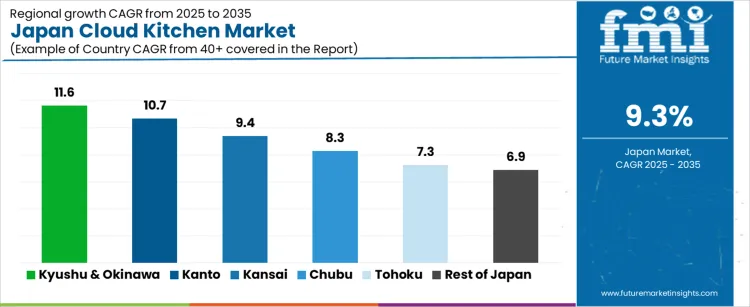
| Region | CAGR (%) |
|---|---|
| Kyushu & Okinawa | 11.6% |
| Kanto | 10.7% |
| Kansai | 9.4% |
| Chubu | 8.3% |
| Tohoku | 7.3% |
| Rest of Japan | 6.9% |
How is Demand for Cloud Kitchens Growing in Kyushu & Okinawa?
Kyushu & Okinawa leads the demand for cloud kitchens, growing at a 11.6% CAGR. The region's strong tourism sector, especially in Okinawa, contributes significantly to this growth as food delivery services rise to meet the demand for convenient, ready-to-eat meals. Okinawa, with its growing international visitor base, has seen a surge in the popularity of cloud kitchens, as tourists and locals alike seek authentic, regional food delivered directly to their homes or hotels. In addition, Kyushu’s focus on modernizing its foodservice industry, alongside the growing trend toward health-conscious eating, fuels the adoption of cloud kitchens. With a strong cultural affinity for local and fresh ingredients, cloud kitchens can meet the demand for diverse and specialized dishes. As consumers in the region prioritize convenience and quality, cloud kitchens continue to thrive, driving the demand for efficient, high-quality food delivery options in both urban and tourist-driven areas.
Why is Demand for Cloud Kitchens Rising in Kanto?

In Kanto, demand for cloud kitchens is rising at a 10.7% CAGR. The region's dense urban population, particularly in Tokyo, is driving the demand for convenient and fast food delivery services. With busy lifestyles becoming more common, Kanto residents are increasingly turning to cloud kitchens for quick, high-quality meals. The rise of delivery-focused restaurant models is fueled by consumer demand for efficiency, variety, and convenience. Kanto’s diverse population, with its expanding interest in both traditional Japanese and international cuisines, continues to support the growth of cloud kitchens. The region’s focus on health-conscious dining, along with the increasing demand for plant-based and organic meal options, has encouraged cloud kitchens to innovate and cater to these preferences. As online food delivery platforms continue to expand, Kanto’s demand for cloud kitchens will remain strong, offering consumers an easy, on-demand solution to access their favorite meals anytime.
How is Demand for Cloud Kitchens Expanding in Kansai?
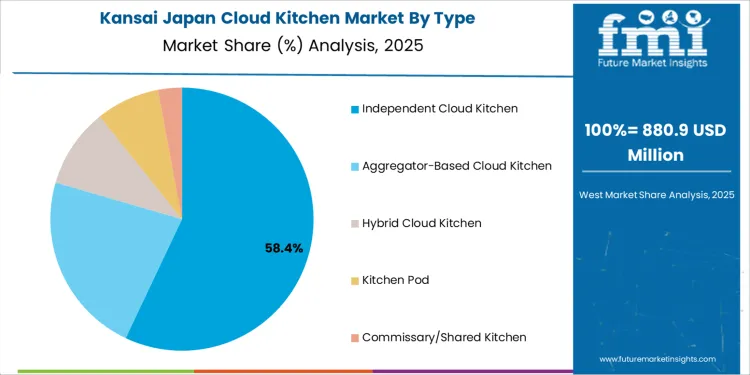
Kansai shows steady demand for cloud kitchens, growing at a 9.4% CAGR. The region's rich food culture, particularly in cities like Osaka and Kyoto, continues to influence the demand for convenient, high-quality food options. Cloud kitchens are becoming more prevalent as Kansai residents and foodservice businesses look for ways to cater to busy, on-the-go lifestyles. Kansai’s vibrant food scene, known for its diversity and innovation, has driven an increase in cloud kitchen models, offering consumers unique and specialized meals. As consumer demand for delivery grows and eating habits shift toward more home-based meals, cloud kitchens are becoming essential for both residential and commercial foodservice providers. The increasing trend towards health-conscious eating and demand for local, fresh ingredients further boosts the adoption of cloud kitchens. As Kansai continues to evolve its food landscape, the demand for cloud kitchens is expected to keep growing, meeting the region’s needs for convenience, variety, and quality.
Why is Demand for Cloud Kitchens Growing in Chubu?
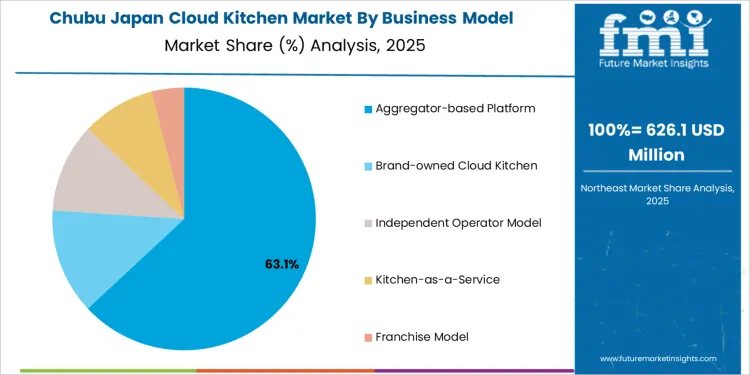
Chubu is experiencing steady demand for cloud kitchens, growing at an 8.3% CAGR. The region's urban centers like Nagoya, combined with its diverse food culture, are contributing to the rise of cloud kitchens. Consumers are increasingly seeking convenient meal options, and cloud kitchens provide the flexibility to meet demand for high-quality, affordable food. As busy lifestyles continue to dominate, food delivery services are gaining traction, especially in Chubu’s growing residential areas. The region’s expanding digital infrastructure and growing interest in new dining experiences also contribute to the growth of cloud kitchens. With a rising focus on health-conscious eating and sustainable food practices, cloud kitchens are being seen as an efficient way to offer a variety of food options that cater to diverse dietary needs. As Chubu embraces more modern, convenient ways of dining, cloud kitchens are poised to become an integral part of the foodservice industry, ensuring continued demand.
How is Demand for Cloud Kitchens Expanding in Tohoku?
Tohoku is seeing moderate growth in cloud kitchen demand, with a 7.3% CAGR. While the region is not as urbanized as Kanto or Kansai, Tohoku is experiencing a growing demand for convenient, high-quality food delivery options. The increasing adoption of food delivery services, particularly in urban centers like Sendai, is driving the need for cloud kitchens. Tohoku’s focus on local, fresh ingredients combined with a rising interest in healthy, convenient meals supports the growing role of cloud kitchens in the region. As more consumers shift toward convenience-oriented dining solutions, particularly due to busy lifestyles, cloud kitchens are becoming an essential part of the local food landscape. The region’s developing infrastructure and consumer awareness of sustainable eating habits are contributing to the growing adoption of cloud kitchens. As the demand for food delivery and innovative dining solutions increases, Tohoku is expected to see steady growth in cloud kitchen usage, albeit at a moderate pace compared to urban areas.
Why is Demand for Cloud Kitchens Steady in the Rest of Japan?
The Rest of Japan is experiencing steady demand for cloud kitchens, with a 6.9% CAGR. Although adoption is slower in smaller cities and rural areas, there is growing interest in food delivery services as consumers increasingly seek convenience and variety. Cloud kitchens provide an ideal solution, offering a broad range of meal options without the overhead costs associated with traditional restaurants. In rural areas, the demand for delivery services is expanding, with cloud kitchens meeting the needs of consumers who may have limited access to dine-in options. As local and regional foodservice businesses continue to modernize, more are adopting cloud kitchens to meet rising consumer expectations for quality, affordability, and convenience. While growth may be more gradual compared to urban centers, the Rest of Japan’s demand for cloud kitchens will continue to increase as consumer habits evolve and the industry for on-demand food services expands. This steady growth reflects the ongoing shift toward convenience in dining.
What is Driving the Demand for Cloud Kitchen Services in Japan and Who Are the Key Providers?
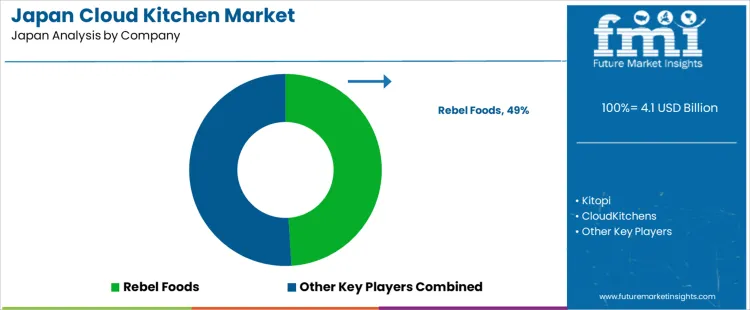
The demand for cloud kitchen services in Japan is growing rapidly as more consumers embrace online ordering and food delivery. With busy urban lifestyles, high smartphone and internet penetration, and an increasing preference for convenience, cloud kitchens provide a practical solution for customers seeking quick and easy meal options. Cloud kitchens, also known as ghost kitchens or virtual kitchens, allow restaurants to operate without the overhead costs associated with traditional dine-in spaces, including staff and real estate. This model enables restaurants to cater exclusively to delivery orders, making it an attractive option in densely populated cities like Tokyo and Osaka, where demand for food delivery is high.
Key providers of cloud kitchen services in Japan include Rebel Foods, Kitopi, CloudKitchens, Ghost Kitchens Private Limited, and Luckin Coffee (Sgp) Pte. Ltd. Rebel Foods leads with a significant share of 49.0%, operating a wide range of virtual brands from shared kitchen spaces. These companies leverage a shared-kitchen model, allowing multiple brands to operate under one roof, optimizing kitchen space and reducing operational costs. Their focus on delivery logistics, streamlined kitchen management, and data-driven decision-making helps them efficiently serve a growing demand for quick, high-quality meals.
Advancements in technology, such as AI-driven order management systems, optimized inventory control, and enhanced delivery route planning, are further fueling the rise of cloud kitchens in Japan. This model allows traditional restaurants to expand into the delivery-only space without the need for a physical storefront. As consumer preferences continue to favor convenience, variety, and speed of service, cloud kitchens are poised to become an integral part of Japan’s foodservice landscape, meeting the evolving demands of a fast-paced, tech-savvy society.
Key Players in Japan Cloud Kitchen Demand
- Rebel Foods
- Kitopi
- CloudKitchens
- Ghost Kitchens Private Limited
- Luckin Coffee (Sgp) Pte. Ltd.
Scope of Report
| Items | Values |
|---|---|
| Quantitative Units (2025) | USD billion |
| Type | Independent Cloud Kitchen, Aggregator-Based Cloud Kitchen, Hybrid Cloud Kitchen, Kitchen Pod, Commissary/Shared Kitchen |
| Business Model | Aggregator-based Platform, Brand-owned Cloud Kitchen, Independent Operator Model, Kitchen-as-a-Service, Franchise Model |
| Food Type | Fast Food, Casual Dining, Fine Dining, Healthy/Diet Food, Ethnic Cuisine |
| End-User | Individual Consumers, Corporate Offices, Food Service Providers, Small Restaurants, Food Chains |
| Region | Kyushu & Okinawa, Kanto, Kansai, Chubu, Tohoku, Rest of Japan |
| Countries Covered | Japan |
| Key Companies Profiled | Rebel Foods, Kitopi, CloudKitchens, Ghost Kitchens Private Limited, Luckin Coffee (Sgp) Pte. Ltd. |
| Additional Attributes | Dollar sales by food type and business model; regional CAGR and growth trends; increasing adoption of aggregator-based platforms and kitchen-as-a-service; rise in demand for health-conscious food options |
Japan Cloud Kitchen Demand by Key Segments
Type
- Independent Cloud Kitchen
- Aggregator-Based Cloud Kitchen
- Hybrid Cloud Kitchen
- Kitchen Pod
- Commissary/Shared Kitchen
Business Model
- Aggregator-based Platform
- Brand-owned Cloud Kitchen
- Independent Operator Model
- Kitchen-as-a-Service
- Franchise Model
Food Type
- Fast Food
- Casual Dining
- Fine Dining
- Healthy/Diet Food
- Ethnic Cuisine
End-User
- Individual Consumers
- Corporate Offices
- Food Service Providers
- Small Restaurants
- Food Chains
Region
- Kyushu & Okinawa
- Kanto
- Kansai
- Chubu
- Tohoku
- Rest of Japan
Frequently Asked Questions
How big is the demand for cloud kitchen in Japan in 2025?
The demand for cloud kitchen in Japan is estimated to be valued at USD 4.1 billion in 2025.
What will be the size of cloud kitchen in Japan in 2035?
The market size for the cloud kitchen in Japan is projected to reach USD 10.0 billion by 2035.
How much will be the demand for cloud kitchen in Japan growth between 2025 and 2035?
The demand for cloud kitchen in Japan is expected to grow at a 9.3% CAGR between 2025 and 2035.
What are the key product types in the cloud kitchen in Japan?
The key product types in cloud kitchen in Japan are independent cloud kitchen, aggregator-based cloud kitchen, hybrid cloud kitchen, kitchen pod and commissary/shared kitchen.
Which business model segment is expected to contribute significant share in the cloud kitchen in Japan in 2025?
In terms of business model, aggregator-based platform segment is expected to command 63.0% share in the cloud kitchen in Japan in 2025.
Preview the report firsthand - request a free sample
Get SampleGet the brochure for pricing and purchase details.
Get PDFTable of Content
- Executive Summary
- Japan Market Outlook
- Demand-side Trends
- Supply-side Trends
- Technology Roadmap Analysis
- Analysis and Recommendations
- Market Overview
- Market Coverage / Taxonomy
- Market Definition / Scope / Limitations
- Market Background
- Market Dynamics
- Drivers
- Restraints
- Opportunity
- Trends
- Scenario Forecast
- Demand in Optimistic Scenario
- Demand in Likely Scenario
- Demand in Conservative Scenario
- Opportunity Map Analysis
- Product Life Cycle Analysis
- Supply Chain Analysis
- Investment Feasibility Matrix
- Value Chain Analysis
- PESTLE and Porter’s Analysis
- Regulatory Landscape
- Regional Parent Market Outlook
- Production and Consumption Statistics
- Import and Export Statistics
- Market Dynamics
- Japan Market Analysis 2020 to 2024 and Forecast, 2025 to 2035
- Historical Market Size Value (USD Million) Analysis, 2020 to 2024
- Current and Future Market Size Value (USD Million) Projections, 2025 to 2035
- Y-o-Y Growth Trend Analysis
- Absolute $ Opportunity Analysis
- Japan Market Pricing Analysis 2020 to 2024 and Forecast 2025 to 2035
- Japan Market Analysis 2020 to 2024 and Forecast 2025 to 2035, By Type
- Introduction / Key Findings
- Historical Market Size Value (USD Million) Analysis By Type , 2020 to 2024
- Current and Future Market Size Value (USD Million) Analysis and Forecast By Type , 2025 to 2035
- Independent Cloud Kitchen
- Aggregator-Based Cloud Kitchen
- Hybrid Cloud Kitchen
- Kitchen Pod
- Commissary/Shared Kitchen
- Y-o-Y Growth Trend Analysis By Type , 2020 to 2024
- Absolute $ Opportunity Analysis By Type , 2025 to 2035
- Japan Market Analysis 2020 to 2024 and Forecast 2025 to 2035, By Business Model
- Introduction / Key Findings
- Historical Market Size Value (USD Million) Analysis By Business Model, 2020 to 2024
- Current and Future Market Size Value (USD Million) Analysis and Forecast By Business Model, 2025 to 2035
- Aggregator-based Platform
- Brand-owned Cloud Kitchen
- Independent Operator Model
- Kitchen-as-a-Service
- Franchise Model
- Y-o-Y Growth Trend Analysis By Business Model, 2020 to 2024
- Absolute $ Opportunity Analysis By Business Model, 2025 to 2035
- Japan Market Analysis 2020 to 2024 and Forecast 2025 to 2035, By Food Type
- Introduction / Key Findings
- Historical Market Size Value (USD Million) Analysis By Food Type, 2020 to 2024
- Current and Future Market Size Value (USD Million) Analysis and Forecast By Food Type, 2025 to 2035
- Fast Food
- Casual Dining
- Fine Dining
- Healthy/Diet Food
- Ethnic Cuisine
- Y-o-Y Growth Trend Analysis By Food Type, 2020 to 2024
- Absolute $ Opportunity Analysis By Food Type, 2025 to 2035
- Japan Market Analysis 2020 to 2024 and Forecast 2025 to 2035, By End-User
- Introduction / Key Findings
- Historical Market Size Value (USD Million) Analysis By End-User, 2020 to 2024
- Current and Future Market Size Value (USD Million) Analysis and Forecast By End-User, 2025 to 2035
- Individual Consumers
- Corporate Offices
- Food Service Providers
- Small Restaurants
- Food Chains
- Y-o-Y Growth Trend Analysis By End-User, 2020 to 2024
- Absolute $ Opportunity Analysis By End-User, 2025 to 2035
- Market Structure Analysis
- Competition Dashboard
- Competition Benchmarking
- Market Share Analysis of Top Players
- By Regional
- By Type
- By Business Model
- By Food Type
- By End-User
- Competition Analysis
- Competition Deep Dive
- Rebel Foods
- Overview
- Product Portfolio
- Profitability by Market Segments (Product/Age /Sales Channel/Region)
- Sales Footprint
- Strategy Overview
- Marketing Strategy
- Product Strategy
- Channel Strategy
- Kitopi
- CloudKitchens
- Ghost Kitchens Private Limited
- Luckin Coffee (Sgp) Pte. Ltd.
- Rebel Foods
- Competition Deep Dive
- Assumptions & Acronyms Used
- Research Methodology


