

- Industry Size (2025)
- USD 29.4 Mn
- Forecast (2035)
- USD 89.4 Mn
- CAGR (2025 to 2035)
- 11.8%
Demand for Cloud Kitchen in USA Forecast and Outlook 2025 to 2035
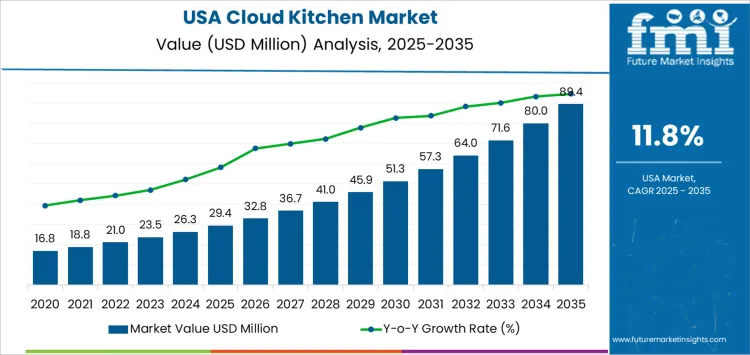
Demand for cloud kitchens in the USA is expected to grow from USD 29.4 million in 2025 to USD 89.4 million by 2035, reflecting a compound annual growth rate (CAGR) of 11.8%. Growth is driven by the increasing popularity of food delivery services and the growing demand for cost-efficient, online-only food businesses. Cloud kitchens, also known as virtual kitchens, are gaining traction as they reduce overhead costs, such as rent and utilities, by operating without physical storefronts. With rise of food delivery platforms and changing consumer preferences towards convenience, cloud kitchens are becoming a viable business model in the foodservice industry.
Adoption is further supported by growing trend of online food ordering, driven by consumer preferences for convenience, variety, and speed. Ability of cloud kitchens to scale quickly and operate multiple brands from a single kitchen location enhances their appeal.
Quick Stats of the Demand for Cloud Kitchen in USA
- Demand for Cloud Kitchen in USA Value (2025): USD 29.4 million
- Demand for Cloud Kitchen in USA Forecast Value (2035): USD 89.4 million
- Demand for Cloud Kitchen in USA Forecast CAGR (2025-2035): 11.8%
- Demand for Cloud Kitchen in USA Leading Business Model: Aggregator-based Platform (63.0%)
- Demand for Cloud Kitchen in USA Key Growth Regions: West USA, South USA, Northeast USA, Midwest USA
- Demand for Cloud Kitchen in USA Key Players: Rebel Foods, Kitopi, CloudKitchens, Ghost Kitchens Private Limited, Luckin Coffee (Sgp) Pte. Ltd.
What is the Growth Forecast for the Cloud Kitchen Market through 2035?
Saturation point analysis of cloud kitchen industry in the USA shows a steady increase in market value, with noticeable acceleration in the early stages of growth. Starting at USD 29.4 million in 2025, the market grows to USD 32.8 million in 2026 and USD 36.7 million in 2027, reflecting consistent growth driven by rising demand for food delivery and online-only restaurant concepts. Early-stage growth indicates a strong, yet manageable, rise in demand as cloud kitchens become more widely accepted by both consumers and entrepreneurs.
Growth rate begins to pick up speed, with market reaching USD 41.0 million in 2028, USD 45.9 million in 2029, and USD 51.3 million in 2030. This acceleration indicates that cloud kitchens are gaining significant traction in the foodservice industry. However, around 2030, the market experiences a slight deceleration in growth, reaching USD 57.3 million in 2031 and USD 64.0 million in 2032, signaling the onset of saturation. From this point, growth becomes steadier, with the market reaching USD 71.6 million in 2033, USD 80.0 million in 2034, and ultimately USD 89.4 million by 2035. The saturation point analysis indicates that while the cloud kitchen market continues to expand, the pace of growth will moderate as the industry matures and more players enter the space.
USA Cloud Kitchen Industry Key Takeaways
| Metric | Value |
|---|---|
| Industry Sales Value (2025) | USD 29.4 million |
| Industry Forecast Value (2035) | USD 89.4 million |
| Industry Forecast CAGR (2025-2035) | 11.8% |
Why is the Demand for Cloud Kitchens Growing in the USA?
Demand for cloud kitchens in the USA is rising as busy lifestyles, urbanization, and growing reliance on delivery reshape how people eat. Many Americans now order food delivery weekly - a fact that reflects a long-term shift toward convenience and on-demand meals. With work schedules, commuting times, and hybrid work setups, home cooking can be time-consuming, and dining out often requires planning. Cloud kitchens (also known as ghost kitchens or virtual kitchens) meet this demand by offering restaurant-quality meals for delivery or takeaway, without dine-in facilities.
At the same time, structural advantages and changing business economics are boosting adoption by restaurateurs and entrepreneurs. Operating a cloud kitchen requires lower overhead than a traditional restaurant because there’s no need for customer seating, front-of-house staff, or prime dine-in location real estate. This makes it easier to start new food concepts, test menus, and quickly scale geographically. Advances in online ordering platforms, food delivery logistics, and kitchen automation tools also make it simpler and more efficient to manage delivery-only operations. As technology and consumer habits continue to support convenience and flexibility, the cloud kitchen market in the USA is positioned for steady growth over the coming years.
What Are the Key Segments in Cloud Kitchen Market in the USA?
The cloud kitchen market in the USA is segmented by type and business model. Independent cloud kitchens dominate the market, accounting for 56% of the share. In terms of business models, aggregator-based platforms lead, holding 63% of the market. The growing demand for food delivery services, convenience, and cost-effective operations continues to drive the cloud kitchen industry in the USA.
Which Type Drives Cloud Kitchen Demand in the USA?
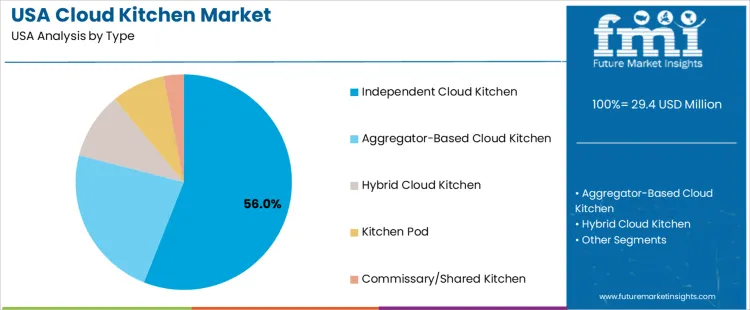
Independent cloud kitchens are the largest segment in the USA, representing 56% of the market. These kitchens operate without relying on third-party aggregators, offering greater control over branding, customer experience, and operational efficiency. The appeal of independent cloud kitchens lies in their flexibility to cater to niche markets and customize their offerings according to customer demand. They often operate from low-cost locations, which helps reduce overhead costs and enhance profitability. While other types, such as aggregator-based cloud kitchens and hybrid cloud kitchens, are gaining traction, independent cloud kitchens continue to dominate due to their ability to build direct relationships with customers and retain full control over their business.
Which Business Model Drives Cloud Kitchen Demand in the USA?
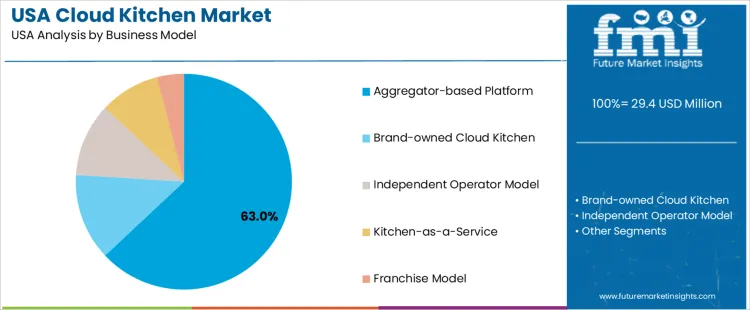
The aggregator-based platform business model is the most popular in the cloud kitchen market, holding 63% of the market share. In this model, cloud kitchens partner with established food delivery platforms (such as UberEats, DoorDash, or Grubhub) to reach a wide audience. The key advantages of this model include access to a large customer base, efficient delivery logistics, and reduced marketing costs. Cloud kitchens operating on aggregator platforms benefit from the visibility and convenience of these food delivery services, which drive customer orders. Despite the success of this model, other business models like brand-owned cloud kitchens, independent operators, and kitchen-as-a-service are also gaining ground, offering additional flexibility and control to operators looking to diversify their operations and expand their market reach.
What is the Summary of Demand for Cloud Kitchens in USA?
Demand for cloud kitchens in the USA is rising significantly as more consumers turn to online food ordering and delivery platforms. Delivery-only kitchens, often called ghost kitchens or virtual restaurants, are gaining popularity because they provide restaurant-quality meals without dine-in facilities. This model enables operators to reach customers across cities at lower overhead than traditional restaurants. As urban lifestyles remain busy and digital food ordering habits grow, cloud kitchens are becoming a major part of the US food service landscape. The shift from dine-in to delivery and take-out continues to reshape where and how Americans consume restaurant food.
What are the Drivers of Demand for Cloud Kitchens in USA?
Several factors drive the growth in US cloud kitchen demand. Changing consumer behaviour: busy schedules, convenience seeking, and preference for ordering meals online rather than dining out or cooking at home support delivery-based food services. Expansion of food delivery platforms and mobile apps makes ordering meals easier and more reliable, broadening access to a wide customer base. Cloud kitchens avoid expenses tied to dining-room space, front-of-house staff, and large premises, enabling lower unit costs and flexible menu offerings. Ability to adapt quickly: cloud kitchens can experiment with diverse cuisines or brands from a single kitchen, allowing operators to respond to shifting tastes and launch new offerings with minimal risk.
What are the Restraints on Demand for Cloud Kitchens in USA?
Demand for cloud kitchens in the USA is rising significantly as more consumers turn to online food ordering and delivery platforms. Delivery only kitchens, often called ghost kitchens or virtual restaurants, are gaining popularity because they provide restaurant quality meals without dine in facilities. This model lets operators reach customers across cities with lower overhead costs than traditional restaurants. As urban lifestyles remain busy and digital food ordering habits grow, cloud kitchens are becoming a major part of the US food service landscape. The shift from dine in to delivery and take out continues to reshape where and how Americans consume restaurant food.
What is the Regional Demand Outlook for the Cloud Kitchen Market in the USA?
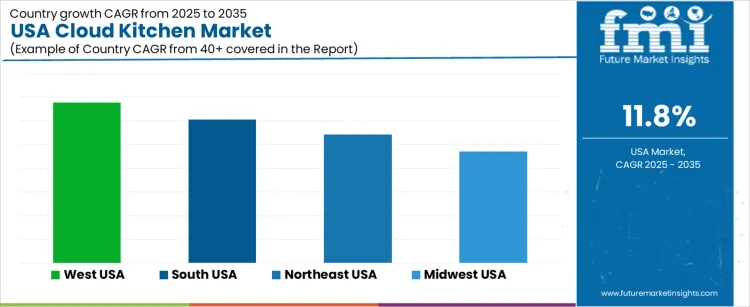
Popularity in the USA is experiencing significant growth, with West USA leading the way at a projected CAGR of 13.5%. South USA follows closely with a growth rate of 12.1%, while the Northeast USA is expected to grow at 10.8%. The Midwest USA shows moderate growth with a CAGR of 9.4%. Cloud kitchens, also known as ghost or virtual kitchens, are becoming increasingly popular due to the rise of online food delivery services and changing consumer preferences. The growing demand for convenience, coupled with the increasing popularity of food delivery apps, is driving the expansion of cloud kitchens across the U.S.
| Region | CAGR (%) |
|---|---|
| West USA | 13.5 |
| South USA | 12.1 |
| Northeast USA | 10.8 |
| Midwest USA | 9.4 |
What is Driving the Growth of Cloud Kitchens in the West USA?
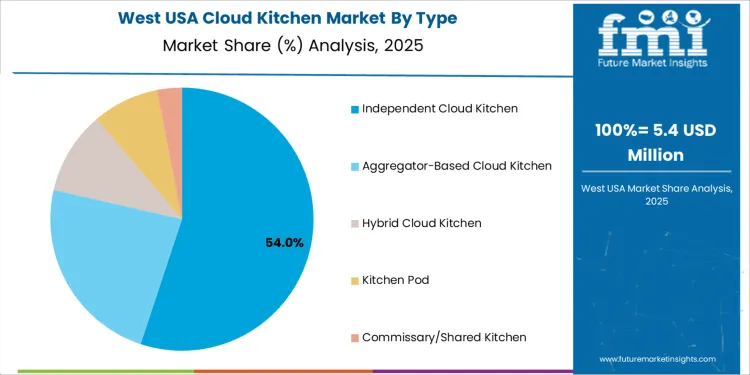
West USA is projected to experience the highest growth in the Cloud Kitchen market, with a projected CAGR of 13.5%. The region's strong food delivery culture, particularly in cities like Los Angeles, San Francisco, and Seattle, is fueling the demand for cloud kitchens. As consumer preferences shift toward on-demand food delivery, the need for more efficient, cost-effective food preparation models is driving the rise of cloud kitchens. West USA's tech-savvy and convenience-oriented consumer base is particularly attracted to cloud kitchens, which operate primarily through food delivery apps, minimizing the need for traditional dining spaces. The region’s entrepreneurial spirit, with its strong presence of food startups and innovation, further supports the rapid adoption of cloud kitchens. Additionally, with the rise of ghost kitchen platforms, restaurant owners are increasingly using cloud kitchens to test new markets and reduce operational costs, further driving market growth in the West USA.
Why is the Cloud Kitchen Market Expanding in South USA?
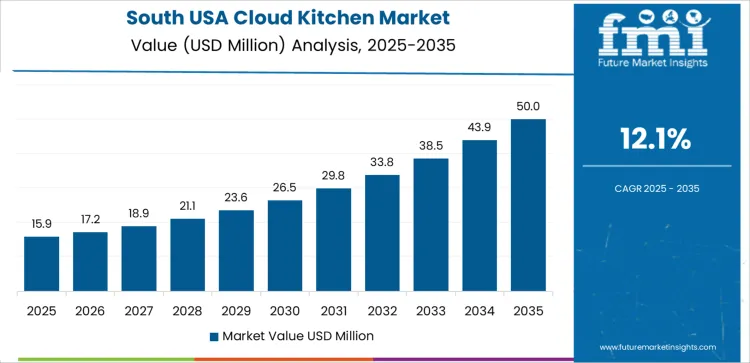
In South USA, the Cloud Kitchen market is projected to grow at a CAGR of 12.1%. The region’s expanding population, coupled with a growing demand for food delivery services, is contributing to the increasing popularity of cloud kitchens. States like Texas, Florida, and Georgia have seen significant growth in the use of online food ordering and delivery apps, creating a strong market for cloud kitchens. As consumers in South USA seek convenience and variety in their food choices, cloud kitchens are providing an efficient solution to meet these needs. The ability to operate multiple virtual restaurant brands from a single kitchen and streamline delivery processes is particularly attractive in South USA, where dining out is often part of the social fabric. Additionally, the relatively lower operating costs of cloud kitchens compared to traditional restaurants make them a cost-effective option for restaurant owners in the South, further driving market growth.
How is the Cloud Kitchen Market Growing in Northeast USA?
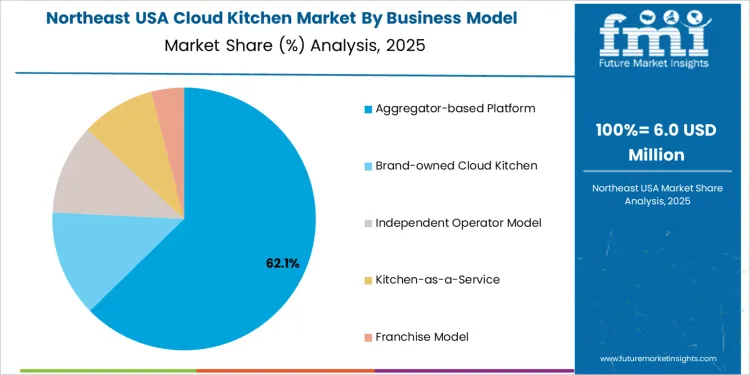
In Northeast USA, the Cloud Kitchen market is projected to grow at a CAGR of 10.8%. The region’s dense population, particularly in metropolitan areas like New York, Boston, and Philadelphia, is driving the demand for food delivery services and, in turn, the need for cloud kitchens. The COVID-19 pandemic accelerated the adoption of online food delivery and cloud kitchens, and this trend continues to gain traction in the Northeast. As consumers increasingly prefer the convenience of ordering food from home, cloud kitchens are offering a cost-effective way for food service providers to meet this demand without the overhead of traditional dining establishments. The Northeast's diverse, fast-paced food culture and large customer base make it an ideal market for cloud kitchens. The flexibility and scalability of cloud kitchens enable businesses to operate multiple brands and target different consumer segments, further driving market growth in this region.
What is Contributing to the Growth of Cloud Kitchens in the Midwest USA?
In Midwest USA, the Cloud Kitchen market is expected to grow at a CAGR of 9.4%. The Midwest’s increasing adoption of online food delivery services is contributing to the rise of cloud kitchens in the region. Cities like Chicago, Detroit, and Minneapolis are experiencing an uptick in demand for food delivery options, making cloud kitchens an attractive business model for restaurateurs. The flexibility and lower capital expenditure required to start a cloud kitchen, compared to a traditional restaurant, are appealing to new entrants in the food service industry. Cloud kitchens provide an opportunity to experiment with new food concepts and reach a broader customer base through delivery apps without the need for physical restaurant locations.
What is the Competitive Landscape for the Cloud Kitchen Market in the USA?
Demand for cloud kitchens in the USA has surged as consumers increasingly favor food delivery and convenience over traditional dine-in experiences. Busy lifestyles, urban living, and the growing popularity of food delivery apps have boosted demand for delivery-only meal services. Cloud kitchens, or ghost kitchens, offer a streamlined model where food is prepared in centralized kitchens and delivered directly to customers without dine-in facilities. This cost-effective model has gained significant traction, especially as consumers continue to embrace the convenience of ordering food online. As demand for delivery grows, the cloud kitchen market in the USA is expanding, with more operators and investors entering the space.
On the supply side, several key players dominate the U.S. cloud kitchen market. According to your data, Rebel Foods leads the market with the largest share, followed by Kitopi, CloudKitchens, Ghost Kitchens Private Limited, and Luckin Coffee (Sgp) Pte. Ltd. These companies offer cloud kitchen infrastructure, multi-brand management, and delivery-optimized operations. Competition in the market is driven by factors such as the efficiency of kitchen and delivery network operations, scalability, consistency of food quality, menu variety, and customer service. Some providers differentiate by offering specialized menus, such as health-focused options or unique global cuisines, while others focus on broad consumer appeal and high-volume service. Firms that combine operational efficiency, broad delivery coverage, and the ability to adapt to evolving consumer preferences are well-positioned to capture growth in the cloud kitchen market in the USA.
Key Players of the Cloud Kitchen Industry in USA
- Rebel Foods
- Kitopi
- CloudKitchens
- Ghost Kitchens Private Limited
- Luckin Coffee (Sgp) Pte. Ltd.
Scope of the Report
| Items | Details |
|---|---|
| Quantitative Units | USD Million |
| Regions Covered | USA |
| Type | Independent Cloud Kitchen; Aggregator-Based Cloud Kitchen; Hybrid Cloud Kitchen; Kitchen Pod; Commissary/Shared Kitchen |
| Business Model | Aggregator-based Platform; Brand owned Cloud Kitchen; Independent Operator Model; Kitchen as-a-Service; Franchise Model |
| Food Type | Fast Food; Casual Dining; Fine Dining; Healthy/Diet Food; Ethnic Cuisine |
| End User | Individual Consumers; Corporate Offices; Food Service Providers; Small Restaurants; Food Chains |
| Key Companies Profiled | Rebel Foods; Kitopi; CloudKitchens; Ghost Kitchens Private Limited; Luckin Coffee (SGP) Pte. Ltd. |
| Additional Attributes | Dollar sales by kitchen type and business model show rising demand for aggregator-based and hybrid cloud kitchens — driven by convenience, cost efficiency, and growth in online food delivery. Fast food and healthy/diet food menus are gaining popularity. Shared/comissary kitchens help reduce fixed costs and enable small restaurants and food chains to scale with lower capital investment. |
Key Segments in the Demand for Cloud Kitchen in USA
Type:
- Independent Cloud Kitchen
- Aggregator Based Cloud Kitchen
- Hybrid Cloud Kitchen
- Kitchen Pod
- Commissary/Shared Kitchen
Business Model:
- Aggregator-based Platform
- Brand-owned Cloud Kitchen
- Independent Operator Model
- Kitchen-as-a-Service
- Franchise Model
Food Type:
- Fast Food
- Casual Dining
- Fine Dining
- Healthy/Diet Food
- Ethnic Cuisine
End-User:
- Individual Consumers
- Corporate Offices
- Food Service Providers
- Small Restaurants
- Food Chains
Region:
- Northeast USA
- West USA
- Midwest USA
- South USA
Frequently Asked Questions
How big is the demand for cloud kitchen in USA in 2025?
The demand for cloud kitchen in USA is estimated to be valued at USD 29.4 million in 2025.
What will be the size of cloud kitchen in USA in 2035?
The market size for the cloud kitchen in USA is projected to reach USD 89.4 million by 2035.
How much will be the demand for cloud kitchen in USA growth between 2025 and 2035?
The demand for cloud kitchen in USA is expected to grow at a 11.8% CAGR between 2025 and 2035.
What are the key product types in the cloud kitchen in USA?
The key product types in cloud kitchen in USA are independent cloud kitchen, aggregator-based cloud kitchen, hybrid cloud kitchen, kitchen pod and commissary/shared kitchen.
Which business model segment is expected to contribute significant share in the cloud kitchen in USA in 2025?
In terms of business model, aggregator-based platform segment is expected to command 63.0% share in the cloud kitchen in USA in 2025.
Preview the report firsthand - request a free sample
Get SampleGet the brochure for pricing and purchase details.
Get PDFTable of Content
- Executive Summary
- USA Market Outlook
- Demand-side Trends
- Supply-side Trends
- Technology Roadmap Analysis
- Analysis and Recommendations
- Market Overview
- Market Coverage / Taxonomy
- Market Definition / Scope / Limitations
- Market Background
- Market Dynamics
- Drivers
- Restraints
- Opportunity
- Trends
- Scenario Forecast
- Demand in Optimistic Scenario
- Demand in Likely Scenario
- Demand in Conservative Scenario
- Opportunity Map Analysis
- Product Life Cycle Analysis
- Supply Chain Analysis
- Investment Feasibility Matrix
- Value Chain Analysis
- PESTLE and Porter’s Analysis
- Regulatory Landscape
- Regional Parent Market Outlook
- Production and Consumption Statistics
- Import and Export Statistics
- Market Dynamics
- USA Market Analysis 2020 to 2024 and Forecast, 2025 to 2035
- Historical Market Size Value (USD Million) Analysis, 2020 to 2024
- Current and Future Market Size Value (USD Million) Projections, 2025 to 2035
- Y-o-Y Growth Trend Analysis
- Absolute $ Opportunity Analysis
- USA Market Pricing Analysis 2020 to 2024 and Forecast 2025 to 2035
- USA Market Analysis 2020 to 2024 and Forecast 2025 to 2035, By Type
- Introduction / Key Findings
- Historical Market Size Value (USD Million) Analysis By Type , 2020 to 2024
- Current and Future Market Size Value (USD Million) Analysis and Forecast By Type , 2025 to 2035
- Independent Cloud Kitchen
- Aggregator-Based Cloud Kitchen
- Hybrid Cloud Kitchen
- Kitchen Pod
- Commissary/Shared Kitchen
- Y-o-Y Growth Trend Analysis By Type , 2020 to 2024
- Absolute $ Opportunity Analysis By Type , 2025 to 2035
- USA Market Analysis 2020 to 2024 and Forecast 2025 to 2035, By Business Model
- Introduction / Key Findings
- Historical Market Size Value (USD Million) Analysis By Business Model, 2020 to 2024
- Current and Future Market Size Value (USD Million) Analysis and Forecast By Business Model, 2025 to 2035
- Aggregator-based Platform
- Brand-owned Cloud Kitchen
- Independent Operator Model
- Kitchen-as-a-Service
- Franchise Model
- Y-o-Y Growth Trend Analysis By Business Model, 2020 to 2024
- Absolute $ Opportunity Analysis By Business Model, 2025 to 2035
- USA Market Analysis 2020 to 2024 and Forecast 2025 to 2035, By Food Type
- Introduction / Key Findings
- Historical Market Size Value (USD Million) Analysis By Food Type, 2020 to 2024
- Current and Future Market Size Value (USD Million) Analysis and Forecast By Food Type, 2025 to 2035
- Fast Food
- Casual Dining
- Fine Dining
- Healthy/Diet Food
- Ethnic Cuisine
- Y-o-Y Growth Trend Analysis By Food Type, 2020 to 2024
- Absolute $ Opportunity Analysis By Food Type, 2025 to 2035
- USA Market Analysis 2020 to 2024 and Forecast 2025 to 2035, By End-User
- Introduction / Key Findings
- Historical Market Size Value (USD Million) Analysis By End-User, 2020 to 2024
- Current and Future Market Size Value (USD Million) Analysis and Forecast By End-User, 2025 to 2035
- Individual Consumers
- Corporate Offices
- Food Service Providers
- Small Restaurants
- Food Chains
- Y-o-Y Growth Trend Analysis By End-User, 2020 to 2024
- Absolute $ Opportunity Analysis By End-User, 2025 to 2035
- Market Structure Analysis
- Competition Dashboard
- Competition Benchmarking
- Market Share Analysis of Top Players
- By Regional
- By Type
- By Business Model
- By Food Type
- By End-User
- Competition Analysis
- Competition Deep Dive
- Rebel Foods
- Overview
- Product Portfolio
- Profitability by Market Segments (Product/Age /Sales Channel/Region)
- Sales Footprint
- Strategy Overview
- Marketing Strategy
- Product Strategy
- Channel Strategy
- Kitopi
- CloudKitchens
- Ghost Kitchens Private Limited
- Luckin Coffee (Sgp) Pte. Ltd.
- Rebel Foods
- Competition Deep Dive
- Assumptions & Acronyms Used
- Research Methodology


