

- Industry Size (2025)
- USD 271.3 Mn
- Forecast (2035)
- USD 354.1 Mn
- CAGR (2025 to 2035)
- 2.7%
Demand for Disposable Plates in Japan Forecast and Outlook 2025 to 2035
Demand for disposable plates in Japan is expected to grow steadily from USD 271.3 million in 2025 to USD 354.1 million by 2035, representing a 2.7% CAGR. Over the first five years (2025-2030), growth will be gradual, with demand rising from USD 271.3 million in 2025 to USD 326.9 million by 2030. Growth is driven by the continued popularity of disposable plates in sectors such as hospitality, catering, and events, as well as their convenience for consumers. During this period, demand will increase by approximately USD 11.7 million annually, as disposable plates remain a preferred choice for their ease of use and practicality.
Quick Stats of the Demand for Disposable Plates in Japan
- Demand for Disposable Plates in Japan Value (2025): USD 271.3 million
- Demand for Disposable Plates in Japan Forecast Value (2035): USD 354.1 million
- Demand for Disposable Plates in Japan Forecast CAGR (2025-2035): 2.7%
- Demand for Disposable Plates in Japan Leading Product Type: Paper
- Demand for Disposable Plates in Japan Key Growth Regions: Kyushu & Okinawa, Kanto, Kansai, Chubu, Tohoku, Rest of Japan
- Demand for Disposable Plates in Japan Top Players: Vegware Global, Cedp Ltd., BioBag International AS, Clondalkin Group Holdings B.V., Cardia Compostable
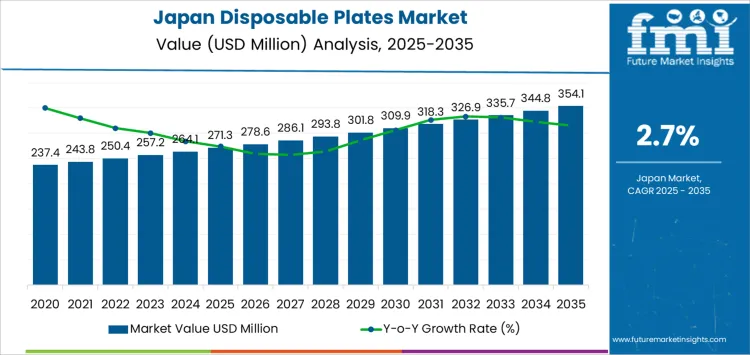
From 2030 to 2035, industry will continue to grow, with demand reaching USD 354.1 million by 2035. Demand will increase by USD 27.2 million over the next five years, reflecting a moderate but steady pace. This continued growth is expected to be supported by both the increasing number of foodservice establishments and the convenience of disposable plates for on-the-go consumption. The rise of eco-friendly alternatives and consumer preferences for sustainable products may further influence the demand for disposable plates made from biodegradable materials. As environmental concerns continue to shape consumer behavior, demand for sustainable disposable plates is likely to increase gradually but significantly over this period.
Demand for Disposable Plates in Japan Key Takeaways
| Metric | Value |
|---|---|
| Demand for Disposable Plates in Japan Value (2025) | USD 271.3 million |
| Demand for Disposable Plates in Japan Forecast Value (2035) | USD 354.1 million |
| Demand for Disposable Plates in Japan Forecast CAGR (2025-2035) | 2.7% |
Why is the Demand for Disposable Plates in Japan Growing?
Demand for disposable plates in Japan is increasing due to the growing need for convenience in food consumption, particularly in the foodservice, takeaway, and catering industries. Disposable plates offer a practical, cost-effective solution for businesses serving large volumes of food, as they are easy to use, clean up, and dispose of. Japan’s busy lifestyle and the rising demand for takeout and delivery services have further accelerated the use of disposable plates. Events, festivals, and gatherings also contribute to the rise in demand, where disposable plates provide an efficient and hygienic way to serve food to large groups of people.
In addition to convenience, the demand is being driven by innovations in materials and designs. Manufacturers are increasingly offering plates made from biodegradable, compostable, or recyclable materials, which align with Japan’s growing focus on environmental sustainability. With heightened awareness of plastic pollution, many consumers and businesses are opting for eco-friendly alternatives to traditional plastic plates. This shift is supported by government initiatives encouraging the reduction of plastic use and promoting recycling.
While the demand for disposable plates continues to grow, challenges remain in balancing convenience with environmental responsibility. Cost of eco-friendly alternatives can be higher, which may limit their adoption in some sectors. As the material technology improves and becomes more cost-competitive, the adoption of biodegradable and compostable plates is expected to increase. Overall, the demand for disposable plates in Japan is anticipated to grow steadily, driven by the ongoing focus on convenience, sustainability, and product innovation.
What is the Segment-Wise Analysis of Demand for Disposable Plates in Japan?
Demand for disposable plates in Japan is primarily driven by convenience and sustainability. Paper plates account for 43% of the market, favored for their eco-friendly, biodegradable properties. As consumers prioritize sustainability, paper plates are increasingly popular for personal and commercial use. Compartmental plates dominate with 68.4% of the market due to their practicality, allowing for organized and hygienic food service. These plates are ideal for foodservice, takeout, and institutional use, offering a convenient solution. With growing consumer interest in sustainable and efficient meal options, both paper and compartmental plates are expected to maintain strong demand in Japan.
How Do Paper Plates Lead the Demand for Disposable Plates in Japan?
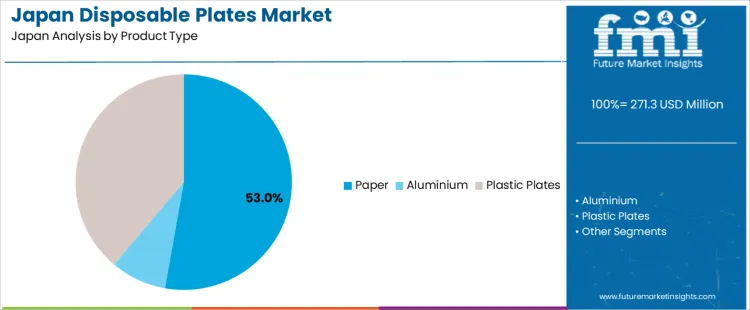
Paper plates account for 53% of disposable plate demand in Japan, driven by their environmental benefits and consumers' preference for eco-friendly products. Paper plates are widely used for both personal and commercial purposes, such as in picnics, events, and takeout. The rising awareness of plastic waste and the desire for biodegradable alternatives have increased the popularity of paper plates. They are favored for their convenience, ease of use, and disposability, making them a go-to option for fast meals and outdoor gatherings. As consumers become more environmentally conscious, the demand for paper disposable plates continues to outpace other materials like plastic and aluminum. Additionally, paper plates offer a lightweight, affordable, and compostable alternative, making them the preferred choice in Japan's growing sustainable living market. As demand for sustainable packaging options rises, paper plates will continue to lead in the disposable plate market.
Why Does Compartmental Design Lead the Demand for Disposable Plates in Japan?
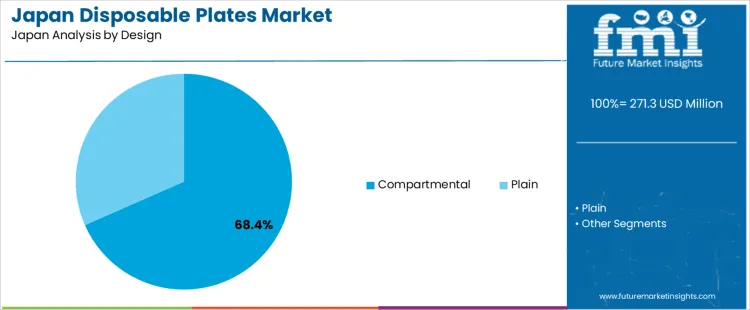
Compartmental plates account for 68.4% of the demand for disposable plates in Japan, driven by their practicality and versatility. These plates are highly favored in foodservice settings, particularly for takeout, catering, and event meals, as they allow different food items to be separated, preventing mixing of flavors and ensuring a more organized presentation. The compartmental design is also popular in schools, hospitals, and institutional catering, where meal portions need to be separated to facilitate consumption and control portion size. As demand for convenience and hygiene in food handling continues to grow, compartmental plates are in greater demand. The design also appeals to Japanese consumers who prioritize convenience, particularly when eating on the go. As the foodservice sector expands and the trend for organized, convenient meal solutions grows, compartmental disposable plates will continue to dominate the market in Japan, fulfilling both practical and aesthetic needs.
What are the Key Trends, Drivers, and Restraints in Demand for Disposable Plates in Japan?
Demand for disposable plates in Japan is growing steadily, driven by the increasing demand for convenience in daily life, especially in urban areas. Disposable plates are widely used by restaurants, convenience stores, and food delivery services, as well as in households, thanks to the convenience of single-use tableware. This demand is further fueled by busy lifestyles and a growing food delivery culture. This market faces several restraints. Rising environmental concerns, stricter regulations on single-use plastics, and growing consumer preference for sustainable or reusable options pose challenges. There is also a shift towards eco-friendly alternatives, such as biodegradable or compostable plates, which may limit the growth of traditional disposable plates over the long term. These dynamics are reshaping the market for disposable tableware in Japan.
Why is Demand for Disposable Plates Growing in Japan?
The demand for disposable plates in Japan is increasing due to several key factors. With rising urbanization, busier lifestyles, and an increasing number of single-person or small households, convenience has become a priority. Disposable plates offer easy cleanup, reducing the need for washing after meals, making them especially attractive to busy individuals. The growing food delivery culture and the increasing consumption of ready-to-eat meals from convenience stores are contributing to this rise in demand. Disposable plates are well-suited for takeout meals and catering services, which are becoming more popular. The foodservice sector, including fast-food restaurants, cafes, and corporate catering services, also relies on disposable plates for efficiency and hygiene. As disposable tableware meets the demand for convenience, it continues to grow across various sectors.
How are Technological & Industry Innovations Driving Disposable Plates Demand in Japan?
Technological advancements in materials and manufacturing processes are driving the demand for disposable plates in Japan. Manufacturers are now offering alternatives to traditional plastic and foam plates, using more sustainable and biodegradable materials such as bagasse (sugarcane residue) and plant-based fibers. These innovations provide a more environmentally friendly option, meeting consumer demand for sustainable products while complying with increasing environmental regulations. Improvements in durability, moisture resistance, and aesthetic appeal are making disposable plates more attractive for a wide range of uses, from casual meals to catering and events. These innovations not only support environmental goals but also enhance the functionality and versatility of disposable plates, driving increased adoption in both commercial and residential settings.
What are the Key Challenges and Risks That Could Limit Disposable Plates Demand in Japan?
Despite growing demand, there are several challenges that could limit the adoption of disposable plates in Japan. Environmental and regulatory pressures are significant factors, with growing concerns over plastic waste and increasing restrictions on single-use plastics. Many consumers and businesses are shifting towards reusable or biodegradable alternatives, reducing the demand for traditional disposable plates. Rising production costs for biodegradable and compostable plates could make them less competitive compared to conventional plastic plates. Price fluctuations in raw materials, such as paper and plastic, also pose challenges for producers. Lastly, greater awareness of sustainability and waste reduction, combined with stricter recycling and waste management policies, may encourage consumers to reduce their use of disposable tableware, further limiting long-term demand.
What is the Regional Demand Outlook for Disposable Plates in Japan?
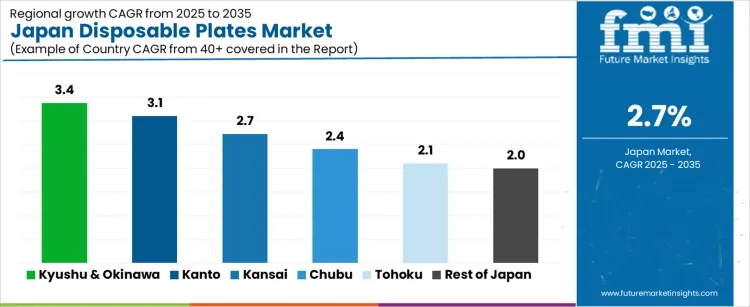
Demand for disposable plates in Japan is growing steadily across all regions, with Kyushu & Okinawa leading at a 3.4% CAGR, driven by the region's robust tourism and foodservice sectors. Kanto follows with a 3.1% CAGR, supported by the region's large urban population and the prevalence of food delivery services. Kansai shows a 2.7% CAGR, with demand driven by its vibrant food culture and events. Chubu experiences a 2.4% CAGR, as disposable plates remain popular for both residential and commercial use. Tohoku and the Rest of Japan see slower growth at 2.1% and 2.0%, respectively, due to lower demand compared to major urban centers, but disposable plates remain in use for festivals, events, and casual dining.
| Region | CAGR (%) |
|---|---|
| Kyushu & Okinawa | 3.4% |
| Kanto | 3.1% |
| Kansai | 2.7% |
| Chubu | 2.4% |
| Tohoku | 2.1% |
| Rest of Japan | 2.0% |
How is Demand for Disposable Plates Growing in Kyushu & Okinawa?
Kyushu & Okinawa leads the demand for disposable plates, growing at a 3.4% CAGR. The region’s booming tourism and hospitality sectors are key drivers of this demand, as Okinawa’s popularity as a tourist destination increases the use of disposable plates in hotels, resorts, and foodservice outlets. Kyushu’s vibrant foodservice and retail industries rely heavily on disposable plates for takeout, casual dining, and events. The convenience and affordability of disposable plates make them particularly popular during festivals, family gatherings, and seasonal events. With the rising focus on environmental sustainability, there is growing pressure to shift toward biodegradable or compostable alternatives, which could slow growth in traditional disposable plates. Despite this, the strong demand driven by Kyushu & Okinawa’s tourism-driven economy, coupled with its expanding foodservice sector, ensures that the demand for disposable plates remains steady and will continue to see growth in the foreseeable future.
Why is Demand for Disposable Plates Rising in Kanto?
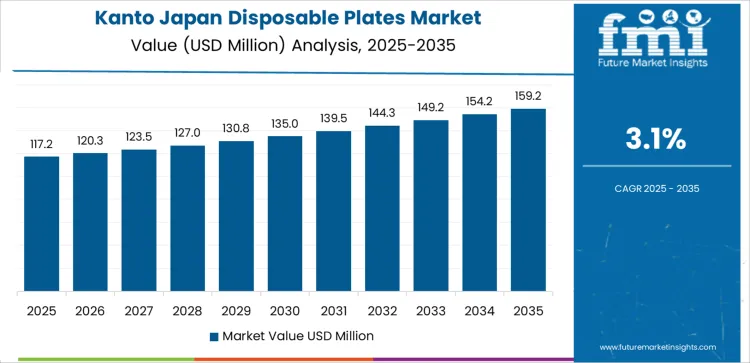
In Kanto, demand for disposable plates is rising at a 3.1% CAGR. The region’s dense urban population and fast-paced lifestyle are driving high demand for disposable tableware, especially in takeout and quick-service meals. Tokyo and its surrounding areas, with numerous restaurants, cafés, and convenience stores, are key contributors to this growth. Disposable plates are a staple in the foodservice industry, particularly as food delivery services continue to rise in popularity. The convenience of disposable plates, combined with their low cost, makes them an essential item in the region’s busy foodservice environment. The demand is further supported by the growing number of events, casual dining options, and social gatherings. With rising environmental awareness and stricter regulations, there is a gradual shift towards more sustainable alternatives like biodegradable plates. Still, disposable plates will continue to be widely used, with sustainability trends influencing a gradual transition.
How is Demand for Disposable Plates Expanding in Kansai?
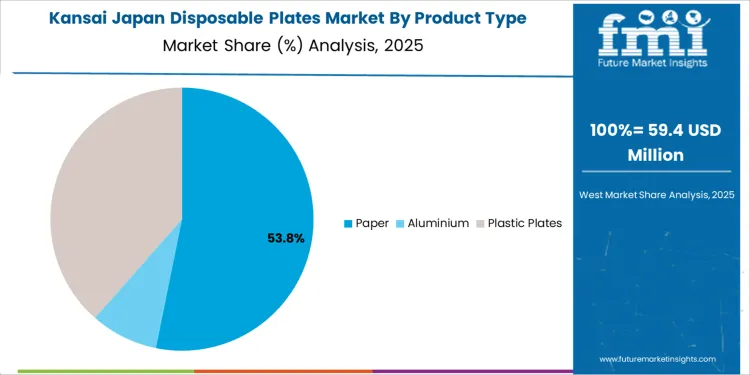
Kansai shows steady demand for disposable plates, growing at a 2.7% CAGR. The region’s rich food culture, especially in cities like Osaka and Kyoto, continues to drive demand for disposable plates in foodservice and casual dining. Disposable plates are frequently used in festivals, events, and takeout services, which are integral to Kansai’s dining scene. As Kansai emphasizes environmental sustainability and waste reduction, there may be a shift toward biodegradable alternatives, which could moderate growth in disposable plates. The convenience, affordability, and widespread use of disposable plates for temporary and casual occasions ensure steady demand. Kansai’s foodservice and event sectors continue to expand, with disposable plates meeting the region's need for practical, cost-effective dining solutions. Despite growing awareness of eco-friendly alternatives, disposable plates will remain widely used in the region due to their practicality in high-volume foodservice environments and casual gatherings.
Why is Demand for Disposable Plates Growing in Chubu?
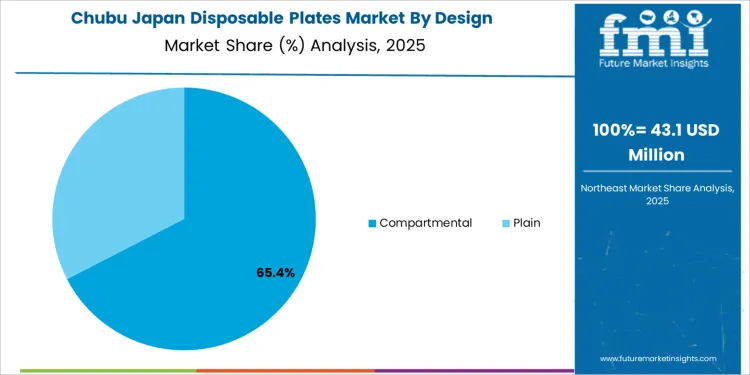
Chubu is experiencing steady demand for disposable plates, growing at a 2.4% CAGR. The region’s diverse industrial base, including cities like Nagoya, contributes to the growing use of disposable plates in both residential and foodservice sectors. Disposable plates are widely used in takeout, catering, and food delivery services, especially as Chubu's foodservice industry grows. The region’s manufacturing base also plays a role in promoting the convenience of disposable plates, as they support efficient meal packaging and delivery processes. As Chubu focuses on sustainability, there is rising interest in biodegradable and compostable alternatives, but disposable plates remain a practical and affordable option for many. With the increasing number of events, festivals, and community gatherings, disposable plates continue to be a popular choice for local businesses and families. As Chubu’s population grows and its foodservice sector modernizes, the demand for disposable plates is projected to grow steadily in both residential and commercial markets.
How is Demand for Disposable Plates Expanding in Tohoku?
Tohoku is seeing moderate growth in disposable plate demand, with a 2.1% CAGR. While demand is smaller compared to urban regions, disposable plates continue to be widely used for festivals, family gatherings, and local events. As Tohoku’s foodservice industry modernizes, the use of disposable plates for takeout and catering is expected to rise, driven by the increasing popularity of convenient food options. The region’s aging population and growing reliance on convenience food contribute to steady demand. Although awareness of plastic waste and the environmental impact of disposable products is increasing, biodegradable alternatives may slowly replace traditional plates. Disposable plates remain essential in rural areas and smaller cities, where they are often preferred for both casual dining and large community events. As Tohoku’s infrastructure improves and consumers embrace more convenient solutions, demand for disposable plates will continue to grow, though at a slower pace compared to larger urban areas.
Why is Demand for Disposable Plates Steady in the Rest of Japan?
The Rest of Japan is experiencing steady demand for disposable plates, with a 2.0% CAGR. While adoption is slower compared to major urban regions, disposable plates remain essential for casual dining, events, and festivals in smaller cities and rural areas. The affordability and convenience of disposable plates make them a popular choice for local businesses, families, and community gatherings. As environmental concerns rise, there is growing interest in biodegradable alternatives, but disposable plates continue to be widely used in areas where sustainable products are less accessible. As foodservice and agricultural sectors in these areas modernize, the use of disposable plates for takeout, catering, and delivery will continue to grow. The Rest of Japan’s steady demand reflects ongoing preferences for practical, cost-effective dining solutions, and although biodegradable plates are gaining attention, disposable plates will continue to play a major role in the region’s foodservice and everyday dining practices.
What is Driving the Demand for Disposable Plates in Japan and Who Are the Key Suppliers?
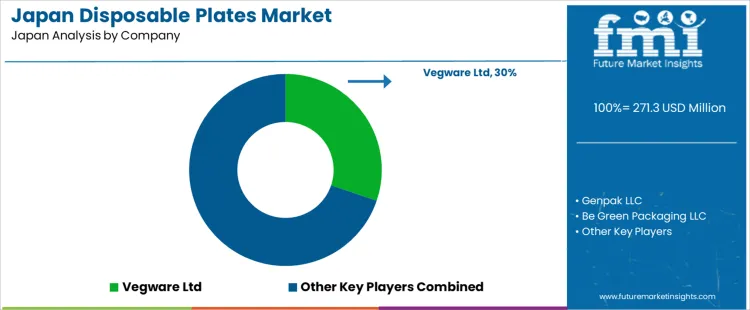
The demand for disposable plates in Japan is rising as lifestyles shift toward convenience, especially with increasing takeout, delivery meals, and catering services. Single-use disposable plates offer quick serving and easy cleanup, which is appealing for busy urban consumers and foodservice providers alike. Cultural events, festivals, and casual dining occasions also contribute to higher use of disposable tableware, as large gatherings favor convenience over reusable dishes.
Suppliers playing a major role in providing disposable plates to meet this demand include Vegware Ltd, Genpak LLC, Be Green Packaging LLC, Duni Global, and Ckf Inc. Vegware Ltd leads with a share of about 30.2%. These suppliers cater to both household use and commercial foodservice needs, offering a variety of plate materials and designs that suit takeout, events, and casual dining. Their products often emphasize ease of use, affordability, and flexibility for different applications.
Growing environmental awareness and regulatory pressure against single-use plastics are pushing both consumers and businesses to adopt more eco-friendly disposable tableware. Biodegradable or compostable alternatives to traditional plastic plates are gaining traction. Advances in materials like bagasse (sugarcane fiber) and paper-based pulp make disposable plates more environmentally acceptable while still offering convenience. As a result, demand for disposable plates is expected to remain strong, especially among consumers and foodservice operators seeking a balance between convenience and environmental responsibility.
Key Players in Japan Disposable Plates Demand
- Vegware Global
- Cedo Ltd.
- BioBag International AS
- Clondalkin Group Holdings B.V.
- Cardia Compostable
Scope of Report
| Items | Values |
|---|---|
| Quantitative Units (2025) | USD million |
| Product Type | Paper, Aluminium, Plastic Plates |
| Design | Compartmental, Plain |
| Sales Channel | B2B, B2C |
| Region | Kyushu & Okinawa, Kanto, Kansai, Chubu, Tohoku, Rest of Japan |
| Countries Covered | Japan |
| Key Companies Profiled | Vegware Global, Cedco Ltd., BioBag International AS, Clondalkin Group Holdings B.V., Cardia Compostable |
| Additional Attributes | Dollar sales by product type and design; regional CAGR and growth trends; increasing shift to eco-friendly disposable plates; growing preference for compartmental designs in restaurants and food service. |
Japan Disposable Plates Demand by Key Segments
Product Type
- Paper
- Aluminium
- Plastic Plates
Design
- Compartmental
- Plain
Sales Channel
- B2B
- B2C
Region
- Kyushu & Okinawa
- Kanto
- Kansai
- Chubu
- Tohoku
- Rest of Japan
Frequently Asked Questions
How big is the demand for disposable plates in Japan in 2025?
The demand for disposable plates in Japan is estimated to be valued at USD 271.3 million in 2025.
What will be the size of disposable plates in Japan in 2035?
The market size for the disposable plates in Japan is projected to reach USD 354.1 million by 2035.
How much will be the demand for disposable plates in Japan growth between 2025 and 2035?
The demand for disposable plates in Japan is expected to grow at a 2.7% CAGR between 2025 and 2035.
What are the key product types in the disposable plates in Japan?
The key product types in disposable plates in Japan are paper, aluminium and plastic plates.
Which design segment is expected to contribute significant share in the disposable plates in Japan in 2025?
In terms of design, compartmental segment is expected to command 68.4% share in the disposable plates in Japan in 2025.
Preview the report firsthand - request a free sample
Get SampleGet the brochure for pricing and purchase details.
Get PDFTable of Content
- Executive Summary
- Japan Market Outlook
- Demand-side Trends
- Supply-side Trends
- Technology Roadmap Analysis
- Analysis and Recommendations
- Market Overview
- Market Coverage / Taxonomy
- Market Definition / Scope / Limitations
- Market Background
- Market Dynamics
- Drivers
- Restraints
- Opportunity
- Trends
- Scenario Forecast
- Demand in Optimistic Scenario
- Demand in Likely Scenario
- Demand in Conservative Scenario
- Opportunity Map Analysis
- Product Life Cycle Analysis
- Supply Chain Analysis
- Investment Feasibility Matrix
- Value Chain Analysis
- PESTLE and Porter’s Analysis
- Regulatory Landscape
- Regional Parent Market Outlook
- Production and Consumption Statistics
- Import and Export Statistics
- Market Dynamics
- Japan Market Analysis 2020 to 2024 and Forecast, 2025 to 2035
- Historical Market Size Value (USD Million) Analysis, 2020 to 2024
- Current and Future Market Size Value (USD Million) Projections, 2025 to 2035
- Y-o-Y Growth Trend Analysis
- Absolute $ Opportunity Analysis
- Japan Market Pricing Analysis 2020 to 2024 and Forecast 2025 to 2035
- Japan Market Analysis 2020 to 2024 and Forecast 2025 to 2035, By Product Type
- Introduction / Key Findings
- Historical Market Size Value (USD Million) Analysis By Product Type , 2020 to 2024
- Current and Future Market Size Value (USD Million) Analysis and Forecast By Product Type , 2025 to 2035
- Paper
- Aluminium
- Plastic Plates
- Y-o-Y Growth Trend Analysis By Product Type , 2020 to 2024
- Absolute $ Opportunity Analysis By Product Type , 2025 to 2035
- Japan Market Analysis 2020 to 2024 and Forecast 2025 to 2035, By Design
- Introduction / Key Findings
- Historical Market Size Value (USD Million) Analysis By Design, 2020 to 2024
- Current and Future Market Size Value (USD Million) Analysis and Forecast By Design, 2025 to 2035
- Compartmental
- Plain
- Y-o-Y Growth Trend Analysis By Design, 2020 to 2024
- Absolute $ Opportunity Analysis By Design, 2025 to 2035
- Japan Market Analysis 2020 to 2024 and Forecast 2025 to 2035, By Sales Channel
- Introduction / Key Findings
- Historical Market Size Value (USD Million) Analysis By Sales Channel, 2020 to 2024
- Current and Future Market Size Value (USD Million) Analysis and Forecast By Sales Channel, 2025 to 2035
- B2B
- B2C
- Y-o-Y Growth Trend Analysis By Sales Channel, 2020 to 2024
- Absolute $ Opportunity Analysis By Sales Channel, 2025 to 2035
- Market Structure Analysis
- Competition Dashboard
- Competition Benchmarking
- Market Share Analysis of Top Players
- By Regional
- By Product Type
- By Design
- By Sales Channel
- Competition Analysis
- Competition Deep Dive
- Vegware Ltd
- Overview
- Product Portfolio
- Profitability by Market Segments (Product/Age /Sales Channel/Region)
- Sales Footprint
- Strategy Overview
- Marketing Strategy
- Product Strategy
- Channel Strategy
- Genpak LLC
- Be Green Packaging LLC
- Duni Global
- Ckf Inc
- Vegware Ltd
- Competition Deep Dive
- Assumptions & Acronyms Used
- Research Methodology


