

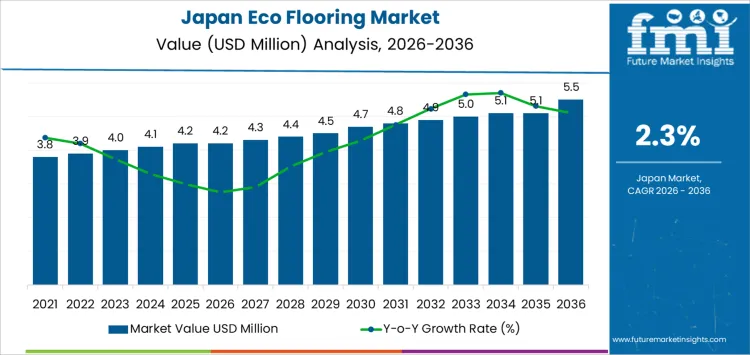
- Industry Size (2026)
- USD 4.2 Mn
- Forecast (2036)
- USD 5.5 Mn
- CAGR (2026 to 2036)
- 2.3%
Demand for Eco Flooring in Japan Forecast and Outlook 2026 to 2036
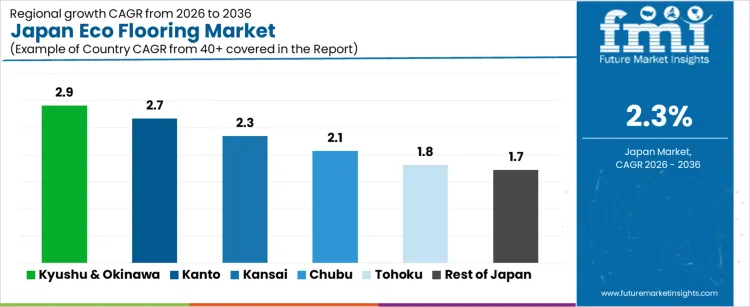
Demand for eco flooring in Japan is experiencing steady growth, with regional variations driven by durability efforts and consumer awareness. Kyushu & Okinawa leads the industry with a 2.9% CAGR, driven by a strong focus on eco-friendly construction and a growing commitment to durability. Kanto follows with a 2.7% CAGR, supported by its large urban population and robust demand for environmentally conscious building materials, especially in smart cities and eco-conscious developments. Kansai, with a 2.3% CAGR, continues to adopt green building practices, spurred by its rich architectural heritage and government incentives promoting eco-friendly solutions.
Quick Stats of the Demand for Eco Flooring in Japan
- Demand for Eco Flooring in Japan Value (2026): USD 4.2 million
- Demand for Eco Flooring in Japan Forecast Value (2036): USD 5.5 million
- Demand for Eco Flooring in Japan Forecast CAGR (2026-2036): 2.3%
- Demand for Eco Flooring in Japan Leading Material Type: Wood
- Demand for Eco Flooring in Japan Key Growth Regions: Kyushu & Okinawa, Kanto, Kansai, Chubu, Tohoku, Rest of Japan
- Demand for Eco Flooring in Japan Top Players: BerryAlloc, Formica, Somerset Hardwood Flooring Inc., Provenza Floors Inc., Boral Limited
Chubu and Tohoku experience moderate growth rates of 2.1% and 1.8% CAGR, respectively, as the regions integrate eco-friendlier materials into their construction projects. Tohoku's focus on recovery and durability post-disasters contributes to its adoption of eco flooring, while Chubu's strong manufacturing sector is driving green building initiatives. The rest of Japan sees a 1.7% CAGR, with smaller urban centers and rural areas gradually embracing eco-friendly flooring in response to increasing awareness of environmental issues. Demand for eco flooring across Japan is propelled by green certifications, rising environmental consciousness, and government support for eco-friendly construction practices.
Demand for Eco Flooring in Japan Key Takeaways
| Metric | Value |
|---|---|
| Demand for Eco Flooring in Japan Value (2026) | USD 4.2 million |
| Demand for Eco Flooring in Japan Forecast Value (2036) | USD 5.5 million |
| Demand for Eco Flooring in Japan Forecast CAGR (2026-2036) | 2.3% |
Why is the Demand for Eco Flooring in Japan Growing?
Demand for eco flooring in Japan is growing due to the increasing focus on eco-friendly building materials and environmentally friendly products in both residential and commercial construction. Eco flooring, made from renewable, recyclable, or biodegradable materials, is gaining traction as consumers and businesses alike become more conscious of the environmental impact of the products they use. As Japan continues to prioritize durability, particularly in the face of climate change concerns and stricter environmental regulations, the adoption of eco-friendly flooring options is rising.
Key drivers for this growth include the rising consumer preference for environmentally responsible products, especially in home renovation and construction projects. With an increasing number of green building certifications and government incentives promoting eco-friendly practices, eco flooring options, such as bamboo, cork, and recycled materials, are becoming more popular. Growing awareness of indoor air quality and the harmful effects of volatile organic compounds (VOCs) in conventional flooring materials is driving the demand for eco flooring, as these products offer better air quality and reduced exposure to toxins.
Ongoing focus on creating energy-efficient, environmentally friendly homes and buildings, supported by Japan's durability initiatives, is pushing demand for eco flooring solutions. Although the industry growth rate is moderate, the continued emphasis on eco-friendly building materials and the preference for natural, non-toxic products is expected to sustain the demand for eco flooring in Japan through 2036.
What is the Segment-Wise Analysis of Demand for Eco Flooring in Japan?
Demand for eco flooring in Japan is segmented by material type, end-use, and region. By material type, wood leads with 30% of the demand, followed by cork, bamboo, linoleum, and glass tiles. In terms of end-use, residential applications account for 60% of the demand, with non-residential applications contributing to the remainder. Regionally, demand is distributed across Kyushu & Okinawa, Kanto, Kansai, Chubu, Tohoku, and the rest of Japan.
Why Does Wood Lead the Demand for Eco Flooring in Japan?
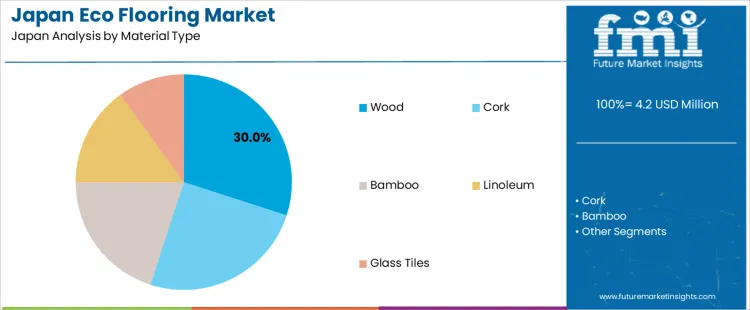
Wood accounts for 30% of the demand for eco flooring in Japan, driven by its natural appeal, long-lasting durability, and environmental durability. As a renewable resource, wood is highly valued for its eco-friendly nature and ability to enhance indoor air quality. It’s a preferred choice in eco-conscious home and building design, offering both aesthetic beauty and practical benefits. The demand for wood flooring in residential and commercial projects continues to grow as consumers prioritize durability in their purchasing decisions. The versatility of wood, combined with its timeless appeal and environmental advantages, makes it a dominant material in the eco flooring industry, meeting the need for eco-friendly materials without compromising on design or performance.
How Does Residential End-Use Drive the Demand for Eco Flooring in Japan?
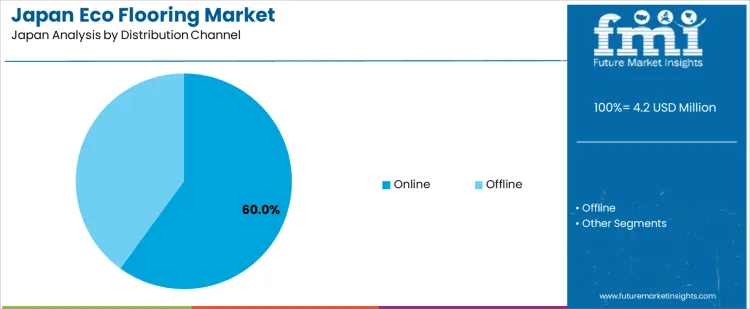
Residential applications account for 60% of the demand for eco flooring in Japan, fueled by the increasing preference for eco-friendly and visually appealing home interiors. Eco-friendly materials like wood, bamboo, and cork are gaining traction in Japanese homes, where the focus on environmental consciousness plays a significant role in design choices. The growing trend of eco-friendly living, coupled with a desire for healthier indoor environments, has led homeowners to prioritize eco flooring options. As construction and renovation projects continue to embrace durability, the demand for eco flooring in residential settings remains strong. The shift toward greener living spaces ensures that eco flooring is a key component in modern home design and development.
What are the Key Trends, Drivers and Restraints in Demand for Eco Flooring in Japan?
Demand for eco flooring in Japan is rising as durability and healthy indoor environments become priorities among consumers and builders. Urbanization and renovation projects are also driving interest in long‑life, low‑maintenance eco-friendly floors. Eco flooring adoption can be restrained by higher upfront costs compared with conventional materials and limited awareness of eco benefits among some homeowners and small businesses. Regulatory emphasis on eco-friendly materials supports long‑term growth.
Why is Demand for Eco Flooring Growing in Japan?
Demand for eco flooring in Japan is growing due to increased awareness of environmental impacts and healthier living spaces. Consumers and commercial developers are looking for flooring solutions made from renewable, recyclable or low‑emission materials that support eco-friendly interior design and align with green building practices. Government and industry focus on low‑VOC and low‑carbon materials for residential and commercial structures encourages use of bamboo, cork, bio‑ceramic and other eco alternatives. Home renovations and new construction projects often adopt eco flooring to improve indoor air quality and achieve durability certifications, further expanding demand.
How are Technological and Industry Innovations Driving Eco Flooring Demand in Japan?
Technological and industry innovations are bolstering eco flooring demand in Japan by improving product performance, durability, and design appeal. Advanced material engineering enables durable, moisture‑resistant flooring from bio‑based and recycled inputs that match the quality of conventional floors. Engineered wood, thermally modified wood, and hybrid materials offer enhanced strength, ease of installation, and aesthetic options that fit modern interior trends. Automated and eco-friendly production technologies also reduce waste and energy use, helping manufacturers meet stricter environmental standards. These innovations make eco flooring more competitive and attractive to environmentally conscious consumers, architects, and builders.
What is the Regional Demand Outlook for Eco Flooring in Japan?
| Region | CAGR (%) |
|---|---|
| Kyushu & Okinawa | 2.9% |
| Kanto | 2.7% |
| Kansai | 2.3% |
| Chubu | 2.1% |
| Tohoku | 1.8% |
| Rest of Japan | 1.7% |
Demand for eco flooring in Japan is growing steadily, with Kyushu & Okinawa leading at a 2.9% CAGR, driven by the region’s commitment to durability and green building practices. Kanto follows with a 2.7% CAGR, supported by urban development projects and a growing focus on environmental responsibility in construction. Kansai shows a 2.3% CAGR, fueled by its emphasis on durability and eco-conscious building practices. Chubu experiences a 2.1% CAGR, with moderate growth driven by the region’s manufacturing sector and eco-friendly construction initiatives. Tohoku and the rest of Japan see moderate growth at 1.8% and 1.7% CAGR, respectively.
How is Demand for Eco Flooring Growing in Kyushu & Okinawa?
Kyushu & Okinawa leads the demand for eco flooring in Japan, growing at a 2.9% CAGR. The region’s growing focus on durability, coupled with increasing consumer awareness about eco-friendly building materials, is driving the adoption of eco flooring solutions. Kyushu, with its expanding urban and residential areas, is seeing rising demand for environmentally friendly flooring in both residential and commercial buildings. Okinawa’s commitment to preserving its natural environment is also pushing the demand for eco-friendly and eco-conscious flooring options. As more construction projects in the region focus on green building certifications and environmentally friendly materials, eco flooring is becoming a preferred choice for both new builds and renovations. The trend towards eco-friendly homes and businesses is expected to continue driving the demand for eco-friendly flooring solutions in the region.
Why is Demand for Eco Flooring Rising in Kanto?
Kanto is experiencing steady demand for eco flooring, with a 2.7% CAGR. The region’s high concentration of residential and commercial construction projects, particularly in Tokyo, is driving the adoption of eco flooring solutions. As durability continues to be a priority for both consumers and businesses, eco flooring is gaining popularity as a green building material. Kanto’s focus on smart cities, green infrastructure, and eco-conscious development projects is further contributing to the rise in demand for eco-friendly flooring options. Increasing awareness of environmental issues and the desire to reduce carbon footprints among homeowners and businesses in Kanto are further boosting the adoption of eco flooring. As eco-friendly materials become more readily available and affordable, demand in Kanto will continue to grow, particularly in the residential and commercial construction sectors.
How is Demand for Eco Flooring Expanding in Kansai?
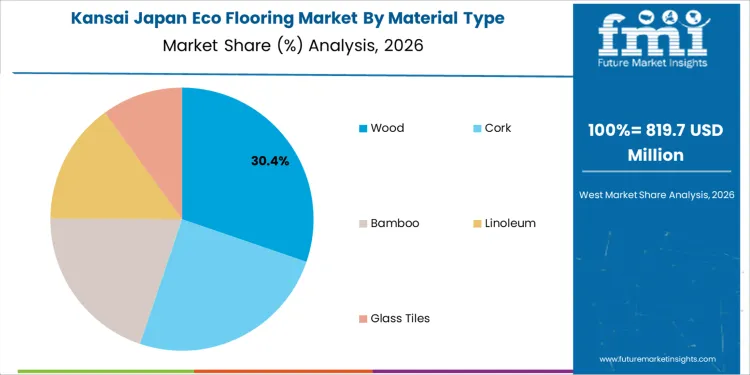
Kansai is seeing steady demand for eco flooring, growing at a 2.3% CAGR. The region’s focus on durability and green building practices is contributing to the growing use of eco-friendly flooring solutions. Cities like Osaka and Kyoto, known for their historical buildings and urban development, are increasingly incorporating eco flooring into both new construction projects and renovations. The region’s growing interest in reducing environmental impact, combined with government incentives and regulations promoting green buildings, is driving demand for eco flooring. Kansai’s strong architectural heritage and commitment to preserving the environment are also key factors in the rising use of eco-friendly flooring materials. As more residential and commercial buildings in Kansai adopt eco-friendly practices, the demand for eco flooring solutions will continue to increase steadily.
How is Demand for Eco Flooring Growing in Chubu?
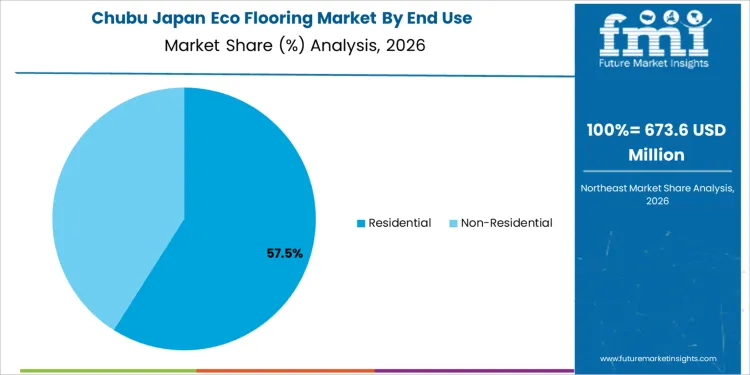
Chubu is experiencing moderate demand for eco flooring, with a 2.1% CAGR. The region’s growing focus on eco-friendly construction and urban development is driving the adoption of eco flooring materials. Chubu’s strong manufacturing sector, particularly in automotive and industrial infrastructure, is increasingly incorporating green building practices, including the use of eco flooring. Cities like Nagoya are becoming hubs for green building projects, where eco-friendly flooring solutions are being integrated into both residential and commercial buildings. The region’s focus on energy efficiency and durability, combined with rising consumer demand for eco-conscious products, is boosting the demand for eco flooring. As Chubu continues to prioritize environmental responsibility in construction projects, the use of eco flooring will rise steadily, supported by both government policies and consumer preferences for greener building materials.
How is Demand for Eco Flooring Growing in Tohoku?
Tohoku is seeing moderate demand for eco flooring, growing at a 1.8% CAGR. While not as concentrated as other regions, Tohoku’s growing interest in eco-friendly building practices is contributing to the adoption of eco flooring solutions. As the region continues to recover from past disasters and focus on rebuilding infrastructure, there is an increasing emphasis on using environmentally friendly materials in construction projects. Tohoku’s commitment to durability, coupled with the rise in eco-conscious consumer behavior, is driving demand for flooring options that reduce environmental impact. Government incentives and green building certifications are also playing a role in encouraging the use of eco flooring in new residential and commercial developments. As the demand for eco-friendly materials continues to rise, Tohoku will see gradual growth in the adoption of eco flooring solutions.
How is Demand for Eco Flooring Growing in Rest of Japan?
The rest of Japan is experiencing moderate demand for eco flooring, growing at a 1.7% CAGR. Although the demand for eco flooring is more concentrated in larger urban areas, the rest of Japan is beginning to see a shift toward eco-friendly building materials. Smaller cities and rural areas are increasingly adopting eco flooring in response to growing awareness of environmental durability and energy efficiency. Regional construction projects, both residential and commercial, are gradually incorporating eco-friendly solutions as part of their commitment to durability. As government policies and incentives aimed at reducing environmental impact gain traction, the rest of Japan will see a gradual rise in demand for eco flooring solutions, especially as consumers seek greener alternatives for their homes and businesses.
What is the Competitive Landscape of Eco Flooring Demand in Japan?
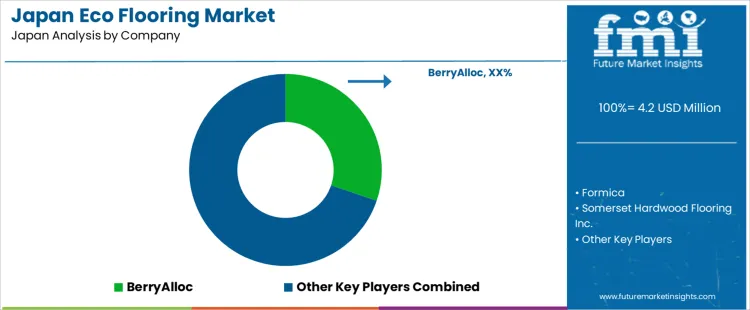
Demand for eco flooring in Japan is increasing as consumers and businesses prioritize durability and environmentally friendly building materials. Eco flooring, which includes products made from renewable, recyclable, or non-toxic materials, is gaining popularity due to the rising awareness of environmental issues and the growing trend of green building certifications. As Japan continues to focus on reducing its carbon footprint, the demand for flooring solutions that are both aesthetically pleasing and environmentally eco-friendly is on the rise.
BerryAlloc is a leading player in the eco flooring industry, offering a wide range of eco-friendly flooring solutions, including laminate and vinyl options that are both durable and eco-friendly. The company’s strategy focuses on providing high-quality, eco-friendly flooring products that meet consumer preferences for green building materials. BerryAlloc's commitment to innovation and durability has made it a strong competitor in Japan’s growing eco flooring industry.
Formica offers eco-friendly laminate flooring options that are highly durable and available in a wide range of designs. Somerset Hardwood Flooring focuses on using sustainably sourced hardwoods, catering to the demand for natural, environmentally friendly flooring options. Provenza Floors specializes in luxury vinyl plank flooring made with eco-friendly practices, while Boral Limited provides a range of eco-friendly wood and eco flooring solutions. These companies continue to innovate and expand their eco-friendly product offerings to meet the growing demand for eco-friendly flooring in Japan.
Key Players in Japan Eco Flooring Demand
- BerryAlloc
- Formica
- Somerset Hardwood Flooring Inc.
- Provenza Floors Inc.
- Boral Limited
Scope of Report
| Items | Values |
|---|---|
| Quantitative Units (2026) | USD million |
| Key Segments | Wood, Cork, Bamboo, Linoleum, Glass Tiles |
| End Use | Residential, Non-Residential |
| Price Range | Economy, Mid-range, Premium |
| Distribution Channel | Online, Offline |
| Key Country | Japan |
| Region | Kyushu & Okinawa, Kanto, Kansai, Chubu, Tohoku, Rest of Japan |
| Key Players Profiled | BerryAlloc, Formica, Somerset Hardwood Flooring Inc., Provenza Floors Inc., Boral Limited |
| Additional Attributes | Dollar sales by material type, end use, price range, and distribution channel; regional CAGR and growth trends in eco flooring demand in Japan |
Japan Eco Flooring Demand by Key Segments
Material Type:
- Wood
- Cork
- Bamboo
- Linoleum
- Glass Tiles
End Use:
- Residential
- Non-Residential
Price Range:
- Economy
- Mid-range
- Premium
Distribution Channel:
- Online
- Offline
Region:
- Kyushu & Okinawa
- Kanto
- Kansai
- Chubu
- Tohoku
- Rest of Japan
Frequently Asked Questions
How big is the demand for eco flooring in Japan in 2026?
The demand for eco flooring in Japan is estimated to be valued at USD 4.2 million in 2026.
What will be the size of eco flooring in Japan in 2036?
The market size for the eco flooring in Japan is projected to reach USD 5.5 million by 2036.
How much will be the demand for eco flooring in Japan growth between 2026 and 2036?
The demand for eco flooring in Japan is expected to grow at a 2.3% CAGR between 2026 and 2036.
What are the key product types in the eco flooring in Japan?
The key product types in eco flooring in Japan are wood, cork, bamboo, linoleum and glass tiles.
Which end use segment is expected to contribute significant share in the eco flooring in Japan in 2026?
In terms of end use, residential segment is expected to command 60.0% share in the eco flooring in Japan in 2026.
Preview the report firsthand - request a free sample
Get SampleGet the brochure for pricing and purchase details.
Get PDFTable of Content
- Executive Summary
- Japan Market Outlook
- Demand-side Trends
- Supply-side Trends
- Technology Roadmap Analysis
- Analysis and Recommendations
- Market Overview
- Market Coverage / Taxonomy
- Market Definition / Scope / Limitations
- Market Background
- Market Dynamics
- Drivers
- Restraints
- Opportunity
- Trends
- Scenario Forecast
- Demand in Optimistic Scenario
- Demand in Likely Scenario
- Demand in Conservative Scenario
- Opportunity Map Analysis
- Product Life Cycle Analysis
- Supply Chain Analysis
- Investment Feasibility Matrix
- Value Chain Analysis
- PESTLE and Porter’s Analysis
- Regulatory Landscape
- Regional Parent Market Outlook
- Production and Consumption Statistics
- Import and Export Statistics
- Market Dynamics
- Japan Market Analysis 2021 and 2026 and Forecast, 2026 to 2036
- Historical Market Size Value (USD Million) Analysis, 2021 and 2026
- Current and Future Market Size Value (USD Million) Projections, 2026 to 2036
- Y-o-Y Growth Trend Analysis
- Absolute $ Opportunity Analysis
- Japan Market Pricing Analysis 2021 and 2026 and Forecast 2026 to 2036
- Japan Market Analysis 2021 and 2026 and Forecast 2026 to 2036, By Material Type
- Introduction / Key Findings
- Historical Market Size Value (USD Million) Analysis By Material Type , 2021 and 2026
- Current and Future Market Size Value (USD Million) Analysis and Forecast By Material Type , 2026 to 2036
- Wood
- Cork
- Bamboo
- Linoleum
- Glass Tiles
- Y-o-Y Growth Trend Analysis By Material Type , 2021 and 2026
- Absolute $ Opportunity Analysis By Material Type , 2026 to 2036
- Japan Market Analysis 2021 and 2026 and Forecast 2026 to 2036, By End Use
- Introduction / Key Findings
- Historical Market Size Value (USD Million) Analysis By End Use, 2021 and 2026
- Current and Future Market Size Value (USD Million) Analysis and Forecast By End Use, 2026 to 2036
- Residential
- Non-Residential
- Y-o-Y Growth Trend Analysis By End Use, 2021 and 2026
- Absolute $ Opportunity Analysis By End Use, 2026 to 2036
- Japan Market Analysis 2021 and 2026 and Forecast 2026 to 2036, By Price Range
- Introduction / Key Findings
- Historical Market Size Value (USD Million) Analysis By Price Range, 2021 and 2026
- Current and Future Market Size Value (USD Million) Analysis and Forecast By Price Range, 2026 to 2036
- Economy
- Mid-range
- Premium
- Y-o-Y Growth Trend Analysis By Price Range, 2021 and 2026
- Absolute $ Opportunity Analysis By Price Range, 2026 to 2036
- Japan Market Analysis 2021 and 2026 and Forecast 2026 to 2036, By Distribution Channel
- Introduction / Key Findings
- Historical Market Size Value (USD Million) Analysis By Distribution Channel, 2021 and 2026
- Current and Future Market Size Value (USD Million) Analysis and Forecast By Distribution Channel, 2026 to 2036
- Online
- Offline
- Y-o-Y Growth Trend Analysis By Distribution Channel, 2021 and 2026
- Absolute $ Opportunity Analysis By Distribution Channel, 2026 to 2036
- Market Structure Analysis
- Competition Dashboard
- Competition Benchmarking
- Market Share Analysis of Top Players
- By Regional
- By Material Type
- By End Use
- By Price Range
- By Distribution Channel
- Competition Analysis
- Competition Deep Dive
- BerryAlloc
- Overview
- Product Portfolio
- Profitability by Market Segments (Product/Age /Sales Channel/Region)
- Sales Footprint
- Strategy Overview
- Marketing Strategy
- Product Strategy
- Channel Strategy
- Formica
- Somerset Hardwood Flooring Inc.
- Provenza Floors Inc.
- Boral Limited
- BerryAlloc
- Competition Deep Dive
- Assumptions & Acronyms Used
- Research Methodology


