

- Industry Size (2025)
- USD 75.0 Mn
- Forecast (2035)
- USD 104.5 Mn
- CAGR (2025 to 2035)
- 3.4%
Demand for Micro Perforated Films Packaging Forecast and Outlook 2025 to 2035
The demand for micro perforated films packaging in Japan is set to grow steadily, valued at USD 75.0 million in 2025 and projected to reach USD 104.5 million by 2035, reflecting a CAGR of 3.4%. One key trend driving this demand is the growing need for packaging that helps preserve the freshness and shelf life of perishable items. Micro perforated films, which allow controlled airflow, are particularly useful in the food and beverage industry, where they help extend the freshness of products like fresh produce, bakery items, and ready-to-eat meals. As consumer expectations shift toward fresher and higher-quality food, these films are increasingly becoming a preferred packaging choice.
Quick Stats of the Demand for Micro Perforated Films Packaging in Japan
- Demand for Micro Perforated Films Packaging in Japan Value (2025): USD 75.0 million
- Demand for Micro Perforated Films Packaging in Japan Forecast Value (2035): USD 104.5 million
- Demand for Micro Perforated Films Packaging in Japan Forecast CAGR (2025-2035): 3.4%
- Demand for Micro Perforated Films Packaging in Japan Leading Product Type: Polyethylene (PE)
- Demand for Micro Perforated Films Packaging in Japan Key Growth Regions: Kyushu & Okinawa, Kanto, Kansai, Chubu, Tohoku, Rest of Japan
- Demand for Micro Perforated Films Packaging in Japan Top Players: Amcor Limited, UFlex Limited, Mondi Group, Sealed Air Corporation, Berry Global
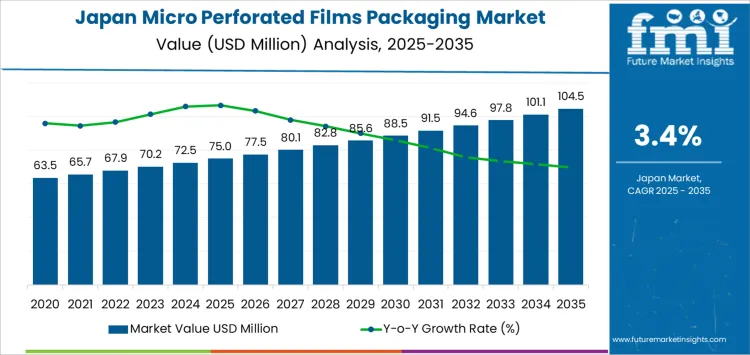
Another significant trend is the rising emphasis on sustainability and reducing plastic waste. As consumer awareness grows regarding the environmental impact of packaging materials, there is an increasing shift toward eco-friendly, recyclable alternatives. Polyethylene (PE), which is widely used in micro perforated films, leads the demand due to its flexibility, durability, and recyclability. Technological innovations in perforation techniques and material science have also contributed to the growth of micro perforated films. Advancements in precision perforation, such as laser and needle methods, allow better control of moisture and gas exchange, enhancing the shelf life of packaged goods. These innovations make micro perforated films more efficient, effective, and appealing to industries looking for sustainable and high-performance packaging solutions.
Demand for Micro Perforated Films Packaging in Japan Key Takeaways
| Metric | Value |
|---|---|
| Demand for Micro Perforated Films Packaging in Japan Value (2025) | USD 75.0 million |
| Demand for Micro Perforated Films Packaging in Japan Forecast Value (2035) | USD 104.5 million |
| Demand for Micro Perforated Films Packaging in Japan Forecast CAGR (2025-2035) | 3.4% |
Why is the Demand for Micro Perforated Films Packaging in Japan Growing?
The demand for micro perforated films packaging in Japan is growing as consumer preference shifts toward more efficient and sustainable packaging solutions. Micro perforated films are designed with small holes that allow for controlled airflow, which is essential in preserving the freshness and shelf life of food products, particularly in the fresh produce and perishable goods sectors. As the food and beverage industry seeks packaging options that maintain product quality while offering convenience, micro perforated films have become an attractive choice.
A key driver behind the growth of micro perforated films is the increasing demand for packaging that extends the shelf life of fresh and perishable products. In Japan, where food waste reduction and freshness are top priorities, micro perforated films provide an effective solution for maintaining product integrity without the need for preservatives or excessive packaging materials. These films help reduce spoilage by allowing the right amount of oxygen and moisture to pass through, making them especially popular in industrys such as fruits, vegetables, and other fresh food items.
The growing focus on sustainability and reducing plastic usage is contributing to the adoption of micro perforated films. These films are often produced using recyclable materials and offer an eco-friendly alternative to traditional packaging options. As businesses and consumers increasingly prioritize sustainability, micro perforated films packaging is expected to see continued growth. With innovations in film technology and an ongoing focus on fresh product preservation, the demand for micro perforated films packaging in Japan is projected to rise steadily through 2035.
What is the Segment-Wise Analysis of Demand for Micro Perforated Films Packaging in Japan?
Demand for micro perforated films packaging in Japan is segmented by material type, product type, and region. By material type, demand is divided into bags and pouches, wraps, lidding film, shrink film, and liners, with bags and pouches leading at 43%. The demand is also segmented by product type, including polyethylene (PE), polypropylene (PP), polyvinyl chloride (PVC), polystyrene, polyethylene terephthalate (PET), and polylactic acid (PLA), with polyethylene (PE) leading at 42.6%. Regionally, demand spans across Kyushu & Okinawa, Kanto, Kansai, Chubu, Tohoku, and the rest of Japan.
How Does Bags and Pouches Lead the Demand for Micro Perforated Films Packaging in Japan?
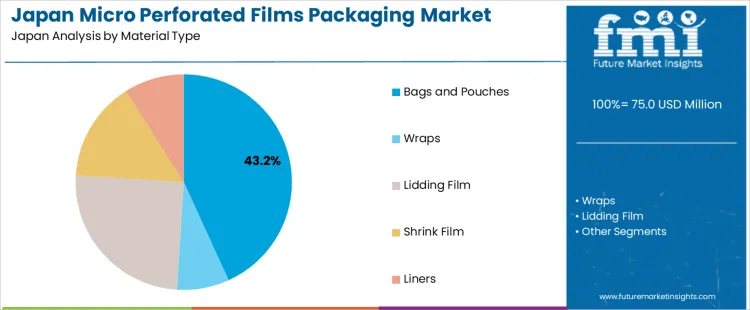
Bags and pouches account for 43% of the demand for micro perforated films packaging in Japan, driven by their versatility, convenience, and suitability for a wide range of products. Micro perforated films are used in bags and pouches to create small holes that allow air and moisture to pass through, which is ideal for packaging fresh produce, bakery items, and other perishable goods. This feature helps extend shelf life by reducing the buildup of moisture and preventing spoilage.
As consumer demand for fresh, sustainable, and longer-lasting packaged goods continues to rise, micro perforated bags and pouches have become a popular choice in the food industry. The convenience of pre-packaged, ready-to-use bags and pouches makes them a top choice for both consumers and manufacturers. As the demand for innovative and functional packaging solutions grows, micro perforated bags and pouches are expected to remain a dominant product type in Japan.
Why Does Polyethylene (PE) Lead the Demand for Micro Perforated Films Packaging in Japan?
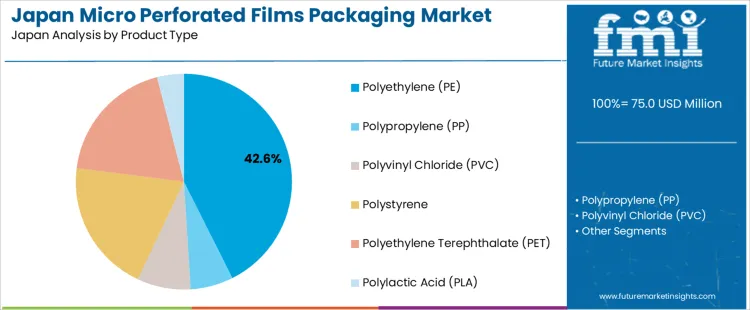
Polyethylene (PE) accounts for 42.6% of the demand for micro perforated films packaging in Japan, driven by its flexibility, durability, and cost-effectiveness. PE is widely used in micro perforated films due to its ability to create fine perforations while maintaining strength and integrity, making it ideal for packaging food products like fruits, vegetables, and baked goods. Its properties allow for the right balance of permeability, ensuring products are kept fresh while also preventing overexposure to air or moisture.
PE is a widely available and affordable material, making it a preferred choice for manufacturers looking for efficient and functional packaging solutions. The growing consumer demand for sustainable and recyclable packaging further supports the dominance of PE, as it is recyclable and can be made from renewable sources. As the packaging industry continues to evolve, PE remains the leading material for micro perforated films in Japan due to its performance and environmental benefits.
What are the Key Trends, Drivers, and Restraints in Demand for Micro‑Perforated Films Packaging in Japan?
Micro‑perforated films with microscopic holes that allow controlled gas and moisture exchange are particularly useful for fresh produce, bakery items, and perishable foods, helping maintain freshness, prevent condensation, and extend shelf life. As consumer expectations shift toward fresher and higher‑quality food, and as retail and distribution chains aim to reduce spoilage, the appeal of micro‑perforated packaging grows. Challenges include the higher cost of these specialized films compared with standard packaging, potential limitations in barrier protection during long‑distance transport, and competition from alternative packaging technologies and methods.
Why is Demand for Micro‑Perforated Films Packaging Growing in Japan?
The growing demand stems from several converging factors in Japan’s food retail and consumer industrys. Consumers increasingly value freshness, convenience, and quality in perishable foods like fruits, vegetables, bakery items and ready‑to‑eat produce. Retailers and superindustrys, aiming to reduce food waste and spoilage while offering fresh products, find micro‑perforated films an effective packaging solution. Also, with expansion in ready‑to‑eat meals, take‑out food, and e‑commerce grocery deliveries, there is a need for packaging that maintains product freshness longer through storage and transit. As awareness grows about shelf‑life, food safety, and supply‑chain efficiency, micro‑perforated films fit well for perishable‑food packaging needs in modern distribution environments.
How are Technological & Industry Innovations Driving Micro‑Perforated Films Packaging Demand in Japan?
Advances in film‑manufacturing, perforation technology, and material science are making micro‑perforated films more viable and effective in the Japanese industry. Improved precision in perforation via laser, needle, or plasma techniques allows better control of gas exchange and moisture management, offering tailored solutions for different food types (produce, bakery, ready meals). Development of mono‑material, recyclable or compostable film options aligns with increasing environmental regulation and consumer demand for sustainable packaging.
Innovations in barrier layers, combined with perforation, help balance breathability and protection, improving suitability even for modest transport durations. As supply‑chain capabilities and packaging‑line compatibility improve, more food producers and processors see micro‑perforated films as practical options, boosting adoption.
What are the Key Challenges and Risks That Could Limit Micro‑Perforated Films Packaging Demand in Japan?
Despite the advantages, adoption of micro‑perforated films packaging in Japan faces several obstacles. First, costs are typically higher than standard plastic films or simpler packaging, which can deter price‑sensitive producers or limit use to premium products. Second, for long‑distance transport or export, the breathability that helps fresh produce may allow moisture ingress or reduce barrier protection, risking quality. Third, some food categories or supply‑chain segments may prefer traditional modified‑atmosphere packaging or rigid containers for better protection or shelf‑life guarantee. Finally, there may be a lack of widespread awareness among smaller producers or retailers about the benefits and correct use of micro‑perforated films, which can slow broader adoption despite demand for freshness and waste reduction.
What is the Regional Demand Outlook for Micro Perforated Films Packaging in Japan?
| Region | CAGR (%) |
|---|---|
| Kyushu & Okinawa | 4.2% |
| Kanto | 3.9% |
| Kansai | 3.4% |
| Chubu | 3.0% |
| Tohoku | 2.6% |
| Rest of Japan | 2.5% |
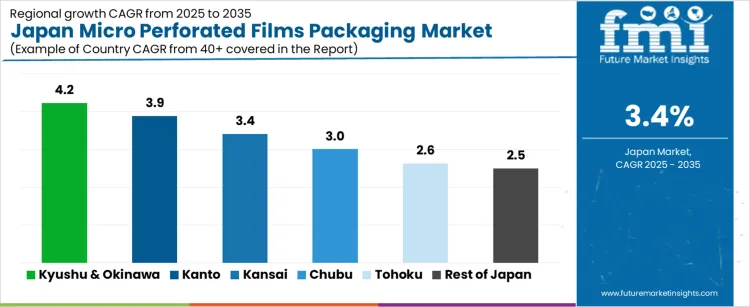
Demand for micro perforated films packaging in Japan is growing steadily across all regions, with Kyushu & Okinawa leading at a 4.2% CAGR, driven by increasing interest in fresh food packaging and sustainable solutions. Kanto follows with a 3.9% CAGR, supported by the region’s large urban population and demand for packaging that enhances food shelf life. Kansai shows a 3.4% CAGR, with rising adoption in the foodservice and retail industries. Chubu experiences a 3.0% CAGR, as local businesses embrace packaging innovations to improve food preservation. Tohoku and the Rest of Japan see moderate growth at 2.6% and 2.5%, respectively.
How is Demand for Micro Perforated Films Packaging Growing in Kyushu & Okinawa?
Kyushu & Okinawa leads the demand for micro perforated films packaging, growing at a 4.2% CAGR. The region’s focus on food preservation and packaging solutions that enhance the shelf life of fresh produce is driving this trend. As consumers in Okinawa and Kyushu seek fresher food products with longer shelf lives, micro perforated films are increasingly used for packaging fresh fruits, vegetables, and seafood. The growing tourism sector in Okinawa has led to an increased demand for convenient, high-quality packaging to ensure that food products are preserved during transportation.
Local retailers and foodservice providers are adopting these packaging solutions to cater to the demand for fresh food with minimal spoilage. As sustainable and efficient packaging solutions become more important, micro perforated films are expected to see continued growth in Kyushu & Okinawa, further supported by the region’s environmental and food safety initiatives.
Why is Demand for Micro Perforated Films Packaging Rising in Kanto?
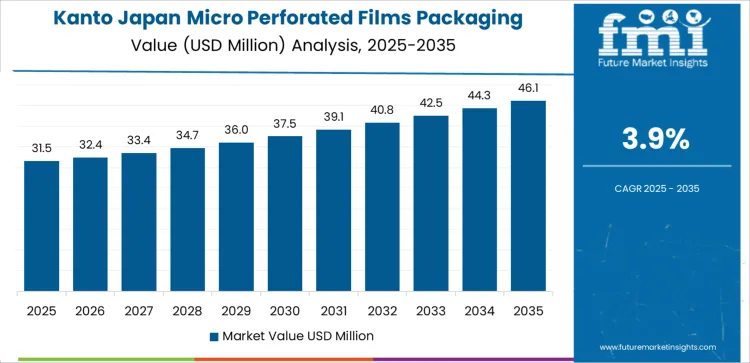
In Kanto, demand for micro perforated films packaging is rising at a 3.9% CAGR. The region’s large urban population, particularly in Tokyo, drives the need for packaging solutions that extend the shelf life of fresh food while maintaining product quality. As consumers become more health-conscious and prefer fresh produce with minimal preservatives, micro perforated films offer an ideal solution. This packaging technology allows for better air circulation, which helps preserve the freshness of fruits, vegetables, and other perishable items.
The rise in online grocery shopping and home delivery services has created greater demand for packaging that ensures food remains fresh during transport. Retailers and foodservice businesses in Kanto are increasingly adopting micro perforated films packaging as part of their commitment to food safety and freshness. As consumer preferences for fresh and convenient food options continue to grow, demand for micro perforated films packaging in Kanto is expected to rise steadily.
How is Demand for Micro Perforated Films Packaging Expanding in Kansai?
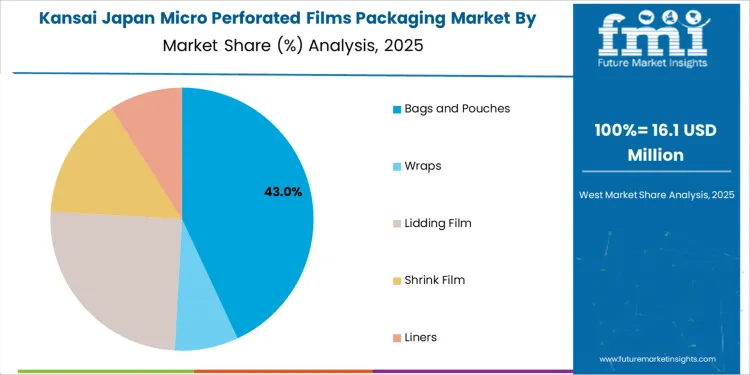
Kansai shows steady demand for micro perforated films packaging, with a 3.4% CAGR. The region’s foodservice and retail industries, particularly in Osaka and Kyoto, are seeing a growing adoption of micro perforated films to preserve the freshness of food products, including produce and ready-to-eat meals. As consumers demand fresher food with longer shelf life, micro perforated films are becoming a preferred choice for packaging.
This type of packaging allows air to circulate around the food, preventing spoilage and extending freshness. Kansai’s increasing focus on sustainability and reducing food waste also contributes to the growing use of micro perforated films, as they offer an eco-friendly solution compared to other packaging types. Retailers and foodservice providers in Kansai are responding to this trend by expanding their use of micro perforated films packaging. As demand for fresh food continues to rise, Kansai’s adoption of these packaging solutions is expected to grow steadily.
Why is Demand for Micro Perforated Films Packaging Growing in Chubu?
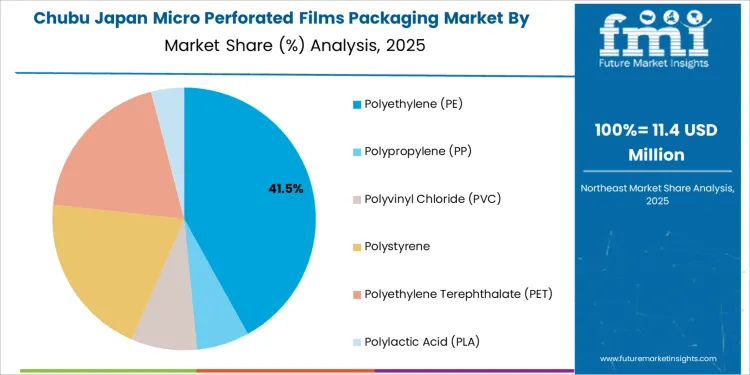
Chubu is witnessing steady demand for micro perforated films packaging, growing at a 3.0% CAGR. The region’s growing interest in food preservation and packaging innovations has led to increased adoption of micro perforated films, particularly in urban areas like Nagoya. As consumers seek fresher food with longer shelf lives, businesses in the foodservice and retail sectors are turning to these packaging solutions to meet consumer demand.
Micro perforated films allow air to circulate around perishable items, preserving their freshness and extending shelf life. As consumer preferences shift toward fresher, minimally processed foods, Chubu is seeing a rise in the use of micro perforated films, especially in superindustrys and food delivery services. The region’s focus on sustainability has led many businesses to adopt eco-friendly packaging solutions like micro perforated films, ensuring continued growth in demand for these products in Chubu.
How is Demand for Micro Perforated Films Packaging Expanding in Tohoku?
Tohoku is seeing moderate growth in micro perforated films packaging demand, with a 2.6% CAGR. Although the region’s consumption of packaging solutions is smaller compared to major urban areas, there is a steady rise in the adoption of micro perforated films for fresh food preservation. As more consumers in Tohoku become aware of the benefits of fresh food packaging, the demand for micro perforated films is gradually increasing.
The region’s foodservice sector is also seeing an increase in the use of these packaging solutions for items like fruits, vegetables, and seafood. Retailers are starting to offer more fresh food options with micro perforated films packaging to cater to the growing demand for products with longer shelf lives. As awareness of sustainable and efficient packaging grows, demand for micro perforated films packaging is expected to continue rising, especially as consumer preferences shift toward fresher, more natural food options.
Why is Demand for Micro Perforated Films Packaging Steady in the Rest of Japan?
The Rest of Japan is experiencing steady demand for micro perforated films packaging, with a 2.5% CAGR. Although the adoption rate is slower compared to urban regions, there is a growing shift toward packaging solutions that help preserve the freshness of food and reduce spoilage. As awareness of food safety and sustainability increases, more retailers and foodservice providers in rural areas are adopting micro perforated films packaging to meet the demand for fresh and high-quality food products.
Local industrys and food delivery services are also beginning to use micro perforated films to cater to the rising demand for fresh produce. With more focus on food waste reduction and sustainable packaging in the Rest of Japan, the adoption of micro perforated films packaging is expected to grow steadily. As access to these packaging solutions increases through online platforms and local suppliers, demand is anticipated to rise gradually.
What is Driving the Demand for Micro Perforated Films Packaging in Japan and Who Are the Key Players Shaping the Industry?
The demand for micro perforated films packaging in Japan is increasing as industries seek packaging solutions that extend product freshness, enhance shelf life, and improve overall product quality. Micro perforated films, which feature tiny holes that allow for controlled air exchange, are particularly beneficial for fresh food packaging, such as fruits, vegetables, and baked goods. These films help maintain optimal humidity levels, reduce condensation, and prevent spoilage, making them an ideal choice for perishable goods. The increasing focus on sustainability and the need for efficient, high-performance packaging materials are further driving the demand for micro perforated films in Japan, as these films are often designed to be recyclable and environmentally friendly.
Key players shaping the micro perforated films packaging industry in Japan include Amcor Limited, UFlex Limited, Mondi Group, Sealed Air Corporation, and Berry Global. Amcor Limited leads the industry with a significant share of 22.0%, offering innovative micro perforated films that meet the growing demand for packaging solutions that preserve product quality and freshness. These companies focus on providing high-quality, customizable films that are adaptable to various products, ensuring their packaging solutions cater to the unique needs of Japanese food and consumer goods industries.
The growth of the micro perforated films packaging industry in Japan is also supported by the increasing consumer demand for fresh, high-quality products that maintain their appearance and nutritional value for longer periods. As Japan continues to prioritize food safety, quality, and sustainability, micro perforated films are expected to play a significant role in the packaging industry. With ongoing advancements in packaging technology, these films are poised for continued growth, offering efficient, sustainable solutions to meet the evolving needs of Japan's food and retail sectors.
Key Players in Japan Micro Perforated Films Packaging Demand
- Amcor Limited
- UFlex Limited
- Mondi Group
- Sealed Air Corporation
- Berry Global
Scope of Report
| Items | Values |
|---|---|
| Quantitative Units (2025) | USD million |
| Material Type | Bags and Pouches, Wraps, Lidding Film, Shrink Film, Liners |
| Product Type | Polyethylene (PE), Polypropylene (PP), Polyvinyl Chloride (PVC), Polystyrene, Polyethylene Terephthalate (PET), Polylactic Acid (PLA) |
| Region | Kyushu & Okinawa, Kanto, Kansai, Chubu, Tohoku, Rest of Japan |
| Countries Covered | Japan |
| Key Companies Profiled | Amcor Limited, UFlex Limited, Mondi Group, Sealed Air Corporation, Berry Global |
| Additional Attributes | Dollar sales by material type, product type, and region; regional CAGR and growth trends; increasing adoption in food and beverage packaging; innovation in micro perforated films; environmental impact and sustainability concerns in packaging. |
Japan Micro Perforated Films Packaging Demand by Key Segments
Material Type
- Bags and Pouches
- Wraps
- Lidding Film
- Shrink Film
- Liners
Product Type
- Polyethylene (PE)
- Polypropylene (PP)
- Polyvinyl Chloride (PVC)
- Polystyrene
- Polyethylene Terephthalate (PET)
- Polylactic Acid (PLA)
Region
- Kyushu & Okinawa
- Kanto
- Kansai
- Chubu
- Tohoku
- Rest of Japan
Frequently Asked Questions
How big is the demand for micro perforated films packaging in Japan in 2025?
The demand for micro perforated films packaging in Japan is estimated to be valued at USD 75.0 million in 2025.
What will be the size of micro perforated films packaging in Japan in 2035?
The market size for the micro perforated films packaging in Japan is projected to reach USD 104.5 million by 2035.
How much will be the demand for micro perforated films packaging in Japan growth between 2025 and 2035?
The demand for micro perforated films packaging in Japan is expected to grow at a 3.4% CAGR between 2025 and 2035.
What are the key product types in the micro perforated films packaging in Japan?
The key product types in micro perforated films packaging in Japan are bags and pouches, wraps, lidding film, shrink film and liners.
Which product type segment is expected to contribute significant share in the micro perforated films packaging in Japan in 2025?
In terms of product type, polyethylene (pe) segment is expected to command 42.6% share in the micro perforated films packaging in Japan in 2025.
Preview the report firsthand - request a free sample
Get SampleGet the brochure for pricing and purchase details.
Get PDFTable of Content
- Executive Summary
- Japan Market Outlook
- Demand-side Trends
- Supply-side Trends
- Technology Roadmap Analysis
- Analysis and Recommendations
- Market Overview
- Market Coverage / Taxonomy
- Market Definition / Scope / Limitations
- Market Background
- Market Dynamics
- Drivers
- Restraints
- Opportunity
- Trends
- Scenario Forecast
- Demand in Optimistic Scenario
- Demand in Likely Scenario
- Demand in Conservative Scenario
- Opportunity Map Analysis
- Product Life Cycle Analysis
- Supply Chain Analysis
- Investment Feasibility Matrix
- Value Chain Analysis
- PESTLE and Porter’s Analysis
- Regulatory Landscape
- Regional Parent Market Outlook
- Production and Consumption Statistics
- Import and Export Statistics
- Market Dynamics
- Japan Market Analysis 2020 to 2024 and Forecast, 2025 to 2035
- Historical Market Size Value (USD Million) Analysis, 2020 to 2024
- Current and Future Market Size Value (USD Million) Projections, 2025 to 2035
- Y-o-Y Growth Trend Analysis
- Absolute $ Opportunity Analysis
- Japan Market Pricing Analysis 2020 to 2024 and Forecast 2025 to 2035
- Japan Market Analysis 2020 to 2024 and Forecast 2025 to 2035, By Material Type
- Introduction / Key Findings
- Historical Market Size Value (USD Million) Analysis By Material Type , 2020 to 2024
- Current and Future Market Size Value (USD Million) Analysis and Forecast By Material Type , 2025 to 2035
- Bags and Pouches
- Wraps
- Lidding Film
- Shrink Film
- Liners
- Y-o-Y Growth Trend Analysis By Material Type , 2020 to 2024
- Absolute $ Opportunity Analysis By Material Type , 2025 to 2035
- Japan Market Analysis 2020 to 2024 and Forecast 2025 to 2035, By Product Type
- Introduction / Key Findings
- Historical Market Size Value (USD Million) Analysis By Product Type, 2020 to 2024
- Current and Future Market Size Value (USD Million) Analysis and Forecast By Product Type, 2025 to 2035
- Polyethylene (PE)
- Polypropylene (PP)
- Polyvinyl Chloride (PVC)
- Polystyrene
- Polyethylene Terephthalate (PET)
- Polylactic Acid (PLA)
- Y-o-Y Growth Trend Analysis By Product Type, 2020 to 2024
- Absolute $ Opportunity Analysis By Product Type, 2025 to 2035
- Market Structure Analysis
- Competition Dashboard
- Competition Benchmarking
- Market Share Analysis of Top Players
- By Regional
- By Material Type
- By Product Type
- Competition Analysis
- Competition Deep Dive
- Amcor Limited
- Overview
- Product Portfolio
- Profitability by Market Segments (Product/Age /Sales Channel/Region)
- Sales Footprint
- Strategy Overview
- Marketing Strategy
- Product Strategy
- Channel Strategy
- UFlex Limited
- Mondi Group
- Sealed Air Corporation
- Berry Global
- Amcor Limited
- Competition Deep Dive
- Assumptions & Acronyms Used
- Research Methodology


