

- Industry Size (2025)
- USD 23.6 Mn
- Forecast (2035)
- USD 33.6 Mn
- CAGR (2025 to 2035)
- 3.6%
Demand for Syringeless Injector in Japan Forecast and Outlook 2025 to 2035
The demand for syringeless injectors in Japan is expected to grow from USD 23.6 million in 2025 to USD 33.6 million by 2035, reflecting a compound annual growth rate (CAGR) of 3.6%. Syringeless injectors, which offer an innovative alternative to traditional syringes, are gaining popularity in Japan's healthcare sector for their convenience and ability to deliver medications without needles. These devices are particularly useful for patients with needle phobia, those who require frequent injections, and for administering vaccines or biologics in settings such as hospitals, clinics, and at-home care.
The growing adoption of syringeless injectors is driven by the rising demand for painless and efficient drug delivery methods, particularly in the management of chronic diseases such as diabetes. With Japan’s aging population and the increasing prevalence of chronic health conditions, the need for safe, user-friendly injection devices is expanding. The increasing focus on improving patient comfort and encouraging patient self-management in homecare settings further supports the growth of syringeless injectors.
Quick Stats of the Demand for Syringeless Injector in Japan
- Demand for Syringeless Injector in Japan Value (2025): USD 23.6 million
- Demand for Syringeless Injector in Japan Forecast Value (2035): USD 33.6 million
- Demand for Syringeless Injector in Japan Forecast CAGR (2025-2035): 3.6%
- Demand for Syringeless Injector in Japan Product Type: Injectors, Consumables and Accessories
- Demand for Syringeless Injector in Japan Key Growth Regions: Kyushu & Okinawa, Kanto, Kansai, Chubu, Tohoku, Rest of Japan
- Demand for Syringeless Injector in Japan Top Players: GE Healthcare, Bayer AG, Guerbet, Bracco Diagnostics Inc.
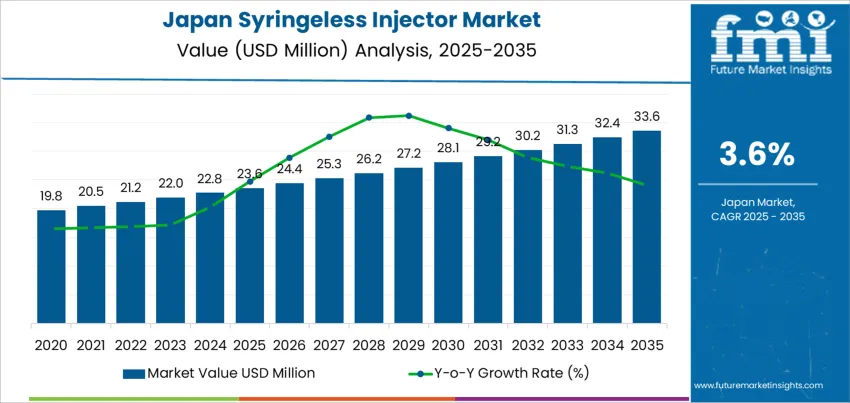
What is the Growth Forecast for the Demand for Syringeless Injector in Japan through 2035?
Technological advancements in drug delivery devices and the shift toward biologics, which often require injections, contribute to the growing demand for syringeless injectors. As the healthcare industry continues to innovate, the adoption of syringeless injectors will play a critical role in the safe and effective delivery of treatments, especially for patients who require regular medication administration.
From 2025 to 2030, the demand for syringeless injectors in Japan is expected to grow from USD 23.6 million to USD 29.2 million, adding USD 5.6 million in value. This period will witness steady growth driven by the increasing use of syringeless injectors to manage chronic conditions, especially for patients with diabetes and other long-term treatment needs. The shift towards more comfortable, pain-free injection methods will be a key factor in this growth, as syringeless injectors offer a less invasive, needle-free alternative. Their increasing adoption, particularly in homecare settings, will contribute to rising demand.
From 2030 to 2035, demand for syringeless injectors will continue to rise from USD 29.2 million to USD 33.6 million, contributing USD 4.4 million in value. While the growth rate may moderate slightly as the industry matures, the demand for injectable medications, particularly biologics, will continue to drive industry expansion. Ongoing technological advancements in syringeless injectors, which improve safety, ease of use, and patient comfort, will sustain steady growth. As Japan’s healthcare system continues to emphasize patient-centric care and the reduction of healthcare costs, the role of syringeless injectors in delivering treatments efficiently and comfortably will remain critical. These factors will ensure that syringeless injectors remain a vital tool in the medical landscape throughout the forecast period.
Demand for Syringeless Injector in Japan Key Takeaways
| Metric | Value |
|---|---|
| Demand for Syringeless Injector in Japan Value (2025) | USD 23.6 million |
| Demand for Syringeless Injector in Japan Forecast Value (2035) | USD 33.6 million |
| Demand for Syringeless Injector in Japan Forecast CAGR (2025-2035) | 3.6% |
Why is the Demand for Syringeless Injector in Japan Growing?
The demand for syringeless injectors in Japan is growing as the healthcare industry seeks safer, more efficient, and less invasive methods of drug delivery. Syringeless injectors, which use high-pressure air or spring mechanisms to administer medication through the skin, offer a painless and needle-free alternative to traditional syringes. This technology is particularly appealing in applications where repeated injections are required, such as for chronic conditions, vaccines, and biologic treatments.
A major driver of this growth is the increasing adoption of syringeless injectors in managing chronic diseases and vaccinations. As Japan’s aging population continues to grow, the demand for chronic disease management, such as for diabetes and osteoporosis, is rising. Syringeless injectors are ideal for self-administration of injectable medications, providing convenience and comfort to patients who need regular treatments. The increasing need for flu vaccinations and other preventive measures is also contributing to the growth in demand for syringeless injectors.
The growing focus on patient comfort and reducing needle-phobia is fueling the demand for syringeless injectors. These injectors eliminate the need for needles, offering a more comfortable and user-friendly option for patients, particularly in pediatric and elderly care. Innovations in syringeless injector design, such as smaller, more portable devices and improved safety features, are further driving adoption. As the healthcare industry in Japan continues to prioritize patient-centric solutions, the demand for syringeless injectors is expected to grow steadily through 2035.
What is the Segment-Wise Analysis of Demand for Syringeless Injectors in Japan?
Demand for syringeless injectors in Japan is segmented by product type and technology. By product type, demand is divided into injectors and consumables and accessories, with injectors leading at 63%. The demand is also segmented by technology, including pressure-based systems, roll pump systems, and smart connectivity systems, with pressure-based systems accounting for 40.4%. Regionally, demand is divided into Kanto, Kinki, Chubu, Kyushu & Okinawa, Tohoku, and the Rest of Japan.
Why Do Injectors Lead the Demand for Syringeless Injectors in Japan?
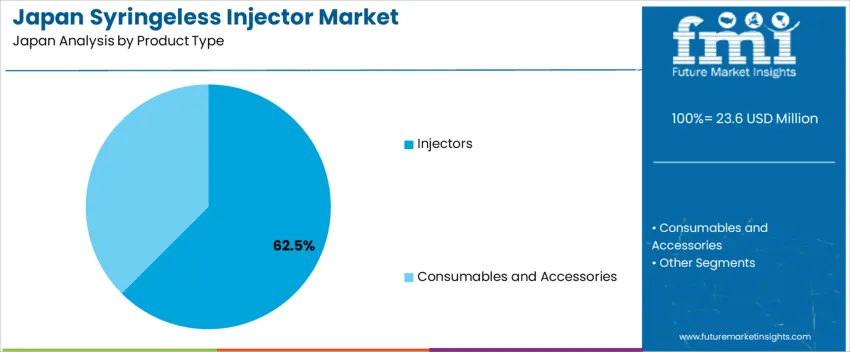
Injectors account for 63% of the demand for syringeless injectors in Japan, driven by their ability to offer a needle-free and less invasive method of delivering medications. Syringeless injectors are preferred in situations where traditional needles may cause discomfort, anxiety, or risk of infection, particularly in patients who require frequent injections, such as those with chronic diseases like diabetes or multiple sclerosis.
The demand for syringeless injectors is growing in Japan as they provide a more convenient, efficient, and safer alternative for drug administration. Syringeless injectors are ideal for use in home healthcare settings, offering patients autonomy while reducing the risk of needle-stick injuries for both patients and healthcare workers. As the healthcare system in Japan continues to emphasize patient comfort and safety, injectors will remain the dominant product in the syringeless injector industry.
Why Do Pressure-Based Systems Lead the Demand for Syringeless Injectors in Japan?
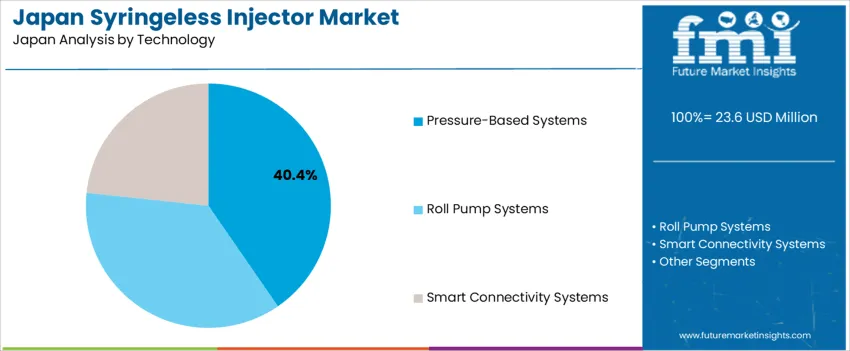
Pressure-based systems account for 40.4% of the demand for syringeless injectors in Japan, driven by their reliable, efficient, and simple operation. Pressure-based syringeless injectors use a controlled force to deliver medication through the skin, offering precise, needle-free drug delivery. These systems are highly valued for their ability to deliver a wide range of medications, including vaccines, biologics, and insulin, with minimal discomfort for patients.
Pressure-based systems are particularly popular in healthcare settings that require frequent, large-volume injections, such as those for chronic disease management and immunizations. The increasing demand for needle-free solutions in Japan’s healthcare sector, along with the desire to reduce pain and complications associated with traditional injections, ensures that pressure-based systems will continue to dominate the syringeless injector industry. As technology advances, these systems are likely to become even more efficient, further solidifying their position in the industry.
What are the Key Trends, Drivers, and Restraints in Demand for Syringeless Injectors in Japan?
Demand for syringeless injectors in Japan is rising as healthcare providers increasingly adopt advanced, efficient, and safer injection technologies, particularly in diagnostic imaging and frequent injection procedures. The growing medical imaging sector, driven by the aging population and rising chronic diseases, supports the uptake of syringeless injectors. These injectors reduce waste, lower the risk of contamination, and improve patient safety by eliminating needlestick injuries. The demand for minimally invasive procedures and better workflow efficiency in busy hospitals is another key factor driving growth. High capital costs, regulatory hurdles, and the need for trained staff may limit the adoption of syringeless injectors, especially in smaller healthcare facilities.
Why is Demand for Syringeless Injectors Growing in Japan?
Demand for syringeless injectors is growing due to the increasing need for efficient and safer injection systems in hospitals and diagnostic centers. With the rise in medical imaging, especially contrast-enhanced procedures, syringeless injectors provide a more streamlined, waste-reducing method of delivering contrast media. The demand is further fueled by Japan’s aging population, which requires more frequent imaging procedures. As healthcare facilities strive to improve patient safety and reduce contamination risks, syringeless injectors are gaining traction. These systems help increase workflow efficiency by simplifying the injection process, making them more attractive to busy healthcare providers looking for effective and safer alternatives to traditional syringes.
How are Technological & Industry Innovations Driving Syringeless Injector Demand in Japan?
Technological advancements are driving the demand for syringeless injectors in Japan by improving functionality and making the systems safer and more efficient. Innovations in injector design, such as automatic contrast-media delivery, smarter volume control, and enhanced safety features, make these systems increasingly appealing to healthcare providers. The development of multi-use injectors and improvements in materials that help reduce waste also contribute to their growing adoption. The integration of syringeless injectors with advanced diagnostic equipment and IT systems, including patient record management and imaging software, further boosts their appeal. These technological improvements are enhancing the accuracy, safety, and overall performance of syringeless injectors.
What are the Key Challenges and Risks That Could Limit Syringeless Injector Demand in Japan?
Several challenges may limit the growth of syringeless injectors in Japan. High initial costs for syringeless systems may deter smaller clinics and diagnostic centers with limited budgets. The adoption of these advanced devices may require training healthcare staff to operate and maintain them properly, which can add to operational costs. Regulatory approval processes for new medical devices can be lengthy and complex, potentially delaying the widespread adoption of syringeless injectors. There is also competition from other forms of drug delivery and imaging technologies, which could limit the demand for syringeless injectors. Lastly, logistical challenges in ensuring a steady supply of consumables, such as contrast agents, may hinder their widespread use.
What is the Regional Demand Outlook for Syringeless Injector in Japan?
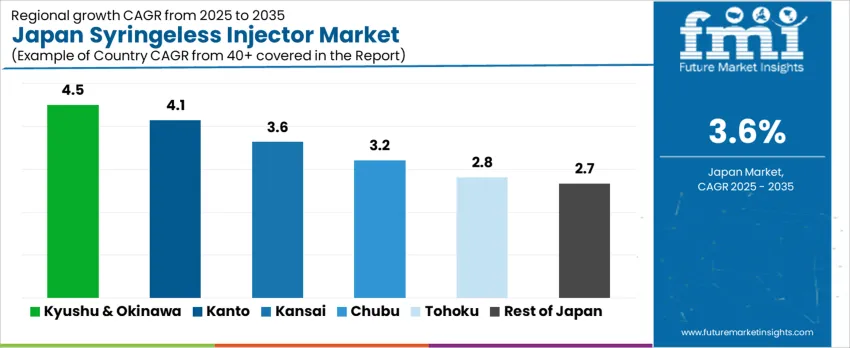
| Region | CAGR (%) |
|---|---|
| Kyushu & Okinawa | 4.5% |
| Kanto | 4.1% |
| Kansai | 3.6% |
| Chubu | 3.2% |
| Tohoku | 2.8% |
| Rest of Japan | 2.7% |
Demand for syringeless injectors in Japan is steadily growing, with Kyushu & Okinawa leading at a 4.5% CAGR, driven by the region’s focus on patient comfort and preventive healthcare. Kanto follows with a 4.1% CAGR, supported by its urban population and advanced medical infrastructure. Kansai shows a 3.6% CAGR, with a focus on holistic health and patient-centric medical technologies. Chubu experiences a 3.2% CAGR, driven by increased awareness of non-invasive treatment options. Tohoku and the Rest of Japan show moderate growth at 2.8% and 2.7%, respectively, with gradual adoption in rural and suburban areas. As more individuals seek pain-free and efficient medical treatments, demand for syringeless injectors will continue to grow steadily across Japan.
How is Demand for Syringeless Injectors Growing in Kyushu & Okinawa?
Kyushu & Okinawa shows the highest demand for syringeless injectors, growing at a 4.5% CAGR. The region’s healthcare infrastructure, particularly in urban areas like Fukuoka, is increasingly adopting innovative and non-invasive drug delivery solutions, such as syringeless injectors. These injectors, which provide a painless and efficient alternative to traditional syringes, are gaining popularity for administering vaccines, insulin, and other medications.
As the region’s population ages and more people seek pain-free treatment options, syringeless injectors are becoming an essential tool in healthcare. The rise in awareness around chronic conditions, such as diabetes, and the increasing focus on patient comfort further drive demand for syringeless injectors. Kyushu & Okinawa’s growing tourism industry also contributes to the adoption of these devices in hospitals and wellness centers, where non-invasive treatments are increasingly sought after.
Why is Demand for Syringeless Injectors Rising in Kanto?
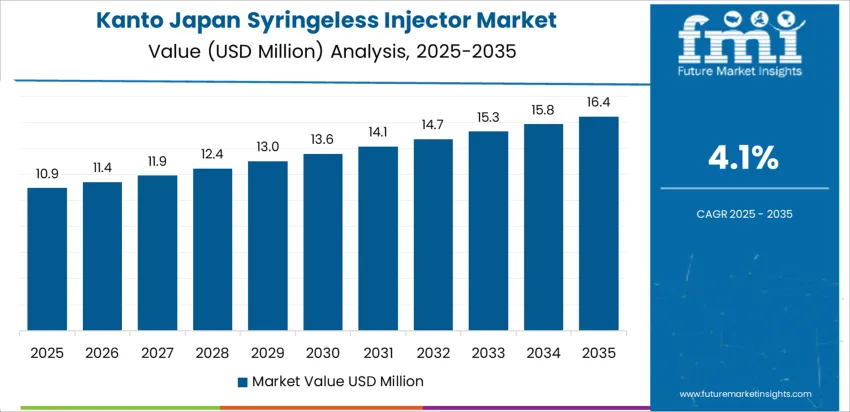
Kanto is experiencing steady demand for syringeless injectors, with a 4.1% CAGR. The region’s advanced healthcare systems, particularly in Tokyo, along with high adoption of innovative medical technologies, contribute to the growing popularity of syringeless injectors. These devices, known for their ability to administer drugs without the need for needles, are widely used for vaccine delivery, insulin administration, and in hospitals for various other treatments.
The increasing focus on patient comfort, especially among those who require regular injections, is one of the key drivers for syringeless injectors. With the region's healthcare facilities at the forefront of adopting cutting-edge medical technology, syringeless injectors are gaining traction in both clinical and outpatient settings. As the demand for less painful medical treatments grows, Kanto’s adoption of syringeless injectors is expected to remain strong, driven by its urban population and medical infrastructure.
How is Demand for Syringeless Injectors Expanding in Kansai?
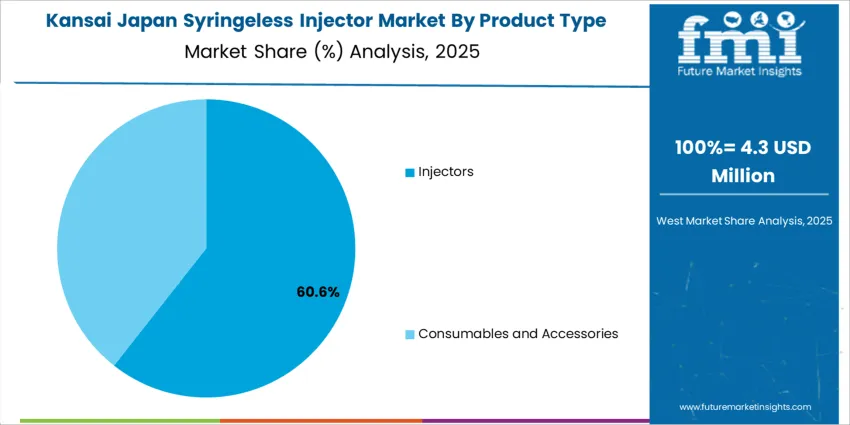
Kansai is seeing steady demand for syringeless injectors, with a 3.6% CAGR. The region’s strong healthcare industry, particularly in cities like Osaka and Kyoto, is increasingly adopting non-invasive drug delivery solutions to enhance patient comfort and treatment efficiency. Syringeless injectors, which eliminate the need for traditional needles, are becoming popular for administering vaccines, insulin, and other medications. The rise in chronic diseases, such as diabetes, and the growing awareness of pain-free treatment options are major factors driving demand in Kansai.
The region’s aging population is seeking alternative injection methods that reduce the discomfort associated with traditional syringes. Kansai’s well-established healthcare infrastructure, alongside increasing interest in patient-centric medical technologies, is helping drive the growth of syringeless injectors. The region’s focus on innovation and improved healthcare services further supports the steady expansion of syringeless injector adoption.
Why is Demand for Syringeless Injectors Growing in Chubu?
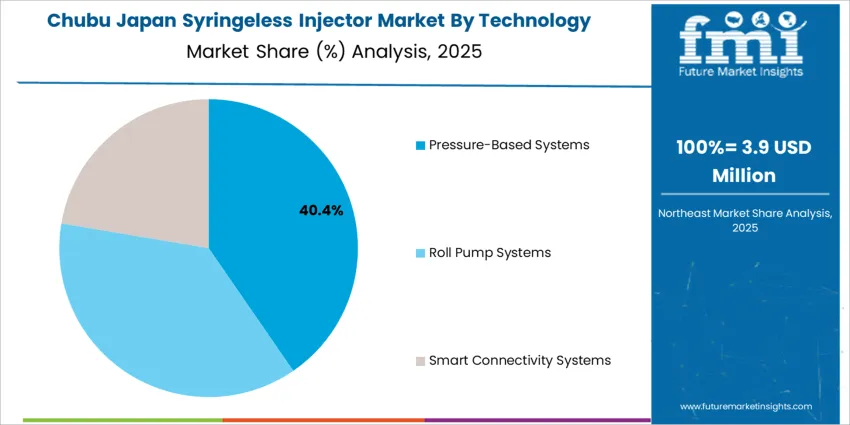
Chubu is experiencing steady demand for syringeless injectors, growing at a 3.2% CAGR. The region’s healthcare system is evolving, with more emphasis on non-invasive treatment solutions, which is contributing to the adoption of syringeless injectors. Cities like Nagoya, with their growing medical and pharmaceutical sectors, are driving the demand for devices that offer painless injections, particularly for the administration of insulin and vaccines. As the prevalence of chronic diseases like diabetes increases, the need for syringeless injectors as an alternative to traditional syringes is growing.
Chubu’s focus on improving healthcare delivery and patient comfort is driving the use of syringeless injectors, especially among those who require regular injections. With an aging population and rising healthcare awareness, Chubu’s demand for syringeless injectors is expected to increase steadily, as these devices offer a more comfortable, efficient, and less invasive method of treatment.
How is Demand for Syringeless Injectors Expanding in Tohoku?
Tohoku is seeing moderate demand for syringeless injectors, with a 2.8% CAGR. While the region is less urbanized compared to major metropolitan areas, there is a steady rise in interest for less invasive medical treatments. As awareness around chronic diseases such as diabetes grows, patients in Tohoku are increasingly seeking pain-free alternatives to traditional injections. Syringeless injectors offer a promising solution for those who require regular injections but wish to avoid the discomfort associated with syringes.
The region’s aging population is another key factor contributing to this demand, as older adults often require long-term medication management. As Tohoku’s healthcare infrastructure improves and access to modern medical technology increases, the use of syringeless injectors is expected to rise, offering a more comfortable and efficient solution for patients.
Why is Demand for Syringeless Injectors Steady in the Rest of Japan?
The Rest of Japan is experiencing steady demand for syringeless injectors, growing at a 2.7% CAGR. While demand is slower compared to urbanized regions, the growing awareness of the benefits of non-invasive drug delivery methods is driving adoption in rural areas. As more local healthcare facilities offer modern medical solutions, such as syringeless injectors, patients in rural regions are becoming more comfortable with these alternative injection methods.
The increasing prevalence of chronic conditions, such as diabetes, and the desire for less painful injections are contributing to the demand for syringeless injectors. As access to healthcare services improves, especially through online and retail channels, the demand for syringeless injectors in the Rest of Japan is expected to grow steadily, though at a more gradual pace than in larger cities.
What is the Competitive Landscape of Syringeless Injector Demand in Japan?
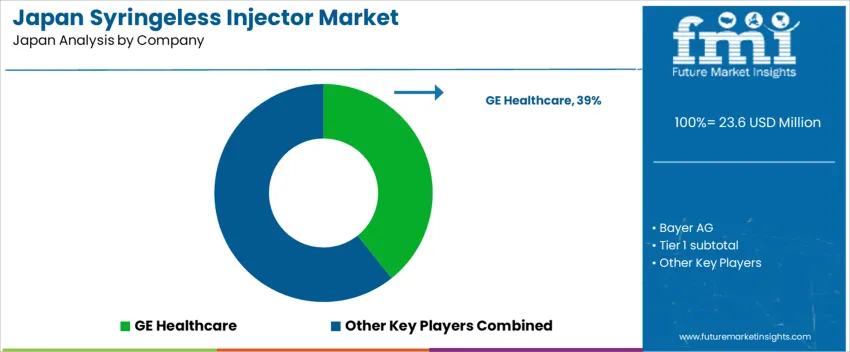
Demand for syringeless injectors in Japan is growing with rising investments in diagnostic imaging and imaging-center capacity. As healthcare providers upgrade from conventional syringe-based injectors to more efficient and safer contrast-media administration systems, the uptake of syringeless injectors has increased. Driving this are higher volumes of CT and MRI scans, increasing chronic disease diagnosis, and a push for smoother, contamination-free workflows in hospitals and diagnostic centers.
Key players in the Japanese syringeless injector industry include GE Healthcare, Bayer AG, Guerbet, and Bracco Diagnostics Inc. GE Healthcare holds the largest share at approximately 39.3%, offering advanced syringeless contrast-media injectors widely used in CT and MRI facilities. Other notable suppliers such as Bayer AG and Guerbet / Bracco Diagnostics Inc. are also active, providing high-pressure injectors and syringeless systems optimized for efficiency, safety, and compliance with Japanese clinical standards.
Several factors drive growth in this segment. First, the shift toward syringeless technology which reduces medical waste, lowers contamination risk, and speeds up patient throughput is highly valued by imaging centers. Second, increasing demand for diagnostic imaging, especially among Japan’s aging population with growing chronic-disease prevalence, ensures steady need for reliable, high-capacity injectors. Competition hinges on injector reliability, ease of use, safety features (e.g., contamination prevention), and cost efficiency. Suppliers differentiate through innovation such as pressure-based syringeless injectors, better consumable designs, and integration with hospital workflows to win contracts from hospitals and diagnostic centers.
Key Players in Japan Syringeless Injector Demand
- GE Healthcare
- Bayer AG
- Tier 1 subtotal
- Guerbet
- Bracco Diagnostics Inc.
Scope of Report
| Items | Values |
|---|---|
| Quantitative Units (2025) | USD million |
| Product Type | Injectors, Consumables and Accessories |
| Technology | Pressure-Based Systems, Roll Pump Systems, Smart Connectivity Systems |
| Region | Kyushu & Okinawa, Kanto, Kansai, Chubu, Tohoku, Rest of Japan |
| Countries Covered | Japan |
| Key Companies Profiled | GE Healthcare, Bayer AG, Guerbet, Bracco Diagnostics Inc., Other Tier 1 Companies |
| Additional Attributes | Dollar sales by product type and technology; regional CAGR and adoption trends; advancements in syringeless injector technology; increasing demand for non-invasive drug delivery systems; focus on smart connectivity and system automation |
Japan Syringeless Injector Demand by Key Segments
Product Type
- Injectors
- Consumables and Accessories
Technology
- Pressure-Based Systems
- Roll Pump Systems
- Smart Connectivity Systems
Region
- Kyushu & Okinawa
- Kanto
- Kansai
- Chubu
- Tohoku
- Rest of Japan
Frequently Asked Questions
How big is the demand for syringeless injector in Japan in 2025?
The demand for syringeless injector in Japan is estimated to be valued at USD 23.6 million in 2025.
What will be the size of syringeless injector in Japan in 2035?
The market size for the syringeless injector in Japan is projected to reach USD 33.6 million by 2035.
How much will be the demand for syringeless injector in Japan growth between 2025 and 2035?
The demand for syringeless injector in Japan is expected to grow at a 3.6% CAGR between 2025 and 2035.
What are the key product types in the syringeless injector in Japan?
The key product types in syringeless injector in Japan are injectors and consumables and accessories.
Which technology segment is expected to contribute significant share in the syringeless injector in Japan in 2025?
In terms of technology, pressure-based systems segment is expected to command 40.4% share in the syringeless injector in Japan in 2025.
Preview the report firsthand - request a free sample
Get SampleGet the brochure for pricing and purchase details.
Get PDFTable of Content
- Executive Summary
- Japan Market Outlook
- Demand-side Trends
- Supply-side Trends
- Technology Roadmap Analysis
- Analysis and Recommendations
- Market Overview
- Market Coverage / Taxonomy
- Market Definition / Scope / Limitations
- Market Background
- Market Dynamics
- Drivers
- Restraints
- Opportunity
- Trends
- Scenario Forecast
- Demand in Optimistic Scenario
- Demand in Likely Scenario
- Demand in Conservative Scenario
- Opportunity Map Analysis
- Product Life Cycle Analysis
- Supply Chain Analysis
- Investment Feasibility Matrix
- Value Chain Analysis
- PESTLE and Porter’s Analysis
- Regulatory Landscape
- Regional Parent Market Outlook
- Production and Consumption Statistics
- Import and Export Statistics
- Market Dynamics
- Japan Market Analysis 2020 to 2024 and Forecast, 2025 to 2035
- Historical Market Size Value (USD Million) Analysis, 2020 to 2024
- Current and Future Market Size Value (USD Million) Projections, 2025 to 2035
- Y-o-Y Growth Trend Analysis
- Absolute $ Opportunity Analysis
- Japan Market Pricing Analysis 2020 to 2024 and Forecast 2025 to 2035
- Japan Market Analysis 2020 to 2024 and Forecast 2025 to 2035, By Product Type
- Introduction / Key Findings
- Historical Market Size Value (USD Million) Analysis By Product Type , 2020 to 2024
- Current and Future Market Size Value (USD Million) Analysis and Forecast By Product Type , 2025 to 2035
- Injectors
- Consumables and Accessories
- Y-o-Y Growth Trend Analysis By Product Type , 2020 to 2024
- Absolute $ Opportunity Analysis By Product Type , 2025 to 2035
- Japan Market Analysis 2020 to 2024 and Forecast 2025 to 2035, By Technology
- Introduction / Key Findings
- Historical Market Size Value (USD Million) Analysis By Technology, 2020 to 2024
- Current and Future Market Size Value (USD Million) Analysis and Forecast By Technology, 2025 to 2035
- Pressure-Based Systems
- Roll Pump Systems
- Smart Connectivity Systems
- Y-o-Y Growth Trend Analysis By Technology, 2020 to 2024
- Absolute $ Opportunity Analysis By Technology, 2025 to 2035
- Market Structure Analysis
- Competition Dashboard
- Competition Benchmarking
- Market Share Analysis of Top Players
- By Regional
- By Product Type
- By Technology
- Competition Analysis
- Competition Deep Dive
- GE Healthcare
- Overview
- Product Portfolio
- Profitability by Market Segments (Product/Age /Sales Channel/Region)
- Sales Footprint
- Strategy Overview
- Marketing Strategy
- Product Strategy
- Channel Strategy
- Bayer AG
- Tier 1 subtotal
- Guerbet
- Bracco Diagnostics Inc.
- GE Healthcare
- Competition Deep Dive
- Assumptions & Acronyms Used
- Research Methodology


