

- Industry Size (2025)
- USD 2.3 Bn
- Forecast (2035)
- USD 6.0 Bn
- CAGR (2025 to 2035)
- 9.9%
Demand for Video Intercom Device in Japan Forecast and Outlook 2025 to 2035
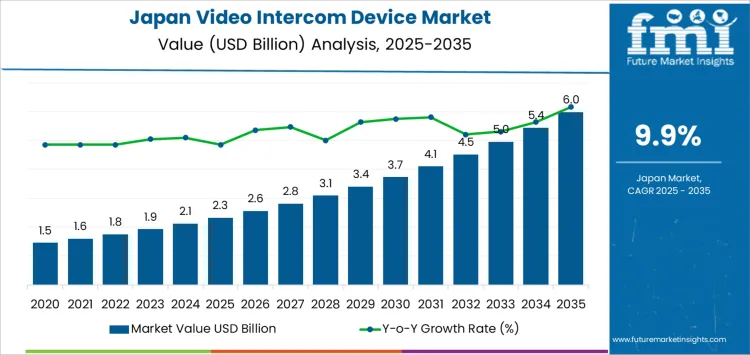
Demand for video intercom devices in Japan is valued at USD 2.3 billion in 2025 and is projected to reach USD 6.0 billion by 2035, reflecting a CAGR of 9.9%. Historical growth from USD 1.5 billion in 2020 to USD 2.3 billion by 2025 reflects rising installation across residential and institutional buildings. Door and entrance systems account for the largest share of product,s as multi-dwelling housing and gated properties adopt fixed access control formats.
IP-based technology dominates due to network compatibility and centralized monitoring capabilities. Residential use accounts for the largest vertical, as apartment construction and renovation activity remain steady. Government and commercial buildings contribute to a stable secondary demand linked to facility access management. Growth during this phase reflects structured security upgrades rather than rapid network-wide deployment across all building categories.
Quick Stats of the Demand for Video Intercom Device in Japan
- Demand for Video Intercom Device in Japan Value (2025): USD 2.3 billion
- Demand for Video Intercom Device in Japan Forecast Value (2035): USD 6.0 billion
- Demand for Video Intercom Device in Japan Forecast CAGR (2025 to 2035): 9.9%
- Demand for Video Intercom Device in Japan Leading Product: Door/Entrance System (45%)
- Demand for Video Intercom Device in Japan Key Growth Regions: Kyushu & Okinawa, Kanto, Kansai
- Demand for Video Intercom Device in Japan Top Players: DoorBird, Samsung Electronics, ABB Group, Fermax Electronica, Legrand
What is the Growth Forecast for Video Intercom Device in Japan through 2035?
From 2026 onward, demand increases from USD 2.6 billion to USD 4.1 billion by 2031, then advances to USD 6.0 billion by 2035, with annual increments widening. Commercial and public sector adoption expands as building access systems integrate with central security platforms. Handheld devices retain a stable demand in small offices and temporary facilities. Manufacturing and industrial sites adopt video intercoms more slowly, focusing on perimeter access points.
Analog-based systems continue to serve cost-sensitive retrofit projects, while IP-based formats remain the preferred option for new installations. After 2030, replacement demand becomes a major contributor as early network systems reach renewal stages. Annual value additions widen steadily, indicating rising spending per installation rather than simple unit growth alone.
Between 2025 and 2030, demand for video intercom devices in Japan is projected to rise from USD 2.3 billion to USD 3.7 billion, creating an absolute increase of USD 1.4 billion and representing about 37.8% of total decade growth. This phase reflects steady installation across residential apartments, gated communities, and small commercial buildings. Replacement demand from legacy audio systems supports baseline volumes. Historical growth relied on housing starts and basic security upgrades, while apartment renovation activity, tenant safety requirements, and wider integration with in-building communication infrastructure shape near-term performance.
From 2030 to 2035, demand is forecast to grow from USD 3.7 billion to USD 6.0 billion, representing an additional USD 2.3 billion and accounting for nearly 62.2% of the total ten-year expansion. This stage reflects deeper penetration across large residential complexes, institutional buildings, and urban redevelopment projects. Integration with access control platforms, visitor management systems, and remote property monitoring becomes more common. Earlier growth depended on unit-level installations, while system-level building upgrades, centralized security operations, and higher device density in metropolitan construction programs guide future expansion.
Video Intercom Device Industry in Japan Key Takeaways
| Metric | Value |
|---|---|
| Industry Value (2025) | USD 2.3 billion |
| Forecast Value (2035) | USD 6.0 billion |
| Forecast CAGR (2025 to 2035) | 9.9% |
What Is Driving the Demand for Video Intercom Devices in Japan Across Historical and Future Growth Cycles?
Demand for video intercom devices in Japan increased as residential and commercial security concerns rose alongside urban development. Expansion of multi-unit residential buildings and commercial complexes created need for controlled access and visitor verification. Adoption of wired video intercom systems grew because they offered stable connection and met building codes for security in high-density housing and offices. Many users replaced older audio-only intercoms with video-enabled models to allow visual confirmation of visitors, especially in apartment buildings and gated residences. Installations focused on core functions: video display, door release control, and intercom audio. Market expansion proceeded through periodic building renovations and new construction requiring intercom installations.
Future demand for video intercom devices in Japan is likely to grow with broader adoption of smart-home features, wireless and IP-based systems, and integration with cloud services. Consumers and property managers are increasingly interested in mobile-app access control, remote visitor monitoring, and integration with smart locks, cameras, and building automation systems. Growth in elder-care and senior housing drives interest in systems offering simplified remote access and emergency response capability. Commercial real estate redevelopment and retrofit projects favour wireless or IP intercoms due to flexibility and lower installation cost compared with wiring. Continued adoption depends on meeting privacy, data security and interoperability standards in smart-home and building-management ecosystems.
What Is the Demand for Video Intercom Device in Japan by Product and Technology?
Demand for video intercom device in Japan is shaped by urban residential density, aging household demographics, and rising focus on entry point security. Door and entrance systems lead by product due to wide use in apartments, gated residences, and mixed use buildings. IP-based technology leads in terms of technology due to network integration across home security and building management platforms. Real estate developers, housing associations, and facility management firms drive procurement. Import reliance remains present for imaging sensors and networking chipsets. Substitution pressure exists from smartphone based access systems. Demand stability is supported by continuous housing renewal and multi dwelling security upgrades.
Why do door and entrance systems account for 45% of the demand for video intercom devices in Japan by product?
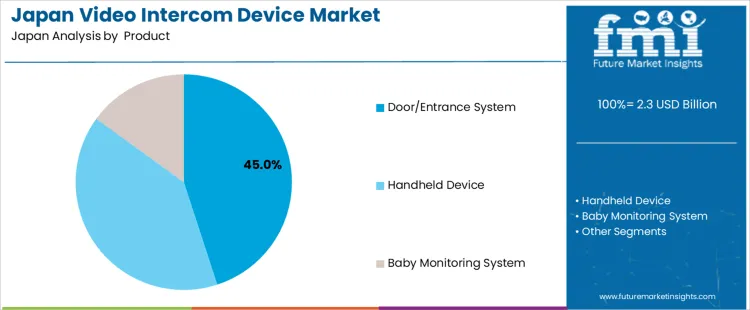
Door and entrance systems account for 45% of the demand for video intercom device in Japan by product, reflecting their role in controlled access at primary building entry points. Consumption intensity is driven by apartment complexes, condominiums, offices, and small retail buildings that require visitor verification before access approval. Usage remains stable because entry management remains a daily security requirement. Procurement is led by real estate developers, building contractors, and housing management companies. Price sensitivity remains moderate because security performance outweighs upfront device cost. Specification control emphasizes camera resolution, night vision clarity, weather resistance, and integration with door lock actuators.
Door and entrance systems also generate consistent repeat demand through residential renovation cycles and mandatory security upgrades in older buildings. Repeat utilization remains predictable as multi-unit housing stock continues to modernize. Buyers favor standardized panel formats to simplify installation across multiple floors and units. Margin structure remains controlled under competitive bidding among domestic electronics brands. Regulatory exposure centers on electrical safety compliance and building security standards. Import reliance persists for CMOS image sensors and display modules. Substitution pressure from handheld video monitors remains limited to temporary access control settings rather than permanent building entrances.
Why does IP based technology represent 65.0% of the demand for video intercom device in Japan by technology?
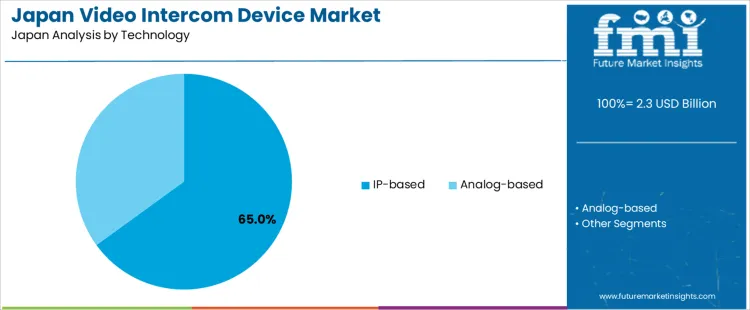
IP based technology represents 65.0% of the demand for video intercom device in Japan by technology, reflecting strong adoption of network connected security systems. Consumption intensity is driven by smart apartments, office buildings, and mixed use developments that require centralized monitoring and remote access features. Usage remains stable because IP systems support video recording, mobile device access, and cloud storage connectivity. Procurement is dominated by system integrators, telecom affiliated security firms, and smart building solution providers. Price sensitivity remains moderate because system scalability and remote management capabilities add operational value. Specification control emphasizes bandwidth efficiency, encryption strength, latency control, and compatibility with building networks.
IP-based intercom systems also generate steady repeat demand through firmware updates, network expansion, and building-wide system extensions. Repeat utilization remains predictable as properties expand unit counts and add secondary entry points. Buyers favor platforms that support multi-building management through unified dashboards. Margin structure remains controlled under long-term service and maintenance contracts. Regulatory exposure centers on data protection compliance and network security standards. Import reliance persists for networking processors and video compression chips. Substitution pressure from analog systems continues in low-budget installations where connectivity features remain underused.
What Is Driving the Demand for Video Intercom Device in Japan Residential Security and Access Control Practices?
Demand for video intercom device in Japan is shaped by dense urban housing, single occupant households, and rising focus on personal security. Apartment buildings, gated communities, and mixed use towers rely on visual verification before granting access. Parcel delivery volume has increased unattended visitor traffic, which raises reliance on camera based door communication. Elderly residents value face recognition support during caregiver and service visits. Property developers treat intercom systems as standard safety infrastructure rather than optional equipment. Demand also links to crime prevention visibility and resident peace of mind within compact living environments across metropolitan districts and commuter suburbs nationwide today.
How Are Apartment Redevelopment and Property Management Standards Shaping Installation Volume?
Urban redevelopment projects in Japan replace older analog intercom systems with network enabled video units as part of building modernization programs. Property management firms specify centralized monitoring, unit level screens, and elevator access linkage in new specifications. Maintenance optimization requires remote diagnostics and software update capability. Large residential blocks adopt intercom systems to reduce security staffing requirements at entrances. Renovation of aging public housing also introduces visual access control for safety compliance. These structured upgrade programs generate steady installation volume through capital planning cycles rather than through spontaneous consumer purchase at household level across city managed and privately operated housing stock nationwide.
Why Is Package Delivery Growth Reinforcing Video Intercom Usage in Japan?
High frequency parcel delivery in Japan places video intercom systems at the center of daily access interaction. E commerce orders, food delivery, and subscription services create frequent doorstep contact without prior notice. Residents use video units to verify identity and guide delivery staff for unattended drop off. Building managers integrate intercom video logs with access records to address disputes and theft prevention. This delivery led interaction pattern increases daily utilization intensity far beyond guest visitation alone. Demand grows with logistics traffic rather than with population change alone across apartment dense corridors and single person dwelling clusters near railway lines and business zones nationwide.
How Do Privacy Concerns, Installation Cost, and Legacy Wiring Limit Broader Adoption?
Video intercom demand in Japan faces limits from resident privacy concerns, wiring complexity, and retrofit costs in older buildings. Some occupants resist camera installation due to data storage and monitoring sensitivity. Legacy concrete structures require invasive cabling that raises renovation expense and tenant disruption. Smaller landlords defer upgrades due to limited return on investment visibility. Cybersecurity compliance increases system procurement scrutiny among corporations and hospitals. These practical and social barriers slow universal coverage across all housing categories. Adoption concentrates in new construction and managed properties where integration aligns with planned electrical layouts and shared security governance models across urban and suburban environments nationwide.
What is the Demand for Video Intercom Device in Japan by Region?
| Region | CAGR (%) |
|---|---|
| Kyushu & Okinawa | 12.4% |
| Kanto | 11.4% |
| Kansai | 10.0% |
| Chubu | 8.8% |
| Tohoku | 7.7% |
| Rest of Japan | 7.3% |
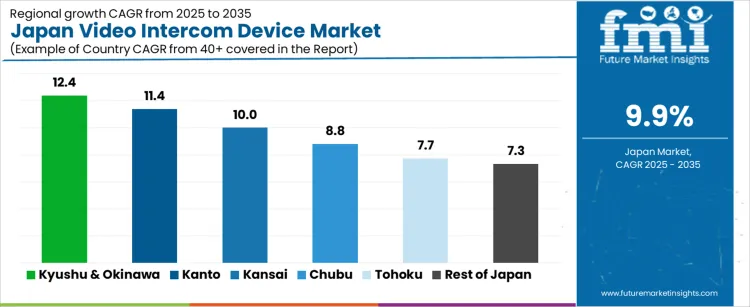
The demand for video intercom devices in Japan is rising strongly across residential and commercial security segments, led by Kyushu and Okinawa at a 12.4% CAGR. Growth in this region is supported by new housing development, resort properties, and rising adoption of smart entry systems in multi dwelling complexes. Kanto follows at 11.4%, driven by dense urban apartment construction, office security upgrades, and integration with home automation platforms.
Kansai records 10.0% growth, reflecting steady demand from real estate refurbishments and mixed use developments. Chubu at 8.8% shows moderate uptake linked to suburban housing and factory security needs. Tohoku and the Rest of Japan, at 7.7% and 7.3%, reflect slower growth shaped by lower construction activity, conservative technology adoption, and longer equipment replacement cycles.
How Is Tourism Linked Residential Security Driving Video Intercom Adoption in Kyushu and Okinawa?
Demand for video intercom device in Kyushu and Okinawa is advancing at a CAGR of 12.4% through 2035, supported by rising installation across resort residences, rental apartments, and mixed use housing near tourism zones. Property owners focus on visitor access management and package monitoring through visual entry systems. Gated communities and coastal villas apply wireless intercom models for remote access control. Growth reflects steady housing development near tourism corridors, rising short term rental activity, and consistent replacement of legacy audio based entry systems with camera enabled units.
- Resort housing drives strong visual access control demand
- Short term rentals increase entry monitoring needs
- Wireless models support retrofit installations
- Legacy audio systems shift toward video formats
Why Is High Density Urban Living Sustaining Video Intercom Growth in Kanto?
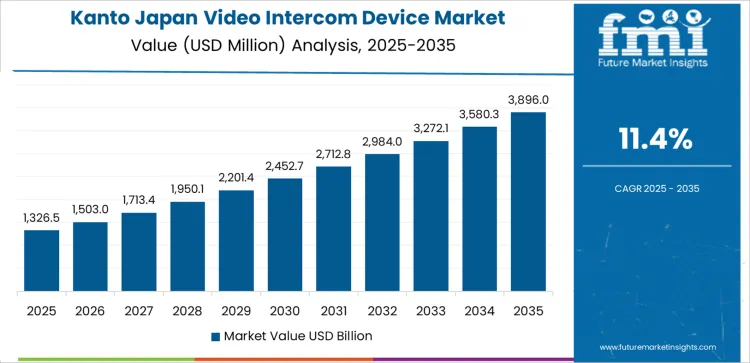
Demand for video intercom device in Kanto is rising at a CAGR of 11.4% through 2035, driven by dense apartment construction, high ownership of multi dwelling units, and strong focus on resident security management. New residential towers integrate smart entry panels with mobile connectivity and visitor logging features. Corporate housing complexes also apply centralized intercom systems for floor level access control. Growth reflects continuous real estate redevelopment, rising solo household security requirements, and high acceptance of connected home access platforms.
- Apartment towers anchor large scale system deployment
- Mobile linked entry panels gain high user acceptance
- Corporate housing supports centralized access systems
- Redevelopment projects sustain steady installation volume
What Is Supporting Balanced Video Intercom Expansion Across Kansai Residential Zones?
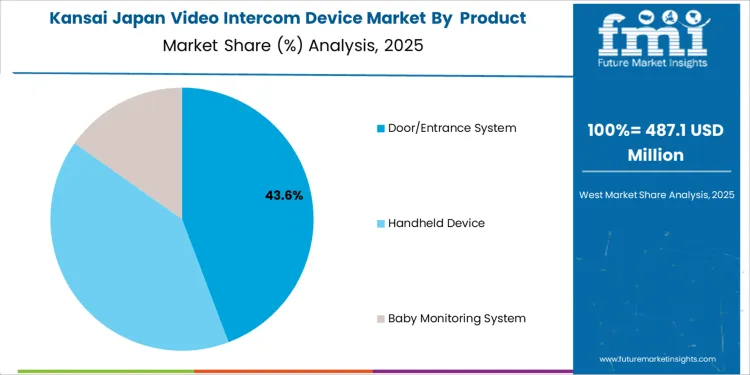
Demand for video intercom device in Kansai is progressing at a CAGR of 10.0% through 2035, supported by steady suburban housing growth, low rise apartment construction, and stable retrofitting of older residential blocks. Kansai shows balanced demand across wired and wireless intercom systems used for door access and internal unit communication. Home builders apply mid range video panels as standard security fittings. Growth remains linked to housing renovation cycles, moderate smart home adoption, and steady residential construction activity.
- Suburban housing projects support continuous installations
- Renovation cycles drive retrofit purchasing activity
- Wired and wireless systems show balanced usage
- Standard security fittings expand baseline demand
How Is Mid Scale City Expansion Shaping Video Intercom Demand in Chubu?
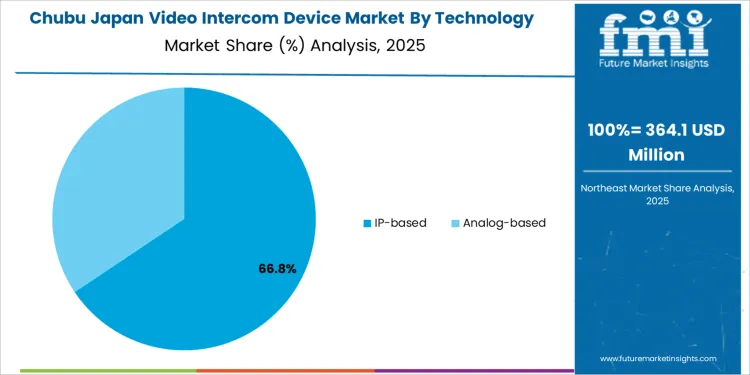
Demand for video intercom device in Chubu is advancing at a CAGR of 8.8% through 2035, supported by residential estate development, industrial worker housing, and moderate growth of smart building infrastructure. Chubu shows rising use across factory adjacent housing clusters and rental complexes serving workforce populations. Cost effective video intercom models dominate procurement decisions. Growth reflects workforce housing expansion, stable construction activity, and rising emphasis on controlled access within mixed residential industrial zones.
- Worker housing clusters drive installation activity
- Cost effective models dominate procurement trends
- Mixed use zones require controlled access systems
- Stable construction supports consistent equipment flow
Why Is Public Housing Modernization Guiding Video Intercom Growth in Tohoku?
Demand for video intercom device in Tohoku is advancing at a CAGR of 7.7% through 2035, supported by municipal housing upgrades, growing use in senior living facilities, and gradual replacement of analog door communication systems. Tohoku applies visual intercoms for elder safety monitoring and controlled building access in public facilities. Private residential uptake remains moderate. Growth reflects public housing renovation programs, safety prioritization for aging residents, and slow but steady modernization of multi-unit residential security systems.
- Senior living facilities adopt visual door access
- Public housing upgrades support installation programs
- Analog systems shift toward basic video units
- Elder safety monitoring drives functional usage demand
How Is Small City Residential Development Influencing Video Intercom Demand in Rest of Japan?
Demand for video intercom device in Rest of Japan is advancing at a CAGR of 7.3% through 2035, supported by local housing development, independent home security upgrades, and gradual penetration of smart entry systems. These areas show preference for standalone door camera units and simple indoor monitor combinations. Premium connected platforms remain limited. Growth remains steady and guided by home renovation activity, rising parcel delivery monitoring needs, and household level investment in basic visual entry security solutions.
- Standalone door cameras dominate product preference
- Home renovation drives retrofit demand
- Parcel delivery monitoring increases usage frequency
- Household safety upgrades guide steady adoption
What Is Driving the Demand for Video Intercom Device in Japan and Which Companies Shape Residential and Commercial Adoption
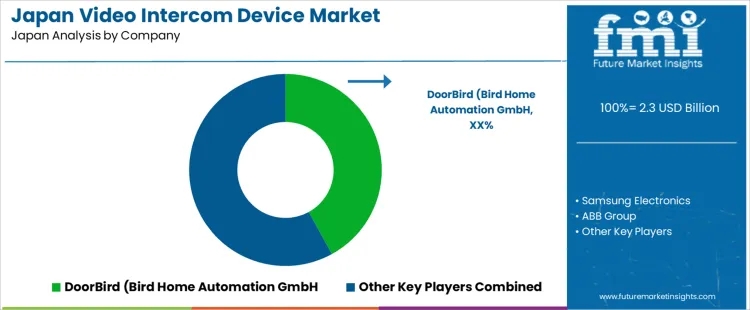
The demand for video intercom devices in Japan is shaped by dense urban housing, strong focus on entry security, and steady renovation of aging apartment buildings. Aiphone holds a central domestic position through audio and video intercom systems deployed across condominiums, detached housing, schools, and medical facilities. Panasonic supports large scale adoption through integrated door communication and access control systems supplied to housing developers and public infrastructure projects. Nasta contributes through smart entrance and delivery linked intercom systems used in high rise residential properties. These domestic suppliers anchor daily installation activity through close ties with construction firms, property managers, and maintenance contractors operating across metropolitan regions.
Samsung Electronics participates through smart home displays and connected intercom products sold through consumer electronics retail and residential system integrators. DoorBird, ABB Group, Fermax Electronica, and Legrand serve selected premium residential and commercial projects through IP based intercom systems used in luxury housing, hotels, and office developments.
System selection in Japan is governed by image clarity under low light, outdoor durability, auto lock system compatibility, and long term maintenance coverage. Buyer preference favors suppliers with domestic installation support, Japanese language interfaces, and stable replacement parts supply. Demand visibility tracks condominium construction starts, refurbishment of postwar apartment stock, and expansion of unattended delivery infrastructure across major urban prefectures.
Key Players in the Video Intercom Device Industry in Japan
- DoorBird (Bird Home Automation GmbH)
- Samsung Electronics
- ABB Group
- Fermax Electronica
- Legrand
Scope of the Report
| Items | Values |
|---|---|
| Quantitative Units (2025) | USD billion |
| Type | Door and Entrance System, Handheld Device, Baby Monitoring System |
| Application | Residential, Government, Commercial, Manufacturing and Industrial |
| End User | Real Estate Developers, Housing Associations, Property Management Firms, Government Facilities, Commercial Building Owners, Industrial Site Operators |
| Regions Covered | Kyushu and Okinawa, Kanto, Kansai, Chubu, Tohoku, Rest of Japan |
| Countries Covered | Japan |
| Key Companies Profiled | Aiphone, Panasonic, Nasta, Samsung Electronics, DoorBird (Bird Home Automation GmbH), ABB Group, Fermax Electronica, Legrand |
| Additional Attributes | Dollar sales by product and technology type, regional installation activity linked to residential construction and retrofit programs, replacement driven demand from legacy audio intercom upgrades, integration with access control and visitor management systems, data security and privacy compliance for IP based platforms, weather resistance and image clarity standards for outdoor entry point devices |
Video Intercom Device Industry in Japan Segmentation
Product:
- Door/Entrance System
- Handheld Device
- Baby Monitoring System
Technology:
- IP-based
- Analog-based
Vertical:
- Residential
- Government
- Commercial
- Manufacturing/Industrial
Region
- Kyushu & Okinawa
- Kanto
- Kansai
- Chubu
- Tohoku
- Rest of Japan
Frequently Asked Questions
How big is the demand for video intercom device in Japan in 2025?
The demand for video intercom device in Japan is estimated to be valued at USD 2.3 billion in 2025.
What will be the size of video intercom device in Japan in 2035?
The market size for the video intercom device in Japan is projected to reach USD 6.0 billion by 2035.
How much will be the demand for video intercom device in Japan growth between 2025 and 2035?
The demand for video intercom device in Japan is expected to grow at a 9.9% CAGR between 2025 and 2035.
What are the key product types in the video intercom device in Japan?
The key product types in video intercom device in Japan are door/entrance system, handheld device and baby monitoring system.
Which technology segment is expected to contribute significant share in the video intercom device in Japan in 2025?
In terms of technology, ip-based segment is expected to command 65.0% share in the video intercom device in Japan in 2025.
Preview the report firsthand - request a free sample
Get SampleGet the brochure for pricing and purchase details.
Get PDFTable of Content
- Executive Summary
- Japan Market Outlook
- Demand-side Trends
- Supply-side Trends
- Technology Roadmap Analysis
- Analysis and Recommendations
- Market Overview
- Market Coverage / Taxonomy
- Market Definition / Scope / Limitations
- Market Background
- Market Dynamics
- Drivers
- Restraints
- Opportunity
- Trends
- Scenario Forecast
- Demand in Optimistic Scenario
- Demand in Likely Scenario
- Demand in Conservative Scenario
- Opportunity Map Analysis
- Product Life Cycle Analysis
- Supply Chain Analysis
- Investment Feasibility Matrix
- Value Chain Analysis
- PESTLE and Porter’s Analysis
- Regulatory Landscape
- Regional Parent Market Outlook
- Production and Consumption Statistics
- Import and Export Statistics
- Market Dynamics
- Japan Market Analysis 2020 to 2024 and Forecast, 2025 to 2035
- Historical Market Size Value (USD Million) Analysis, 2020 to 2024
- Current and Future Market Size Value (USD Million) Projections, 2025 to 2035
- Y-o-Y Growth Trend Analysis
- Absolute $ Opportunity Analysis
- Japan Market Pricing Analysis 2020 to 2024 and Forecast 2025 to 2035
- Japan Market Analysis 2020 to 2024 and Forecast 2025 to 2035, By Product
- Introduction / Key Findings
- Historical Market Size Value (USD Million) Analysis By Product , 2020 to 2024
- Current and Future Market Size Value (USD Million) Analysis and Forecast By Product , 2025 to 2035
- Door/Entrance System
- Handheld Device
- Baby Monitoring System
- Y-o-Y Growth Trend Analysis By Product , 2020 to 2024
- Absolute $ Opportunity Analysis By Product , 2025 to 2035
- Japan Market Analysis 2020 to 2024 and Forecast 2025 to 2035, By Technology
- Introduction / Key Findings
- Historical Market Size Value (USD Million) Analysis By Technology, 2020 to 2024
- Current and Future Market Size Value (USD Million) Analysis and Forecast By Technology, 2025 to 2035
- IP-based
- Analog-based
- Y-o-Y Growth Trend Analysis By Technology, 2020 to 2024
- Absolute $ Opportunity Analysis By Technology, 2025 to 2035
- Japan Market Analysis 2020 to 2024 and Forecast 2025 to 2035, By Vertical
- Introduction / Key Findings
- Historical Market Size Value (USD Million) Analysis By Vertical, 2020 to 2024
- Current and Future Market Size Value (USD Million) Analysis and Forecast By Vertical, 2025 to 2035
- Residential
- Government
- Commercial
- Manufacturing/Industrial
- Y-o-Y Growth Trend Analysis By Vertical, 2020 to 2024
- Absolute $ Opportunity Analysis By Vertical, 2025 to 2035
- Market Structure Analysis
- Competition Dashboard
- Competition Benchmarking
- Market Share Analysis of Top Players
- By Regional
- By Product
- By Technology
- By Vertical
- Competition Analysis
- Competition Deep Dive
- DoorBird (Bird Home Automation GmbH
- Overview
- Product Portfolio
- Profitability by Market Segments (Product/Age /Sales Channel/Region)
- Sales Footprint
- Strategy Overview
- Marketing Strategy
- Product Strategy
- Channel Strategy
- Samsung Electronics
- ABB Group
- Fermax Electronica
- Legrand
- DoorBird (Bird Home Automation GmbH
- Competition Deep Dive
- Assumptions & Acronyms Used
- Research Methodology


