

- Industry Size (2025)
- USD 698.0 Mn
- Forecast (2035)
- USD 1094.5 Mn
- CAGR (2025 to 2035)
- 4.6%
Knife Sharpener and Honer Market Size and Share Forecast Outlook 2025 to 2035
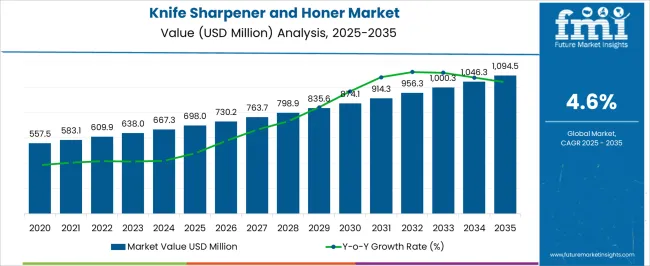
The knife sharpener and honer market is estimated to be valued at USD 698.0 million in 2025 and is projected to reach USD 1094.5 million by 2035, registering a compound annual growth rate (CAGR) of 4.6% over the forecast period.
The knife sharpener and honer market is projected to reach USD 698.0 million in 2025 and grow to USD 1,094.5 million by 2035, exhibiting a CAGR of 4.6%. From 2021 to 2025, the market has seen steady growth, increasing from USD 557.5 million to USD 698.0 million. Over the next decade, the growth trajectory is expected to continue, with a consistent climb in market value, eventually surpassing USD 1 billion in 2030. This value accumulation is indicative of the market’s stable demand driven by the rise in home cooking and DIY activities, as well as growing consumer awareness of knife maintenance.
The year-on-year growth follows a steady pattern, reflecting gradual but constant adoption of both manual and electric sharpeners, particularly among residential consumers. The market value saw an increase from USD 557.5 million in 2021 to USD 583.1 million in 2022 and continued rising in subsequent years. By 2024, the market had reached USD 667.3 million, before achieving USD 698.0 million by 2025. This indicates a solid growth curve in response to increasing consumer spending on premium kitchen tools, further compounded by a growing awareness of the importance of maintaining kitchen knives in top condition. In 2035, the market is expected to cross USD 1 billion, with the cumulative value seeing a peak-to-trough analysis that supports this steady, long-term growth trajectory.
Professional kitchens drive substantial demand through high-volume blade maintenance requirements that create predictable replacement cycles for commercial-grade sharpening equipment. Restaurant operators, butcher shops, and food processing facilities typically maintain relationships with specialized suppliers who provide industrial sharpening systems capable of handling continuous use patterns.
These commercial buyers prioritize durability and processing speed over cost considerations, creating a market segment where premium pricing remains sustainable. Procurement departments in large food service chains often establish long-term contracts with equipment suppliers, reducing price volatility but creating barriers for new market entrants seeking to establish distribution channels.
Consumer markets demonstrate different purchasing behaviors influenced by cooking frequency, blade quality awareness, and storage space constraints in residential kitchens. Retail channels include specialty culinary stores, general merchandise retailers, and online platforms where product differentiation occurs through brand positioning rather than functional capabilities.
Marketing strategies focus on ease of use and safety features rather than technical specifications, reflecting the knowledge gap between professional and amateur users. Price sensitivity varies considerably across geographic markets, with premium segments emerging in regions where culinary education and cooking culture support higher spending on kitchen maintenance tools.
Quick Stats for Knife Sharpener and Honer Market
- Knife Sharpener and Honer Market Value (2025): USD 698.0 million
- Knife Sharpener and Honer Market Forecast Value (2035): USD 1094.5 million
- Knife Sharpener and Honer Market Forecast CAGR: 4.6%
- Leading Segment in Knife Sharpener and Honer Market in 2025: Manual knife sharpeners (32.8%)
- Key Growth Regions in Knife Sharpener and Honer Market: North America, Asia-Pacific, Europe
- Top Players in Knife Sharpener and Honer Market: DMT (Diamond Machining Technology); EdgeCraft Corporation; Fortune Products, Inc.; Global (F. Dick GmbH); KAI Corporation; Lansky Sharpeners; Messermeister, Inc.; Razor Edge Systems; Sharpal; Smith’s Consumer Products, Inc.; Spyderco, Inc.; Tormek AB; Wüsthof; Zwilling J.A. Henckels.
Knife Sharpener and Honer Market Key Takeaways
| Metric | Value |
|---|---|
| Knife Sharpener and Honer Market Estimated Value in (2025 E) | USD 698.0 million |
| Knife Sharpener and Honer Market Forecast Value in (2035 F) | USD 1094.5 million |
| Forecast CAGR (2025 to 2035) | 4.6% |
Why is the Knife Sharpener and Honer Market Growing?
The knife sharpener and honer market is experiencing consistent growth, supported by the rising demand for effective and convenient blade maintenance solutions across both residential and commercial environments. Increasing consumer interest in cooking, driven by culinary awareness and home dining trends, is expanding the need for products that extend the life and efficiency of knives. Technological advancements in sharpening mechanisms and ergonomic designs are improving ease of use and safety, encouraging higher adoption rates.
The availability of diverse product formats catering to varying skill levels and budgets is broadening the consumer base. Additionally, growing emphasis on food preparation hygiene and precision cutting in both home and professional kitchens is influencing purchase decisions.
The proliferation of e-commerce channels is enhancing accessibility and product variety, while the integration of durable materials and advanced honing technologies is boosting product lifespan As consumers increasingly prioritize performance, safety, and convenience in kitchen tools, the market is expected to maintain steady expansion, with innovation and functionality driving competitive differentiation among leading manufacturers.
Segmental Analysis
The knife sharpener and honer market is segmented by product type, end use, and geographic regions. By product type, knife sharpener and honer market is divided into Manual knife sharpeners, Electric Knife Sharpeners, and Honing Machines. In terms of end use, knife sharpener and honer market is classified into Residential and Commercial. Regionally, the knife sharpener and honer industry is classified into North America, Latin America, Western Europe, Eastern Europe, Balkan & Baltic Countries, Russia & Belarus, Central Asia, East Asia, South Asia & Pacific, and the Middle East & Africa.
Insights into the Manual Knife Sharpeners Product Type Segment
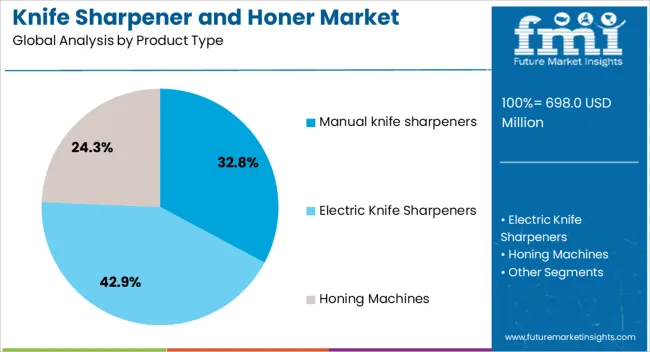
The manual knife sharpeners segment is projected to hold 32.8% of the knife sharpener and honer market revenue share in 2025, positioning it as the leading product type. This dominance is being driven by the affordability, portability, and user-friendly nature of manual devices, which appeal to a wide range of consumers. Manual sharpeners require no electricity, making them accessible for use in any setting, including outdoor and remote locations.
The segment benefits from a perception of greater control during sharpening, allowing users to fine-tune blade edges according to preference. Advances in abrasive materials and multi-stage sharpening slots are improving performance consistency and reducing wear on blades.
The durability and low maintenance requirements of manual sharpeners further support their popularity in both residential and light commercial environments With rising demand for cost-effective yet reliable sharpening solutions, and the continued preference for hands-on control in kitchen maintenance, this segment is expected to retain its leadership position over the forecast period.
Insights into the Residential End Use Segment
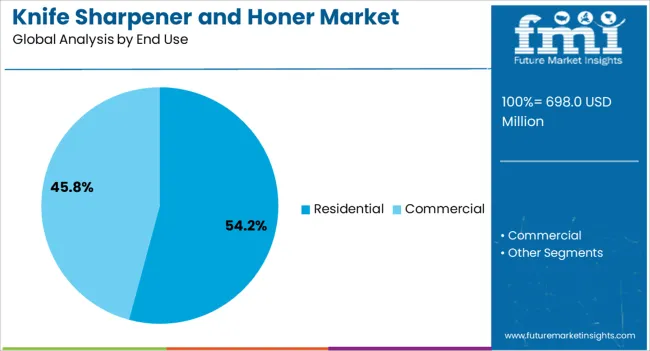
The residential segment is anticipated to account for 54.2% of the knife sharpener and honer market revenue share in 2025, making it the largest end-use category. This leadership is being reinforced by the increasing popularity of home cooking, meal preparation, and gourmet culinary practices among households. The segment benefits from the growing trend of investing in quality kitchen tools and maintaining them for long-term use, particularly among consumers who own high-value knives.
Residential users often seek sharpening and honing solutions that combine ease of use, safety, and compact storage, making them more inclined to purchase products tailored for home environments. Marketing initiatives highlighting product safety features, ergonomic designs, and time-saving capabilities are further influencing household adoption.
The expansion of online retail channels is also enabling greater access to a variety of models, encouraging product upgrades and replacements As consumer awareness about knife maintenance continues to rise, the residential segment is expected to sustain its dominant position through a combination of practicality, affordability, and functional performance.
What are the Drivers, Restraints, and Key Trends of the Knife Sharpener and Honer Market?
The knife sharpener and honer market is experiencing steady growth, driven by the rising popularity of home cooking and DIY activities. As more consumers invest in premium kitchen tools, particularly knives, the demand for reliable sharpening and honing solutions is increasing. The market offers a wide range of products, including manual and electric sharpeners, catering to both residential and commercial users. The residential segment holds a significant share of the market and is expected to maintain its dominance throughout the forecast period as awareness of knife maintenance continues to grow.
Challenges in Knife Sharpener and Honer Market Development
A significant hurdle is the safety concerns associated with manual sharpeners, which require skill and experience to achieve the correct angle and pressure. This can lead to inconsistent sharpening quality and potential accidents. Additionally, the availability of alternative sharpening methods, such as professional sharpening services, poses competition to the market. The high cost of advanced electric sharpeners may also deter some consumers from adopting these products. Furthermore, the market is fragmented with numerous players offering a wide range of products, making it challenging for consumers to identify the most suitable option for their needs. Addressing these challenges requires continuous innovation, consumer education, and improved product designs to enhance safety and usability.
Drivers of Knife Sharpener and Honer Market Growth
The knife sharpener and honer market is primarily driven by the increasing demand for home cooking and DIY activities. The popularity of cooking shows and online culinary content has inspired many individuals to engage in home cooking, leading to a higher demand for quality kitchen tools, including knives. As consumers invest in premium knives, the need for proper maintenance through sharpening and honing becomes essential to prolong the lifespan and performance of these tools. Additionally, the growing awareness about the importance of knife maintenance and safety has contributed to the market's expansion. The availability of a wide range of sharpening products, from manual to electric models, offers consumers various options to suit their preferences and budgets. These factors collectively contribute to the robust growth of the knife sharpener and honer market.
Opportunities for Innovation and Market Expansion
The knife sharpener and honer market presents numerous opportunities for innovation and expansion. Advancements in technology have led to the development of electric sharpeners with features such as adjustable sharpening angles, multiple grinding stages, and ergonomic designs, catering to both amateur and professional chefs. The integration of smart technologies, such as Bluetooth connectivity and app integration, allows users to monitor and control the sharpening process remotely, enhancing convenience and precision. Furthermore, the growing trend of outdoor activities and camping has increased the demand for portable and compact sharpening tools. Manufacturers can capitalize on these trends by developing products that cater to specific consumer needs, thereby expanding their market reach. Additionally, partnerships with culinary schools, professional chefs, and online culinary platforms can further promote product adoption and brand recognition.
Trends Influencing the Future of Knife Sharpeners and Honers
The increasing preference for electric sharpeners over manual ones is driven by their ease of use and consistent results. Consumers are seeking products that offer convenience, speed, and precision in the sharpening process. The integration of advanced technologies, such as digital displays, angle guides, and automated sharpening systems, is enhancing the functionality and user experience of these products. There is also a growing emphasis on the development of compact and portable sharpening tools, catering to consumers with limited storage space or those who require mobility. Additionally, the rise of online retail platforms has made it easier for consumers to access a wide variety of sharpening products, leading to increased competition and innovation in the market.
Analysis of Knife Sharpener and Honer Market By Key Countries
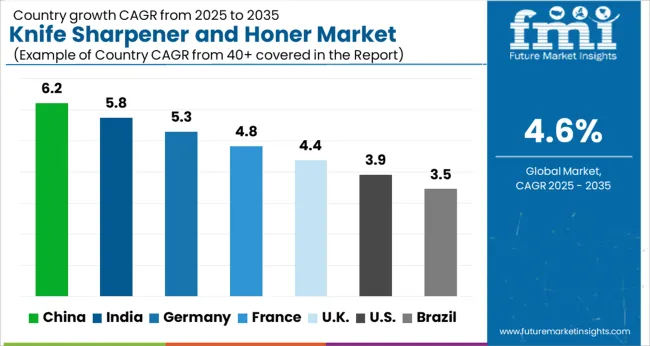
| Country | CAGR |
|---|---|
| China | 6.2% |
| India | 5.8% |
| Germany | 5.3% |
| France | 4.8% |
| UK | 4.4% |
| USA | 3.9% |
| Brazil | 3.5% |
The global knife sharpener and honer market is growing at a CAGR of 4.6% from 2025 to 2035. Among the key markets, China leads with a growth rate of 6.2%, followed by India at 5.8%, and Germany at 5.3%. The United Kingdom and the United States show more moderate growth rates of 4.4% and 3.9%, respectively. The growth is driven by the rising demand for high-quality kitchen tools in the foodservice, retail, and consumer sectors. As urbanization, home cooking, and culinary interest rise, the market for specialized sharpeners and honers continues to expand. The analysis spans over 40+ countries, with the leading markets shown below.
In-depth Analysis of Knife Sharpener and Honer Market in China
China is expected to lead the global knife sharpener and honer market, expanding at a CAGR of 6.2% from 2025 to 2035. The growing demand for precision kitchen tools in the country’s expanding foodservice and home cooking industries is driving the market’s growth. China’s increasing urbanization and improving disposable income are also contributing to higher demand for high-quality kitchen equipment, including knife sharpeners and honers. As e-commerce and online sales continue to grow, the demand for innovative, easy-to-use knife sharpeners is expected to rise. China’s significant manufacturing base in consumer goods ensures the availability of a wide variety of sharpener products.
- Growing demand for high-quality kitchen equipment due to expanding foodservice and home cooking industries.
- Increasing urbanization and disposable income driving higher demand for advanced knife sharpening tools.
- Rapid growth of e-commerce platforms fueling demand for convenient, innovative kitchen tools.
Sales Outlook for Knife Sharpener and Honer Market in India
The knife sharpener and honer market in India is set to expand at a CAGR of 5.8% from 2025 to 2035. The growing demand for kitchen appliances in India’s expanding middle class is one of the key factors driving the market. As urbanization increases, more people are adopting modern kitchen tools, including knife sharpeners and honers, for both commercial and home use. Additionally, the rise in foodservice and hospitality sectors, along with greater awareness about maintaining kitchen tools, is expected to further boost the market. The increasing availability of knife sharpeners through online and offline retail channels is also contributing to the growth of the market.
- Rising demand for advanced kitchen tools driven by an expanding middle class.
- Growth in foodservice and hospitality sectors contributing to higher demand for efficient kitchen equipment.
- Increasing online and offline retail availability enhancing market penetration.
Growth Outlook for Optical Communication and Networking Market in France
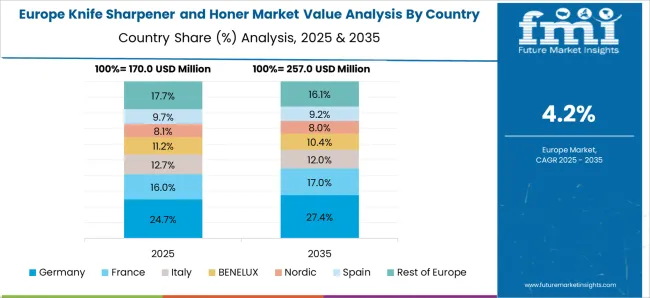
The knife sharpener and honer market in France is growing at a CAGR of 5.3% from 2025 to 2035. The country’s strong culinary culture and high demand for professional kitchen tools are key factors contributing to this growth. As France continues to focus on high-quality food preparation and innovation in the culinary field, the demand for reliable and durable knife sharpeners is rising. The market is also being driven by the increasing popularity of home cooking and DIY kitchen projects. As awareness grows about the importance of maintaining kitchen tools, the demand for specialized sharpeners and honers continues to increase.
- Strong demand for high-quality, durable kitchen tools driven by Germany’s culinary culture.
- Growing popularity of home cooking and DIY kitchen projects driving demand for reliable sharpeners.
- Increasing awareness about the importance of maintaining kitchen tools contributing to market growth.
Future Outlook for Knife Sharpener and Honer Market in the United Kingdom
The knife sharpener and honer market in the United Kingdom is expanding at a CAGR of 4.4% from 2025 to 2035. The UK is experiencing a growing interest in premium kitchen tools, with consumers increasingly investing in high-quality knives and sharpening systems. The demand for kitchen accessories, including knife sharpeners, is also rising due to the growing popularity of culinary shows and home cooking. As people continue to value well-maintained, long-lasting kitchen tools, the market for specialized sharpeners and honers is expected to see continued growth. The retail expansion and e-commerce boom in the UK are further boosting market accessibility.
- Growing interest in premium kitchen tools driving demand for high-quality sharpeners and honers.
- Increased focus on home cooking and culinary shows boosting the market for kitchen accessories.
- Retail and e-commerce growth improving accessibility and demand for knife sharpeners.
Growth Insights for Knife Sharpener and Honer Market in the United States
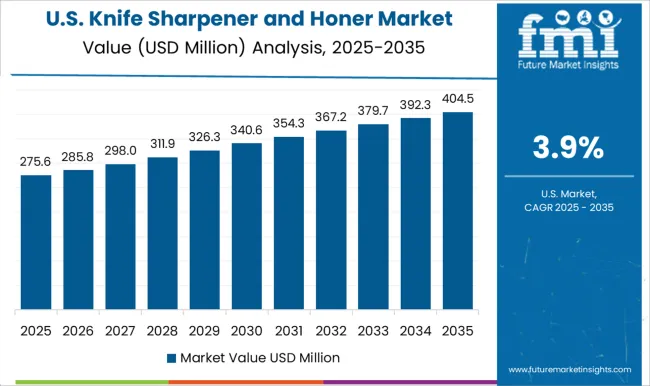
The USA knife sharpener and honer market is expected to grow at a CAGR of 3.9% from 2025 to 2035. The USA market is largely driven by the increasing focus on kitchen efficiency and the growing consumer interest in home cooking and culinary skills. As people continue to invest in premium kitchen tools and equipment, the demand for quality knife sharpeners and honers is expected to rise. The market is also supported by a growing trend of specialty knives and custom kitchenware, further driving the need for precision sharpening and maintenance tools in residential and professional kitchens.
- Increased focus on kitchen efficiency and consumer interest in home cooking driving market demand.
- Growing demand for premium kitchen tools, including knives and sharpening systems.
- Rising popularity of specialty knives and custom kitchenware boosting the need for precision sharpeners.
Competitive Landscape of Knife Sharpener and Honer Market
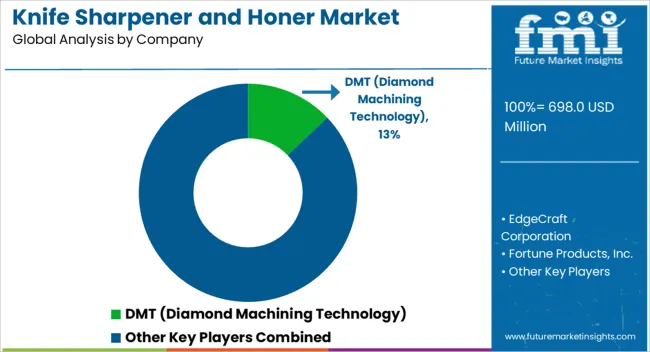
The knife sharpener and honer market is driven by brands offering diverse sharpening technologies, catering to both professional and consumer segments. DMT (Diamond Machining Technology) leads with diamond-impregnated sharpening tools that ensure precision, durability, and consistent performance across manual and bench models. EdgeCraft Corporation, under its Chef’sChoice brand, dominates the electric sharpener segment with multi-stage sharpening and honing systems designed for professional kitchens and home users. Fortune Products, Inc. and Smith’s Consumer Products, Inc. specialize in manual and pull-through sharpeners, focusing on affordability and ease of use.
KAI Corporation and Global (F. Dick GmbH) provide hybrid solutions that combine traditional craftsmanship with modern sharpening technologies, targeting culinary professionals. Lansky Sharpeners is recognized for its guided systems that deliver precision angle control, ideal for enthusiasts and outdoor users. Tormek AB offers premium water-cooled systems that minimize blade wear while achieving razor-sharp finishes, appealing to workshops and professional chefs.
Wüsthof and Zwilling J.A. Henckels produce high-end sharpeners designed to complement their knife lines, ensuring edge consistency and premium usability. Messermeister, Spyderco, Sharpal, and Razor Edge Systems focus on portable, compact solutions for outdoor, tactical, and everyday applications. Competitive differentiation centers on technology, ergonomics, and reliability across both manual and electric sharpening categories.
Key Players in the Knife Sharpener and Honer Market
- DMT (Diamond Machining Technology)
- EdgeCraft Corporation
- Fortune Products, Inc.
- Global (F. Dick GmbH)
- KAI Corporation
- Lansky Sharpeners
The knife sharpener and honer market is driven by brands offering diverse sharpening technologies, catering to both professional and consumer segments. DMT (Diamond Machining Technology) leads with diamond-impregnated sharpening tools that ensure precision, durability, and consistent performance across manual and bench models. EdgeCraft Corporation, under its Chef’sChoice brand, dominates the electric sharpener segment with multi-stage sharpening and honing systems designed for professional kitchens and home users. Fortune Products, Inc. and Smith’s Consumer Products, Inc. specialize in manual and pull-through sharpeners, focusing on affordability and ease of use.
KAI Corporation and Global (F. Dick GmbH) provide hybrid solutions that combine traditional craftsmanship with modern sharpening technologies, targeting culinary professionals. Lansky Sharpeners is recognized for its guided systems that deliver precision angle control, ideal for enthusiasts and outdoor users. Tormek AB offers premium water-cooled systems that minimize blade wear while achieving razor-sharp finishes, appealing to workshops and professional chefs.
Wüsthof and Zwilling J.A. Henckels produce high-end sharpeners designed to complement their knife lines, ensuring edge consistency and premium usability. Messermeister, Spyderco, Sharpal, and Razor Edge Systems focus on portable, compact solutions for outdoor, tactical, and everyday applications. Competitive differentiation centers on technology, ergonomics, and reliability across both manual and electric sharpening categories.
- Messermeister, Inc.
- Razor Edge Systems
- Sharpal
- Smith’s Consumer Products, Inc.
- Spyderco, Inc.
- Tormek AB
- Wüsthof
- Zwilling J.A. Henckels
Scope of the Report
| Item | Value |
|---|---|
| Quantitative Units | USD 698.0 Million |
| Product Type | Manual knife sharpeners, Electric Knife Sharpeners, and Honing Machines |
| End Use | Residential and Commercial |
| Regions Covered | North America, Europe, Asia-Pacific, Latin America, Middle East & Africa |
| Country Covered | United States, Canada, Germany, France, United Kingdom, China, Japan, India, Brazil, South Africa |
| Key Companies Profiled | DMT (Diamond Machining Technology); EdgeCraft Corporation; Fortune Products, Inc.; Global (F. Dick GmbH); KAI Corporation; Lansky Sharpeners; Messermeister, Inc.; Razor Edge Systems; Sharpal; Smith’s Consumer Products, Inc.; Spyderco, Inc.; Tormek AB; Wüsthof; Zwilling J.A. Henckels. |
| Additional Attributes | Dollar sales by product type (manual, electric, belt), sharpening medium (diamond, ceramic, steel, water-cooled), and applications (professional, home, outdoor). Demand dynamics are influenced by consumer preference for convenience, with electric sharpeners gaining traction for their ease of use, while manual sharpeners are favored for precision. Regional trends show strong adoption in North America and Europe, driven by the growing interest in culinary activities and outdoor hobbies, leading to increased demand for high-quality and portable sharpening solutions. |
Knife Sharpener and Honer Market by Segments
Product Type:
- Manual knife sharpeners
- Electric Knife Sharpeners
- Honing Machines
End Use:
- Residential
- Commercial
Region:
- North America
- USA
- Canada
- Mexico
- Latin America
- Brazil
- Chile
- Rest of Latin America
- Western Europe
- Germany
- UK
- Italy
- Spain
- France
- Nordic
- BENELUX
- Rest of Western Europe
- Eastern Europe
- Russia
- Poland
- Hungary
- Balkan & Baltic
- Rest of Eastern Europe
- East Asia
- China
- Japan
- South Korea
- South Asia and Pacific
- India
- ASEAN
- Australia & New Zealand
- Rest of South Asia and Pacific
- Middle East & Africa
- Kingdom of Saudi Arabia
- Other GCC Countries
- Turkiye
- South Africa
- Other African Union
- Rest of Middle East & Africa
Frequently Asked Questions
How big is the knife sharpener and honer market in 2025?
The global knife sharpener and honer market is estimated to be valued at USD 698.0 million in 2025.
What will be the size of knife sharpener and honer market in 2035?
The market size for the knife sharpener and honer market is projected to reach USD 1,094.5 million by 2035.
How much will be the knife sharpener and honer market growth between 2025 and 2035?
The knife sharpener and honer market is expected to grow at a 4.6% CAGR between 2025 and 2035.
What are the key product types in the knife sharpener and honer market?
The key product types in knife sharpener and honer market are manual knife sharpeners, _sharpening stones, _honing rods, _handheld manual sharpeners, _manual rotary sharpeners, electric knife sharpeners, _two-stage electric sharpeners, _three-stage electric sharpeners, honing machines, _manual honing machines and _electric honing machines.
Which end use segment to contribute significant share in the knife sharpener and honer market in 2025?
In terms of end use, residential segment to command 54.2% share in the knife sharpener and honer market in 2025.
Preview the report firsthand - request a free sample
Get SampleGet the brochure for pricing and purchase details.
Get PDFTable of Content
- Executive Summary
- Global Market Outlook
- Demand-side Trends
- Supply-side Trends
- Technology Roadmap Analysis
- Analysis and Recommendations
- Market Overview
- Market Coverage / Taxonomy
- Market Definition / Scope / Limitations
- Market Background
- Market Dynamics
- Drivers
- Restraints
- Opportunity
- Trends
- Scenario Forecast
- Demand in Optimistic Scenario
- Demand in Likely Scenario
- Demand in Conservative Scenario
- Opportunity Map Analysis
- Product Life Cycle Analysis
- Supply Chain Analysis
- Investment Feasibility Matrix
- Value Chain Analysis
- PESTLE and Porter’s Analysis
- Regulatory Landscape
- Regional Parent Market Outlook
- Production and Consumption Statistics
- Import and Export Statistics
- Market Dynamics
- Global Knife Sharpener and Honer Market Analysis 2020-2024 and Forecast, 2025-2035
- Historical Market Size Value (USD Mn) Analysis, 2020-2024
- Current and Future Market Size Value (USD Mn) Projections, 2025-2035
- Y-o-Y Growth Trend Analysis
- Absolute $ Opportunity Analysis
- Global Knife Sharpener and Honer Market Pricing Analysis 2020-2024 and Forecast 2025-2035
- Global Knife Sharpener and Honer Market Analysis 2020-2024 and Forecast 2025-2035, By Product Type
- Introduction / Key Findings
- Historical Market Size Value (USD Mn) Analysis By Product Type , 2020-2024
- Current and Future Market Size Value (USD Mn) Analysis and Forecast By Product Type , 2025-2035
- Manual knife sharpeners
- Sharpening stones
- Honing rods
- Handheld manual sharpeners
- Manual rotary sharpeners
- Electric Knife Sharpeners
- Two-stage electric sharpeners
- Three-stage electric sharpeners
- Honing Machines
- Manual honing machines
- Electric honing machines
- Manual knife sharpeners
- Y-o-Y Growth Trend Analysis By Product Type , 2020-2024
- Absolute $ Opportunity Analysis By Product Type , 2025-2035
- Global Knife Sharpener and Honer Market Analysis 2020-2024 and Forecast 2025-2035, By End Use
- Introduction / Key Findings
- Historical Market Size Value (USD Mn) Analysis By End Use, 2020-2024
- Current and Future Market Size Value (USD Mn) Analysis and Forecast By End Use, 2025-2035
- Residential
- Commercial
- Y-o-Y Growth Trend Analysis By End Use, 2020-2024
- Absolute $ Opportunity Analysis By End Use, 2025-2035
- Global Knife Sharpener and Honer Market Analysis 2020-2024 and Forecast 2025-2035, By Region
- Introduction
- Historical Market Size Value (USD Mn) Analysis By Region, 2020-2024
- Current Market Size Value (USD Mn) Analysis and Forecast By Region, 2025-2035
- North America
- Latin America
- Western Europe
- Eastern Europe
- East Asia
- South Asia and Pacific
- Middle East & Africa
- Market Attractiveness Analysis By Region
- North America Knife Sharpener and Honer Market Analysis 2020-2024 and Forecast 2025-2035, By Country
- Historical Market Size Value (USD Mn) Trend Analysis By Market Taxonomy, 2020-2024
- Market Size Value (USD Mn) Forecast By Market Taxonomy, 2025-2035
- By Country
- USA
- Canada
- Mexico
- By Product Type
- By End Use
- By Country
- Market Attractiveness Analysis
- By Country
- By Product Type
- By End Use
- Key Takeaways
- Latin America Knife Sharpener and Honer Market Analysis 2020-2024 and Forecast 2025-2035, By Country
- Historical Market Size Value (USD Mn) Trend Analysis By Market Taxonomy, 2020-2024
- Market Size Value (USD Mn) Forecast By Market Taxonomy, 2025-2035
- By Country
- Brazil
- Chile
- Rest of Latin America
- By Product Type
- By End Use
- By Country
- Market Attractiveness Analysis
- By Country
- By Product Type
- By End Use
- Key Takeaways
- Western Europe Knife Sharpener and Honer Market Analysis 2020-2024 and Forecast 2025-2035, By Country
- Historical Market Size Value (USD Mn) Trend Analysis By Market Taxonomy, 2020-2024
- Market Size Value (USD Mn) Forecast By Market Taxonomy, 2025-2035
- By Country
- Germany
- UK
- Italy
- Spain
- France
- Nordic
- BENELUX
- Rest of Western Europe
- By Product Type
- By End Use
- By Country
- Market Attractiveness Analysis
- By Country
- By Product Type
- By End Use
- Key Takeaways
- Eastern Europe Knife Sharpener and Honer Market Analysis 2020-2024 and Forecast 2025-2035, By Country
- Historical Market Size Value (USD Mn) Trend Analysis By Market Taxonomy, 2020-2024
- Market Size Value (USD Mn) Forecast By Market Taxonomy, 2025-2035
- By Country
- Russia
- Poland
- Hungary
- Balkan & Baltic
- Rest of Eastern Europe
- By Product Type
- By End Use
- By Country
- Market Attractiveness Analysis
- By Country
- By Product Type
- By End Use
- Key Takeaways
- East Asia Knife Sharpener and Honer Market Analysis 2020-2024 and Forecast 2025-2035, By Country
- Historical Market Size Value (USD Mn) Trend Analysis By Market Taxonomy, 2020-2024
- Market Size Value (USD Mn) Forecast By Market Taxonomy, 2025-2035
- By Country
- China
- Japan
- South Korea
- By Product Type
- By End Use
- By Country
- Market Attractiveness Analysis
- By Country
- By Product Type
- By End Use
- Key Takeaways
- South Asia and Pacific Knife Sharpener and Honer Market Analysis 2020-2024 and Forecast 2025-2035, By Country
- Historical Market Size Value (USD Mn) Trend Analysis By Market Taxonomy, 2020-2024
- Market Size Value (USD Mn) Forecast By Market Taxonomy, 2025-2035
- By Country
- India
- ASEAN
- Australia & New Zealand
- Rest of South Asia and Pacific
- By Product Type
- By End Use
- By Country
- Market Attractiveness Analysis
- By Country
- By Product Type
- By End Use
- Key Takeaways
- Middle East & Africa Knife Sharpener and Honer Market Analysis 2020-2024 and Forecast 2025-2035, By Country
- Historical Market Size Value (USD Mn) Trend Analysis By Market Taxonomy, 2020-2024
- Market Size Value (USD Mn) Forecast By Market Taxonomy, 2025-2035
- By Country
- Kingdom of Saudi Arabia
- Other GCC Countries
- Turkiye
- South Africa
- Other African Union
- Rest of Middle East & Africa
- By Product Type
- By End Use
- By Country
- Market Attractiveness Analysis
- By Country
- By Product Type
- By End Use
- Key Takeaways
- Key Countries Knife Sharpener and Honer Market Analysis
- USA
- Pricing Analysis
- Market Share Analysis, 2024
- By Product Type
- By End Use
- Canada
- Pricing Analysis
- Market Share Analysis, 2024
- By Product Type
- By End Use
- Mexico
- Pricing Analysis
- Market Share Analysis, 2024
- By Product Type
- By End Use
- Brazil
- Pricing Analysis
- Market Share Analysis, 2024
- By Product Type
- By End Use
- Chile
- Pricing Analysis
- Market Share Analysis, 2024
- By Product Type
- By End Use
- Germany
- Pricing Analysis
- Market Share Analysis, 2024
- By Product Type
- By End Use
- UK
- Pricing Analysis
- Market Share Analysis, 2024
- By Product Type
- By End Use
- Italy
- Pricing Analysis
- Market Share Analysis, 2024
- By Product Type
- By End Use
- Spain
- Pricing Analysis
- Market Share Analysis, 2024
- By Product Type
- By End Use
- France
- Pricing Analysis
- Market Share Analysis, 2024
- By Product Type
- By End Use
- India
- Pricing Analysis
- Market Share Analysis, 2024
- By Product Type
- By End Use
- ASEAN
- Pricing Analysis
- Market Share Analysis, 2024
- By Product Type
- By End Use
- Australia & New Zealand
- Pricing Analysis
- Market Share Analysis, 2024
- By Product Type
- By End Use
- China
- Pricing Analysis
- Market Share Analysis, 2024
- By Product Type
- By End Use
- Japan
- Pricing Analysis
- Market Share Analysis, 2024
- By Product Type
- By End Use
- South Korea
- Pricing Analysis
- Market Share Analysis, 2024
- By Product Type
- By End Use
- Russia
- Pricing Analysis
- Market Share Analysis, 2024
- By Product Type
- By End Use
- Poland
- Pricing Analysis
- Market Share Analysis, 2024
- By Product Type
- By End Use
- Hungary
- Pricing Analysis
- Market Share Analysis, 2024
- By Product Type
- By End Use
- Kingdom of Saudi Arabia
- Pricing Analysis
- Market Share Analysis, 2024
- By Product Type
- By End Use
- Turkiye
- Pricing Analysis
- Market Share Analysis, 2024
- By Product Type
- By End Use
- South Africa
- Pricing Analysis
- Market Share Analysis, 2024
- By Product Type
- By End Use
- USA
- Market Structure Analysis
- Competition Dashboard
- Competition Benchmarking
- Market Share Analysis of Top Players
- By Regional
- By Product Type
- By End Use
- Competition Analysis
- Competition Deep Dive
- DMT (Diamond Machining Technology)
- Overview
- Product Portfolio
- Profitability by Market Segments (Product/Age /Sales Channel/Region)
- Sales Footprint
- Strategy Overview
- Marketing Strategy
- Product Strategy
- Channel Strategy
- EdgeCraft Corporation
- Fortune Products, Inc.
- Global (F. Dick GmbH)
- KAI Corporation
- Lansky Sharpeners
- Messermeister, Inc.
- Razor Edge Systems
- Sharpal
- Smith’s Consumer Products, Inc.
- Spyderco, Inc.
- Tormek AB
- Wüsthof
- Zwilling J.A. Henckels
- DMT (Diamond Machining Technology)
- Competition Deep Dive
- Assumptions & Acronyms Used
- Research Methodology


