

- Industry Size (2026)
- USD 2.4 Bn
- Forecast (2036)
- USD 3.5 Bn
- CAGR (2026 to 2036)
- 3.8%
Leisure Boat Marine Coatings Market Forecast and Outlook 2026 to 2036
The leisure boat marine coatings market is projected to reach USD 3.5 billion by 2036, growing at a CAGR of 3.8% from its 2026 valuation of USD 2.4 billion. Regulatory oversight plays a critical role in shaping market dynamics, particularly as environmental regulations around harmful chemicals and emissions tighten globally. Compliance costs will increase as manufacturers invest in developing coatings that meet these stringent standards, potentially raising production costs. Certification complexity will further influence vendor positioning, as companies must navigate varying standards across different markets.
Vendors with robust R&D capabilities and the ability to adapt quickly to evolving regulations will have a competitive edge. The added expense of compliance may initially slow adoption, especially among smaller companies, but the shift towards eco-friendly solutions will ultimately drive long-term growth. Companies able to balance innovation with regulatory alignment will likely capture significant market share, positioning themselves as leaders in a more controlled and environmentally-conscious industry.
Quick Stats for the Leisure Boat Marine Coatings Market
- Leisure Boat Marine Coatings Market Value (2026): USD 2.4 billion
- Leisure Boat Marine Coatings Market Forecast Value (2036): USD 3.5 billion
- Leisure Boat Marine Coatings Market Global Forecast CAGR 2026 to 2036: 3.8%
- Leisure Boat Marine Coatings Market Leading Segment: Boat Maintenance & Repair (52%)
- Key Growth Regions in Leisure Boat Marine Coatings Market: USA
- Top Players in Leisure Boat Marine Coatings Market: AkzoNobel, PPG Industries, Sherwin Williams, BASF SE, Hempel A/S, Jotun A/S, RPM International, International Paint, Nautical Coatings, Chugoku Marine Paints
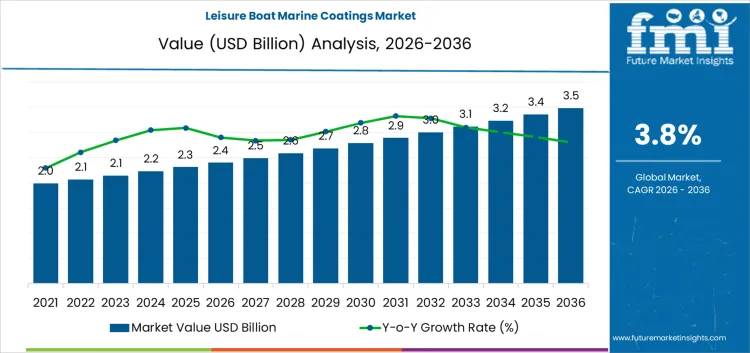
What is the Rolling CAGR Analysis for the Leisure Boat Marine Coatings Market through 2036?
The rolling CAGR analysis for the leisure boat marine coatings market indicates steady growth, with gradual increases in demand for coatings across the forecast period. Starting at USD 2.4 billion in 2026, the market will experience a moderate increase, reaching USD 2.9 billion by 2028, driven by rising global demand for recreational boating and a growing focus on the maintenance and aesthetics of leisure boats.
From 2028 to 2030, the market is poised to gain momentum. This period reflects the increasing focus on high-performance, environmentally friendly coatings, which help improve the durability and sustainability of boats, especially in the face of rising environmental concerns and regulations.
Between 2030 and 2036, the market will continue its steady growth trajectory, reaching USD 3.5 billion by 2036. This phase will see the continued expansion of the boating industry, with the demand for coatings increasing as the number of leisure boat owners grows. The rolling CAGR analysis highlights a stable yet steady growth pattern, with the market benefiting from increasing boating activity, technological advancements in marine coatings, and an emphasis on sustainability in the leisure boat market.
Dye Fixatives Market Key Takeaways
| Metric | Value |
|---|---|
| Industry Sales Value (2026) | USD 2.4 billion |
| Industry Forecast Value (2036) | USD 3.5 billion |
| Industry Forecast CAGR 2026 to 2036 | 3.8% |
What Is Driving the Leisure Boat Marine Coatings Market?
Historically, the leisure boat marine coatings market developed from the need to protect hulls and topsides from corrosive saltwater, UV exposure, and biological fouling while maintaining aesthetic appeal. Early leisure craft relied on basic paints and varnishes that offered limited resistance to blistering, chalking, and barnacle attachment, leading owners to refinish hulls frequently. Advances in resin chemistry, such as improved alkyd and polyurethane systems, delivered better adhesion and durability, encouraging wider adoption among boat builders and owners.
As fiberglass and composite hulls became standard, coatings were formulated for enhanced chemical compatibility and flexibility, reducing cracking and loss of gloss. Demand also grew for antifouling systems tailored to seasonal use patterns typical of recreational boating, with options that balanced performance and environmental impact. This historical phase clarified performance expectations for coatings that could withstand long idle periods between outings, retain visual appeal, and reduce maintenance cycles without compromising the boating experience.
Future demand for leisure boat marine coatings is expected to be shaped by rising recreational boating participation, stricter environmental standards, and innovation in low-emission, long-life formulations. Growth drivers include the expansion of marina networks, increased disposable income in key markets, and preferences for low-maintenance coatings that extend service intervals and preserve resale value. Regulatory pressures to reduce biocidal content and volatile organic compound (VOC) emissions are steering buyers toward eco-efficient antifouling systems, water-based primers, and UV-stable clear coats that meet compliance without sacrificing performance.
Technological advances such as self-polishing copolymers, ceramic-enhanced topcoats, and nanostructured additives are expected to deliver improved fouling resistance, gloss retention, and surface hardness, broadening application in both new build and refit programs. Challenges include balancing cost with long-term performance and educating boat owners on proper application and environmental disposal. Long-term market expansion will depend on how effectively suppliers align coatings with evolving sustainability criteria, performance expectations, and the diverse climatic conditions where leisure boats operate.
What are the Key Segments in the Leisure Boat Marine Coatings Market?
The Leisure Boat Marine Coatings market is segmented by coating type and application. Coating types include antifouling coatings, topcoatings, primers & undercoats, specialty coatings, and others, with antifouling coatings holding the largest share at 47%. Application segments include boat maintenance & repair, new boat construction, refinishing & restoration, and others, with boat maintenance & repair leading the market at 52%. The market is driven by the increasing demand for long-lasting, high-performance coatings that protect leisure boats from harsh marine environments, enhance aesthetics, and improve durability. The growth of the recreational boating industry, combined with rising awareness of boat maintenance and protection, is fueling demand for specialized marine coatings.
What is Driving Growth in the Antifouling Coatings Segment?
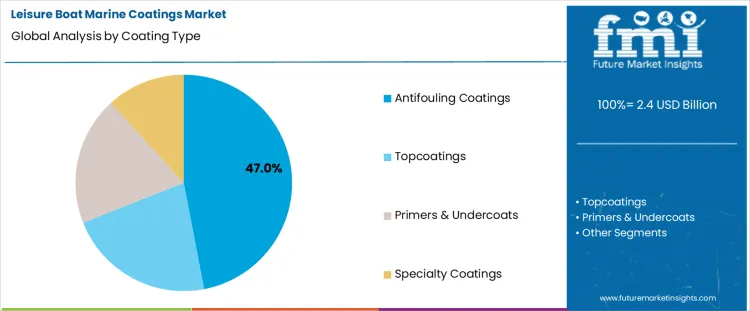
Antifouling coatings are the largest coating type segment in the Leisure Boat Marine Coatings market, accounting for 47% of the market share. This growth is primarily driven by the need to prevent the buildup of marine organisms such as algae, barnacles, and mollusks, which can accumulate on boat hulls and reduce speed, fuel efficiency, and overall performance. Antifouling coatings offer a protective layer that reduces biofouling, extending the life of boats and improving their operational efficiency.
These coatings are particularly crucial for boats that are used frequently in saltwater or brackish environments, where the risk of fouling is higher. As boat owners and operators increasingly recognize the importance of maintaining hull cleanliness for both performance and maintenance cost reduction, the demand for antifouling coatings is expected to grow. Furthermore, regulatory requirements around environmental impact are encouraging the development of more eco-friendly antifouling solutions, contributing to market growth. As recreational boating continues to rise in popularity, particularly in regions with extensive coastlines, the need for high-quality antifouling coatings will remain a key driver in the market.
What is Driving the Demand for Boat Maintenance & Repair in the Application Segment?
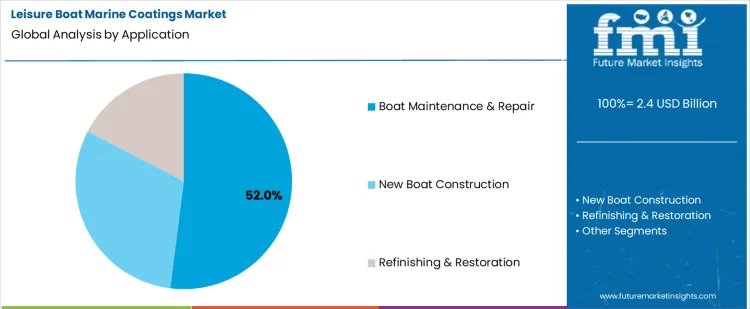
Boat maintenance & repair is the largest application segment in the Leisure Boat Marine Coatings market, holding 52% of the market share. This growth is driven by the need for regular upkeep and restoration of leisure boats, which are exposed to harsh marine conditions that can cause wear and tear. Over time, boat owners require coatings for maintenance and repairs to protect their vessels from corrosion, UV damage, and biological fouling, ensuring the longevity of their boats. As the recreational boating industry grows, so does the importance of maintaining boats in optimal condition.
Regular maintenance, including recoating of the hull, deck, and interior surfaces, is essential for keeping boats functioning well and looking aesthetically appealing. With more boat owners seeking to extend the lifespan of their boats, the demand for coatings used in maintenance and repair is expected to continue rising. The increasing availability of advanced coatings, which offer better protection, longer-lasting finishes, and more environmentally friendly options, is further fueling demand in the boat maintenance & repair segment. This trend is particularly notable in regions with high recreational boating activity, such as North America, Europe, and parts of Asia Pacific.
What are the Key Dynamics in the Leisure Boat Marine Coatings Market?
The leisure boat marine coatings market is growing due to the rising popularity of recreational boating and the increasing demand for high-quality coatings that enhance the durability, aesthetics, and performance of leisure boats. Marine coatings are essential for protecting boats from harsh marine environments, including exposure to saltwater, UV radiation, and weather conditions, which can cause degradation and corrosion. The market is driven by the growing number of leisure boat owners, especially in regions with coastlines and favorable climates for boating. Furthermore, advancements in eco-friendly coatings that reduce environmental impact while providing high-performance protection are fueling the demand for marine coatings in the leisure boat segment. The trend toward luxury and customized leisure boats, which require specialized coatings, is further contributing to market growth.
What are the Key Drivers of Growth in the Leisure Boat Marine Coatings Market?
The primary drivers of growth in the leisure boat marine coatings market include the increasing number of leisure boat owners and the expanding recreational boating industry. As disposable incomes rise and interest in water-based leisure activities grows, more consumers are investing in leisure boats, leading to a higher demand for protective coatings. The demand for coatings that offer enhanced durability, corrosion resistance, and UV protection is increasing, as boat owners seek to extend the life of their vessels and maintain their appearance.
The shift towards eco-friendly and sustainable coatings is driving innovation in the market, with manufacturers developing low-VOC (volatile organic compound) coatings, anti-fouling solutions, and water-based coatings to meet both regulatory requirements and consumer demand for environmentally responsible products. Technological advancements in marine coatings that improve ease of application, reduce maintenance requirements, and provide superior protection are also contributing to market growth. Finally, the trend of personalized, luxury, and custom-built leisure boats is increasing the need for high-performance coatings that enhance the aesthetic appeal and longevity of these boats.
What are the Key Restraints in the Leisure Boat Marine Coatings Market?
Despite the market’s growth potential, several challenges exist. One major restraint is the high cost of premium marine coatings, which can be prohibitive for some boat owners, particularly in emerging markets or for smaller leisure boats. The higher price of eco-friendly coatings and specialized finishes may limit their adoption, especially when budget-conscious consumers opt for more affordable options. The complexity and labor-intensive nature of applying certain types of coatings, such as multi-layer systems, can increase labor costs and time, which may deter boat owners from investing in high-end coatings.
Another challenge is the environmental regulations governing the use of traditional marine coatings, which contain harmful chemicals like solvents and biocides. While the shift toward more eco-friendly and sustainable coatings is growing, compliance with changing regulatory standards can pose a challenge for manufacturers, requiring them to innovate and adapt. Finally, the availability of alternative products, such as coatings for industrial or commercial boats, may divert attention away from leisure boats, which could slow market growth in the leisure segment.
What are the Key Trends in the Leisure Boat Marine Coatings Market?
Several key trends are shaping the leisure boat marine coatings market. One significant trend is the growing adoption of eco-friendly and sustainable coatings, driven by increasing consumer awareness of environmental issues and stricter regulations in marine environments. Manufacturers are focusing on developing low-VOC, non-toxic, and anti-fouling coatings that minimize the impact on marine ecosystems while still providing long-lasting protection for leisure boats. Another trend is the development of high-performance coatings that offer superior resistance to corrosion, UV damage, and wear, which is particularly important for boats exposed to harsh weather and saltwater conditions. The use of advanced coating technologies, such as nanotechnology, is also becoming more common, as these coatings provide enhanced durability and self-cleaning properties.
Furthermore, the customization trend in the leisure boat market is driving demand for coatings that offer unique aesthetic finishes, allowing boat owners to personalize the appearance of their vessels. The shift towards DIY and easier application methods is also a growing trend, with manufacturers offering more user-friendly products that can be applied with minimal expertise. Finally, the expansion of the boating industry in developing markets and the rising demand for luxury boats are expected to continue driving the demand for premium marine coatings.
What is the Country-Wise Analysis of the Leisure Boat Marine Coatings Market?
The leisure boat marine coatings market is growing as the global demand for recreational boating increases and the need for durable, high-performance coatings rises. These coatings are essential for protecting leisure boats from the harsh marine environment, preventing corrosion, enhancing aesthetics, and improving longevity. The market is driven by factors such as growing consumer interest in recreational boating, technological advancements in coating formulations, and the increasing focus on sustainability and eco-friendly products. Countries like the USA, Germany, China, Japan, and France are witnessing growth in this market due to their large boating industries, investments in marine technology, and the popularity of leisure boating activities.
CAGR for Leisure Boat Marine Coatings Market by Country
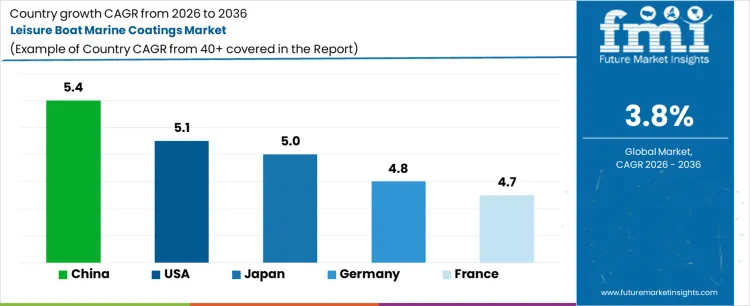
| Country | CAGR (%) |
|---|---|
| USA | 5.1% |
| Germany | 4.8% |
| China | 5.4% |
| Japan | 5% |
| France | 4.7% |
What is Driving the Growth of the Leisure Boat Marine Coatings Market in the USA?
The USA’s leisure boat marine coatings market is growing at a CAGR of 5.1%. The growth is driven by the increasing popularity of recreational boating and the rising demand for high-quality coatings that offer durability, corrosion resistance, and aesthetic appeal. The USA has a large recreational boating market, which is contributing to the growth of the marine coatings sector. Advancements in coating technologies, such as eco-friendly and low-emission coatings, are further supporting market expansion. As the demand for leisure boats continues to rise and consumers seek more durable and sustainable products, the market for leisure boat marine coatings in the USA is expected to continue growing steadily.
How is the Leisure Boat Marine Coatings Market Performing in Germany?
Germany’s leisure boat marine coatings market is growing at a CAGR of 4.8%. Germany has a strong presence in the leisure boating industry, with a focus on high-quality and durable boat construction. The country’s demand for marine coatings is driven by the growing interest in recreational boating and the need for coatings that provide long-term protection against the marine environment. Germany’s focus on innovation in marine technologies and eco-friendly products is also contributing to the demand for advanced coatings. As the recreational boating market continues to expand and consumers seek more durable and environmentally responsible coatings, the leisure boat marine coatings market in Germany is expected to experience steady growth.
What Factors are Shaping the Leisure Boat Marine Coatings Market in China?
China’s leisure boat marine coatings market is growing at a CAGR of 5.4%. As China’s recreational boating market expands, the demand for high-performance coatings that can withstand the harsh marine environment is increasing. China’s growing middle class and increasing disposable income are contributing to the rise in leisure boat ownership. Advancements in coatings technology, including environmentally friendly and low-maintenance coatings, are driving market growth. The demand for durable coatings that offer corrosion resistance, UV protection, and aesthetic appeal is expected to continue to rise as China’s recreational boating industry grows. As China continues to invest in marine infrastructure and technology, the demand for leisure boat marine coatings will likely continue to increase.
How is the Leisure Boat Marine Coatings Market Evolving in Japan?
Japan’s leisure boat marine coatings market is growing at a CAGR of 5%. The growth is driven by Japan’s strong recreational boating culture and the increasing demand for high-quality coatings that provide long-lasting protection. As more consumers in Japan invest in leisure boats, the need for coatings that prevent corrosion and ensure the boats' longevity is growing. Japan’s focus on eco-friendly and sustainable products is contributing to the demand for low-emission and environmentally friendly coatings. As Japan’s leisure boating industry continues to expand, the market for leisure boat marine coatings is expected to grow at a steady pace, driven by advancements in coating technologies and consumer demand for durable and high-performance coatings.
What is Contributing to the Growth of the Leisure Boat Marine Coatings Market in France?
France’s leisure boat marine coatings market is growing at a CAGR of 4.7%. The market is driven by the increasing popularity of recreational boating along France’s extensive coastline and the growing demand for boats that are durable and resistant to the harsh marine environment. As the demand for high-quality coatings rises, France is focusing on providing innovative solutions, such as eco-friendly and low-maintenance coatings, to meet consumer demand. The government’s focus on sustainability and the growing interest in outdoor activities contribute to the growth of the recreational boating market and, consequently, the demand for leisure boat marine coatings. As France continues to embrace sustainable boating practices and innovative coatings technology, the market for leisure boat marine coatings is expected to expand steadily.
What is the Competitive Landscape for the Leisure Boat Marine Coatings Market?
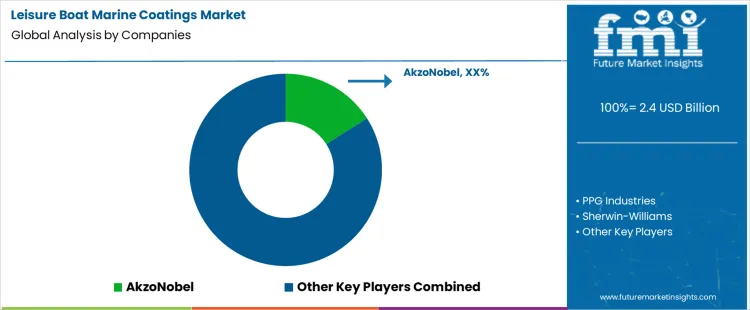
The leisure boat marine coatings market is growing as demand for high-quality protective coatings increases, driven by the rise in recreational boating and the need for longer-lasting, durable finishes. AkzoNobel leads the market, offering advanced coatings that provide excellent protection against harsh marine environments, emphasizing sustainability, durability, and performance. The company’s coatings are widely used in leisure boats, ensuring long-lasting aesthetics and protection. PPG Industries is another key competitor, providing high-performance marine coatings designed to withstand extreme weather conditions and enhance boat longevity. PPG focuses on offering innovative solutions that cater to both functional and aesthetic needs of leisure boat owners.
Sherwin-Williams competes with its marine coatings that combine advanced technologies and high-quality finishes, providing excellent corrosion resistance and superior durability for leisure boats. BASF SE offers a wide range of coatings that are specifically formulated for the marine environment, ensuring long-term protection and enhanced appearance. Hempel A/S is actively involved in the market, offering innovative and sustainable coatings solutions for leisure boats, focusing on performance, protection, and reducing environmental impact.
Jotun A/S specializes in marine coatings that offer excellent protection against corrosion and UV damage, catering to the leisure boat segment with coatings that combine high performance and aesthetic appeal. RPM International offers durable and weather-resistant coatings that are widely used in the marine industry, including leisure boat applications, ensuring long-lasting results. International Paint provides coatings that offer superior anti-fouling, UV protection, and enhanced durability, ideal for leisure boats. Nautical Coatings and Chugoku Marine Paints also contribute by offering specialized coatings for leisure boats, focusing on performance and customization to meet the growing demands of the market.
To stay competitive, companies in the leisure boat marine coatings market are shifting toward sustainability and product differentiation. AkzoNobel continues to lead by enhancing its coatings with advanced protection technologies and sustainable ingredients, ensuring long-lasting performance and environmental compatibility. PPG Industries invests in developing coatings with improved durability, corrosion resistance, and environmental performance, ensuring they meet the evolving needs of leisure boat owners. Sherwin-Williams is expanding its product range with coatings that combine aesthetic appeal with high-performance protection, focusing on ease of application and long-lasting finishes.
BASF SE is advancing its offerings with innovative coatings that ensure superior durability and UV protection, while focusing on eco-friendly solutions. Hempel A/S is working on reducing the environmental impact of its coatings while maintaining high performance and protection. Jotun A/S focuses on providing sustainable coatings that offer superior anti-corrosion protection and easy maintenance for leisure boat owners. RPM International continues to innovate by offering coatings that extend the lifespan of leisure boats, focusing on weather and UV resistance.
International Paint enhances its offerings with coatings designed to improve performance and reduce maintenance needs. Nautical Coatings and Chugoku Marine Paints focus on providing tailored solutions that meet the specific needs of the leisure boat market, offering customizable coatings that ensure optimal protection and aesthetic appeal. These strategies position these companies to lead the growing leisure boat marine coatings market, which is driven by the increasing demand for durable, high-performance, and sustainable coatings.
Key Players of the Leisure Boat Marine Coatings Market
- AkzoNobel
- PPG Industries
- Sherwin‑Williams
- BASF SE
- Hempel A/S
- Jotun A/S
- RPM International
- International Paint
- Nautical Coatings
- Chugoku Marine Paints
Scope of the Report
| Items | Values |
|---|---|
| Quantitative Units (2026) | USD Billion |
| Coating Type | Antifouling Coatings, Topcoatings, Primers & Undercoats, Specialty Coatings |
| Application | Boat Maintenance & Repair, New Boat Construction, Refinishing & Restoration |
| Boat Type | Motor Yachts, Fishing Boats, Sailboats, Personal Watercraft (PWCs), Other Leisure Boats |
| Companies | AkzoNobel, PPG Industries, Sherwin-Williams, BASF SE, Hempel A/S, Jotun A/S, RPM International, International Paint, Nautical Coatings, Chugoku Marine Paints |
| Regions Covered | North America, Latin America, Western Europe, Eastern Europe, South Asia and Pacific, East Asia, Middle East & Africa |
| Countries Covered | United States, Canada, Mexico, Brazil, Argentina, Germany, France, United Kingdom, Italy, Spain, Netherlands, China, India, Japan, South Korea, ANZ, GCC Countries, South Africa |
| Additional Attributes | Dollar by sales by coating type, application, boat type, and region. Includes market trends towards durability, cost-effectiveness, and the role of marine coatings in enhancing the performance and longevity of leisure boats. |
Leisure Boat Marine Coatings Market Segmentation
By Coating Type:
- Antifouling Coatings
- Topcoatings
- Primers & Undercoats
- Specialty Coatings
By Application:
- Boat Maintenance & Repair
- New Boat Construction
- Refinishing & Restoration
- Other Leisure Boats
By Boat Type:
- Motor Yachts
- Fishing Boats
- Sailboats
- Personal Watercraft (PWCs)
- Other Leisure Boats
By Region:
- Asia Pacific
- China
- Japan
- India
- Australia & New Zealand
- ASEAN
- Rest of Asia Pacific
- Europe
- Germany
- United Kingdom
- France
- Italy
- Spain
- Nordic
- BENELUX
- Rest of Europe
- North America
- United States
- Canada
- Mexico
- Latin America
- Brazil
- Argentina
- Rest of Latin America
- Middle East & Africa
- Kingdom of Saudi Arabia
- Other GCC Countries
- South Africa
- Rest of Middle East & Africa
Bibliography
- USA Environmental Protection Agency. (2023). National Pollutant Discharge Elimination System (NPDES) regulations for vessel coatings and runoff. USA EPA.
- Intergovernmental Panel on Climate Change. (2023). Climate Change 2023: Mitigation of Climate Change. Cambridge University Press.
- United States Coast Guard, Office of Boating Safety. (2024). Recreational Boating Statistics 2024. U.S. Department of Homeland Security
- Society for Protective Coatings. (2022). Protective Coatings: Fundamentals and Selection. ASTM International.
Frequently Asked Questions
How big is the leisure boat marine coatings market in 2026?
The global leisure boat marine coatings market is estimated to be valued at USD 2.4 billion in 2026.
What will be the size of leisure boat marine coatings market in 2036?
The market size for the leisure boat marine coatings market is projected to reach USD 3.5 billion by 2036.
How much will be the leisure boat marine coatings market growth between 2026 and 2036?
The leisure boat marine coatings market is expected to grow at a 3.8% CAGR between 2026 and 2036.
What are the key product types in the leisure boat marine coatings market?
The key product types in leisure boat marine coatings market are antifouling coatings, topcoatings, primers & undercoats and specialty coatings.
Which application segment to contribute significant share in the leisure boat marine coatings market in 2026?
In terms of application, boat maintenance & repair segment to command 52.0% share in the leisure boat marine coatings market in 2026.
Preview the report firsthand - request a free sample
Get SampleGet the brochure for pricing and purchase details.
Get PDFTable of Content
- Executive Summary
- Global Market Outlook
- Demand-side Trends
- Supply-side Trends
- Technology Roadmap Analysis
- Analysis and Recommendations
- Market Overview
- Market Coverage / Taxonomy
- Market Definition / Scope / Limitations
- Market Background
- Market Dynamics
- Drivers
- Restraints
- Opportunity
- Trends
- Scenario Forecast
- Demand in Optimistic Scenario
- Demand in Likely Scenario
- Demand in Conservative Scenario
- Opportunity Map Analysis
- Product Life Cycle Analysis
- Supply Chain Analysis
- Investment Feasibility Matrix
- Value Chain Analysis
- PESTLE and Porter’s Analysis
- Regulatory Landscape
- Regional Parent Market Outlook
- Production and Consumption Statistics
- Import and Export Statistics
- Market Dynamics
- Global Market Analysis 2021 to 2025 and Forecast, 2026 to 2036
- Historical Market Size Value (USD Million) Analysis, 2021 to 2025
- Current and Future Market Size Value (USD Million) Projections, 2026 to 2036
- Y-o-Y Growth Trend Analysis
- Absolute $ Opportunity Analysis
- Global Market Pricing Analysis 2021 to 2025 and Forecast 2026 to 2036
- Global Market Analysis 2021 to 2025 and Forecast 2026 to 2036, By Coating Type
- Introduction / Key Findings
- Historical Market Size Value (USD Million) Analysis By Coating Type, 2021 to 2025
- Current and Future Market Size Value (USD Million) Analysis and Forecast By Coating Type, 2026 to 2036
- Antifouling Coatings
- Topcoatings
- Primers & Undercoats
- Specialty Coatings
- Antifouling Coatings
- Y-o-Y Growth Trend Analysis By Coating Type, 2021 to 2025
- Absolute $ Opportunity Analysis By Coating Type, 2026 to 2036
- Global Market Analysis 2021 to 2025 and Forecast 2026 to 2036, By Application
- Introduction / Key Findings
- Historical Market Size Value (USD Million) Analysis By Application, 2021 to 2025
- Current and Future Market Size Value (USD Million) Analysis and Forecast By Application, 2026 to 2036
- Boat Maintenance & Repair
- New Boat Construction
- Refinishing & Restoration
- Boat Maintenance & Repair
- Y-o-Y Growth Trend Analysis By Application, 2021 to 2025
- Absolute $ Opportunity Analysis By Application, 2026 to 2036
- Global Market Analysis 2021 to 2025 and Forecast 2026 to 2036, By Boat Type
- Introduction / Key Findings
- Historical Market Size Value (USD Million) Analysis By Boat Type, 2021 to 2025
- Current and Future Market Size Value (USD Million) Analysis and Forecast By Boat Type, 2026 to 2036
- Motor Yachts
- Fishing Boats
- Sailboats
- Personal Watercraft (PWCs)
- Other Leisure Boats
- Motor Yachts
- Y-o-Y Growth Trend Analysis By Boat Type, 2021 to 2025
- Absolute $ Opportunity Analysis By Boat Type, 2026 to 2036
- Global Market Analysis 2021 to 2025 and Forecast 2026 to 2036, By Region
- Introduction
- Historical Market Size Value (USD Million) Analysis By Region, 2021 to 2025
- Current Market Size Value (USD Million) Analysis and Forecast By Region, 2026 to 2036
- North America
- Latin America
- Western Europe
- Eastern Europe
- East Asia
- South Asia and Pacific
- Middle East & Africa
- Market Attractiveness Analysis By Region
- North America Market Analysis 2021 to 2025 and Forecast 2026 to 2036, By Country
- Historical Market Size Value (USD Million) Trend Analysis By Market Taxonomy, 2021 to 2025
- Market Size Value (USD Million) Forecast By Market Taxonomy, 2026 to 2036
- By Country
- USA
- Canada
- Mexico
- By Coating Type
- By Application
- By Boat Type
- By Country
- Market Attractiveness Analysis
- By Country
- By Coating Type
- By Application
- By Boat Type
- Key Takeaways
- Latin America Market Analysis 2021 to 2025 and Forecast 2026 to 2036, By Country
- Historical Market Size Value (USD Million) Trend Analysis By Market Taxonomy, 2021 to 2025
- Market Size Value (USD Million) Forecast By Market Taxonomy, 2026 to 2036
- By Country
- Brazil
- Chile
- Rest of Latin America
- By Coating Type
- By Application
- By Boat Type
- By Country
- Market Attractiveness Analysis
- By Country
- By Coating Type
- By Application
- By Boat Type
- Key Takeaways
- Western Europe Market Analysis 2021 to 2025 and Forecast 2026 to 2036, By Country
- Historical Market Size Value (USD Million) Trend Analysis By Market Taxonomy, 2021 to 2025
- Market Size Value (USD Million) Forecast By Market Taxonomy, 2026 to 2036
- By Country
- Germany
- UK
- Italy
- Spain
- France
- Nordic
- BENELUX
- Rest of Western Europe
- By Coating Type
- By Application
- By Boat Type
- By Country
- Market Attractiveness Analysis
- By Country
- By Coating Type
- By Application
- By Boat Type
- Key Takeaways
- Eastern Europe Market Analysis 2021 to 2025 and Forecast 2026 to 2036, By Country
- Historical Market Size Value (USD Million) Trend Analysis By Market Taxonomy, 2021 to 2025
- Market Size Value (USD Million) Forecast By Market Taxonomy, 2026 to 2036
- By Country
- Russia
- Poland
- Hungary
- Balkan & Baltic
- Rest of Eastern Europe
- By Coating Type
- By Application
- By Boat Type
- By Country
- Market Attractiveness Analysis
- By Country
- By Coating Type
- By Application
- By Boat Type
- Key Takeaways
- East Asia Market Analysis 2021 to 2025 and Forecast 2026 to 2036, By Country
- Historical Market Size Value (USD Million) Trend Analysis By Market Taxonomy, 2021 to 2025
- Market Size Value (USD Million) Forecast By Market Taxonomy, 2026 to 2036
- By Country
- China
- Japan
- South Korea
- By Coating Type
- By Application
- By Boat Type
- By Country
- Market Attractiveness Analysis
- By Country
- By Coating Type
- By Application
- By Boat Type
- Key Takeaways
- South Asia and Pacific Market Analysis 2021 to 2025 and Forecast 2026 to 2036, By Country
- Historical Market Size Value (USD Million) Trend Analysis By Market Taxonomy, 2021 to 2025
- Market Size Value (USD Million) Forecast By Market Taxonomy, 2026 to 2036
- By Country
- India
- ASEAN
- Australia & New Zealand
- Rest of South Asia and Pacific
- By Coating Type
- By Application
- By Boat Type
- By Country
- Market Attractiveness Analysis
- By Country
- By Coating Type
- By Application
- By Boat Type
- Key Takeaways
- Middle East & Africa Market Analysis 2021 to 2025 and Forecast 2026 to 2036, By Country
- Historical Market Size Value (USD Million) Trend Analysis By Market Taxonomy, 2021 to 2025
- Market Size Value (USD Million) Forecast By Market Taxonomy, 2026 to 2036
- By Country
- Kingdom of Saudi Arabia
- Other GCC Countries
- Turkiye
- South Africa
- Other African Union
- Rest of Middle East & Africa
- By Coating Type
- By Application
- By Boat Type
- By Country
- Market Attractiveness Analysis
- By Country
- By Coating Type
- By Application
- By Boat Type
- Key Takeaways
- Key Countries Market Analysis
- USA
- Pricing Analysis
- Market Share Analysis, 2025
- By Coating Type
- By Application
- By Boat Type
- Canada
- Pricing Analysis
- Market Share Analysis, 2025
- By Coating Type
- By Application
- By Boat Type
- Mexico
- Pricing Analysis
- Market Share Analysis, 2025
- By Coating Type
- By Application
- By Boat Type
- Brazil
- Pricing Analysis
- Market Share Analysis, 2025
- By Coating Type
- By Application
- By Boat Type
- Chile
- Pricing Analysis
- Market Share Analysis, 2025
- By Coating Type
- By Application
- By Boat Type
- Germany
- Pricing Analysis
- Market Share Analysis, 2025
- By Coating Type
- By Application
- By Boat Type
- UK
- Pricing Analysis
- Market Share Analysis, 2025
- By Coating Type
- By Application
- By Boat Type
- Italy
- Pricing Analysis
- Market Share Analysis, 2025
- By Coating Type
- By Application
- By Boat Type
- Spain
- Pricing Analysis
- Market Share Analysis, 2025
- By Coating Type
- By Application
- By Boat Type
- France
- Pricing Analysis
- Market Share Analysis, 2025
- By Coating Type
- By Application
- By Boat Type
- India
- Pricing Analysis
- Market Share Analysis, 2025
- By Coating Type
- By Application
- By Boat Type
- ASEAN
- Pricing Analysis
- Market Share Analysis, 2025
- By Coating Type
- By Application
- By Boat Type
- Australia & New Zealand
- Pricing Analysis
- Market Share Analysis, 2025
- By Coating Type
- By Application
- By Boat Type
- China
- Pricing Analysis
- Market Share Analysis, 2025
- By Coating Type
- By Application
- By Boat Type
- Japan
- Pricing Analysis
- Market Share Analysis, 2025
- By Coating Type
- By Application
- By Boat Type
- South Korea
- Pricing Analysis
- Market Share Analysis, 2025
- By Coating Type
- By Application
- By Boat Type
- Russia
- Pricing Analysis
- Market Share Analysis, 2025
- By Coating Type
- By Application
- By Boat Type
- Poland
- Pricing Analysis
- Market Share Analysis, 2025
- By Coating Type
- By Application
- By Boat Type
- Hungary
- Pricing Analysis
- Market Share Analysis, 2025
- By Coating Type
- By Application
- By Boat Type
- Kingdom of Saudi Arabia
- Pricing Analysis
- Market Share Analysis, 2025
- By Coating Type
- By Application
- By Boat Type
- Turkiye
- Pricing Analysis
- Market Share Analysis, 2025
- By Coating Type
- By Application
- By Boat Type
- South Africa
- Pricing Analysis
- Market Share Analysis, 2025
- By Coating Type
- By Application
- By Boat Type
- USA
- Market Structure Analysis
- Competition Dashboard
- Competition Benchmarking
- Market Share Analysis of Top Players
- By Regional
- By Coating Type
- By Application
- By Boat Type
- Competition Analysis
- Competition Deep Dive
- AkzoNobel
- Overview
- Product Portfolio
- Profitability by Market Segments (Product/Age /Sales Channel/Region)
- Sales Footprint
- Strategy Overview
- Marketing Strategy
- Product Strategy
- Channel Strategy
- PPG Industries
- Sherwin‑Williams
- BASF SE
- Hempel A/S
- Jotun A/S
- RPM International
- International Paint
- Nautical Coatings
- Chugoku Marine Paints
- AkzoNobel
- Competition Deep Dive
- Assumptions & Acronyms Used
- Research Methodology


