

- Industry Size (2026)
- USD 467.26 Mn
- Forecast (2036)
- USD 798.15 Mn
- CAGR (2026 to 2036)
- 5.5%
Marine Nanocoating Market Size, Market Forecast and Outlook By FMI
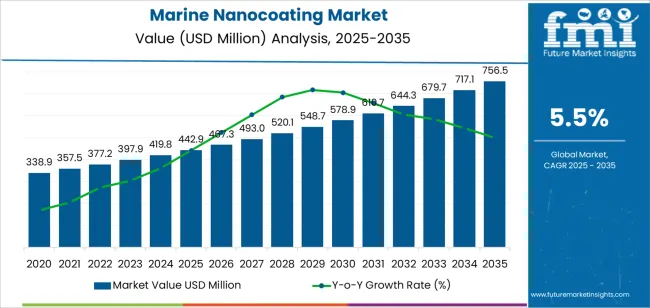
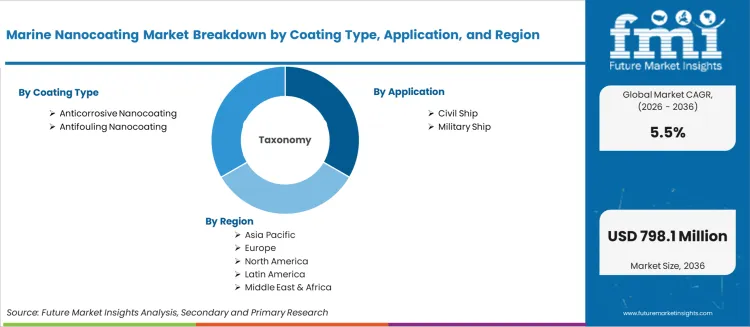
The marine nanocoating market was valued at USD 442.90 million in 2025, projected to reach USD 467.26 million in 2026, and is forecast to expand to USD 798.15 million by 2036 at a 5.5% CAGR. Advancing nanotechnology-enabled surface treatment formulations and tightening biocide restrictions on conventional anti-fouling paints are positioning nanocoatings as a premium alternative for hull protection and corrosion prevention on commercial and military vessels. Based on FMI's analysis, the documented fuel savings from nanocoating-treated hulls operating under IMO Carbon Intensity Indicator frameworks are converting what was previously a niche specification into a lifecycle cost optimization tool for fleet managers.
Summary of Marine Nanocoating Market
- Market Overview
- The market is valued at USD 442.90 million in 2025 and is projected to reach USD 798.15 million by 2036.
- The industry is expected to grow at a 5.5% CAGR from 2026 to 2036, creating an incremental opportunity of USD 330.89 million.
- The market is a nanotechnology-driven marine surface protection category where biocide restriction compliance, CII-driven hull efficiency optimization, and extended drydocking interval economics define nanocoating specification and adoption.
- Demand and Growth Drivers
- Biocide restrictions on conventional copper-based anti-fouling paints are positioning nanocoatings as an environmentally compliant hull protection alternative that prevents organism attachment without toxic compound discharge.
- Documented fuel savings from nanocoating-treated hulls operating under IMO Carbon Intensity Indicator frameworks are converting nanocoatings from a niche specification into a lifecycle cost optimization tool for fleet managers.
- Extended nanocoating service life reduces drydock recoating frequency, lowering total hull maintenance costs over five to seven year service intervals compared to conventional paint systems.
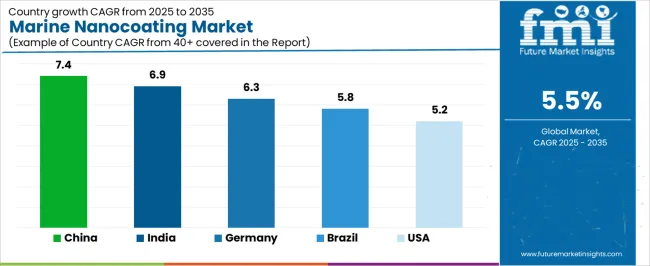
- Among key countries, China leads at 7.4% CAGR, followed by India at 6.9%, Germany at 6.3%, Brazil at 5.8%, and the USA at 5.2%.
- Product and Segment View
- The market covers nanoscale surface treatment systems using molecular-level bonding and hydrophobic nano-structures for marine corrosion protection and anti-fouling performance.
- Applications span civil commercial fleet hull treatment and military vessel corrosion management, each with distinct performance specification and procurement processes.
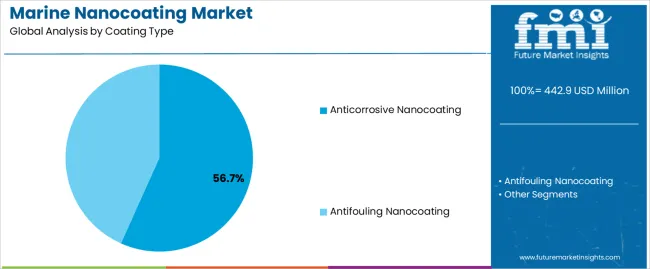
- Anticorrosive Nanocoating leads by Coating Type with 56.7% share in 2026, reflecting longer service life than conventional primer-topcoat systems and reduced drydock recoating frequency.
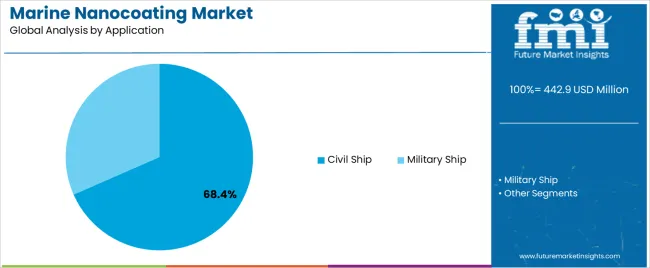
- Civil Ship leads by Application with 68.4% share in 2026, driven by the commercial fleet's large hull surface area requiring periodic treatment.
- Scope includes all commercially available marine nanocoating systems and excludes conventional paints, nano-enhanced fuel additives, and laboratory-scale research materials.
- Geography and Competitive Outlook
- China and India are the fastest-growing markets driven by fleet maintenance volumes and expanding domestic nanocoating manufacturing capacity.
- Germany leads nanocoating formulation R&D, while the United States drives adoption through Navy corrosion management and CII compliance programs.
- Competition is shaped by coating durability, fuel savings documentation, and biocide-free compliance certification, with key players including Nanovere Technologies, Nippon Paint Marine Coatings, Tesla NanoCoatings, IGL Coatings, and Guangzhou Sysmyk New Material Technology.
- Analyst Opinion at FMI
- Nikhil Kaitwade, Principal Consultant for Chemicals and Materials at Future Market Insights, opines: 'In my analysis, the marine nanocoating market is at the inflection point where lifecycle cost documentation is replacing novelty as the primary adoption driver. Fleet managers evaluating nanocoatings now require auditable fuel savings data over documented drydocking intervals rather than laboratory performance claims. Nanocoating suppliers that can provide third-party verified drag reduction measurements linked to CII score improvements will capture the specification tier that conventional coating manufacturers cannot reach with incremental formulation improvements.'
- Strategic Implications / Executive Takeaways
- Nanocoating manufacturers must invest in third-party verified fuel savings and drag reduction testing programs linked to CII score improvements to build the lifecycle cost documentation that fleet managers require for specification approval.
- Fleet operators should evaluate nanocoating total cost of ownership over two drydocking cycles rather than per-application price to capture the recoating frequency reduction that nanocoating durability delivers.
- Naval procurement agencies must develop nanocoating performance specifications that address both corrosion protection and signature management requirements within unified coating system contracts.
Anticorrosive nanocoatings lead the market because their molecular-level surface bonding provides longer service life than conventional primer-topcoat systems, reducing the frequency and cost of drydock recoating cycles. Antifouling nanocoatings are gaining traction as an environmentally compliant alternative to copper-based and biocidal coatings, using nano-structured hydrophobic surfaces to prevent marine organism attachment without leaching toxic compounds. Civil ship applications dominate the market, as the commercial fleet represents the largest surface area requiring periodic hull treatment, while military vessels specify nanocoatings for both corrosion protection and radar signature management.
China leads with a 7.4% CAGR, driven by domestic nanocoating manufacturing development and the hull maintenance requirements of the world's largest commercial fleet. India follows at 6.9%, supported by naval vessel coating specifications and growing ship repair industry capacity. Germany registers 6.3% growth tied to its nanotechnology research ecosystem and marine coatings formulation expertise. Brazil posts 5.8% as pre-salt offshore vessel maintenance drives nanocoating adoption. The United States tracks at 5.2% reflecting Navy fleet corrosion management programs and CII compliance-driven hull optimization.
Marine Nanocoating Market Key Takeaways
| Metric | Details |
|---|---|
| Industry Size (2026) | USD 467.26 million |
| Industry Value (2036) | USD 798.15 million |
| CAGR (2026-2036) | 5.5% |
Source: Future Market Insights, 2026
Marine Nanocoating Market Definition
Marine nanocoatings are advanced surface treatment systems that use nanoscale particles and molecular structures to deliver corrosion protection, anti-fouling performance, and drag reduction on vessel hulls, decks, and structural components. Core product types include anticorrosive nanocoatings and antifouling nanocoatings applied to civil and military ship surfaces through spray, brush, or immersion application methods.
Marine Nanocoating Market Inclusions
Market scope covers anticorrosive and antifouling nanocoating systems for marine hull and structural applications. Coverage spans civil ship and military ship segments. Regional and country-level market sizes for 2026 to 2036 are included.
Marine Nanocoating Market Exclusions
The scope excludes conventional marine paints and coatings without nanoscale components, nano-enhanced fuel additives, and nanocoatings used exclusively on non-maritime structures. Laboratory-scale nanocoating research materials not commercially available for vessel application are also excluded.
Marine Nanocoating Market Research Methodology
- Primary Research: Analysts engaged with procurement managers, operations engineers, and industry supply chain directors to identify the decision triggers, specification requirements, and budget allocation patterns governing equipment and technology upgrades.
- Desk Research: Data collection aggregated publicly available regulatory filings, government procurement records, trade association publications, and company annual reports and investor presentations.
- Market-Sizing and Forecasting: Baseline values derive from a bottom-up aggregation of product-level shipment volumes and average selling prices, applying region-specific adoption curves to project demand through the forecast period.
- Data Validation and Update Cycle: Projections are cross-validated against publicly reported company revenue guidance, government statistical agency databases, and trade body shipment records.
Why is the Marine Nanocoating Market Growing?
| ENVIRONMENTAL COMPLIANCE | OPERATIONAL EFFICIENCY | TECHNOLOGICAL ADVANCEMENT |
|---|---|---|
|
|
|
How Is the Marine Nanocoating Market Structured?
| Category | Segments Covered |
|---|---|
| By Coating Type | Anticorrosive Nanocoating, Antifouling Nanocoating |
| By Application | Civil Ship, Military Ship |
| By Region | North America, Europe, Asia Pacific, Latin America, Middle East & Africa |
Marine Nanocoating Market Analysis by Coating Type
| Segment | 2026 to 2036 Outlook |
|---|---|
| Anticorrosive Nanocoating |
|
| Antifouling Nanocoating |
|
Marine Nanocoating Market Analysis by Application
| Segment | 2026 to 2036 Outlook |
|---|---|
| Civil Ship |
|
| Military Ship |
|
DRIVERS
| DRIVERS | RESTRAINTS | KEY TRENDS |
|---|---|---|
|
|
|
Where Are the Strongest Growth Opportunities by Country?
.webp "Top Country Growth Comparison Marine Nanocoating Market Cagr (2026 2036)")
| Country | CAGR (2026-2036) |
|---|---|
| China | 7.4% |
| India | 6.9% |
| Germany | 6.3% |
| Brazil | 5.8% |
| United States | 5.2% |
Why is China leading global demand for marine nanocoatings?
Revenue from Marine Nanocoating in China is projected to exhibit strong growth with a market value of USD 163.99 million by 2036, driven by expanding commercial shipbuilding capacity and comprehensive naval modernization programs creating substantial opportunities for coating technology suppliers across vessel construction operations, ship repair facilities, and offshore platform maintenance. The country's massive maritime infrastructure and expanding fleet operations are creating significant demand for advanced hull coating systems supporting operational efficiency and environmental compliance. Major shipbuilding companies and naval facilities are establishing comprehensive coating application capabilities to support large-scale vessel production and meet growing domestic environmental standards.
- Commercial shipbuilding expansion programs are supporting widespread adoption of nanocoating technologies across new vessel construction, driving demand for coating systems with proven performance capabilities
- Naval modernization initiatives and military vessel construction programs are creating substantial opportunities for coating suppliers requiring validated performance characteristics and cost-effective application procedures
- Maritime infrastructure development and offshore platform construction programs are facilitating nanocoating adoption throughout major coastal regions
How is India’s maritime expansion shaping coating technology adoption?
Revenue from Marine Nanocoating in India is expanding to reach USD 113.5 million by 2036, supported by extensive commercial shipping expansion and comprehensive naval capability enhancement creating sustained demand for advanced coating technologies across diverse vessel operations and shipyard maintenance segments. The country's growing maritime trade infrastructure and expanding naval construction capabilities are driving demand for nanocoating systems that provide consistent performance while supporting cost-effective maintenance requirements. Coating suppliers and manufacturers are investing in local technical support infrastructure to support growing maritime industry requirements and technology adoption.
- Shipbuilding capacity expansion programs and vessel maintenance facility development initiatives are creating opportunities for nanocoating technologies across diverse segments requiring validated performance and competitive application costs
- Naval construction programs and military vessel maintenance enhancement initiatives are driving investments in advanced coating systems supporting performance requirements throughout major shipyard facilities
- Commercial fleet expansion and environmental compliance programs are enhancing demand for sustainable nanocoating technologies throughout maritime operations
What keeps Germany at the forefront of marine coating innovation?
Demand for Marine Nanocoating in Germany is projected to reach USD 48.3 million by 2036, supported by the country's leadership in maritime technology and advanced shipbuilding capabilities requiring sophisticated coating systems for commercial vessel construction and naval maintenance applications. German shipyards implement high-quality coating application programs that support advanced performance specifications, operational reliability, and comprehensive environmental documentation. The market is characterized by focus on coating durability, environmental compliance standards, and adherence to stringent maritime safety and quality regulations.
- Shipbuilding industry investments are prioritizing advanced coating technologies that demonstrate superior performance characteristics and environmental sustainability while meeting German maritime standards and international regulations
- Maritime technology leadership programs and operational excellence initiatives are driving adoption of nanocoating systems that support efficient vessel construction and maintenance protocols
- Research and development programs for coating optimization are facilitating adoption of specialized application capabilities throughout major shipbuilding centers
How is Brazil’s offshore infrastructure fueling demand for advanced coatings?
Revenue from Marine Nanocoating in Brazil is growing to reach USD 20.7 million by 2036, driven by offshore oil platform maintenance and commercial shipping expansion creating sustained opportunities for coating suppliers serving both state-owned vessel operators and private maritime service contractors. The country's extensive coastline and expanding offshore operations are creating demand for coating technologies that support diverse marine environment requirements while maintaining performance standards. Manufacturers and maritime service organizations are developing procurement strategies to support coating capability enhancement and vessel maintenance program implementation.
- Offshore platform maintenance programs and subsea infrastructure protection initiatives are facilitating nanocoating adoption capable of supporting harsh marine environment requirements and competitive performance specifications
- Commercial shipping development and port infrastructure expansion programs are enhancing demand for coating systems that support operational efficiency and environmental reliability
- Naval modernization and vessel maintenance capability development programs are creating opportunities for advanced nanocoating technologies across Brazilian maritime facilities
Why is the United States focusing on naval fleet maintenance and coating modernization?
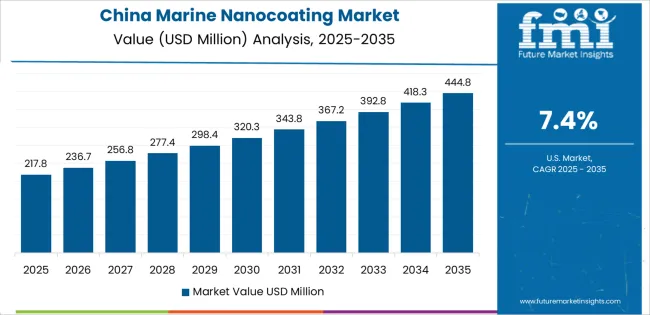
Demand for Marine Nanocoating in United States is projected to reach USD 38.9 million by 2036, expanding at a CAGR of 5.2%, driven by naval vessel maintenance optimization and commercial shipping environmental compliance supporting comprehensive coating programs and advanced application capabilities. The country's extensive naval fleet infrastructure and growing environmental regulation emphasis are creating demand for nanocoating systems that support operational readiness and regulatory compliance standards. Coating manufacturers and suppliers are maintaining comprehensive validation support capabilities to serve diverse maritime requirements.
- Naval maintenance advancement and fleet readiness enhancement initiatives are supporting demand for nanocoating technologies that meet contemporary performance and durability standards
- Commercial shipping sector development and environmental compliance programs are creating opportunities for sustainable coating systems that provide comprehensive hull protection capabilities
- Maritime infrastructure modernization and coating application standardization programs are facilitating adoption of advanced nanocoating platforms throughout major naval and commercial facilities
How are European maritime economies (Germany, Norway, UK, Netherlands, France) diversifying adoption?
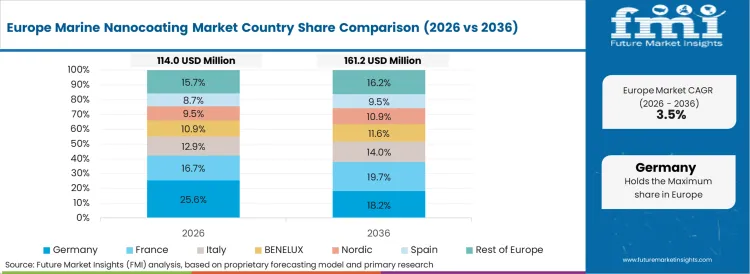
The marine nanocoating market in Europe is projected to grow from USD 106.4 million in 2026 to USD 181.7 million by 2036, registering a CAGR of 5.5% over the forecast period. Germany is expected to maintain its leadership position with a 27.2% market share in 2026, declining slightly to 26.6% by 2036, supported by its advanced shipbuilding infrastructure and major commercial vessel operators concentrated in Hamburg and Bremen regions.
Norway follows with a 23.8% share in 2026, projected to reach 24.3% by 2036, driven by comprehensive offshore vessel operations and specialized ship coating facilities serving North Sea maritime activities. The United Kingdom holds a 18.6% share in 2026, expected to decrease to 18.1% by 2036 due to commercial shipping consolidation. The Netherlands commands a 15.9% share, while France accounts for 9.3% in 2026. The Rest of Europe region is anticipated to gain momentum, expanding its collective share from 5.2% to 6.0% by 2036, attributed to increasing nanocoating adoption in Mediterranean countries and emerging Eastern European shipyard operations implementing advanced coating technologies.
Advanced Technology Defines Japanese Maritime Operations
Japanese marine nanocoating operations reflect the country's precision shipbuilding standards and comprehensive vessel maintenance protocols. Major shipping companies including Mitsui O.S.K. Lines and Nippon Yusen require rigorous coating qualification procedures that exceed international standards, driving demand for nanocoating systems with validated performance specifications. Organizations maintain comprehensive coating application protocols and inspection procedures supporting consistent vessel maintenance across commercial fleet operations.
The shipbuilding sector demonstrates particular strength in integrating advanced coating technologies during new vessel construction, with shipyards including Mitsubishi Heavy Industries implementing sophisticated application facilities for nanocoating systems. Regulatory oversight through the Ministry of Land, Infrastructure, Transport and Tourism emphasizes comprehensive environmental compliance and coating performance documentation that favors established manufacturers with proven marine coating technologies.
Shipbuilding Excellence Drives South Korean Adoption
South Korean marine nanocoating operations reflect the country's global shipbuilding leadership and comprehensive vessel coating capabilities. Major shipbuilding companies including Hyundai Heavy Industries and Samsung Heavy Industries implement sophisticated coating procurement strategies supporting both new vessel construction and maintenance operations targeting international maritime markets. Organizations are investing in advanced nanocoating application systems to enhance operational efficiency while meeting international environmental standards.
The commercial shipping sector drives demand for cost-effective nanocoating solutions capable of supporting competitive vessel operating economics and regulatory compliance requirements. Korean shipbuilders prioritize coating suppliers with comprehensive technical support capabilities and established quality assurance systems supporting consistent application performance across high-volume production operations.
Who Dominates the Competitive Landscape?
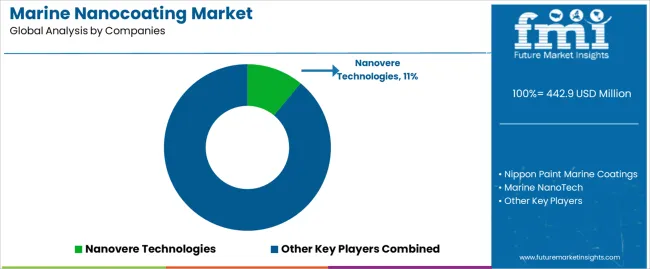
Market dynamics favor established marine coating manufacturers with proven nanoparticle formulation expertise and comprehensive maritime industry relationships supporting shipbuilding and vessel maintenance operations. Value concentration occurs around validated coating systems capable of delivering superior fouling resistance with simplified application procedures, creating barriers for new entrants lacking performance documentation and maritime certification credentials. Several competitive archetypes dominate market positioning: global marine coating companies leveraging broad product portfolios and established shipyard relationships across commercial and naval segments; specialized nanocoating technology developers offering focused formulations with advanced performance characteristics in corrosion protection and biofouling prevention; regional coating suppliers providing localized application support and cost-competitive solutions for emerging market maritime operations; and innovative material science companies developing next-generation nanoparticle systems with enhanced environmental compatibility.
Switching costs remain elevated due to coating qualification requirements, application procedure validation, and established shipyard relationships that favor incumbent suppliers in conservative maritime industries. Technology transitions toward environmentally compliant formulations and multifunctional coating systems create opportunities for suppliers offering regulatory compliance advantages and operational efficiency benefits, while performance validation requirements and maritime certification processes slow adoption in risk-averse shipping operations. Consolidation pressure increases as larger chemical companies acquire specialized nanocoating developers to expand marine coating capabilities and strengthen maritime market positions.
Strategic positioning requires comprehensive performance validation across diverse marine environments and proven durability in extended service applications, particularly for commercial shipping operations and naval vessel maintenance programs. Technical support capabilities and application training services become critical differentiation factors as shipyards prioritize coating reliability and consistent application quality in high-value vessel operations. Market share stability depends on maintaining maritime industry certification and regulatory acceptance while adapting nanocoating formulations to emerging environmental standards and operational requirements without disrupting established application workflows or requiring extensive facility modifications.
Key Players in the Marine Nanocoating Market
- Nanovere Technologies
- Nippon Paint Marine Coatings
- Marine NanoTech
- OxoChem
- Tesla NanoCoatings
- Vetro Power
- Nasiol
- Optitune
- Gtechniq
- IGL Coatings
- Guangzhou Sysmyk New Material Technology
Scope of the Report
| Metric | Value |
|---|---|
| Quantitative Units | USD 467.26 million to USD 798.15 million, at a CAGR of 5.5% |
| Market Definition | Marine nanocoatings are advanced surface treatment systems that use nanoscale particles and molecular structures to deliver corrosion protection, anti-fouling performance, and drag reduction on vessel... |
| Segmentation | Coating Type: Anticorrosive Nanocoating, Antifouling Nanocoating; Application: Civil Ship, Military Ship |
| Regions Covered | North America, Latin America, Europe, East Asia, South Asia, Oceania, Middle East & Africa |
| Countries Covered | China, India, Germany, Brazil, USA, and 40 plus countries |
| Key Companies Profiled | Nanovere Technologies, Nippon Paint Marine Coatings, Marine NanoTech, OxoChem, Tesla NanoCoatings, Vetro Power, Nasiol, Optitune, Gtechniq, IGL Coatings, Guangzhou Sysmyk New Material Technology |
| Forecast Period | 2026 to 2036 |
| Approach | Forecasting models apply a bottom-up methodology starting with global installed base metrics and product-level demand curves, cross-validated against publicly reported revenue and trade data. |
Marine Nanocoating Market Segmentation
Coating Type
- Anticorrosive Nanocoating
- Antifouling Nanocoating
Application
- Civil Ship
- Military Ship
By Region
- North America
- Europe
- Asia Pacific
- Latin America
- Middle East & Africa
Bibliography
- International Maritime Organization. (2024). Guidelines on Anti-Fouling Systems and Biocide Restrictions. IMO.
- European Chemicals Agency. (2024). Biocidal Products Regulation: Nanocoating Assessment Framework. ECHA.
- International Organization for Standardization. (2024). ISO/TS 80004: Nanotechnologies Vocabulary and Classification. ISO.
- United States Navy, Naval Sea Systems Command. (2024). Corrosion Prevention and Control: Advanced Coatings Technology Program. NAVSEA.
- International Paint and Printing Ink Council. (2024). Marine Coatings Technology and Environmental Compliance Handbook. IPPIC.
- Organisation for Economic Co-operation and Development. (2024). Nanotechnology Applications in Maritime Industries. OECD.
This bibliography is provided for reader reference. The full Future Market Insights report contains the complete reference list with primary research documentation.
Frequently Asked Questions
How large is the demand for Marine Nanocoating in the global market in 2026?
Demand for marine nanocoatings in the global market is estimated to be valued at USD 467.26 million in 2026.
What will be the market size by 2036?
Market size for marine nanocoatings is projected to reach USD 798.15 million by 2036.
What is the expected demand growth between 2026 and 2036?
Demand is expected to grow at a CAGR of 5.5% between 2026 and 2036.
Which Coating Type is poised to lead by 2026?
Anticorrosive Nanocoating accounts for 56.7% share in 2026, reflecting superior service life and reduced drydock recoating frequency compared to conventional primer-topcoat systems.
How significant is the Civil Ship segment?
Civil Ship holds 68.4% share in 2026 as the commercial fleet's large hull surface area generates the majority of periodic nanocoating application demand.
What is driving demand in China?
Domestic nanocoating manufacturing development and the hull maintenance requirements of the world's largest commercial fleet sustain procurement growth.
What is India's growth outlook in this report?
India is projected to grow at a CAGR of 6.9% during 2026 to 2036.
Preview the report firsthand - request a free sample
Get SampleGet the brochure for pricing and purchase details.
Get PDFTable of Content
- Executive Summary
- Global Market Outlook
- Demand-side Trends
- Supply-side Trends
- Technology Roadmap Analysis
- Analysis and Recommendations
- Market Overview
- Market Coverage / Taxonomy
- Market Definition / Scope / Limitations
- Research Methodology
- Chapter Orientation
- Analytical Lens and Working Hypotheses
- Market Structure, Signals, and Trend Drivers
- Benchmarking and Cross-market Comparability
- Market Sizing, Forecasting, and Opportunity Mapping
- Research Design and Evidence Framework
- Desk Research Programme (Secondary Evidence)
- Company Annual and Sustainability Reports
- Peer-reviewed Journals and Academic Literature
- Corporate Websites, Product Literature, and Technical Notes
- Earnings Decks and Investor Briefings
- Statutory Filings and Regulatory Disclosures
- Technical White Papers and Standards Notes
- Trade Journals, Industry Magazines, and Analyst Briefs
- Conference Proceedings, Webinars, and Seminar Materials
- Government Statistics Portals and Public Data Releases
- Press Releases and Reputable Media Coverage
- Specialist Newsletters and Curated Briefings
- Sector Databases and Reference Repositories
- FMI Internal Proprietary Databases and Historical Market Datasets
- Subscription Datasets and Paid Sources
- Social Channels, Communities, and Digital Listening Inputs
- Additional Desk Sources
- Expert Input and Fieldwork (Primary Evidence)
- Primary Modes
- Qualitative Interviews and Expert Elicitation
- Quantitative Surveys and Structured Data Capture
- Blended Approach
- Why Primary Evidence is Used
- Field Techniques
- Interviews
- Surveys
- Focus Groups
- Observational and In-context Research
- Social and Community Interactions
- Stakeholder Universe Engaged
- C-suite Leaders
- Board Members
- Presidents and Vice Presidents
- R&D and Innovation Heads
- Technical Specialists
- Domain Subject-matter Experts
- Scientists
- Physicians and Other Healthcare Professionals
- Governance, Ethics, and Data Stewardship
- Research Ethics
- Data Integrity and Handling
- Primary Modes
- Tooling, Models, and Reference Databases
- Desk Research Programme (Secondary Evidence)
- Data Engineering and Model Build
- Data Acquisition and Ingestion
- Cleaning, Normalisation, and Verification
- Synthesis, Triangulation, and Analysis
- Quality Assurance and Audit Trail
- Market Background
- Market Dynamics
- Drivers
- Restraints
- Opportunity
- Trends
- Scenario Forecast
- Demand in Optimistic Scenario
- Demand in Likely Scenario
- Demand in Conservative Scenario
- Opportunity Map Analysis
- Product Life Cycle Analysis
- Supply Chain Analysis
- Investment Feasibility Matrix
- Value Chain Analysis
- PESTLE and Porter’s Analysis
- Regulatory Landscape
- Regional Parent Market Outlook
- Production and Consumption Statistics
- Import and Export Statistics
- Market Dynamics
- Global Market Analysis 2021 to 2025 and Forecast, 2026 to 2036
- Historical Market Size Value (USD Million) Analysis, 2021 to 2025
- Current and Future Market Size Value (USD Million) Projections, 2026 to 2036
- Y-o-Y Growth Trend Analysis
- Absolute $ Opportunity Analysis
- Global Market Pricing Analysis 2021 to 2025 and Forecast 2026 to 2036
- Global Market Analysis 2021 to 2025 and Forecast 2026 to 2036, By Coating Type
- Introduction / Key Findings
- Historical Market Size Value (USD Million) Analysis By Coating Type , 2021 to 2025
- Current and Future Market Size Value (USD Million) Analysis and Forecast By Coating Type , 2026 to 2036
- Anticorrosive Nanocoating
- Antifouling Nanocoating
- Anticorrosive Nanocoating
- Y-o-Y Growth Trend Analysis By Coating Type , 2021 to 2025
- Absolute $ Opportunity Analysis By Coating Type , 2026 to 2036
- Global Market Analysis 2021 to 2025 and Forecast 2026 to 2036, By Application
- Introduction / Key Findings
- Historical Market Size Value (USD Million) Analysis By Application, 2021 to 2025
- Current and Future Market Size Value (USD Million) Analysis and Forecast By Application, 2026 to 2036
- Civil Ship
- Military Ship
- Civil Ship
- Y-o-Y Growth Trend Analysis By Application, 2021 to 2025
- Absolute $ Opportunity Analysis By Application, 2026 to 2036
- Global Market Analysis 2021 to 2025 and Forecast 2026 to 2036, By Region
- Introduction
- Historical Market Size Value (USD Million) Analysis By Region, 2021 to 2025
- Current Market Size Value (USD Million) Analysis and Forecast By Region, 2026 to 2036
- North America
- Latin America
- Western Europe
- Eastern Europe
- East Asia
- South Asia and Pacific
- Middle East & Africa
- Market Attractiveness Analysis By Region
- North America Market Analysis 2021 to 2025 and Forecast 2026 to 2036, By Country
- Historical Market Size Value (USD Million) Trend Analysis By Market Taxonomy, 2021 to 2025
- Market Size Value (USD Million) Forecast By Market Taxonomy, 2026 to 2036
- By Country
- USA
- Canada
- Mexico
- By Coating Type
- By Application
- By Country
- Market Attractiveness Analysis
- By Country
- By Coating Type
- By Application
- Key Takeaways
- Latin America Market Analysis 2021 to 2025 and Forecast 2026 to 2036, By Country
- Historical Market Size Value (USD Million) Trend Analysis By Market Taxonomy, 2021 to 2025
- Market Size Value (USD Million) Forecast By Market Taxonomy, 2026 to 2036
- By Country
- Brazil
- Chile
- Rest of Latin America
- By Coating Type
- By Application
- By Country
- Market Attractiveness Analysis
- By Country
- By Coating Type
- By Application
- Key Takeaways
- Western Europe Market Analysis 2021 to 2025 and Forecast 2026 to 2036, By Country
- Historical Market Size Value (USD Million) Trend Analysis By Market Taxonomy, 2021 to 2025
- Market Size Value (USD Million) Forecast By Market Taxonomy, 2026 to 2036
- By Country
- Germany
- UK
- Italy
- Spain
- France
- Nordic
- BENELUX
- Rest of Western Europe
- By Coating Type
- By Application
- By Country
- Market Attractiveness Analysis
- By Country
- By Coating Type
- By Application
- Key Takeaways
- Eastern Europe Market Analysis 2021 to 2025 and Forecast 2026 to 2036, By Country
- Historical Market Size Value (USD Million) Trend Analysis By Market Taxonomy, 2021 to 2025
- Market Size Value (USD Million) Forecast By Market Taxonomy, 2026 to 2036
- By Country
- Russia
- Poland
- Hungary
- Balkan & Baltic
- Rest of Eastern Europe
- By Coating Type
- By Application
- By Country
- Market Attractiveness Analysis
- By Country
- By Coating Type
- By Application
- Key Takeaways
- East Asia Market Analysis 2021 to 2025 and Forecast 2026 to 2036, By Country
- Historical Market Size Value (USD Million) Trend Analysis By Market Taxonomy, 2021 to 2025
- Market Size Value (USD Million) Forecast By Market Taxonomy, 2026 to 2036
- By Country
- China
- Japan
- South Korea
- By Coating Type
- By Application
- By Country
- Market Attractiveness Analysis
- By Country
- By Coating Type
- By Application
- Key Takeaways
- South Asia and Pacific Market Analysis 2021 to 2025 and Forecast 2026 to 2036, By Country
- Historical Market Size Value (USD Million) Trend Analysis By Market Taxonomy, 2021 to 2025
- Market Size Value (USD Million) Forecast By Market Taxonomy, 2026 to 2036
- By Country
- India
- ASEAN
- Australia & New Zealand
- Rest of South Asia and Pacific
- By Coating Type
- By Application
- By Country
- Market Attractiveness Analysis
- By Country
- By Coating Type
- By Application
- Key Takeaways
- Middle East & Africa Market Analysis 2021 to 2025 and Forecast 2026 to 2036, By Country
- Historical Market Size Value (USD Million) Trend Analysis By Market Taxonomy, 2021 to 2025
- Market Size Value (USD Million) Forecast By Market Taxonomy, 2026 to 2036
- By Country
- Kingdom of Saudi Arabia
- Other GCC Countries
- Turkiye
- South Africa
- Other African Union
- Rest of Middle East & Africa
- By Coating Type
- By Application
- By Country
- Market Attractiveness Analysis
- By Country
- By Coating Type
- By Application
- Key Takeaways
- Key Countries Market Analysis
- USA
- Pricing Analysis
- Market Share Analysis, 2025
- By Coating Type
- By Application
- Canada
- Pricing Analysis
- Market Share Analysis, 2025
- By Coating Type
- By Application
- Mexico
- Pricing Analysis
- Market Share Analysis, 2025
- By Coating Type
- By Application
- Brazil
- Pricing Analysis
- Market Share Analysis, 2025
- By Coating Type
- By Application
- Chile
- Pricing Analysis
- Market Share Analysis, 2025
- By Coating Type
- By Application
- Germany
- Pricing Analysis
- Market Share Analysis, 2025
- By Coating Type
- By Application
- UK
- Pricing Analysis
- Market Share Analysis, 2025
- By Coating Type
- By Application
- Italy
- Pricing Analysis
- Market Share Analysis, 2025
- By Coating Type
- By Application
- Spain
- Pricing Analysis
- Market Share Analysis, 2025
- By Coating Type
- By Application
- France
- Pricing Analysis
- Market Share Analysis, 2025
- By Coating Type
- By Application
- India
- Pricing Analysis
- Market Share Analysis, 2025
- By Coating Type
- By Application
- ASEAN
- Pricing Analysis
- Market Share Analysis, 2025
- By Coating Type
- By Application
- Australia & New Zealand
- Pricing Analysis
- Market Share Analysis, 2025
- By Coating Type
- By Application
- China
- Pricing Analysis
- Market Share Analysis, 2025
- By Coating Type
- By Application
- Japan
- Pricing Analysis
- Market Share Analysis, 2025
- By Coating Type
- By Application
- South Korea
- Pricing Analysis
- Market Share Analysis, 2025
- By Coating Type
- By Application
- Russia
- Pricing Analysis
- Market Share Analysis, 2025
- By Coating Type
- By Application
- Poland
- Pricing Analysis
- Market Share Analysis, 2025
- By Coating Type
- By Application
- Hungary
- Pricing Analysis
- Market Share Analysis, 2025
- By Coating Type
- By Application
- Kingdom of Saudi Arabia
- Pricing Analysis
- Market Share Analysis, 2025
- By Coating Type
- By Application
- Turkiye
- Pricing Analysis
- Market Share Analysis, 2025
- By Coating Type
- By Application
- South Africa
- Pricing Analysis
- Market Share Analysis, 2025
- By Coating Type
- By Application
- USA
- Market Structure Analysis
- Competition Dashboard
- Competition Benchmarking
- Market Share Analysis of Top Players
- By Regional
- By Coating Type
- By Application
- Competition Analysis
- Competition Deep Dive
- Nanovere Technologies
- Overview
- Product Portfolio
- Profitability by Market Segments (Product/Age /Sales Channel/Region)
- Sales Footprint
- Strategy Overview
- Marketing Strategy
- Product Strategy
- Channel Strategy
- Nippon Paint Marine Coatings
- Marine NanoTech
- OxoChem
- Tesla NanoCoatings
- Vetro Power
- Nasiol
- Optitune
- Gtechniq
- IGL Coatings
- Guangzhou Sysmyk New Material Technology
- Nanovere Technologies
- Competition Deep Dive
- Assumptions & Acronyms Used


