

- Industry Size (2026)
- USD 670.2 Mn
- Forecast (2036)
- USD 1459.4 Mn
- CAGR (2026 to 2036)
- 8.10%
Load Transient Test System Market Forecast and Outlook 2026 to 2036
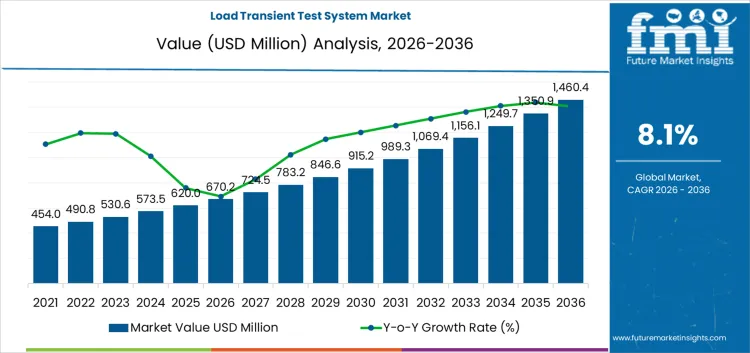
The global load transient test system market is valued at USD 670.2 million in 2026, with a forecasted growth to USD 1,459.4 million by 2036, reflecting a CAGR of 8.10%. Demand quality in this market is characterized by stability and repeat usage, as industries increasingly rely on these systems to ensure the performance and reliability of power systems under dynamic conditions. Key sectors such as automotive, aerospace, and telecommunications require high-precision test systems to validate the robustness of their power electronics and energy systems.
Buyers in this space are committed to adopting long-term solutions that enhance operational efficiency and meet stringent performance standards. As industries continue to embrace technological advancements, the demand for high-performance, reliable testing solutions remains steady, with customers prioritizing accurate, real-time data and comprehensive system integration. This commitment to long-term value over sheer volume growth shapes the market dynamics, ensuring ongoing demand and continued investment in advanced testing technologies.
Quick Stats for Load Transient Test System Market
- Load Transient Test System Market Value (2026): USD 670.2 Million
- Load Transient Test System Market Forecast Value (2036): USD 1,459.4 Million
- Load Transient Test System Market Forecast CAGR 2026 to 2036: 8.10%
- Leading Test Type in Load Transient Test System Market: AC Load Transient Testing
- Key Growth Regions in Load Transient Test System Market: Asia Pacific, North America, Europe
- Top Key Players in Load Transient Test System Market: Chroma ATE, Keysight, NH Research, AMETEK Programmable Power, Rohde & Schwarz
Load Transient Test System Market Key Takeaways
| Metric | Value |
|---|---|
| Industry Value (2026) | USD 670.2 Million |
| Forecast Value (2036) | USD 1,459.4 Million |
| Forecast CAGR 2026 to 2036 | 8.10% |
How Is the Global Load Transient Test System Market Advancing?
The global load transient test system market is experiencing strong growth, driven by the increasing need for efficient and accurate testing of power systems and electronic devices in industries such as automotive, aerospace, telecommunications, and energy. Load transient test systems are critical in evaluating the dynamic performance of electrical systems, ensuring that they can handle sudden fluctuations in power demand without compromising on reliability or safety. With the growing complexity of electronic systems, the demand for high-performance test systems that can simulate real-world conditions is rising rapidly.
A major factor driving market growth is the growing adoption of electric vehicles (EVs) and renewable energy solutions, which require robust testing to ensure that power management systems can efficiently handle load transients. These systems are used to simulate sudden changes in power demand, such as rapid acceleration in EVs or fluctuations in energy output from solar and wind systems. As the need for energy-efficient and reliable systems increases, load transient test systems are becoming essential for validating the performance and stability of next-generation power systems.
Technological advancements in test equipment are also contributing to the market's expansion. Innovations in digital simulation and automated testing are improving the precision and efficiency of load transient tests, allowing for faster and more accurate analysis. The integration of IoT (Internet of Things) and AI-driven analytics into test systems is enhancing the ability to monitor and evaluate system performance in real-time, providing more detailed insights into potential issues. As industries continue to focus on optimizing energy management and ensuring the reliability of electrical systems, the load transient test system market is poised for sustained growth in the coming years.
What Is the Segment-Wise Analysis for the Load Transient Test System Market?
The load transient test system market is segmented by test type and application. AC load transient testing leads the test type segment with a 36% share, followed by DC load transient testing, hybrid AC or DC systems, and other test types. AC load transient testing is essential for evaluating the performance and stability of power systems under varying load conditions. In terms of application, data center power systems hold the largest share at 34%, followed by EV charging & power electronics, industrial UPS or converters, and aerospace or defense power.
Why Does AC Load Transient Testing Lead the Load Transient Test System Market?
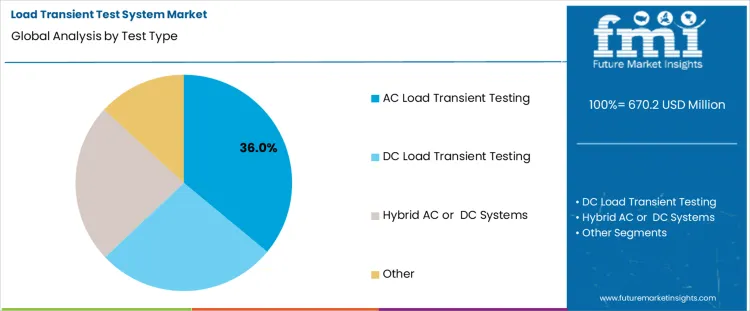
AC load transient testing leads the load transient test system market with a 36% share due to its ability to simulate and analyze the impact of varying electrical loads on AC power systems. This test type is critical for ensuring the reliability and stability of power systems, particularly in environments like data centers and industrial applications where continuous, uninterrupted power is essential. By simulating sudden load changes, AC load transient testing helps identify potential weaknesses in power delivery systems, ensuring that they can withstand transient disturbances without compromising performance. As the demand for stable, high-performance power systems increases, AC load transient testing remains the preferred method in the market.
How Do Data Center Power Systems Contribute to the Load Transient Test System Market?
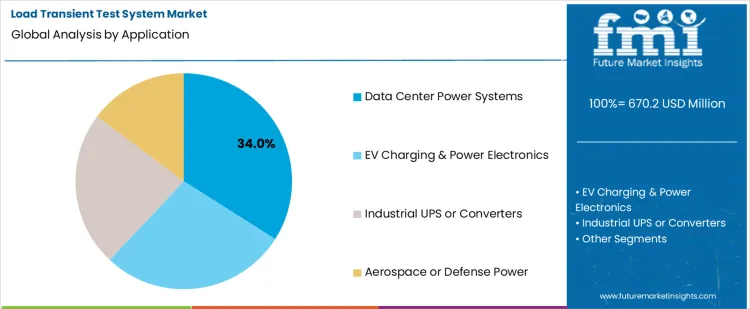
Data center power systems account for 34% of the application segment in the load transient test system market. Data centers require continuous, reliable power to maintain operations, and load transient testing plays a crucial role in ensuring the resilience of power systems against unexpected surges or drops in load. With the increasing complexity of data center operations and the rising demand for cloud services, the need for efficient power delivery systems becomes even more critical. Load transient test systems are used to simulate and evaluate the performance of power supplies, UPS systems, and backup power solutions in data centers, contributing to their growth in the market.
What Are the Key Dynamics for the Load Transient Test System Market?
The load transient test system market is driven by the increasing need for testing and validating electrical and power systems' performance under dynamic load conditions. These systems are crucial in sectors such as automotive, aerospace, and industrial equipment, where power systems must endure varying loads. The rising demand for high-quality, durable products, coupled with stringent regulatory standards in energy efficiency and safety, is pushing the need for advanced load transient test systems. These systems ensure the reliability and efficiency of power systems by simulating real-world conditions.
How Are the Key Drivers Shaping the Load Transient Test System Market?
Key drivers include the growing need for accurate, real-time performance testing of power electronics in critical industries like automotive, aerospace, and renewable energy. As industries adopt more sophisticated electrical systems, particularly in electric vehicles (EVs), energy storage, and industrial automation, the demand for reliable testing solutions has surged. The rise in the adoption of electric vehicles, renewable energy sources, and smart grids is driving the market, as these sectors require load transient test systems to ensure the robustness of their power systems under fluctuating demands.
What Are the Restraints Impacting the Load Transient Test System Market?
The load transient test system market faces several challenges, including the high initial investment and operating costs of advanced testing systems. The complexity of designing and integrating load transient test systems with existing power infrastructures in various industries can be a significant barrier, especially for small and medium enterprises. Furthermore, the need for specialized expertise to operate and interpret the results from these systems can limit their widespread adoption. The variability in testing standards across different regions may also complicate system development and integration in global markets.
What is the Growth Outlook for the Load Transient Test System Market by Country?
| Country | CAGR (%) |
|---|---|
| China | 9.4% |
| Brazil | 8.9% |
| USA | 7.9% |
| South Korea | 7.6% |
| Germany | 7.5% |
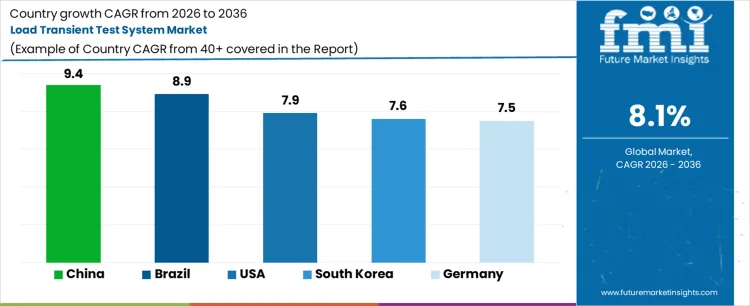
The load transient test system market is growing steadily across key regions, with China leading at 9.4%, driven by expanding automotive, electronics, and manufacturing sectors. Brazil follows at 8.9%, fueled by rising demand for high-performance testing solutions in industries like automotive and aerospace. The USA grows at 7.9%, supported by advancements in power electronics and aerospace industries. South Korea’s market expands at 7.6%, driven by innovation in automotive technology and electronics. Germany grows at 7.5%, supported by its automotive, aerospace, and industrial sectors, focusing on high-quality, reliable testing systems to meet stringent performance standards.
What is Driving the Growth of the Load Transient Test System Market in China?
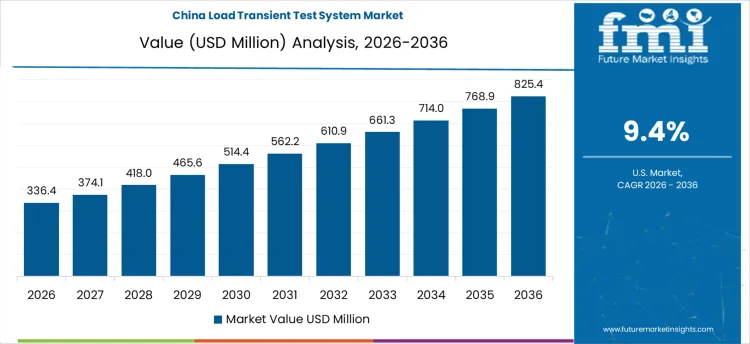
China’s load transient test system market is growing at 9.4%, driven by rapid growth in automotive, electronics, and manufacturing sectors. As China invests in industrial automation, the need for advanced testing systems that can simulate load transients in applications such as automotive engines, power electronics, and industrial machinery is increasing. With a strong emphasis on quality control and adherence to international standards, industries are adopting more reliable, high-performance testing solutions. The government’s focus on technological innovation, industrial modernization, and improving production efficiency is further supporting the market. As manufacturing continues to scale and innovate, the demand for load transient test systems in China is expected to grow at a robust pace.
How is the Load Transient Test System Market Expanding in Brazil?
Brazil’s load transient test system market is growing at 8.9%, driven by demand in automotive, aerospace, and power generation industries. As Brazil’s manufacturing sector modernizes, there is increasing need for testing systems that ensure the reliability of electrical and mechanical systems under transient loads. The government’s push for infrastructure development and sustainable manufacturing practices also fuels the adoption of advanced test systems. As the automotive industry expands with a focus on fuel efficiency and reducing emissions, the demand for sophisticated testing equipment that meets these needs rises. Brazil’s growing focus on quality control and optimizing industrial performance will continue to drive the market for load transient test systems in the coming years.
How is the Load Transient Test System Market Expanding in the USA?
The load transient test system market in the USA is growing at 7.9%, driven by advancements in automotive, aerospace, and power systems. With rising technological innovations and regulatory standards for quality control, there is a growing demand for sophisticated systems that simulate load transients to ensure the reliability of various electrical and mechanical systems. As the U.S. leads in R&D across industries like power electronics, automotive manufacturing, and renewable energy, the market for load transient test systems is seeing consistent growth. The increasing focus on improving performance, reducing emissions, and meeting regulatory requirements further contributes to the adoption of these systems, ensuring continued market expansion.
What is Driving the Growth of the Load Transient Test System Market in South Korea?
South Korea’s load transient test system market is growing at 7.6%, fueled by the country’s emphasis on industrial innovation, automotive technologies, and electronics manufacturing. South Korea’s automotive and electronics sectors, which are key drivers of advanced test systems, require precise and reliable testing solutions for their high-performance products. The rise of electric vehicles (EVs) and the demand for efficient, high-performance power systems are further boosting the need for sophisticated testing solutions. South Korea’s strong investment in R&D and modernizing its industries ensures that load transient test systems will remain in demand. As the country leads in automotive innovation, the market is set to continue its steady expansion.
How is the Load Transient Test System Market Expanding in Germany?
Germany’s load transient test system market is growing at 7.5%, driven by the country’s well-established automotive, aerospace, and industrial sectors. As a global leader in automotive engineering, Germany is adopting load transient test systems to simulate real-world conditions for vehicle powertrains, electrical systems, and components, ensuring compliance with stringent EU regulations. The country’s focus on renewable energy and high-performance power systems is further contributing to the market’s growth. Germany’s emphasis on precision engineering, quality control, and sustainable manufacturing practices supports the demand for advanced testing solutions. As Germany continues to innovate and lead in industrial technologies, the market for load transient test systems will continue to expand.
How Are Companies Competing in the Load Transient Test System Market?
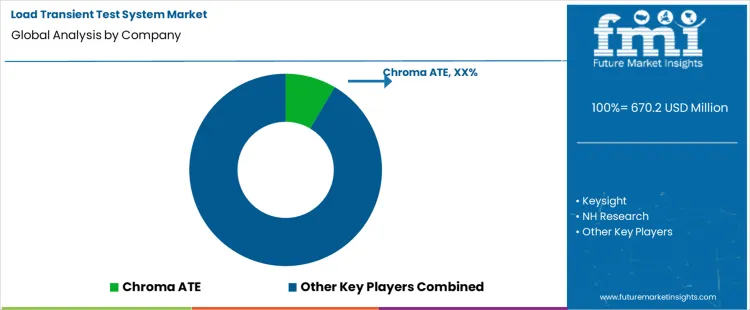
Competition in the Load Transient Test System Market is driven by dynamic power accuracy, fast response times, software flexibility, multi-channel synchronization, and integration with broader test workflows. Chroma ATE positions its load transient systems with high-speed transient simulation and programmable load profiles, and its product materials emphasize versatile interfaces and automation support that help engineers validate power supplies under real-world stress conditions. Keysight competes with precision scalable systems that combine high bandwidth measurement and detailed transient analysis, marketed for rigorous performance verification in power electronics and automotive testing.
NH Research and AMETEK Programmable Power differentiate through robust programmable loads and power sources that deliver tight regulation and rapid transient handling, with brochures highlighting high slew rates and stable performance during load steps. Rohde & Schwarz and EA Elektro-Automatik add value by offering comprehensive test platforms that integrate power measurement, transient capture, and automated scripting, their documentation focusing on tight integration with DUT control and efficient test sequencing.
Kikusui and Tektronix bring trusted measurement technologies with strong emphasis on signal fidelity and analysis toolchains, marketed for use in design validation and compliance testing. NI (Emerson) differentiates through modular, software-defined test platforms that enable custom test development and synchronized data capture across channels. Regatron rounds out the competitive landscape with programmable power and load systems engineered for high reliability and precise transient emulation, and its materials stress scalability and seamless integration into automated environments. Across all vendors, product literature underscores transient accuracy, rapid response capability, integration flexibility, and robust software support as key differentiators that help designers and test engineers ensure device performance under dynamic load conditions.
Key Players in Load Transient Test System Market
- Chroma ATE
- Keysight
- NH Research
- AMETEK Programmable Power
- Rohde & Schwarz
- EA Elektro-Automatik
- Kikusui
- Tektronix
- NI (Emerson)
- Regatron
Scope of Report
| Attributes | Description |
|---|---|
| Quantitative Unit (2026) | USD Million |
| Test Type | AC Load Transient Testing, DC Load Transient Testing, Hybrid AC or DC Systems, Other |
| Application | Data Center Power Systems, EV Charging & Power Electronics, Industrial UPS or Converters, Aerospace or Defense Power |
| Regions Covered | Asia Pacific, Europe, North America, Latin America, Middle East & Africa |
| Countries Covered | China, Japan, South Korea, India, Australia & New Zealand, ASEAN, Germany, United Kingdom, France, Italy, Spain, Nordic, BENELUX, United States, Canada, Mexico, Brazil, Chile, Turkey, South Africa, Other GCC Countries |
| Key Companies Profiled | Chroma ATE, Keysight, NH Research, AMETEK Programmable Power, Rohde & Schwarz, EA Elektro-Automatik, Kikusui, Tektronix, NI (Emerson), Regatron |
| Additional Attributes | Dollar sales by test type, application, and region; regional CAGR and growth outlook for the load transient test system market. |
Load Transient Test System Market by Key Segments
Test Type
- AC Load Transient Testing
- DC Load Transient Testing
- Hybrid AC or DC Systems
- Other
Application
- Data Center Power Systems
- EV Charging & Power Electronics
- Industrial UPS or Converters
- Aerospace or Defense Power
Region:
- Asia Pacific
- China
- Japan
- South Korea
- India
- Australia & New Zealand
- ASEAN
- Rest of Asia Pacific
- Europe
- Germany
- United Kingdom
- France
- Italy
- Spain
- Nordic
- BENELUX
- Rest of Europe
- North America
- United States
- Canada
- Mexico
- Latin America
- Brazil
- Chile
- Rest of Latin America
- Middle East & Africa
- Kingdom of Saudi Arabia
- Other GCC Countries
- Turkey
- South Africa
- Other African Union
- Rest of Middle East & Africa
Bibliography
-
International Electrotechnical Commission. (2022). IEC 62196-1:2022—Plugs, socket-outlets, vehicle connectors and vehicle inlets—Conductive charging of electric vehicles—Part 1: General requirements. IEC.
International Electrotechnical Commission. (2022). IEC 62477-1:2022—Safety requirements for power electronic converter systems and equipment—Part 1: General. IEC.
Kroičs, K., et al. (2024). Response time reduction of DC–DC converter in voltage control mode. Electronics, 13(5), 901.
Guo, Z., et al. (2025). Transient response enhancement method for DC–DC converters (adaptive duty-cycle adjustment). ScienceDirect.
Chroma ATE. (2023). Programmable DC electronic load—63200A series (Datasheet). Chroma ATE Inc.
Frequently Asked Questions
How big is the load transient test system market in 2026?
The global load transient test system market is estimated to be valued at USD 670.2 million in 2026.
What will be the size of load transient test system market in 2036?
The market size for the load transient test system market is projected to reach USD 1,460.4 million by 2036.
How much will be the load transient test system market growth between 2026 and 2036?
The load transient test system market is expected to grow at a 8.1% CAGR between 2026 and 2036.
What are the key product types in the load transient test system market?
The key product types in load transient test system market are ac load transient testing, dc load transient testing, hybrid ac or dc systems and other.
Which application segment to contribute significant share in the load transient test system market in 2026?
In terms of application, data center power systems segment to command 34.0% share in the load transient test system market in 2026.
Preview the report firsthand - request a free sample
Get SampleGet the brochure for pricing and purchase details.
Get PDFTable of Content
- Executive Summary
- Global Market Outlook
- Demand-side Trends
- Supply-side Trends
- Technology Roadmap Analysis
- Analysis and Recommendations
- Market Overview
- Market Coverage / Taxonomy
- Market Definition / Scope / Limitations
- Market Background
- Market Dynamics
- Drivers
- Restraints
- Opportunity
- Trends
- Scenario Forecast
- Demand in Optimistic Scenario
- Demand in Likely Scenario
- Demand in Conservative Scenario
- Opportunity Map Analysis
- Product Life Cycle Analysis
- Supply Chain Analysis
- Investment Feasibility Matrix
- Value Chain Analysis
- PESTLE and Porter’s Analysis
- Regulatory Landscape
- Regional Parent Market Outlook
- Production and Consumption Statistics
- Import and Export Statistics
- Market Dynamics
- Global Market Analysis 2021 to 2025 and Forecast, 2026 to 2036
- Historical Market Size Value (USD Million) Analysis, 2021 to 2025
- Current and Future Market Size Value (USD Million) Projections, 2026 to 2036
- Y-o-Y Growth Trend Analysis
- Absolute $ Opportunity Analysis
- Global Market Pricing Analysis 2021 to 2025 and Forecast 2026 to 2036
- Global Market Analysis 2021 to 2025 and Forecast 2026 to 2036, By Test Type
- Introduction / Key Findings
- Historical Market Size Value (USD Million) Analysis By Test Type , 2021 to 2025
- Current and Future Market Size Value (USD Million) Analysis and Forecast By Test Type , 2026 to 2036
- AC Load Transient Testing
- DC Load Transient Testing
- Hybrid AC or DC Systems
- Other
- AC Load Transient Testing
- Y-o-Y Growth Trend Analysis By Test Type , 2021 to 2025
- Absolute $ Opportunity Analysis By Test Type , 2026 to 2036
- Global Market Analysis 2021 to 2025 and Forecast 2026 to 2036, By Application
- Introduction / Key Findings
- Historical Market Size Value (USD Million) Analysis By Application, 2021 to 2025
- Current and Future Market Size Value (USD Million) Analysis and Forecast By Application, 2026 to 2036
- Data Center Power Systems
- EV Charging & Power Electronics
- Industrial UPS or Converters
- Aerospace or Defense Power
- Data Center Power Systems
- Y-o-Y Growth Trend Analysis By Application, 2021 to 2025
- Absolute $ Opportunity Analysis By Application, 2026 to 2036
- Global Market Analysis 2021 to 2025 and Forecast 2026 to 2036, By Region
- Introduction
- Historical Market Size Value (USD Million) Analysis By Region, 2021 to 2025
- Current Market Size Value (USD Million) Analysis and Forecast By Region, 2026 to 2036
- North America
- Latin America
- Western Europe
- Eastern Europe
- East Asia
- South Asia and Pacific
- Middle East & Africa
- Market Attractiveness Analysis By Region
- North America Market Analysis 2021 to 2025 and Forecast 2026 to 2036, By Country
- Historical Market Size Value (USD Million) Trend Analysis By Market Taxonomy, 2021 to 2025
- Market Size Value (USD Million) Forecast By Market Taxonomy, 2026 to 2036
- By Country
- USA
- Canada
- Mexico
- By Test Type
- By Application
- By Country
- Market Attractiveness Analysis
- By Country
- By Test Type
- By Application
- Key Takeaways
- Latin America Market Analysis 2021 to 2025 and Forecast 2026 to 2036, By Country
- Historical Market Size Value (USD Million) Trend Analysis By Market Taxonomy, 2021 to 2025
- Market Size Value (USD Million) Forecast By Market Taxonomy, 2026 to 2036
- By Country
- Brazil
- Chile
- Rest of Latin America
- By Test Type
- By Application
- By Country
- Market Attractiveness Analysis
- By Country
- By Test Type
- By Application
- Key Takeaways
- Western Europe Market Analysis 2021 to 2025 and Forecast 2026 to 2036, By Country
- Historical Market Size Value (USD Million) Trend Analysis By Market Taxonomy, 2021 to 2025
- Market Size Value (USD Million) Forecast By Market Taxonomy, 2026 to 2036
- By Country
- Germany
- UK
- Italy
- Spain
- France
- Nordic
- BENELUX
- Rest of Western Europe
- By Test Type
- By Application
- By Country
- Market Attractiveness Analysis
- By Country
- By Test Type
- By Application
- Key Takeaways
- Eastern Europe Market Analysis 2021 to 2025 and Forecast 2026 to 2036, By Country
- Historical Market Size Value (USD Million) Trend Analysis By Market Taxonomy, 2021 to 2025
- Market Size Value (USD Million) Forecast By Market Taxonomy, 2026 to 2036
- By Country
- Russia
- Poland
- Hungary
- Balkan & Baltic
- Rest of Eastern Europe
- By Test Type
- By Application
- By Country
- Market Attractiveness Analysis
- By Country
- By Test Type
- By Application
- Key Takeaways
- East Asia Market Analysis 2021 to 2025 and Forecast 2026 to 2036, By Country
- Historical Market Size Value (USD Million) Trend Analysis By Market Taxonomy, 2021 to 2025
- Market Size Value (USD Million) Forecast By Market Taxonomy, 2026 to 2036
- By Country
- China
- Japan
- South Korea
- By Test Type
- By Application
- By Country
- Market Attractiveness Analysis
- By Country
- By Test Type
- By Application
- Key Takeaways
- South Asia and Pacific Market Analysis 2021 to 2025 and Forecast 2026 to 2036, By Country
- Historical Market Size Value (USD Million) Trend Analysis By Market Taxonomy, 2021 to 2025
- Market Size Value (USD Million) Forecast By Market Taxonomy, 2026 to 2036
- By Country
- India
- ASEAN
- Australia & New Zealand
- Rest of South Asia and Pacific
- By Test Type
- By Application
- By Country
- Market Attractiveness Analysis
- By Country
- By Test Type
- By Application
- Key Takeaways
- Middle East & Africa Market Analysis 2021 to 2025 and Forecast 2026 to 2036, By Country
- Historical Market Size Value (USD Million) Trend Analysis By Market Taxonomy, 2021 to 2025
- Market Size Value (USD Million) Forecast By Market Taxonomy, 2026 to 2036
- By Country
- Kingdom of Saudi Arabia
- Other GCC Countries
- Turkiye
- South Africa
- Other African Union
- Rest of Middle East & Africa
- By Test Type
- By Application
- By Country
- Market Attractiveness Analysis
- By Country
- By Test Type
- By Application
- Key Takeaways
- Key Countries Market Analysis
- USA
- Pricing Analysis
- Market Share Analysis, 2025
- By Test Type
- By Application
- Canada
- Pricing Analysis
- Market Share Analysis, 2025
- By Test Type
- By Application
- Mexico
- Pricing Analysis
- Market Share Analysis, 2025
- By Test Type
- By Application
- Brazil
- Pricing Analysis
- Market Share Analysis, 2025
- By Test Type
- By Application
- Chile
- Pricing Analysis
- Market Share Analysis, 2025
- By Test Type
- By Application
- Germany
- Pricing Analysis
- Market Share Analysis, 2025
- By Test Type
- By Application
- UK
- Pricing Analysis
- Market Share Analysis, 2025
- By Test Type
- By Application
- Italy
- Pricing Analysis
- Market Share Analysis, 2025
- By Test Type
- By Application
- Spain
- Pricing Analysis
- Market Share Analysis, 2025
- By Test Type
- By Application
- France
- Pricing Analysis
- Market Share Analysis, 2025
- By Test Type
- By Application
- India
- Pricing Analysis
- Market Share Analysis, 2025
- By Test Type
- By Application
- ASEAN
- Pricing Analysis
- Market Share Analysis, 2025
- By Test Type
- By Application
- Australia & New Zealand
- Pricing Analysis
- Market Share Analysis, 2025
- By Test Type
- By Application
- China
- Pricing Analysis
- Market Share Analysis, 2025
- By Test Type
- By Application
- Japan
- Pricing Analysis
- Market Share Analysis, 2025
- By Test Type
- By Application
- South Korea
- Pricing Analysis
- Market Share Analysis, 2025
- By Test Type
- By Application
- Russia
- Pricing Analysis
- Market Share Analysis, 2025
- By Test Type
- By Application
- Poland
- Pricing Analysis
- Market Share Analysis, 2025
- By Test Type
- By Application
- Hungary
- Pricing Analysis
- Market Share Analysis, 2025
- By Test Type
- By Application
- Kingdom of Saudi Arabia
- Pricing Analysis
- Market Share Analysis, 2025
- By Test Type
- By Application
- Turkiye
- Pricing Analysis
- Market Share Analysis, 2025
- By Test Type
- By Application
- South Africa
- Pricing Analysis
- Market Share Analysis, 2025
- By Test Type
- By Application
- USA
- Market Structure Analysis
- Competition Dashboard
- Competition Benchmarking
- Market Share Analysis of Top Players
- By Regional
- By Test Type
- By Application
- Competition Analysis
- Competition Deep Dive
- Chroma ATE
- Overview
- Product Portfolio
- Profitability by Market Segments (Product/Age /Sales Channel/Region)
- Sales Footprint
- Strategy Overview
- Marketing Strategy
- Product Strategy
- Channel Strategy
- Keysight
- NH Research
- AMETEK Programmable Power
- Rohde & Schwarz
- EA Elektro-Automatik
- Kikusui
- Tektronix
- NI (Emerson)
- Regatron
- Chroma ATE
- Competition Deep Dive
- Assumptions & Acronyms Used
- Research Methodology


