

- Industry Size (2026)
- USD 279 Mn
- Forecast (2036)
- USD 914.1 Mn
- CAGR (2026 to 2036)
- 12.6%
Probiotic Systemic Resistance Inducer Spray Market Forecast and Outlook 2026 to 2036
The Probiotic Systemic Resistance Inducer Spray Market is projected to grow from USD 279 million in 2026 to USD 914.1 million by 2036, with a robust CAGR of 12.6%. This growth is driven by the increasing adoption of SAR sprays in agriculture, which enhance plant immunity against diseases and environmental stress. SAR sprays activate the plant's natural defense mechanisms, making them more resilient to pathogens and improving overall crop health. As growers face rising challenges from pests, pathogens, and climate variability, SAR sprays offer a green and effective alternative to traditional chemical pesticides. Their ability to reduce reliance on harmful chemicals aligns with the growing demand for eco-friendly and green agricultural solutions.
Quick Stats for Probiotic Systemic Resistance Inducer Spray Market
- Probiotic Systemic Resistance Inducer Spray Market Value (2026): USD 279 million
- Probiotic Systemic Resistance Inducer Spray Market Forecast Value (2036): USD 914.1 million
- Probiotic Systemic Resistance Inducer Spray Market CAGR (2026 to 2036): 12.6%
- Leading Prebiotic Type in SAR Spray Market: Oligosaccharide-based Inducers (34%)
- Key Growth Regions for SAR Spray Market: Asia Pacific, North America, Latin America
- Key Players in SAR Spray Market: Syngenta Group, Bayer CropScience, BASF SE, UPL Limited, Corteva Agriscience
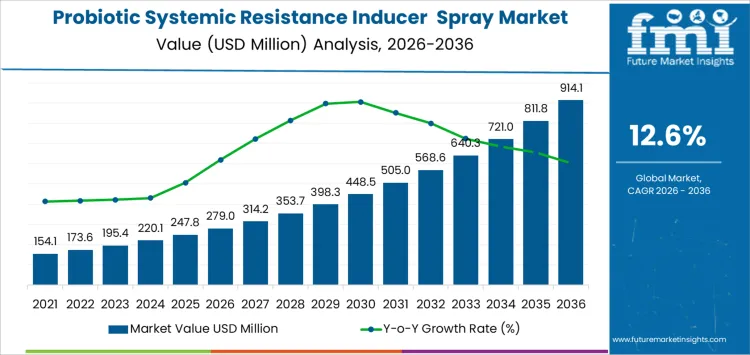
Key drivers for market expansion include advancements in SAR formulations, which now feature more efficient prebiotic compounds that provide long-lasting protection to plants. The agricultural industry is increasingly focusing on enhancing crop productivity and reducing environmental impact, making SAR sprays an attractive option for integrated pest management strategies. As the market grows, SAR sprays are expected to play a pivotal role in ensuring food security and green agriculture practices worldwide. The growth in key regions, driven by increased agricultural investments and regulatory shifts towards more natural crop protection methods, is further contributing to the market’s positive outlook. With SAR technology being incorporated into modern farming practices, the market is poised to expand significantly in the coming years.
Probiotic Systemic Resistance Inducer Spray Market Key Takeaways
| Metric | Value |
|---|---|
| Industry Value (2026) | USD 279 million |
| Forecast Value (2036) | USD 914.1 million |
| Forecast CAGR (2026 to 2036) | 12.6% |
How is the Global Prebiotic Systemic Resistance Inducer (SAR) Spray Sector Advancing?
The global Probiotic Systemic Resistance Inducer Spray Market is growing rapidly as agricultural producers seek innovative ways to strengthen plant natural defenses against pests, diseases, and environmental stress. Prebiotic SAR sprays work by stimulating a plant’s internal immune system, enhancing its ability to resist pathogens and stressors without direct pesticide action. This mode of crop protection aligns with rising demand for green, low-chemical input solutions that support long-term soil and crop health. Traditional crop protection approaches have focused heavily on synthetic pesticides, but concerns over resistance development, environmental impact, and consumer preference for residue-free produce have encouraged the adoption of resistance-inducing products.
Advances in biological science and plant physiology are improving the efficacy of prebiotic SAR formulations, enabling better activation of defense pathways across a range of crop types including cereals, fruits, vegetables, and specialty crops. As regulatory frameworks around crop protection tighten and durability goals become more central to farming practices, prebiotic SAR sprays are increasingly incorporated into integrated crop management programs. These products help growers reduce reliance on conventional chemicals while maintaining yield and quality.
The market is expected to grow strongly as awareness of climate stress challenges and disease pressures increases globally. Continued research into formulation technologies, field performance validation, and integration with precision agriculture practices will support broader adoption. Challenges such as variability in field responses, the need for tailored application guidance by crop and region, and education among growers about biological crop protection mechanisms may influence adoption pace. Nonetheless, the emphasis on green agriculture and eco-friendly crop defense strategies will continue to drive demand for prebiotic SAR sprays worldwide.
What Is the Segment-Wise Analysis for the Global Probiotic Systemic Resistance Inducer Spray Market?
The global Probiotic Systemic Resistance Inducer Spray Market is segmented by prebiotic type and application mode. Oligosaccharide-based inducers lead the market with a 34% share due to their effectiveness in activating plant defense mechanisms. Other significant prebiotic types include chitosan & derivatives, seaweed & algal extracts, plant-derived polysaccharides, and others. In terms of application modes, foliar spray holds the largest share at 58%, followed by seed treatment and soil application.
How Do Oligosaccharide-Based Inducers Lead the Global Probiotic Systemic Resistance Inducer Spray Market?
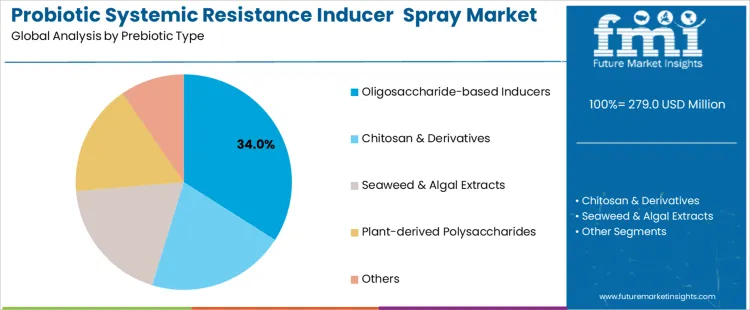
Oligosaccharide-based inducers hold a 34% share in the global Probiotic Systemic Resistance Inducer Spray Market due to their remarkable ability to enhance plant immunity. These compounds stimulate the plant's natural defense mechanisms, helping it resist various pathogens and environmental stress factors. Oligosaccharides are particularly valued for their capacity to activate systemic acquired resistance (SAR) pathways, offering long-lasting protection against a broad spectrum of diseases. This makes them highly effective in green agricultural practices, where eco-friendly solutions are prioritized. The growing emphasis on reducing chemical pesticide use in agriculture further boosts the demand for SAR sprays based on oligosaccharides.
Why Does Foliar Spray Hold the Largest Market Share in the Global SAR Spray Market?
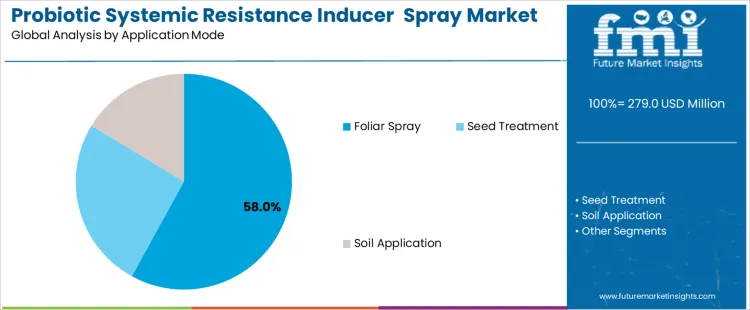
Foliar spray holds the largest share of 58% in the global Probiotic Systemic Resistance Inducer Spray Market due to its superior efficiency in delivering active ingredients directly to plant leaves for rapid absorption. This application method enables quick activation of plant defense mechanisms, particularly during times of high disease pressure. Foliar spray is a highly effective way to ensure that SAR agents, such as oligosaccharides, are uniformly distributed across the plant's surface, maximizing their impact on boosting the plant’s immunity. The method’s simplicity, speed, and ability to provide immediate protection in fields and crops during critical growth stages make it the preferred choice for farmers.
What is Shaping the Prebiotic Systemic Resistance Inducer Spray Market?
The Probiotic Systemic Resistance Inducer Spray Market is shaped by growing demand for green plant health solutions that enhance crop immunity without heavy reliance on traditional pesticides. Prebiotic SAR sprays stimulate innate plant defense mechanisms, helping crops resist diseases and environmental stresses. As growers face tighter regulations on chemical pesticides and increasing pressure to adopt environmentally friendly practices, SAR sprays are gaining traction. Advances in plant biology and agritech research are improving understanding of plant immune signaling pathways, leading to more effective and targeted SAR formulations.
What Factors Are Driving the Prebiotic Systemic Resistance Inducer Spray Market?
The market is driven by the need to protect crop yields while reducing synthetic chemical inputs. Farmers and agronomists are adopting prebiotic SAR sprays to bolster plant defenses against pathogens, improve resilience to stress, and reduce disease‑related losses. Regulatory restrictions on conventional fungicides and bactericides in many regions are encouraging the shift to biological and bio‑enhancing crop inputs. Increased investment in crop protection research and precision agriculture tools that support optimized application timing further support market growth. Demand is especially strong in high‑value crops where disease pressure can significantly impact profitability.
What Challenges Are Limiting Adoption of Prebiotic Systemic Resistance Inducer Sprays?
Adoption of prebiotic SAR sprays can be limited by variable field performance, especially across diverse environments, crop types, and pathogen pressures. The complexity of plant immune responses means results may differ by region and growing conditions, creating uncertainty for some growers. Cost considerations and perceived value versus traditional chemical controls also affect uptake, particularly in price‑sensitive farming systems. Comprehensive agronomic guidance and training are needed for optimal application timing and integration with existing crop protection programs, which can be a barrier in regions with limited advisory support.
What is the Growth Outlook for the Probiotic Systemic Resistance Inducer Spray Market by Country?
| Country | CAGR (%) |
|---|---|
| India | 15.1% |
| China | 13.2% |
| USA | 10.4% |
| Brazil | 11.6% |
| Germany | 9.1% |
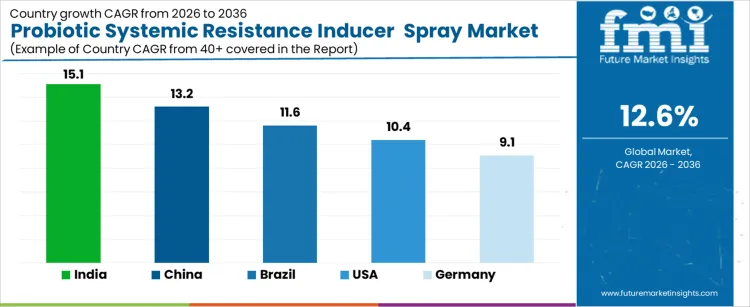
The Probiotic Systemic Resistance Inducer Spray Market is growing rapidly, with India leading at a 15.1% CAGR, driven by increasing agricultural demand and the need for eco-friendly crop protection solutions. China follows closely with 13.2%, supported by its large-scale agricultural operations and rising focus on green farming. Brazil’s market grows at 11.6%, driven by its expansive agricultural sector and growing emphasis on innovative farming techniques. The USA shows steady growth at 10.4%, fueled by the growing demand for biological crop protectants. Germany’s market grows at 9.1%, supported by stringent environmental regulations and the increasing shift towards green agriculture practices.
Why is India Leading in the Probiotic Systemic Resistance Inducer Spray Market?
India’s Probiotic Systemic Resistance Inducer Spray Market is growing at 15.1%, driven by the country’s vast agricultural sector and the increasing need to combat crop diseases and pests while minimizing the use of chemical pesticides. As agriculture is vital to India’s economy, the demand for green crop protection solutions is rising. Prebiotic SAR sprays offer an eco-friendly alternative to traditional chemical treatments, promoting plant immunity against stress and disease. Government initiatives aimed at promoting green farming practices and reducing pesticide use are further accelerating the adoption of SAR sprays. With a growing focus on improving crop resilience and food security, India’s market for prebiotic SAR sprays is expected to expand rapidly, with more farmers turning to biological solutions for crop protection.
What is Driving the Growth of the Probiotic Systemic Resistance Inducer Spray Market in China?
China’s Probiotic Systemic Resistance Inducer Spray Market is growing at 13.2%, driven by the country’s vast agricultural output and the increasing need for more green farming practices. As China faces rising pressure to reduce pesticide use and combat the effects of climate change on crops, SAR sprays are gaining popularity for their ability to boost plant resistance naturally. These sprays improve plant health, helping crops withstand diseases, pests, and environmental stress. The government’s efforts to modernize agriculture and reduce the environmental impact of traditional farming methods are contributing to the growth of the SAR spray market. As the adoption of green agricultural practices continues to rise, the demand for prebiotic SAR sprays in China is expected to grow steadily.
How is the Probiotic Systemic Resistance Inducer Spray Market Expanding in Brazil?
Brazil’s Probiotic Systemic Resistance Inducer Spray Market is growing at 11.6%, fueled by the country’s large agricultural sector and the increasing demand for green crop protection solutions. Brazil is a key global producer of crops like soybeans, coffee, and sugarcane, and as farmers face rising challenges from pests, diseases, and changing environmental conditions, the adoption of SAR sprays is on the rise. These sprays help plants build natural defenses against stress and pathogens, reducing the need for chemical pesticides. With Brazil’s growing focus on agricultural innovation and durability, SAR sprays are gaining traction as an eco-friendly alternative. As Brazil’s agricultural industry continues to evolve, the market for SAR sprays is expected to continue its steady growth.
What is Contributing to the Growth of the Probiotic Systemic Resistance Inducer Spray Market in the USA?
The USA’s Probiotic Systemic Resistance Inducer Spray Market is growing at 10.4%, driven by the increasing demand for green crop protection products. As the USA looks for ways to reduce pesticide use and improve crop resilience to environmental stress and diseases, SAR sprays are becoming a preferred solution. These biological products help enhance plant immunity, providing protection against pests and diseases without the harmful effects of chemical treatments. The growing awareness among farmers about the benefits of SAR sprays, combined with government policies encouraging green agriculture, is driving market growth. With increasing adoption of eco-friendly farming practices and the need for more resilient crops, the demand for SAR sprays in the USA is expected to rise steadily.
What is Driving the Growth of the Probiotic Systemic Resistance Inducer Spray Market in Germany?
Germany’s Probiotic Systemic Resistance Inducer Spray Market is growing at 9.1%, supported by the country’s strong commitment to green agricultural practices and environmental protection. As Germany continues to focus on reducing chemical pesticide use, the demand for natural crop protection solutions like SAR sprays is rising. These products help crops build resistance to diseases, pests, and environmental stress, improving overall plant health. Germany’s regulatory framework, which promotes the adoption of eco-friendly agricultural practices, is further accelerating the use of SAR sprays. With the increasing focus on reducing the environmental footprint of farming, the market for prebiotic SAR sprays in Germany is expected to grow steadily, driven by both government policies and growing consumer demand for green agriculture.
How Are Companies Competing in the Probiotic Systemic Resistance Inducer Spray Market?
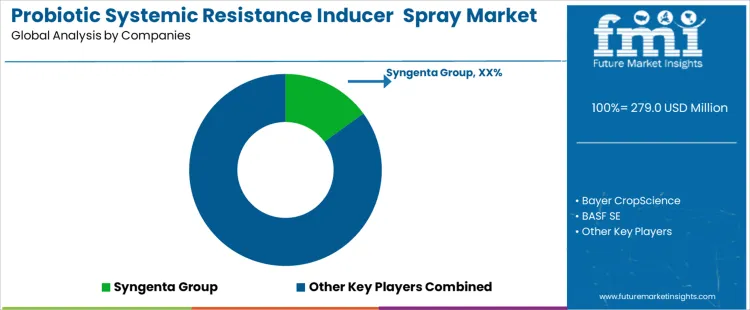
In the Probiotic Systemic Resistance Inducer Spray Market Syngenta Group, Bayer CropScience, BASF SE, UPL Limited, and Corteva Agriscience are positioned with differentiated product brochures that emphasize plant health enhancement through systemic resistance. Syngenta Group brochures describe SAR sprays formulated to prime plant defense mechanisms with data presented on improved stress tolerance and disease reduction. Details on application timing and compatibility with crop protection programs are highlighted. Bayer CropScience literature focuses on SAR products integrated into broader plant health portfolios. Trial summaries, mode‑of‑action explanations, and crop‑specific recommendations are included to build confidence among agronomists and advisors.
BASF SE materials present systemic resistance inducers with clear performance metrics and technical guidance. Emphasis is placed on formulation stability and ease of mixing with other inputs. Product brochures include visual aids showing comparative results under stress conditions. UPL Limited brochures position SAR sprays as components of integrated crop management plans. Specifics on dosing regimens and tank‑mix compatibility are offered to simplify decision making for growers. Corteva Agriscience literature highlights research‑backed approaches to systemic resistance induction. Brochures emphasize how products support plant physiological responses and include application windows and crop stage guidance.
Key Players in Probiotic Systemic Resistance Inducer Spray Market
- Syngenta Group
- Bayer CropScience
- BASF SE
- UPL Limited
- Corteva Agriscience
Scope of Report
| Items | Values |
|---|---|
| Quantitative Units (2026) | USD million |
| Prebiotic Type | Oligosaccharide-based Inducers, Chitosan & Derivatives, Seaweed & Algal Extracts, Plant-derived Polysaccharides, Others |
| Application Mode | Foliar Spray, Seed Treatment, Soil Application |
| Regions Covered | Asia Pacific, Europe, North America, Latin America, Middle East & Africa |
| Countries Covered | USA, China, Japan, South Korea, India, Australia & New Zealand, ASEAN, Germany, UK, France, Italy, Spain, Nordic, BENELUX, Brazil, Chile, Mexico, Saudi Arabia, Other GCC Countries, Turkey, South Africa, Other African Union |
| Key Companies Profiled | Syngenta Group, Bayer CropScience, BASF SE, UPL Limited, Corteva Agriscience |
| Additional Attributes | Dollar sales by prebiotic type, application mode, and region; regional CAGR and growth outlook; distribution channels including seed suppliers, agrochemical distributors, and farm service providers; innovation trends in prebiotic resistance induction; competitive positioning of global vs regional suppliers. |
Probiotic Systemic Resistance Inducer Spray Market by Segments
Prebiotic Type
- Oligosaccharide-based Inducers
- Chitosan & Derivatives
- Seaweed & Algal Extracts
- Plant-derived Polysaccharides
- Others
Application Mode
- Foliar Spray
- Seed Treatment
- Soil Application
Region:
- Asia Pacific
- China
- Japan
- South Korea
- India
- Australia & New Zealand
- ASEAN
- Rest of Asia Pacific
- Europe
- Germany
- United Kingdom
- France
- Italy
- Spain
- Nordic
- BENELUX
- Rest of Europe
- North America
- United States
- Canada
- Mexico
- Latin America
- Brazil
- Chile
- Rest of Latin America
- Middle East & Africa
- Kingdom of Saudi Arabia
- Other GCC Countries
- Turkey
- South Africa
- Other African Union
- Rest of Middle East & Africa
Frequently Asked Questions
How big is the probiotic systemic resistance inducer spray market in 2026?
The global probiotic systemic resistance inducer spray market is estimated to be valued at USD 279.0 million in 2026.
What will be the size of probiotic systemic resistance inducer spray market in 2036?
The market size for the probiotic systemic resistance inducer spray market is projected to reach USD 914.1 million by 2036.
How much will be the probiotic systemic resistance inducer spray market growth between 2026 and 2036?
The probiotic systemic resistance inducer spray market is expected to grow at a 12.6% CAGR between 2026 and 2036.
What are the key product types in the probiotic systemic resistance inducer spray market?
The key product types in probiotic systemic resistance inducer spray market are oligosaccharide-based inducers, chitosan & derivatives, seaweed & algal extracts, plant-derived polysaccharides and others.
Which application mode segment to contribute significant share in the probiotic systemic resistance inducer spray market in 2026?
In terms of application mode, foliar spray segment to command 58.0% share in the probiotic systemic resistance inducer spray market in 2026.
Preview the report firsthand - request a free sample
Get SampleGet the brochure for pricing and purchase details.
Get PDFTable of Content
- Executive Summary
- Global Market Outlook
- Demand-side Trends
- Supply-side Trends
- Technology Roadmap Analysis
- Analysis and Recommendations
- Market Overview
- Market Coverage / Taxonomy
- Market Definition / Scope / Limitations
- Market Background
- Market Dynamics
- Drivers
- Restraints
- Opportunity
- Trends
- Scenario Forecast
- Demand in Optimistic Scenario
- Demand in Likely Scenario
- Demand in Conservative Scenario
- Opportunity Map Analysis
- Product Life Cycle Analysis
- Supply Chain Analysis
- Investment Feasibility Matrix
- Value Chain Analysis
- PESTLE and Porter’s Analysis
- Regulatory Landscape
- Regional Parent Market Outlook
- Production and Consumption Statistics
- Import and Export Statistics
- Market Dynamics
- Global Market Analysis 2021 to 2025 and Forecast, 2026 to 2036
- Historical Market Size Value (USD Million) Analysis, 2021 to 2025
- Current and Future Market Size Value (USD Million) Projections, 2026 to 2036
- Y-o-Y Growth Trend Analysis
- Absolute $ Opportunity Analysis
- Global Market Pricing Analysis 2021 to 2025 and Forecast 2026 to 2036
- Global Market Analysis 2021 to 2025 and Forecast 2026 to 2036, By Prebiotic Type
- Introduction / Key Findings
- Historical Market Size Value (USD Million) Analysis By Prebiotic Type , 2021 to 2025
- Current and Future Market Size Value (USD Million) Analysis and Forecast By Prebiotic Type , 2026 to 2036
- Oligosaccharide-based Inducers
- Chitosan & Derivatives
- Seaweed & Algal Extracts
- Plant-derived Polysaccharides
- Others
- Y-o-Y Growth Trend Analysis By Prebiotic Type , 2021 to 2025
- Absolute $ Opportunity Analysis By Prebiotic Type , 2026 to 2036
- Global Market Analysis 2021 to 2025 and Forecast 2026 to 2036, By Application Mode
- Introduction / Key Findings
- Historical Market Size Value (USD Million) Analysis By Application Mode, 2021 to 2025
- Current and Future Market Size Value (USD Million) Analysis and Forecast By Application Mode, 2026 to 2036
- Foliar Spray
- Seed Treatment
- Soil Application
- Y-o-Y Growth Trend Analysis By Application Mode, 2021 to 2025
- Absolute $ Opportunity Analysis By Application Mode, 2026 to 2036
- Global Market Analysis 2021 to 2025 and Forecast 2026 to 2036, By Region
- Introduction
- Historical Market Size Value (USD Million) Analysis By Region, 2021 to 2025
- Current Market Size Value (USD Million) Analysis and Forecast By Region, 2026 to 2036
- North America
- Latin America
- Western Europe
- Eastern Europe
- East Asia
- South Asia and Pacific
- Middle East & Africa
- Market Attractiveness Analysis By Region
- North America Market Analysis 2021 to 2025 and Forecast 2026 to 2036, By Country
- Historical Market Size Value (USD Million) Trend Analysis By Market Taxonomy, 2021 to 2025
- Market Size Value (USD Million) Forecast By Market Taxonomy, 2026 to 2036
- By Country
- USA
- Canada
- Mexico
- By Prebiotic Type
- By Application Mode
- By Country
- Market Attractiveness Analysis
- By Country
- By Prebiotic Type
- By Application Mode
- Key Takeaways
- Latin America Market Analysis 2021 to 2025 and Forecast 2026 to 2036, By Country
- Historical Market Size Value (USD Million) Trend Analysis By Market Taxonomy, 2021 to 2025
- Market Size Value (USD Million) Forecast By Market Taxonomy, 2026 to 2036
- By Country
- Brazil
- Chile
- Rest of Latin America
- By Prebiotic Type
- By Application Mode
- By Country
- Market Attractiveness Analysis
- By Country
- By Prebiotic Type
- By Application Mode
- Key Takeaways
- Western Europe Market Analysis 2021 to 2025 and Forecast 2026 to 2036, By Country
- Historical Market Size Value (USD Million) Trend Analysis By Market Taxonomy, 2021 to 2025
- Market Size Value (USD Million) Forecast By Market Taxonomy, 2026 to 2036
- By Country
- Germany
- UK
- Italy
- Spain
- France
- Nordic
- BENELUX
- Rest of Western Europe
- By Prebiotic Type
- By Application Mode
- By Country
- Market Attractiveness Analysis
- By Country
- By Prebiotic Type
- By Application Mode
- Key Takeaways
- Eastern Europe Market Analysis 2021 to 2025 and Forecast 2026 to 2036, By Country
- Historical Market Size Value (USD Million) Trend Analysis By Market Taxonomy, 2021 to 2025
- Market Size Value (USD Million) Forecast By Market Taxonomy, 2026 to 2036
- By Country
- Russia
- Poland
- Hungary
- Balkan & Baltic
- Rest of Eastern Europe
- By Prebiotic Type
- By Application Mode
- By Country
- Market Attractiveness Analysis
- By Country
- By Prebiotic Type
- By Application Mode
- Key Takeaways
- East Asia Market Analysis 2021 to 2025 and Forecast 2026 to 2036, By Country
- Historical Market Size Value (USD Million) Trend Analysis By Market Taxonomy, 2021 to 2025
- Market Size Value (USD Million) Forecast By Market Taxonomy, 2026 to 2036
- By Country
- China
- Japan
- South Korea
- By Prebiotic Type
- By Application Mode
- By Country
- Market Attractiveness Analysis
- By Country
- By Prebiotic Type
- By Application Mode
- Key Takeaways
- South Asia and Pacific Market Analysis 2021 to 2025 and Forecast 2026 to 2036, By Country
- Historical Market Size Value (USD Million) Trend Analysis By Market Taxonomy, 2021 to 2025
- Market Size Value (USD Million) Forecast By Market Taxonomy, 2026 to 2036
- By Country
- India
- ASEAN
- Australia & New Zealand
- Rest of South Asia and Pacific
- By Prebiotic Type
- By Application Mode
- By Country
- Market Attractiveness Analysis
- By Country
- By Prebiotic Type
- By Application Mode
- Key Takeaways
- Middle East & Africa Market Analysis 2021 to 2025 and Forecast 2026 to 2036, By Country
- Historical Market Size Value (USD Million) Trend Analysis By Market Taxonomy, 2021 to 2025
- Market Size Value (USD Million) Forecast By Market Taxonomy, 2026 to 2036
- By Country
- Kingdom of Saudi Arabia
- Other GCC Countries
- Turkiye
- South Africa
- Other African Union
- Rest of Middle East & Africa
- By Prebiotic Type
- By Application Mode
- By Country
- Market Attractiveness Analysis
- By Country
- By Prebiotic Type
- By Application Mode
- Key Takeaways
- Key Countries Market Analysis
- USA
- Pricing Analysis
- Market Share Analysis, 2025
- By Prebiotic Type
- By Application Mode
- Canada
- Pricing Analysis
- Market Share Analysis, 2025
- By Prebiotic Type
- By Application Mode
- Mexico
- Pricing Analysis
- Market Share Analysis, 2025
- By Prebiotic Type
- By Application Mode
- Brazil
- Pricing Analysis
- Market Share Analysis, 2025
- By Prebiotic Type
- By Application Mode
- Chile
- Pricing Analysis
- Market Share Analysis, 2025
- By Prebiotic Type
- By Application Mode
- Germany
- Pricing Analysis
- Market Share Analysis, 2025
- By Prebiotic Type
- By Application Mode
- UK
- Pricing Analysis
- Market Share Analysis, 2025
- By Prebiotic Type
- By Application Mode
- Italy
- Pricing Analysis
- Market Share Analysis, 2025
- By Prebiotic Type
- By Application Mode
- Spain
- Pricing Analysis
- Market Share Analysis, 2025
- By Prebiotic Type
- By Application Mode
- France
- Pricing Analysis
- Market Share Analysis, 2025
- By Prebiotic Type
- By Application Mode
- India
- Pricing Analysis
- Market Share Analysis, 2025
- By Prebiotic Type
- By Application Mode
- ASEAN
- Pricing Analysis
- Market Share Analysis, 2025
- By Prebiotic Type
- By Application Mode
- Australia & New Zealand
- Pricing Analysis
- Market Share Analysis, 2025
- By Prebiotic Type
- By Application Mode
- China
- Pricing Analysis
- Market Share Analysis, 2025
- By Prebiotic Type
- By Application Mode
- Japan
- Pricing Analysis
- Market Share Analysis, 2025
- By Prebiotic Type
- By Application Mode
- South Korea
- Pricing Analysis
- Market Share Analysis, 2025
- By Prebiotic Type
- By Application Mode
- Russia
- Pricing Analysis
- Market Share Analysis, 2025
- By Prebiotic Type
- By Application Mode
- Poland
- Pricing Analysis
- Market Share Analysis, 2025
- By Prebiotic Type
- By Application Mode
- Hungary
- Pricing Analysis
- Market Share Analysis, 2025
- By Prebiotic Type
- By Application Mode
- Kingdom of Saudi Arabia
- Pricing Analysis
- Market Share Analysis, 2025
- By Prebiotic Type
- By Application Mode
- Turkiye
- Pricing Analysis
- Market Share Analysis, 2025
- By Prebiotic Type
- By Application Mode
- South Africa
- Pricing Analysis
- Market Share Analysis, 2025
- By Prebiotic Type
- By Application Mode
- USA
- Market Structure Analysis
- Competition Dashboard
- Competition Benchmarking
- Market Share Analysis of Top Players
- By Regional
- By Prebiotic Type
- By Application Mode
- Competition Analysis
- Competition Deep Dive
- Syngenta Group
- Overview
- Product Portfolio
- Profitability by Market Segments (Product/Age /Sales Channel/Region)
- Sales Footprint
- Strategy Overview
- Marketing Strategy
- Product Strategy
- Channel Strategy
- Bayer CropScience
- BASF SE
- UPL Limited
- Corteva Agriscience
- Syngenta Group
- Competition Deep Dive
- Assumptions & Acronyms Used
- Research Methodology


