

- Industry Size (2026)
- USD 320 Mn
- Forecast (2036)
- USD 757.6 Mn
- CAGR (2026 to 2036)
- 9%
Low-Allergen Hair Dye Pigment Systems for Sensitive Scalp Care Market Forecast and Outlook 2026 to 2036
The low-allergen hair dye pigment systems for sensitive scalp care market is expected to grow from USD 320 million in 2026 to USD 757.6 million by 2036, reflecting a compound annual growth rate (CAGR) of 9%. Regionally, demand for these products will be concentrated in North America and Europe, where consumers are increasingly aware of scalp sensitivity and allergic reactions. In contrast, adoption may be slower in emerging markets, where cost and awareness barriers limit growth. These regions will require tailored marketing strategies to address consumer concerns and demonstrate the benefits of low-allergen solutions.
Geographic cost advantages will also play a role, as suppliers in regions with lower manufacturing costs, such as parts of Asia, can offer competitive pricing. However, these markets will need to meet higher regulatory standards set by more developed regions. As global demand for scalp-friendly products rises, suppliers must balance innovation, cost-efficiency, and regulatory compliance to capture value across diverse markets.
Quick Stats of the Low-Allergen Hair Dye Pigment Systems for Sensitive Scalp Care Market
- Low-Allergen Hair Dye Pigment Systems for Sensitive Scalp Care Market Value (2026): USD 320 million
- Low-Allergen Hair Dye Pigment Systems for Sensitive Scalp Care Market Forecast Value (2036): USD 757.6 million
- Low-Allergen Hair Dye Pigment Systems for Sensitive Scalp Care Market Global Forecast CAGR (2026 to 2036): 9%
- Low-Allergen Hair Dye Pigment Systems for Sensitive Scalp Care Market Leading Segment: Formulation Type (Permanent Low-Allergen Dyes) 42%
- Key Growth Regions in Low-Allergen Hair Dye Pigment Systems for Sensitive Scalp Care Market: USA
- Top Players in Low-Allergen Hair Dye Pigment Systems for Sensitive Scalp Care Market: L’Oréal S.A., Henkel AG & Co. KGaA, Revlon, Inc., Godrej Consumer Products Limited, Madison Reed, Herbatint, Surya Brasil, Indus Valley, Aveda (Estée Lauder), Clairol
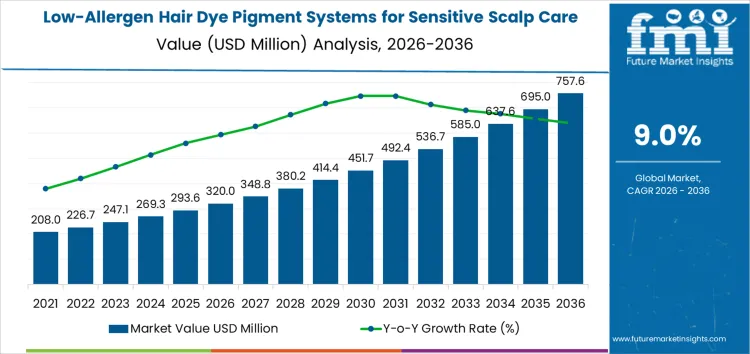
What is the Growth Forecast for the Low-Allergen Hair Dye Pigment Systems for Sensitive Scalp Care Market through 2036?
The compound absolute growth analysis for the low-allergen hair dye pigment systems for sensitive scalp care market reveals significant growth over the forecast period, driven by increasing consumer demand for safer and more hypoallergenic hair dye solutions. From 2026 to 2031, the market is expected to grow from USD 320 million to USD 495 million, representing an absolute growth of USD 175 million over the first five years. This initial phase will be characterized by strong consumer interest as awareness of scalp sensitivity and the risks of traditional hair dyes increase. As more consumers seek alternatives that minimize irritation, particularly those with sensitive skin or allergies, the market will see rapid adoption of low-allergen hair dye systems, fueled by improved formulations and growing availability across retail and professional segments.
The market will continue its growth from 2031 to 2036, expanding from USD 495 million to USD 757.6 million, reflecting an additional absolute growth of USD 290 million. This phase will be marked by more stable and predictable growth as the technology matures and low-allergen hair dye products become more mainstream. Innovations in product formulations, particularly in improving color longevity and performance while minimizing allergens, will drive this continued growth. The steady rise in consumer preference for cleaner, safer beauty products, along with expanding distribution channels, will support a more gradual yet sustained increase in market value during the latter part of the forecast period.
Low-Allergen Hair Dye Pigment Systems for Sensitive Scalp Care Market Key Takeaways
| Metric | Value |
|---|---|
| Industry Sales Value (2026) | USD 320 million |
| Industry Forecast Value (2036) | USD 757.6 million |
| Industry Forecast CAGR (2026 to 2036) | 9% |
What Is Driving the Demand for Low-Allergen Hair Dye Pigment Systems for Sensitive Scalp Care?
Historical demand for low-allergen hair dye pigment systems emerged from broader growth in the global hair color industry, which was valued at about USD 26.1 billion in 2024 and projected to expand at around 5.9 % growth annually through 2033. This expansion reflects rising use of hair coloring products across demographics and regions. Conventional hair dyes historically relied on chemicals such as p phenylenediamine (PPD), which are known to cause allergic contact dermatitis and scalp irritation. Dermatologists identify PPD and related amines as strong sensitizers that contribute to allergic reactions in some users.
As awareness of scalp sensitivity increased, demand shifted toward formulations that reduce the presence of such allergens or replace them with gentler alternatives. The historic interest in plant based and hypoallergenic products, including ammonia free and PPD free options, provided early impetus for products targeting individuals with sensitive scalps and allergy concerns. Retail availability of herbal, botanical, and hypoallergenic hair colors supported this trend by offering alternatives perceived as less irritating and better tolerated by allergy prone consumers.
Future demand for low-allergen hair dye pigment systems for sensitive scalp care is expected to grow as consumers continue to prioritize product safety, ingredient transparency, and scalp health. Market research projects the global hypoallergenic hair dye market to expand from about USD 1.15 billion in 2024 to around USD 2.47 billion by 2033 at a CAGR of 8.7 %, indicating stronger growth than the broader hair color category. Key growth factors include rising prevalence of skin sensitivities and allergic reactions among consumers, increased consumer awareness of ingredient safety, and regulatory emphasis on reducing harmful chemicals in cosmetic products.
The shift toward natural, organic, and hypoallergenic formulations influences hair dye innovation, encouraging pigment systems that minimize contact sensitizers and include gentle, plant derived colorants with skin friendly pH profiles. Continued growth in the natural and organic hair dye segment is also forecast, with the overall natural hair dye market expected to grow at around 8.4 % CAGR through 2030, further supporting demand for low-allergen systems. Adoption may be influenced by formulation complexity required to balance gentle performance with color longevity and shade range, but advances in ingredient science and consumer preference for safer alternatives are likely to sustain future market growth.
What are the Leading Segments in the Global Low-Allergen Hair Dye Pigment Systems for Sensitive Scalp Care Market?
The global low-allergen hair dye pigment systems for sensitive scalp care market is segmented by ingredient platform and formulation type. Among ingredient platforms, plant-derived colorants lead the market, capturing 38% of the share, followed by henna & botanical blends, low-amino or mild synthetic pigment systems, and hypoallergenic mineral pigments. Plant-derived colorants are preferred for their natural origin and skin-friendly properties, making them ideal for sensitive scalps. On the formulation type side, permanent low-allergen dyes dominate the market, holding 42% of the share, followed by semi-permanent low-irritation shades, temporary sensitive scalp colorants, and shade enhancers/gloss systems. Permanent low-allergen dyes are the largest segment due to their lasting effects and suitability for long-term use in sensitive scalp applications.
What Drives the Growth of Plant-Derived Colorants in the Low-Allergen Hair Dye Pigment Systems for Sensitive Scalp Care Market?
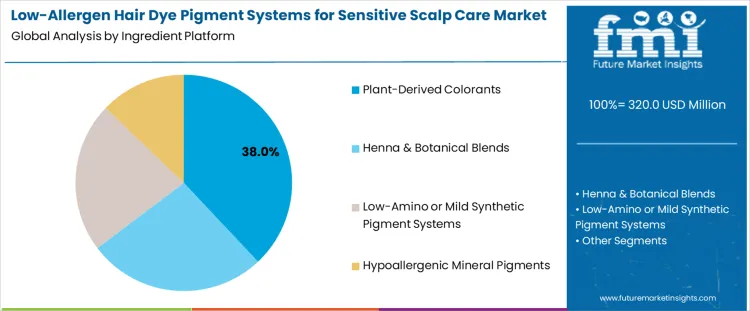
Plant-derived colorants are the leading ingredient platform in the low-allergen hair dye pigment systems for sensitive scalp care market, holding 38% of the share. These colorants are increasingly popular due to their natural and gentle properties, making them ideal for consumers with sensitive skin or scalps. Derived from plants, fruits, or vegetables, these pigments are less likely to cause irritation or allergic reactions compared to synthetic alternatives. The growing demand for clean, natural beauty products, combined with the increasing awareness of the potential harm caused by harsh chemicals, is driving the adoption of plant-derived colorants in hair dye formulations. Consumers are increasingly seeking hair care solutions that are both effective and safe, leading to the preference for plant-based ingredients that provide vibrant, lasting color without compromising scalp health. As the demand for sensitive scalp care continues to grow, plant-derived colorants are expected to maintain their dominant position in the market.
What is Driving the Demand for Permanent Low-Allergen Dyes in the Low-Allergen Hair Dye Pigment Systems for Sensitive Scalp Care Market?
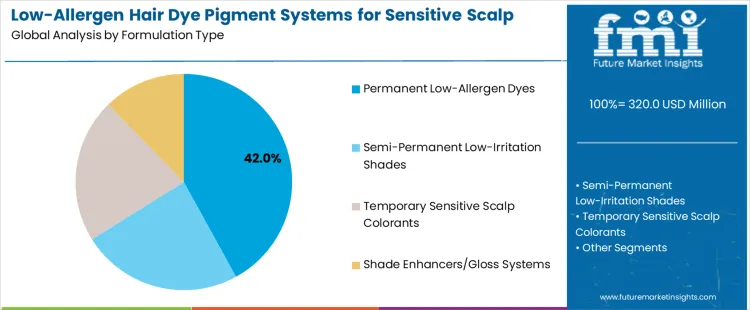
Permanent low-allergen dyes are the leading formulation type in the low-allergen hair dye pigment systems for sensitive scalp care market, capturing 42% of the share. This demand is driven by the increasing desire for long-lasting hair color solutions that are safe for sensitive skin. Permanent dyes provide a more durable solution for individuals seeking consistent hair color while minimizing irritation. These low-allergen dyes are formulated to offer lasting results without triggering allergic reactions, which is a key concern for consumers with sensitive scalps. The growing awareness of allergic reactions to conventional hair dyes and the increasing demand for hair coloring options that cater to individuals with sensitive skin are major factors fueling the demand for permanent low-allergen dyes. As consumers continue to prioritize health-conscious, sustainable beauty options, permanent low-allergen hair dyes will remain a dominant choice for sensitive scalp care.
What are the Key Dynamics in the Global Low Allergen Hair Dye Pigment Systems for Sensitive Scalp Care Market?
The global low-allergen hair dye pigment systems for sensitive scalp care market is growing as consumers and professional salons increasingly seek colorants that minimize irritation while delivering reliable shade payoff and coverage. These pigment systems combine mild, low reactivity dyes with tailored carriers and conditioners that reduce risk of allergic reactions and scalp discomfort. Growth reflects rising awareness of scalp health, increased dermatologist and stylist recommendations, and demand for inclusive products suitable for sensitive users. Adoption spans retail and salon use products where safety, comfort and aesthetic performance are core decision criteria.
What are the Key Drivers for the Low-Allergen Hair Dye Pigment Systems for Sensitive Scalp Care Market?
A key driver is heightened consumer focus on scalp health and avoidance of harsh ingredients linked to irritation or allergic responses. Individuals with sensitive skin, scalp conditions, or history of dye reactions motivate brands to develop systems that are gentler yet effective. Advances in cosmetic chemistry enable formulation of low-allergen pigments and delivery systems that balance performance and mildness. Growth in at home hair coloring and DIY beauty routines increases demand for products perceived as safer and easier to use. Professional salons also seek options that expand service offerings to clients with sensitive skin concerns.
What are the Restraints for the Low-Allergen Hair Dye Pigment Systems for Sensitive Scalp Care Market?
One restraint is the technical challenge of matching color intensity, gray coverage and shade range of conventional dyes while maintaining low allergenicity. Some mild pigment systems may require careful balance with conditioners and stabilizers that affect dye uptake or longevity, increasing formulation complexity. Higher development and raw material costs for low-allergen ingredients may translate to premium pricing that limits adoption in value oriented segments. Consumer skepticism around claims of “sensitivity friendly” performance without clear evidence may slow conversion unless supported by clinical testing and education. Regulatory definitions of hypoallergenic and allergen free vary by market, affecting labeling and marketing strategies.
What are the Key Trends in the Low-Allergen Hair Dye Pigment Systems for Sensitive Scalp Care Market?
A key trend is development of pigment systems that integrate conditioning and scalp soothing actives such as botanical extracts, ceramides or barrier support ingredients to enhance comfort during and after application. Ingredient suppliers are innovating encapsulation and delivery technologies that reduce direct contact of reactive dye molecules with skin while ensuring even color deposition. Collaboration between pigment developers, dermatologists and cosmetic brands accelerates validation and consumer trust. Transparent communication about ingredient sources, clinical results and patch test guidance supports informed choices. Personalization tools and shade matching technology help users select suitable products tailored to their color goals and sensitivity profiles.
What is the Country-Wise Analysis of the Low-Allergen Hair Dye Pigment Systems for Sensitive Scalp Care Market?
The low-allergen hair dye pigment systems for sensitive scalp care market is growing rapidly, driven by rising consumer demand for hair color products that are both effective and gentle on sensitive scalps. With increasing awareness of the potential irritants in traditional hair dyes, more consumers are seeking low-allergen alternatives that minimize scalp discomfort and offer a safer hair coloring experience. Developed markets such as the USA, Germany, and the UK are leading the way, driven by their strong consumer interest in clean beauty and scalp health.
These markets are increasingly adopting hair care solutions that emphasize gentle formulations, natural ingredients, and dermatologically tested products. Emerging markets like Japan and France are also seeing steady growth, as consumers in these regions are becoming more conscious of the ingredients in their hair care products. As the market for low-allergen hair dye pigments expands, it is expected to continue growing globally, fueled by both consumer demand and ongoing innovation in hair care formulations.
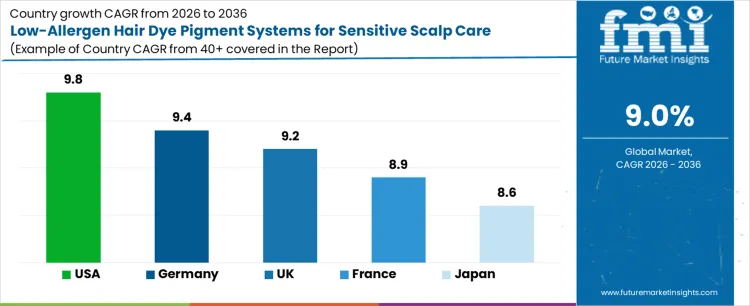
| Country | CAGR (2026 to 2036) |
|---|---|
| USA | 9.8% |
| Germany | 9.4% |
| UK | 9.2% |
| France | 8.9% |
| Japan | 8.6% |
What is the Growth Outlook for the Low-Allergen Hair Dye Pigment Systems for Sensitive Scalp Care Market in the USA?
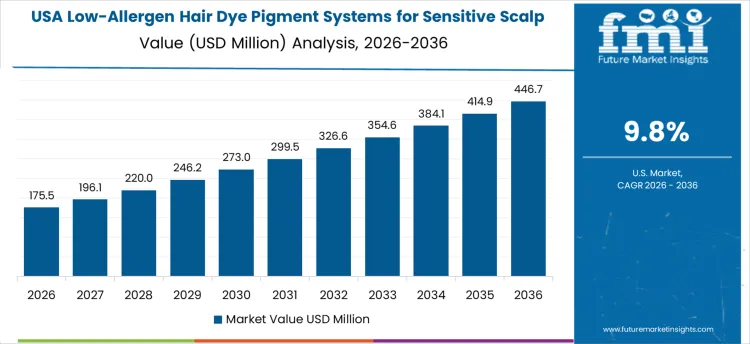
The low-allergen hair dye pigment systems for sensitive scalp care market in the USA is projected to experience strong growth, with a projected CAGR of 9.8% from 2026 to 2036. USA consumers are increasingly focused on hair care products that prioritize scalp health and minimize irritation. As awareness grows about the allergens and harsh chemicals present in traditional hair dyes, the demand for low-allergen alternatives has surged. This shift towards gentle, dermatologically tested products is driving significant interest in low-allergen hair dye pigment systems. USA beauty brands are innovating to meet this demand, offering hair dye products with natural ingredients and improved formulas designed for sensitive skin. The growing focus on clean beauty, coupled with rising consumer awareness about scalp health, is expected to drive the USA market for low-allergen hair dye pigment systems over the next decade.
What is the Market Outlook for the Low-Allergen Hair Dye Pigment Systems for Sensitive Scalp Care Market in Germany?
Germany is expected to see steady growth in the low-allergen hair dye pigment systems for sensitive scalp care market, with a projected CAGR of 9.4% from 2026 to 2036. German consumers are highly concerned with the ingredients in their personal care products, and there is a growing demand for hair dye options that are free from harsh chemicals and allergens. As awareness of the importance of scalp health increases, more consumers in Germany are opting for low-allergen hair dye pigments that minimize irritation while providing effective color. Germany’s beauty market is heavily influenced by trends toward sustainability and wellness, and as part of this movement, consumers are gravitating towards hair care products that offer gentle, non-toxic formulations. The demand for low-allergen pigments in hair dye products is expected to continue growing as the clean beauty movement gains further momentum in Germany.
What is the Growth Forecast for the Low-Allergen Hair Dye Pigment Systems for Sensitive Scalp Care Market in the UK?
The low-allergen hair dye pigment systems for sensitive scalp care market in the UK is projected to grow steadily, with a projected CAGR of 9.2% from 2026 to 2036. In the UK, there is increasing consumer demand for hair color solutions that are safe for sensitive skin and scalp. As consumers become more conscious of the potential allergens in hair dye products, many are seeking alternatives that are designed to minimize irritation. The growing trend of clean beauty and dermatologically tested products is driving the UK market for low-allergen hair dye pigments. Brands are responding to this demand by offering products that feature natural, gentle ingredients and improved formulas that cater to sensitive skin. With the continued emphasis on scalp health and wellness, the UK market for low-allergen hair dye pigment systems is expected to experience steady growth.
What is the Market Outlook for the Low-Allergen Hair Dye Pigment Systems for Sensitive Scalp Care Market in France?
The low-allergen hair dye pigment systems for sensitive scalp care market in France is expected to grow steadily, with a projected CAGR of 8.9% from 2026 to 2036. France’s beauty market has long been known for its focus on natural and high-quality ingredients, and this trend is now extending to hair care products. As more French consumers become aware of the potential risks of allergens in hair dyes, there is a rising demand for low-allergen alternatives. French consumers are increasingly seeking hair color products that are not only effective but also gentle on the scalp. The growth of the clean beauty movement, along with a strong interest in dermatologically safe products, is contributing to the rise in popularity of low-allergen hair dye pigment systems. As consumer preferences continue to shift towards safer and more sustainable beauty options, France’s market for low-allergen hair dye pigments is expected to expand steadily.
What are the Growth Prospects for the Low-Allergen Hair Dye Pigment Systems for Sensitive Scalp Care Market in Japan?
The low-allergen hair dye pigment systems for sensitive scalp care market in Japan is projected to grow steadily, with a projected CAGR of 8.6% from 2026 to 2036. Japan is known for its advanced beauty market, where consumers are increasingly focused on skin health and ingredient transparency. As awareness of the risks associated with allergens in traditional hair dyes grows, Japanese consumers are increasingly seeking safer alternatives. The demand for low-allergen hair dye products is on the rise, as consumers prioritize products that minimize scalp irritation and provide gentle, effective results. Japan’s emphasis on high-quality and safe personal care products, combined with the growing trend of clean beauty, is expected to contribute to the steady growth of the low-allergen hair dye pigment systems market. With the rise in consumer preference for products that promote scalp health, the market for these gentle, dermatologically tested hair dye pigments is expected to continue expanding in Japan.
What is the Competitive Landscape for the Low-Allergen Hair Dye Pigment Systems for Sensitive Scalp Care Market?
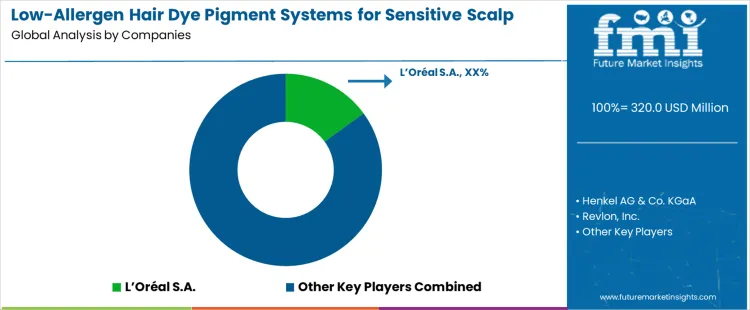
The low-allergen hair dye pigment systems for sensitive scalp care market is expanding as consumers increasingly prioritize hair color products that are gentle on the scalp and reduce the risk of allergic reactions. L’Oréal S.A. leads the market with its innovative low-allergen hair dye pigment systems, offering high-performance, gentle hair coloring solutions that are specially formulated for sensitive scalps.
Their commitment to product safety, efficacy, and skin compatibility has positioned them as a dominant player in this growing segment. Henkel AG & Co. KGaA, Revlon, Inc., and Godrej Consumer Products Limited are key competitors, each offering specialized hair dye products designed to minimize allergens while providing vibrant, long-lasting color. Henkel AG focuses on creating hair color solutions that cater to sensitive skin, while Revlon, Inc. and Godrej Consumer Products Limited offer gentle alternatives that balance safety and color performance.
Madison Reed, Herbatint, Surya Brasil, Indus Valley, Aveda (Estée Lauder), and Clairol further contribute to the competitive landscape with their own formulations for sensitive scalp care. Madison Reed is known for its ammonia-free and low-allergen hair color products, while Herbatint and Surya Brasil specialize in plant-based, natural alternatives that minimize irritation. Indus Valley focuses on providing Ayurvedic, natural hair color solutions, and Aveda offers hair dyes that are free from harsh chemicals. Clairol also leads with hypoallergenic formulations in its product range.
These companies compete by focusing on safety, innovation, and the growing demand for products that offer both gentle care and vibrant, long-lasting color. As consumer awareness around scalp health continues to rise, the market for low-allergen hair dye pigment systems is expected to grow, driving further innovation and competition in the sector.
Key Players of the Low-Allergen Hair Dye Pigment Systems for Sensitive Scalp Care Market
- L’Oréal S.A.
- Henkel AG & Co. KGaA
- Revlon, Inc.
- Godrej Consumer Products Limited
- Madison Reed
- Herbatint
- Surya Brasil
- Indus Valley
- Aveda (Estée Lauder)
- Clairol
Scope of the Report
| Items | Values |
|---|---|
| Quantitative Units (2026) | USD Million |
| Ingredient Platform | Plant-Derived Colorants, Henna & Botanical Blends, Low-Amino or Mild Synthetic Pigment Systems, Hypoallergenic Mineral Pigments |
| Formulation Type | Permanent Low-Allergen Dyes, Semi-Permanent Low-Irritation Shades, Temporary Sensitive Scalp Colorants, Shade Enhancers/Gloss Systems |
| End Use | Salon Professional Sensitive Solutions, At-Home Low-Allergen Kits, Dermatology/Clinical Hair Color Products, Mass-Market Allergy-Friendly Products |
| Companies | L’Oréal S.A., Henkel AG & Co. KGaA, Revlon, Inc., Godrej Consumer Products Limited, Madison Reed, Herbatint, Surya Brasil, Indus Valley, Aveda (Estée Lauder), Clairol |
| Regions Covered | North America, Latin America, Western Europe, Eastern Europe, South Asia and Pacific, East Asia, Middle East & Africa |
| Countries Covered | United States, Canada, Mexico, Brazil, Argentina, Germany, France, United Kingdom, Italy, Spain, Netherlands, China, India, Japan, South Korea, ANZ, GCC Countries, South Africa |
| Additional Attributes | Dollar by sales by ingredient platform, formulation type, end use, and region. Includes analysis of market trends in low-allergen hair dye pigment systems for sensitive scalp care, performance of low-irritation formulations, formulation drivers and cost dynamics, regulatory and safety considerations for sensitive scalp products, consumer demand for allergy-friendly hair color solutions, market share and competitive positioning of key companies, innovations in mild and plant-based colorant technologies, and assessment of impact on product efficacy, scalp health outcomes, and user satisfaction. |
Low-Allergen Hair Dye Pigment Systems for Sensitive Scalp Care Market Segmentation
By Ingredient Platform:
- Plant-Derived Colorants
- Henna & Botanical Blends
- Low-Amino or Mild Synthetic Pigment Systems
- Hypoallergenic Mineral Pigments
By Formulation Type
- Permanent Low-Allergen Dyes
- Semi-Permanent Low-Irritation Shades
- Temporary Sensitive Scalp Colorants
- Shade Enhancers/Gloss Systems
By End Use
- Salon Professional Sensitive Solutions
- At-Home Low-Allergen Kits
- Dermatology/Clinical Hair Color Products
- Mass-Market Allergy-Friendly Products
By Region:
- Asia Pacific
- China
- Japan
- South Korea
- India
- Australia & New Zealand
- ASEAN
- Rest of Asia Pacific
- Europe
- Germany
- United Kingdom
- France
- Italy
- Spain
- Nordic
- BENELUX
- Rest of Europe
- North America
- United States
- Canada
- Mexico
- Latin America
- Brazil
- Chile
- Rest of Latin America
- Middle East & Africa
- Kingdom of Saudi Arabia
- Other GCC Countries
- Turkey
- South Africa
- Other African Union
- Rest of Middle East & Africa
Frequently Asked Questions
How big is the low-allergen hair dye pigment systems for sensitive scalp care market in 2026?
The global low-allergen hair dye pigment systems for sensitive scalp care market is estimated to be valued at USD 320.0 million in 2026.
What will be the size of low-allergen hair dye pigment systems for sensitive scalp care market in 2036?
The market size for the low-allergen hair dye pigment systems for sensitive scalp care market is projected to reach USD 757.6 million by 2036.
How much will be the low-allergen hair dye pigment systems for sensitive scalp care market growth between 2026 and 2036?
The low-allergen hair dye pigment systems for sensitive scalp care market is expected to grow at a 9.0% CAGR between 2026 and 2036.
What are the key product types in the low-allergen hair dye pigment systems for sensitive scalp care market?
The key product types in low-allergen hair dye pigment systems for sensitive scalp care market are plant‑derived colorants, henna & botanical blends, low‑amino or mild synthetic pigment systems and hypoallergenic mineral pigments.
Which formulation type segment to contribute significant share in the low-allergen hair dye pigment systems for sensitive scalp care market in 2026?
In terms of formulation type, permanent low‑allergen dyes segment to command 42.0% share in the low-allergen hair dye pigment systems for sensitive scalp care market in 2026.
Preview the report firsthand - request a free sample
Get SampleGet the brochure for pricing and purchase details.
Get PDFTable of Content
- Executive Summary
- Global Market Outlook
- Demand-side Trends
- Supply-side Trends
- Technology Roadmap Analysis
- Analysis and Recommendations
- Market Overview
- Market Coverage / Taxonomy
- Market Definition / Scope / Limitations
- Market Background
- Market Dynamics
- Drivers
- Restraints
- Opportunity
- Trends
- Scenario Forecast
- Demand in Optimistic Scenario
- Demand in Likely Scenario
- Demand in Conservative Scenario
- Opportunity Map Analysis
- Product Life Cycle Analysis
- Supply Chain Analysis
- Investment Feasibility Matrix
- Value Chain Analysis
- PESTLE and Porter’s Analysis
- Regulatory Landscape
- Regional Parent Market Outlook
- Production and Consumption Statistics
- Import and Export Statistics
- Market Dynamics
- Global Market Analysis 2021 to 2025 and Forecast, 2026 to 2036
- Historical Market Size Value (USD Million) Analysis, 2021 to 2025
- Current and Future Market Size Value (USD Million) Projections, 2026 to 2036
- Y-o-Y Growth Trend Analysis
- Absolute $ Opportunity Analysis
- Global Market Pricing Analysis 2021 to 2025 and Forecast 2026 to 2036
- Global Market Analysis 2021 to 2025 and Forecast 2026 to 2036, By Ingredient Platform
- Introduction / Key Findings
- Historical Market Size Value (USD Million) Analysis By Ingredient Platform , 2021 to 2025
- Current and Future Market Size Value (USD Million) Analysis and Forecast By Ingredient Platform , 2026 to 2036
- Plant‑Derived Colorants
- Henna & Botanical Blends
- Low‑Amino or Mild Synthetic Pigment Systems
- Hypoallergenic Mineral Pigments
- Plant‑Derived Colorants
- Y-o-Y Growth Trend Analysis By Ingredient Platform , 2021 to 2025
- Absolute $ Opportunity Analysis By Ingredient Platform , 2026 to 2036
- Global Market Analysis 2021 to 2025 and Forecast 2026 to 2036, By Formulation Type
- Introduction / Key Findings
- Historical Market Size Value (USD Million) Analysis By Formulation Type, 2021 to 2025
- Current and Future Market Size Value (USD Million) Analysis and Forecast By Formulation Type, 2026 to 2036
- Permanent Low‑Allergen Dyes
- Semi‑Permanent Low‑Irritation Shades
- Temporary Sensitive Scalp Colorants
- Shade Enhancers/Gloss Systems
- Permanent Low‑Allergen Dyes
- Y-o-Y Growth Trend Analysis By Formulation Type, 2021 to 2025
- Absolute $ Opportunity Analysis By Formulation Type, 2026 to 2036
- Global Market Analysis 2021 to 2025 and Forecast 2026 to 2036, By End Use
- Introduction / Key Findings
- Historical Market Size Value (USD Million) Analysis By End Use, 2021 to 2025
- Current and Future Market Size Value (USD Million) Analysis and Forecast By End Use, 2026 to 2036
- Salon Professional Sensitive Solutions
- At‑Home Low‑Allergen Kits
- Dermatology/Clinical Hair Color Products
- Mass‑Market Allergy‑Friendly Products
- Salon Professional Sensitive Solutions
- Y-o-Y Growth Trend Analysis By End Use, 2021 to 2025
- Absolute $ Opportunity Analysis By End Use, 2026 to 2036
- Global Market Analysis 2021 to 2025 and Forecast 2026 to 2036, By Region
- Introduction
- Historical Market Size Value (USD Million) Analysis By Region, 2021 to 2025
- Current Market Size Value (USD Million) Analysis and Forecast By Region, 2026 to 2036
- North America
- Latin America
- Western Europe
- Eastern Europe
- East Asia
- South Asia and Pacific
- Middle East & Africa
- Market Attractiveness Analysis By Region
- North America Market Analysis 2021 to 2025 and Forecast 2026 to 2036, By Country
- Historical Market Size Value (USD Million) Trend Analysis By Market Taxonomy, 2021 to 2025
- Market Size Value (USD Million) Forecast By Market Taxonomy, 2026 to 2036
- By Country
- USA
- Canada
- Mexico
- By Ingredient Platform
- By Formulation Type
- By End Use
- By Country
- Market Attractiveness Analysis
- By Country
- By Ingredient Platform
- By Formulation Type
- By End Use
- Key Takeaways
- Latin America Market Analysis 2021 to 2025 and Forecast 2026 to 2036, By Country
- Historical Market Size Value (USD Million) Trend Analysis By Market Taxonomy, 2021 to 2025
- Market Size Value (USD Million) Forecast By Market Taxonomy, 2026 to 2036
- By Country
- Brazil
- Chile
- Rest of Latin America
- By Ingredient Platform
- By Formulation Type
- By End Use
- By Country
- Market Attractiveness Analysis
- By Country
- By Ingredient Platform
- By Formulation Type
- By End Use
- Key Takeaways
- Western Europe Market Analysis 2021 to 2025 and Forecast 2026 to 2036, By Country
- Historical Market Size Value (USD Million) Trend Analysis By Market Taxonomy, 2021 to 2025
- Market Size Value (USD Million) Forecast By Market Taxonomy, 2026 to 2036
- By Country
- Germany
- UK
- Italy
- Spain
- France
- Nordic
- BENELUX
- Rest of Western Europe
- By Ingredient Platform
- By Formulation Type
- By End Use
- By Country
- Market Attractiveness Analysis
- By Country
- By Ingredient Platform
- By Formulation Type
- By End Use
- Key Takeaways
- Eastern Europe Market Analysis 2021 to 2025 and Forecast 2026 to 2036, By Country
- Historical Market Size Value (USD Million) Trend Analysis By Market Taxonomy, 2021 to 2025
- Market Size Value (USD Million) Forecast By Market Taxonomy, 2026 to 2036
- By Country
- Russia
- Poland
- Hungary
- Balkan & Baltic
- Rest of Eastern Europe
- By Ingredient Platform
- By Formulation Type
- By End Use
- By Country
- Market Attractiveness Analysis
- By Country
- By Ingredient Platform
- By Formulation Type
- By End Use
- Key Takeaways
- East Asia Market Analysis 2021 to 2025 and Forecast 2026 to 2036, By Country
- Historical Market Size Value (USD Million) Trend Analysis By Market Taxonomy, 2021 to 2025
- Market Size Value (USD Million) Forecast By Market Taxonomy, 2026 to 2036
- By Country
- China
- Japan
- South Korea
- By Ingredient Platform
- By Formulation Type
- By End Use
- By Country
- Market Attractiveness Analysis
- By Country
- By Ingredient Platform
- By Formulation Type
- By End Use
- Key Takeaways
- South Asia and Pacific Market Analysis 2021 to 2025 and Forecast 2026 to 2036, By Country
- Historical Market Size Value (USD Million) Trend Analysis By Market Taxonomy, 2021 to 2025
- Market Size Value (USD Million) Forecast By Market Taxonomy, 2026 to 2036
- By Country
- India
- ASEAN
- Australia & New Zealand
- Rest of South Asia and Pacific
- By Ingredient Platform
- By Formulation Type
- By End Use
- By Country
- Market Attractiveness Analysis
- By Country
- By Ingredient Platform
- By Formulation Type
- By End Use
- Key Takeaways
- Middle East & Africa Market Analysis 2021 to 2025 and Forecast 2026 to 2036, By Country
- Historical Market Size Value (USD Million) Trend Analysis By Market Taxonomy, 2021 to 2025
- Market Size Value (USD Million) Forecast By Market Taxonomy, 2026 to 2036
- By Country
- Kingdom of Saudi Arabia
- Other GCC Countries
- Turkiye
- South Africa
- Other African Union
- Rest of Middle East & Africa
- By Ingredient Platform
- By Formulation Type
- By End Use
- By Country
- Market Attractiveness Analysis
- By Country
- By Ingredient Platform
- By Formulation Type
- By End Use
- Key Takeaways
- Key Countries Market Analysis
- USA
- Pricing Analysis
- Market Share Analysis, 2025
- By Ingredient Platform
- By Formulation Type
- By End Use
- Canada
- Pricing Analysis
- Market Share Analysis, 2025
- By Ingredient Platform
- By Formulation Type
- By End Use
- Mexico
- Pricing Analysis
- Market Share Analysis, 2025
- By Ingredient Platform
- By Formulation Type
- By End Use
- Brazil
- Pricing Analysis
- Market Share Analysis, 2025
- By Ingredient Platform
- By Formulation Type
- By End Use
- Chile
- Pricing Analysis
- Market Share Analysis, 2025
- By Ingredient Platform
- By Formulation Type
- By End Use
- Germany
- Pricing Analysis
- Market Share Analysis, 2025
- By Ingredient Platform
- By Formulation Type
- By End Use
- UK
- Pricing Analysis
- Market Share Analysis, 2025
- By Ingredient Platform
- By Formulation Type
- By End Use
- Italy
- Pricing Analysis
- Market Share Analysis, 2025
- By Ingredient Platform
- By Formulation Type
- By End Use
- Spain
- Pricing Analysis
- Market Share Analysis, 2025
- By Ingredient Platform
- By Formulation Type
- By End Use
- France
- Pricing Analysis
- Market Share Analysis, 2025
- By Ingredient Platform
- By Formulation Type
- By End Use
- India
- Pricing Analysis
- Market Share Analysis, 2025
- By Ingredient Platform
- By Formulation Type
- By End Use
- ASEAN
- Pricing Analysis
- Market Share Analysis, 2025
- By Ingredient Platform
- By Formulation Type
- By End Use
- Australia & New Zealand
- Pricing Analysis
- Market Share Analysis, 2025
- By Ingredient Platform
- By Formulation Type
- By End Use
- China
- Pricing Analysis
- Market Share Analysis, 2025
- By Ingredient Platform
- By Formulation Type
- By End Use
- Japan
- Pricing Analysis
- Market Share Analysis, 2025
- By Ingredient Platform
- By Formulation Type
- By End Use
- South Korea
- Pricing Analysis
- Market Share Analysis, 2025
- By Ingredient Platform
- By Formulation Type
- By End Use
- Russia
- Pricing Analysis
- Market Share Analysis, 2025
- By Ingredient Platform
- By Formulation Type
- By End Use
- Poland
- Pricing Analysis
- Market Share Analysis, 2025
- By Ingredient Platform
- By Formulation Type
- By End Use
- Hungary
- Pricing Analysis
- Market Share Analysis, 2025
- By Ingredient Platform
- By Formulation Type
- By End Use
- Kingdom of Saudi Arabia
- Pricing Analysis
- Market Share Analysis, 2025
- By Ingredient Platform
- By Formulation Type
- By End Use
- Turkiye
- Pricing Analysis
- Market Share Analysis, 2025
- By Ingredient Platform
- By Formulation Type
- By End Use
- South Africa
- Pricing Analysis
- Market Share Analysis, 2025
- By Ingredient Platform
- By Formulation Type
- By End Use
- USA
- Market Structure Analysis
- Competition Dashboard
- Competition Benchmarking
- Market Share Analysis of Top Players
- By Regional
- By Ingredient Platform
- By Formulation Type
- By End Use
- Competition Analysis
- Competition Deep Dive
- L’Oréal S.A.
- Overview
- Product Portfolio
- Profitability by Market Segments (Product/Age /Sales Channel/Region)
- Sales Footprint
- Strategy Overview
- Marketing Strategy
- Product Strategy
- Channel Strategy
- Henkel AG & Co. KGaA
- Revlon, Inc.
- Godrej Consumer Products Limited
- Madison Reed
- Herbatint
- Surya Brasil
- Indus Valley
- Aveda (Estée Lauder)
- Clairol
- L’Oréal S.A.
- Competition Deep Dive
- Assumptions & Acronyms Used
- Research Methodology


