

- Industry Size (2026)
- USD 631.5 Mn
- Forecast (2036)
- USD 1495 Mn
- CAGR (2026 to 2036)
- 9%
Low-Chloride Concrete Safe Deicing Products Market Forecast and Outlook 2026 to 2036
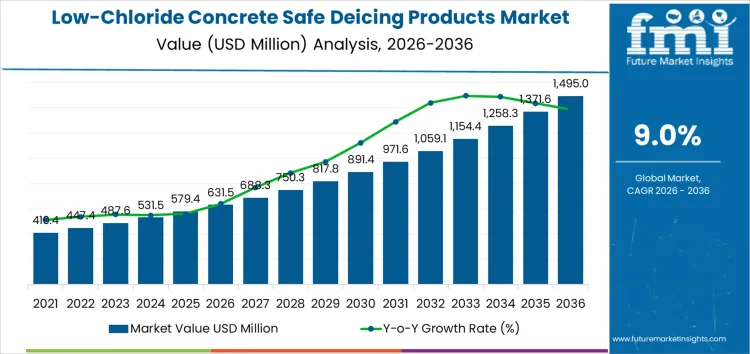
The low-chloride concrete safe deicing products market is expected to grow steadily from 2026 to 2036. In 2026, the market value is projected to be USD 631.5 million, with steady growth expected, reaching USD 1,495 million by 2036. The compound annual growth rate (CAGR) for this market is forecasted at 9%, driven by the increasing demand for environmentally friendly and safe deicing products. These products are designed to reduce the impact of deicing chemicals on concrete, infrastructure, and the environment, making them particularly attractive to municipalities and industries seeking to minimize damage caused by traditional chloride-based deicers.
The market’s growth is supported by an increased focus on sustainability, environmental protection, and infrastructure longevity. As climate change and severe weather events continue to affect regions worldwide, the demand for effective, low-chloride deicing solutions will increase. Additionally, the growing focus on protecting concrete structures, especially roads and bridges, from chloride-induced damage further drives market adoption. Over the forecast period, the low-chloride concrete safe deicing products market is expected to expand steadily, driven by these trends and innovations in deicing technologies.
Quick Stats of the Low-Chloride Concrete Safe Deicing Products Market
- Low-Chloride Concrete Safe Deicing Products Market Value (2026): USD 631.5 million
- Low-Chloride Concrete Safe Deicing Products Market Forecast Value (2036): USD 1,495 million
- Low-Chloride Concrete Safe Deicing Products Market Global Forecast CAGR (2026 to 2036): 9%
- Low-Chloride Concrete Safe Deicing Products Market Leading Segment: End-User (Government & Municipal Authorities) 34%
- Key Growth Regions in Low-Chloride Concrete Safe Deicing Products Market: Canada
- Top Players in Low-Chloride Concrete Safe Deicing Products Market: Cargill, Envirotech Services, Compass Minerals, K-Tech Specialty Coatings, Dow Inc.
What is the Growth Forecast for the Low-Chloride Concrete Safe Deicing Products Market through 2036?
In the early stage (2026 to 2032), the market will expand from USD 631.5 million in 2026 to USD 1,072.6 million by 2032. The early growth is largely driven by the increasing demand for low-chloride deicing products and the initial adoption by municipalities and industries recognizing the benefits of safer, more environmentally friendly alternatives.
In the later stage (2032 to 2036), while growth continues, the rate of expansion will decelerate slightly as the market matures. By 2036, the market is expected to reach USD 1,495 million, with slower, more stable growth rates in the final years. This late-stage growth is influenced by the widespread adoption of these products, reaching a point where demand stabilizes due to market saturation and the industry shifting towards incremental innovations rather than major shifts in product adoption.
Low-Chloride Concrete Safe Deicing Products Market Key Takeaways
| Metric | Value |
|---|---|
| Industry Sales Value (2026) | USD 631.5 million |
| Industry Forecast Value (2036) | USD 1,495 million |
| Industry Forecast CAGR (2026 to 2036) | 9% |
What Is Driving the Demand for the Low-Chloride Concrete Safe Deicing Products Market Globally?
The global demand for low chloride concrete safe deicing products is driven by increasing concerns about infrastructure durability, environmental impact, and public safety in cold climate regions. Conventional chloride based deicers such as sodium chloride, calcium chloride, and magnesium chloride are effective at melting ice and snow, yet they contribute to corrosion of reinforced concrete structures, bridge decks, and embedded steel rebar. Over time this accelerates maintenance costs and reduces service life of roads, parking structures, and airport runways. Municipal authorities, transportation agencies, and facility managers are therefore adopting low chloride alternatives that minimise corrosive effects on concrete, extend asset longevity, and lower lifecycle repair expenses. In parallel, environmental regulations in Europe, North America, and parts of Asia restrict chloride runoff due to harmful effects on soil, groundwater, vegetation, and aquatic ecosystems, prompting specification of deicing formulations that substantially reduce chloride content without sacrificing performance. These trends are reinforced by public demand for safer, more sustainable winter maintenance practices that protect critical infrastructure and sensitive environments alike.
Future demand for low chloride concrete safe deicing products is expected to grow as road agencies, contractors, and municipalities intensify focus on resilient infrastructure and sustainable materials management. Advances in formulation technology, including blends with acetate salts, organic acids, and corrosion inhibitors, are improving ice melting efficiency at lower temperatures while reducing chloride related degradation. Adoption of predictive winter maintenance systems and automated application equipment supports more precise dosing of safer deicers, enhancing operational efficiency and reducing overall chemical use. Policy frameworks that prioritise reduced chloride emissions, extended asset life, and alignment with broader environmental goals will further accelerate uptake across regions prone to freeze-thaw cycles. Research into performance equivalence and cost effectiveness relative to traditional deicers will also influence specification in public procurement and engineering standards. As climate variability increases demand for reliable winter road treatments that balance infrastructure protection with environmental stewardship, the market for low chloride concrete safe deicing products is positioned for sustained expansion in global cold weather maintenance programs.
What are the Leading Segments in the Global Low-Chloride Concrete Safe Deicing Products Market?
The global low-chloride concrete safe deicing products market is segmented by product type and end-user. Among product types, acetate-based deicers lead the market, capturing 30% of the share, followed by potassium formate & organic salts, bio-based low-chloride deicers, calcium magnesium acetate (CMA), and other concrete-safe low-chloride products. Acetate-based deicers are preferred for their efficiency in melting ice while being safer for concrete surfaces compared to chloride-based alternatives. On the end-user side, government & municipal authorities dominate the market, holding 34% of the share, followed by highway maintenance contractors, airport authorities, commercial property owners, and industrial facility operators. Government and municipal authorities are the largest users of deicing products due to their responsibility for maintaining public roads, highways, and infrastructure.
What Drives the Growth of Acetate-Based Deicers in the Low-Chloride Concrete Safe Deicing Products Market?
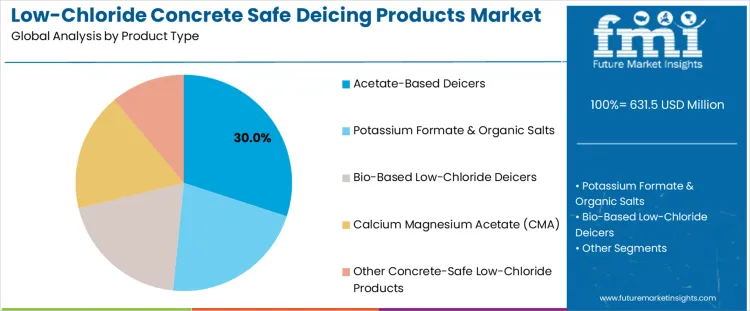
Acetate-based deicers are the leading product type in the low-chloride concrete safe deicing products market, capturing 30% of the share. These deicers are highly favored due to their low chloride content, which makes them safer for concrete surfaces and reduces the risk of corrosion on road infrastructure. Acetate-based deicers effectively melt ice and snow while being less harmful to the environment, making them an ideal choice for areas with concrete roads, bridges, and sidewalks. As municipalities, highways, and infrastructure managers seek safer alternatives to traditional chloride-based deicers, the adoption of acetate-based deicers is growing. The increasing focus on maintaining road safety while minimizing the environmental impact of deicing products is driving demand for acetate-based deicers in the market.
What is Driving the Demand for Government & Municipal Authorities in the Low-Chloride Concrete Safe Deicing Products Market?
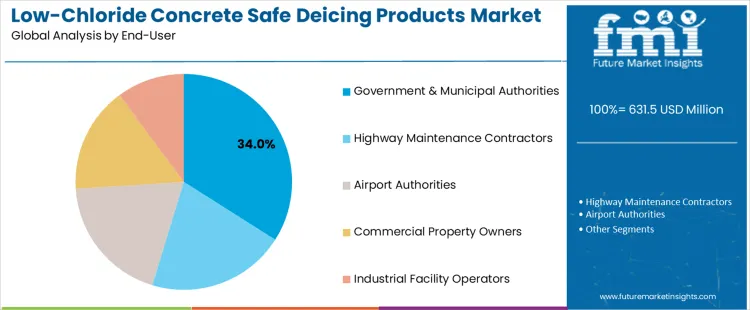
Government & municipal authorities are the leading end-user segment in the low-chloride concrete safe deicing products market, holding 34% of the share. This demand is primarily driven by their responsibility for managing public roads, highways, and infrastructure during winter conditions. Municipalities need effective deicing solutions to ensure road safety while minimizing damage to concrete surfaces and reducing environmental harm. Low-chloride deicing products, such as acetate-based deicers and calcium magnesium acetate (CMA), are increasingly being adopted to meet these needs, as they provide effective snow and ice removal while being safer for both infrastructure and the environment. As regulations around the use of harmful deicing chemicals tighten and sustainability becomes a higher priority, government and municipal authorities are expected to continue driving the growth of low-chloride concrete safe deicing products in the market.
What are the Key Dynamics in the Global Low-Chloride Concrete Safe Deicing Products Market?
The global low-chloride concrete safe deicing products market is expanding as transportation agencies, municipalities and contractors adopt solutions that protect concrete infrastructure while maintaining winter road safety. Low-chloride deicers minimise corrosion of reinforced concrete, bridge decks and pavements compared with traditional chloride based salts. Growth is driven by aging infrastructure, heightened emphasis on asset preservation, and stricter performance standards for durable, environmentally responsible winter maintenance. Adoption spans roadways, airport runways, parking structures and pedestrian surfaces where effective ice control must align with long term concrete performance and safety objectives.
What are the Key Drivers for the Global Low-Chloride Concrete Safe Deicing Products Market?
Concerns about concrete deterioration and reinforcement corrosion are major drivers as agencies seek deicing materials that reduce structural damage and lifecycle repair costs. Policies and procurement standards that prioritise asset longevity and reduced maintenance expenses encourage use of low-chloride alternatives. Public safety expectations for reliable ice and snow control on roadways and high traffic facilities support investment in performance oriented deicers that also protect infrastructure. Advancements in product formulation are improving efficacy at low temperatures while maintaining mitigating effects on concrete. Increased infrastructure spending and replacement cycles in many regions provide momentum for specification of safer deicing chemistries.
What are the Restraints for the Global Low-Chloride Concrete Safe Deicing Products Market?
One restraint is the perceived cost premium of low-chloride products relative to conventional salts, which can deter adoption in budget constrained agencies and contractors focused on short term procurement costs. Some stakeholders remain uncertain about comparative performance under extreme winter conditions, requiring demonstration projects and data to build confidence. Variability in regional standards for deicing products and infrastructure resilience can complicate specification and procurement. Supply chain limitations for specialty formulations in certain markets may affect consistent availability. Operational familiarity with traditional chloride salts also influences decision making, especially where switching requires training and adjustment of application practices.
What are the Key Trends in the Global Low-Chloride Concrete Safe Deicing Products Market?
A key trend is innovation in blended and engineered deicing chemistries that balance ice melting performance with low-chloride content and reduced corrosivity. Manufacturers are integrating corrosion inhibitors, organic components and synergistic agents that enhance efficacy while protecting concrete and reinforcing steel. Adoption of data driven winter maintenance strategies, including sensor based application and weather forecasting, helps optimise use of low-chloride products and reduce material waste. Collaboration between research institutions, transportation departments and product developers is advancing performance testing and specification alignment. Growing emphasis on sustainable procurement and life cycle cost assessment supports selection of deicers that deliver both safety and infrastructure preservation outcomes.
What is the Country-Wise Analysis of the Low-Chloride Concrete Safe Deicing Products Market?
The low-chloride concrete safe deicing products market is expected to grow steadily, driven by the increasing need for safer, environmentally friendly alternatives to traditional deicing chemicals. Chloride-based deicers, such as sodium chloride, are commonly used in colder regions for road safety during winter, but their harmful effects on concrete, infrastructure, and the environment have raised concerns. Low-chloride alternatives offer the same functionality in preventing ice formation but with reduced risks to concrete surfaces, making them increasingly popular in road maintenance and other applications. High-growth markets such as Canada and the United States are experiencing strong demand due to their harsh winter conditions, while developed markets like Germany, China, and Sweden are also experiencing growth, driven by stricter environmental regulations, a growing focus on sustainability, and an increased emphasis on reducing the environmental impact of deicing chemicals.

| Country | CAGR (2026-2036) |
|---|---|
| Canada | 9.6% |
| United States | 9.2% |
| Germany | 7.8% |
| China | 7.5% |
| Sweden | 7.3% |
What is the Growth Outlook for the Low-Chloride Concrete Safe Deicing Products Market in Canada?

The low-chloride concrete safe deicing products market in Canada is expected to grow at the highest rate, with a projected CAGR of 9.6%. Canada’s harsh winters, particularly in northern regions, create significant demand for deicing products to ensure road safety. The growing awareness of the detrimental effects of chloride-based deicers on concrete infrastructure, such as roadways, bridges, and sidewalks, is driving the demand for low-chloride alternatives. As the Canadian government and municipalities continue to emphasize sustainability and environmentally friendly practices, the shift toward safer, low-chloride deicing products is becoming more pronounced. The adoption of these products is further supported by Canada’s commitment to reducing its environmental footprint and minimizing the damage caused by traditional deicers. With increasing focus on both infrastructure longevity and environmental protection, Canada is poised for strong growth in the low-chloride concrete safe deicing products market.
What is the Market Outlook for the Low-Chloride Concrete Safe Deicing Products Market in the United States?
The low-chloride concrete safe deicing products market in the United States is projected to grow steadily, with a projected CAGR of 9.2%. The U.S. experiences severe winter weather in many regions, creating a consistent demand for deicing products to ensure road safety. However, the harmful effects of traditional chloride-based deicers on concrete surfaces, infrastructure, and the environment have led to increased interest in safer, low-chloride alternatives. With stricter regulations and rising consumer awareness about the environmental and economic impact of chloride deicing, U.S. municipalities and road maintenance agencies are shifting towards more sustainable solutions. The U.S. market is expected to grow steadily as more industries, including transportation and construction, seek eco-friendly products to comply with regulatory requirements and meet sustainability goals. As the demand for safer, more environmentally responsible deicing products increases, the U.S. market for low-chloride concrete safe deicing products is positioned for continued growth
What is the Growth Forecast for the Low-Chloride Concrete Safe Deicing Products Market in Germany?
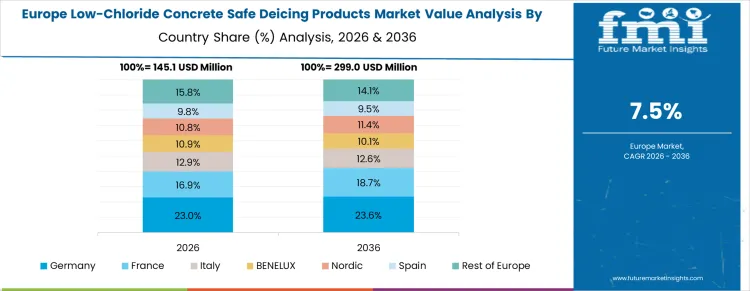
The low-chloride concrete safe deicing products market in Germany is expected to grow at a moderate pace, with a projected CAGR of 7.8%. Germany, known for its strong commitment to environmental sustainability, is increasingly focused on adopting products that reduce harmful effects on both the environment and infrastructure. The country’s stringent regulations on the use of deicing chemicals are encouraging the transition to low-chloride alternatives, particularly in the automotive, construction, and infrastructure sectors. Germany’s emphasis on reducing chemical usage and improving infrastructure durability is expected to continue driving demand for these safer deicing products. With the growing awareness of the environmental impact of traditional deicing methods, the demand for low-chloride products is set to rise steadily in Germany as both public and private sectors seek sustainable solutions.
What is the Market Outlook for the Low-Chloride Concrete Safe Deicing Products Market in China?
The low-chloride concrete safe deicing products market in China is projected to grow steadily, with a projected CAGR of 7.5%. China’s rapid industrialization and urbanization have led to increased infrastructure development, particularly in cold-weather regions where deicing products are essential. While traditional chloride-based deicers are commonly used, there is growing concern over their effects on concrete infrastructure and the environment. As environmental regulations tighten and the country shifts toward more sustainable practices, the demand for low-chloride alternatives is rising. China’s growing awareness of environmental issues, coupled with the increasing focus on infrastructure longevity and the protection of roads, bridges, and other concrete structures, is expected to drive market growth. With a large and rapidly expanding manufacturing base, China is positioned to see steady demand for low-chloride concrete safe deicing products in the coming years.
What are the Growth Prospects for the Low-Chloride Concrete Safe Deicing Products Market in Sweden?
The low-chloride concrete safe deicing products market in Sweden is expected to grow steadily, with a projected CAGR of 7.3%. Sweden’s harsh winters and high-quality infrastructure require effective deicing solutions to ensure road safety. However, as environmental sustainability becomes increasingly important, Sweden is focused on adopting safer, non-toxic alternatives to traditional deicing chemicals. The Swedish government’s strong emphasis on reducing environmental damage and increasing public awareness of the harmful effects of chloride-based deicers is driving demand for low-chloride alternatives. As Sweden continues to push for sustainable practices across various industries, the market for low-chloride concrete safe deicing products is expected to grow steadily, particularly in road maintenance and infrastructure protection. With a commitment to environmental preservation, Sweden is well-positioned to adopt these safer, eco-friendly deicing products, further supporting market growth.
What is the Competitive Landscape for the Low-Chloride Concrete Safe Deicing Products Market?
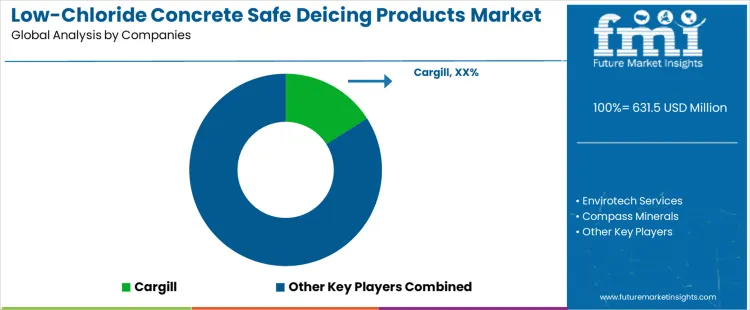
The low-chloride concrete safe deicing products market is expanding rapidly as industries and municipalities look for effective solutions to manage winter road conditions while reducing the corrosive effects that traditional deicing products have on concrete and infrastructure. Cargill leads the market with its innovative low-chloride concrete safe deicing solutions, offering products that provide effective ice melting capabilities while minimizing the risk of damage to concrete surfaces and reinforcing materials. Their focus on creating environmentally friendly, concrete-safe deicing solutions has positioned them as a dominant player in the market.
Envirotech Services, Compass Minerals, and K-Tech Specialty Coatings are significant competitors, each offering specialized deicing products designed to be safe for concrete surfaces while maintaining performance in challenging winter conditions. Envirotech Services focuses on providing non-toxic, chloride-free deicing solutions that protect both infrastructure and the environment, while Compass Minerals and K-Tech Specialty Coatings offer advanced products formulated to minimize concrete damage while ensuring effective ice and snow removal.
Dow Inc. further contributes to the competitive landscape with its low-chloride deicing solutions designed specifically to preserve concrete surfaces and reduce maintenance costs associated with corrosion. Dow Inc. emphasizes the importance of safety, durability, and sustainability in its formulations, offering products that balance performance and environmental concerns. These companies compete by focusing on product innovation, safety, and the ability to meet the growing demand for safe and effective deicing solutions that do not harm concrete or other critical infrastructure. As the need for more sustainable and infrastructure-friendly solutions continues to rise, the market for low-chloride concrete safe deicing products is expected to grow, driven by both environmental concerns and the desire to reduce costly damage to roadways and structures.
Key Players of the Low-Chloride Concrete Safe Deicing Products Market
- Cargill
- Envirotech Services
- Compass Minerals
- K-Tech Specialty Coatings
- Dow Inc.
Scope of the Report
| Items | Values |
|---|---|
| Quantitative Units (2026) | USD Million |
| Product Type | Acetate-Based Deicers, Potassium Formate & Organic Salts, Bio-Based Low-Chloride Deicers, Calcium Magnesium Acetate (CMA), Other Concrete-Safe Low-Chloride Products |
| Application Area | Bridges & Parking Structures, Highways & Municipal Roads, Airports & Runways, Commercial & Residential Pavements, Industrial & Logistics Facilities |
| End-User | Government & Municipal Authorities, Highway Maintenance Contractors, Airport Authorities, Commercial Property Owners, Industrial Facility Operators |
| Companies | Cargill, Envirotech Services, Compass Minerals, K-Tech Specialty Coatings, Dow Inc. |
| Regions Covered | North America, Latin America, Western Europe, Eastern Europe, South Asia and Pacific, East Asia, Middle East & Africa |
| Countries Covered | United States, Canada, Mexico, Brazil, Argentina, Germany, France, United Kingdom, Italy, Spain, Netherlands, China, India, Japan, South Korea, ANZ, GCC Countries, South Africa |
| Additional Attributes | Dollar sales by product type, application area, end-user, and region. Includes market trends in low-chloride concrete safe deicing products, focusing on acetate-based, potassium formate, bio-based, and CMA deicers. Highlights the role of bridges, highways, airports, and pavements in winter maintenance. Focus on sustainability, cost-effectiveness, performance, regulatory compliance, market share, and competitive positioning of key companies in the deicing market. |
Low-Chloride Concrete Safe Deicing Products Market Segmentation
By Product Type:
- Acetate-Based Deicers
- Potassium Formate & Organic Salts
- Bio-Based Low-Chloride Deicers
- Calcium Magnesium Acetate (CMA)
- Other Concrete-Safe Low-Chloride Products
By Application Area:
- Bridges & Parking Structures
- Highways & Municipal Roads
- Airports & Runways
- Commercial & Residential Pavements
- Industrial & Logistics Facilities
By End-User:
- Government & Municipal Authorities
- Highway Maintenance Contractors
- Airport Authorities
- Commercial Property Owners
- Industrial Facility Operators
By Region:
- Asia Pacific
- China
- Japan
- South Korea
- India
- Australia & New Zealand
- ASEAN
- Rest of Asia Pacific
- Europe
- Germany
- United Kingdom
- France
- Italy
- Spain
- Nordic
- BENELUX
- Rest of Europe
- North America
- United States
- Canada
- Mexico
- Latin America
- Brazil
- Chile
- Rest of Latin America
- Middle East & Africa
- Kingdom of Saudi Arabia
- Other GCC Countries
- Turkey
- South Africa
- Other African Union
- Rest of Middle East & Africa
Frequently Asked Questions
How big is the low-chloride concrete safe deicing products market in 2026?
The global low-chloride concrete safe deicing products market is estimated to be valued at USD 631.5 million in 2026.
What will be the size of low-chloride concrete safe deicing products market in 2036?
The market size for the low-chloride concrete safe deicing products market is projected to reach USD 1,495.0 million by 2036.
How much will be the low-chloride concrete safe deicing products market growth between 2026 and 2036?
The low-chloride concrete safe deicing products market is expected to grow at a 9.0% CAGR between 2026 and 2036.
What are the key product types in the low-chloride concrete safe deicing products market?
The key product types in low-chloride concrete safe deicing products market are acetate-based deicers, potassium formate & organic salts, bio-based low-chloride deicers, calcium magnesium acetate (CMA) and other concrete-safe low-chloride products.
Which end-user segment to contribute significant share in the low-chloride concrete safe deicing products market in 2026?
In terms of end-user, government & municipal authorities segment to command 34% share in the low-chloride concrete safe deicing products market in 2026.
Preview the report firsthand - request a free sample
Get SampleGet the brochure for pricing and purchase details.
Get PDFTable of Content
- Executive Summary
- Global Market Outlook
- Demand-side Trends
- Supply-side Trends
- Technology Roadmap Analysis
- Analysis and Recommendations
- Market Overview
- Market Coverage / Taxonomy
- Market Definition / Scope / Limitations
- Market Background
- Market Dynamics
- Drivers
- Restraints
- Opportunity
- Trends
- Scenario Forecast
- Demand in Optimistic Scenario
- Demand in Likely Scenario
- Demand in Conservative Scenario
- Opportunity Map Analysis
- Product Life Cycle Analysis
- Supply Chain Analysis
- Investment Feasibility Matrix
- Value Chain Analysis
- PESTLE and Porter’s Analysis
- Regulatory Landscape
- Regional Parent Market Outlook
- Production and Consumption Statistics
- Import and Export Statistics
- Market Dynamics
- Global Market Analysis 2021 to 2025 and Forecast, 2026 to 2036
- Historical Market Size Value (USD Million) Analysis, 2021 to 2025
- Current and Future Market Size Value (USD Million) Projections, 2026 to 2036
- Y-o-Y Growth Trend Analysis
- Absolute $ Opportunity Analysis
- Global Market Pricing Analysis 2021 to 2025 and Forecast 2026 to 2036
- Global Market Analysis 2021 to 2025 and Forecast 2026 to 2036, By Product Type
- Introduction / Key Findings
- Historical Market Size Value (USD Million) Analysis By Product Type , 2021 to 2025
- Current and Future Market Size Value (USD Million) Analysis and Forecast By Product Type , 2026 to 2036
- Acetate-Based Deicers
- Potassium Formate & Organic Salts
- Bio-Based Low-Chloride Deicers
- Calcium Magnesium Acetate (CMA)
- Other Concrete-Safe Low-Chloride Products
- Acetate-Based Deicers
- Y-o-Y Growth Trend Analysis By Product Type , 2021 to 2025
- Absolute $ Opportunity Analysis By Product Type , 2026 to 2036
- Global Market Analysis 2021 to 2025 and Forecast 2026 to 2036, By Application Area
- Introduction / Key Findings
- Historical Market Size Value (USD Million) Analysis By Application Area, 2021 to 2025
- Current and Future Market Size Value (USD Million) Analysis and Forecast By Application Area, 2026 to 2036
- Bridges & Parking Structures
- Highways & Municipal Roads
- Airports & Runways
- Commercial & Residential Pavements
- Industrial & Logistics Facilities
- Bridges & Parking Structures
- Y-o-Y Growth Trend Analysis By Application Area, 2021 to 2025
- Absolute $ Opportunity Analysis By Application Area, 2026 to 2036
- Global Market Analysis 2021 to 2025 and Forecast 2026 to 2036, By End-User
- Introduction / Key Findings
- Historical Market Size Value (USD Million) Analysis By End-User, 2021 to 2025
- Current and Future Market Size Value (USD Million) Analysis and Forecast By End-User, 2026 to 2036
- Government & Municipal Authorities
- Highway Maintenance Contractors
- Airport Authorities
- Commercial Property Owners
- Industrial Facility Operators
- Government & Municipal Authorities
- Y-o-Y Growth Trend Analysis By End-User, 2021 to 2025
- Absolute $ Opportunity Analysis By End-User, 2026 to 2036
- Global Market Analysis 2021 to 2025 and Forecast 2026 to 2036, By Region
- Introduction
- Historical Market Size Value (USD Million) Analysis By Region, 2021 to 2025
- Current Market Size Value (USD Million) Analysis and Forecast By Region, 2026 to 2036
- North America
- Latin America
- Western Europe
- Eastern Europe
- East Asia
- South Asia and Pacific
- Middle East & Africa
- Market Attractiveness Analysis By Region
- North America Market Analysis 2021 to 2025 and Forecast 2026 to 2036, By Country
- Historical Market Size Value (USD Million) Trend Analysis By Market Taxonomy, 2021 to 2025
- Market Size Value (USD Million) Forecast By Market Taxonomy, 2026 to 2036
- By Country
- USA
- Canada
- Mexico
- By Product Type
- By Application Area
- By End-User
- By Country
- Market Attractiveness Analysis
- By Country
- By Product Type
- By Application Area
- By End-User
- Key Takeaways
- Latin America Market Analysis 2021 to 2025 and Forecast 2026 to 2036, By Country
- Historical Market Size Value (USD Million) Trend Analysis By Market Taxonomy, 2021 to 2025
- Market Size Value (USD Million) Forecast By Market Taxonomy, 2026 to 2036
- By Country
- Brazil
- Chile
- Rest of Latin America
- By Product Type
- By Application Area
- By End-User
- By Country
- Market Attractiveness Analysis
- By Country
- By Product Type
- By Application Area
- By End-User
- Key Takeaways
- Western Europe Market Analysis 2021 to 2025 and Forecast 2026 to 2036, By Country
- Historical Market Size Value (USD Million) Trend Analysis By Market Taxonomy, 2021 to 2025
- Market Size Value (USD Million) Forecast By Market Taxonomy, 2026 to 2036
- By Country
- Germany
- UK
- Italy
- Spain
- France
- Nordic
- BENELUX
- Rest of Western Europe
- By Product Type
- By Application Area
- By End-User
- By Country
- Market Attractiveness Analysis
- By Country
- By Product Type
- By Application Area
- By End-User
- Key Takeaways
- Eastern Europe Market Analysis 2021 to 2025 and Forecast 2026 to 2036, By Country
- Historical Market Size Value (USD Million) Trend Analysis By Market Taxonomy, 2021 to 2025
- Market Size Value (USD Million) Forecast By Market Taxonomy, 2026 to 2036
- By Country
- Russia
- Poland
- Hungary
- Balkan & Baltic
- Rest of Eastern Europe
- By Product Type
- By Application Area
- By End-User
- By Country
- Market Attractiveness Analysis
- By Country
- By Product Type
- By Application Area
- By End-User
- Key Takeaways
- East Asia Market Analysis 2021 to 2025 and Forecast 2026 to 2036, By Country
- Historical Market Size Value (USD Million) Trend Analysis By Market Taxonomy, 2021 to 2025
- Market Size Value (USD Million) Forecast By Market Taxonomy, 2026 to 2036
- By Country
- China
- Japan
- South Korea
- By Product Type
- By Application Area
- By End-User
- By Country
- Market Attractiveness Analysis
- By Country
- By Product Type
- By Application Area
- By End-User
- Key Takeaways
- South Asia and Pacific Market Analysis 2021 to 2025 and Forecast 2026 to 2036, By Country
- Historical Market Size Value (USD Million) Trend Analysis By Market Taxonomy, 2021 to 2025
- Market Size Value (USD Million) Forecast By Market Taxonomy, 2026 to 2036
- By Country
- India
- ASEAN
- Australia & New Zealand
- Rest of South Asia and Pacific
- By Product Type
- By Application Area
- By End-User
- By Country
- Market Attractiveness Analysis
- By Country
- By Product Type
- By Application Area
- By End-User
- Key Takeaways
- Middle East & Africa Market Analysis 2021 to 2025 and Forecast 2026 to 2036, By Country
- Historical Market Size Value (USD Million) Trend Analysis By Market Taxonomy, 2021 to 2025
- Market Size Value (USD Million) Forecast By Market Taxonomy, 2026 to 2036
- By Country
- Kingdom of Saudi Arabia
- Other GCC Countries
- Turkiye
- South Africa
- Other African Union
- Rest of Middle East & Africa
- By Product Type
- By Application Area
- By End-User
- By Country
- Market Attractiveness Analysis
- By Country
- By Product Type
- By Application Area
- By End-User
- Key Takeaways
- Key Countries Market Analysis
- USA
- Pricing Analysis
- Market Share Analysis, 2025
- By Product Type
- By Application Area
- By End-User
- Canada
- Pricing Analysis
- Market Share Analysis, 2025
- By Product Type
- By Application Area
- By End-User
- Mexico
- Pricing Analysis
- Market Share Analysis, 2025
- By Product Type
- By Application Area
- By End-User
- Brazil
- Pricing Analysis
- Market Share Analysis, 2025
- By Product Type
- By Application Area
- By End-User
- Chile
- Pricing Analysis
- Market Share Analysis, 2025
- By Product Type
- By Application Area
- By End-User
- Germany
- Pricing Analysis
- Market Share Analysis, 2025
- By Product Type
- By Application Area
- By End-User
- UK
- Pricing Analysis
- Market Share Analysis, 2025
- By Product Type
- By Application Area
- By End-User
- Italy
- Pricing Analysis
- Market Share Analysis, 2025
- By Product Type
- By Application Area
- By End-User
- Spain
- Pricing Analysis
- Market Share Analysis, 2025
- By Product Type
- By Application Area
- By End-User
- France
- Pricing Analysis
- Market Share Analysis, 2025
- By Product Type
- By Application Area
- By End-User
- India
- Pricing Analysis
- Market Share Analysis, 2025
- By Product Type
- By Application Area
- By End-User
- ASEAN
- Pricing Analysis
- Market Share Analysis, 2025
- By Product Type
- By Application Area
- By End-User
- Australia & New Zealand
- Pricing Analysis
- Market Share Analysis, 2025
- By Product Type
- By Application Area
- By End-User
- China
- Pricing Analysis
- Market Share Analysis, 2025
- By Product Type
- By Application Area
- By End-User
- Japan
- Pricing Analysis
- Market Share Analysis, 2025
- By Product Type
- By Application Area
- By End-User
- South Korea
- Pricing Analysis
- Market Share Analysis, 2025
- By Product Type
- By Application Area
- By End-User
- Russia
- Pricing Analysis
- Market Share Analysis, 2025
- By Product Type
- By Application Area
- By End-User
- Poland
- Pricing Analysis
- Market Share Analysis, 2025
- By Product Type
- By Application Area
- By End-User
- Hungary
- Pricing Analysis
- Market Share Analysis, 2025
- By Product Type
- By Application Area
- By End-User
- Kingdom of Saudi Arabia
- Pricing Analysis
- Market Share Analysis, 2025
- By Product Type
- By Application Area
- By End-User
- Turkiye
- Pricing Analysis
- Market Share Analysis, 2025
- By Product Type
- By Application Area
- By End-User
- South Africa
- Pricing Analysis
- Market Share Analysis, 2025
- By Product Type
- By Application Area
- By End-User
- USA
- Market Structure Analysis
- Competition Dashboard
- Competition Benchmarking
- Market Share Analysis of Top Players
- By Regional
- By Product Type
- By Application Area
- By End-User
- Competition Analysis
- Competition Deep Dive
- Cargill
- Overview
- Product Portfolio
- Profitability by Market Segments (Product/Age /Sales Channel/Region)
- Sales Footprint
- Strategy Overview
- Marketing Strategy
- Product Strategy
- Channel Strategy
- Envirotech Services
- Compass Minerals
- K-Tech Specialty Coatings
- Dow Inc.
- Cargill
- Competition Deep Dive
- Assumptions & Acronyms Used
- Research Methodology


