

- Industry Size (2026)
- USD 460 Mn
- Forecast (2036)
- USD 1380 Mn
- CAGR (2026 to 2036)
- 11.7%
Low-Sodium Olive Brine Flavor Systems Market Forecast and Outlook 2026 to 2036
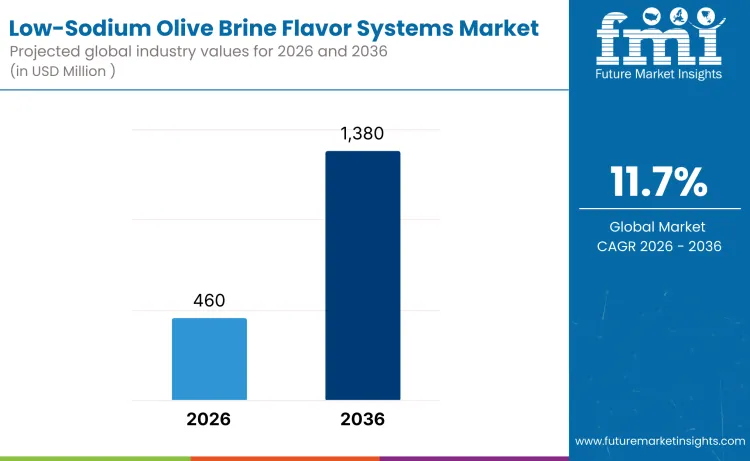
The global low-sodium olive brine flavor systems market, valued at USD 460 million in 2026, is projected to grow to USD 1,380 million by 2036, with a CAGR of 11.7%. The market is driven by the growing demand for healthier, sodium-reduced alternatives in food products, particularly in savory snack categories.
Low-sodium olive brine concentrates, which account for 41% of the product type market share, are the preferred option due to their ability to provide robust flavor while maintaining a lower sodium content. Savory snacks and chips, representing 36% of the application segment, are the largest consumers, as manufacturers look to offer healthier snack options without compromising on taste. The market growth is further supported by rising consumer awareness of the health risks associated with excessive sodium intake and the increasing trend toward functional, healthier food ingredients.
Quick Stats for Low-Sodium Olive Brine Flavor Systems Market
- Low-Sodium Olive Brine Flavor Systems Market Value (2026): USD 460 million
- Low-Sodium Olive Brine Flavor Systems Market Forecast Value (2036): USD 1,380 million
- Low-Sodium Olive Brine Flavor Systems Market Global Forecast CAGR (2026 to 2036): 11.7%
- Top Product Type by Share in Low-Sodium Olive Brine Flavor Systems Market: Low-Sodium Olive Brine Concentrates (41%)
- Key Growth Regions in Low-Sodium Olive Brine Flavor Systems Market: China, India, USA, UK, Japan
- Top Players in Low-Sodium Olive Brine Flavor Systems Market: Givaudan, Symrise AG, Firmenich, International Flavors & Fragrances (IFF), T. Hasegawa USA Inc.
Low-Sodium Olive Brine Flavor Systems Market Key Takeaways
| Metric | Value |
|---|---|
| Industry Sales Value (2026) | USD 460 million |
| Industry Forecast Value (2036) | USD 1,380 million |
| Industry Forecast CAGR (2026-2036) | 11.7% |
What Are the Key Segments in Low-Sodium Olive Brine Flavor Systems Market?
The low-sodium olive brine flavor systems market is segmented by product type and application. Low-sodium olive brine concentrates lead the product type segment, representing 41% of the market. Savory snacks & chips dominate the application segment with 36%, reflecting the growing trend for healthier, lower-sodium snack options. The market is expanding as consumers seek more flavorful, health-conscious alternatives in a variety of food and beverage products.
Which Product Type Drives Low-Sodium Olive Brine Flavor Systems Market Demand Globally?
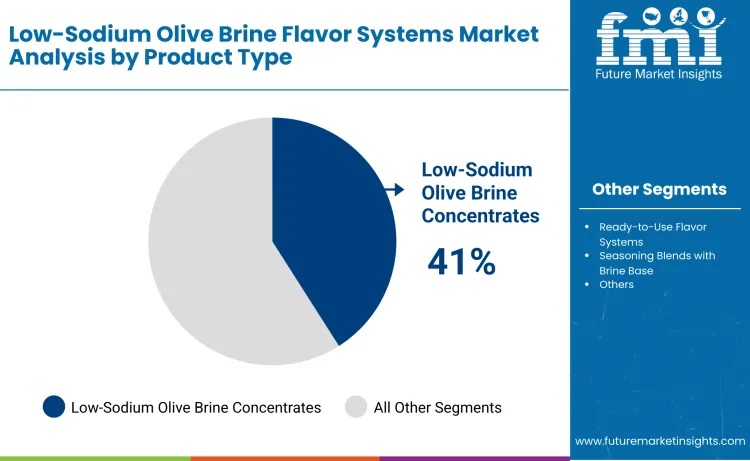
Low-sodium olive brine concentrates account for 41% of the market share. These concentrates offer a convenient and cost-effective solution for manufacturers seeking to add a savory, olive-based flavor while reducing sodium content. The demand for low-sodium alternatives in food products is growing as consumers become more health-conscious and seek to manage their sodium intake. Olive brine concentrates provide a natural, rich flavor profile that can be used in a wide range of products, from snacks to sauces, offering a healthier option without sacrificing taste. The ability to control sodium levels while enhancing flavor makes these concentrates a preferred choice for food manufacturers. As the trend towards clean-label and natural ingredients continues to rise, low-sodium olive brine concentrates are gaining traction in food and beverage formulations, driving market growth.
Which Application Drives Low-Sodium Olive Brine Flavor Systems Market Demand Globally?
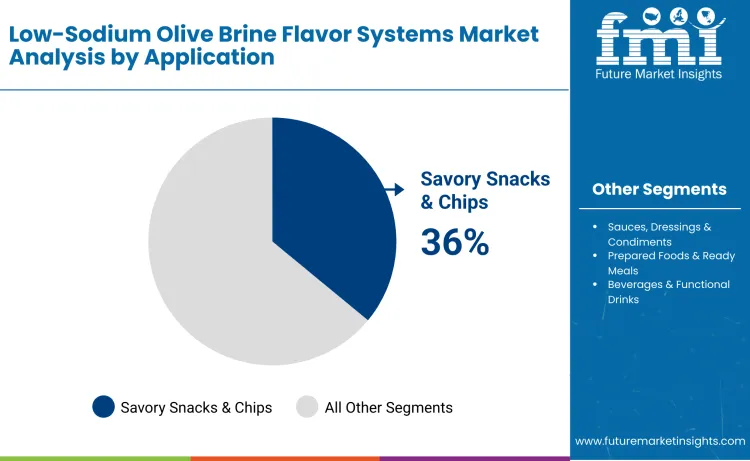
Savory snacks & chips lead the application segment with 36% of the market share. The growing demand for healthier snack options, particularly those with reduced sodium content, is fueling the adoption of low-sodium olive brine flavor systems. Olive brine adds a savory, umami-rich taste to snacks and chips, making it an attractive ingredient for brands looking to offer flavorful products with less salt. As consumers increasingly seek better-for-you snack options without compromising on taste, the demand for low-sodium flavoring systems in savory snacks continues to rise. The clean-label and natural ingredient trends are pushing manufacturers to turn to low-sodium olive brine as a flavorful, health-conscious alternative to traditional seasoning systems. The versatility of olive brine in enhancing the taste profile of savory snacks and chips is further driving its market share in this segment.
What is the Key Trends in the Global Low Sodium Olive Brine Flavor Systems Market?
The global low‑sodium olive brine flavor systems market is expanding as food and beverage manufacturers focus on taste innovation aligned with health and nutrition preferences. Low‑sodium olive brine systems deliver characteristic savory, tangy, and umami notes while reducing salt content in products such as snacks, dressings, sauces, marinades, and formulated meals. Growth reflects rising consumer interest in reduced‑sodium options that maintain flavor quality. Ingredient suppliers are developing refined brine concentrates and flavor modulators that help brands differentiate products while supporting cleaner labelling and sensory appeal across diverse food categories.
What are the Key Drivers for the Global Low‑Sodium Olive Brine Flavor Systems Market?
Rising consumer awareness about dietary sodium and its relationship with health patterns is a primary driver of demand for low‑sodium olive brine flavor systems. Food manufacturers are reformulating products to respond to public health guidance and internal nutrition criteria, seeking solutions that preserve desirable savory profiles without excessive salt. Growth of convenience foods, ready meals, and global snack trends encourages use of flavor systems that add complexity and appeal. Expansion of clean label demand supports adoption of natural, plant‑derived olive brine components. Increasing emphasis on product differentiation through unique taste experiences also propels formulation activity in retail, foodservice, and specialty foods.
What are the Restraints for the Global Low‑Sodium Olive Brine Flavor Systems Market?
One restraint is the technical challenge of reducing sodium while still achieving desired flavor intensity, balance, and shelf stability in diverse applications. Formulators must optimize blend profiles and supporting ingredients to compensate for salt reduction without introducing off‑notes or undesirable textures, which can increase development time and cost. Some markets maintain strong preference for traditional salty flavor profiles, limiting immediate uptake. Variability in regulatory definitions and allowable claims for sodium reduction across regions requires careful navigation by manufacturers. Cost pressures related to premium brine extracts compared with conventional salt may deter use in price‑sensitive segments of the food and beverage industry.
What is the Country-Wise Outlook for Low-Sodium Olive Brine Flavor Systems?
The Low-Sodium Olive Brine Flavor Systems market is experiencing strong growth across several countries, driven by an increasing demand for healthier food options with reduced sodium content. Countries like India, China, and the USA are leading this growth due to rising consumer awareness of the health risks associated with high sodium intake. The demand for natural, flavorful, and low-sodium ingredients in food and beverages is growing, with olive brine flavor systems gaining popularity for their unique taste and health benefits. As consumer preferences shift toward healthier and functional ingredients, the market for low-sodium olive brine flavor systems is expected to see continued growth. 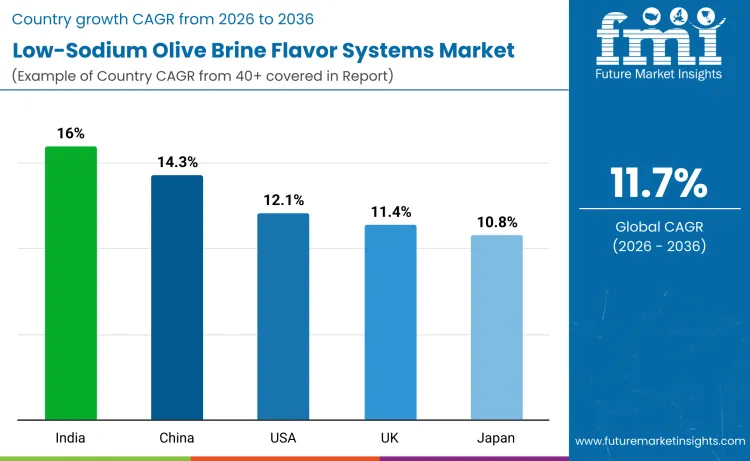
| Country | CAGR (2026 to 2036) |
|---|---|
| China | 14.3% |
| India | 16% |
| USA | 12.1% |
| UK | 11.4% |
| Japan | 10.8% |
What is Driving the Growth of Low-Sodium Olive Brine Flavor Systems in China?
China’s Low-Sodium Olive Brine Flavor Systems market is projected to grow at a CAGR of 14.3% from 2026 to 2036. The increasing consumer shift towards healthier eating habits, along with rising concerns about sodium intake, is driving the demand for low-sodium alternatives in food. As Chinese consumers become more health-conscious and prioritize functional foods, the appeal of olive brine flavor systems, known for their unique taste and health benefits, is growing. Additionally, the Chinese food industry is increasingly incorporating natural, low-sodium ingredients to cater to the demand for healthier, flavor-enhancing products, which supports the market’s growth.
What is Contributing to the Growth of Low-Sodium Olive Brine Flavor Systems in India?
India’s Low-Sodium Olive Brine Flavor Systems market is expected to grow at an impressive CAGR of 16%. The rising awareness of the health risks associated with high sodium consumption, coupled with a growing interest in functional and health-conscious foods, is driving this market’s growth. Olive brine, with its rich flavor profile and reduced sodium content, is gaining popularity in India as consumers increasingly seek healthier alternatives in their diets. The expansion of the food and beverage sector, along with the increasing preference for natural and flavorful ingredients, is expected to further boost the demand for low-sodium olive brine flavor systems in India.
What is Driving the Low-Sodium Olive Brine Flavor Systems Market Growth in the USA?
The USA’s Low-Sodium Olive Brine Flavor Systems market is projected to grow at a CAGR of 12.1%. The rising demand for low-sodium, functional foods is a key driver of this growth, as consumers continue to seek healthier alternatives that do not compromise on taste. Olive brine flavor systems, offering a natural, savory flavor with less sodium, are increasingly being incorporated into a variety of food products, including sauces, snacks, and dressings. The growing consumer preference for clean-label and natural ingredients, along with heightened awareness of sodium-related health issues, supports the expansion of low-sodium olive brine flavor systems in the USA.
What is Influencing the Growth of Low-Sodium Olive Brine Flavor Systems in the UK?
The UK’s Low-Sodium Olive Brine Flavor Systems market is expected to grow at a CAGR of 11.4%. As consumers become more aware of the health risks associated with excessive sodium consumption, there is an increasing demand for low-sodium alternatives in the food and beverage sector. The UK market is seeing a shift toward healthier, more sustainable ingredients, with olive brine flavor systems gaining popularity due to their natural flavor and reduced sodium content. The trend towards clean-label products and functional foods, combined with a growing focus on improving public health, is driving the growth of low-sodium olive brine flavor systems in the UK.
What is Contributing to the Growth of Low-Sodium Olive Brine Flavor Systems in Japan?
Japan’s Low-Sodium Olive Brine Flavor Systems market is projected to grow at a CAGR of 10.8%. The growing demand for healthier, low-sodium products in the food and beverage sector is a significant driver of this market. With increasing consumer awareness of the health risks posed by high sodium intake, Japan is seeing a shift toward more balanced, functional ingredient in food. Olive brine, with its savory taste and reduced sodium content, is becoming a popular alternative for enhancing the flavor of various food products. The Japanese preference for clean, natural ingredients, coupled with an increasing focus on wellness and longevity, supports the continued growth of low-sodium olive brine flavor systems in Japan.
What is the Competitive Landscape for the Low Sodium Olive Brine Flavor Systems Market?
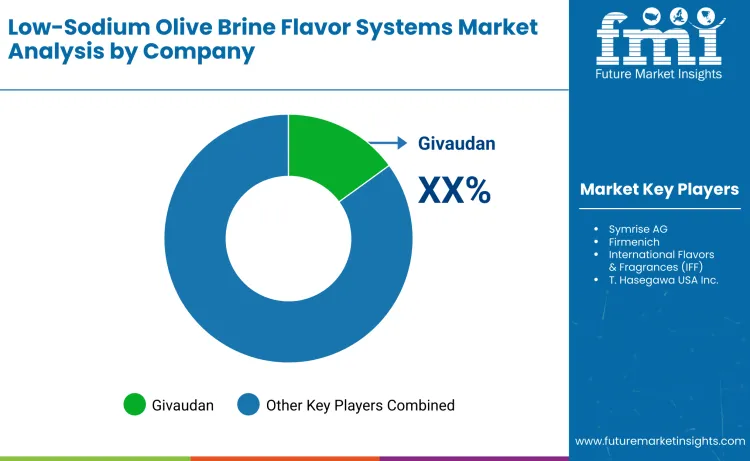
Global demand for low‑sodium olive brine flavor systems has been rising as consumers and food producers increasingly prioritise health, taste and clean‑label credentials. Low‑sodium diets are widely recommended for cardiovascular health and general wellness, leading formulators to seek flavour systems that deliver traditional olive brine character without high salt content. Olive brine flavours are used in dressings, sauces, marinades, snack seasonings, plant‑based foods, beverage applications and culinary blends where a briny, savoury note enhances overall taste. Rising interest in Mediterranean‑style flavours and premium culinary profiles further supports uptake. Food and beverage manufacturers are investing in ingredient systems that balance functional taste, mouthfeel and reduced sodium to align with regulatory sodium‑reduction targets and evolving consumer preferences in markets such as North America, Europe and Asia Pacific.
On the supply side, a group of major flavour and ingredient companies competes to supply effective low‑sodium olive brine solutions. Givaudan is recognised as a leading player with a broad portfolio of flavour systems and deep technical expertise in savoury profiles. Other important competitors include Symrise AG, Firmenich, International Flavors & Fragrances (IFF) and T. Hasegawa USA Inc., each offering customised flavour systems tailored for low‑sodium applications. Competition among these suppliers focuses on the ability to replicate authentic olive brine character while reducing sodium impact, consistency across production batches, regulatory compliance with food‑safety standards, and support for formulation work in diverse product categories. Suppliers that combine strong sensory science, scalable production and effective technical support for customers are best positioned to capture growth as demand for lower‑sodium, flavour‑rich ingredients continues to expand in the global food and beverage industry.
Key Players
- Givaudan
- Symrise AG
- Firmenich
- International Flavors & Fragrances (IFF)
- T. Hasegawa USA Inc.
Scope of the Report
| Items | Values |
|---|---|
| Quantitative Units (2026) | USD Million |
| Product Type | Low-Sodium Olive Brine Concentrates, Ready-to-Use Flavor Systems, Seasoning Blends with Brine Base, Other Formulations |
| Application | Savory Snacks & Chips, Sauces, Dressings & Condiments, Prepared Foods & Ready Meals, Beverages & Functional Drinks |
| Companies | Givaudan, Symrise AG, Firmenich, International Flavors & Fragrances (IFF), T. Hasegawa USA Inc. |
| Regions Covered | North America, Latin America, Western Europe, Eastern Europe, South Asia and Pacific, East Asia, Middle East & Africa |
| Countries Covered | United States, Canada, Mexico, Brazil, Argentina, Germany, France, United Kingdom, Italy, Spain, Netherlands, China, India, Japan, South Korea, ANZ, GCC Countries, South Africa |
| Additional Attributes | Dollar by sales by product type, application, and region. Includes market trends in low-sodium olive brine and its use in flavor systems, performance in various applications (savory snacks, sauces, prepared foods, beverages), cost-effectiveness, sustainability practices, regulatory compliance, market share and competitive positioning of key companies, and the role of low-sodium olive brine flavor systems in enhancing taste, health benefits, and overall flavor profiles in the food and beverage industry. |
Key Segments in the Low-Sodium Olive Brine Flavor Systems Market
Product Type:
- Low‑Sodium Olive Brine Concentrates
- Ready‑to‑Use Flavor Systems
- Seasoning Blends with Brine Base
- Other Formulations
Application:
- Savory Snacks & Chips
- Sauces, Dressings & Condiments
- Prepared Foods & Ready Meals
- Beverages & Functional Drinks
Region:
- Asia Pacific
- China
- India
- Japan
- South Korea
- ASEAN
- Rest of Asia Pacific
- Europe
- Germany
- United Kingdom
- France
- Italy
- Spain
- Nordic
- BENELUX
- Rest of Europe
- North America
- United States
- Canada
- Mexico
- Latin America
- Brazil
- Chile
- Rest of Latin America
- Middle East & Africa
- Kingdom of Saudi Arabia
- Other GCC Countries
- Turkey
- South Africa
- Other African Union
- Rest of Middle East & Africa
Bibliography
- Food and Agriculture Organization of the United Nations and World Health Organization. (2023). Codex standards and guidance on sodium reduction strategies and flavor formulations. Codex Alimentarius Publications.
- Flavor and Extract Manufacturers Association. (2024). FEMA GRAS evaluations and safety assessment of flavoring substances including brine and olive derived flavors. FEMA GRAS Program Publications.
- International Organization of the Flavor Industry. (2023). Good manufacturing practices for flavor systems and flavor delivery in food applications. IOFI Technical Guidance Documents.
- United States Department of Agriculture. (2023). Guidance on ingredient functionality and food processing considerations for low sodium formulations. USDA Food Safety and Inspection Service Publications.
Frequently Asked Questions
How big is the Low-Sodium Olive Brine Flavor Systems market?
The market is valued at USD 460 million in 2026 and is expected to grow at a CAGR of 11.7%, reaching USD 1.38 billion by 2036.
What is the growth outlook for the Low-Sodium Olive Brine Flavor Systems market?
The market is projected to grow at a CAGR of 11.7% from 2026 to 2036.
Which region is expected to experience the fastest growth in the Low-Sodium Olive Brine Flavor Systems market?
India is expected to lead with a growth rate of 16%, driven by the increasing demand for healthier, low-sodium flavoring solutions in food products.
What are the key applications of Low-Sodium Olive Brine Flavor Systems?
Low-Sodium Olive Brine Flavor Systems are primarily used in the production of food products, with low-sodium olive brine concentrates accounting for approximately 41% of the market share.
Who are the major players in the Low-Sodium Olive Brine Flavor Systems market?
Key players include Givaudan, Symrise AG, Firmenich, International Flavors & Fragrances (IFF), and T. Hasegawa USA Inc.
Preview the report firsthand - request a free sample
Get SampleGet the brochure for pricing and purchase details.
Get PDFTable of Content
- Executive Summary
- Market Overview
- Global Market Value, 2020-2026
- Global Market Forecast, 2026-2036
- Market Dynamics
- Drivers
- Restraints
- Opportunities
- Regulatory & Standards Landscape
- Flavor Technology & Sensory Science Outlook
- Market Segmentation Analysis
- By Product Type
- Low-Sodium Olive Brine Concentrates
- Ready-to-Use Flavor Systems
- Seasoning Blends with Brine Base
- Other Formulations
- By Application
- Savory Snacks & Chips
- Sauces, Dressings & Condiments
- Prepared Foods & Ready Meals
- Beverages & Functional Drinks
- By Sales Channel
- Retail Packaged Foods
- Foodservice & QSR Supply
- Industrial & OEM Food Manufacturers
- By Product Type
- Regional Outlook
- North America
- Latin America
- Western Europe
- Eastern Europe
- South Asia & Pacific
- East Asia
- Middle East & Africa
- Country-Level Outlook
- United States
- Canada
- Mexico
- Brazil
- Argentina
- Germany
- France
- United Kingdom
- Italy
- Spain
- Netherlands
- China
- India
- Japan
- South Korea
- ANZ
- GCC Countries
- South Africa
- Competitive Landscape
- Market Structure Overview
- Company Positioning
- Strategic Initiatives
- Key Player Profiles
- Scope of the Report
- Research Methodology
- Assumptions & Acronyms


