

- Industry Size (2026)
- USD 187.96 Mn
- Forecast (2036)
- USD 275.56 Mn
- CAGR (2026 to 2036)
- 3.90%
Magnetic Material Magnetization and Testing Equipment Market Size, Market Forecast and Outlook By FMI
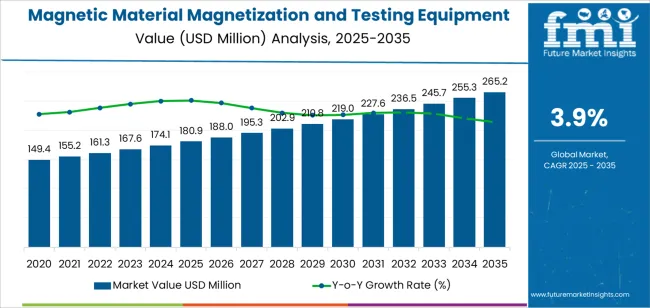
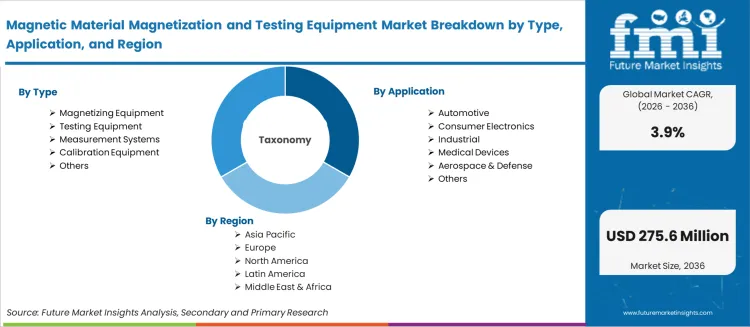
The magnetic material magnetization and testing equipment market was valued at USD 180.9 million in 2025, is projected to reach USD 187.96 million in 2026, and is forecast to expand to USD 275.56 million by 2036 at a 3.9% CAGR. FMI opines that steady growth is underpinned by the expanding use of permanent magnets in electric vehicle traction motors, wind turbine generators, and consumer electronics, all of which require precise magnetization and quality verification at the production stage.
Summary of Magnetic Material Magnetization and Testing Equipment Market
- Market Snapshot
- The magnetic material magnetization and testing equipment market is valued at USD 180.90 million in 2025 and is projected to reach USD 275.56 million by 2036.
- The industry is expected to grow at a 3.90% CAGR from 2026 to 2036, creating an incremental opportunity of USD 87.60 million.
- The market is a quality-assurance-driven instrumentation category where automotive electrification volumes and permanent magnet production output directly determine equipment purchasing cycles.
- Demand and Growth Drivers
- Electric vehicle traction motor production is creating mandatory quality gates requiring inline magnetic property testing of every permanent magnet rotor.
- Consumer electronics miniaturization is increasing demand for high-throughput magnetization testing of rare earth magnets embedded in speakers and haptic systems.
- Aerospace and defense material certification protocols require traceable magnetic measurements compliant with MIL-STD and DO standards.
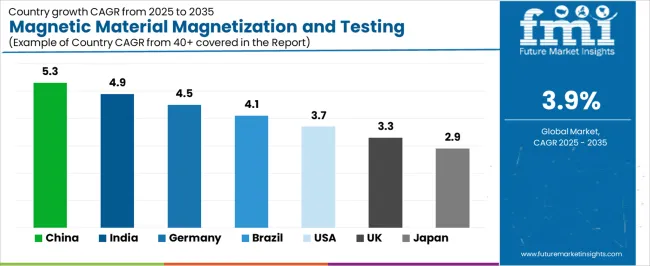
- Among key countries: China at 5.3%, India at 4.9%, Germany at 4.5%, Brazil at 4.1%, USA at 3.7%, UK at 3.3%, Japan at 2.9% CAGR through 2036.
- Product and Segment View
- Magnetic material magnetization and testing equipment comprises specialized instruments used to magnetize, demagnetize, and characterize the magnetic properties of permanent magnets, soft magnetic materials, and ferrite components.
- Primary applications include Automotive, Consumer Electronics, Industrial, Medical Devices, Aerospace & Defense, Others.
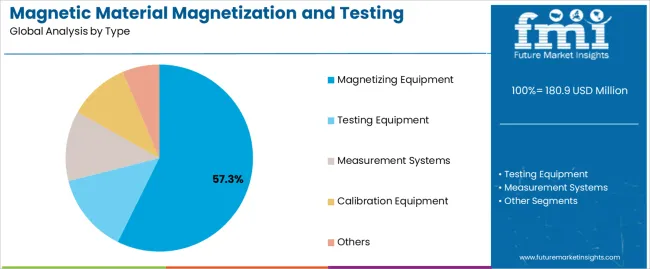
- Magnetizing Equipment leads by Type with 57.3% share in 2026.
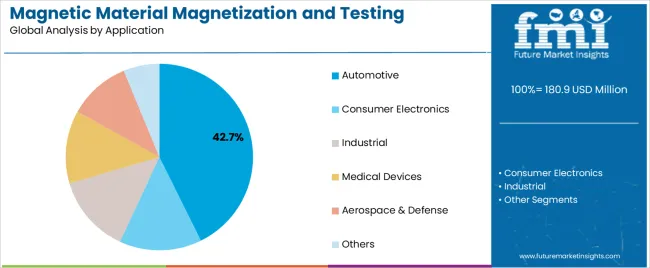
- Automotive leads by Application with 42.7% share in 2026.
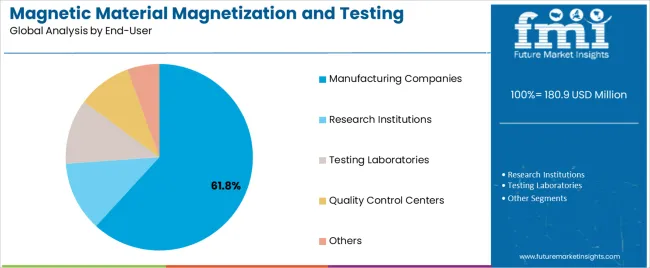
- Manufacturing Companies leads by End-User with 61.8% share in 2026.
- Scope includes market scope covers magnetizing equipment (impulse magnetizers, electromagnets), testing equipment (hysteresis graph systems, bh analyzers), measurement systems (gaussmeters, fluxmeters), and calibration equipment. The scope excludes MRI systems, magnetic resonance spectroscopy instruments, and magnetic separation equipment used in mining or recycling.
- Geography and Competitive Outlook
- China and India are the fastest-growing markets, while mature economies sustain replacement and upgrade demand.
- Competition is shaped by Magnet-Physik holding approximately 20.0% share, followed by Laboratorio Elettrofisico, 360 Magnetics, Nihon Denji Sokki.
- Key players include Magnet-Physik, Laboratorio Elettrofisico, 360 Magnetics, Nihon Denji Sokki, Oersted Technology, Magnetic Instrumentation, MAGSYS Magnet Systeme, List-Magnetik, Ningbo Canmag Technology, Mingzhe Magnetic, Shenzhen Jiuju, Magele Technology, Mianyang Litian.
- Analyst Opinion at FMI
- Nikhil Kaitwade, Principal Consultant for Industrial Components, opines: 'In my analysis, I have observed that magnetization and testing equipment purchasing is directly correlated with permanent magnet production volumes, and those volumes are accelerating on the back of EV motor demand. Every new EV motor production line requires dedicated magnetization fixtures and testing stations calibrated to the specific rotor geometry. The market is supply-constrained on the high-end: lead times for custom hysteresis graph systems from European manufacturers now extend to 16 to 20 weeks, creating planning challenges for automotive OEMs scaling magnet assembly operations.'
- Strategic Implications / Executive Takeaways
- Automotive OEMs should integrate magnetization equipment procurement into motor production line capital budgets at the design phase rather than treating it as ancillary tooling, to avoid supply delays.
- Testing equipment manufacturers must develop modular, high-throughput configurations compatible with automated production cells to serve the EV motor assembly market's volume requirements.
- Quality assurance managers in magnet manufacturing should standardize calibration protocols across production sites using traceable reference magnets to ensure measurement consistency in multi-plant operations.
As per FMI, the automotive sector is the primary demand catalyst. Electric vehicle manufacturers require every permanent magnet rotor assembly to meet exact magnetic flux specifications, creating mandatory quality gates that demand inline and offline magnetization testing equipment. Consumer electronics producers embedding miniaturized rare earth magnets in speakers, haptic motors, and wireless charging modules need high-throughput testing systems to maintain yield rates. Aerospace and defense manufacturers apply stringent material certification protocols that require traceable magnetic property measurements compliant with MIL-STD and DO standards.
China leads growth at 5.3% CAGR, driven by its dominant position in rare earth magnet production and expanding EV motor manufacturing capacity. India follows at 4.9%, where automotive component manufacturers serving export markets are installing magnetization quality lines to meet OEM certification requirements. Germany registers 4.5% growth, reflecting concentrated demand from automotive tier-one suppliers and precision instrument manufacturers. Brazil tracks at 4.1%, supported by growing wind turbine generator assembly operations. United States operations advance at 3.7%, anchored by defense-sector magnet qualification programs and EV supply chain localization. United Kingdom networks grow at 3.3%, and Japan registers 2.9%, reflecting its mature but steady demand from electronics and automotive magnet producers.
Magnetic Material Magnetization and Testing Equipment Market Key Takeaways
| Metric | Details |
|---|---|
| Industry Size (2026) | USD 187.96 million |
| Industry Value (2036) | USD 275.56 million |
| CAGR (2026-2036) | 3.90% |
Source: Future Market Insights, 2026
Magnetic Material Magnetization and Testing Equipment Market Definition
Magnetic material magnetization and testing equipment comprises specialized instruments used to magnetize, demagnetize, and characterize the magnetic properties of permanent magnets, soft magnetic materials, and ferrite components. This equipment category includes impulse magnetizers, hysteresis graph testers, flux meters, Helmholtz coil systems, and calibration standards used in production quality control and research environments.
Magnetic Material Magnetization and Testing Equipment Market Inclusions
Market scope covers magnetizing equipment (impulse magnetizers, electromagnets), testing equipment (hysteresis graph systems, BH analyzers), measurement systems (Gaussmeters, fluxmeters), and calibration equipment. Analysis spans 2026 to 2036 across all major regions.
Magnetic Material Magnetization and Testing Equipment Market Exclusions
The scope excludes MRI systems, magnetic resonance spectroscopy instruments, and magnetic separation equipment used in mining or recycling. Superconducting magnet systems for particle physics research fall outside the analytical parameters.
Magnetic Material Magnetization and Testing Equipment Market Research Methodology
- Primary Research: Analysts engaged with procurement managers, plant engineers, and technical directors across key end-use industries to map purchasing decision triggers and specification requirements.
- Desk Research: Data collection phases aggregated regulatory filings, industry standards publications, trade association reports, and company annual disclosures relevant to this market.
- Market-Sizing and Forecasting: Baseline values derive from a bottom-up aggregation of product shipment volumes and average selling prices, applying region-specific adoption curves to project future demand.
- Data Validation and Update Cycle: Projections are tested against publicly reported financial guidance and production capacity data from leading manufacturers, with annual refresh cycles.
Why is the Magnetic Material Magnetization and Testing Equipment Market Growing?
| AUTOMOTIVE ELECTRIFICATION | RENEWABLE ENERGY EXPANSION | MANUFACTURING PRECISION |
|---|---|---|
| Electric Vehicle Growth : Automotive industry transformation requiring specialized magnetization solutions for permanent magnet motors, battery systems, and power electronics with enhanced field uniformity performance for electric vehicle manufacturing, hybrid vehicle applications, and charging infrastructure development with advanced magnetic characterization capabilities for industrial facility compliance and quality assurance requirements. | Wind Power Development : Renewable energy installations requiring certified magnetization performance for permanent magnet generators, power conversion systems, and grid integration applications with documented field characteristics and regulatory compliance validation for utility-scale projects and distributed energy systems. | Production Optimization : Manufacturing facility improvements implementing magnetic characterization technology for operational efficiency, reduced material waste requirements, and enhanced product quality while maintaining productive manufacturing environments and standardized testing procedures. |
| Motor Technology : Industrial equipment advancement requiring integrated magnetization components for electric motor manufacturing, power train applications, and automotive system optimization with superior field generation and reliability characteristics for automated production systems and quality control applications. | Solar Integration : Industrial facility standards requiring comprehensive magnetic testing solutions for photovoltaic systems, energy storage applications, and power electronics with enhanced performance and certification requirements throughout manufacturing operations and system installations. | Equipment Integration : Manufacturing system optimization requiring specialized magnetization components for production automation, process control, and facility infrastructure with enhanced performance and standardized specifications for quality assurance and operational efficiency. |
| System Integration : Automotive component suppliers implementing comprehensive magnetization solutions for electric vehicle projects, manufacturing system installations, and equipment upgrades with specialized design characteristics and performance specifications for automated production environments and quality control systems. | Regulatory Requirements : Industrial safety standards and energy efficiency regulations requiring certified magnetization performance for renewable energy facilities, equipment operations, and system integration with comprehensive compliance documentation and testing validation procedures. | Cost Effectiveness : Manufacturing cost reduction initiatives requiring durable magnetization solutions for production systems, equipment maintenance optimization, and facility operational efficiency with proven performance and reliability characteristics for industrial applications. |
Magnetic Material Magnetization and Testing Equipment Market Segmentation
| Category | Segments / Values |
|---|---|
| By Type | Magnetizing Equipment; Testing Equipment; Measurement Systems; Calibration Equipment; Others |
| By Application | Automotive; Consumer Electronics; Industrial; Medical Devices; Aerospace & Defense; Others |
| By End-User | Manufacturing Companies; Research Institutions; Testing Laboratories; Quality Control Centers; Others |
| By Field Strength | Low Field (0-1 Tesla); Medium Field (1-5 Tesla); High Field (5+ Tesla); Others |
| By Material Type | Permanent Magnets; Soft Magnets; Ferrite Materials; Rare Earth Magnets; Others |
| By Region | North America; Europe; Asia Pacific; Latin America; Middle East & Africa |
Magnetic Material Magnetization and Testing Equipment Market Analysis by Type
| Segment | 2026-2036 Outlook |
|---|---|
| Magnetizing Equipment |
|
| Testing Equipment |
|
| Measurement Systems |
|
| Others |
|
Magnetic Material Magnetization and Testing Equipment Market Analysis by Application
| Segment | 2026-2036 Outlook |
|---|---|
| Automotive |
|
| Consumer Electronics |
|
| Industrial |
|
| Others |
|
Magnetic Material Magnetization and Testing Equipment Market Analysis by End-User
| End-User | Status & Outlook (2026-2036) |
|---|---|
| Manufacturing Companies |
|
| Research Institutions |
|
| Testing Laboratories |
|
| Others |
|
KEY TRENDS
| KEY TRENDS | DRIVERS | RESTRAINTS |
|---|---|---|
| Technology Integration : Advanced measurement systems and automated testing platforms delivering enhanced precision, data connectivity, and process integration for demanding industrial applications with improved measurement accuracy and extended operational capabilities for comprehensive magnetic characterization requirements. | Electric Vehicle Growth across automotive manufacturing and transportation systems creating substantial demand for magnetization solutions supporting permanent magnet production, motor manufacturing, and power electronics applications requiring effective field generation and regulatory compliance throughout the supply chain. | High Capital Investment in specialized equipment and infrastructure limiting adoption of advanced magnetization solutions across cost-conscious manufacturing facilities and research institutions with restricted capital equipment budgets for magnetic characterization systems. |
| Automation Enhancement : Expanding integration with manufacturing automation systems, robotic production equipment, and industrial control platforms enabling comprehensive process monitoring, quality assurance optimization, and performance tracking capabilities for enhanced operational efficiency and reliability. | Renewable Energy Development : Wind power and solar energy installations driving adoption of certified magnetization technology for permanent magnet generator production, power conversion systems, and grid integration applications requiring documented performance and regulatory validation across utility projects and distributed energy systems. | Technical Complexity : Diverse industrial applications, equipment specifications, and measurement requirements creating challenges for suppliers developing standardized magnetization solutions across multiple manufacturing sectors and international markets with varying technical standards. |
| Material Innovation : Integration with advanced magnetic materials and specialized applications enabling predictive maintenance, performance optimization, and automated equipment calibration for enhanced operational capabilities and measurement precision across demanding industrial environments. | Quality Standards Enhancement : Industrial facility upgrades and production system improvements requiring specialized magnetization components for improved operational efficiency, reduced maintenance costs, and enhanced manufacturing environments with superior field control performance throughout production processes. | Market Fragmentation : Application-specific requirements, installation procedures, and performance validation affecting deployment timelines and operational capabilities for industrial facilities lacking specialized magnetic measurement expertise and maintenance capabilities for complex testing equipment. |
Analysis of Magnetic Material Magnetization and Testing Equipment Market by Key Countries
.webp "Top Country Growth Comparison Magnetic Material Magnetization And Testing Equipment Market Cagr (2026 2036)")
| Country | CAGR (2026-2036) |
|---|---|
| China | 5.3% |
| India | 4.9% |
| Germany | 4.5% |
| Brazil | 4.1% |
| United States | 3.7% |
| United Kingdom | 3.3% |
| Japan | 2.9% |
China Leads Global Market Growth with Manufacturing Excellence
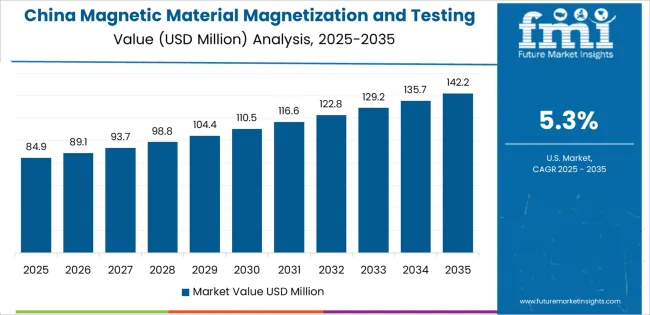
Revenue from magnetic material magnetization and testing equipment in China is projected to exhibit strong growth with a market value of USD 87.6 million by 2036, driven by extensive electric vehicle manufacturing programs and comprehensive industrial modernization initiatives creating substantial opportunities for magnetization technology suppliers across automotive production, renewable energy installations, and advanced manufacturing facility development sectors. The country's ambitious electrification programs including national electric vehicle development initiatives and renewable energy expansion projects are creating consistent demand for specialized magnetic characterization systems. Major manufacturing companies and automotive suppliers including BYD, CATL, and specialized magnetic component manufacturers are establishing comprehensive magnetization solution programs to support large-scale electric vehicle production and advanced manufacturing technology applications.
- National electrification programs and renewable energy development projects are supporting widespread adoption of magnetization technologies across manufacturing systems, driving demand for reliable performance equipment supporting diverse industrial applications
- Industrial facility development initiatives and manufacturing infrastructure programs are creating substantial opportunities for suppliers requiring consistent performance and cost-effective magnetization solutions for automotive and electronics applications
- Manufacturing equipment expansion and production facility upgrades are facilitating adoption of specialized magnetic testing systems throughout major industrial development regions supporting quality control and process optimization
India Demonstrates Strong Market Potential with Infrastructure Growth
India is expanding to reach USD 32.4 million by 2036, supported by extensive automotive industry development programs and comprehensive manufacturing infrastructure modernization initiatives creating demand for magnetization solutions across diverse automotive manufacturing and electronics production application segments. The country's growing automotive manufacturing capabilities and expanding electronics infrastructure are driving demand for magnetization components that provide exceptional reliability while supporting advanced manufacturing system requirements. Industrial companies and manufacturing facilities are investing in magnetic testing technology to support growing production demand and industrial automation advancement requirements.
- Automotive industry expansion and electronics manufacturing development are creating opportunities for magnetization components across diverse application segments requiring exceptional reliability and competitive performance specifications throughout major manufacturing regions
- Infrastructure development programs and industrial facility modernization are driving investments in automated manufacturing systems supporting operational efficiency requirements and quality control standards across automotive and electronics sectors
- Industrial facility growth and specialized manufacturing technology development programs are enhancing demand for quality magnetization solutions throughout Indian automotive and electronics markets
Germany Maintains Leadership with Engineering Excellence
Demand for magnetic material magnetization and testing equipment in Germany is projected to reach USD 41.7 million by 2036, supported by the country's leadership in automotive engineering technology and advanced manufacturing systems requiring sophisticated magnetization solutions for precision automotive production and industrial automation applications. German manufacturing operators are implementing cutting-edge magnetization platforms that support advanced operational capabilities, precision performance, and comprehensive quality monitoring protocols. The market is characterized by focus on engineering excellence, technology innovation, and compliance with stringent automotive and industrial safety standards.
- Automotive engineering industry investments and manufacturing technology leadership are prioritizing advanced magnetization technologies that demonstrate superior performance and reliability while meeting German automotive and industrial standards
- Precision manufacturing leadership programs and technology innovation initiatives are driving adoption of precision-engineered magnetization systems that support advanced automotive infrastructure and production optimization throughout major automotive manufacturing centers
- Manufacturing system engineering programs for facility enhancement are facilitating adoption of specialized magnetization technologies supporting automotive electrification and advanced manufacturing development across German industrial regions
Brazil Expands Market with Infrastructure Development
Revenue from magnetic material magnetization and testing equipment in Brazil is growing to reach USD 19.8 million by 2036, driven by automotive infrastructure development programs and increasing manufacturing capabilities creating opportunities for magnetization suppliers serving both automotive manufacturers and specialized equipment contractors. The country's expanding automotive sector and growing industrial infrastructure are creating demand for magnetization components that support diverse manufacturing requirements while maintaining performance standards. Industrial companies and manufacturing facilities are developing technology strategies to support operational efficiency and system reliability advancement.
- Automotive infrastructure development programs and manufacturing modernization are facilitating adoption of magnetization components capable of supporting diverse manufacturing requirements and competitive performance standards throughout major industrial regions
- Manufacturing expansion and industrially-focused development programs are enhancing demand for quality magnetization solutions that support operational efficiency and manufacturing system reliability across automotive and industrial applications
- Technology market expansion and specialized industrial system development are creating opportunities for advanced magnetization capabilities across Brazilian automotive and manufacturing facilities
United States Focuses on Technology Innovation and Premium Applications
Demand for magnetic material magnetization and testing equipment in United States is projected to reach USD 28.6 million by 2036, expanding at a CAGR of 3.7%, driven by advanced automotive technology innovation and specialized industrial applications supporting precision manufacturing and comprehensive automation technology applications. The country's established automotive technology tradition including major automotive manufacturers and electronics facilities are creating demand for high-performance magnetization components that support operational advancement and quality standards. Manufacturers and industrial system suppliers are maintaining comprehensive development capabilities to support diverse automotive and electronics requirements.
- Advanced automotive technology innovation including major automotive manufacturers and specialized electronics programs are supporting demand for quality magnetization systems that meet contemporary performance and reliability standards throughout major manufacturing regions
- Precision manufacturing advancement and industrial automation system programs are creating opportunities for specialized magnetization components that provide comprehensive manufacturing quality support across automotive and electronics applications
- Industrial technology excellence and component quality enhancement programs are facilitating adoption of advanced magnetization capabilities throughout major manufacturing and automation centers
United Kingdom Emphasizes Technology Heritage
The United Kingdom is growing to reach USD 30.1 million by 2036, supported by automotive technology heritage and established industrial engineering communities driving demand for premium magnetization solutions across traditional manufacturing systems and specialized automotive electrification applications. The country's rich automotive engineering heritage including major automotive companies and established industrial system capabilities create demand for magnetization components that support both legacy system advancement and modern automotive applications.
- Automotive technology heritage preservation and advanced industrial system programs are supporting demand for specialized magnetization systems that meet historical excellence and contemporary performance standards throughout British automotive manufacturing
- Industrial manufacturing collaboration and international partnership development are creating opportunities for magnetization components throughout British automotive and electronics system facilities
- Technology modernization and infrastructure advancement programs are facilitating adoption of advanced magnetization technologies across traditional manufacturing markets supporting automotive electrification and industrial automation
Japan Maintains Precision with Technology Leadership
Demand for magnetic material magnetization and testing equipment in Japan is projected to reach USD 25.3 million by 2036, driven by precision manufacturing technology tradition and established automotive leadership supporting both domestic manufacturing system markets and export-oriented component production. Japanese companies maintain sophisticated magnetization development capabilities, with established manufacturers continuing to lead in magnetic testing technology and automotive component standards.
- Precision manufacturing technology tradition and automotive leadership including major automotive manufacturers are supporting continued demand for high-performance components that meet exacting quality standards throughout Japanese automotive and electronics markets
- Advanced manufacturing system research and traditional industrial excellence are creating opportunities for premium magnetization components supporting Japanese automotive and electronics production requirements
- Export manufacturing excellence and component quality programs are facilitating adoption of advanced magnetization production capabilities across specialized automotive and electronics manufacturing facilities
How is the Europe market divided based on application focus?
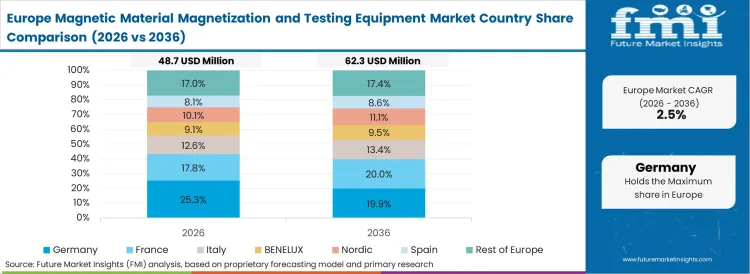
European magnetic material magnetization and testing equipment operations are increasingly concentrated between German automotive engineering excellence and specialized manufacturing across multiple countries. German facilities dominate high-performance magnetization production for automotive electrification and industrial automation applications, leveraging cutting-edge manufacturing technologies and strict quality protocols that command price premiums in global markets. British automotive technology operators maintain leadership in electric vehicle innovation and magnetization system development, with organizations like specialized engineering companies and university research centers driving technical specifications that suppliers must meet to access major automotive contracts.
Eastern European operations in Czech Republic and Poland are capturing specialized production contracts through precision manufacturing expertise and EU compliance standards, particularly in automotive component fabrication and electronics manufacturing technologies. These facilities increasingly serve as development partners for Western European automotive programs while building their own magnetization technology expertise.
The regulatory environment presents both opportunities and constraints. European automotive safety framework requirements create quality standards that favor established European manufacturers and automotive system operators while ensuring consistent performance specifications for critical automotive infrastructure and safety applications. Brexit has created complexity for UK automotive collaboration with EU programs, driving opportunities for direct relationships between British operators and international magnetization suppliers.
Technology collaboration accelerates as automotive companies seek technology advancement to support major electrification milestones and automotive development timelines. Vertical integration increases, with major automotive system operators acquiring specialized manufacturing capabilities to secure component supplies and quality control for critical automotive programs. Smaller industrial contractors face pressure to specialize in niche applications or risk displacement by larger, more comprehensive operations serving mainstream automotive and electronics requirements.
Market Dynamics Drive Innovation in South Korea
South Korean magnetic material magnetization and testing equipment operations reflect the country's advanced electronics manufacturing capabilities and export-oriented industrial development model. Major electronics system operators including Samsung and LG drive component procurement strategies for their manufacturing facilities, establishing direct relationships with specialized magnetization suppliers to secure consistent quality and performance for their electronics development programs and advanced manufacturing technology systems targeting both domestic infrastructure and international collaboration projects.
The Korean market demonstrates particular strength in integrating magnetization technologies into electronics manufacturing platforms and advanced automotive system configurations, with engineering teams developing solutions that bridge traditional magnetic testing applications and next-generation automotive systems. This integration approach creates demand for specific performance specifications that differ from conventional applications, requiring suppliers to adapt magnetization capabilities and system coordination characteristics.
Regulatory frameworks emphasize electronics safety and automotive system reliability, with Korean industrial standards often exceeding international requirements for magnetization systems. This creates barriers for standard component suppliers but benefits established manufacturers who can demonstrate electronics-grade performance capabilities. The regulatory environment particularly favors suppliers with Korean electronics system qualification and comprehensive testing documentation systems.
Supply chain excellence remains critical given Korea's electronics focus and international collaboration dynamics. Electronics system operators increasingly pursue development partnerships with suppliers in Japan, Germany, and specialized manufacturers to ensure access to cutting-edge magnetization technologies while managing infrastructure risks. Investment in electronics infrastructure supports performance advancement during extended manufacturing development cycles.
What factors define the competitive landscape of the magnetic material magnetization and testing equipment market?
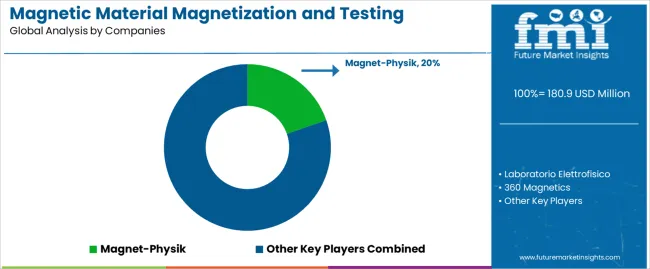
Magnet-Physik leads the market with 19.7% share owing to its comprehensive magnetic measurement portfolio and established automotive industry relationships, which manufacturers use to implement integrated magnetization solutions across diverse automotive and industrial applications. Profit pools are consolidating upstream in advanced electromagnet development and downstream in application-specific solutions for automotive electrification, manufacturing facility integration, and specialized magnetic materials markets where performance reliability, measurement accuracy, and consistent field generation command substantial premiums. Value is migrating from basic magnetization equipment production to specification-driven, application-ready magnetic testing systems where electromagnet expertise, precision engineering, and reliable integration capabilities create competitive advantages.
Several archetypes define market leadership: established German component companies defending share through comprehensive magnetic measurement development and proven automotive industry support; Japanese precision manufacturers leveraging manufacturing excellence and engineering capabilities; American technology leaders with automotive expertise and advanced manufacturing heritage; and emerging Asian manufacturers pursuing cost-effective production while developing advanced magnetization capabilities.
Switching costs - system integration, equipment compatibility validation, industrial certification - provide stability for established suppliers, while technological advancement requirements and specialized application growth create opportunities for innovative equipment manufacturers. Consolidation continues as companies seek manufacturing scale; direct automotive partnerships grow for specialized applications while traditional industrial distribution remains relationship-driven. Focus areas: secure premium automotive and electronics market positions with application-specific performance specifications and technical collaboration; develop magnetization technology and advanced measurement capabilities; explore specialized applications including renewable energy and medical device requirements.
| Stakeholder Type | Primary Advantage | Repeatable Plays |
|---|---|---|
| German Precision Leaders | Comprehensive magnetic expertise; proven automotive integration; established manufacturer relationships | Precision engineering; technical innovation; automotive certification support |
| Japanese Technology Suppliers | Manufacturing excellence; comprehensive automation development programs; established customer partnerships | Engineering collaboration focus; integrated solutions; technical consultation |
| American Innovation Leaders | Automotive system expertise; advanced technology leadership; trusted by major manufacturing programs | Industrial partnerships; application-specific specifications; automation infrastructure collaboration |
| Emerging Asian Producers | Manufacturing efficiency; competitive pricing; rapid technology development | Production scaling; technology advancement; market entry strategies |
| Industrial Distributors | Technical distribution networks; manufacturing service relationships | Industrial expertise; inventory management; technical support services |
Key Players in the Magnetic Material Magnetization and Testing Equipment Market
- Magnet-Physik
- Laboratorio Elettrofisico
- 360 Magnetics
- Nihon Denji Sokki
- Oersted Technology
- Magnetic Instrumentation
- MAGSYS Magnet Systeme
- List-Magnetik
- Ningbo Canmag Technology
- Mingzhe Magnetic
- Shenzhen Jiuju
- Magele Technology
- Mianyang Litian
Scope of the Report
| Metric | Value |
|---|---|
| Quantitative Units | USD 187.96 million to USD 275.56 million, at a CAGR of 3.90% |
| Market Definition | Magnetic material magnetization and testing equipment comprises specialized instruments used to magnetize, demagnetize, and characterize the magnetic properties of permanent magnets, soft magnetic materials, and ferrite components. This equipment category includes impulse magnetizers, hysteresis graph testers, flux meters, Helmholtz coil systems, and calibration standards used in production quality control and research environments. |
| Segmentation | Type: Magnetizing Equipment, Testing Equipment, Measurement Systems, Calibration Equipment, Others; Application: Automotive, Consumer Electronics, Industrial, Medical Devices, Aerospace & Defense, Others; End-User: Manufacturing Companies, Research Institutions, Testing Laboratories, Quality Control Centers, Others; Field Strength: Low Field, Medium Field, High Field, Others; Material Type: Permanent Magnets, Soft Magnets, Ferrite Materials, Rare Earth Magnets, Others |
| Regions Covered | North America, Latin America, Europe, East Asia, South Asia, Oceania, Middle East & Africa |
| Countries Covered | China, India, Germany, Brazil, USA, UK, Japan, and 40 plus countries |
| Key Companies Profiled | Magnet-Physik, Laboratorio Elettrofisico, 360 Magnetics, Nihon Denji Sokki, Oersted Technology, Magnetic Instrumentation, MAGSYS Magnet Systeme, List-Magnetik, Ningbo Canmag Technology, Mingzhe Magnetic, Shenzhen Jiuju, Magele Technology, Mianyang Litian |
| Forecast Period | 2026 to 2036 |
| Approach | Forecasting models apply a bottom-up methodology starting with global installed base and shipment metrics, cross-validated against manufacturer financial disclosures and industry procurement records. |
Magnetic Material Magnetization and Testing Equipment Market Segmentation
By Type
- Magnetizing Equipment
- Testing Equipment
- Measurement Systems
- Calibration Equipment
- Others
By Application
- Automotive
- Consumer Electronics
- Industrial
- Medical Devices
- Aerospace & Defense
- Others
By End-User
- Manufacturing Companies
- Research Institutions
- Testing Laboratories
- Quality Control Centers
- Others
By Field Strength
- Low Field (0-1 Tesla)
- Medium Field (1-5 Tesla)
- High Field (5+ Tesla)
- Others
By Material Type
- Permanent Magnets
- Soft Magnets
- Ferrite Materials
- Rare Earth Magnets
- Others
By Region
- North America
- United States
- Canada
- Mexico
- Latin America
- Brazil
- Chile
- Rest of Latin America
- Western Europe
- Germany
- United Kingdom
- France
- Italy
- Spain
- Nordic
- BENELUX
- Rest of Western Europe
- Eastern Europe
- Russia
- Poland
- Rest of Eastern Europe
- East Asia
- China
- Japan
- South Korea
- South Asia Pacific
- India
- ASEAN
- Australia & New Zealand
- Rest of South Asia Pacific
- Middle East & Africa
- Kingdom of Saudi Arabia
- Other GCC Countries
- Turkey
- South Africa
- Other African Union
- Rest of Middle East & Africa
Bibliography
- 1. International Electrotechnical Commission. (2024). IEC 60404-5: Magnetic materials, Part 5: Permanent magnet materials. IEC.
- 2. International Organization for Standardization. (2024). ISO 17025: General requirements for the competence of testing and calibration laboratories. ISO.
- 3. USA Department of Energy. (2024). Critical materials assessment: Rare earth elements. DOE.
- 4. European Commission. (2024). Critical Raw Materials Act: Implementation guidance for permanent magnets. European Commission.
- 5. Society of Automotive Engineers International. (2024). SAE J2464: Electric and hybrid electric vehicle rechargeable energy storage system safety standards. SAE.
- 6. National Institute of Standards and Technology. (2024). Standard reference materials for magnetic measurements. NIST.
This bibliography is provided for reader reference. The full Future Market Insights report contains the complete reference list with primary research documentation.
Frequently Asked Questions
How large is the demand for Magnetic Material Magnetization and Testing Equipment in the global market in 2026?
Demand for Magnetic Material Magnetization and Testing Equipment in the global market is estimated to be valued at USD 187.96 million in 2026.
What will be the market size of Magnetic Material Magnetization and Testing Equipment in the global market by 2036?
Market size for Magnetic Material Magnetization and Testing Equipment is projected to reach USD 275.56 million by 2036.
What is the expected demand growth for Magnetic Material Magnetization and Testing Equipment between 2026 and 2036?
Demand for Magnetic Material Magnetization and Testing Equipment is expected to grow at a CAGR of 3.90% between 2026 and 2036.
Which Type segment is poised to lead global sales by 2026?
Magnetizing Equipment accounts for 57.3% share in 2026.
What is driving demand in China?
China leads growth at 5.3% CAGR through 2036.
What is Magnetic Material Magnetization and Testing Equipment and what is it mainly used for?
Magnetic material magnetization and testing equipment comprises specialized instruments used to magnetize, demagnetize, and characterize the magnetic properties of permanent magnets, soft magnetic materials, and ferrite components. This equipment category includes impulse magnetizers, hysteresis graph testers, flux meters, Helmholtz coil systems, and calibration standards used in production quality control and research environments.
What is included in the scope of this Magnetic Material Magnetization and Testing Equipment report?
Market scope covers magnetizing equipment (impulse magnetizers, electromagnets), testing equipment (hysteresis graph systems, BH analyzers), measurement systems (Gaussmeters, fluxmeters), and calibration equipment. Analysis spans 2026 to 2036 across all major regions.
How does FMI build and validate the Magnetic Material Magnetization and Testing Equipment forecast?
Forecasting models apply a bottom-up methodology starting with global installed base metrics and cross-validate projections against manufacturer financial disclosures and industry procurement data.
Preview the report firsthand - request a free sample
Get SampleGet the brochure for pricing and purchase details.
Get PDFTable of Content
- Executive Summary
- Global Market Outlook
- Demand-side Trends
- Supply-side Trends
- Technology Roadmap Analysis
- Analysis and Recommendations
- Market Overview
- Market Coverage / Taxonomy
- Market Definition / Scope / Limitations
- Research Methodology
- Chapter Orientation
- Analytical Lens and Working Hypotheses
- Market Structure, Signals, and Trend Drivers
- Benchmarking and Cross-market Comparability
- Market Sizing, Forecasting, and Opportunity Mapping
- Research Design and Evidence Framework
- Desk Research Programme (Secondary Evidence)
- Company Annual and Sustainability Reports
- Peer-reviewed Journals and Academic Literature
- Corporate Websites, Product Literature, and Technical Notes
- Earnings Decks and Investor Briefings
- Statutory Filings and Regulatory Disclosures
- Technical White Papers and Standards Notes
- Trade Journals, Industry Magazines, and Analyst Briefs
- Conference Proceedings, Webinars, and Seminar Materials
- Government Statistics Portals and Public Data Releases
- Press Releases and Reputable Media Coverage
- Specialist Newsletters and Curated Briefings
- Sector Databases and Reference Repositories
- FMI Internal Proprietary Databases and Historical Market Datasets
- Subscription Datasets and Paid Sources
- Social Channels, Communities, and Digital Listening Inputs
- Additional Desk Sources
- Expert Input and Fieldwork (Primary Evidence)
- Primary Modes
- Qualitative Interviews and Expert Elicitation
- Quantitative Surveys and Structured Data Capture
- Blended Approach
- Why Primary Evidence is Used
- Field Techniques
- Interviews
- Surveys
- Focus Groups
- Observational and In-context Research
- Social and Community Interactions
- Stakeholder Universe Engaged
- C-suite Leaders
- Board Members
- Presidents and Vice Presidents
- R&D and Innovation Heads
- Technical Specialists
- Domain Subject-matter Experts
- Scientists
- Physicians and Other Healthcare Professionals
- Governance, Ethics, and Data Stewardship
- Research Ethics
- Data Integrity and Handling
- Primary Modes
- Tooling, Models, and Reference Databases
- Desk Research Programme (Secondary Evidence)
- Data Engineering and Model Build
- Data Acquisition and Ingestion
- Cleaning, Normalisation, and Verification
- Synthesis, Triangulation, and Analysis
- Quality Assurance and Audit Trail
- Market Background
- Market Dynamics
- Drivers
- Restraints
- Opportunity
- Trends
- Scenario Forecast
- Demand in Optimistic Scenario
- Demand in Likely Scenario
- Demand in Conservative Scenario
- Opportunity Map Analysis
- Product Life Cycle Analysis
- Supply Chain Analysis
- Investment Feasibility Matrix
- Value Chain Analysis
- PESTLE and Porter’s Analysis
- Regulatory Landscape
- Regional Parent Market Outlook
- Production and Consumption Statistics
- Import and Export Statistics
- Market Dynamics
- Global Market Analysis 2021 to 2025 and Forecast, 2026 to 2036
- Historical Market Size Value (USD Million) Analysis, 2021 to 2025
- Current and Future Market Size Value (USD Million) Projections, 2026 to 2036
- Y-o-Y Growth Trend Analysis
- Absolute $ Opportunity Analysis
- Global Market Pricing Analysis 2021 to 2025 and Forecast 2026 to 2036
- Global Market Analysis 2021 to 2025 and Forecast 2026 to 2036, By Type
- Introduction / Key Findings
- Historical Market Size Value (USD Million) Analysis By Type , 2021 to 2025
- Current and Future Market Size Value (USD Million) Analysis and Forecast By Type , 2026 to 2036
- Magnetizing Equipment
- Testing Equipment
- Measurement Systems
- Calibration Equipment
- Others
- Magnetizing Equipment
- Y-o-Y Growth Trend Analysis By Type , 2021 to 2025
- Absolute $ Opportunity Analysis By Type , 2026 to 2036
- Global Market Analysis 2021 to 2025 and Forecast 2026 to 2036, By Application
- Introduction / Key Findings
- Historical Market Size Value (USD Million) Analysis By Application, 2021 to 2025
- Current and Future Market Size Value (USD Million) Analysis and Forecast By Application, 2026 to 2036
- Automotive
- Consumer Electronics
- Industrial
- Medical Devices
- Aerospace & Defense
- Others
- Automotive
- Y-o-Y Growth Trend Analysis By Application, 2021 to 2025
- Absolute $ Opportunity Analysis By Application, 2026 to 2036
- Global Market Analysis 2021 to 2025 and Forecast 2026 to 2036, By End-User
- Introduction / Key Findings
- Historical Market Size Value (USD Million) Analysis By End-User, 2021 to 2025
- Current and Future Market Size Value (USD Million) Analysis and Forecast By End-User, 2026 to 2036
- Manufacturing Companies
- Research Institutions
- Testing Laboratories
- Quality Control Centers
- Others
- Manufacturing Companies
- Y-o-Y Growth Trend Analysis By End-User, 2021 to 2025
- Absolute $ Opportunity Analysis By End-User, 2026 to 2036
- Global Market Analysis 2021 to 2025 and Forecast 2026 to 2036, By Field Strength
- Introduction / Key Findings
- Historical Market Size Value (USD Million) Analysis By Field Strength, 2021 to 2025
- Current and Future Market Size Value (USD Million) Analysis and Forecast By Field Strength, 2026 to 2036
- Low Field
- Medium Field
- High Field
- Others
- Low Field
- Y-o-Y Growth Trend Analysis By Field Strength, 2021 to 2025
- Absolute $ Opportunity Analysis By Field Strength, 2026 to 2036
- Global Market Analysis 2021 to 2025 and Forecast 2026 to 2036, By Material Type
- Introduction / Key Findings
- Historical Market Size Value (USD Million) Analysis By Material Type, 2021 to 2025
- Current and Future Market Size Value (USD Million) Analysis and Forecast By Material Type, 2026 to 2036
- Permanent Magnets
- Soft Magnets
- Ferrite Materials
- Rare Earth Magnets
- Others
- Permanent Magnets
- Y-o-Y Growth Trend Analysis By Material Type, 2021 to 2025
- Absolute $ Opportunity Analysis By Material Type, 2026 to 2036
- Global Market Analysis 2021 to 2025 and Forecast 2026 to 2036, By Region
- Introduction
- Historical Market Size Value (USD Million) Analysis By Region, 2021 to 2025
- Current Market Size Value (USD Million) Analysis and Forecast By Region, 2026 to 2036
- North America
- Latin America
- Western Europe
- Eastern Europe
- East Asia
- South Asia and Pacific
- Middle East & Africa
- Market Attractiveness Analysis By Region
- North America Market Analysis 2021 to 2025 and Forecast 2026 to 2036, By Country
- Historical Market Size Value (USD Million) Trend Analysis By Market Taxonomy, 2021 to 2025
- Market Size Value (USD Million) Forecast By Market Taxonomy, 2026 to 2036
- By Country
- USA
- Canada
- Mexico
- By Type
- By Application
- By End-User
- By Field Strength
- By Material Type
- By Country
- Market Attractiveness Analysis
- By Country
- By Type
- By Application
- By End-User
- By Field Strength
- By Material Type
- Key Takeaways
- Latin America Market Analysis 2021 to 2025 and Forecast 2026 to 2036, By Country
- Historical Market Size Value (USD Million) Trend Analysis By Market Taxonomy, 2021 to 2025
- Market Size Value (USD Million) Forecast By Market Taxonomy, 2026 to 2036
- By Country
- Brazil
- Chile
- Rest of Latin America
- By Type
- By Application
- By End-User
- By Field Strength
- By Material Type
- By Country
- Market Attractiveness Analysis
- By Country
- By Type
- By Application
- By End-User
- By Field Strength
- By Material Type
- Key Takeaways
- Western Europe Market Analysis 2021 to 2025 and Forecast 2026 to 2036, By Country
- Historical Market Size Value (USD Million) Trend Analysis By Market Taxonomy, 2021 to 2025
- Market Size Value (USD Million) Forecast By Market Taxonomy, 2026 to 2036
- By Country
- Germany
- UK
- Italy
- Spain
- France
- Nordic
- BENELUX
- Rest of Western Europe
- By Type
- By Application
- By End-User
- By Field Strength
- By Material Type
- By Country
- Market Attractiveness Analysis
- By Country
- By Type
- By Application
- By End-User
- By Field Strength
- By Material Type
- Key Takeaways
- Eastern Europe Market Analysis 2021 to 2025 and Forecast 2026 to 2036, By Country
- Historical Market Size Value (USD Million) Trend Analysis By Market Taxonomy, 2021 to 2025
- Market Size Value (USD Million) Forecast By Market Taxonomy, 2026 to 2036
- By Country
- Russia
- Poland
- Hungary
- Balkan & Baltic
- Rest of Eastern Europe
- By Type
- By Application
- By End-User
- By Field Strength
- By Material Type
- By Country
- Market Attractiveness Analysis
- By Country
- By Type
- By Application
- By End-User
- By Field Strength
- By Material Type
- Key Takeaways
- East Asia Market Analysis 2021 to 2025 and Forecast 2026 to 2036, By Country
- Historical Market Size Value (USD Million) Trend Analysis By Market Taxonomy, 2021 to 2025
- Market Size Value (USD Million) Forecast By Market Taxonomy, 2026 to 2036
- By Country
- China
- Japan
- South Korea
- By Type
- By Application
- By End-User
- By Field Strength
- By Material Type
- By Country
- Market Attractiveness Analysis
- By Country
- By Type
- By Application
- By End-User
- By Field Strength
- By Material Type
- Key Takeaways
- South Asia and Pacific Market Analysis 2021 to 2025 and Forecast 2026 to 2036, By Country
- Historical Market Size Value (USD Million) Trend Analysis By Market Taxonomy, 2021 to 2025
- Market Size Value (USD Million) Forecast By Market Taxonomy, 2026 to 2036
- By Country
- India
- ASEAN
- Australia & New Zealand
- Rest of South Asia and Pacific
- By Type
- By Application
- By End-User
- By Field Strength
- By Material Type
- By Country
- Market Attractiveness Analysis
- By Country
- By Type
- By Application
- By End-User
- By Field Strength
- By Material Type
- Key Takeaways
- Middle East & Africa Market Analysis 2021 to 2025 and Forecast 2026 to 2036, By Country
- Historical Market Size Value (USD Million) Trend Analysis By Market Taxonomy, 2021 to 2025
- Market Size Value (USD Million) Forecast By Market Taxonomy, 2026 to 2036
- By Country
- Kingdom of Saudi Arabia
- Other GCC Countries
- Turkiye
- South Africa
- Other African Union
- Rest of Middle East & Africa
- By Type
- By Application
- By End-User
- By Field Strength
- By Material Type
- By Country
- Market Attractiveness Analysis
- By Country
- By Type
- By Application
- By End-User
- By Field Strength
- By Material Type
- Key Takeaways
- Key Countries Market Analysis
- USA
- Pricing Analysis
- Market Share Analysis, 2025
- By Type
- By Application
- By End-User
- By Field Strength
- By Material Type
- Canada
- Pricing Analysis
- Market Share Analysis, 2025
- By Type
- By Application
- By End-User
- By Field Strength
- By Material Type
- Mexico
- Pricing Analysis
- Market Share Analysis, 2025
- By Type
- By Application
- By End-User
- By Field Strength
- By Material Type
- Brazil
- Pricing Analysis
- Market Share Analysis, 2025
- By Type
- By Application
- By End-User
- By Field Strength
- By Material Type
- Chile
- Pricing Analysis
- Market Share Analysis, 2025
- By Type
- By Application
- By End-User
- By Field Strength
- By Material Type
- Germany
- Pricing Analysis
- Market Share Analysis, 2025
- By Type
- By Application
- By End-User
- By Field Strength
- By Material Type
- UK
- Pricing Analysis
- Market Share Analysis, 2025
- By Type
- By Application
- By End-User
- By Field Strength
- By Material Type
- Italy
- Pricing Analysis
- Market Share Analysis, 2025
- By Type
- By Application
- By End-User
- By Field Strength
- By Material Type
- Spain
- Pricing Analysis
- Market Share Analysis, 2025
- By Type
- By Application
- By End-User
- By Field Strength
- By Material Type
- France
- Pricing Analysis
- Market Share Analysis, 2025
- By Type
- By Application
- By End-User
- By Field Strength
- By Material Type
- India
- Pricing Analysis
- Market Share Analysis, 2025
- By Type
- By Application
- By End-User
- By Field Strength
- By Material Type
- ASEAN
- Pricing Analysis
- Market Share Analysis, 2025
- By Type
- By Application
- By End-User
- By Field Strength
- By Material Type
- Australia & New Zealand
- Pricing Analysis
- Market Share Analysis, 2025
- By Type
- By Application
- By End-User
- By Field Strength
- By Material Type
- China
- Pricing Analysis
- Market Share Analysis, 2025
- By Type
- By Application
- By End-User
- By Field Strength
- By Material Type
- Japan
- Pricing Analysis
- Market Share Analysis, 2025
- By Type
- By Application
- By End-User
- By Field Strength
- By Material Type
- South Korea
- Pricing Analysis
- Market Share Analysis, 2025
- By Type
- By Application
- By End-User
- By Field Strength
- By Material Type
- Russia
- Pricing Analysis
- Market Share Analysis, 2025
- By Type
- By Application
- By End-User
- By Field Strength
- By Material Type
- Poland
- Pricing Analysis
- Market Share Analysis, 2025
- By Type
- By Application
- By End-User
- By Field Strength
- By Material Type
- Hungary
- Pricing Analysis
- Market Share Analysis, 2025
- By Type
- By Application
- By End-User
- By Field Strength
- By Material Type
- Kingdom of Saudi Arabia
- Pricing Analysis
- Market Share Analysis, 2025
- By Type
- By Application
- By End-User
- By Field Strength
- By Material Type
- Turkiye
- Pricing Analysis
- Market Share Analysis, 2025
- By Type
- By Application
- By End-User
- By Field Strength
- By Material Type
- South Africa
- Pricing Analysis
- Market Share Analysis, 2025
- By Type
- By Application
- By End-User
- By Field Strength
- By Material Type
- USA
- Market Structure Analysis
- Competition Dashboard
- Competition Benchmarking
- Market Share Analysis of Top Players
- By Regional
- By Type
- By Application
- By End-User
- By Field Strength
- By Material Type
- Competition Analysis
- Competition Deep Dive
- Magnet-Physik
- Overview
- Product Portfolio
- Profitability by Market Segments (Product/Age /Sales Channel/Region)
- Sales Footprint
- Strategy Overview
- Marketing Strategy
- Product Strategy
- Channel Strategy
- Laboratorio Elettrofisico
- 360 Magnetics
- Nihon Denji Sokki
- Oersted Technology
- Magnetic Instrumentation
- MAGSYS Magnet Systeme
- List-Magnetik
- Ningbo Canmag Technology
- Mingzhe Magnetic
- Shenzhen Jiuju
- Magele Technology
- Mianyang Litian
- Magnet-Physik
- Competition Deep Dive
- Assumptions & Acronyms Used


