

Network Function Virtualization (NFV) Market Size and Forecast Outlook from 2025 to 2035
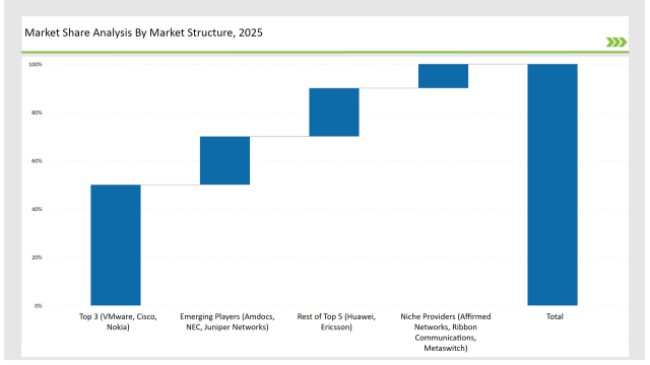
The Network Function Virtualization (NFV) market is growing rapidly as telecom operators, cloud providers and enterprises embrace virtualization to increase efficiencies, lower costs and enhance agility in network operations. VMware, Cisco, and Nokia account for a market share of almost 50% among leading vendors driven by leveraging cloud-native architectures, AI-driven network automation, and multi-access edge computing to meet the demands of service provider networks for NFV adoption.
The rest of the top five vendors -Huawei and Ericsson - collectively have 20% power, purposefully devoting themselves to 5G network slicing, open-source NFV and integrated service orchestration. 20% by emerging players like Amdocs, NEC, and Juniper Networks who fit the cloud driven network automation space well and have integrated into SD-WAN seamlessly. This remaining 10% making up for niche providers such as Affirmed Networks, Ribbon Communications and Met switch to fulfil specific requirements in mobile core virtualization, security, and VoIP optimization.
Global Market Share of Leading NFV Providers by Segment (2025)
| Category | Industry Share (%) |
|---|---|
| Top 3 (VMware, Cisco, Nokia) | 50% |
| Rest of Top 5 (Huawei, Ericsson) | 20% |
| Emerging Players (Amdocs, NEC, Juniper Networks) | 20% |
| Niche Providers (Affirmed Networks, Ribbon Communications, Metaswitch) | 10% |
Market Concentration Analysis in the NFV Sector by Use Case and Region
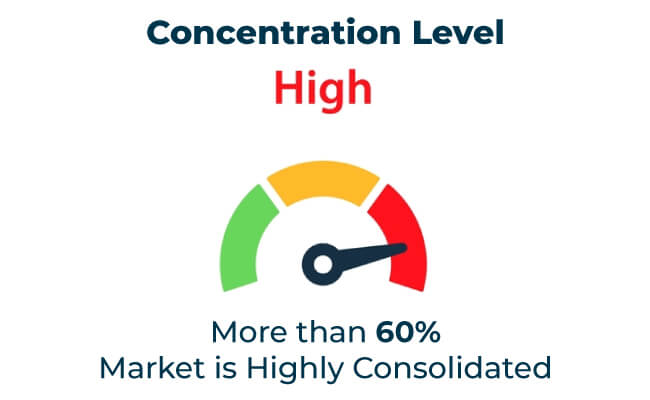
The market for NFV is moderately concentrated, with more than 60% of share held by top 10 vendors. The larger vendors are major players, and mid-sized ones are the primary innovators for virtualization of telecom and enterprises.
NFV Market by Deployment Type, Application, Industry Vertical, Service Model, and Region
By Component
Solution
The NFV Solution segment dominates with a 60% market share, driven by increased demand for virtualized network functions (VNFs) and cloud-native orchestration. VMware and Nokia lead this space by delivering robust NFV infrastructures that support automated network provisioning, real-time analytics, and edge computing optimizations.
Cisco enhances cloud-based SD-WAN and security solutions to further strengthen NFV adoption. With growing 5G deployments, NFV solutions integrating AI-based optimization and traffic routing will see rapid expansion.
Services
The NFV Services segment accounts for 40% of the market, including consulting, integration, and managed services. Ericsson and Huawei lead by offering full-service NFV deployments, including cloud orchestration, managed SDN/NFV solutions, and 5G core virtualization. As enterprises adopt NFV to enhance operational efficiency, demand for service-driven implementations will surge, particularly for security-focused NFV deployments and AI-powered monitoring solutions.
By Enterprise Size
Small Enterprises
Small enterprises hold a 15% market share, primarily adopting NFV for cost reduction and network flexibility. Solutions tailored for small-scale SD-WAN deployments and cloud-based VNFs see increased adoption, with players like Juniper Networks and Affirmed Networks offering lightweight NFV implementations.
Medium Enterprises
Medium enterprises account for 30% of the NFV market, leveraging virtualized networks for scalable remote operations, cybersecurity, and network management. Vendors like Cisco and NEC provide cost-efficient, modular NFV solutions with managed service options to help mid-sized firms optimize network functions.
Large Enterprises
Large enterprises dominate the NFV market with a 55% share, adopting NFV to support cloud-native workloads, hybrid networks, and data-intensive applications. VMware and Nokia lead in enterprise-scale NFV adoption, offering cloud-based infrastructure and AI-driven network analytics to ensure high-performance networking across global operations.
By End User
Service Providers
Telecom operators and cloud service providers hold a 50% share, leveraging NFV for 5G deployments, software-defined networking (SDN), and automated network slicing. Huawei and Ericsson dominate this segment, enhancing mobile core virtualization and carrier-grade SD-WAN for seamless service delivery.
Data Centers
Data center operators account for 30% of NFV adoption, utilizing virtualized networking to scale infrastructure, improve automation, and reduce operational costs. VMware and Juniper Networks lead in NFV-driven data center virtualization, integrating SDN and security for optimized cloud networking.
Enterprises
Corporate enterprises contribute 20% to NFV adoption, deploying NFV for enhanced security, compliance, and operational agility. Cisco and Amdocs drive enterprise NFV adoption by integrating hybrid cloud networking and real-time network monitoring for large-scale businesses.
Top Contributors Who Shaped the NFV Landscape Through 2024
- VMware NSX-T expands its AI-powered network automation solutions, enhancing SDN and NFV-driven cloud networking.
- Cisco SD-WAN & NFV improves cloud-native security integrations, allowing enterprises to virtualize networking functions at scale.
- Nokia CloudBand enhances 5G network slicing and cloud-native orchestration for service providers.
- Huawei NFV Solutions strengthen edge computing capabilities for telecom operators, optimizing real-time analytics and automated network management.
- Ericsson NFV Infrastructure expands AI-driven security features, enabling real-time risk detection for telecom and enterprise networks.
Forecast Highlights on 5G, Edge Integration, and Cloud-Native NFV Growth
- AI-Powered Network Optimization: Enhanced machine learning models will drive intelligent NFV traffic routing and automation.
- Industry-Specific NFV Deployments: Tailored solutions for telecom, healthcare, and finance will drive sector-specific NFV adoption.
- 5G-Driven Virtualization: Increasing 5G rollouts will accelerate NFV deployments across mobile networks.
- Cloud-Native NFV Evolution: Hybrid cloud and edge computing integration will reshape NFV solutions.
- End-to-End NFV Security: AI-powered threat detection and real-time security analytics will strengthen virtual network defenses.
- Integration with SD-WAN & SDN: Enterprises will adopt NFV alongside SD-WAN and software-defined networking for optimal agility.
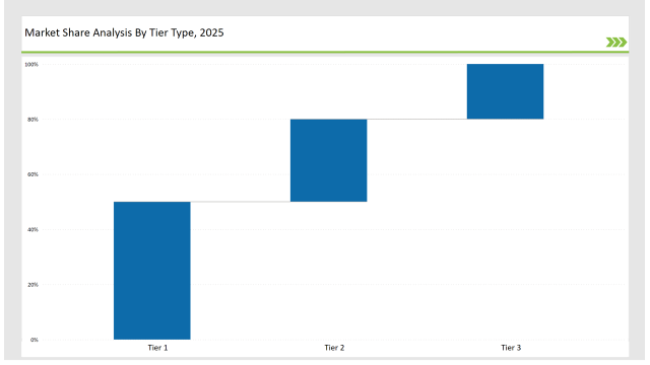
Tier-Wise Classification of NFV Vendors by Capability and Market Presence (2025)
| Tier | Tier 1 |
|---|---|
| Vendors | VMware, Cisco, Nokia |
| Consolidated Market Share (%) | 50% |
| Tier | Tier 2 |
|---|---|
| Vendors | Huawei, Ericsson, Amdocs |
| Consolidated Market Share (%) | 30% |
| Tier | Tier 3 |
|---|---|
| Vendors | NEC, Juniper Networks, Affirmed Networks, Ribbon Communications, Metaswitch |
| Consolidated Market Share (%) | 20% |
Key Company Initiatives in VNF Development, Interoperability, and Carrier Alliances
| Vendor | Key Focus |
|---|---|
| VMware | Advances AI-powered NFV automation and cloud-native networking. |
| Cisco | Strengthens security integrations for SD-WAN and NFV deployments. |
| Nokia | Develops cloud-native NFV solutions with 5G optimization. |
| Huawei | Enhances edge computing and AI-driven NFV orchestration. |
| Ericsson | Expands AI-based security and automated NFV risk detection. |
| Juniper Networks | Innovates SD-WAN and NFV-driven cloud networking. |
| Amdocs | Focuses on telecom-focused NFV service automation. |
Strategic Recommendations for NFV Vendors Targeting CSPs and Enterprise Networks
- Enhance AI-Driven Network Automation: Automate network optimization and real-time traffic routing.
- Strengthen Cloud Capabilities: Develop scalable, hybrid cloud NFV solutions for enterprises and service providers.
- Expand into Emerging Markets: Strengthen NFV solutions for 5G deployments in developing regions.
- Collaborate with SD-WAN & SDN Providers: Ensure seamless integration between virtualized networks and software-defined solutions.
- Focus on Security & Compliance: Enhance NFV security analytics and regulatory adherence.
Future Roadmap for NFV with Focus on Automation, Scalability, and Multi-Cloud Support
Vendors must refine AI-driven NFV orchestration to optimize network performance, integrating predictive analytics to detect and mitigate potential failures. Automating NFV service management through machine learning will enable businesses to streamline operations and enhance security monitoring.
As global 5G deployments accelerate, telecom operators and enterprises will prioritize NFV-driven network slicing and cloud-native security enhancements. Strengthening partnerships with cloud providers and SD-WAN vendors will be crucial for NFV market expansion.
Top Segments Studied in the NFV Market: Deployment Model, Application, Network Type, End User, and Region
By Component:
- Solution
- Services
By Enterprise Size:
- Small Enterprises
- Medium Enterprises
- Large Enterprises
By End User:
- Service Providers
- Data Centers
- Enterprises
Frequently Asked Questions
Which companies hold the largest market share in the NFV industry?
Leading vendors VMware, Cisco, and Nokia hold 50% of the market.
What is the market share of emerging players in the NFV sector?
Emerging players Amdocs, NEC, and Juniper Networks hold 20% of the market.
How much market share do niche providers hold?
Niche providers Affirmed Networks, Ribbon Communications, and Metaswitch hold 10% of the market.
What percentage of the market do the top five vendors control?
The top five vendors (VMware, Cisco, Nokia, Huawei, and Ericsson) control 70% of the market.
How is market concentration assessed for 2025?
Market concentration in 2025 is categorized as medium, with the top 10 players controlling 60% to 70% of the market.
Preview the report firsthand - request a free sample
Get SampleGet the brochure for pricing and purchase details.
Get PDFTable of Content
- Executive Summary
- Market Overview
- Competitive Landscape
- Market Concentration
- Market Share Analysis
- Segment Analysis
- Who Shaped the Year
- Key Highlights from the Forecast
- Tier-Wise Company Classification
- Key Company Initiatives
- Recommendations for Vendors
- Future Roadmap


