

- Industry Size (2025)
- USD 253.2 Mn
- Forecast (2035)
- USD 535.5 Mn
- CAGR (2025 to 2035)
- 7.8%
Niacinamide Market Forecast and Outlook 2025 to 2035
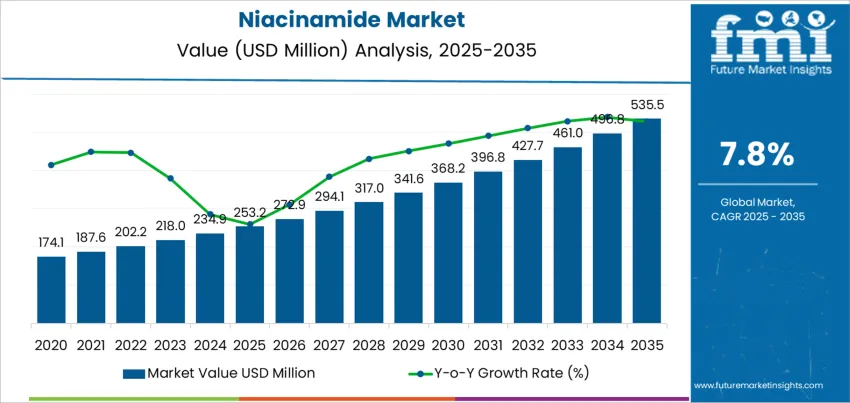
The global niacinamide market is projected to reach USD 535.5 million by 2035, recording an absolute increase of USD 282.3 million over the forecast period. The market is valued at USD 253.2 million in 2025 and is set to rise at a compound annual growth rate (CAGR) of 7.8% during the assessment period. The overall market size is expected to grow by more than 2x during the same period, driven by rising demand for niacinamide in cosmetics, skincare, and pharmaceutical applications. Niacinamide’s versatile skin benefits, such as anti-aging, anti-inflammatory, and skin barrier-repairing properties, are key drivers for its adoption across various products.
The niacinamide market has witnessed significant growth due to increasing consumer awareness about the benefits of using niacinamide-based skincare products, such as serums, moisturizers, and treatments aimed at reducing pigmentation, acne, and fine lines. Its ability to enhance skin texture and treat multiple skin concerns at once has made it a preferred ingredient in dermatological formulations. Market expansion is also supported by the growing trend toward functional and clean beauty products, where consumers seek effective, non-irritating active ingredients. Rising demand for niacinamide in emerging markets, along with innovations in formulation and packaging, will further drive growth. Growing clinical validation of niacinamide's skin health benefits contributes to its increasing adoption.
Quick Stats for Niacinamide Market
- Niacinamide Market Value (2025): USD 253.2 million
- Niacinamide Market Forecast Value (2035): USD 535.5 million
- Niacinamide Market Forecast CAGR: 7.8%
- Leading Product Form in Niacinamide Market: Liquid (Solution)
- Key Growth Regions in Niacinamide Market: Asia Pacific, Europe, and North America
- Top Players in Niacinamide Market: BASF SE, Croda International, Evonik Industries, Symrise (incl. IFF/Givaudan actives), Dow / Dow Inc., Ashland, Clariant, Seppic / Others (Seppic, Lubrizol, Lonza, Inolex, etc.)
What is the Growth Forecast for the Niacinamide Market through 2035?
Between 2025 and 2030, the niacinamide market is projected to grow from USD 253.2 million to USD 341.6 million, creating an absolute expansion of USD 88.4 million and setting a 7.8% compound annual growth rate (CAGR). This growth is driven by the increased use of niacinamide in skincare products, particularly for anti-aging and skin-brightening formulations. Growing consumer awareness of the effectiveness of niacinamide, alongside expanding product offerings, will continue to drive demand for the ingredient across global markets.
From 2030 to 2035, the market value increases from USD 341.6 million to USD 535.5 million, adding USD 193.9 million, which represents 53.3% of the overall forecast growth for the decade. The second half of the decade will see stronger adoption of niacinamide in both mainstream and premium product lines. As niacinamide continues to be recognized for its broad spectrum of skin benefits, its use in clinical dermatology, personal care, and cosmetic products will continue to increase. Expanding availability in emerging markets and continued innovation in formulations will accelerate the market's growth. This period will also witness further consolidation within the supply chain, enabling key players to capture greater market share.
Niacinamide Market Key Takeaways
| Metric | Value |
|---|---|
| Market Value (2025) | USD 253.2 million |
| Market Forecast Value (2035) | USD 535.5 million |
| Forecast CAGR (2025-2035) | 7.8% |
Why is the Niacinamide Market Growing?
The niacinamide market is growing due to the increasing demand for skincare products that offer multiple benefits, including improving skin tone, reducing fine lines, and enhancing overall skin health. Niacinamide, a form of vitamin B3, is widely used in cosmetic formulations for its ability to address skin concerns like acne, hyperpigmentation, and inflammation. Its versatility and gentle nature make it a popular choice in both over-the-counter and professional skincare products. The rise in consumer awareness about the importance of active ingredients and their positive impact on skin health is significantly contributing to the growing adoption of niacinamide.
Advancements in skincare formulations, along with the growing trend of holistic and multifunctional skincare products, have bolstered the market's growth. Niacinamide's ability to work synergistically with other active ingredients, such as retinol and hyaluronic acid, increases its appeal to consumers seeking effective and simple skincare routines. Furthermore, the rising demand for clean, cruelty-free, and sustainable skincare products has accelerated the adoption of niacinamide in a variety of formulations. As more people seek healthier and more effective skincare solutions, niacinamide remains a key ingredient in achieving these goals.
Despite its widespread use, challenges like high production costs and the complexity of formulating stable products with niacinamide may slow down growth in certain regions. Regulatory restrictions on certain cosmetic formulations may pose barriers to entry for new players in the market. Continued innovations in formulation technology, alongside rising consumer demand for effective skincare, are expected to drive sustained growth in the niacinamide market.
How are End Use Segments and Product Forms Structuring the Global Niacinamide Landscape?
Global demand for niacinamide is shaped by end use applications and product form, with a strong concentration in East Asia, Western Europe, and North America. Skin care leads with a 10.4% share, driven by the increasing popularity of niacinamide for its skin-brightening, anti-aging, and barrier-strengthening properties. Other segments include body care, hair care, sun care, color cosmetics, men’s grooming, baby and kids care, and dermocosmetic or professional care, spanning both mass and professional channels. On the product form side, powders capture a 14.7% share, alongside granules/agglomerates, flakes, pellets/prills, liquid solutions, high-active liquid concentrates, dispersions, emulsions, pastes, gels, wax/solid blocks, and oils.
Why Does Skin Care Hold the Largest Share in Global Niacinamide Usage?
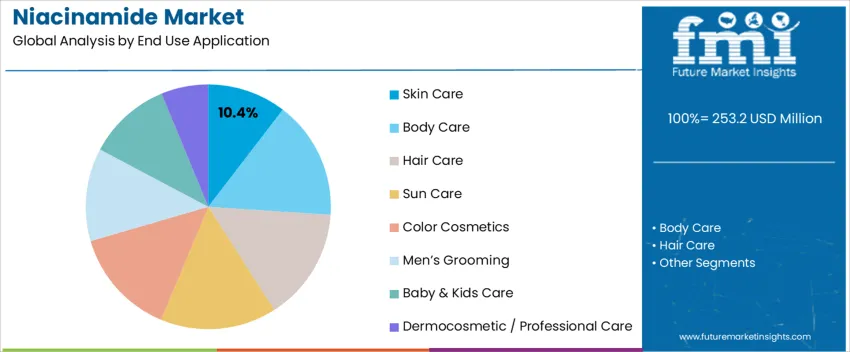
Skin care accounts for 10.4% of global niacinamide usage, driven by its wide use in products targeting skin brightening, anti-aging, and overall skin health. Niacinamide is commonly included in facial cleansers, toners, serums, and moisturizers, offering benefits such as improved skin elasticity, even skin tone, and enhanced moisture retention. Demand is particularly strong in South Korea, Japan, the USA, and Western Europe, where innovations in dermocosmetics and professional skincare are a key driver. Niacinamide’s versatility makes it suitable for a range of skin concerns, from acne to pigmentation. Professional and dermocosmetic brands emphasize niacinamide for its ability to improve skin texture and strength while providing a calming effect. Ongoing product development in regions like France, Germany, and the USA continues to focus on niacinamide as a key active ingredient for creating high-performance, multi-functional skincare solutions.
Why Does Powder Form Dominate Product Positioning in the Global Niacinamide Market?
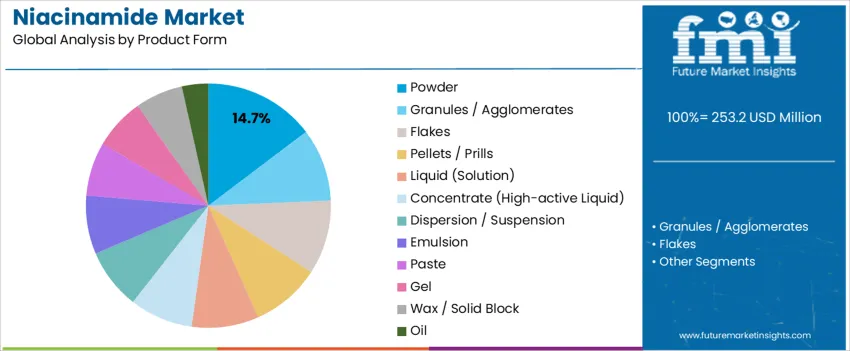
Powder form holds a 14.7% share of global niacinamide demand due to its superior stability, ease of handling, and precise dosing. Powders allow for effective integration into various product forms like emulsions, gels, and creams while ensuring uniform performance across large-scale production in regions such as Asia, Europe, and North America. Powder formats also provide logistical advantages by reducing leakage risks and minimizing the need for refrigeration during global shipping. Manufacturers favor powders because they are compatible with automated blending systems, enabling predictable product quality and stability even in varying climates. Regulatory documentation and microbial specification control are more standardized for powdered inputs in export markets, further supporting the powder form’s dominance in the niacinamide sector. These benefits continue to make powder the preferred choice for niacinamide-based products.
What is Shaping the Niacinamide Sector Worldwide
The niacinamide sector is driven by the growing demand for effective, multi-functional skin care ingredients. Known for its ability to reduce inflammation, even skin tone, and improve the skin’s barrier function, niacinamide is increasingly sought after in both cosmetic and pharmaceutical formulations. The ingredient's gentle nature, combined with its proven efficacy in treating a range of skin concerns, such as acne, hyperpigmentation, and signs of aging, makes it highly attractive to consumers of all skin types. Niacinamide’s compatibility with other active ingredients further contributes to its popularity, as it can be easily incorporated into various skin care products like serums, moisturizers, and masks. As consumers increasingly seek clean, science-backed solutions, niacinamide's reputation as a versatile and safe ingredient fuels its market growth.
Which Factors Are Driving Global Demand for Niacinamide
Global demand for niacinamide is rising as consumers seek multifunctional, dermatologist-recommended skin care solutions. Niacinamide offers multiple benefits, including reducing redness, balancing oil production, and improving skin elasticity, making it ideal for a wide range of skin types and conditions. The ingredient's ability to treat acne, reduce fine lines, and minimize the appearance of dark spots has driven its inclusion in numerous anti-aging and skin-brightening products. Increasing awareness of skin health and the demand for effective, non-irritating ingredients has boosted niacinamide’s popularity. Its compatibility with other active ingredients, such as hyaluronic acid, peptides, and retinoids, makes it a staple in many skin care formulations, contributing to its widespread use and continued market growth.
What Constraints Are Limiting Adoption of Niacinamide
Despite its benefits, the adoption of niacinamide is limited by factors such as formulation challenges and market competition. While niacinamide is generally well-tolerated, certain concentrations can cause irritation or sensitivity, especially in individuals with very sensitive skin. This has led to cautious formulation approaches in some regions, limiting higher concentration products. The rise in competition from other active ingredients, such as vitamin C or peptides, could pose a challenge to niacinamide's market share, especially in the premium skin care segment. The need for consistent ingredient sourcing and regulatory compliance across regions may slow down global expansion efforts. Overcoming these barriers requires careful product development and education to highlight niacinamide’s unique benefits.
Which Key Trends Are Redefining Niacinamide Globally
Several key trends are driving the niacinamide sector, including the increasing focus on multifunctional, gentle skin care ingredients that can address multiple skin concerns. Niacinamide's versatility makes it a key player in formulations targeting anti-aging, acne treatment, and skin brightening, catering to a broad range of consumers. There is also a growing preference for formulations that incorporate niacinamide with other complementary ingredients like hyaluronic acid and peptides for enhanced efficacy. The clean beauty movement is further fueling demand for niacinamide, as it is considered a safe and non-toxic ingredient. The rise of personalized skincare solutions, where niacinamide is used in conjunction with other active ingredients tailored to individual skin needs, is reshaping how consumers approach skin care.
What is the Growth Outlook for the Niacinamide Market by Country?
| Country | CAGR (%) |
|---|---|
| India | 10.5% |
| China | 9.7% |
| Japan | 8.9% |
| UK | 8.2% |
| Germany | 7.4% |
| USA | 6.6% |
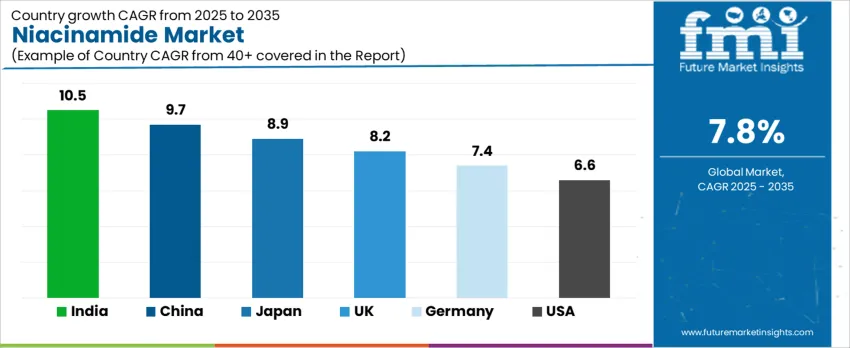
The niacinamide market is showing steady growth across the globe, with India leading at a 10.5% CAGR, driven by increasing demand for advanced skincare products focused on brightening, anti-aging, and skin barrier improvement. China follows with a 9.7% growth rate, supported by a growing middle class and rising awareness of skincare benefits. Japan’s market is growing at 8.9%, with a strong emphasis on high-quality skincare solutions. The UK and Germany are seeing moderate growth at 8.2% and 7.4%, respectively, driven by consumer interest in effective skincare ingredients. In the USA, the niacinamide market is growing at a slower pace of 6.6%, reflecting a more mature market but still showing consistent demand for effective and innovative skincare products.
What is Driving the Niacinamide Market Growth in India?
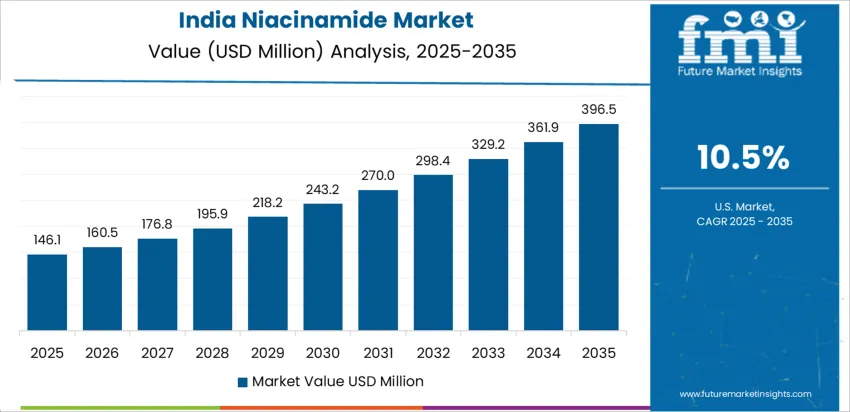
India’s niacinamide market is growing at a 10.5% CAGR, driven by rising consumer awareness of skincare benefits and increasing demand for multifunctional ingredients. Niacinamide is highly favored for its ability to address concerns such as pigmentation, acne, and skin barrier repair, making it a go-to ingredient for a wide range of skin issues. The growing middle class, higher disposable incomes, and an increasing preference for premium skincare products are contributing to the market's growth. Urbanization has resulted in more people investing in skincare routines that include advanced, effective ingredients. The rapid growth of e-commerce platforms has made niacinamide-based products more accessible, further boosting the market. As Indian consumers seek out holistic and scientifically formulated skincare solutions, the niacinamide market is expected to continue expanding, with both international and local brands investing in innovative product offerings to meet the growing demand.
What is Contributing to Niacinamide Market Growth in China?
China’s niacinamide market is growing at a 9.7% CAGR, driven by a surge in consumer interest in skincare products with multifunctional benefits. Niacinamide is known for its skin-brightening, anti-inflammatory, and anti-aging properties, making it highly sought after by Chinese consumers. As the middle class expands, so does the demand for higher-quality skincare solutions, including those featuring niacinamide. The rising beauty consciousness in China has led to a stronger focus on effective skincare ingredients, pushing niacinamide to the forefront. E-commerce platforms are crucial in increasing product accessibility, enabling brands to reach a wider consumer base. The growing preference for international and domestic brands that offer scientifically-backed skincare products has further fueled market expansion. With more consumers seeking solutions for common skin concerns like pigmentation, acne, and overall skin health, niacinamide is becoming a key ingredient in China's rapidly evolving skincare industry.
What is Fueling Niacinamide Market Growth in Japan?
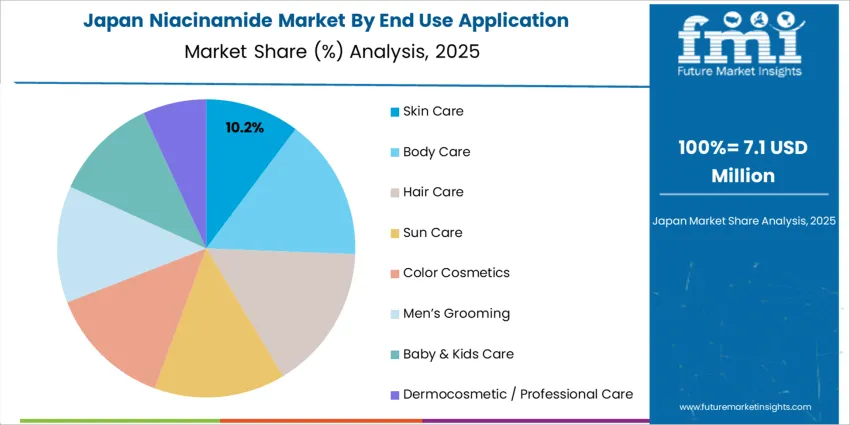
Japan’s niacinamide market is growing at an 8.9% CAGR, driven by the country’s strong skincare culture and increasing demand for high-quality, science-backed skincare products. Niacinamide is highly popular for its ability to improve skin texture, brighten the complexion, and reduce the appearance of fine lines, making it a preferred ingredient in Japan’s aging population. The focus on anti-aging skincare solutions and the growing interest in personalized beauty are significant contributors to the market’s growth. Niacinamide’s versatility in addressing various skin concerns like pigmentation, acne, and skin barrier repair aligns well with Japan’s emphasis on precision skincare. As more Japanese consumers seek effective, non-invasive solutions, niacinamide-based products are becoming essential in daily routines. Japan’s established retail infrastructure, along with the growing popularity of e-commerce platforms, ensures that niacinamide products are widely accessible, supporting steady growth in the market.
What is Supporting Niacinamide Market Growth in the UK?
The UK’s niacinamide market is expanding at an 8.2% CAGR, fueled by rising consumer awareness of skincare ingredients that offer multiple benefits. Niacinamide is valued for its brightening, anti-inflammatory, and anti-aging properties, which makes it a popular choice for consumers seeking effective skincare solutions. The UK’s growing focus on holistic beauty and wellness, along with an increasing interest in clean beauty products, is contributing to the demand for niacinamide-based formulations. As consumers become more educated on the benefits of niacinamide, products featuring this ingredient are gaining traction in both drugstore and premium skincare segments. E-commerce platforms and retail pharmacies have made niacinamide products more accessible, further driving their adoption. The UK’s strong skincare culture and high consumer trust in scientifically-backed products have paved the way for niacinamide to become a key ingredient in the skincare routines of health-conscious consumers.
What is Shaping Niacinamide Market Trends in Germany?
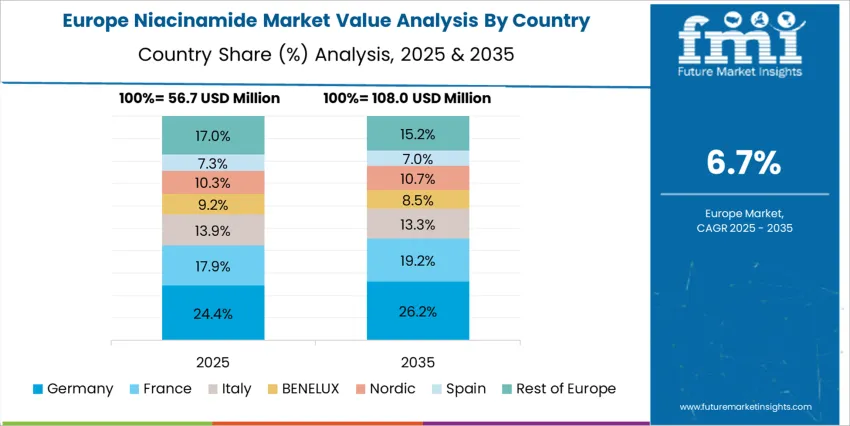
Germany’s niacinamide market is growing at a 7.4% CAGR, driven by the increasing demand for skincare products that address multiple skin concerns with proven effectiveness. Niacinamide is a key ingredient in many anti-aging, brightening, and acne treatments, which has boosted its popularity among German consumers. Germany’s well-established skincare industry places a premium on high-quality, scientifically formulated products, which is driving demand for niacinamide-based skincare solutions. The increasing focus on personalized beauty and natural ingredients is also contributing to the rise in niacinamide’s popularity, as consumers seek effective and gentle solutions for skin health. As the aging population grows, demand for products that address skin texture, pigmentation, and barrier function is expected to rise, further supporting market growth. With widespread retail access and high consumer confidence in advanced skincare formulations, niacinamide’s presence in Germany’s skincare market continues to expand steadily.
What is Driving Niacinamide Market Growth in the USA?
The USA’s niacinamide market is growing at a 6.6% CAGR, driven by ongoing consumer demand for skincare products that address common skin issues like pigmentation, acne, and aging. Niacinamide is a versatile ingredient that helps brighten skin, reduce inflammation, and enhance skin barrier function, making it a popular choice in many skincare routines. Despite being a mature market, the increasing focus on personalized beauty solutions and consumer awareness of ingredient efficacy continues to drive steady growth in the niacinamide sector. Retail pharmacies, dermatology clinics, and online platforms are key distribution channels, ensuring broad access to niacinamide-based products. As consumers seek out products that deliver visible results, niacinamide remains a preferred ingredient in both high-end and drugstore skincare products. With a strong preference for science-backed skincare, the USA is expected to maintain steady demand for niacinamide-based solutions.
What is Driving the Demand for Niacinamide Globally and Who Are the Key Players Shaping the Industry?
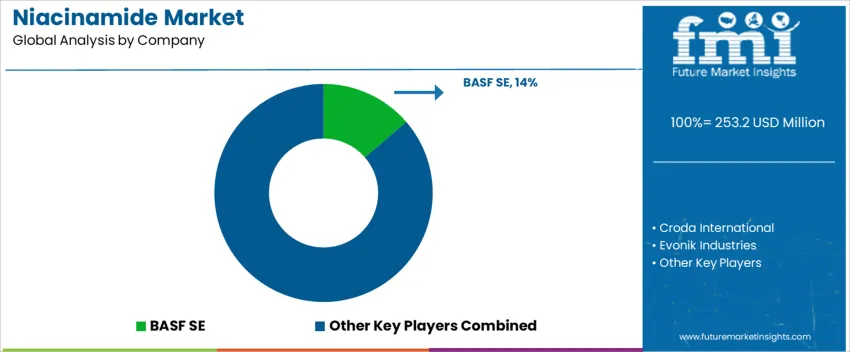
The demand for niacinamide is growing globally due to its well-documented skin benefits, including improving skin texture, reducing the appearance of fine lines and wrinkles, and brightening the complexion. Niacinamide, also known as vitamin B3, is increasingly used in skincare products targeting anti-aging, hyperpigmentation, and acne treatment. As consumer awareness of skincare ingredients rises, niacinamide is becoming a staple in formulations for all skin types, particularly due to its ability to enhance skin barrier function and provide a soothing effect. The rising popularity of clean and effective beauty products further accelerates niacinamide adoption across various skincare categories, from moisturizers to serums.
Key players shaping the niacinamide industry include BASF SE, Croda International, Evonik Industries, Symrise (including IFF/Givaudan active ingredient businesses), Dow Inc., Ashland, Clariant, and Seppic. BASF SE holds a significant market share of 13.7%, thanks to its extensive experience in skin care ingredients and high-quality niacinamide formulations. These leading companies focus on providing niacinamide with high purity and stability, catering to the growing demand for skincare products that promote healthier and more radiant skin. Smaller players also contribute to the market by offering specialized formulations for different skincare needs, ensuring a competitive and diversified industry landscape.
The growth of the niacinamide market is driven by its versatility and effectiveness in addressing a wide range of skin concerns. With advancements in ingredient sourcing, formulation techniques, and consumer awareness, niacinamide is increasingly incorporated into both high-end and mass-market skincare products. As demand for skin-perfecting and anti-aging solutions continues to grow, niacinamide's presence in the beauty and personal care industries is expected to expand significantly.
Key Players in Niacinamide Market
- BASF SE
- Croda International
- Evonik Industries
- Symrise (incl. IFF/Givaudan actives)
- Dow / Dow Inc.
- Ashland
- Clariant
- Seppic / Others (Seppic, Lubrizol, Lonza, Inolex etc.)
- Others
Scope of Report
| Items | Values |
|---|---|
| Quantitative Units (2025) | USD million |
| End Use Application | Skin Care, Body Care, Hair Care, Sun Care, Color Cosmetics, Men’s Grooming, Baby & Kids Care, Dermocosmetic / Professional Care |
| Product Form | Powder, Granules / Agglomerates, Flakes, Pellets / Prills, Liquid (Solution), Concentrate (High-active Liquid), Dispersion / Suspension, Emulsion, Paste, Gel, Wax / Solid Block, Oil |
| Regions Covered | North America, Europe, East Asia, South Asia, Latin America, Middle East & Africa, Eastern Europe |
| Countries Covered | USA, China, Japan, South Korea, India, Germany, UK, France, Italy, Brazil, Argentina, Mexico, Saudi Arabia, South Africa, Russia, others |
| Key Companies Profiled | BASF SE, Croda International, Evonik Industries, Symrise (including IFF/Givaudan actives), Dow / Dow Inc., Ashland, Clariant, Seppic / Others (Lubrizol, Lonza, Inolex), Other regional and niche suppliers |
| Additional Attributes | Dollar by sales by end use application and product form; regional CAGR and growth outlook; multi-strain formulation adoption; clinical validation and regulatory compliance tracking; distribution channels including retail, DTC, e-commerce, and institutional buyers; product form prevalence in powders, liquids, and emulsions; regional preference for strain libraries; supply chain logistics for cold chain and ambient stability; strain survivability, CFU consistency, and shelf-life performance; innovation trends including prebiotic/postbiotic combinations, non-dairy matrices, and personalized nutrition; competitive positioning of global vs regional suppliers. |
Niacinamide Market by Key Segments
End Use Application:
- Skin Care
- Body Care
- Hair Care
- Sun Care
- Color Cosmetics
- Men’s Grooming
- Baby & Kids Care
- Dermocosmetic / Professional Care
Product Form:
- Powder
- Granules / Agglomerates
- Flakes
- Pellets / Prills
- Liquid (Solution)
- Concentrate (High-active Liquid)
- Dispersion / Suspension
- Emulsion
- Paste
- Gel
- Wax / Solid Block
- Oil
Region:
- Asia Pacific
- China
- Japan
- South Korea
- India
- Australia & New Zealand
- ASEAN
- Rest of Asia Pacific
- Europe
- Germany
- United Kingdom
- France
- Italy
- Spain
- Nordic
- BENELUX
- Rest of Europe
- North America
- United States
- Canada
- Mexico
- Latin America
- Brazil
- Chile
- Rest of Latin America
- Middle East & Africa
- Kingdom of Saudi Arabia
- Other GCC Countries
- Turkey
- South Africa
- Other African Union
- Rest of Middle East & Africa
Frequently Asked Questions
How big is the niacinamide market in 2025?
The global niacinamide market is estimated to be valued at USD 253.2 million in 2025.
What will be the size of niacinamide market in 2035?
The market size for the niacinamide market is projected to reach USD 535.5 million by 2035.
How much will be the niacinamide market growth between 2025 and 2035?
The niacinamide market is expected to grow at a 7.8% CAGR between 2025 and 2035.
What are the key product types in the niacinamide market?
The key product types in niacinamide market are skin care, body care, hair care, sun care, color cosmetics, men’s grooming, baby & kids care and dermocosmetic / professional care.
Which product form segment to contribute significant share in the niacinamide market in 2025?
In terms of product form , powder segment to command 14.7% share in the niacinamide market in 2025.
Preview the report firsthand - request a free sample
Get SampleGet the brochure for pricing and purchase details.
Get PDFTable of Content
- Executive Summary
- Global Market Outlook
- Demand-side Trends
- Supply-side Trends
- Technology Roadmap Analysis
- Analysis and Recommendations
- Market Overview
- Market Coverage / Taxonomy
- Market Definition / Scope / Limitations
- Market Background
- Market Dynamics
- Drivers
- Restraints
- Opportunity
- Trends
- Scenario Forecast
- Demand in Optimistic Scenario
- Demand in Likely Scenario
- Demand in Conservative Scenario
- Opportunity Map Analysis
- Product Life Cycle Analysis
- Supply Chain Analysis
- Investment Feasibility Matrix
- Value Chain Analysis
- PESTLE and Porter’s Analysis
- Regulatory Landscape
- Regional Parent Market Outlook
- Production and Consumption Statistics
- Import and Export Statistics
- Market Dynamics
- Global Market Analysis 2020 to 2024 and Forecast, 2025 to 2035
- Historical Market Size Value (USD Million) Analysis, 2020 to 2024
- Current and Future Market Size Value (USD Million) Projections, 2025 to 2035
- Y-o-Y Growth Trend Analysis
- Absolute $ Opportunity Analysis
- Global Market Pricing Analysis 2020 to 2024 and Forecast 2025 to 2035
- Global Market Analysis 2020 to 2024 and Forecast 2025 to 2035, By End Use Application
- Introduction / Key Findings
- Historical Market Size Value (USD Million) Analysis By End Use Application , 2020 to 2024
- Current and Future Market Size Value (USD Million) Analysis and Forecast By End Use Application , 2025 to 2035
- Skin Care
- Body Care
- Hair Care
- Sun Care
- Color Cosmetics
- Men’s Grooming
- Baby & Kids Care
- Dermocosmetic / Professional Care
- Y-o-Y Growth Trend Analysis By End Use Application , 2020 to 2024
- Absolute $ Opportunity Analysis By End Use Application , 2025 to 2035
- Global Market Analysis 2020 to 2024 and Forecast 2025 to 2035, By Product Form
- Introduction / Key Findings
- Historical Market Size Value (USD Million) Analysis By Product Form, 2020 to 2024
- Current and Future Market Size Value (USD Million) Analysis and Forecast By Product Form, 2025 to 2035
- Powder
- Granules / Agglomerates
- Flakes
- Pellets / Prills
- Liquid (Solution)
- Concentrate (High-active Liquid)
- Dispersion / Suspension
- Emulsion
- Paste
- Gel
- Wax / Solid Block
- Y-o-Y Growth Trend Analysis By Product Form, 2020 to 2024
- Absolute $ Opportunity Analysis By Product Form, 2025 to 2035
- Global Market Analysis 2020 to 2024 and Forecast 2025 to 2035, By Region
- Introduction
- Historical Market Size Value (USD Million) Analysis By Region, 2020 to 2024
- Current Market Size Value (USD Million) Analysis and Forecast By Region, 2025 to 2035
- North America
- Latin America
- Western Europe
- Eastern Europe
- East Asia
- South Asia and Pacific
- Middle East & Africa
- Market Attractiveness Analysis By Region
- North America Market Analysis 2020 to 2024 and Forecast 2025 to 2035, By Country
- Historical Market Size Value (USD Million) Trend Analysis By Market Taxonomy, 2020 to 2024
- Market Size Value (USD Million) Forecast By Market Taxonomy, 2025 to 2035
- By Country
- USA
- Canada
- Mexico
- By End Use Application
- By Product Form
- By Country
- Market Attractiveness Analysis
- By Country
- By End Use Application
- By Product Form
- Key Takeaways
- Latin America Market Analysis 2020 to 2024 and Forecast 2025 to 2035, By Country
- Historical Market Size Value (USD Million) Trend Analysis By Market Taxonomy, 2020 to 2024
- Market Size Value (USD Million) Forecast By Market Taxonomy, 2025 to 2035
- By Country
- Brazil
- Chile
- Rest of Latin America
- By End Use Application
- By Product Form
- By Country
- Market Attractiveness Analysis
- By Country
- By End Use Application
- By Product Form
- Key Takeaways
- Western Europe Market Analysis 2020 to 2024 and Forecast 2025 to 2035, By Country
- Historical Market Size Value (USD Million) Trend Analysis By Market Taxonomy, 2020 to 2024
- Market Size Value (USD Million) Forecast By Market Taxonomy, 2025 to 2035
- By Country
- Germany
- UK
- Italy
- Spain
- France
- Nordic
- BENELUX
- Rest of Western Europe
- By End Use Application
- By Product Form
- By Country
- Market Attractiveness Analysis
- By Country
- By End Use Application
- By Product Form
- Key Takeaways
- Eastern Europe Market Analysis 2020 to 2024 and Forecast 2025 to 2035, By Country
- Historical Market Size Value (USD Million) Trend Analysis By Market Taxonomy, 2020 to 2024
- Market Size Value (USD Million) Forecast By Market Taxonomy, 2025 to 2035
- By Country
- Russia
- Poland
- Hungary
- Balkan & Baltic
- Rest of Eastern Europe
- By End Use Application
- By Product Form
- By Country
- Market Attractiveness Analysis
- By Country
- By End Use Application
- By Product Form
- Key Takeaways
- East Asia Market Analysis 2020 to 2024 and Forecast 2025 to 2035, By Country
- Historical Market Size Value (USD Million) Trend Analysis By Market Taxonomy, 2020 to 2024
- Market Size Value (USD Million) Forecast By Market Taxonomy, 2025 to 2035
- By Country
- China
- Japan
- South Korea
- By End Use Application
- By Product Form
- By Country
- Market Attractiveness Analysis
- By Country
- By End Use Application
- By Product Form
- Key Takeaways
- South Asia and Pacific Market Analysis 2020 to 2024 and Forecast 2025 to 2035, By Country
- Historical Market Size Value (USD Million) Trend Analysis By Market Taxonomy, 2020 to 2024
- Market Size Value (USD Million) Forecast By Market Taxonomy, 2025 to 2035
- By Country
- India
- ASEAN
- Australia & New Zealand
- Rest of South Asia and Pacific
- By End Use Application
- By Product Form
- By Country
- Market Attractiveness Analysis
- By Country
- By End Use Application
- By Product Form
- Key Takeaways
- Middle East & Africa Market Analysis 2020 to 2024 and Forecast 2025 to 2035, By Country
- Historical Market Size Value (USD Million) Trend Analysis By Market Taxonomy, 2020 to 2024
- Market Size Value (USD Million) Forecast By Market Taxonomy, 2025 to 2035
- By Country
- Kingdom of Saudi Arabia
- Other GCC Countries
- Turkiye
- South Africa
- Other African Union
- Rest of Middle East & Africa
- By End Use Application
- By Product Form
- By Country
- Market Attractiveness Analysis
- By Country
- By End Use Application
- By Product Form
- Key Takeaways
- Key Countries Market Analysis
- USA
- Pricing Analysis
- Market Share Analysis, 2024
- By End Use Application
- By Product Form
- Canada
- Pricing Analysis
- Market Share Analysis, 2024
- By End Use Application
- By Product Form
- Mexico
- Pricing Analysis
- Market Share Analysis, 2024
- By End Use Application
- By Product Form
- Brazil
- Pricing Analysis
- Market Share Analysis, 2024
- By End Use Application
- By Product Form
- Chile
- Pricing Analysis
- Market Share Analysis, 2024
- By End Use Application
- By Product Form
- Germany
- Pricing Analysis
- Market Share Analysis, 2024
- By End Use Application
- By Product Form
- UK
- Pricing Analysis
- Market Share Analysis, 2024
- By End Use Application
- By Product Form
- Italy
- Pricing Analysis
- Market Share Analysis, 2024
- By End Use Application
- By Product Form
- Spain
- Pricing Analysis
- Market Share Analysis, 2024
- By End Use Application
- By Product Form
- France
- Pricing Analysis
- Market Share Analysis, 2024
- By End Use Application
- By Product Form
- India
- Pricing Analysis
- Market Share Analysis, 2024
- By End Use Application
- By Product Form
- ASEAN
- Pricing Analysis
- Market Share Analysis, 2024
- By End Use Application
- By Product Form
- Australia & New Zealand
- Pricing Analysis
- Market Share Analysis, 2024
- By End Use Application
- By Product Form
- China
- Pricing Analysis
- Market Share Analysis, 2024
- By End Use Application
- By Product Form
- Japan
- Pricing Analysis
- Market Share Analysis, 2024
- By End Use Application
- By Product Form
- South Korea
- Pricing Analysis
- Market Share Analysis, 2024
- By End Use Application
- By Product Form
- Russia
- Pricing Analysis
- Market Share Analysis, 2024
- By End Use Application
- By Product Form
- Poland
- Pricing Analysis
- Market Share Analysis, 2024
- By End Use Application
- By Product Form
- Hungary
- Pricing Analysis
- Market Share Analysis, 2024
- By End Use Application
- By Product Form
- Kingdom of Saudi Arabia
- Pricing Analysis
- Market Share Analysis, 2024
- By End Use Application
- By Product Form
- Turkiye
- Pricing Analysis
- Market Share Analysis, 2024
- By End Use Application
- By Product Form
- South Africa
- Pricing Analysis
- Market Share Analysis, 2024
- By End Use Application
- By Product Form
- USA
- Market Structure Analysis
- Competition Dashboard
- Competition Benchmarking
- Market Share Analysis of Top Players
- By Regional
- By End Use Application
- By Product Form
- Competition Analysis
- Competition Deep Dive
- BASF SE
- Overview
- Product Portfolio
- Profitability by Market Segments (Product/Age /Sales Channel/Region)
- Sales Footprint
- Strategy Overview
- Marketing Strategy
- Product Strategy
- Channel Strategy
- Croda International
- Evonik Industries
- Symrise (incl. IFF/Givaudan actives)
- Dow / Dow Inc.
- Ashland
- Clariant
- Seppic
- BASF SE
- Competition Deep Dive
- Assumptions & Acronyms Used
- Research Methodology


