

- Industry Size (2026)
- USD 459.7 Mn
- Forecast (2036)
- USD 1139.2 Mn
- CAGR (2026 to 2036)
- 9.5%
Osteoporosis Screening Software Market Forecast and Outlook 2026 to 2036
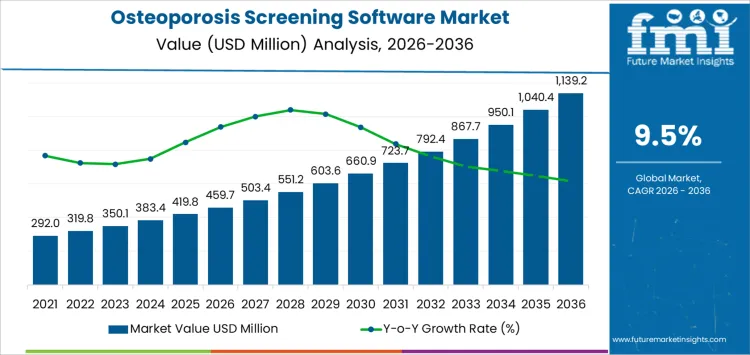
The osteoporosis screening software market is expected to grow from USD 459.7 million in 2026 to USD 1,139.2 million by 2036, reflecting a compound annual growth rate (CAGR) of 9.5%. Osteoporosis screening software is a critical tool used in the early detection of osteoporosis, a condition characterized by weakened bones that are more prone to fractures. The growing awareness of osteoporosis, particularly in aging populations, along with increasing healthcare emphasis on preventive measures, is driving the adoption of osteoporosis screening software. These software solutions enable healthcare providers to more accurately assess bone density and predict fracture risks using advanced algorithms and imaging technologies.
The market is further supported by the rising prevalence of osteoporosis, particularly among postmenopausal women and the elderly, who are at a higher risk of developing the disease. As healthcare systems prioritize early diagnosis and preventive care, the demand for osteoporosis screening tools is increasing. Advancements in diagnostic technologies, such as AI-powered screening platforms, and the growing integration of digital health tools in routine medical practices are expected to accelerate the adoption of osteoporosis screening software globally.
Quick Stats of the Osteoporosis Screening Software Market
- Osteoporosis Screening Software Market Value (2026): USD 459.7 million
- Osteoporosis Screening Software Market Forecast Value (2036): USD 1,139.2 million
- Osteoporosis Screening Software Market Global Forecast CAGR (2026-2036): 9.5%
- Osteoporosis Screening Software Market Leading Segment: Screening Workflow (DXA analysis and reporting) 46%
- Key Growth Regions in Osteoporosis Screening Software Market: North America, Asia Pacific, and Europe
- Top Players in Osteoporosis Screening Software Market: Hologic, GE HealthCare, Siemens Healthineers, Fujifilm Healthcare, Philips, Canon Medical Systems, Mindray, Esaote, Carestream Health, Agfa HealthCare
What is the Growth Forecast for the Osteoporosis Screening Software Market through 2036?
The absolute dollar opportunity for the osteoporosis screening software market shows steady and consistent growth over the forecast period. Starting at USD 459.7 million in 2026, the market grows to USD 502.7 million in 2027 and USD 549.5 million in 2028, reflecting gradual adoption and increasing awareness about osteoporosis screening. These early years represent the market’s foundation as healthcare providers begin to incorporate screening software into their preventive care practices.
From 2028 to 2030, the market continues to grow, reaching USD 600.3 million in 2029 and USD 656.5 million in 2030, driven by the continued integration of AI and digital health technologies that enhance screening accuracy and efficiency. By 2035, the market is projected to reach USD 955.9 million, with the final market value of USD 1,139.2 million expected by 2036. The absolute dollar opportunity analysis highlights how the market will steadily expand, driven by growing adoption, technological innovations, and an increasing focus on early detection and prevention of osteoporosis.
Osteoporosis Screening Software Market Key Takeaways
| Metric | Value |
|---|---|
| Industry Sales Value (2026) | USD 459.7 million |
| Industry Forecast Value (2036) | USD 1,139.2 million |
| Industry Forecast CAGR (2026-2036) | 9.5% |
What Is Driving the Demand for the Osteoporosis Screening Software Market Globally?
The global demand for osteoporosis screening software is driven by the rising prevalence of osteoporosis and related fractures, particularly among ageing populations in developed and emerging markets. Osteoporosis, characterised by reduced bone density and increased fracture risk, affects millions of older adults, with women at particularly high risk after menopause. Early identification of bone loss enables clinicians to intervene with lifestyle changes, supplements, or pharmacotherapy before fractures occur. Traditional bone density assessment has relied on DXA scans, but integration of advanced screening software enhances diagnostic accuracy, automates analysis, and standardises reporting.
These software platforms use algorithms to interpret imaging data, identify subtle changes in bone architecture, and stratify fracture risk, helping clinicians make evidence based decisions. Growing awareness of preventive health and routine screening recommendations in national guidelines encourage adoption of software tools in hospitals, imaging centres, and outpatient clinics. Increased availability of digital imaging systems, rising investments in diagnostic infrastructure, and a shift toward value based care further support uptake. Healthcare providers seek solutions that reduce interpretation variability, improve workflow efficiency, and enhance patient management across diverse clinical settings.
Future demand for osteoporosis screening software is expected to grow as health systems continue emphasising early detection, risk assessment, and preventive intervention to reduce fracture related morbidity and costs. Advances in artificial intelligence and machine learning will further refine the ability of software to detect bone quality changes, predict fracture risk, and integrate patient specific clinical data. Enhanced interoperability with electronic health records and imaging platforms will enable seamless integration into clinical workflows, supporting longitudinal monitoring and treatment planning.
Expansion of screening programmes in regions with rapidly ageing populations, such as East Asia, Latin America, and parts of Europe, will raise adoption, especially where public health initiatives prioritise chronic disease prevention. Regulatory recognition of digital diagnostic tools and reimbursement frameworks that support preventive care will influence how widely these technologies are adopted. Educational efforts to familiarise primary care providers and specialists with screening software benefits may further expand use. As evidence accumulates on improved patient outcomes and cost savings from early identification of bone loss, demand for osteoporosis screening software is expected to expand steadily across global healthcare systems.
What is the Segment Analysis for the Osteoporosis Screening Software Market?
The osteoporosis screening software market is driven by key segments based on screening workflows and deployment methods. Among the screening workflows, DXA analysis and reporting holds the largest share, accounting for 46% of the market, followed by opportunistic CT bone density and risk assessment/FRAX integration. These workflows are critical for diagnosing osteoporosis and assessing fracture risk, providing healthcare professionals with the tools needed for accurate patient evaluation. In terms of deployment, on-premise solutions dominate with 44% of the market, while cloud/SaaS and hybrid deployments are gaining traction due to their scalability and remote accessibility. The market's growth is influenced by advancements in diagnostic technologies and the increasing demand for accurate and efficient osteoporosis management. Regional adoption of osteoporosis screening software, particularly in North America and Europe, further fuels the market's expansion. Understanding these segments offers insights into the market's evolving landscape, highlighting the increasing reliance on digital solutions in clinical practice.
What is Driving Growth in the DXA Analysis & Reporting Segment of the Osteoporosis Screening Software Market?
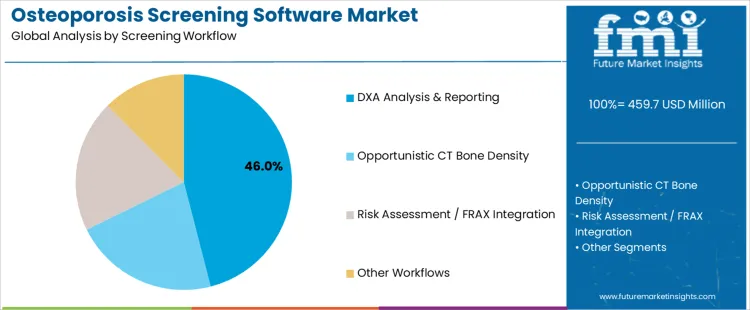
DXA analysis and reporting is the leading screening workflow in the osteoporosis screening software market, comprising 46% of the market share. This segment's growth is primarily driven by the widespread use of dual-energy X-ray absorptiometry (DXA) as the gold standard for assessing bone mineral density (BMD) in patients. DXA remains the most reliable method for diagnosing osteoporosis, particularly in elderly populations who are at higher risk for fractures. The integration of advanced software solutions with DXA machines has improved the accuracy and efficiency of bone density reporting, allowing healthcare providers to make timely and informed decisions. Moreover, DXA analysis software has evolved to offer more detailed insights, such as the detection of early signs of bone loss, improving preventative care. As awareness of osteoporosis rises and as healthcare systems prioritize early intervention, the demand for DXA analysis and reporting solutions continues to grow. This segment is expected to maintain its leading position in the market as advancements in DXA technology enhance the precision and usability of osteoporosis screening, making it an indispensable tool for clinicians worldwide.
What is Contributing to the Growth of On-Premise Deployment in the Osteoporosis Screening Software Market?
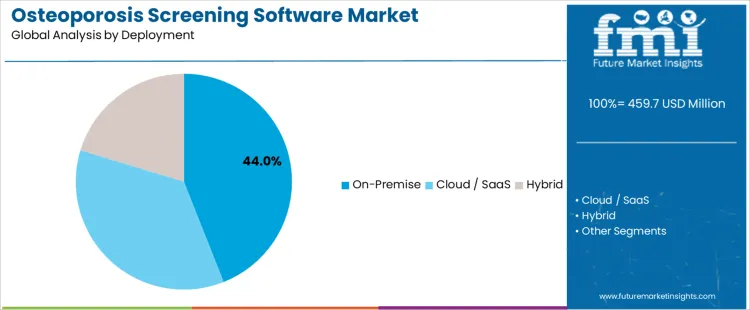
On-premise deployment remains the dominant method in the osteoporosis screening software market, holding 44% of the market share. The preference for on-premise solutions is driven by the need for secure, controlled environments where sensitive patient data can be stored and processed locally, in compliance with regulatory requirements such as HIPAA. Healthcare institutions, especially in regions like North America and Europe, often prefer on-premise deployment for reasons related to data privacy, security, and integration with existing hospital systems. These solutions allow for seamless communication with other medical devices and internal databases, which is essential in providing comprehensive patient care. Furthermore, on-premise deployment is well-suited to large healthcare facilities that require high-volume processing and detailed reporting of patient data. While cloud/SaaS and hybrid models are growing, on-premise solutions remain a critical component of the osteoporosis screening software market. As hospitals and healthcare centers continue to invest in secure and reliable infrastructures, the on-premise segment is expected to remain a dominant player in the market, providing stability and flexibility for osteoporosis diagnosis and management.
What are the Key Dynamics of the Global Osteoporosis Screening Software Market?
The global osteoporosis screening software market is growing as healthcare providers seek solutions that support early detection and risk assessment of bone loss. Software tools help clinicians analyse patient data, imaging results and clinical risk factors to identify individuals at elevated risk of fracture or advancing disease. Growth reflects aging populations, higher prevalence of osteoporosis, and emphasis on preventative care to avoid costly fractures. Adoption spans hospitals, imaging centers and outpatient clinics where efficient screening supports clinical decision workflows. Expansion of healthcare IT infrastructure and demand for evidence-based diagnostic support contribute to broader use worldwide.
What are the Key Drivers for the Global Osteoporosis Screening Software Market?
Rising incidence of osteoporosis and related fractures among older adults encourages adoption of software that improves identification of at-risk patients. Clinicians require tools that integrate clinical risk factors, bone mineral density values and imaging data to support personalized assessment. Growth in preventive health programs and population health initiatives motivates providers to implement solutions that enable longitudinal tracking and early intervention. Healthcare systems investing in digital health records and analytics platforms create environments where screening software can be connected with broader care pathways. Increased awareness among patients and clinicians regarding the consequences of untreated osteoporosis supports screening uptake.
What are the Restraints for the Global Osteoporosis Screening Software Market?
One restraint is variability in reimbursement and screening guidelines across regions, which may slow uniform adoption of dedicated software solutions. Some clinics and imaging facilities continue to rely on traditional assessment methods or manual risk scoring due to familiarity and lower cost. Integration of screening software with legacy hospital and radiology systems can require IT investment and coordination that smaller providers may find difficult. Data quality and completeness influence algorithm performance, requiring careful implementation and validation. Limited specialist training on use of advanced analytics tools in some care settings affects confidence and consistent utilization of screening platforms.
What is the Key Trends in the Global Osteoporosis Screening Software Market?
A key trend is development of analytics platforms that combine artificial intelligence with clinical risk models to enhance fracture risk prediction and automate reporting. Vendors are creating tools that integrate multiple data sources, including imaging archives and electronic health records, to support comprehensive assessment and longitudinal monitoring. Expansion of cloud-based deployment options makes software accessible to smaller practices and multi-site health systems. Users are increasingly adopting solutions that provide standardized dashboards, alerts and decision support to help guide treatment pathways. Collaboration between software developers, clinical researchers and professional societies is advancing validation studies that support clinical utility and guideline alignment.
What are the Key Insights from the Osteoporosis Screening Software Market Analysis?
The osteoporosis screening software market is forecasted to grow steadily across key regions, with different compound annual growth rates (CAGRs) reflecting the market dynamics in each country. Increasing awareness of osteoporosis, an aging population, and the growing prevalence of bone-related disorders are driving the demand for innovative screening solutions. The market is influenced by technological advancements in diagnostic tools, as well as the push towards improving healthcare efficiency through digital solutions. By examining country-specific growth forecasts, businesses can make informed decisions regarding investments, product development, and market strategies tailored to regional needs and opportunities in osteoporosis care.
| Country | CAGR (2026-2036) |
|---|---|
| China | 11% |
| United States | 9% |
| United Kingdom | 9% |
| Germany | 8.9% |
| Japan | 7.5% |
What is the Market Outlook for Osteoporosis Screening Software in China?
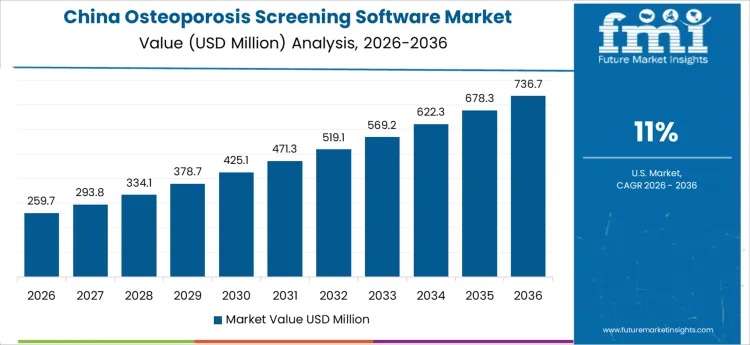
The osteoporosis screening software market in China is expected to grow at the highest rate, with a projected CAGR of 11%. This growth is driven by China's aging population and the increasing awareness of osteoporosis and bone health. As the healthcare sector in China continues to modernize and expand, there is a rising demand for efficient diagnostic tools to manage chronic diseases like osteoporosis. The government’s focus on improving healthcare accessibility and technological adoption in the medical field supports the market’s development. Additionally, the country’s large population and growing healthcare needs create an ideal environment for widespread adoption of osteoporosis screening software.
What is the Growth Forecast for Osteoporosis Screening Software in the United States?
The market for osteoporosis screening software in the United States is projected to grow at a steady pace, with a CAGR of 9%. The U.S. healthcare system, known for its innovation and large-scale adoption of new technologies, provides a solid foundation for the growth of osteoporosis screening solutions. The increasing prevalence of osteoporosis, especially among the aging population, is driving demand for more efficient and accurate diagnostic tools. As awareness about bone health rises, healthcare providers are increasingly adopting digital solutions to enhance screening processes. With a strong focus on improving patient care and treatment outcomes, the U.S. is expected to remain a significant market for osteoporosis screening software.
How is the Osteoporosis Screening Software Market Performing in the United Kingdom?
The osteoporosis screening software market in the United Kingdom is expected to experience moderate growth, with a projected CAGR of 9%. The UK’s advanced healthcare infrastructure and high level of digital technology adoption support the increasing use of osteoporosis screening software. The aging population and a growing awareness of bone health are key drivers behind the market demand. The National Health Service (NHS) plays a central role in integrating innovative diagnostic tools into healthcare delivery, further promoting the use of osteoporosis screening solutions. As a result, the UK market is expected to experience consistent demand for more accurate and efficient screening software.
What is the Market Outlook for Osteoporosis Screening Software in Germany?
The osteoporosis screening software market in Germany is projected to grow at a moderate pace, with a CAGR of 8.9%. Germany’s well-established healthcare system, along with its focus on health innovation, creates an ideal environment for the adoption of advanced diagnostic technologies. The market’s growth is supported by the country’s aging population and increasing attention to preventive healthcare. With a focus on improving the quality of life and reducing healthcare costs through early detection, Germany is likely to see steady adoption of osteoporosis screening software. The country's strong regulatory framework also ensures that new technologies are integrated into the healthcare system effectively.
What are the Growth Prospects for Osteoporosis Screening Software in Japan?
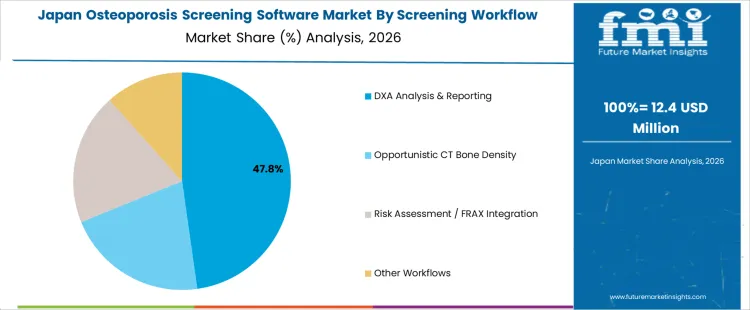
The osteoporosis screening software market in Japan is expected to grow at a CAGR of 7.5%. Japan’s aging population is a significant factor driving the demand for osteoporosis screening solutions. The country's focus on healthcare innovation and efficient medical practices ensures that osteoporosis detection and prevention will remain a priority. Despite a slower growth rate compared to other regions, Japan’s market for osteoporosis screening software benefits from high healthcare standards and strong government support for digital health technologies. The increasing awareness of bone health issues, coupled with Japan’s advanced medical infrastructure, provides a solid foundation for moderate market expansion.
What is the Competitive Landscape for the Osteoporosis Screening Software Market?
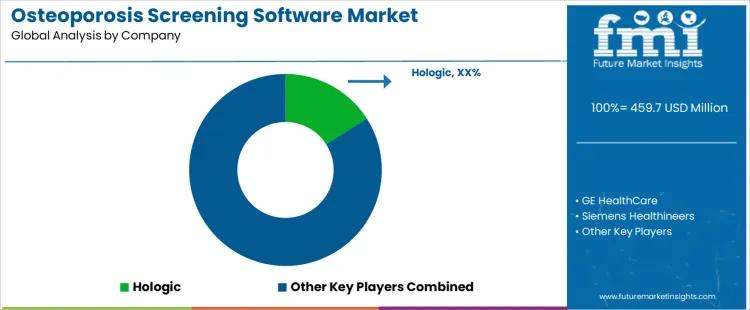
The osteoporosis screening software market is expanding as healthcare providers seek more efficient ways to diagnose bone health. Hologic leads the market with its advanced osteoporosis screening software, which integrates with high-resolution imaging systems to provide accurate, real-time assessments of bone density. Their comprehensive software solutions are widely used in clinical settings, positioning Hologic as a leader in the osteoporosis diagnostics field. GE HealthCare, Siemens Healthineers, and Fujifilm Healthcare are key competitors, each offering specialized software that supports bone mineral density testing. GE HealthCare integrates imaging and software solutions to streamline diagnostics, while Siemens Healthineers and Fujifilm Healthcare focus on delivering precision and improving clinical workflows through their osteoporosis screening technologies.
Philips, Canon Medical Systems, Mindray, Esaote, Carestream Health, and Agfa HealthCare contribute to the competitive landscape by offering a range of bone health screening solutions. Philips and Canon Medical Systems provide high-quality imaging systems with integrated software that enhances the accuracy of osteoporosis screenings. Mindray and Esaote focus on making diagnostics more accessible and affordable, offering solutions suitable for various healthcare environments. Carestream Health and Agfa HealthCare bring additional competition with their advanced imaging software and diagnostic tools, helping clinicians assess bone health efficiently. These companies compete on the basis of software integration, imaging quality, and the ability to deliver reliable osteoporosis screenings for improved patient care.
Key Players of the Osteoporosis Screening Software Market
- Hologic
- GE HealthCare
- Siemens Healthineers
- Fujifilm Healthcare
- Philips
- Canon Medical Systems
- Mindray
- Esaote
- Carestream Health
- Agfa HealthCare
Scope of the Report
| Items | Values |
|---|---|
| Quantitative Units (2026) | USD Million |
| Screening Workflow | DXA Analysis & Reporting, Opportunistic CT Bone Density, Risk Assessment / FRAX Integration, Other Workflows |
| Deployment | On-Premise, Cloud / SaaS, Hybrid |
| End User | Hospitals & Imaging Centers, Orthopedic & Endocrine Clinics, Primary Care Networks, Other Users |
| Monetization | Subscription, Perpetual License, Per-Scan / Usage Based |
| Companies | Hologic, GE HealthCare, Siemens Healthineers, Fujifilm Healthcare, Philips, Canon Medical Systems, Mindray, Esaote, Carestream Health, Agfa HealthCare |
| Regions Covered | North America, Latin America, Western Europe, Eastern Europe, South Asia and Pacific, East Asia, Middle East & Africa |
| Countries Covered | United States, Canada, Mexico, Brazil, Argentina, Germany, France, United Kingdom, Italy, Spain, Netherlands, China, India, Japan, South Korea, ANZ, GCC Countries, South Africa |
| Additional Attributes | Dollar by sales by screening workflow, deployment, end-user, monetization model, and region. Includes market trends in osteoporosis screening software, focusing on DXA analysis, CT bone density assessment, risk assessment, and FRAX integration. Highlights deployment models (on-premise, cloud/SaaS, hybrid) and monetization strategies (subscription, perpetual license, per-scan). Focus on cost-effectiveness, regulatory compliance, market share, and competitive positioning of key companies in osteoporosis screening solutions. |
Osteoporosis Screening Software Market Segmentation
Screening Workflow:
- DXA Analysis & Reporting
- Opportunistic CT Bone Density
- Risk Assessment / FRAX Integration
- Other Workflows
Deployment:
- On-Premise
- Cloud / SaaS
- Hybrid
End User:
- Hospitals & Imaging Centers
- Orthopedic & Endocrine Clinics
- Primary Care Networks
- Other Users
Monetization:
- Subscription
- Perpetual License
- Per-Scan / Usage Based
Region
- Asia Pacific
- China
- Japan
- South Korea
- India
- Australia & New Zealand
- ASEAN
- Rest of Asia Pacific
- Europe
- Germany
- United Kingdom
- France
- Italy
- Spain
- Nordic
- BENELUX
- Rest of Europe
- North America
- United States
- Canada
- Mexico
- Latin America
- Brazil
- Chile
- Rest of Latin America
- Middle East & Africa
- Kingdom of Saudi Arabia
- Other GCC Countries
- Turkey
- South Africa
- Other African Union
- Rest of Middle East & Africa
Frequently Asked Questions
How big is the osteoporosis screening software market in 2026?
The global osteoporosis screening software market is estimated to be valued at USD 459.7 million in 2026.
What will be the size of osteoporosis screening software market in 2036?
The market size for the osteoporosis screening software market is projected to reach USD 1,139.2 million by 2036.
How much will be the osteoporosis screening software market growth between 2026 and 2036?
The osteoporosis screening software market is expected to grow at a 9.5% CAGR between 2026 and 2036.
What are the key product types in the osteoporosis screening software market?
The key product types in osteoporosis screening software market are dxa analysis & reporting, opportunistic ct bone density, risk assessment / frax integration and other workflows.
Which deployment segment to contribute significant share in the osteoporosis screening software market in 2026?
In terms of deployment, on-premise segment to command 44.0% share in the osteoporosis screening software market in 2026.
Preview the report firsthand - request a free sample
Get SampleGet the brochure for pricing and purchase details.
Get PDFTable of Content
- Executive Summary
- Global Market Outlook
- Demand-side Trends
- Supply-side Trends
- Technology Roadmap Analysis
- Analysis and Recommendations
- Market Overview
- Market Coverage / Taxonomy
- Market Definition / Scope / Limitations
- Market Background
- Market Dynamics
- Drivers
- Restraints
- Opportunity
- Trends
- Scenario Forecast
- Demand in Optimistic Scenario
- Demand in Likely Scenario
- Demand in Conservative Scenario
- Opportunity Map Analysis
- Product Life Cycle Analysis
- Supply Chain Analysis
- Investment Feasibility Matrix
- Value Chain Analysis
- PESTLE and Porter’s Analysis
- Regulatory Landscape
- Regional Parent Market Outlook
- Production and Consumption Statistics
- Import and Export Statistics
- Market Dynamics
- Global Market Analysis 2021 to 2025 and Forecast, 2026 to 2036
- Historical Market Size Value (USD Million) Analysis, 2021 to 2025
- Current and Future Market Size Value (USD Million) Projections, 2026 to 2036
- Y-o-Y Growth Trend Analysis
- Absolute $ Opportunity Analysis
- Global Market Pricing Analysis 2021 to 2025 and Forecast 2026 to 2036
- Global Market Analysis 2021 to 2025 and Forecast 2026 to 2036, By Screening Workflow
- Introduction / Key Findings
- Historical Market Size Value (USD Million) Analysis By Screening Workflow , 2021 to 2025
- Current and Future Market Size Value (USD Million) Analysis and Forecast By Screening Workflow , 2026 to 2036
- DXA Analysis & Reporting
- Opportunistic CT Bone Density
- Risk Assessment / FRAX Integration
- Other Workflows
- Y-o-Y Growth Trend Analysis By Screening Workflow , 2021 to 2025
- Absolute $ Opportunity Analysis By Screening Workflow , 2026 to 2036
- Global Market Analysis 2021 to 2025 and Forecast 2026 to 2036, By Deployment
- Introduction / Key Findings
- Historical Market Size Value (USD Million) Analysis By Deployment, 2021 to 2025
- Current and Future Market Size Value (USD Million) Analysis and Forecast By Deployment, 2026 to 2036
- On-Premise
- Cloud / SaaS
- Hybrid
- Y-o-Y Growth Trend Analysis By Deployment, 2021 to 2025
- Absolute $ Opportunity Analysis By Deployment, 2026 to 2036
- Global Market Analysis 2021 to 2025 and Forecast 2026 to 2036, By End User
- Introduction / Key Findings
- Historical Market Size Value (USD Million) Analysis By End User, 2021 to 2025
- Current and Future Market Size Value (USD Million) Analysis and Forecast By End User, 2026 to 2036
- Hospitals & Imaging Centers
- Orthopedic & Endocrine Clinics
- Primary Care Networks
- Other Users
- Y-o-Y Growth Trend Analysis By End User, 2021 to 2025
- Absolute $ Opportunity Analysis By End User, 2026 to 2036
- Global Market Analysis 2021 to 2025 and Forecast 2026 to 2036, By Monetization
- Introduction / Key Findings
- Historical Market Size Value (USD Million) Analysis By Monetization, 2021 to 2025
- Current and Future Market Size Value (USD Million) Analysis and Forecast By Monetization, 2026 to 2036
- Subscription
- Perpetual License
- Per-Scan / Usage Based
- Y-o-Y Growth Trend Analysis By Monetization, 2021 to 2025
- Absolute $ Opportunity Analysis By Monetization, 2026 to 2036
- Global Market Analysis 2021 to 2025 and Forecast 2026 to 2036, By Region
- Introduction
- Historical Market Size Value (USD Million) Analysis By Region, 2021 to 2025
- Current Market Size Value (USD Million) Analysis and Forecast By Region, 2026 to 2036
- North America
- Latin America
- Western Europe
- Eastern Europe
- East Asia
- South Asia and Pacific
- Middle East & Africa
- Market Attractiveness Analysis By Region
- North America Market Analysis 2021 to 2025 and Forecast 2026 to 2036, By Country
- Historical Market Size Value (USD Million) Trend Analysis By Market Taxonomy, 2021 to 2025
- Market Size Value (USD Million) Forecast By Market Taxonomy, 2026 to 2036
- By Country
- USA
- Canada
- Mexico
- By Screening Workflow
- By Deployment
- By End User
- By Monetization
- By Country
- Market Attractiveness Analysis
- By Country
- By Screening Workflow
- By Deployment
- By End User
- By Monetization
- Key Takeaways
- Latin America Market Analysis 2021 to 2025 and Forecast 2026 to 2036, By Country
- Historical Market Size Value (USD Million) Trend Analysis By Market Taxonomy, 2021 to 2025
- Market Size Value (USD Million) Forecast By Market Taxonomy, 2026 to 2036
- By Country
- Brazil
- Chile
- Rest of Latin America
- By Screening Workflow
- By Deployment
- By End User
- By Monetization
- By Country
- Market Attractiveness Analysis
- By Country
- By Screening Workflow
- By Deployment
- By End User
- By Monetization
- Key Takeaways
- Western Europe Market Analysis 2021 to 2025 and Forecast 2026 to 2036, By Country
- Historical Market Size Value (USD Million) Trend Analysis By Market Taxonomy, 2021 to 2025
- Market Size Value (USD Million) Forecast By Market Taxonomy, 2026 to 2036
- By Country
- Germany
- UK
- Italy
- Spain
- France
- Nordic
- BENELUX
- Rest of Western Europe
- By Screening Workflow
- By Deployment
- By End User
- By Monetization
- By Country
- Market Attractiveness Analysis
- By Country
- By Screening Workflow
- By Deployment
- By End User
- By Monetization
- Key Takeaways
- Eastern Europe Market Analysis 2021 to 2025 and Forecast 2026 to 2036, By Country
- Historical Market Size Value (USD Million) Trend Analysis By Market Taxonomy, 2021 to 2025
- Market Size Value (USD Million) Forecast By Market Taxonomy, 2026 to 2036
- By Country
- Russia
- Poland
- Hungary
- Balkan & Baltic
- Rest of Eastern Europe
- By Screening Workflow
- By Deployment
- By End User
- By Monetization
- By Country
- Market Attractiveness Analysis
- By Country
- By Screening Workflow
- By Deployment
- By End User
- By Monetization
- Key Takeaways
- East Asia Market Analysis 2021 to 2025 and Forecast 2026 to 2036, By Country
- Historical Market Size Value (USD Million) Trend Analysis By Market Taxonomy, 2021 to 2025
- Market Size Value (USD Million) Forecast By Market Taxonomy, 2026 to 2036
- By Country
- China
- Japan
- South Korea
- By Screening Workflow
- By Deployment
- By End User
- By Monetization
- By Country
- Market Attractiveness Analysis
- By Country
- By Screening Workflow
- By Deployment
- By End User
- By Monetization
- Key Takeaways
- South Asia and Pacific Market Analysis 2021 to 2025 and Forecast 2026 to 2036, By Country
- Historical Market Size Value (USD Million) Trend Analysis By Market Taxonomy, 2021 to 2025
- Market Size Value (USD Million) Forecast By Market Taxonomy, 2026 to 2036
- By Country
- India
- ASEAN
- Australia & New Zealand
- Rest of South Asia and Pacific
- By Screening Workflow
- By Deployment
- By End User
- By Monetization
- By Country
- Market Attractiveness Analysis
- By Country
- By Screening Workflow
- By Deployment
- By End User
- By Monetization
- Key Takeaways
- Middle East & Africa Market Analysis 2021 to 2025 and Forecast 2026 to 2036, By Country
- Historical Market Size Value (USD Million) Trend Analysis By Market Taxonomy, 2021 to 2025
- Market Size Value (USD Million) Forecast By Market Taxonomy, 2026 to 2036
- By Country
- Kingdom of Saudi Arabia
- Other GCC Countries
- Turkiye
- South Africa
- Other African Union
- Rest of Middle East & Africa
- By Screening Workflow
- By Deployment
- By End User
- By Monetization
- By Country
- Market Attractiveness Analysis
- By Country
- By Screening Workflow
- By Deployment
- By End User
- By Monetization
- Key Takeaways
- Key Countries Market Analysis
- USA
- Pricing Analysis
- Market Share Analysis, 2025
- By Screening Workflow
- By Deployment
- By End User
- By Monetization
- Canada
- Pricing Analysis
- Market Share Analysis, 2025
- By Screening Workflow
- By Deployment
- By End User
- By Monetization
- Mexico
- Pricing Analysis
- Market Share Analysis, 2025
- By Screening Workflow
- By Deployment
- By End User
- By Monetization
- Brazil
- Pricing Analysis
- Market Share Analysis, 2025
- By Screening Workflow
- By Deployment
- By End User
- By Monetization
- Chile
- Pricing Analysis
- Market Share Analysis, 2025
- By Screening Workflow
- By Deployment
- By End User
- By Monetization
- Germany
- Pricing Analysis
- Market Share Analysis, 2025
- By Screening Workflow
- By Deployment
- By End User
- By Monetization
- UK
- Pricing Analysis
- Market Share Analysis, 2025
- By Screening Workflow
- By Deployment
- By End User
- By Monetization
- Italy
- Pricing Analysis
- Market Share Analysis, 2025
- By Screening Workflow
- By Deployment
- By End User
- By Monetization
- Spain
- Pricing Analysis
- Market Share Analysis, 2025
- By Screening Workflow
- By Deployment
- By End User
- By Monetization
- France
- Pricing Analysis
- Market Share Analysis, 2025
- By Screening Workflow
- By Deployment
- By End User
- By Monetization
- India
- Pricing Analysis
- Market Share Analysis, 2025
- By Screening Workflow
- By Deployment
- By End User
- By Monetization
- ASEAN
- Pricing Analysis
- Market Share Analysis, 2025
- By Screening Workflow
- By Deployment
- By End User
- By Monetization
- Australia & New Zealand
- Pricing Analysis
- Market Share Analysis, 2025
- By Screening Workflow
- By Deployment
- By End User
- By Monetization
- China
- Pricing Analysis
- Market Share Analysis, 2025
- By Screening Workflow
- By Deployment
- By End User
- By Monetization
- Japan
- Pricing Analysis
- Market Share Analysis, 2025
- By Screening Workflow
- By Deployment
- By End User
- By Monetization
- South Korea
- Pricing Analysis
- Market Share Analysis, 2025
- By Screening Workflow
- By Deployment
- By End User
- By Monetization
- Russia
- Pricing Analysis
- Market Share Analysis, 2025
- By Screening Workflow
- By Deployment
- By End User
- By Monetization
- Poland
- Pricing Analysis
- Market Share Analysis, 2025
- By Screening Workflow
- By Deployment
- By End User
- By Monetization
- Hungary
- Pricing Analysis
- Market Share Analysis, 2025
- By Screening Workflow
- By Deployment
- By End User
- By Monetization
- Kingdom of Saudi Arabia
- Pricing Analysis
- Market Share Analysis, 2025
- By Screening Workflow
- By Deployment
- By End User
- By Monetization
- Turkiye
- Pricing Analysis
- Market Share Analysis, 2025
- By Screening Workflow
- By Deployment
- By End User
- By Monetization
- South Africa
- Pricing Analysis
- Market Share Analysis, 2025
- By Screening Workflow
- By Deployment
- By End User
- By Monetization
- USA
- Market Structure Analysis
- Competition Dashboard
- Competition Benchmarking
- Market Share Analysis of Top Players
- By Regional
- By Screening Workflow
- By Deployment
- By End User
- By Monetization
- Competition Analysis
- Competition Deep Dive
- Hologic
- Overview
- Product Portfolio
- Profitability by Market Segments (Product/Age /Sales Channel/Region)
- Sales Footprint
- Strategy Overview
- Marketing Strategy
- Product Strategy
- Channel Strategy
- GE HealthCare
- Siemens Healthineers
- Fujifilm Healthcare
- Philips
- Canon Medical Systems
- Mindray
- Esaote
- Carestream Health
- Agfa HealthCare
- Hologic
- Competition Deep Dive
- Assumptions & Acronyms Used
- Research Methodology


