

- Industry Size (2026)
- USD 3600.0 Mn
- Forecast (2036)
- USD 5380.3 Mn
- CAGR (2026 to 2036)
- 4.1%
Passenger Car Hub Bearings Market Forecast and Outlook (2026-2036)
The passenger car hub bearings market is projected to be valued at USD 3,600.0 million in 2026 and is set to reach USD 5,380.3 million by 2036, growing at a CAGR of 4.1%. As global automotive production continues to rise, particularly with the transition toward electric vehicles (EVs) and hybrid electric vehicles (HEVs), the demand for high-performance, durable, and lightweight hub bearings is increasing. Automotive manufacturers are adopting innovative hub bearing solutions to meet stricter vehicle performance standards, including higher load capacities, enhanced ride quality, and reduced noise, vibration, and harshness (NVH). This market expansion is also fueled by the need to upgrade aging vehicle fleets and the rise of autonomous driving technologies that require precise components for stable wheel rotation and reduced vibration at sensor points.
The evolving automotive sector, including a shift toward electric powertrains and the adoption of active safety systems, is influencing the demand for hub bearings that can withstand dynamic cornering forces and regenerative braking loads. Manufacturers are focusing on advancing bearing materials and sealing technologies to improve performance in diverse road conditions, ensuring longer lifespans and reduced maintenance costs. The shift towards sustainable, energy-efficient solutions has further propelled growth, with stakeholders in the automotive supply chain focusing on lightweight components that contribute to overall fuel efficiency and vehicle longevity. As consumer expectations rise for better ride quality and durability, the market for passenger car hub bearings is set to grow, especially in emerging markets where automotive production is ramping up.
Quick Stats for Passenger Car Hub Bearings Market
- Passenger Car Hub Bearings Market Value (2026): USD 3,600.0 million
- Passenger Car Hub Bearings Market Forecast Value (2036): USD 5,380.3 million
- Passenger Car Hub Bearings Market Forecast CAGR 2026 to 2036: 4.1%
- Leading Hub Bearing Generation by Demand Share: Gen 3 Hub Units
- Fastest-Growing Countries: India, China, Indonesia, Mexico, Vietnam
- Top Players in Global Demand: SKF, Schaeffler, NSK, NTN, JTEKT (Koyo)
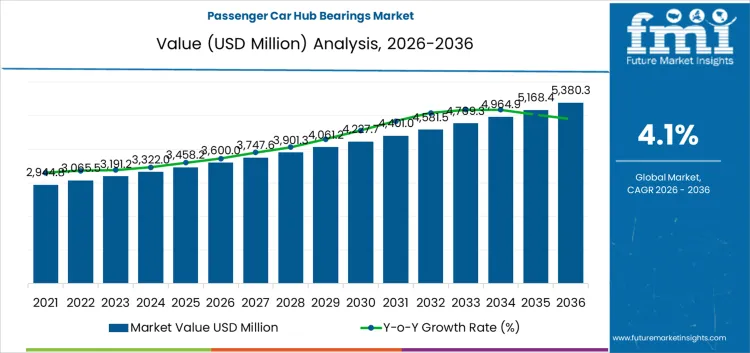
Passenger Car Hub Bearings Market Key Takeaways
| Metric | Value |
|---|---|
| Market Value (2026) | USD 3,600.0 million |
| Market Forecast Value (2036) | USD 5,380.3 million |
| Forecast CAGR (2026-2036) | 4.1% |
Why is the Demand for Passenger Car Hub Bearings Market Growing?
Demand for passenger car hub bearings is rising as automotive manufacturers upgrade wheel end components to support higher vehicle speeds, increased load capacity and enhanced ride quality in modern cars. Vehicles with electrified powertrains generate unique torque characteristics that place different stresses on hub assemblies compared with conventional engines. Original equipment manufacturers specify advanced bearing solutions that can withstand lateral and radial forces while maintaining alignment under regenerative braking loads and dynamic cornering demands. Growth in autonomous driving features and active safety systems requires precision components that contribute to stable wheel rotation and reduced vibration at sensor mounting points.
Urban traffic environments with frequent starts and stops intensify wear on hub bearings, prompting engineers to select robust designs that extend service intervals and reduce downtime during routine maintenance. Market expansion reflects stronger aftermarket demand as vehicle parc ages and owners seek reliable replacements that maintain performance standards. Repair facilities and parts distributors offer high quality hub bearings matched to specific chassis configurations, helping preserve wheel geometry and steering responsiveness. Regulatory attention to vehicle safety inspections emphasizes compliant parts that meet noise vibration harshness criteria. Bearing manufacturers invest in materials and sealing technologies that improve contamination resistance and thermal performance, supporting longer life across seasonal road conditions.
How Are the Segments Classified in the Passenger Car Hub Bearings Market?
The passenger car hub bearings market is driven by the evolving automotive industry, with increasing demand for more efficient, durable, and lightweight components. Innovations in hub bearing designs and materials are closely tied to advancements in vehicle powertrains and the push for lower emissions, higher performance, and improved vehicle efficiency. As the market adapts to diverse powertrain types and increasingly demanding environmental standards, manufacturers are focusing on reducing friction and improving lifespan through the development of specialized bearing units and coatings.
Which hub bearing generation holds the largest share of demand?
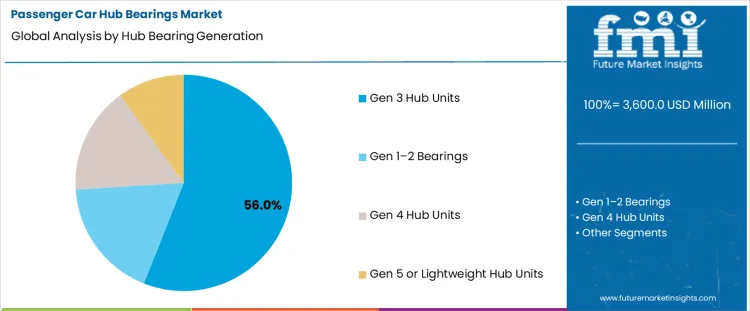
Gen 3 hub units dominate the market with a 56.0% share due to their balance of durability, efficiency, and cost-effectiveness. These bearings are well-suited to modern passenger cars, offering the necessary performance for both standard and advanced vehicles. They provide enhanced load-bearing capacities, smoother operation, and better sealing capabilities, making them a popular choice for automakers prioritizing vehicle reliability and longevity. The widespread adoption of these units in internal combustion engine (ICE) and hybrid vehicles strengthens their dominant position.
Key Points
- Balances durability and cost-effectiveness for mass-market vehicles
- Provides enhanced load-bearing and sealing capacities
- Commonly used in both conventional and hybrid vehicles
Which powertrain type accounts for the highest share of demand?
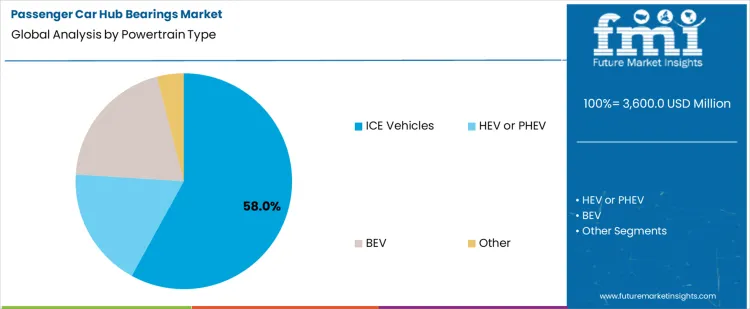
Internal combustion engine (ICE) vehicles lead powertrain demand, capturing 58.0% of the market. ICE vehicles remain the dominant segment due to their large share of the global automotive fleet and ongoing demand in regions where electric vehicle infrastructure is still developing. Hub bearings in these vehicles require robust designs to support the stresses of traditional powertrains, particularly in terms of heat and load handling. Despite the growth of electric and hybrid vehicles, ICE vehicles continue to drive the majority of demand for hub bearings.
Key Points
- Dominated by traditional vehicle fleets with ICE powertrains
- Requires robust bearings capable of handling higher stresses
- Continues to account for the majority of global vehicle sales
Which design and material type holds the highest share of demand?
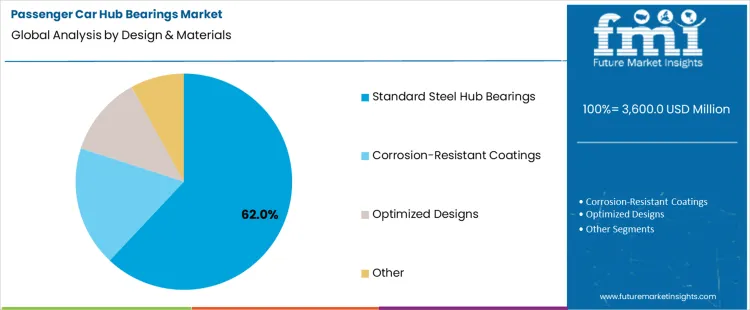
Standard steel hub bearings account for 62.0% of the demand, primarily due to their proven reliability, strength, and cost-efficiency. These bearings are ideal for a wide range of passenger vehicles, offering high performance without the need for specialized coatings or advanced designs. Standard steel is favored for its affordability and ability to meet the demands of conventional vehicles without compromising on durability. The ongoing reliance on these bearings in both new and replacement markets solidifies their leading share.
Key Points
- Reliable, cost-efficient, and strong for mass-market vehicles
- Meets the performance demands of conventional passenger cars
- Widely used in both new vehicle manufacturing and aftermarket applications
What are the Key Dynamics in the passenger car hub bearings market?
Demand dynamics in the passenger car hub bearings market reflect the need for durability, precision, and low friction in automotive drivetrains and wheel systems. Global activity centers on rising vehicle production, increasing consumer preference for quieter and smoother rides, and expanding demand for electric vehicles (EVs). Value formation depends on bearing design, material quality, and integration with vehicle suspension and drivetrain systems. Purchasing decisions align with cost efficiency, vehicle performance requirements, and environmental regulations driving the need for lightweight and energy-efficient solutions.
How do vehicle performance and weight reduction requirements shape adoption?
Adoption increases as automakers prioritize performance optimization, particularly in reducing rolling resistance and improving fuel efficiency. Demand strengthens in electric and hybrid vehicles, where energy consumption reduction is critical for maximizing range. Automotive manufacturers select hub bearings that deliver smooth rotation, minimize heat generation, and withstand high load conditions for extended periods. As lightweight materials and energy efficiency gain importance, bearing designs evolve to meet these needs without compromising durability. Noise, vibration, and harshness (NVH) reduction drives the selection of high-quality bearings, improving ride comfort. EV manufacturers focus on specialized bearings that align with the unique drivetrain demands of electric motors and regenerative braking systems.
How do raw material costs and technological complexity influence market scalability?
Market scalability faces constraints from raw material cost fluctuations and the technical complexity of high-performance bearings. Demand encounters resistance where prices for advanced materials, such as high-grade steel or ceramic composites, elevate production costs. These materials, while enhancing durability and efficiency, require specialized manufacturing processes, limiting supplier options and raising costs for automakers. Technological challenges in designing hub bearings that balance strength, weight, and precision increase R&D expenses for manufacturers. The need for higher precision and quality control in mass production complicates scaling, particularly for smaller manufacturers. Regulatory pressures for sustainability and longer vehicle lifespans further add complexity, as automakers seek to meet both performance and environmental standards.
How Is Demand for the Passenger Car Hub Bearings Market Evolving Globally?
Global demand for passenger car hub bearings is growing as the automotive industry shifts towards lightweight, high-performance components to improve fuel efficiency and reduce emissions. Expansion reflects increasing passenger car production, technological advancements in bearing design, and the push for higher reliability in safety-critical systems. Demand remains driven by the adoption of electric vehicles (EVs) and evolving automotive manufacturing standards. India records 6.0% CAGR, China records 5.4% CAGR, Indonesia records 5.2% CAGR, Mexico records 4.7% CAGR, and Vietnam records 4.9% CAGR. Adoption is supported by technological advancements in bearing materials, manufacturing precision, and growing automotive production in emerging markets.
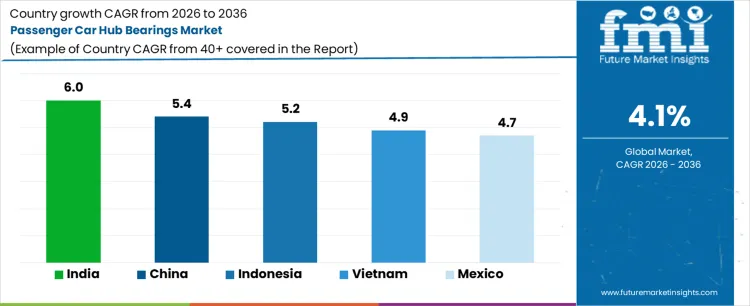
| Country | CAGR (%) |
|---|---|
| India | 6.0% |
| China | 5.4% |
| Indonesia | 5.2% |
| Mexico | 4.7% |
| Vietnam | 4.9% |
What is driving passenger car hub bearings demand in India?
Passenger car hub bearings demand in India is expanding as the automotive industry experiences significant growth, driven by rising vehicle ownership and increasing production volumes. Growth at 6.0% CAGR reflects strong domestic demand, with a shift towards lightweight and more efficient components for improving fuel economy. The automotive sector is also incorporating better-performing hub bearings as vehicles become more sophisticated, particularly with the growing presence of electric vehicles. The expansion of manufacturing capabilities in the country, along with infrastructure improvements and government support for EV adoption, further fuels demand for high-quality automotive components such as hub bearings.
- Rising vehicle ownership and production
- Growing focus on lightweight and efficient components
- Government incentives for EV adoption
- Expansion of automotive manufacturing capabilities
What is driving passenger car hub bearings demand in China?
Demand for passenger car hub bearings in China is increasing as the country strengthens its position as a global automotive manufacturing leader. Growth at 5.4% CAGR reflects China’s expanding passenger car production capacity, both for domestic consumption and export. The adoption of advanced materials and technologies to enhance vehicle safety and performance is further driving the demand for hub bearings. The growing focus on electric vehicles, which require different bearing configurations, the demand for specialized hub bearings for these vehicles is also rising. China’s automotive industry is expected to remain a key player in global automotive parts production.
- Large-scale automotive production capacity
- Focus on electric vehicle manufacturing
- Adoption of advanced bearing materials and technologies
- Expansion of export-focused vehicle production
What factors are shaping sales of passenger car hub bearings in Indonesia?
Sales of passenger car hub bearings in Indonesia are rising as local automotive manufacturing grows and more consumers enter the automotive market. The 5.2% CAGR reflects Indonesia's strong automotive market, driven by both domestic consumption and the rise of the local manufacturing sector. With rising demand for more fuel-efficient vehicles, the need for higher-performing hub bearings is increasing. The government initiatives aimed at promoting the automotive sector and increasing electric vehicle production will drive further adoption of specialized components such as hub bearings. Manufacturers are focused on enhancing bearing durability and performance to meet consumer and regulatory expectations.
- Growing automotive market in Southeast Asia
- Government support for local manufacturing
- Increasing demand for fuel-efficient vehicles
- Focus on enhancing bearing performance and durability
What factors are shaping passenger car hub bearings sales in Mexico?
Passenger car hub bearings sales in Mexico are increasing as the automotive industry strengthens and the country solidifies its position as a major production hub for both domestic and international markets. Growth at 4.7% CAGR is driven by the expansion of automotive assembly plants and the demand for both local and export vehicles. As the country’s automotive sector shifts towards the production of more fuel-efficient and technologically advanced vehicles, the demand for high-quality hub bearings is rising. Trade agreements such as the USMCA support Mexico's automotive exports, further boosting the demand for automotive components such as hub bearings.
- Strong automotive export industry
- Rising production of fuel-efficient vehicles
- Focus on technological advancement in manufacturing
- Support from trade agreements and industry incentives
How is passenger car hub bearings demand in Vietnam evolving?
Passenger car hub bearings demand in Vietnam is growing steadily, supported by the expansion of the automotive manufacturing sector. With a CAGR of 4.9%, the Vietnamese automotive market is developing, fueled by increasing consumer purchasing power and growing demand for affordable, fuel-efficient cars. As local manufacturers continue to scale production and focus on improving vehicle quality, demand for high-performance, durable components such as hub bearings is rising. The government’s push to modernize infrastructure and support the automotive industry further contributes to market growth, while the growing presence of electric vehicle manufacturers in the country will also influence future demand for specialized bearings.
- Growth of the Vietnamese automotive market
- Rising demand for fuel-efficient vehicles
- Government support for infrastructure and industry development
- Increasing focus on vehicle quality and performance
What is the competitive landscape of demand for the passenger car hub bearings market globally?
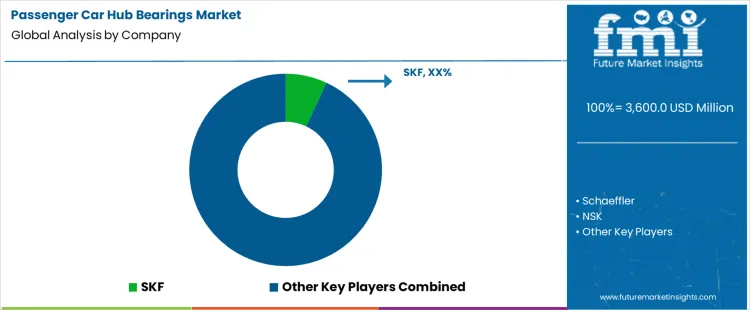
Demand for passenger car hub bearings is driven by automotive industry growth, increasing demand for fuel-efficient vehicles, and advancements in vehicle electrification. Buyers evaluate bearing durability, load capacity, noise levels, sealing performance, and friction reduction capabilities. Procurement behavior emphasizes reliable suppliers with consistent product quality, cost-effectiveness, and compliance with OEM specifications. Purchasing decisions prioritize suppliers with advanced technology, product innovation, and the ability to meet increasing demand for lighter, more energy-efficient components. Trend in the passenger car hub bearings market reflects the shift towards higher-performance bearings, adoption of electric vehicles (EVs), and the need for lower maintenance solutions.
SKF leads competitive positioning through advanced bearing technology, extensive global presence, and long-standing relationships with major OEMs. Schaeffler competes with its strong product portfolio, engineering expertise, and ability to deliver high-quality bearings tailored to automotive requirements. NSK maintains relevance with its focus on precision manufacturing and performance-driven designs for global automotive players. NTN supports demand with a broad range of bearing solutions and integrated offerings for both traditional and electric vehicles. Timken participates by offering reliable, high-performance bearings with strong customer support across various vehicle platforms. Competitive differentiation depends on product innovation, load capacity optimization, noise reduction, and ability to support electric vehicle requirements.
Key Players in the Passenger Car Hub Bearings Market
- SKF
- Schaeffler
- NSK
- NTN
- JTEKT (Koyo)
- Timken
- ILJIN
- GMB
- C&U Group
- ZWZ
Scope of the Report
| Items | Values |
|---|---|
| Quantitative Units | USD million |
| Hub Bearing Generation | Gen 3 Hub Units; Gen 1–2 Bearings; Gen 4 Hub Units; Gen 5 or Lightweight Hub Units |
| Powertrain Type | ICE Vehicles; HEV or PHEV; BEV; Other |
| Design & Materials | Standard Steel Hub Bearings; Corrosion-Resistant Coatings; Optimized Designs; Other |
| Sales Channel | OEM or Line-Fit; Aftermarket Replacement; Other |
| Regions Covered | Asia Pacific, Europe, North America, Latin America, Middle East & Africa |
| Countries Covered | India, China, Indonesia, Mexico, Vietnam, and 40+ countries |
| Key Companies Profiled | SKF; Schaeffler; NSK; NTN; JTEKT (Koyo); Timken; ILJIN; GMB; C&U Group; ZWZ |
| Additional Attributes | Dollar sales by hub bearing generation, powertrain type, design & materials, and sales channel; bearing load capacity, rotational efficiency, and durability performance across standard steel and corrosion-resistant materials; integration with hybrid, electric, and internal combustion vehicle powertrains; design optimization for lightweighting and noise, vibration, and harshness (NVH) reduction; procurement patterns spanning OEM contracts, aftermarket replacement, and global bearing supplier networks. |
Passenger Car Hub Bearings Market by Segment
Hub Bearing Generation:
- Gen 3 Hub Units
- Gen 1-2 Bearings
- Gen 4 Hub Units
- Gen 5 or Lightweight Hub Units
Powertrain Type:
- ICE Vehicles
- HEV or PHEV
- BEV
- Other
Design & Materials:
- Standard Steel Hub Bearings
- Corrosion-Resistant Coatings
- Optimized Designs
- Other
Sales Channel:
- OEM or Line-Fit
- Aftermarket Replacement
- Other
Region:
- Asia Pacific
- China
- Japan
- South Korea
- India
- Australia & New Zealand
- ASEAN
- Rest of Asia Pacific
- Europe
- Germany
- United Kingdom
- France
- Italy
- Spain
- Nordic
- BENELUX
- Rest of Europe
- North America
- United States
- Canada
- Mexico
- Latin America
- Brazil
- Chile
- Rest of Latin America
- Middle East & Africa
- Kingdom of Saudi Arabia
- Other GCC Countries
- Turkey
- South Africa
- Other African Union
- Rest of Middle East & Africa
Bibliography
- International Organization for Standardization. (2023). Rolling bearings—Dynamic load ratings and rating life (ISO 281:2007). ISO.
- International Energy Agency. (2023). Global EV outlook 2023: Catching up with climate ambitions. International Energy Agency.
- Organization for Economic Co-operation and Development. (2023). Infrastructure investment outlook 2023: Construction, mining, and equipment demand. OECD Publishing.
Frequently Asked Questions
How big is the passenger car hub bearings market in 2026?
The global passenger car hub bearings market is estimated to be valued at USD 3,600.0 million in 2026.
What will be the size of passenger car hub bearings market in 2036?
The market size for the passenger car hub bearings market is projected to reach USD 5,380.3 million by 2036.
How much will be the passenger car hub bearings market growth between 2026 and 2036?
The passenger car hub bearings market is expected to grow at a 4.1% CAGR between 2026 and 2036.
What are the key product types in the passenger car hub bearings market?
The key product types in passenger car hub bearings market are gen 3 hub units, gen 1–2 bearings, gen 4 hub units and gen 5 or lightweight hub units.
Which powertrain type segment to contribute significant share in the passenger car hub bearings market in 2026?
In terms of powertrain type, ice vehicles segment to command 58.0% share in the passenger car hub bearings market in 2026.
Preview the report firsthand - request a free sample
Get SampleGet the brochure for pricing and purchase details.
Get PDFTable of Content
- Executive Summary
- Global Market Outlook
- Demand-side Trends
- Supply-side Trends
- Technology Roadmap Analysis
- Analysis and Recommendations
- Market Overview
- Market Coverage / Taxonomy
- Market Definition / Scope / Limitations
- Market Background
- Market Dynamics
- Drivers
- Restraints
- Opportunity
- Trends
- Scenario Forecast
- Demand in Optimistic Scenario
- Demand in Likely Scenario
- Demand in Conservative Scenario
- Opportunity Map Analysis
- Product Life Cycle Analysis
- Supply Chain Analysis
- Investment Feasibility Matrix
- Value Chain Analysis
- PESTLE and Porter’s Analysis
- Regulatory Landscape
- Regional Parent Market Outlook
- Production and Consumption Statistics
- Import and Export Statistics
- Market Dynamics
- Global Market Analysis 2021 to 2025 and Forecast, 2026 to 2036
- Historical Market Size Value (USD Million) Analysis, 2021 to 2025
- Current and Future Market Size Value (USD Million) Projections, 2026 to 2036
- Y-o-Y Growth Trend Analysis
- Absolute $ Opportunity Analysis
- Global Market Pricing Analysis 2021 to 2025 and Forecast 2026 to 2036
- Global Market Analysis 2021 to 2025 and Forecast 2026 to 2036, By Hub Bearing Generation
- Introduction / Key Findings
- Historical Market Size Value (USD Million) Analysis By Hub Bearing Generation , 2021 to 2025
- Current and Future Market Size Value (USD Million) Analysis and Forecast By Hub Bearing Generation , 2026 to 2036
- Gen 3 Hub Value (USD Million)s
- Gen 1-2 Bearings
- Gen 4 Hub Value (USD Million)s
- Gen 5 or Lightweight Hub Value (USD Million)s
- Gen 3 Hub Value (USD Million)s
- Y-o-Y Growth Trend Analysis By Hub Bearing Generation , 2021 to 2025
- Absolute $ Opportunity Analysis By Hub Bearing Generation , 2026 to 2036
- Global Market Analysis 2021 to 2025 and Forecast 2026 to 2036, By Powertrain Type
- Introduction / Key Findings
- Historical Market Size Value (USD Million) Analysis By Powertrain Type, 2021 to 2025
- Current and Future Market Size Value (USD Million) Analysis and Forecast By Powertrain Type, 2026 to 2036
- ICE Vehicles
- HEV or PHEV
- BEV
- Other
- ICE Vehicles
- Y-o-Y Growth Trend Analysis By Powertrain Type, 2021 to 2025
- Absolute $ Opportunity Analysis By Powertrain Type, 2026 to 2036
- Global Market Analysis 2021 to 2025 and Forecast 2026 to 2036, By Design & Materials
- Introduction / Key Findings
- Historical Market Size Value (USD Million) Analysis By Design & Materials, 2021 to 2025
- Current and Future Market Size Value (USD Million) Analysis and Forecast By Design & Materials, 2026 to 2036
- Standard Steel Hub Bearings
- Corrosion-Resistant Coatings
- Optimized Designs
- Other
- Standard Steel Hub Bearings
- Y-o-Y Growth Trend Analysis By Design & Materials, 2021 to 2025
- Absolute $ Opportunity Analysis By Design & Materials, 2026 to 2036
- Global Market Analysis 2021 to 2025 and Forecast 2026 to 2036, By Sales Channel
- Introduction / Key Findings
- Historical Market Size Value (USD Million) Analysis By Sales Channel, 2021 to 2025
- Current and Future Market Size Value (USD Million) Analysis and Forecast By Sales Channel, 2026 to 2036
- OEM or Line-Fit
- Aftermarket Replacement
- Other
- OEM or Line-Fit
- Y-o-Y Growth Trend Analysis By Sales Channel, 2021 to 2025
- Absolute $ Opportunity Analysis By Sales Channel, 2026 to 2036
- Global Market Analysis 2021 to 2025 and Forecast 2026 to 2036, By Region
- Introduction
- Historical Market Size Value (USD Million) Analysis By Region, 2021 to 2025
- Current Market Size Value (USD Million) Analysis and Forecast By Region, 2026 to 2036
- North America
- Latin America
- Western Europe
- Eastern Europe
- East Asia
- South Asia and Pacific
- Middle East & Africa
- Market Attractiveness Analysis By Region
- North America Market Analysis 2021 to 2025 and Forecast 2026 to 2036, By Country
- Historical Market Size Value (USD Million) Trend Analysis By Market Taxonomy, 2021 to 2025
- Market Size Value (USD Million) Forecast By Market Taxonomy, 2026 to 2036
- By Country
- USA
- Canada
- Mexico
- By Hub Bearing Generation
- By Powertrain Type
- By Design & Materials
- By Sales Channel
- By Country
- Market Attractiveness Analysis
- By Country
- By Hub Bearing Generation
- By Powertrain Type
- By Design & Materials
- By Sales Channel
- Key Takeaways
- Latin America Market Analysis 2021 to 2025 and Forecast 2026 to 2036, By Country
- Historical Market Size Value (USD Million) Trend Analysis By Market Taxonomy, 2021 to 2025
- Market Size Value (USD Million) Forecast By Market Taxonomy, 2026 to 2036
- By Country
- Brazil
- Chile
- Rest of Latin America
- By Hub Bearing Generation
- By Powertrain Type
- By Design & Materials
- By Sales Channel
- By Country
- Market Attractiveness Analysis
- By Country
- By Hub Bearing Generation
- By Powertrain Type
- By Design & Materials
- By Sales Channel
- Key Takeaways
- Western Europe Market Analysis 2021 to 2025 and Forecast 2026 to 2036, By Country
- Historical Market Size Value (USD Million) Trend Analysis By Market Taxonomy, 2021 to 2025
- Market Size Value (USD Million) Forecast By Market Taxonomy, 2026 to 2036
- By Country
- Germany
- UK
- Italy
- Spain
- France
- Nordic
- BENELUX
- Rest of Western Europe
- By Hub Bearing Generation
- By Powertrain Type
- By Design & Materials
- By Sales Channel
- By Country
- Market Attractiveness Analysis
- By Country
- By Hub Bearing Generation
- By Powertrain Type
- By Design & Materials
- By Sales Channel
- Key Takeaways
- Eastern Europe Market Analysis 2021 to 2025 and Forecast 2026 to 2036, By Country
- Historical Market Size Value (USD Million) Trend Analysis By Market Taxonomy, 2021 to 2025
- Market Size Value (USD Million) Forecast By Market Taxonomy, 2026 to 2036
- By Country
- Russia
- Poland
- Hungary
- Balkan & Baltic
- Rest of Eastern Europe
- By Hub Bearing Generation
- By Powertrain Type
- By Design & Materials
- By Sales Channel
- By Country
- Market Attractiveness Analysis
- By Country
- By Hub Bearing Generation
- By Powertrain Type
- By Design & Materials
- By Sales Channel
- Key Takeaways
- East Asia Market Analysis 2021 to 2025 and Forecast 2026 to 2036, By Country
- Historical Market Size Value (USD Million) Trend Analysis By Market Taxonomy, 2021 to 2025
- Market Size Value (USD Million) Forecast By Market Taxonomy, 2026 to 2036
- By Country
- China
- Japan
- South Korea
- By Hub Bearing Generation
- By Powertrain Type
- By Design & Materials
- By Sales Channel
- By Country
- Market Attractiveness Analysis
- By Country
- By Hub Bearing Generation
- By Powertrain Type
- By Design & Materials
- By Sales Channel
- Key Takeaways
- South Asia and Pacific Market Analysis 2021 to 2025 and Forecast 2026 to 2036, By Country
- Historical Market Size Value (USD Million) Trend Analysis By Market Taxonomy, 2021 to 2025
- Market Size Value (USD Million) Forecast By Market Taxonomy, 2026 to 2036
- By Country
- India
- ASEAN
- Australia & New Zealand
- Rest of South Asia and Pacific
- By Hub Bearing Generation
- By Powertrain Type
- By Design & Materials
- By Sales Channel
- By Country
- Market Attractiveness Analysis
- By Country
- By Hub Bearing Generation
- By Powertrain Type
- By Design & Materials
- By Sales Channel
- Key Takeaways
- Middle East & Africa Market Analysis 2021 to 2025 and Forecast 2026 to 2036, By Country
- Historical Market Size Value (USD Million) Trend Analysis By Market Taxonomy, 2021 to 2025
- Market Size Value (USD Million) Forecast By Market Taxonomy, 2026 to 2036
- By Country
- Kingdom of Saudi Arabia
- Other GCC Countries
- Turkiye
- South Africa
- Other African Union
- Rest of Middle East & Africa
- By Hub Bearing Generation
- By Powertrain Type
- By Design & Materials
- By Sales Channel
- By Country
- Market Attractiveness Analysis
- By Country
- By Hub Bearing Generation
- By Powertrain Type
- By Design & Materials
- By Sales Channel
- Key Takeaways
- Key Countries Market Analysis
- USA
- Pricing Analysis
- Market Share Analysis, 2025
- By Hub Bearing Generation
- By Powertrain Type
- By Design & Materials
- By Sales Channel
- Canada
- Pricing Analysis
- Market Share Analysis, 2025
- By Hub Bearing Generation
- By Powertrain Type
- By Design & Materials
- By Sales Channel
- Mexico
- Pricing Analysis
- Market Share Analysis, 2025
- By Hub Bearing Generation
- By Powertrain Type
- By Design & Materials
- By Sales Channel
- Brazil
- Pricing Analysis
- Market Share Analysis, 2025
- By Hub Bearing Generation
- By Powertrain Type
- By Design & Materials
- By Sales Channel
- Chile
- Pricing Analysis
- Market Share Analysis, 2025
- By Hub Bearing Generation
- By Powertrain Type
- By Design & Materials
- By Sales Channel
- Germany
- Pricing Analysis
- Market Share Analysis, 2025
- By Hub Bearing Generation
- By Powertrain Type
- By Design & Materials
- By Sales Channel
- UK
- Pricing Analysis
- Market Share Analysis, 2025
- By Hub Bearing Generation
- By Powertrain Type
- By Design & Materials
- By Sales Channel
- Italy
- Pricing Analysis
- Market Share Analysis, 2025
- By Hub Bearing Generation
- By Powertrain Type
- By Design & Materials
- By Sales Channel
- Spain
- Pricing Analysis
- Market Share Analysis, 2025
- By Hub Bearing Generation
- By Powertrain Type
- By Design & Materials
- By Sales Channel
- France
- Pricing Analysis
- Market Share Analysis, 2025
- By Hub Bearing Generation
- By Powertrain Type
- By Design & Materials
- By Sales Channel
- India
- Pricing Analysis
- Market Share Analysis, 2025
- By Hub Bearing Generation
- By Powertrain Type
- By Design & Materials
- By Sales Channel
- ASEAN
- Pricing Analysis
- Market Share Analysis, 2025
- By Hub Bearing Generation
- By Powertrain Type
- By Design & Materials
- By Sales Channel
- Australia & New Zealand
- Pricing Analysis
- Market Share Analysis, 2025
- By Hub Bearing Generation
- By Powertrain Type
- By Design & Materials
- By Sales Channel
- China
- Pricing Analysis
- Market Share Analysis, 2025
- By Hub Bearing Generation
- By Powertrain Type
- By Design & Materials
- By Sales Channel
- Japan
- Pricing Analysis
- Market Share Analysis, 2025
- By Hub Bearing Generation
- By Powertrain Type
- By Design & Materials
- By Sales Channel
- South Korea
- Pricing Analysis
- Market Share Analysis, 2025
- By Hub Bearing Generation
- By Powertrain Type
- By Design & Materials
- By Sales Channel
- Russia
- Pricing Analysis
- Market Share Analysis, 2025
- By Hub Bearing Generation
- By Powertrain Type
- By Design & Materials
- By Sales Channel
- Poland
- Pricing Analysis
- Market Share Analysis, 2025
- By Hub Bearing Generation
- By Powertrain Type
- By Design & Materials
- By Sales Channel
- Hungary
- Pricing Analysis
- Market Share Analysis, 2025
- By Hub Bearing Generation
- By Powertrain Type
- By Design & Materials
- By Sales Channel
- Kingdom of Saudi Arabia
- Pricing Analysis
- Market Share Analysis, 2025
- By Hub Bearing Generation
- By Powertrain Type
- By Design & Materials
- By Sales Channel
- Turkiye
- Pricing Analysis
- Market Share Analysis, 2025
- By Hub Bearing Generation
- By Powertrain Type
- By Design & Materials
- By Sales Channel
- South Africa
- Pricing Analysis
- Market Share Analysis, 2025
- By Hub Bearing Generation
- By Powertrain Type
- By Design & Materials
- By Sales Channel
- USA
- Market Structure Analysis
- Competition Dashboard
- Competition Benchmarking
- Market Share Analysis of Top Players
- By Regional
- By Hub Bearing Generation
- By Powertrain Type
- By Design & Materials
- By Sales Channel
- Competition Analysis
- Competition Deep Dive
- SKF
- Overview
- Product Portfolio
- Profitability by Market Segments (Product/Age /Sales Channel/Region)
- Sales Footprint
- Strategy Overview
- Marketing Strategy
- Product Strategy
- Channel Strategy
- Schaeffler
- NSK
- NTN
- JTEKT (Koyo)
- Timken
- ILJIN
- GMB
- C&U Group
- ZWZ
- SKF
- Competition Deep Dive
- Assumptions & Acronyms Used
- Research Methodology


