

- Industry Size (2025)
- USD 144.1 Mn
- Forecast (2035)
- USD 195.5 Mn
- CAGR (2025 to 2035)
- 3.10%
Portable Ultrasound Bladder Scanner Market Size, Market Forecast and Outlook By FMI
The portable ultrasound bladder scanner market is expected to expand from USD 148.6 million in 2026 to USD 201.6 million by 2036. The market is anticipated to register a 3.1% CAGR during the forecast period. 3D portable ultrasound bladder scanners are likely to lead with 61.0% share, and hospitals are projected to account for 60.0% of end user demand in 2026.
Summary of the Portable Ultrasound Bladder Scanner Market
- Demand and Growth Drivers
- Rising urological disorder cases are expected to increase demand for non-invasive bladder volume assessment across clinical settings.
- Point-of-care diagnostics are likely to raise scanner use in emergency departments, recovery units, and geriatric care areas.
- Aging populations are anticipated to increase routine screening needs for urinary retention and post-void residual measurement.
- Product and Segment View
- 3D portable ultrasound bladder scanners are expected to lead the product type segment through stronger imaging accuracy.
- Hospitals are likely to stay the leading end user group as bedside assessment reduces catheter use and discomfort.
- Wireless connectivity and AI-assisted readings are anticipated to improve device usability across trained and semi-trained care teams.
- Geography and Competitive Outlook
- India is expected to lead country-level expansion as public healthcare investment improves diagnostic access in underserved areas.
- China is likely to record steady adoption through local manufacturing strength and higher demand for compact diagnostic tools.
- Companies with validated imaging performance and easier hospital integration are anticipated to gain stronger procurement visibility.
- Analyst Opinion
- Sabyasachi Ghosh, Principal Consultant for Healthcare at FMI, suggests, “The portable ultrasound bladder scanner market is likely to favor manufacturers able to combine imaging accuracy with simple bedside use. Hospitals and long-term care providers are expected to prefer scanners that reduce invasive catheterization and improve clinical documentation across routine urinary assessment workflows.”
- Portable Ultrasound Bladder Scanner Market Value Analysis
- The portable ultrasound bladder scanner market is moving toward routine use in urology, emergency care, and elderly care settings.
- Demand is likely to rise as healthcare providers reduce catheter-based assessment and favor non-invasive diagnostic methods.
- Adoption is expected to gain traction as EMR integration improves documentation quality and clinical handover accuracy.
- Spending is anticipated to increase gradually as hospitals modernize point-of-care diagnostics with compact ultrasound-based systems.
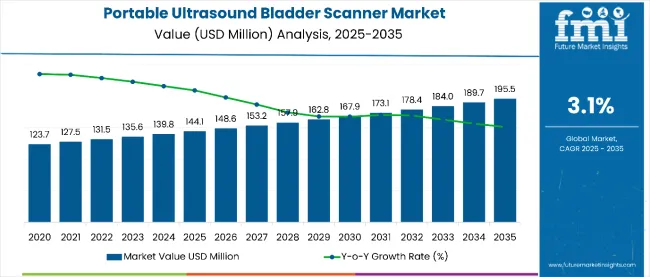
Key Takeaways, Market Size, and Forecast
| Metric | Value |
|---|---|
| Market Size (2026) | USD 148.6 Million |
| Market Size (2036) | USD 201.6 Million |
| CAGR (2026–2036) | 3.1% |
| Leading Product Type (2026) | 3D Portable Ultrasound Bladder Scanners |
| 3D Portable Ultrasound Bladder Scanners Share (2026) | 61.0% |
| Leading End User (2026) | Hospitals |
| Hospitals Share (2026) | 60.0% |
| Fastest-Growing Country | India |
| India CAGR | 6.1% |
Portable Ultrasound Bladder Scanner Market Integration with EMR and Diagnostics
The portable ultrasound bladder scanner market is becoming an essential part of hospital digital infrastructure and integrated diagnostics. In hospital settings, these scanners are now connected to EMR systems like Cerner and Epic to support real-time documentation, streamline data sharing, and reduce manual entry. Their role has also expanded into complex diagnostic workflows, where they function alongside cardiac, renal, and pulmonary assessments within ERs, ICUs, and mobile care units. These devices now contribute not only to urinary diagnostics but to broader fluid management and triage protocols across clinical settings.
- At Mayo Clinic, EMR-integrated scanners have replaced paper-based bladder diaries, improving patient tracking and shift-to-shift communication. Nurses at Mayo Clinic now use Verathon’s BladderScan devices that directly sync with the Epic EMR system. This allows continuous updates to a patient’s voiding history, reducing handover errors during shift changes.
- Cerner-enabled decision support tools work with bladder scanners to alert staff to unusual bladder volume patterns for proactive intervention. In Cerner-run hospitals like Banner Health, integrated bladder scanners trigger alerts when a patient’s residual urine exceeds clinical thresholds, allowing clinicians to take early action to prevent urinary complications.
- Tactical military POCUS kits include ruggedized bladder scanners to enable field-level diagnostics where full imaging systems are unavailable. USA Army combat medics use portable, shock-resistant ultrasound devices like the Clarius HD3 to assess urinary retention and abdominal trauma in remote deployment zones where traditional radiology is not available.
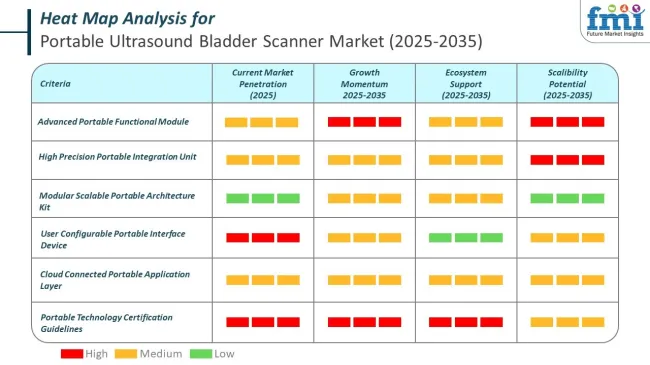
Regulatory Overview of the Portable Ultrasound Bladder Scanner Market
The portable ultrasound bladder scanner market is governed by regulatory protocols that focus on safety, clinical accuracy, and non-invasive diagnostic performance. Approvals typically require technical validation, clinical evidence, and post-market surveillance commitments. Devices are classified based on risk level, with most falling under moderate-risk categories. Compliance with electronic data standards, performance reporting, and reimbursement coding is essential to ensure wide adoption across hospitals, clinics, and home healthcare settings.
- The portable ultrasound bladder scanner market is regulated by robust frameworks to ensure safety, accuracy, and reimbursement eligibility. The USA mandates FDA 510(k) clearance and CMS coding, while the EU requires CE marking under MDR for Class IIa devices. Japan enforces PMDA reviews and MHLW pricing approvals. These regulations support clinical adoption, standardized quality, and timely diagnostics in hospitals, especially where integration with EMR systems is essential.
- Regulatory systems are being modernized to improve device oversight and accessibility. China’s NMPA requires local type testing and national registration before market entry. India’s CDSCO, under MDR 2017, enforces registration and documentation for bladder scanners. These evolving policies help enhance public health infrastructure while ensuring product reliability. Countries are increasingly aligning with global standards to support non-invasive diagnostics and improve care delivery in rural and underserved regions.
Analysing Portable Ultrasound Bladder Scanner Market by Top Investment Segments
In 2025, 3D portable ultrasound bladder scanners are projected to hold 61% of market revenue, expanding at a 3.3% CAGR through 2035. Hospitals remain the leading end-users with a 60% share in 2025 and a 2.5% CAGR. Adoption is driven by AI integration, government subsidies, and demand for non-invasive diagnostics in both developed and emerging markets.
3D Portable Ultrasound Bladder Scanners Remain Top Selling Products
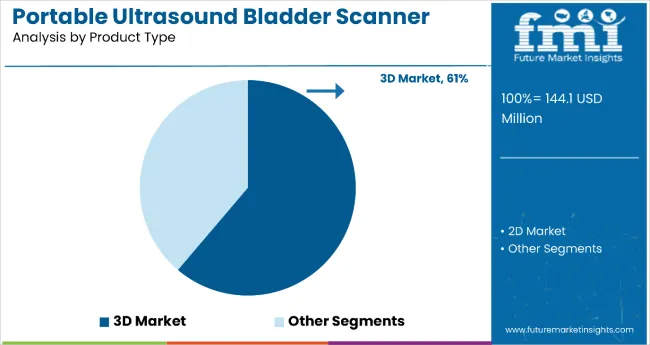
The 3D portable ultrasound bladder scanner segment is projected to expand at a CAGR of 3.3% through 2035. In 2025, this product category is anticipated to account for 61% of total market revenue. Growth is being driven by rising demand for higher imaging accuracy and diagnostic confidence in urology departments. These scanners enable clinicians to assess bladder structure and volume in three dimensions, improving diagnosis for irregular bladder shapes and complex cases.
Repeat scanning has been reduced, and patient discomfort is minimized, due to fewer invasive tests. Adoption of 3D bladder scanners is being seen in both public and private healthcare sectors. Manufacturers such as Verathon and Sonostar are integrating AI and machine learning to enhance imaging quality and interpretation. Wireless connectivity and touchscreen interfaces are being incorporated to simplify usage.
Hospitals and diagnostic centers are increasingly using these scanners for pre-surgical evaluations and routine urinary assessments. Investments in R&D and technological miniaturization are accelerating accessibility. In emerging markets, demand is growing due to government support for advanced diagnostics. As 3D imaging becomes standard in urology diagnostics, dominance over 2D systems is expected to continue.
Hospitals Remain Leading End-users of Portable Ultrasound Bladder Scanners
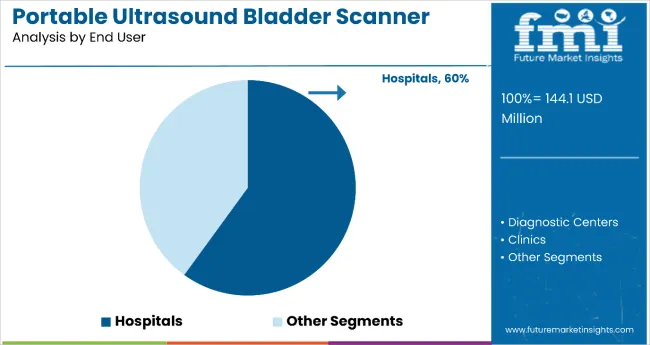
Hospitals are forecast to hold a dominant 60% market share in 2025 and grow at a CAGR of 2.5% through 2035. The high adoption rate is attributed to increased patient admissions and rising demand for point-of-care diagnostic tools. Portable ultrasound bladder scanners are used extensively in emergency rooms, inpatient wards, and surgical recovery units. Real-time imaging, portability, and non-invasiveness make them essential in managing urinary retention and pre-operative assessments.
Public healthcare institutions are investing in equipment upgrades to improve diagnostic efficiency. In developed nations, hospitals are adopting AI-assisted bladder scanners to reduce diagnostic turnaround times. For instance, Echo Nous’ Kosmos platform is being trialed in multiple hospitals to improve training and ultrasound access. Government subsidies and reimbursement support have encouraged hospitals to switch from traditional catheter-based methods to ultrasound diagnostics.
In developing countries, urban hospitals are leading adoption, often supported by multilateral health projects and infrastructure modernization programs. Training modules are being included to upskill medical staff. Hospitals benefit from vendor support programs and procurement partnerships that lower costs and simplify integration. Given their central role in managing urological cases, hospitals will continue to dominate demand for portable bladder scanners.
Top Portable Ultrasound Bladder Scanner Market Dynamics
The portable ultrasound bladder scanner market is shaped by strict safety regulations, aging populations, and non-invasive diagnostic demand. Growth is driven by AI integration and regulatory preference for ultrasound. However, complex approval and reimbursement processes, supply chain disruptions, and technician shortages pose challenges. Manufacturers are investing in modular production and digital training to overcome these barriers.
Strict Medical Safety Guidelines Promote Adoption of Non-invasive Imaging
Regulatory bodies such as the USA FDA and European Medicines Agency (EMA) continue to emphasize the use of non-ionizing imaging modalities, particularly ultrasound, over radiation-intensive methods like X-rays and CT scans. These guidelines are aimed at reducing patient exposure to harmful radiation, especially in routine diagnostics. As a result, portable ultrasound bladder scanners are increasingly favored in hospitals, clinics, and long-term care facilities. For instance, the FDA's Image Wisely Campaign encourages clinicians to use safer imaging alternatives where possible.
This regulatory push is prompting procurement shifts toward ultrasound-based diagnostics, boosting adoption across developed markets. The growing implementation of low-dose imaging protocols further complements this trend, reinforcing the case for bladder scanners.
Barriers from Complex Regulatory Approvals and Reimbursement Processes
Approving portable ultrasound bladder scanners requires navigating country-specific regulatory frameworks, such as FDA 510(k) in the United States and CE marking in Europe. These processes involve lengthy clinical trials, technical documentation, and post-market surveillance. Reimbursement adds another layer of complexity, with varied coding, cost thresholds, and payer criteria across regions.
In Japan, for example, device pricing approvals by the MHLW can delay commercial availability by 12-18 months. Manufacturers also face challenges in securing public insurance reimbursement without localized clinical evidence. These hurdles restrict market entry for startups and increase go-to-market costs, limiting device accessibility in price-sensitive markets.
Integration with AI and Smart Systems Expands Application Scope
Advancements in artificial intelligence (AI) are reshaping how portable bladder scanners operate in clinical workflows. AI-powered scanners such as those from Echo Nous and Butterfly Network can now automatically detect bladder boundaries, calculate volumes, and reduce operator dependency. These smart devices are compatible with electronic health records (EHRs), enabling seamless data integration and telehealth capabilities.
Hospitals are deploying such scanners in emergency and geriatric care, where quick decisions are critical. AI-driven platforms also allow remote specialists to review scans, aiding teleradiology expansion in rural areas. As health systems prioritize data interoperability, investment in connected bladder scanners is accelerating.
Supply Chain and Skilled Labour Limitations Create Bottlenecks
Global supply chain disruptions-particularly in semiconductors, microcontrollers, and LCD components-are impacting production timelines for portable bladder scanners. COVID-19-induced backlogs in 2020 to 2022 exposed vulnerabilities in sourcing from single-region suppliers like China and Taiwan. At the same time, a shortage of trained ultrasound technicians hampers adoption in hospitals and clinics, especially across Southeast Asia and Sub-Saharan Africa.
To mitigate these risks, companies such as Clarius Mobile Health are investing in modular manufacturing and cloud-based training platforms. Some governments, like India’s Skill India initiative, have launched programs to certify diagnostic technicians. These efforts aim to build local capacity and streamline market scalability.
Analysing Top Countries Adopting, Manufacturing, and Exporting Portable Ultrasound Bladder Scanners
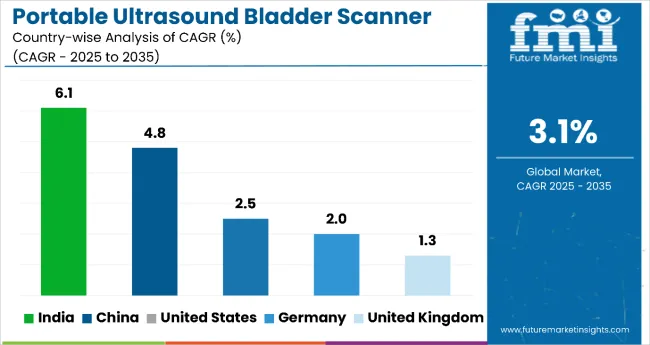
The portable ultrasound bladder scanner market study highlights growth across India, China, United States, Germany, and United Kingdom. Each country is advancing the market through distinct strategies-ranging from localized manufacturing and public health investments to digital health innovation and regulatory support. The table below presents the projected CAGR for each leading country during the 2025 to 2035 forecast period.
| Countries | CAGR (2025 to 2035) |
|---|---|
| United States | 2.5% |
| United Kingdom | 1.3% |
| India | 6.1% |
| China | 4.8% |
| Germany | 2.0% |
United States Drives Demand for the portable ultrasound bladder scanner with Innovation and POC Adoption
The USA market for portable ultrasound bladder scanners is projected to reach USD 51.7 million in 2025 and grow at a CAGR of 2.5% through 2035. The country leads in clinical innovation, regulatory efficiency, and early adoption of point-of-care diagnostics. High prevalence of urinary retention, postoperative assessments, and elderly care demand are primary drivers. Key players such as Verathon Inc. and Echo Nous operate from the USA, contributing significantly to R&D and device innovation.
Healthcare facilities, from hospitals to nursing homes, are replacing invasive catheterization with bladder scanners to improve patient outcomes. The FDA’s streamlined 510(k) pathway and favorable CMS reimbursement policies have eased market access. Home-based diagnostics and AI-integrated systems are witnessing growth due to the expanding telehealth infrastructure. Overall, the USA remains a mature yet steadily growing market due to its advanced medical ecosystem and high diagnostic quality standards.
United Kingdom Relies on NHS Integration and Diagnostic Expansion in the portable ultrasound bladder scanner market
The United Kingdom portable ultrasound bladder scanner market is projected to grow at a CAGR of 1.3% from 2025 to 2035. Market expansion is driven by the National Health Service (NHS) emphasis on non-invasive, digital diagnostics for front-line care. These scanners are widely deployed in outpatient clinics, surgical recovery units, and elderly care settings, where real-time bladder volume measurement is essential. NHS procurement frameworks promote cost-effective, patient-friendly tools, while structured training programs ensure standardized usage across facilities.
Partnerships with healthcare technology providers and NHS-backed innovation hubs are fostering the adoption of AI-integrated bladder scanners, especially in pilot projects and clinical trials. Digital health priorities under the UK’s healthcare transformation plan are further encouraging deployment. Although growth is moderate due to saturation in certain sectors, consistent investments in smart diagnostics and public health integration maintain the UK’s relevance in the European portable scanner market.
India Demonstrates Rapid Growth Potential
Portable ultrasound bladder scanner market in India is poised to grow at a CAGR of 6.1% from 2025 to 2035. The growth is led by rising awareness of urological health, increased geriatric population, and substantial healthcare investments in underserved regions. Public hospitals are prioritizing affordable and non-invasive diagnostics, supported by government schemes like Ayushman Bharat and PMJAY, which promote decentralized healthcare. Local manufacturers are establishing assembly lines to reduce import reliance and cost barriers.
Strategic partnerships between diagnostic companies and state governments are facilitating broader deployment of scanners in rural clinics and district hospitals. Additionally, the rise in telehealth adoption and AI-enabled devices is enhancing accessibility and operational efficiency. India’s proactive policy environment and digital health push, alongside the demand for compact, wireless diagnostic tools, make it one of the most promising markets globally for portable bladder scanners.
China Emerges as a Manufacturing and Demand Hub
Portable ultrasound bladder scanner market in China is expected to expand at a CAGR of 4.8% between 2025 and 2035. It stands out as both a major consumer and manufacturing base, supported by government initiatives such as Made in China 2025, which promote domestic innovation in diagnostic devices. Urban tertiary hospitals and rural clinics alike are adopting portable bladder scanners for efficient point-of-care diagnostics, driven by rising cases of urinary disorders and the country’s aging population.
Local companies, including Kaixin and Sonostar, are developing affordable, community-specific models tailored to chronic disease management and public health needs. Export potential is rising due to improved component localization and cost-effective engineering. Investments in diagnostic infrastructure and digital healthcare platforms are accelerating adoption across regions, positioning China as a global supplier and innovation hub in this market.
Germany Leverages Public Healthcare Investments
The Germany market is expected to grow at a 2.0% CAGR from 2025 to 2035, underpinned by strong public healthcare infrastructure and EU medical device regulations. Hospitals are adopting portable bladder scanners for their efficiency in pre- and post-operative diagnostics, particularly in geriatrics and urology. The CE marking process and centralized hospital procurement systems support faster integration into routine care. Government-backed modernization programs are equipping public and university hospitals with advanced point-of-care tools.
Emergency care, outpatient facilities, and long-term care units increasingly use these scanners for non-invasive urinary diagnostics. German manufacturers are focusing on developing ergonomic, high-precision devices that meet export standards across the EU and globally. With growing emphasis on efficient and radiation-free diagnostics, The market in Germany is expanding steadily, benefiting from policy consistency and high standards of clinical care across both urban and rural health centers.
Leading Portable Ultrasound Bladder Scanner Suppliers
The competitive landscape of the portable ultrasound bladder scanner market is moderately fragmented. Tier 1 companies such as Roper Technologies (Verathon Inc.), Laborie Medical Technologies, and SRS Medical Systems dominate with established global footprints. These firms have maintained leadership through strong investments in R&D, commercial alliances, and regulatory expertise. Verathon’s Bladder Scan series remains a benchmark in real-time bladder volume assessment. Laborie expanded its portfolio with strategic investments, including its 2023 funding in Bright Uro.
Tier 2 players focus on affordability, user-friendly design, and localized production. Companies like Sonostar Technologies and Kaixin are offering cost-effective options, especially in emerging markets. These firms cater to demand from clinics and rural care centers.
New entrants are targeting innovations in AI integration, wireless connectivity, and cloud-based diagnostics. Success depends on compliance with regional medical standards, effective distribution, and responsiveness to localized clinical workflows. Partnerships with public health agencies and training programs are increasingly being used as competitive tools. Overall, innovation and regional adaptability are driving market positioning.
Recent Hydronic Portable Ultrasound Bladder Scanner Market News
In the portable ultrasound bladder scanner market, recent advancements have highlighted a focus on wireless diagnostics and non-invasive technologies. In November 2023, As per Laborie’s press release, Laborie Medical Technologies made a strategic investment in Bright Uro, supporting the development of the Glean Urodynamic System™. This innovative solution is a wireless, catheter-free diagnostic tool designed to assess lower urinary tract pressure with enhanced patient comfort and clinical precision.
The system enables real-time, remote urodynamic monitoring, addressing key challenges in urodynamic testing. This investment reflects strong industry momentum toward next-generation urological care, prioritizing minimally invasive solutions and smart diagnostic platforms for improved healthcare outcomes.
Leading Portable Ultrasound Bladder Scanner Suppliers
- Roper Technologies (Verathon Inc.)
- SRS Medical Systems, Inc.
- Laborie Medical Technologies Inc.
- Sonostar Technologies Co., Limited
- Caresono Technology Co. Ltd.
- Kaixin
- AvantSonic Technology Co., Ltd.
- Medica SPA
- The Prometheus Group
- MEDA Co., Ltd.
- Vitacon US, LLC
- Suzhou Peak Sonic Medical Technology Co. Ltd.
- Infinium Medical, Inc.
- EchoNous Inc.
- DiaMedical
- MCUBETECH
- Clarius
- Interson Corporation
- Butterfly Network, Inc.
- GE Healthcare Inc.
- dBMEDx Inc.
- Echo Son SA
- Beijing iTrason Technologies Co., Ltd
- Innovative Medical B.V.
Report Scope - Portable Ultrasound Bladder Scanner Market
| Report Attributes | Details |
|---|---|
| Current Market Size (2025) | USD 144.1 million |
| Projected Market Size (2035) | USD 195.5 million |
| CAGR (2025 to 2035) | 3.10% |
| Base Year for Estimation | 2024 |
| Historical Period | 2020 to 2024 |
| Forecast Period | 2025 to 2035 |
| Product Categories Analyzed | 2D and 3D Portable Bladder Scanners |
| End Users Analyzed | Hospitals, Diagnostic Centers, Clinics, Ambulatory Surgical Centers |
| Regions Covered | North America, Latin America, Europe, East Asia, South Asia & Oceania, Middle East & Africa |
| Key Companies Profiled | Roper Technologies, SRS Medical Systems, Laborie, Sonostar, Kaixin, AvantSonic, Medica SPA, The Prometheus Group, MEDA, Vitacon, Suzhou Peak Sonic, Infinium Medical, EchoNous, MCUBETECH, Clarius, Interson, Butterfly Network, GE Healthcare, dBMEDx, Echo Son SA, iTrason, Innovative Medical B.V. |
| Additional Attributes | Demand driven by non-invasive diagnostics, integration of AI and wireless technology, rise in point-of-care testing, increasing geriatric population, and government-backed diagnostic modernization initiatives. |
Segments Covered in the Report
By Product:
The market is categorized into 2D Portable Ultrasound Bladder Scanner and 3D Portable Ultrasound Bladder Scanner.
By End-user:
The market is segmented into Hospitals, Diagnostic Centers, Clinics, and Ambulatory Surgical Centers.
By Region:
The market is divided into North America, Latin America, Europe, East Asia, South Asia & Oceania, and Middle East & Africa.
Frequently Asked Questions
What is the market size of portable ultrasound bladder scanners in 2025?
The market is estimated to be valued at USD 144.1 million in 2025.
What is the projected market size by 2035?
The market is expected to reach USD 194.2 million by 2035.
Which product segment holds the largest share?
3D portable ultrasound bladder scanners dominate with an estimated 61.2% share in 2025.
Which end-user segment leads the market?
Hospitals are the top end users, accounting for 59% of market value in 2025.
Who are the key players in the market?
Leading companies include Roper Technologies (Verathon Inc.), Laborie, SRS Medical Systems, EchoNous, and Butterfly Network. Other notable players shaping the competitive landscape include Sonostar Technologies Co., Limited, Caresono Technology Co. Ltd., Kaixin, AvantSonic Technology Co., Ltd., Medica SPA, The Prometheus Group, MEDA Co., Ltd., Vitacon US, LLC, Suzhou PeakSonic Medical Technology Co. Ltd., Infinium Medical, Inc., DiaMedical, MCUBETECH, Clarius, Interson Corporation, GE Healthcare Inc., dBMEDx Inc., Echo Son SA, Beijing iTrason Technologies Co., Ltd, and Innovative Medical B.V.
Preview the report firsthand - request a free sample
Get SampleGet the brochure for pricing and purchase details.
Get PDFTable of Content
- Executive Summary
- Market Overview
- Value-Added Insights
- Market Background
- Global Market - Pricing Assessment
- Global Market Demand Value USD million and Volume (Units) Analysis 2020 to 2024 and Forecast, 2025 to 2035
- Global Market Analysis 2020 to 2024 and Forecast 2025 to 2035, By Product Type
- 3D Market
- 2D Market
- Global Market Analysis 2020 to 2024 and Forecast 2025 to 2035, By End User
- Hospitals
- Diagnostic Centers
- Clinics
- Ambulatory Surgical Centers
- Global Market Analysis 2020 to 2024 and Forecast 2025 to 2035, By Region
- North America
- Latin America
- East Asia
- South Asia and Pacific
- Western Europe
- Eastern Europe
- Middle East and Africa
- North America Market Analysis 2020 to 2024 and Forecast 2025 to 2035
- Latin America Market Analysis 2020 to 2024 and Forecast 2025 to 2035
- East Asia Market Analysis 2020 to 2024 and Forecast 2025 to 2035
- South Asia and Pacific Market Analysis 2020 to 2024 and Forecast 2025 to 2035
- Western Europe Market Analysis 2020 to 2024 and Forecast 2025 to 2035
- Eastern Europe Market Analysis 2020 to 2024 and Forecast 2025 to 2035
- Middle East and Africa Market Analysis 2020 to 2024 and Forecast 2025 to 2035
- Market Structure Analysis
- Competition Analysis
- Roper Technologies (Verathon Inc.)
- F. SRS Medical Systems, Inc
- Laborie Medical Technologies Inc.
- Sonostar Technologies Co., Limited
- Caresono Technology Co. Ltd.
- Kaixin
- AvantSonic Technology Co., Ltd.
- Medica SPA
- The Prometheus Group
- MEDA Co., Ltd.
- Vitacon US, LLC
- Suzhou PeakSonic Medical Technology Co. Ltd.
- Infinium Medical, Inc.
- EchoNous Inc
- DiaMedical
- MCUBETECH
- Clarius
- Interson Corporation
- Butterfly Network, Inc.
- GE Healthcare Inc.
- dBMEDx Inc.
- Echo Son SA
- Beijing iTrason Technologies Co., Ltd
- Innovative Medical B.V.
- Assumptions and Acronyms Used
- Research Methodology


