

- Industry Size (2026)
- USD 0.6 Bn
- Forecast (2036)
- USD 2.8 Bn
- CAGR (2026 to 2036)
- 16.2%
QR-Linked Traceable Agrochemical Program Market Forecast and Outlook 2026 to 2036
The global QR-linked traceable agrochemical program market is expected to grow from USD 0.6 billion in 2026 to USD 2.8 billion by 2036, at a CAGR of 16.2%. This growth is driven by the increasing need for transparency, regulatory compliance, and data-driven agriculture. QR-linked systems enable real-time tracking and product authentication through digital identifiers such as QR codes, offering functionality in product authentication & anti-counterfeiting (34% market share), end-to-end supply chain traceability, and regulatory compliance & batch-level reporting. Crop protection chemicals dominate the market with 41% share, followed by seed treatment products and specialty fertilizers. These solutions enhance traceability, ensure the authenticity of products, and support efficient record-keeping, addressing the growing concerns around durability and consumer trust.
Quick Stats for QR-Linked Traceable Agrochemical Program Market
- QR-Linked Traceable Agrochemical Program Market Value (2026): USD 0.6 billion
- QR-Linked Traceable Agrochemical Program Market Forecast Value (2036): USD 2.8 billion
- QR-Linked Traceable Agrochemical Program Market Forecast CAGR: 16.2%
- Leading Functionality in QR-Linked Traceable Agrochemical Program Market: Product Authentication & Anti-Counterfeiting (34%)
- Key Growth Regions in QR-Linked Traceable Agrochemical Program Market: North America
- Key Players in QR-Linked Traceable Agrochemical Program Market: Antares Vision Group, Systech (Markem-Imaje), Kezzler AS, Digimarc Corporation, TraceGains Network
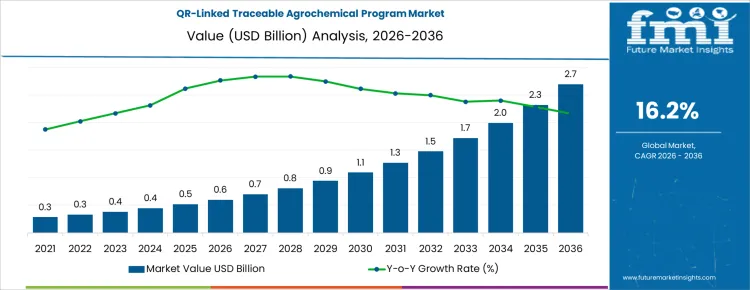
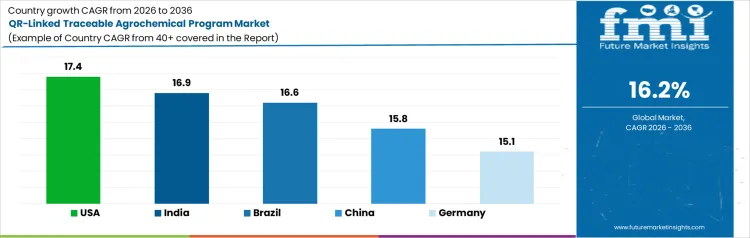
The USA leads the market with a 17.4% CAGR, fueled by the adoption of smart farming technologies and increasing consumer demand for transparency in agrochemical use. India follows with a 16.9% CAGR, driven by modernization and a push for safe, traceable agricultural practices. Brazil and China grow at 16.6% and 15.8% CAGR, respectively, as both nations embrace innovative technologies to improve food safety and traceability. Germany shows 15.1% growth, supported by stringent regulatory frameworks and high consumer demand for eco-friendly farming practices. As digital traceability continues to gain momentum, these regions are set to dominate the QR-linked traceable agrochemical program market.
QR‑Linked Traceable Agrochemical Program Market Key Takeaways
| Metric | Value |
|---|---|
| Industry Value (2026) | USD 0.6 billion |
| Forecast Value (2036) | USD 2.8 billion |
| Forecast CAGR (2026 to 2036) | 16.2% |
How is the Global QR‑Linked Traceable Agrochemical Program Sector Advancing?
The global QR‑linked traceable agrochemical program market is expanding quickly as digital traceability, transparency, and data‑driven agriculture become central to supply chain integrity and regulatory compliance. These programs integrate QR codes or similar digital identifiers with agrochemical products such as pesticides, herbicides, and fertilizers to enable real‑time tracking from production through application and beyond. Growers, distributors, and end consumers can scan codes to access information on formulation, application rates, safety data, origin, handling instructions, and compliance credentials. This traceable system enhances visibility across the agrochemical lifecycle, helping reduce misuse, improve record‑keeping, and support eco-friendly practices.
Adoption is driven by increasing demand from stakeholders for accountability and verification of product authenticity, particularly in markets with stringent regulatory environments or consumer expectations for chemical stewardship. QR‑linked traceability enables growers to document application history easily, which can support certification programs, residue management, and audit readiness. At the same time, digital traceability enhances supply chain transparency, reduces counterfeiting risks, and fosters trust between producers and buyers. Advances in mobile connectivity and cloud‑based data platforms have made QR‑linked traceable systems more accessible to a wide range of users, from smallholder farms to large agricultural enterprises.
Challenges such as the need for standardized data protocols, integration with legacy systems, and grower education on digital tools may influence the pace of adoption. The robust emphasis on transparent, data‑linked agricultural inputs and the benefits of traceable agrochemical programs for risk mitigation, compliance, and market differentiation will continue to drive demand globally.
What Is the Segment-Wise Analysis for the Global QR-Linked Traceable Agrochemical Program Market?
The global QR-linked traceable agrochemical program market is segmented by program functionality and agrochemical category. Product authentication & anti-counterfeiting leads the market with a 34% share, ensuring that agrochemicals are genuine and protecting against counterfeiting. Other key functionalities include end-to-end supply chain traceability, regulatory compliance & batch-level reporting, and farmer usage guidance & stewardship tracking. In terms of agrochemical categories, crop protection chemicals hold the largest share at 41%, followed by seed treatment products, specialty fertilizers & biostimulants, and adjuvants & tank-mix programs.
How Does Product Authentication & Anti-Counterfeiting Lead the QR-Linked Traceable Agrochemical Program Market?
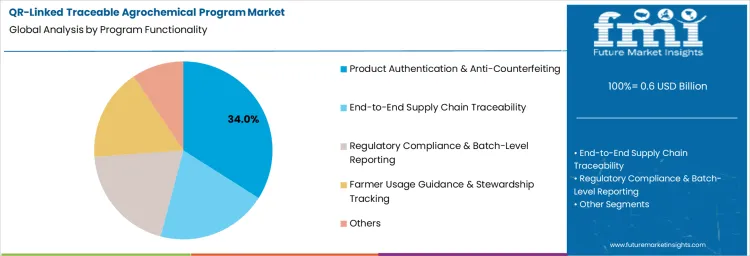
Product authentication & anti-counterfeiting holds a 34% share in the global QR-linked traceable agrochemical program market due to its crucial role in ensuring the legitimacy of agrochemical products. This functionality helps combat the growing issue of counterfeit agrochemicals, which can harm crops, reduce efficacy, and endanger both the environment and consumer health. QR-linked systems enable verification of product authenticity, protecting both farmers and manufacturers. As the demand for safe, reliable agricultural inputs rises, product authentication becomes a vital tool in maintaining the integrity of agrochemical products, driving its market dominance.
Why Do Crop Protection Chemicals Hold the Largest Share in the QR-Linked Traceable Agrochemical Program Market?
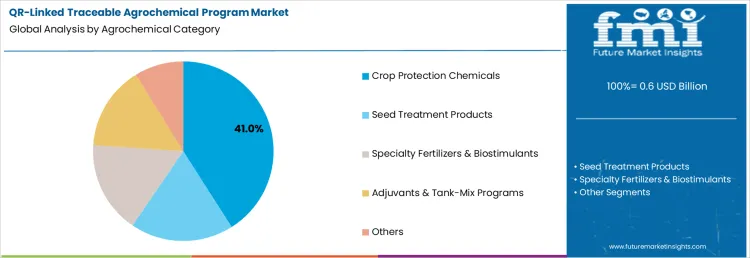
Crop protection chemicals hold the largest share of 41% in the global QR-linked traceable agrochemical program market due to their widespread use in preventing or controlling pests, diseases, and weeds in agriculture. These chemicals are crucial for ensuring high crop yields and food security. As the need for transparency and accountability in agrochemical use grows, traceable programs for crop protection chemicals help verify the safety, authenticity, and effectiveness of products. This enhanced visibility throughout the supply chain ensures proper usage and compliance, reinforcing crop protection chemicals as the dominant category in the market.
How Are Traceability Requirements Driving Change in Crop Protection?
QR codes linked to detailed agrochemical data allow growers, supply chain partners, and end consumers to verify which products were applied, when they were used, and what safety standards were met. This traceability supports risk management, rapid response during food safety issues, and compliance with evolving regulatory frameworks. As assurance of safe, verifiable production becomes a differentiator in global markets, traceable agrochemical programs are being adopted as part of broader digital agriculture and compliance ecosystems.
Why Are Growers and Buyers Adopting QR-Linked Agrochemical Programs?
Growers are integrating QR-linked traceability into crop protection not just for compliance, but to strengthen market access and pricing. Traceable programs help demonstrate responsible use of pesticides and fertilizers, support audit readiness for retailers and exporters, and provide documented evidence that inputs were applied according to label requirements and durability criteria. Retailers and brands leverage QR codes to share verified input histories with consumers, enhancing trust and aligning with demand for responsible sourcing. The approach also supports integrated pest management (IPM) tracking and stewardship metrics that influence procurement decisions.
What Challenges Are Shaping Adoption of QR Traceability in Agrochemicals?
Despite the benefits, several barriers influence adoption. Developing and maintaining accurate digital records requires investment in hardware, software, and farmer training. Smaller farms may find integration with current practices complex or costly without clear short-term economic return. Data standardization across crops, regions, and agrochemical brands is still uneven, complicating interoperability. There are also concerns about data privacy, ownership, and the resources needed to validate and update QR-linked information in real time. Building trust in the data and ensuring it reflects field reality requires robust agronomic support and quality assurance.
What is the Growth Outlook for the QR-Linked Traceable Agrochemical Program Market by Country?
| Country | CAGR (%) |
|---|---|
| USA | 17.4% |
| Brazil | 16.6% |
| India | 16.9% |
| China | 15.8% |
| Germany | 15.1% |
The QR-linked traceable agrochemical program market is experiencing significant growth, with India leading at a 16.9% CAGR, driven by the need for transparency and traceability in agricultural practices. The USA follows closely with 17.4%, supported by the increasing adoption of smart farming technologies and the demand for transparency in agrochemical usage. Brazil’s market grows at 16.6%, fueled by its large agricultural sector and a focus on improving food safety and traceability. China’s market grows at 15.8%, driven by its rapidly expanding agrochemical market and the government’s push for more efficient and transparent farming practices. Germany’s market grows at 15.1%, supported by its strong regulatory framework and the demand for traceability in food safety and durability.
Why is India Leading in the QR-Linked Traceable Agrochemical Program Market?
India’s QR-linked traceable agrochemical program market is growing at 16.9%, driven by the increasing demand for transparency and traceability in agricultural practices. As India continues to modernize its agricultural industry, the need for solutions that ensure agrochemical usage is traceable and meets safety standards is growing. QR-linked systems provide farmers with a way to track the use of agrochemicals in real-time, allowing for better regulation, enhanced food safety, and consumer confidence. As Indian farmers seek to improve efficiency and comply with international standards for food safety and traceability, the adoption of QR-linked agrochemical programs is increasing. The government’s push for eco-friendly and transparent farming practices further accelerates the growth of this market in India, ensuring continued expansion in the coming years.
What is Driving the Growth of the QR-Linked Traceable Agrochemical Program Market in the USA?
The USA’s QR-linked traceable agrochemical program market is growing at 17.4%, driven by the increasing adoption of smart farming technologies and the rising demand for food safety and transparency. QR codes linked to agrochemical programs allow farmers to track and document the use of chemicals in real-time, ensuring compliance with safety standards and improving traceability. With growing consumer demand for transparency in food production, particularly regarding agrochemical use, QR-linked systems are becoming more important. USA’s regulatory environment, which emphasizes the need for food traceability and durability, is pushing the adoption of these technologies. As farmers focus on improving efficiency and meeting consumer expectations, the demand for QR-linked traceable agrochemical programs is expected to grow steadily, contributing to market expansion in the USA.
How is the QR-Linked Traceable Agrochemical Program Market Expanding in Brazil?
Brazil’s QR-linked traceable agrochemical program market is growing at 16.6%, supported by the country’s large agricultural sector, which is one of the world’s largest producers and exporters of crops. As Brazil focuses on improving food safety, durability, and traceability in its agricultural practices, the demand for agrochemical programs that ensure transparency is increasing. QR-linked systems enable Brazilian farmers to monitor and record the use of agrochemicals, improving product traceability and consumer confidence. The Brazilian government’s push for stricter food safety regulations and the rising global demand for certified eco-friendly products is fueling the adoption of these systems. As Brazil continues to modernize its agricultural practices and comply with international standards, the market for QR-linked traceable agrochemical programs is expected to expand.
What is Contributing to the Growth of the QR-Linked Traceable Agrochemical Program Market in China?
China’s QR-linked traceable agrochemical program market is growing at 15.8%, driven by the country’s push for modernizing agricultural practices and improving food safety. China’s agricultural sector is rapidly adopting new technologies, and QR-linked agrochemical programs are increasingly seen as essential for ensuring transparency and compliance with regulatory standards. These systems enable farmers to track agrochemical use, ensuring safer and more eco-friendly farming practices. With the Chinese government’s strong focus on food safety and traceability, the adoption of QR-linked systems is growing. As the demand for high-quality, traceable agricultural products continues to rise, the market for QR-linked traceable agrochemical programs in China is expected to continue expanding
What is Driving the Growth of the QR-Linked Traceable Agrochemical Program Market in Germany?
Germany’s QR-linked traceable agrochemical program market is growing at 15.1%, supported by the country’s strong regulatory framework and emphasis on food safety and durability. Germany has some of the most stringent regulations for agricultural products, and QR-linked agrochemical programs help farmers comply with these standards by ensuring real-time tracking and documentation of agrochemical use. As consumers demand more transparency in food production, Germany is adopting innovative technologies like QR-linked systems to enhance traceability and improve consumer trust. With the growing emphasis on durability in agriculture, the market for QR-linked traceable agrochemical programs in Germany is expected to continue growing, driven by both regulatory pressures and consumer expectations for transparency.
What Are the Competitive Dynamics in the QR-Linked Traceable Agrochemical Program Market?
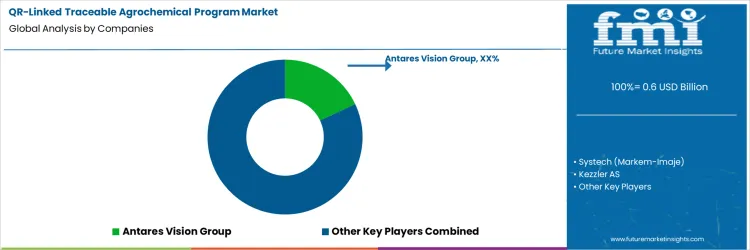
Competition in the QR-linked traceable agrochemical program market is shaped by Antares Vision Group, Systech (Markem-Imaje), Kezzler AS, Digimarc Corporation, TraceGains Network, and others, each promoting traceability platforms that link product data to QR codes for transparency and compliance. At Antares Vision Group brochures are crafted to highlight end-to-end traceability, with QR-linked insights on origin, batch data, and handling instructions. Technical features are described with use cases showing enhanced supply chain visibility and easier recall management. Systech (Markem-Imaje) is presented with solutions that integrate serialization and QR linkage to provide product history throughout distribution. Performance summaries and deployment guidance are included to support adoption in complex supply networks.
Kezzler AS materials emphasize digital DNA and cloud-enabled trace programs that connect QR codes with rich product metadata. Product briefs outline scalability and integration with existing enterprise systems. Digimarc Corporation collateral focuses on imperceptible digital identifiers that augment QR capabilities for secure tracking. Usage notes and illustrative workflows are used to simplify understanding for agribusiness stakeholders. TraceGains Network brochures showcase cloud-connected trace platforms with supplier collaboration tools linked to QR scans, with clear diagrams and benefit statements aimed at quality teams. Others in the market are featured with niche offerings or tailored traceability modules oriented to specific crop protection lines or regional regulatory needs.
Key Players in QR-Linked Traceable Agrochemical Program Market
- Antares Vision Group
- Systech (Markem-Imaje)
- Kezzler AS
- Digimarc Corporation
- TraceGains Network
- Others
Scope of Report
| Items | Values |
|---|---|
| Quantitative Units (2026) | USD billion |
| Program Functionality | Product Authentication & Anti-Counterfeiting, End-to-End Supply Chain Traceability, Regulatory Compliance & Batch-Level Reporting, Farmer Usage Guidance & Stewardship Tracking |
| Agrochemical Category | Crop Protection Chemicals, Seed Treatment Products, Specialty Fertilizers & Biostimulants, Adjuvants & Tank-Mix Programs |
| Regions Covered | Asia Pacific, Europe, North America, Latin America, Middle East & Africa |
| Countries Covered | USA, China, Japan, South Korea, India, Australia & New Zealand, ASEAN, Germany, UK, France, Italy, Spain, Nordic, BENELUX, Brazil, Chile, Mexico, Saudi Arabia, Other GCC Countries, Turkey, South Africa, Other African Union |
| Key Companies Profiled | Antares Vision Group, Systech (Markem-Imaje), Kezzler AS, Digimarc Corporation, TraceGains Network |
| Additional Attributes | Dollar sales by program functionality, agrochemical category, and region; regional CAGR and growth outlook; distribution channels including agrochemical manufacturers, supply chain solutions providers, and regulators; innovation trends in traceability technology and QR-based agrochemical programs; competitive positioning of global vs regional suppliers. |
QR-Linked Traceable Agrochemical Program Market by Segments
Program Functionality
- Product Authentication & Anti-Counterfeiting
- End-to-End Supply Chain Traceability
- Regulatory Compliance & Batch-Level Reporting
- Farmer Usage Guidance & Stewardship Tracking
- Others
Agrochemical Category
- Crop Protection Chemicals
- Seed Treatment Products
- Specialty Fertilizers & Biostimulants
- Adjuvants & Tank-Mix Programs
- Others
Region:
- Asia Pacific
- China
- Japan
- South Korea
- India
- Australia & New Zealand
- ASEAN
- Rest of Asia Pacific
- Europe
- Germany
- United Kingdom
- France
- Italy
- Spain
- Nordic
- BENELUX
- Rest of Europe
- North America
- United States
- Canada
- Mexico
- Latin America
- Brazil
- Chile
- Rest of Latin America
- Middle East & Africa
- Kingdom of Saudi Arabia
- Other GCC Countries
- Turkey
- South Africa
- Other African Union
- Rest of Middle East & Africa
Frequently Asked Questions
How big is the qr-linked traceable agrochemical program market in 2026?
The global qr-linked traceable agrochemical program market is estimated to be valued at USD 0.6 billion in 2026.
What will be the size of qr-linked traceable agrochemical program market in 2036?
The market size for the qr-linked traceable agrochemical program market is projected to reach USD 2.7 billion by 2036.
How much will be the qr-linked traceable agrochemical program market growth between 2026 and 2036?
The qr-linked traceable agrochemical program market is expected to grow at a 16.2% CAGR between 2026 and 2036.
What are the key product types in the qr-linked traceable agrochemical program market?
The key product types in qr-linked traceable agrochemical program market are product authentication & anti-counterfeiting, end-to-end supply chain traceability, regulatory compliance & batch-level reporting, farmer usage guidance & stewardship tracking and others.
Which agrochemical category segment to contribute significant share in the qr-linked traceable agrochemical program market in 2026?
In terms of agrochemical category, crop protection chemicals segment to command 41.0% share in the qr-linked traceable agrochemical program market in 2026.
Preview the report firsthand - request a free sample
Get SampleGet the brochure for pricing and purchase details.
Get PDFTable of Content
- Executive Summary
- Global Market Outlook
- Demand-side Trends
- Supply-side Trends
- Technology Roadmap Analysis
- Analysis and Recommendations
- Market Overview
- Market Coverage / Taxonomy
- Market Definition / Scope / Limitations
- Market Background
- Market Dynamics
- Drivers
- Restraints
- Opportunity
- Trends
- Scenario Forecast
- Demand in Optimistic Scenario
- Demand in Likely Scenario
- Demand in Conservative Scenario
- Opportunity Map Analysis
- Product Life Cycle Analysis
- Supply Chain Analysis
- Investment Feasibility Matrix
- Value Chain Analysis
- PESTLE and Porter’s Analysis
- Regulatory Landscape
- Regional Parent Market Outlook
- Production and Consumption Statistics
- Import and Export Statistics
- Market Dynamics
- Global Market Analysis 2021 to 2025 and Forecast, 2026 to 2036
- Historical Market Size Value (USD Million) Analysis, 2021 to 2025
- Current and Future Market Size Value (USD Million) Projections, 2026 to 2036
- Y-o-Y Growth Trend Analysis
- Absolute $ Opportunity Analysis
- Global Market Pricing Analysis 2021 to 2025 and Forecast 2026 to 2036
- Global Market Analysis 2021 to 2025 and Forecast 2026 to 2036, By Program Functionality
- Introduction / Key Findings
- Historical Market Size Value (USD Million) Analysis By Program Functionality , 2021 to 2025
- Current and Future Market Size Value (USD Million) Analysis and Forecast By Program Functionality , 2026 to 2036
- Product Authentication & Anti-Counterfeiting
- End-to-End Supply Chain Traceability
- Regulatory Compliance & Batch-Level Reporting
- Farmer Usage Guidance & Stewardship Tracking
- Others
- Y-o-Y Growth Trend Analysis By Program Functionality , 2021 to 2025
- Absolute $ Opportunity Analysis By Program Functionality , 2026 to 2036
- Global Market Analysis 2021 to 2025 and Forecast 2026 to 2036, By Agrochemical Category
- Introduction / Key Findings
- Historical Market Size Value (USD Million) Analysis By Agrochemical Category, 2021 to 2025
- Current and Future Market Size Value (USD Million) Analysis and Forecast By Agrochemical Category, 2026 to 2036
- Crop Protection Chemicals
- Seed Treatment Products
- Specialty Fertilizers & Biostimulants
- Adjuvants & Tank-Mix Programs
- Others
- Y-o-Y Growth Trend Analysis By Agrochemical Category, 2021 to 2025
- Absolute $ Opportunity Analysis By Agrochemical Category, 2026 to 2036
- Global Market Analysis 2021 to 2025 and Forecast 2026 to 2036, By Region
- Introduction
- Historical Market Size Value (USD Million) Analysis By Region, 2021 to 2025
- Current Market Size Value (USD Million) Analysis and Forecast By Region, 2026 to 2036
- North America
- Latin America
- Western Europe
- Eastern Europe
- East Asia
- South Asia and Pacific
- Middle East & Africa
- Market Attractiveness Analysis By Region
- North America Market Analysis 2021 to 2025 and Forecast 2026 to 2036, By Country
- Historical Market Size Value (USD Million) Trend Analysis By Market Taxonomy, 2021 to 2025
- Market Size Value (USD Million) Forecast By Market Taxonomy, 2026 to 2036
- By Country
- USA
- Canada
- Mexico
- By Program Functionality
- By Agrochemical Category
- By Country
- Market Attractiveness Analysis
- By Country
- By Program Functionality
- By Agrochemical Category
- Key Takeaways
- Latin America Market Analysis 2021 to 2025 and Forecast 2026 to 2036, By Country
- Historical Market Size Value (USD Million) Trend Analysis By Market Taxonomy, 2021 to 2025
- Market Size Value (USD Million) Forecast By Market Taxonomy, 2026 to 2036
- By Country
- Brazil
- Chile
- Rest of Latin America
- By Program Functionality
- By Agrochemical Category
- By Country
- Market Attractiveness Analysis
- By Country
- By Program Functionality
- By Agrochemical Category
- Key Takeaways
- Western Europe Market Analysis 2021 to 2025 and Forecast 2026 to 2036, By Country
- Historical Market Size Value (USD Million) Trend Analysis By Market Taxonomy, 2021 to 2025
- Market Size Value (USD Million) Forecast By Market Taxonomy, 2026 to 2036
- By Country
- Germany
- UK
- Italy
- Spain
- France
- Nordic
- BENELUX
- Rest of Western Europe
- By Program Functionality
- By Agrochemical Category
- By Country
- Market Attractiveness Analysis
- By Country
- By Program Functionality
- By Agrochemical Category
- Key Takeaways
- Eastern Europe Market Analysis 2021 to 2025 and Forecast 2026 to 2036, By Country
- Historical Market Size Value (USD Million) Trend Analysis By Market Taxonomy, 2021 to 2025
- Market Size Value (USD Million) Forecast By Market Taxonomy, 2026 to 2036
- By Country
- Russia
- Poland
- Hungary
- Balkan & Baltic
- Rest of Eastern Europe
- By Program Functionality
- By Agrochemical Category
- By Country
- Market Attractiveness Analysis
- By Country
- By Program Functionality
- By Agrochemical Category
- Key Takeaways
- East Asia Market Analysis 2021 to 2025 and Forecast 2026 to 2036, By Country
- Historical Market Size Value (USD Million) Trend Analysis By Market Taxonomy, 2021 to 2025
- Market Size Value (USD Million) Forecast By Market Taxonomy, 2026 to 2036
- By Country
- China
- Japan
- South Korea
- By Program Functionality
- By Agrochemical Category
- By Country
- Market Attractiveness Analysis
- By Country
- By Program Functionality
- By Agrochemical Category
- Key Takeaways
- South Asia and Pacific Market Analysis 2021 to 2025 and Forecast 2026 to 2036, By Country
- Historical Market Size Value (USD Million) Trend Analysis By Market Taxonomy, 2021 to 2025
- Market Size Value (USD Million) Forecast By Market Taxonomy, 2026 to 2036
- By Country
- India
- ASEAN
- Australia & New Zealand
- Rest of South Asia and Pacific
- By Program Functionality
- By Agrochemical Category
- By Country
- Market Attractiveness Analysis
- By Country
- By Program Functionality
- By Agrochemical Category
- Key Takeaways
- Middle East & Africa Market Analysis 2021 to 2025 and Forecast 2026 to 2036, By Country
- Historical Market Size Value (USD Million) Trend Analysis By Market Taxonomy, 2021 to 2025
- Market Size Value (USD Million) Forecast By Market Taxonomy, 2026 to 2036
- By Country
- Kingdom of Saudi Arabia
- Other GCC Countries
- Turkiye
- South Africa
- Other African Union
- Rest of Middle East & Africa
- By Program Functionality
- By Agrochemical Category
- By Country
- Market Attractiveness Analysis
- By Country
- By Program Functionality
- By Agrochemical Category
- Key Takeaways
- Key Countries Market Analysis
- USA
- Pricing Analysis
- Market Share Analysis, 2025
- By Program Functionality
- By Agrochemical Category
- Canada
- Pricing Analysis
- Market Share Analysis, 2025
- By Program Functionality
- By Agrochemical Category
- Mexico
- Pricing Analysis
- Market Share Analysis, 2025
- By Program Functionality
- By Agrochemical Category
- Brazil
- Pricing Analysis
- Market Share Analysis, 2025
- By Program Functionality
- By Agrochemical Category
- Chile
- Pricing Analysis
- Market Share Analysis, 2025
- By Program Functionality
- By Agrochemical Category
- Germany
- Pricing Analysis
- Market Share Analysis, 2025
- By Program Functionality
- By Agrochemical Category
- UK
- Pricing Analysis
- Market Share Analysis, 2025
- By Program Functionality
- By Agrochemical Category
- Italy
- Pricing Analysis
- Market Share Analysis, 2025
- By Program Functionality
- By Agrochemical Category
- Spain
- Pricing Analysis
- Market Share Analysis, 2025
- By Program Functionality
- By Agrochemical Category
- France
- Pricing Analysis
- Market Share Analysis, 2025
- By Program Functionality
- By Agrochemical Category
- India
- Pricing Analysis
- Market Share Analysis, 2025
- By Program Functionality
- By Agrochemical Category
- ASEAN
- Pricing Analysis
- Market Share Analysis, 2025
- By Program Functionality
- By Agrochemical Category
- Australia & New Zealand
- Pricing Analysis
- Market Share Analysis, 2025
- By Program Functionality
- By Agrochemical Category
- China
- Pricing Analysis
- Market Share Analysis, 2025
- By Program Functionality
- By Agrochemical Category
- Japan
- Pricing Analysis
- Market Share Analysis, 2025
- By Program Functionality
- By Agrochemical Category
- South Korea
- Pricing Analysis
- Market Share Analysis, 2025
- By Program Functionality
- By Agrochemical Category
- Russia
- Pricing Analysis
- Market Share Analysis, 2025
- By Program Functionality
- By Agrochemical Category
- Poland
- Pricing Analysis
- Market Share Analysis, 2025
- By Program Functionality
- By Agrochemical Category
- Hungary
- Pricing Analysis
- Market Share Analysis, 2025
- By Program Functionality
- By Agrochemical Category
- Kingdom of Saudi Arabia
- Pricing Analysis
- Market Share Analysis, 2025
- By Program Functionality
- By Agrochemical Category
- Turkiye
- Pricing Analysis
- Market Share Analysis, 2025
- By Program Functionality
- By Agrochemical Category
- South Africa
- Pricing Analysis
- Market Share Analysis, 2025
- By Program Functionality
- By Agrochemical Category
- USA
- Market Structure Analysis
- Competition Dashboard
- Competition Benchmarking
- Market Share Analysis of Top Players
- By Regional
- By Program Functionality
- By Agrochemical Category
- Competition Analysis
- Competition Deep Dive
- Antares Vision Group
- Overview
- Product Portfolio
- Profitability by Market Segments (Product/Age /Sales Channel/Region)
- Sales Footprint
- Strategy Overview
- Marketing Strategy
- Product Strategy
- Channel Strategy
- Systech (Markem-Imaje)
- Kezzler AS
- Digimarc Corporation
- TraceGains Network
- Others
- Antares Vision Group
- Competition Deep Dive
- Assumptions & Acronyms Used
- Research Methodology


