

- Industry Size (2026)
- USD 460 Mn
- Forecast (2036)
- USD 1260 Mn
- CAGR (2026 to 2036)
- 10.6%
Reusable Silicone Closures Market Forecast and Outlook 2026–2036
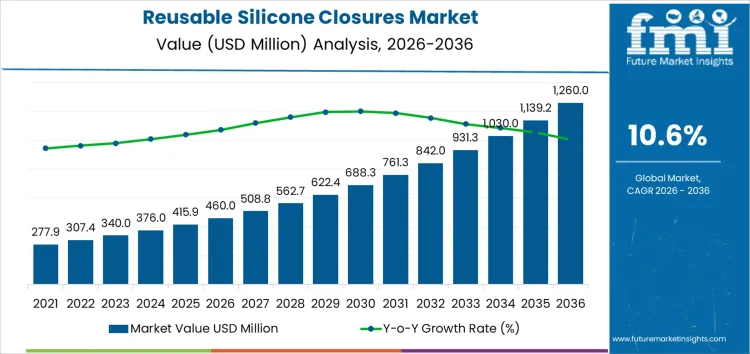
The reusable silicone closures market is expected to experience steady growth from 2026 to 2036. In 2026, the market value is projected to be USD 460 million, with consistent growth anticipated, reaching USD 1,260 million by 2036. The compound annual growth rate (CAGR) for this market is forecasted at 10.6%, driven by increasing consumer demand for sustainable and eco-friendly packaging solutions. Reusable silicone closures are gaining popularity due to their durability, reusability, and versatility, making them an attractive alternative to traditional plastic closures in various industries such as food and beverage, pharmaceuticals, and personal care.
The market will benefit from the growing global emphasis on reducing single-use plastics and adopting more sustainable packaging materials. As industries and consumers alike focus on sustainability, the adoption of reusable silicone closures will increase, supported by their cost-effectiveness and environmental benefits. Over the forecast period, the market is expected to experience steady growth as demand for eco-friendly packaging solutions rises across multiple sectors.
Quick Stats of the Reusable Silicone Closures Market
- Reusable Silicone Closures Market Value (2026): USD 460 million
- Reusable Silicone Closures Market Forecast Value (2036): USD 1,260 million
- Reusable Silicone Closures Market Global Forecast CAGR (2026-2036): 10.6%
- Reusable Silicone Closures Market Leading Segment: Material (Food-grade silicone) 55%
- Key Growth Regions in Reusable Silicone Closures Market: China
- Top Players in Reusable Silicone Closures Market: Tupperware, Weck, Silgan, KAI Group
What is the Growth Forecast for the Reusable Silicone Closures Market through 2036?
The growth forecast for the reusable silicone closures market indicates consistent and steady expansion, with a projected CAGR of 10.6%. Starting at USD 460 million in 2026, the market is expected to grow gradually, reaching USD 509.6 million in 2027, USD 564.3 million in 2028, and USD 625.2 million in 2029. By 2030, the market value will rise to USD 693.4 million, continuing its upward trajectory throughout the forecast period.
From 2031 to 2036, the market will experience continued growth, reaching USD 769.2 million in 2031, USD 853.9 million in 2032, and USD 948.1 million in 2033. The market will continue to expand steadily, reaching USD 1,053.9 million in 2034, USD 1,172.2 million in 2035, and finally USD 1,260 million by 2036. The compound absolute growth analysis shows a steady increase in market value over the forecast period, indicating the growing adoption of reusable silicone closures driven by the demand for more sustainable and environmentally friendly packaging solutions.
Reusable Silicone Closures Market Key Takeaways
| Metric | Value |
|---|---|
| Industry Sales Value (2026) | USD 460 million |
| Industry Forecast Value (2036) | USD 1,260 million |
| Industry Forecast CAGR (2026-2036) | 10.6% |
What Is Driving the Demand for the Reusable Silicone Closures Market Globally?
The global demand for reusable silicone closures is driven by increasing focus on sustainable packaging and the shift away from single use plastics in food, beverage, and household segments. Silicone closures, including caps, lids, stoppers, and seals, offer durability and flexibility that support repeated use across bottles, jars, tubs, and containers, reducing reliance on disposable alternatives. Consumers and brands are prioritising packaging that aligns with environmental goals, such as waste reduction, resource efficiency, and circular economy principles.
In response, manufacturers across packaged food, baby care, personal care, and beverage sectors are specifying silicone closures because they withstand repeated cleaning, resist degradation over time, and maintain functional performance in varied temperatures and conditions. The appeal of reusable silicone closures is reinforced by their inertness, which helps preserve product quality without imparting off flavours or interacting with contents, making them suitable for liquids, pastes, and solids alike. Growth in direct to consumer and subscription packaging, where repeat usage and minimal waste are valued, adds to adoption, as does heightened awareness of environmental impact through media and regulatory campaigns focused on single use plastic reduction.
Future demand for reusable silicone closures is expected to grow as sustainability commitments deepen across industries and consumer preference for durable, low impact packaging strengthens. Advances in silicone formulation and manufacturing technologies will enhance performance attributes such as sealing reliability, tactile quality, and compatibility with automated packaging lines, making reusable closures easier to integrate into existing supply chains.
Expansion of closed loop systems, return schemes, and refill at store or refill at home models will further reinforce uptake, as these systems rely on packaging that can withstand multiple life cycles. Regulatory landscapes in many regions are increasingly favouring reuse and recycled content mandates, encouraging brands to adopt materials and designs that support long term use. As infrastructure improves for cleaning, sorting, and redistribution, the cost benefit of reusable solutions becomes more attractive to both small and large producers. Consumer demand for visible sustainability credentials, combined with operational efficiencies gained through reduced need for single use inventory, positions reusable silicone closures as a growth area in packaging markets worldwide. Continued emphasis on environmental performance, supply chain resilience, and product differentiation will support steady expansion of this market segment.
What are the Leading Segments in the Global Reusable Silicone Closures Market?
The global reusable silicone closures market is segmented by application and closure type. Among applications, beverage & food storage leads the market, capturing 42% of the share, followed by premium food containers, household goods, kitchenware, consumer storage, and precision kitchenware. Beverage & food storage is a dominant segment due to the growing demand for sustainable, airtight, and leak-proof solutions for storing food and beverages. On the closure type side, reusable lids & caps dominate the market, accounting for 45% of the share, followed by stretch-fit closures, silicone caps & seals, and universal lids. Reusable lids & caps are favored for their durability, versatility, and ability to create a tight seal, making them ideal for various storage applications.
What Drives the Growth of Beverage & Food Storage in the Reusable Silicone Closures Market?
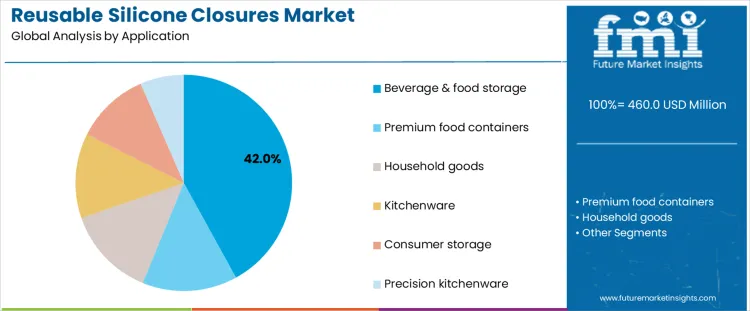
Beverage & food storage is the leading application segment in the reusable silicone closures market, holding 42% of the share. This growth is driven by the increasing demand for sustainable and eco-friendly alternatives to single-use plastic closures. Silicone closures are preferred for their reusability, durability, and ability to maintain airtight seals, which is crucial for preserving the freshness and quality of stored food and beverages.
As consumers become more environmentally conscious and seek ways to reduce plastic waste, reusable silicone closures have gained popularity in both household and commercial food storage applications. The versatility of silicone, which is heat-resistant, non-toxic, and easy to clean, further enhances its appeal in the food storage market. Additionally, the demand for eco-friendly packaging solutions in the beverage industry, as well as the growth in home-based food storage solutions, is expected to continue driving the growth of reusable silicone closures in this segment.
What is Driving the Demand for Reusable Lids & Caps in the Reusable Silicone Closures Market?
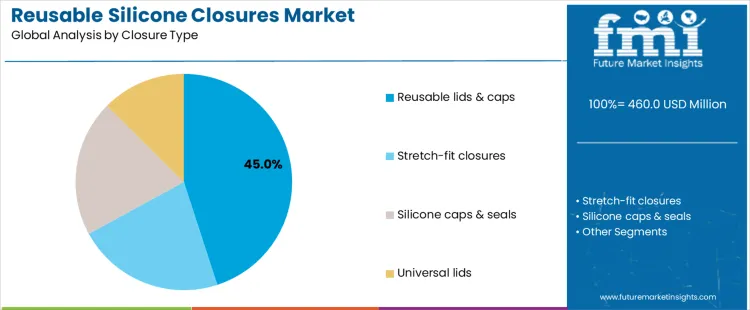
Reusable lids & caps are the leading closure type in the reusable silicone closures market, accounting for 45% of the share. These closures are highly favored for their versatility and ease of use in a variety of storage applications, particularly in beverage and food containers. Reusable lids & caps provide a secure, airtight seal that helps preserve the freshness of food and beverages, making them ideal for both short-term and long-term storage.
The ability to reuse these lids and caps multiple times, along with their resistance to wear and tear, contributes to their growing popularity, especially as consumers and businesses seek more sustainable packaging options. Furthermore, the growing focus on reducing single-use plastic and the increasing demand for reusable, durable products further support the demand for reusable lids & caps. As sustainability becomes a priority across industries, reusable silicone lids & caps are expected to maintain their leading position in the market, offering a long-lasting, eco-friendly solution for food and beverage storage.
What is the Summary of the Global Reusable Silicone Closures Market?
The global reusable silicone closures market is expanding as brands and consumers seek durable, sustainable alternatives to single use caps and seals across food and beverage, cosmetics, pharmaceuticals and household product packaging. Silicone closures are valued for flexibility, heat and cold resistance, airtight sealing and repeated use without significant performance loss. Growth reflects rising sustainability commitments, regulatory focus on waste reduction, and consumer preference for reusable packaging options. Adoption spans retail, direct to consumer and institutional markets where closures support reuse systems, extended product life and improved user experience.
What are the Key Drivers for the Global Reusable Silicone Closures Market?
Increasing emphasis on sustainability and reduction of disposable plastic waste is a primary driver for reusable silicone closures. Brands are integrating silicone caps, lids and seals to support refillable, reusable and circular packaging systems that align with environmental goals. Silicone’s robust thermal and chemical stability makes it suitable for a wide range of products, including beverages, baby food jars, cosmetics and medical containers. Growth in premium and lifestyle oriented products encourages closures that offer both performance and aesthetic quality. Expansion of reuse and return programmes by retailers and consumer preference for products with lower lifecycle impact further support market uptake.
What are the Restraints for the Global Reusable Silicone Closures Market?
One restraint is the higher initial cost of silicone closures compared with conventional single use caps and closures, which can affect adoption in price sensitive segments. Some brands and converters may hesitate to invest in reusable closure systems without established reuse logistics or incentives that ensure container returns. Integration of silicone closures into existing filling and sealing lines may require adjustments to equipment and processes, increasing implementation complexity. Consumer education and behaviour change are also factors, as success of reusable systems depends on consistent use and return participation. Variability in recycling and reuse infrastructure across regions impacts the ease of managing reusable systems at scale.
What is the Key Trends in the Global Reusable Silicone Closures Market?
A key trend is integration of reusable silicone closures with refillable packaging programmes that span retail and e commerce channels. Brands are designing closures with secure seals, ergonomic handling and compatibility with reusable bottles and jars. Co branding and consumer education efforts promote reusable systems as part of lifestyle choices focused on lower waste. Innovation in silicone compound formulations improves durability, food safety compliance and resistance to staining or odor retention. Partnerships between silicone closure suppliers, packaging converters and reuse logistics providers help standardise solutions that support scalability. Expansion of sustainability certification and labeling programmes also influences consumer confidence and purchase decisions in favor of reusable closure formats.
What is the Country-Wise Analysis of the Reusable Silicone Closures Market?
The reusable silicone closures market is projected to grow steadily, driven by increasing consumer demand for sustainable, durable, and eco-friendly packaging solutions. Silicone closures are used in various industries, including food and beverage, pharmaceuticals, and cosmetics, offering an effective alternative to traditional plastic closures. These closures are reusable, long-lasting, and environmentally friendly, making them a popular choice as businesses and consumers look to reduce waste. High-growth markets like China and India are seeing strong demand due to rapid industrialization, rising disposable incomes, and increasing awareness of environmental sustainability. Developed markets such as the USA, Germany, and Brazil are also experiencing steady growth, supported by regulatory pressures for sustainable packaging solutions and consumer preferences for high-quality, reusable products.
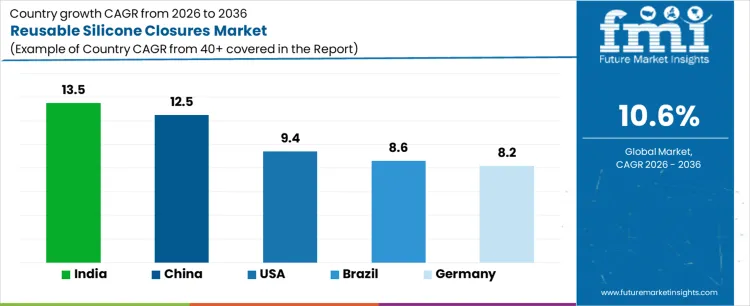
| Country | CAGR (%) |
|---|---|
| China | 12.5 |
| India | 13.5 |
| United States | 9.4 |
| Germany | 8.2 |
| Brazil | 8.6 |
What is the Growth Outlook for the Reusable Silicone Closures Market in China?
The reusable silicone closures market in China is expected to grow at a strong pace, with a projected CAGR of 12.5%. China’s rapidly expanding consumer goods market, particularly in food and beverage, pharmaceuticals, and cosmetics, is driving the demand for more sustainable and durable packaging solutions. As the country shifts towards more eco-friendly products and packaging materials, reusable silicone closures are becoming increasingly popular due to their long-lasting and recyclable nature. China’s growing middle class and increasing awareness of environmental issues further support the adoption of reusable silicone closures. The government’s focus on reducing plastic waste and promoting sustainability is expected to accelerate the growth of this market in China.
What is the Market Outlook for the Reusable Silicone Closures Market in India?
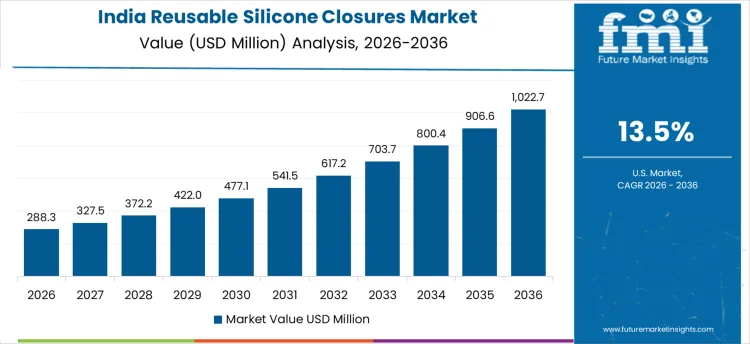
The reusable silicone closures market in India is projected to grow at the highest rate, with a projected CAGR of 13.5%. India’s fast-growing consumer market, especially in the food and beverage and pharmaceutical sectors, is driving strong demand for sustainable and reusable packaging solutions. As the Indian population becomes more environmentally conscious, the demand for eco-friendly alternatives to plastic closures is rising. The shift toward reusable packaging is also supported by government regulations aimed at reducing plastic waste. India’s expanding middle class, coupled with increasing disposable incomes, is further contributing to the market growth. As industries look for cost-effective, durable, and sustainable packaging options, the market for reusable silicone closures is expected to see significant growth.
What is the Growth Forecast for the Reusable Silicone Closures Market in the United States?
The reusable silicone closures market in the United States is expected to grow steadily, with a projected CAGR of 9.4%. In the U.S., consumers and businesses are increasingly adopting sustainable packaging solutions as part of a growing trend toward environmental responsibility. The demand for reusable silicone closures is rising in the food and beverage, pharmaceutical, and cosmetic industries, driven by a focus on reducing plastic waste and adopting more durable packaging options. The U.S. market is also influenced by government regulations aimed at promoting sustainability and reducing plastic use. As the trend toward eco-friendly packaging continues, the market for reusable silicone closures in the U.S. is expected to experience steady growth.
What is the Market Outlook for the Reusable Silicone Closures Market in Germany?
The reusable silicone closures market in Germany is projected to grow at a steady pace, with a projected CAGR of 8.2%. Germany’s strong emphasis on sustainability and environmentally friendly products is driving the adoption of reusable packaging solutions, including silicone closures. As the German market continues to prioritize eco-friendly alternatives to traditional packaging, the demand for reusable silicone closures is increasing, particularly in sectors like food packaging and pharmaceuticals. Germany’s regulatory framework, which promotes environmental responsibility and waste reduction, is further supporting the growth of this market. As consumer awareness of sustainable packaging grows, the market for reusable silicone closures in Germany is expected to see steady growth.
What are the Growth Prospects for the Reusable Silicone Closures Market in Brazil?
The reusable silicone closures market in Brazil is expected to grow at a moderate pace, with a projected CAGR of 8.6%. Brazil’s growing demand for sustainable packaging solutions, particularly in the food and beverage and pharmaceutical industries, is driving the adoption of reusable silicone closures. As consumers become more aware of the environmental impact of plastic waste, there is an increasing preference for reusable and eco-friendly packaging options. The Brazilian government’s focus on reducing plastic consumption and promoting sustainability is further contributing to market growth. While growth in Brazil may be slower compared to other regions, the demand for reusable, long-lasting closures is expected to drive steady expansion in the market.
What is the Competitive Landscape for the Reusable Silicone Closures Market?
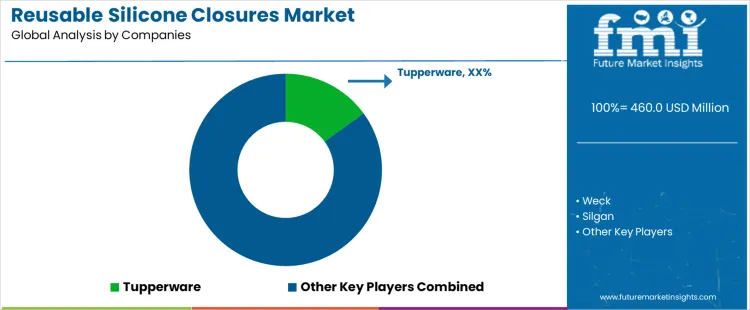
The reusable silicone closures market is growing rapidly as industries and consumers increasingly seek sustainable, durable, and eco-friendly alternatives to traditional packaging materials. Tupperware leads the market with its innovative reusable silicone closures, providing high-quality, flexible solutions designed to ensure airtight seals and enhance product longevity. Their strong focus on sustainability, ease of use, and product durability has positioned them as a dominant player in the market. Weck, Silgan, and KAI Group are key competitors, offering a range of reusable silicone closures tailored to meet the needs of various packaging applications. Weck specializes in high-quality glass jars with reusable silicone lids, focusing on eco-friendly home storage solutions. Silgan offers innovative silicone closures that provide durability and ease of use for food and beverage packaging, while KAI Group provides flexible, reusable silicone closures for a wide range of consumer products, including personal care and household goods.
These companies compete by focusing on product innovation, sustainability, and their ability to offer durable, reusable packaging solutions that reduce environmental impact. Their strategies emphasize the growing demand for long-lasting, eco-friendly alternatives in packaging that support the circular economy. As consumer preferences continue to shift toward sustainable products, the competitive landscape in the reusable silicone closures market will continue to evolve with a focus on enhancing functionality, cost-efficiency, and environmental responsibility.
Key Players of the Reusable Silicone Closures Market
- Tupperware
- Weck
- Silgan
- KAI Group
Scope of the Report
| Items | Values |
|---|---|
| Quantitative Units (2026) | USD Million |
| Application | Beverage & Food Storage, Premium Food Containers, Household Goods, Kitchenware, Consumer Storage, Precision Kitchenware |
| Closure Type | Reusable Lids & Caps, Stretch-Fit Closures, Silicone Caps & Seals, Universal Lids |
| Material | Food-Grade Silicone, Platinum-Cured Silicone, Silicone Blends, Silicone |
| Technology | High-Cycle Moulding & Durability Design, Precision Compression Moulding, High-Volume Moulding, Cost-Efficient Moulding |
| Companies | Tupperware, Weck, Silgan, KAI Group |
| Regions Covered | North America, Latin America, Western Europe, Eastern Europe, South Asia and Pacific, East Asia, Middle East & Africa |
| Countries Covered | United States, Canada, Mexico, Brazil, Argentina, Germany, France, United Kingdom, Italy, Spain, Netherlands, China, India, Japan, South Korea, ANZ, GCC Countries, South Africa |
| Additional Attributes | Dollar by sales by application, closure type, material, technology, and region. Includes market trends in reusable silicone closures, focusing on food-grade, platinum-cured, and silicone blends. Highlights the role of high-cycle moulding, precision compression moulding, and cost-efficient moulding in beverage, food storage, kitchenware, and household goods packaging. Focus on sustainability, performance, regulatory compliance, market share, and competitive positioning of key companies in the packaging market. |
Reusable Silicone Closures Market Segmentation
Application:
- Beverage & food storage
- Premium food containers
- Household goods
- Kitchenware
- Consumer storage
- Precision kitchenware
Closure Type:
- Reusable lids & caps
- Stretch-fit closures
- Silicone caps & seals
- Universal lids
- Others
Material:
- Food-grade silicone
- Platinum-cured silicone
- Silicone blends
- Silicone
- Others
Technology
- High-cycle moulding & durability design
- Precision compression moulding
- High-volume moulding
- Cost-efficient moulding
- Others
Region:
- Asia Pacific
- China
- Japan
- South Korea
- India
- Australia & New Zealand
- ASEAN
- Rest of Asia Pacific
- Europe
- Germany
- United Kingdom
- France
- Italy
- Spain
- Nordic
- BENELUX
- Rest of Europe
- North America
- United States
- Canada
- Mexico
- Latin America
- Brazil
- Chile
- Rest of Latin America
- Middle East & Africa
- Kingdom of Saudi Arabia
- Other GCC Countries
- Turkey
- South Africa
- Other African Union
- Rest of Middle East & Africa
Frequently Asked Questions
How big is the reusable silicone closures market in 2026?
The global reusable silicone closures market is valued at USD 460.0 million in 2026.
What will be the size of the reusable silicone closures market in 2036?
The market is projected to reach USD 1,260.0 million by 2036.
How fast will the reusable silicone closures market grow between 2026 and 2036?
The reusable silicone closures market will grow at a CAGR of 10.6% from 2026 to 2036.
Which application segment leads the reusable silicone closures market in 2026?
Beverage and food storage leads the market with a 42.0% share in 2026.
Who are the major players in the reusable silicone closures market?
Key players include Tupperware, Weck, Silgan, and KAI Group.
Preview the report firsthand - request a free sample
Get SampleGet the brochure for pricing and purchase details.
Get PDFTable of Content
- Executive Summary
- Global Market Outlook
- Demand-side Trends
- Supply-side Trends
- Technology Roadmap Analysis
- Analysis and Recommendations
- Market Overview
- Market Coverage / Taxonomy
- Market Definition / Scope / Limitations
- Market Background
- Market Dynamics
- Drivers
- Restraints
- Opportunity
- Trends
- Scenario Forecast
- Demand in Optimistic Scenario
- Demand in Likely Scenario
- Demand in Conservative Scenario
- Opportunity Map Analysis
- Product Life Cycle Analysis
- Supply Chain Analysis
- Investment Feasibility Matrix
- Value Chain Analysis
- PESTLE and Porter’s Analysis
- Regulatory Landscape
- Regional Parent Market Outlook
- Production and Consumption Statistics
- Import and Export Statistics
- Market Dynamics
- Global Market Analysis 2021 to 2025 and Forecast, 2026 to 2036
- Historical Market Size Value (USD Million) Analysis, 2021 to 2025
- Current and Future Market Size Value (USD Million) Projections, 2026 to 2036
- Y-o-Y Growth Trend Analysis
- Absolute $ Opportunity Analysis
- Global Market Pricing Analysis 2021 to 2025 and Forecast 2026 to 2036
- Global Market Analysis 2021 to 2025 and Forecast 2026 to 2036, By Application
- Introduction / Key Findings
- Historical Market Size Value (USD Million) Analysis By Application , 2021 to 2025
- Current and Future Market Size Value (USD Million) Analysis and Forecast By Application , 2026 to 2036
- Beverage & food storage
- Premium food containers
- Household goods
- Kitchenware
- Consumer storage
- Precision kitchenware
- Beverage & food storage
- Y-o-Y Growth Trend Analysis By Application , 2021 to 2025
- Absolute $ Opportunity Analysis By Application , 2026 to 2036
- Global Market Analysis 2021 to 2025 and Forecast 2026 to 2036, By Closure Type
- Introduction / Key Findings
- Historical Market Size Value (USD Million) Analysis By Closure Type, 2021 to 2025
- Current and Future Market Size Value (USD Million) Analysis and Forecast By Closure Type, 2026 to 2036
- Reusable lids & caps
- Stretch-fit closures
- Silicone caps & seals
- Universal lids
- Reusable lids & caps
- Y-o-Y Growth Trend Analysis By Closure Type, 2021 to 2025
- Absolute $ Opportunity Analysis By Closure Type, 2026 to 2036
- Global Market Analysis 2021 to 2025 and Forecast 2026 to 2036, By Material
- Introduction / Key Findings
- Historical Market Size Value (USD Million) Analysis By Material, 2021 to 2025
- Current and Future Market Size Value (USD Million) Analysis and Forecast By Material, 2026 to 2036
- Food-grade silicone
- Platinum-cured silicone
- Silicone blends
- Silicone
- Food-grade silicone
- Y-o-Y Growth Trend Analysis By Material, 2021 to 2025
- Absolute $ Opportunity Analysis By Material, 2026 to 2036
- Global Market Analysis 2021 to 2025 and Forecast 2026 to 2036, By Technology
- Introduction / Key Findings
- Historical Market Size Value (USD Million) Analysis By Technology, 2021 to 2025
- Current and Future Market Size Value (USD Million) Analysis and Forecast By Technology, 2026 to 2036
- High-cycle moulding & durability design
- Precision compression moulding
- High-volume moulding
- Cost-efficient moulding
- High-cycle moulding & durability design
- Y-o-Y Growth Trend Analysis By Technology, 2021 to 2025
- Absolute $ Opportunity Analysis By Technology, 2026 to 2036
- Global Market Analysis 2021 to 2025 and Forecast 2026 to 2036, By Region
- Introduction
- Historical Market Size Value (USD Million) Analysis By Region, 2021 to 2025
- Current Market Size Value (USD Million) Analysis and Forecast By Region, 2026 to 2036
- North America
- Latin America
- Western Europe
- Eastern Europe
- East Asia
- South Asia and Pacific
- Middle East & Africa
- Market Attractiveness Analysis By Region
- North America Market Analysis 2021 to 2025 and Forecast 2026 to 2036, By Country
- Historical Market Size Value (USD Million) Trend Analysis By Market Taxonomy, 2021 to 2025
- Market Size Value (USD Million) Forecast By Market Taxonomy, 2026 to 2036
- By Country
- USA
- Canada
- Mexico
- By Application
- By Closure Type
- By Material
- By Technology
- By Country
- Market Attractiveness Analysis
- By Country
- By Application
- By Closure Type
- By Material
- By Technology
- Key Takeaways
- Latin America Market Analysis 2021 to 2025 and Forecast 2026 to 2036, By Country
- Historical Market Size Value (USD Million) Trend Analysis By Market Taxonomy, 2021 to 2025
- Market Size Value (USD Million) Forecast By Market Taxonomy, 2026 to 2036
- By Country
- Brazil
- Chile
- Rest of Latin America
- By Application
- By Closure Type
- By Material
- By Technology
- By Country
- Market Attractiveness Analysis
- By Country
- By Application
- By Closure Type
- By Material
- By Technology
- Key Takeaways
- Western Europe Market Analysis 2021 to 2025 and Forecast 2026 to 2036, By Country
- Historical Market Size Value (USD Million) Trend Analysis By Market Taxonomy, 2021 to 2025
- Market Size Value (USD Million) Forecast By Market Taxonomy, 2026 to 2036
- By Country
- Germany
- UK
- Italy
- Spain
- France
- Nordic
- BENELUX
- Rest of Western Europe
- By Application
- By Closure Type
- By Material
- By Technology
- By Country
- Market Attractiveness Analysis
- By Country
- By Application
- By Closure Type
- By Material
- By Technology
- Key Takeaways
- Eastern Europe Market Analysis 2021 to 2025 and Forecast 2026 to 2036, By Country
- Historical Market Size Value (USD Million) Trend Analysis By Market Taxonomy, 2021 to 2025
- Market Size Value (USD Million) Forecast By Market Taxonomy, 2026 to 2036
- By Country
- Russia
- Poland
- Hungary
- Balkan & Baltic
- Rest of Eastern Europe
- By Application
- By Closure Type
- By Material
- By Technology
- By Country
- Market Attractiveness Analysis
- By Country
- By Application
- By Closure Type
- By Material
- By Technology
- Key Takeaways
- East Asia Market Analysis 2021 to 2025 and Forecast 2026 to 2036, By Country
- Historical Market Size Value (USD Million) Trend Analysis By Market Taxonomy, 2021 to 2025
- Market Size Value (USD Million) Forecast By Market Taxonomy, 2026 to 2036
- By Country
- China
- Japan
- South Korea
- By Application
- By Closure Type
- By Material
- By Technology
- By Country
- Market Attractiveness Analysis
- By Country
- By Application
- By Closure Type
- By Material
- By Technology
- Key Takeaways
- South Asia and Pacific Market Analysis 2021 to 2025 and Forecast 2026 to 2036, By Country
- Historical Market Size Value (USD Million) Trend Analysis By Market Taxonomy, 2021 to 2025
- Market Size Value (USD Million) Forecast By Market Taxonomy, 2026 to 2036
- By Country
- India
- ASEAN
- Australia & New Zealand
- Rest of South Asia and Pacific
- By Application
- By Closure Type
- By Material
- By Technology
- By Country
- Market Attractiveness Analysis
- By Country
- By Application
- By Closure Type
- By Material
- By Technology
- Key Takeaways
- Middle East & Africa Market Analysis 2021 to 2025 and Forecast 2026 to 2036, By Country
- Historical Market Size Value (USD Million) Trend Analysis By Market Taxonomy, 2021 to 2025
- Market Size Value (USD Million) Forecast By Market Taxonomy, 2026 to 2036
- By Country
- Kingdom of Saudi Arabia
- Other GCC Countries
- Turkiye
- South Africa
- Other African Union
- Rest of Middle East & Africa
- By Application
- By Closure Type
- By Material
- By Technology
- By Country
- Market Attractiveness Analysis
- By Country
- By Application
- By Closure Type
- By Material
- By Technology
- Key Takeaways
- Key Countries Market Analysis
- USA
- Pricing Analysis
- Market Share Analysis, 2025
- By Application
- By Closure Type
- By Material
- By Technology
- Canada
- Pricing Analysis
- Market Share Analysis, 2025
- By Application
- By Closure Type
- By Material
- By Technology
- Mexico
- Pricing Analysis
- Market Share Analysis, 2025
- By Application
- By Closure Type
- By Material
- By Technology
- Brazil
- Pricing Analysis
- Market Share Analysis, 2025
- By Application
- By Closure Type
- By Material
- By Technology
- Chile
- Pricing Analysis
- Market Share Analysis, 2025
- By Application
- By Closure Type
- By Material
- By Technology
- Germany
- Pricing Analysis
- Market Share Analysis, 2025
- By Application
- By Closure Type
- By Material
- By Technology
- UK
- Pricing Analysis
- Market Share Analysis, 2025
- By Application
- By Closure Type
- By Material
- By Technology
- Italy
- Pricing Analysis
- Market Share Analysis, 2025
- By Application
- By Closure Type
- By Material
- By Technology
- Spain
- Pricing Analysis
- Market Share Analysis, 2025
- By Application
- By Closure Type
- By Material
- By Technology
- France
- Pricing Analysis
- Market Share Analysis, 2025
- By Application
- By Closure Type
- By Material
- By Technology
- India
- Pricing Analysis
- Market Share Analysis, 2025
- By Application
- By Closure Type
- By Material
- By Technology
- ASEAN
- Pricing Analysis
- Market Share Analysis, 2025
- By Application
- By Closure Type
- By Material
- By Technology
- Australia & New Zealand
- Pricing Analysis
- Market Share Analysis, 2025
- By Application
- By Closure Type
- By Material
- By Technology
- China
- Pricing Analysis
- Market Share Analysis, 2025
- By Application
- By Closure Type
- By Material
- By Technology
- Japan
- Pricing Analysis
- Market Share Analysis, 2025
- By Application
- By Closure Type
- By Material
- By Technology
- South Korea
- Pricing Analysis
- Market Share Analysis, 2025
- By Application
- By Closure Type
- By Material
- By Technology
- Russia
- Pricing Analysis
- Market Share Analysis, 2025
- By Application
- By Closure Type
- By Material
- By Technology
- Poland
- Pricing Analysis
- Market Share Analysis, 2025
- By Application
- By Closure Type
- By Material
- By Technology
- Hungary
- Pricing Analysis
- Market Share Analysis, 2025
- By Application
- By Closure Type
- By Material
- By Technology
- Kingdom of Saudi Arabia
- Pricing Analysis
- Market Share Analysis, 2025
- By Application
- By Closure Type
- By Material
- By Technology
- Turkiye
- Pricing Analysis
- Market Share Analysis, 2025
- By Application
- By Closure Type
- By Material
- By Technology
- South Africa
- Pricing Analysis
- Market Share Analysis, 2025
- By Application
- By Closure Type
- By Material
- By Technology
- USA
- Market Structure Analysis
- Competition Dashboard
- Competition Benchmarking
- Market Share Analysis of Top Players
- By Regional
- By Application
- By Closure Type
- By Material
- By Technology
- Competition Analysis
- Competition Deep Dive
- Tupperware
- Overview
- Product Portfolio
- Profitability by Market Segments (Product/Age /Sales Channel/Region)
- Sales Footprint
- Strategy Overview
- Marketing Strategy
- Product Strategy
- Channel Strategy
- Weck
- Silgan
- KAI Group
- Tupperware
- Competition Deep Dive
- Assumptions & Acronyms Used
- Research Methodology


