

- Industry Size (2026)
- USD 107.6 Mn
- Forecast (2036)
- USD 149.3 Mn
- CAGR (2026 to 2036)
- 3.3%
Demand for Glass Cosmetic Bottles in South Korea Forecast and Outlook 2026 to 2036
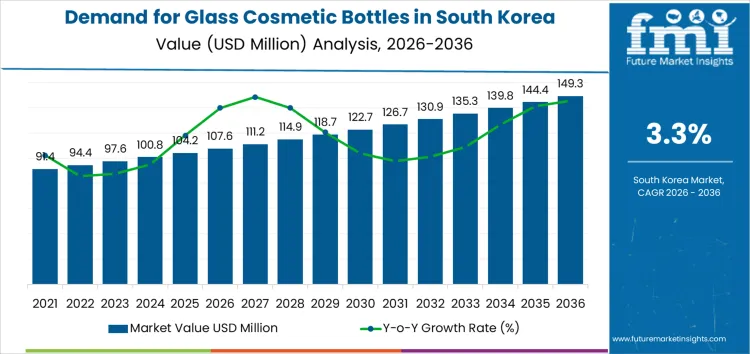
The demand for Glass Cosmetic Bottles in South Korea is expected to reach USD 107.6 million in 2026 and grow to USD 149.3 million by 2036, with a CAGR of 3.3%. Procurement priorities will increasingly shift toward suppliers offering cost efficiency without compromising quality, as buyers face growing pressure to maintain sustainable margins. Risk aversion among buyers will drive preferences for established suppliers, who are perceived as more reliable, thereby fostering longer-term contracts.
Vendor lock-in will be reinforced by the complexity and cost of switching suppliers, particularly for companies relying on specific glass designs or production processes. This will lead to higher switching costs, which may limit buyer flexibility but ensure stability in supply chains. As a result, vendors capable of offering tailored solutions that mitigate these switching costs will likely see enhanced buyer loyalty and sustained value capture over the forecast period.
Quick Stats for the Demand for Glass Cosmetic Bottles in South Korea
- Glass Cosmetic Bottles in South Korea Value (2026): USD 107.6 million
- Glass Cosmetic Bottles in South Korea Forecast Value (2036): USD 149.3 million
- Glass Cosmetic Bottles in South Korea Forecast CAGR (2026 to 2036): 3.3%
- Glass Cosmetic Bottles in South Korea Leading Segment: Borosilicate glass (57.9%)
- Key Growth Regions of Glass Cosmetic Bottles in South Korea: Jeju (leading CAGR ~4%)
- Top Players of Glass Cosmetic Bottles in South Korea: Gerresheimer, Verescence, Stoelzle Glass Group, Vidrala
What is the Growth Forecast for the Demand for Glass Cosmetic Bottles in South Korea through 2036?
The demand for glass cosmetic bottles in South Korea is projected to maintain a steady growth trajectory through 2036. In 2026, the market is expected to be valued at USD 107.6 million, with a compounded annual growth rate of 3.3%. As South Korean consumers continue to favor premium and environmentally friendly products, glass bottles are anticipated to gain further traction, particularly in the cosmetics and personal care sectors. The popularity of organic, sustainable, and high-quality beauty products, combined with the growing preference for packaging that aligns with eco-conscious values, is set to drive the market's expansion.
By 2036, the market for glass cosmetic bottles in South Korea is forecasted to reach USD 149.3 million, representing significant growth. The increasing demand for glass packaging will be further supported by innovations in design and functionality, making glass bottles more versatile and appealing for both consumers and manufacturers. As the market continues to evolve, the demand for glass cosmetic bottles will remain strong, driven by ongoing shifts toward sustainable, premium packaging solutions in the beauty and skincare industries.
Key Takeaways for Demand for Glass Cosmetic Bottles in South Korea
| Metric | Value |
|---|---|
| Industry Sales Value (2026) | USD 107.6 million |
| Industry Forecast Value (2036) | USD 149.3 million |
| Industry Forecast CAGR (2026 to 2036) | 3.3% |
Why is the Demand for Glass Cosmetic Bottles Growing in South Korea?
Demand for glass cosmetic bottles in South Korea is rising as manufacturers and brands adjust packaging strategies to meet evolving consumer preferences and production goals. South Korean consumers have shown increased interest in premium and luxury beauty products, which are often paired with glass packaging due to its perceived quality and tactile appeal. Glass bottles offer clarity, weight, and a surface that can support high-resolution printing and decorative finishes, attributes that align with local demand for visually distinctive cosmetics. Many domestic cosmetic producers, including skincare and fragrance brands, integrate glass packaging to reinforce brand identity and signal product value. Production and packaging engineers also favor glass for its inert nature, which helps preserve product integrity, especially for formulations sensitive to interactions with plastic materials.
Looking forward, several factors are likely to support continued demand for glass cosmetic bottles in South Korea. Environmental considerations are increasingly influencing packaging decisions, as both regulators and consumers place emphasis on materials that can be recycled repeatedly without significant degradation in quality. Glass’s recyclability positions it advantageously compared with multi-layer plastic alternatives in this context. Cosmetic brands, particularly those with sustainability commitments, are evaluating ways to reduce plastic use and enhance recyclability, and glass packaging often fits this objective. In addition, the expansion of online beauty retail channels creates opportunities for packaging that communicates quality through visual and tactile cues, which glass bottles can deliver effectively even in digital presentations. Manufacturing upgrades and investments in glass forming and finishing technologies also make it easier for local packagers to supply custom glass solutions tailored to brand specifications. These considerations contribute to a growing role for glass cosmetic bottles in South Korea’s beauty and personal care sector.
What is the Demand for Glass Cosmetic Bottles in South Korea?
The demand for glass cosmetic bottles in South Korea is largely influenced by two primary factors: the end-use industry and material type. Skincare products lead the charge in the end-use industry, while borosilicate glass is the dominant material type. These two segments significantly shape the overall demand and consumption trends. With skincare accounting for 43% of the market and borosilicate glass commanding a 57.9% share, both these segments are integral to understanding the current market landscape and future growth potential in South Korea.
How Does the Skincare Industry Influence the Glass Cosmetic Bottles Market?
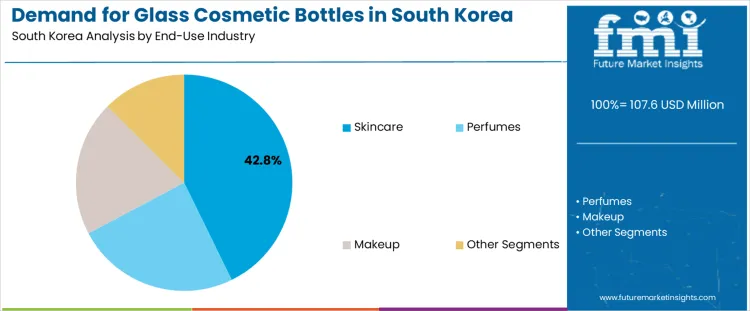
Skincare remains the leading end-use industry for glass cosmetic bottles in South Korea, representing 43% of the market share. The rising demand for premium and high-quality skincare products has directly contributed to the growing preference for glass packaging, which is seen as more elegant and luxurious compared to plastic alternatives. Glass bottles, especially those used in skincare, are favored for their ability to preserve the integrity of sensitive formulations by providing a barrier against air, light, and contaminants. The eco-conscious trends among South Korean consumers also support this shift towards glass, as it is perceived as a more sustainable material. Additionally, the aesthetics of glass packaging, with its sleek and premium look, appeal to high-end skincare brands that aim to differentiate their products in a competitive market. With skincare continuing to grow in South Korea, the demand for glass cosmetic bottles, particularly in this segment, is expected to rise. Furthermore, South Korean consumers' increasing awareness of sustainability continues to influence brands’ packaging choices, pushing for more eco-friendly glass packaging options.
How Does the Borosilicate Glass Material Type Shape the Market?
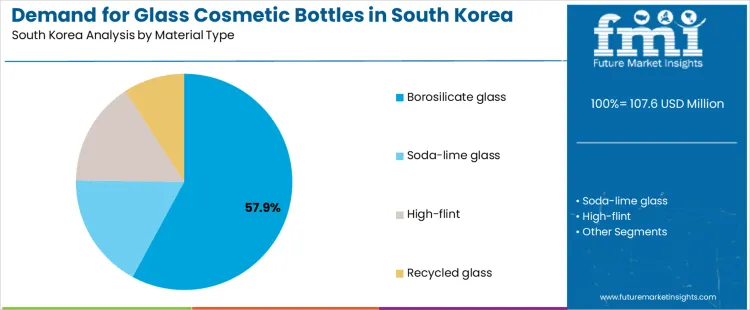
Borosilicate glass is the leading material type in the glass cosmetic bottles market in South Korea, holding a dominant 57.9% share. This material is favored in the cosmetic industry for its high thermal resistance and durability, making it particularly suitable for high-end products in both skincare and perfume segments. Borosilicate glass can withstand temperature fluctuations without breaking, ensuring that the packaging maintains its structural integrity, even under demanding storage conditions. The growing consumer preference for premium products has led brands to opt for borosilicate glass, especially in high-value segments like perfumes and luxury skincare items. Furthermore, borosilicate glass is seen as a more sustainable option compared to other types of glass, as it is fully recyclable, aligning with South Korea’s increasing focus on environmental responsibility. With the market for high-end cosmetics growing and the demand for durable, aesthetically pleasing packaging solutions continuing to rise, borosilicate glass is expected to remain the material of choice for the majority of cosmetic packaging in the country. The shift towards this material reflects broader consumer trends favoring quality, sustainability, and innovation in cosmetic packaging.
What Is the Current Demand for Glass Cosmetic Bottles in South Korea?
Demand for glass cosmetic bottles in South Korea is anchored in their widespread use by beauty and personal care product manufacturers that require premium packaging for fragrances, serums, essences, toners, and high-end skincare lines. Procurement correlates with production volumes in domestic cosmetics brands as well as international labels marketed locally. Glass bottles are valued for barrier properties, inertness, and aesthetic appeal, supporting product preservation and visual differentiation at retail. Demand patterns reflect activity in cosmetic formulation, seasonal product launches, and consumer preferences for reusable and recyclable packaging formats.
What Factors Are Driving Demand for Glass Cosmetic Bottles in South Korea?
Several drivers influence demand for glass cosmetic bottles in South Korea. Growth in the beauty and skincare sector encourages brands to invest in packaging that conveys quality and supports product stability. Consumer tastes that prioritize premium feel and sustainability reinforce selection of glass over plastic alternatives. Retail trends favour minimalist, transparent bottles that highlight formulation hues and textures. Export-oriented cosmetic producers also specify glass packaging to meet international quality expectations. Regulatory and retailer requirements related to packaging safety and recyclability further shape procurement decisions across national and boutique cosmetic lines.
What Are the Constraints on Demand for Glass Cosmetic Bottles in South Korea?
Despite ongoing uptake, constraints affect demand for glass cosmetic bottles in South Korea. Higher material and transportation costs relative to plastic and polymer alternatives influence overall packaging budgets, especially for mass-market products. Fragility and weight considerations in logistics and handling can deter use in high-volume or travel-oriented SKUs where durability and lightweight attributes are priorities. Recycling infrastructure and return systems may not fully capture all glass waste, affecting total lifecycle assessments. Some manufacturers opt for hybrid solutions or lightweight plastic where cost pressures and performance requirements outweigh aesthetic or sustainability imperatives.
What Trends Are Emerging in South Korea’s Glass Cosmetic Bottle Market?
Emerging trends in South Korea’s glass cosmetic bottle landscape include increased interest in eco-designed and refillable packaging that aligns with sustainability commitments. Brands are adopting bottles with recycled content and designs compatible with refill stations or pouch refills, reducing single-use waste. Customization and premium finishes such as frosted glass, embossing, and metallic accents are gaining traction in boutique and prestige segments. Collaboration with glassmakers on lightweight yet robust container designs helps balance aesthetics with reduced transportation impact. Consumer emphasis on transparency and minimal additives is shaping packaging choices that elevate brand narratives and perceived value.
What is the Regional Outlook for the Demand for Glass Cosmetic Bottles in South Korea?
The demand for glass cosmetic bottles in South Korea shows notable regional variations, with each province contributing differently based on local industrial activity and consumer demand. Jeju, South Gyeongsang, and South Jeolla stand out as key regions in driving growth for this packaging solution. The beauty and personal care industry, with its increasing demand for premium packaging solutions, is a significant driver. Jeju leads the demand with the highest projected growth, while other regions like South Gyeongsang and South Jeolla are also witnessing steady increases in demand due to their respective roles in the manufacturing and distribution of cosmetic products. The rising focus on sustainable and premium packaging solutions further enhances the regional demand for glass bottles, reflecting growing consumer preferences for environmentally friendly, high-quality packaging.
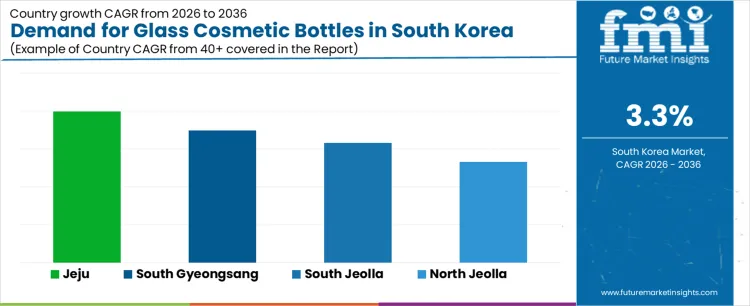
| Province | CAGR (2026 to 2036) |
|---|---|
| South Gyeongsang | 3.5% |
| North Jeolla | 2.7% |
| South Jeolla | 3.2% |
| Jeju | 4.0% |
What drives the demand for Glass Cosmetic Bottles in South Gyeongsang?
South Gyeongsang is projected to experience a CAGR of 3.5% in the demand for glass cosmetic bottles from 2026 to 2036. The region’s well-established manufacturing sector, particularly in cosmetics and personal care products, plays a crucial role in driving this demand. As the beauty and skincare industries continue to expand, the need for premium, sustainable packaging solutions increases. Glass cosmetic bottles are favored in these industries for their ability to preserve product quality and enhance the perceived value of the product. South Gyeongsang’s proximity to major transportation hubs and industrial zones also facilitates efficient distribution of cosmetic products, further boosting demand for glass bottles in this region. The rising trend of eco-conscious consumers who prefer sustainable packaging also contributes to the steady growth in demand for glass packaging solutions.
What influences the growth of Glass Cosmetic Bottles demand in North Jeolla?
North Jeolla’s demand for glass cosmetic bottles is expected to grow at a CAGR of 2.7% from 2026 to 2036. The region’s cosmetic industry, while smaller compared to other regions, is steadily expanding, driven by both domestic consumption and exports. North Jeolla is home to several cosmetic manufacturing plants that rely on high-quality, environmentally friendly packaging solutions like glass bottles to appeal to the premium segment of the market. As the demand for organic and natural cosmetic products grows, particularly in the skincare segment, there is an increasing need for packaging that aligns with these product characteristics. Glass bottles offer a sustainable and aesthetically appealing option that meets consumer preferences for premium packaging. North Jeolla’s rising focus on sustainability and eco-friendly packaging practices is also supporting the growth of glass packaging in the cosmetic sector.
What drives the demand for Glass Cosmetic Bottles in South Jeolla?
South Jeolla is expected to see a CAGR of 3.2% in glass cosmetic bottle demand from 2026 to 2036. The region’s growing role in the cosmetics and skincare industry, particularly in the production of organic and natural products, has led to an increased demand for premium and eco-friendly packaging solutions. Glass cosmetic bottles are preferred in this segment due to their ability to protect product integrity and offer a high-end appearance. South Jeolla’s focus on sustainability and reducing packaging waste aligns with the global trend toward environmentally friendly packaging. Additionally, the region’s expanding manufacturing capabilities and rising export activities in the beauty and personal care sector are further fueling demand for glass bottles as an ideal packaging solution. South Jeolla’s growing eco-conscious consumer base also drives demand for products that use recyclable materials, contributing to the rising popularity of glass packaging in the cosmetics market.
Why is Jeju’s demand for Glass Cosmetic Bottles the highest?
Jeju is projected to see the highest growth in demand for glass cosmetic bottles, with a CAGR of 4.0% from 2026 to 2036. As a major tourist destination, Jeju has a strong presence in the retail and hospitality sectors, driving demand for premium cosmetic products. Glass cosmetic bottles are favored for their luxurious, high-end appearance, making them ideal for Jeju’s tourism-driven market. The region’s increasing focus on eco-friendly packaging aligns with the growing trend in the beauty industry toward sustainable solutions. Jeju’s role as a gateway for international exports, particularly in cosmetics, further supports the demand for glass bottles. Additionally, the region's vibrant consumer market, driven by both domestic residents and international visitors, is increasingly leaning toward products that offer both quality and environmental responsibility. As sustainability and premium packaging continue to influence consumer choices, Jeju is well-positioned to lead the demand for glass cosmetic bottles in South Korea.
How are Competitors Differentiating in the Glass Cosmetic Bottle Market in South Korea?
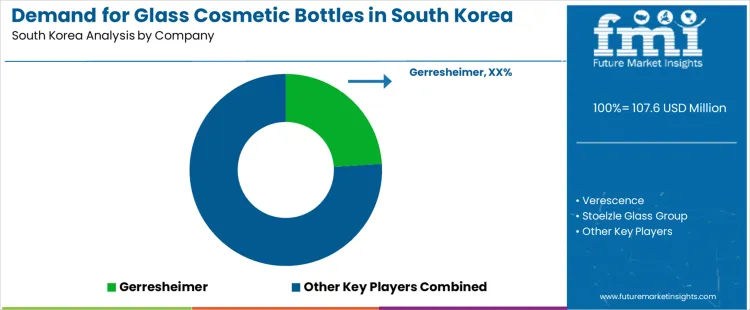
In the South Korean glass cosmetic bottle market, competition centers around premium quality, innovative design, and sustainability. Gerresheimer leads by offering highly customizable glass packaging with a focus on durability and aesthetic appeal, aligning with South Korea's luxury beauty sector. Other competitors, such as Verescence and Stoelzle Glass Group, differentiate by offering unique designs, including embossed and frosted glass options, to cater to high-end cosmetic brands. These companies also invest in advanced manufacturing techniques to ensure that their glass bottles are both functional and visually striking. Sustainability is becoming an increasingly important factor, with several players, including Vidrala, emphasizing eco-friendly production methods and recyclable glass, addressing the growing demand for sustainable packaging solutions in South Korea.
To capture market share, companies rely heavily on product brochures that highlight their premium design capabilities, customization options, and commitment to environmental responsibility. These brochures allow companies to effectively communicate their value proposition, showcasing how their glass packaging can enhance brand identity while meeting the eco-conscious preferences of South Korean consumers. As competition intensifies, continuous innovation in both design and sustainability will be crucial for maintaining a competitive edge in the evolving beauty packaging market.
Key Players of the Demand for Glass Cosmetic Bottles in South Korea
- Gerresheimer
- Verescence
- Stoelzle Glass Group
- Vidrala
Scope of the Report
| Items | Values |
|---|---|
| Quantitative Units (2026) | USD Million |
| End-Use Industry | Skincare, Perfumes, Makeup, Other Segments |
| Material Type | Borosilicate glass, Soda-lime glass, High-flint, Recycled glass |
| Companies | Gerresheimer, Verescence, Stoelzle Glass Group, Vidrala |
| Region Covered | South Korea |
| Provinces Covered | South Gyeongsang, North Jeolla, South Jeolla, Jeju |
| Additional Attributes | Dollar sales by end-use industry and material type. Trends show growing demand for eco-friendly packaging and high-quality materials. Glass offers superior durability and aesthetics for premium cosmetic brands, driving the shift toward specialized glass types like borosilicate and recycled glass. |
Demand for Glass Cosmetic Bottles in South Korea
End-Use Industry
- Skincare
- Perfumes
- Makeup
- Other Segments
Material Type
- Borosilicate Glass
- Soda-Lime Glass
- High-Flint Glass
- Recycled Glass
Provinces
- South Gyeongsang
- North Jeolla
- South Jeolla
- Jeju
Bibliography
- Ministry of Environment (Republic of Korea). (2024, January 26). Ministry of Environment, 2024 major policy implementation plan (Press release). Government of the Republic of Korea.
- Korea Environment Corporation. (2024). K-eco 2023–2024 sustainability report. Korea Environment Corporation.
- Ministry of Food and Drug Safety (Republic of Korea). (2024). Standards and specifications for utensils, containers and packages (Notification No. 2024-29). Government of the Republic of Korea.
Frequently Asked Questions
How big is the demand for glass cosmetic bottles in south korea in 2026?
The demand for glass cosmetic bottles in south korea is estimated to be valued at USD 107.6 million in 2026.
What will be the size of glass cosmetic bottles in south korea in 2036?
The market size for the glass cosmetic bottles in south korea is projected to reach USD 149.3 million by 2036.
How much will be the demand for glass cosmetic bottles in south korea growth between 2026 and 2036?
The demand for glass cosmetic bottles in south korea is expected to grow at a 3.3% CAGR between 2026 and 2036.
What are the key product types in the glass cosmetic bottles in south korea?
The key product types in glass cosmetic bottles in south korea are skincare, perfumes, makeup and other segments.
Which material type segment is expected to contribute significant share in the glass cosmetic bottles in south korea in 2026?
In terms of material type , borosilicate glass segment is expected to command 57.9% share in the glass cosmetic bottles in south korea in 2026.
Preview the report firsthand - request a free sample
Get SampleGet the brochure for pricing and purchase details.
Get PDFTable of Content
- Executive Summary
- South Korea Market Outlook
- Demand-side Trends
- Supply-side Trends
- Technology Roadmap Analysis
- Analysis and Recommendations
- Market Overview
- Market Coverage / Taxonomy
- Market Definition / Scope / Limitations
- Market Background
- Market Dynamics
- Drivers
- Restraints
- Opportunity
- Trends
- Scenario Forecast
- Demand in Optimistic Scenario
- Demand in Likely Scenario
- Demand in Conservative Scenario
- Opportunity Map Analysis
- Product Life Cycle Analysis
- Supply Chain Analysis
- Investment Feasibility Matrix
- Value Chain Analysis
- PESTLE and Porter’s Analysis
- Regulatory Landscape
- Regional Parent Market Outlook
- Production and Consumption Statistics
- Import and Export Statistics
- Market Dynamics
- South Korea Market Analysis 2021 to 2025 and Forecast, 2026 to 2036
- Historical Market Size Value (USD Million) Analysis, 2021 to 2025
- Current and Future Market Size Value (USD Million) Projections, 2026 to 2036
- Y-o-Y Growth Trend Analysis
- Absolute $ Opportunity Analysis
- South Korea Market Pricing Analysis 2021 to 2025 and Forecast 2026 to 2036
- South Korea Market Analysis 2021 to 2025 and Forecast 2026 to 2036, By End-Use Industry
- Introduction / Key Findings
- Historical Market Size Value (USD Million) Analysis By End-Use Industry , 2021 to 2025
- Current and Future Market Size Value (USD Million) Analysis and Forecast By End-Use Industry , 2026 to 2036
- Skincare
- Perfumes
- Makeup
- Other Segments
- Skincare
- Y-o-Y Growth Trend Analysis By End-Use Industry , 2021 to 2025
- Absolute $ Opportunity Analysis By End-Use Industry , 2026 to 2036
- South Korea Market Analysis 2021 to 2025 and Forecast 2026 to 2036, By Material Type
- Introduction / Key Findings
- Historical Market Size Value (USD Million) Analysis By Material Type, 2021 to 2025
- Current and Future Market Size Value (USD Million) Analysis and Forecast By Material Type, 2026 to 2036
- Borosilicate glass
- Soda-lime glass
- High-flint
- Recycled glass
- Borosilicate glass
- Y-o-Y Growth Trend Analysis By Material Type, 2021 to 2025
- Absolute $ Opportunity Analysis By Material Type, 2026 to 2036
- Market Structure Analysis
- Competition Dashboard
- Competition Benchmarking
- Market Share Analysis of Top Players
- By Regional
- By End-Use Industry
- By Material Type
- Competition Analysis
- Competition Deep Dive
- Gerresheimer
- Overview
- Product Portfolio
- Profitability by Market Segments (Product/Age /Sales Channel/Region)
- Sales Footprint
- Strategy Overview
- Marketing Strategy
- Product Strategy
- Channel Strategy
- Verescence
- Stoelzle Glass Group
- Vidrala
- Gerresheimer
- Competition Deep Dive
- Assumptions & Acronyms Used
- Research Methodology


