

- Industry Size (2026)
- USD 737.9 Mn
- Forecast (2036)
- USD 1648 Mn
- CAGR (2026 to 2036)
- 8.4%
Sweat-Resistant Sensorial Modifiers Market Forecast and Outlook (2026 to 2036)
The sweat-resistant sensorial modifiers market is projected to grow from USD 737.9 million in 2026 to USD 1,648 million by 2036, reflecting a compound annual growth rate (CAGR) of 8.4%. These modifiers are primarily used in cosmetic and personal care products to enhance their durability and performance, particularly in products like deodorants, anti-perspirants, and sweat-proof skincare. As consumer demand for long-lasting, effective solutions in personal care products grows, sweat-resistant sensorial modifiers are becoming more widely used. Innovations in these modifiers aim to provide enhanced comfort and skin feel, improving the consumer experience while maintaining efficacy against sweat and moisture.
The market growth is further supported by increasing awareness of the importance of sweat-resistant and long-lasting personal care products, especially in the wake of growing fitness trends and active lifestyles. Additionally, as consumers seek products that perform well under a variety of conditions, from sports to everyday use, the adoption of sweat-resistant sensorial modifiers is expected to rise, particularly with advancements in formulation technology that offer better skin compatibility and a more pleasant sensory experience.
Quick Stats of the Sweat-Resistant Sensorial Modifiers Market
- Sweat-Resistant Sensorial Modifiers Market Value (2026): USD 737.9 million
- Sweat-Resistant Sensorial Modifiers Market Forecast Value (2036): USD 1,648 million
- Sweat-Resistant Sensorial Modifiers Market Global Forecast CAGR (2026-2036): 8.4%
- Key Growth Regions in Sweat-Resistant Sensorial Modifiers Market: China
- Top Players in Sweat-Resistant Sensorial Modifiers Market: Dow, Ecolab, Wacker Chemie, Evonik, Momentive, Shin-Etsu Chemical, BASF, Croda, Clariant, Solvay, Ashland
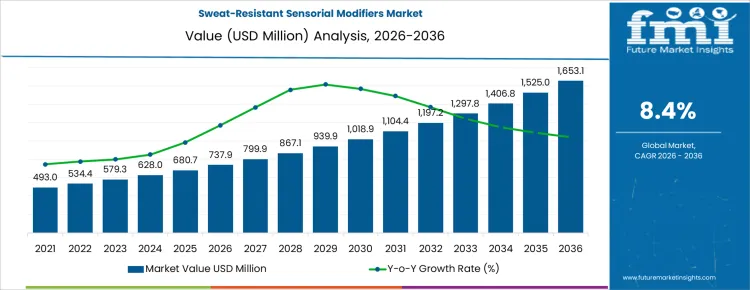
What is the Growth Forecast for the Sweat-Resistant Sensorial Modifiers Market through 2036?
The 10-year growth comparison for the sweat-resistant sensorial modifiers market shows steady, continuous expansion throughout the forecast period. Starting at USD 737.9 million in 2026, the market grows to USD 801.3 million in 2027 and USD 871.5 million in 2028, reflecting consistent growth as demand for long-lasting personal care solutions continues to rise. These early years of the forecast period show gradual adoption as the market matures and more consumers seek sweat-resistant products that offer enhanced comfort.
From 2028 to 2030, the market continues its upward trajectory, reaching USD 948.4 million in 2029 and USD 1,033.9 million in 2030. This period reflects a phase of acceleration as the benefits of sweat-resistant sensorial modifiers become more widely recognized across a variety of personal care categories. Between 2030 and 2035, the market experiences stronger growth, reaching USD 1,128.2 million in 2031, USD 1,232.5 million in 2032, and USD 1,347.7 million in 2033, driven by technological advancements in formulation and a growing consumer base.
By 2035, the market is projected to reach USD 1,475.9 million, with the final projected market value of USD 1,648 million expected in 2036. The comparison indicates steady growth in the early years, with noticeable acceleration in the later years due to increased consumer demand, continued product innovations, and the growing focus on sweat-resistant solutions in the personal care sector.
Sweat-Resistant Sensorial Modifiers Market Key Takeaways
| Metric | Value |
|---|---|
| Industry Sales Value (2026) | USD 737.9 million |
| Industry Forecast Value (2036) | USD 1,648 million |
| Industry Forecast CAGR (2026-2036) | 8.4% |
What Is Driving the Demand for the Sweat Resistant Sensorial Modifiers Market Globally?
The global demand for sweat resistant sensorial modifiers is being driven by rising consumer expectations for personal care and cosmetic products that maintain performance and comfort under active, humid, or prolonged wear conditions. Sensorial modifiers are formulation ingredients that influence texture, feel, spreadability, and overall user experience. When tailored for sweat resistance, these modifiers help products - such as antiperspirants, deodorants, sunscreens, setting sprays, long wear makeup, body lotions, and performance skincare - retain their sensory appeal and functional effectiveness even during physical activity or in warm climates. Growth in health and wellness lifestyles, fitness culture, outdoor activities, and year round travel has increased demand for cosmetic and personal care formulations that feel comfortable on skin, do not run or migrate with perspiration, and maintain look and feel throughout the day. Social media and beauty influencers have amplified interest in “active lifestyle” beauty and care, encouraging brands to innovate with modifiers that balance durability, aesthetics, and skin comfort. Regulatory focus on ingredient safety and the shift toward milder, more skin friendly alternatives also influence selection of sweat resistant modifiers that can perform without irritation.
Future demand for sweat resistant sensorial modifiers is expected to grow as personal care and cosmetic markets continue to prioritise performance and experiential differentiation. Advances in polymer chemistry, silicone alternatives, and hybrid materials will expand options that deliver long lasting sensory benefits without compromising breathability or clean label positioning. Sustainability trends will shape innovation, as brands seek modifiers that align with biodegradability, natural origin, or lower environmental impact while still offering sweat resistant properties. Growth in hot and humid regions, including parts of Asia Pacific, the Middle East, and Latin America, supports broader adoption of sweat resistant formulations, particularly where climate heightens demand for products that maintain texture and stability. Consumer segmentation by age, activity level, and lifestyle will influence product development, with performance oriented modifiers tailored for athletes, outdoor workers, and daily commuters alike. As digital commerce and personalized beauty solutions expand globally, brands will look to incorporate sweat resistant sensorial modifiers that enhance product differentiation, user satisfaction, and brand loyalty. Continued emphasis on formulation innovation that balances efficacy, comfort, and sustainability is expected to sustain growth of this market segment worldwide.
What are the Leading Segments in the Global Sweat-Resistant Sensorial Modifiers Market?
The global sweat-resistant sensorial modifiers market is segmented into primary function and format. Nursing homes are the leading primary function segment, driven by the growing demand for specialized products designed to address the needs of elderly residents, particularly in terms of comfort and long-lasting effects. Slip and spread optimization, sweat/water resistance, matte/anti-shine control, and long-lasting after-feel are additional key functions driving the market. In terms of format, direct facility contracts hold the largest share, followed by gels, powders, liquid dispersions, and hybrid systems. The growth of the market is largely driven by the increasing demand for formulations that provide both functional benefits and a pleasant sensory experience in sectors such as healthcare, personal care, and cosmetics.
What Drives the Growth of Nursing Homes in the Sweat-Resistant Sensorial Modifiers Market?
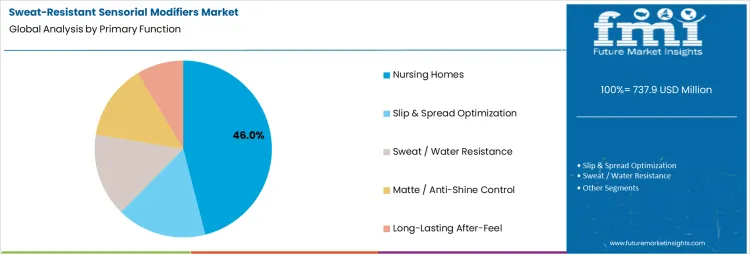
Nursing homes are a dominant segment in the sweat-resistant sensorial modifiers market due to the specific needs of elderly individuals, particularly in relation to sweat resistance, comfort, and skin protection. The demand for sweat-resistant sensorial modifiers in nursing homes is driven by the need for products that ensure long-lasting effects without frequent reapplication. These modifiers help address common challenges faced by elderly residents, such as moisture buildup, discomfort, and the need for continuous protection against environmental factors like sweat and humidity. In nursing homes, where residents often require assistance with personal care routines, products that provide sweat and water resistance, as well as a long-lasting after-feel, are increasingly valued. The need for these properties is essential in products like body lotions, deodorants, and incontinence care products, which require durability, effectiveness, and comfort throughout the day. Additionally, as the population of elderly individuals continues to grow globally, the demand for specialized care products, including sensorial modifiers that offer sweat resistance, is expected to rise. The focus on improving the quality of life for nursing home residents and enhancing their comfort during daily activities is driving the growth of this segment. As nursing homes continue to prioritize resident well-being, the market for sweat-resistant sensorial modifiers is projected to maintain strong growth.
What is Driving the Demand for Direct Facility Contracts in the Sweat-Resistant Sensorial Modifiers Market?
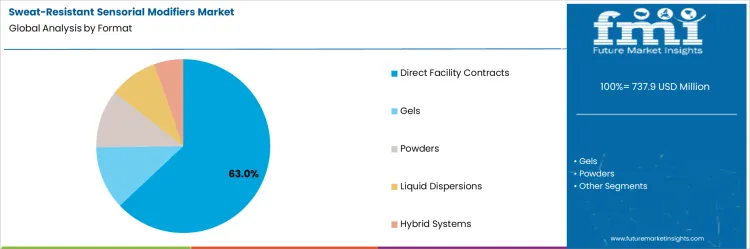
Direct facility contracts are the leading format in the sweat-resistant sensorial modifiers market, accounting for the largest share. These contracts are primarily driven by the demand for bulk supply and specialized formulations in sectors such as healthcare facilities, nursing homes, and personal care manufacturing. Direct facility contracts provide a streamlined approach to procurement, allowing facilities to ensure consistent supply of high-performance sensorial modifiers that meet the needs of their residents or clients. In healthcare settings, where patient comfort and hygiene are crucial, the demand for sweat-resistant, water-resistant, and long-lasting products is significant. Products in formats like gels, powders, and liquid dispersions, which are suited for easy application and long-lasting effects, are commonly supplied under these contracts. Additionally, the growing focus on quality standards and the need for products that can withstand challenging conditions, such as high humidity or sweat, make direct facility contracts a convenient solution. By securing direct contracts, facilities can also ensure cost-effectiveness while maintaining high-quality product standards for residents or clients. As industries like healthcare, nursing homes, and personal care manufacturing continue to grow, the reliance on direct facility contracts for specialized products like sweat-resistant sensorial modifiers is expected to remain strong. This trend reflects the increasing importance of long-lasting, efficient, and comfortable formulations in consumer and healthcare products.
What is the Summary of the Global Sweat Resistant Sensorial Modifiers Market?
The global sweat resistant sensorial modifiers market is expanding as personal care and cosmetic brands develop products that maintain desirable feel and performance under heat and perspiration. Sensorial modifiers adjust texture, slip, and skin/hair feel while helping formulas resist moisture and friction. Rising consumer demand for longer lasting makeup, skincare and body care products that perform during activity supports adoption. Growth reflects innovation in ingredient systems that balance sensorial quality with durability, as well as increasing preference for active and outdoor lifestyles across regions.
What are the Key Drivers for the Global Sweat Resistant Sensorial Modifiers Market?
A key driver is demand for personal care products that remain comfortable and effective during sweat exposure, especially in makeup, sunscreen and long wear skincare categories. Active consumers and professionals expect formulations that do not break down under heat, humidity or physical exertion. Brands are responding by incorporating sensorial modifiers that help products stay smooth on skin while resisting sweat induced migration or tackiness. Investment in premium and performance oriented products in emerging and mature markets encourages formulators to adopt advanced modifiers. Rapid expansion of lifestyle and outdoor activity trends also motivates interest in sweat resistant sensory technologies.
What are the Restraints for the Global Sweat Resistant Sensorial Modifiers Market?
One restraint is formulation complexity when balancing sweat resistance with a pleasant feel and compatibility with diverse skin types. Developing modifiers that do not compromise product spreadability, adhesion or comfort requires extensive testing and expertise. Some high performance modifiers may add cost or require adjustment of other ingredients, affecting pricing for value oriented products. Regulatory scrutiny on certain film forming or silicone based actives in some regions can influence selection and compliance. Consumer sensitivity to heavy or occlusive sensations may limit appeal if sweat resistant systems deliver an undesirable feel.
What is the Key Trends in the Global Sweat Resistant Sensorial Modifiers Market?
A key trend is innovation in hybrid modifier systems that support both sweat resistance and enhanced sensorial qualities such as softness, silkiness and light texture. Manufacturers are developing bio based and silicone free options that deliver resilient feel and performance to meet sustainability and clean beauty expectations. Integration of modifiers with multifunctional benefits, such as UV protection, hydration retention or mattifying effect, is gaining interest. Use of advanced in vitro and in use sensory testing helps brands refine texture and performance balance. Collaboration between ingredient developers and cosmetic formulators supports custom modifier blends tailored to specific product formats and consumer segments.
What is the Country-Wise Analysis of the Sweat-Resistant Sensorial Modifiers Market?
The sweat-resistant sensorial modifiers market is projected to experience steady growth, driven by increasing demand for long-lasting and high-performance personal care products, particularly in the skincare and cosmetics sectors. These modifiers are designed to improve product stability, texture, and resistance to sweat, providing consumers with enhanced product experiences. As consumers seek products that deliver superior performance, particularly in humid or sweaty conditions, the demand for sensorial modifiers that maintain efficacy is rising. High-growth markets like China are witnessing robust demand driven by a growing middle class and increased interest in premium, long-lasting personal care solutions. Developed markets such as the USA, UK, and Germany are also experiencing steady growth, supported by consumer demand for high-quality, sweat-resistant formulations.
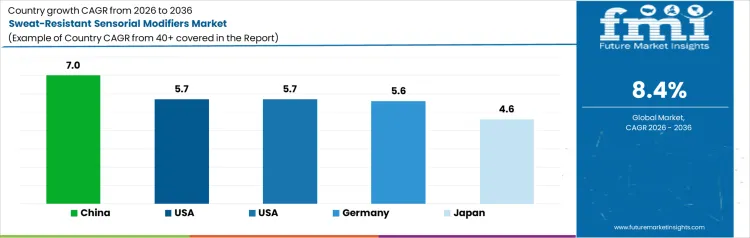
| Country | CAGR (2026-2036) |
|---|---|
| China | 7% |
| United States | 5.7% |
| United Kingdom | 5.7% |
| Japan | 4.6% |
| Germany | 5.6% |
What is the Growth Outlook for the Sweat-Resistant Sensorial Modifiers Market in China?
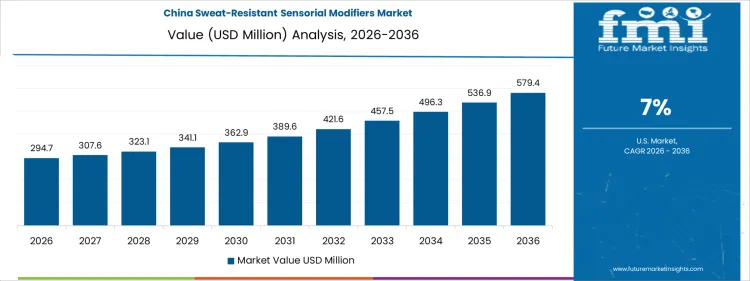
The sweat-resistant sensorial modifiers market in China is expected to grow at the highest rate, with a projected CAGR of 7%. China’s rapidly expanding personal care market, combined with increasing consumer demand for high-performance, long-lasting products, is driving the adoption of sweat-resistant sensorial modifiers. As Chinese consumers become more focused on effective skincare and cosmetics, particularly in humid climates, the need for products that can withstand sweat and provide long-lasting performance is increasing. With a growing middle class, rising disposable incomes, and expanding interest in premium personal care solutions, China is poised to lead the market for sweat-resistant sensorial modifiers.
What is the Market Outlook for the Sweat-Resistant Sensorial Modifiers Market in the United States?
The sweat-resistant sensorial modifiers market in the United States is projected to grow steadily, with a projected CAGR of 5.7%. The U.S. personal care and cosmetics market is characterized by strong consumer demand for long-lasting, effective products that deliver superior performance. With increasing awareness of the need for sweat-resistant solutions in skincare, deodorants, and makeup, the adoption of sensorial modifiers is on the rise. U.S. consumers are increasingly seeking products that not only perform well but also provide enhanced experiences in challenging conditions. The demand for innovative and sweat-resistant formulations is expected to drive steady market growth, supported by consumer interest in high-performance, high-quality personal care products.
What is the Growth Forecast for the Sweat-Resistant Sensorial Modifiers Market in the United Kingdom?
The sweat-resistant sensorial modifiers market in the United Kingdom is expected to grow at a steady pace, with a projected CAGR of 5.7%. The UK’s growing demand for high-performance, long-lasting personal care products is driving the adoption of sweat-resistant sensorial modifiers. Consumers in the UK are increasingly seeking products that offer enhanced performance in humid or active conditions, leading to greater demand for formulations with improved resistance to sweat. The trend towards multifunctional, high-quality products is further supporting the market. Additionally, the growing focus on product innovation, particularly in skincare and cosmetics, is expected to drive steady market growth in the UK.
What is the Market Outlook for the Sweat-Resistant Sensorial Modifiers Market in Japan?
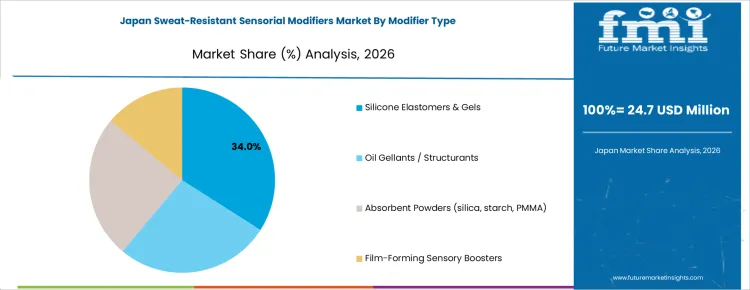
The sweat-resistant sensorial modifiers market in Japan is expected to grow at a moderate pace, with a projcted CAGR of 4.6%. Japan’s personal care and cosmetics market is well-established, with high demand for high-performance, effective products. However, compared to other regions, the adoption of sweat-resistant sensorial modifiers in Japan is expected to be slower due to more cautious consumer behavior and established preferences for traditional skincare products. Nevertheless, with increasing awareness of the benefits of sweat-resistant solutions in skincare and cosmetics, the market is expected to see steady growth. Innovations in the formulation of long-lasting products tailored to the specific needs of Japanese consumers will support moderate market expansion in the coming years.
What are the Growth Prospects for the Sweat-Resistant Sensorial Modifiers Market in Germany?
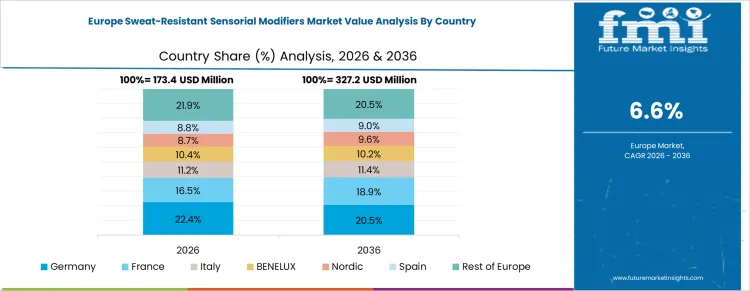
The sweat-resistant sensorial modifiers market in Germany is expected to grow steadily, with a projected CAGR of 5.6%. Germany’s well-established personal care market, coupled with increasing consumer demand for products that offer enhanced performance, particularly in active or humid conditions, is driving the market. German consumers are increasingly seeking innovative, long-lasting formulations that provide sweat resistance in skincare and cosmetics. The demand for high-quality, effective personal care products is expected to support steady market growth in Germany, as consumers prioritize both product performance and sustainability. As the trend toward multifunctional, performance-driven personal care solutions continues, the market for sweat-resistant sensorial modifiers is expected to experience steady growth in Germany.
What is the Competitive Landscape for the Sweat-Resistant Sensorial Modifiers Market?
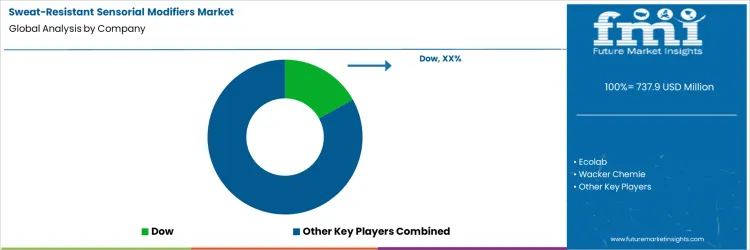
The sweat-resistant sensorial modifiers market is expanding as industries in personal care and cosmetics seek innovative solutions that enhance the longevity and performance of products, particularly in humid or sweaty conditions. Dow leads the market with its advanced sensorial modifiers, which are designed to improve the wear and feel of personal care formulations, ensuring long-lasting performance even under sweat-inducing conditions. Their strong portfolio of high-performance products has established them as a dominant player in the market. Ecolab, Wacker Chemie, and Evonik are key competitors, each offering specialized sensorial modifiers that focus on improving product stability and texture in challenging environments. Ecolab provides sustainable solutions for personal care, while Wacker Chemie and Evonik focus on functional ingredients that enhance the sensory experience and sweat resistance in a variety of formulations.
Momentive, Shin-Etsu Chemical, BASF, Croda, Clariant, Solvay, and Ashland further contribute to the competitive landscape with their own innovative sensorial modifiers. Momentive and Shin-Etsu Chemical are recognized for their silicone-based solutions, which provide smooth application and long-lasting effects in sweat-prone conditions. BASF and Croda offer a range of modifiers that cater to both sensory appeal and performance, while Clariant and Solvay focus on sustainable ingredients that enhance product quality. Ashland contributes specialized solutions for improving product feel and resilience in humid environments. These companies compete through their ability to deliver high-performance, sustainable, and sweat-resistant sensorial modifiers that meet the evolving demands of the personal care and cosmetics industries.
Key Players of the Sweat-Resistant Sensorial Modifiers Market
- Dow
- Ecolab
- Wacker Chemie
- Evonik
- Momentive
- Shin-Etsu Chemical
- BASF
- Croda
- Clariant
- Solvay
- Ashland
Scope of the Report
| Items | Values |
|---|---|
| Quantitative Units (2026) | USD Million |
| Modifier Type | Silicone Elastomers & Gels, Oil Gellants / Structurants, Absorbent Powders (Silica, Starch, PMMA), Film-Forming Sensory Boosters |
| Application | Sun Care, Color Cosmetics, Deodorants / Antiperspirants, Active / Sports Skin Care |
| Primary Function | Nursing Homes, Slip & Spread Optimization, Sweat / Water Resistance, Matte / Anti-Shine Control, Long-Lasting After-Feel |
| Format | Direct Facility Contracts, Gels, Powders, Liquid Dispersions, Hybrid Systems |
| Companies | Ecolab, Dow, Wacker Chemie, Evonik, Momentive, Shin-Etsu Chemical, BASF, Croda, Clariant, Solvay, Ashland |
| Regions Covered | North America, Latin America, Western Europe, Eastern Europe, South Asia and Pacific, East Asia, Middle East & Africa |
| Countries Covered | United States, Canada, Mexico, Brazil, Argentina, Germany, France, United Kingdom, Italy, Spain, Netherlands, China, India, Japan, South Korea, ANZ, GCC Countries, South Africa |
| Additional Attributes | Dollar by sales by modifier type, application, primary function, format, and region. Includes market trends in sweat-resistant sensorial modifiers, focusing on silicone elastomers, oil gellants, and absorbent powders. Highlights the role of film-forming boosters and hybrid systems in applications like deodorants, color cosmetics, and skin care. Focus on cost-effectiveness, sustainability, regulatory compliance, and market share of key companies in the personal care ingredients market. |
Sweat-Resistant Sensorial Modifiers Market Segmentation
Modifier Type:
- Silicone Elastomers & Gels
- Oil Gellants / Structurants
- Absorbent Powders (silica, starch, PMMA)
- Film-Forming Sensory Boosters
Application:
- Sun Care
- Color Cosmetics
- Deodorants / Antiperspirants
- Active / Sports Skin Care
Primary Function:
- Nursing Homes
- Slip & Spread Optimization
- Sweat / Water Resistance
- Matte / Anti-Shine Control
- Long-Lasting After-Feel
Format:
- Direct Facility Contracts
- Gels
- Powders
- Liquid Dispersions
- Hybrid Systems
Region:
- Asia Pacific
- China
- Japan
- South Korea
- India
- Australia & New Zealand
- ASEAN
- Rest of Asia Pacific
- Europe
- Germany
- United Kingdom
- France
- Italy
- Spain
- Nordic
- BENELUX
- Rest of Europe
- North America
- United States
- Canada
- Mexico
- Latin America
- Brazil
- Chile
- Rest of Latin America
- Middle East & Africa
- Kingdom of Saudi Arabia
- Other GCC Countries
- Turkey
- South Africa
- Other African Union
- Rest of Middle East & Africa
Frequently Asked Questions
How big is the sweat-resistant sensorial modifiers market in 2026?
The global sweat-resistant sensorial modifiers market is estimated to be valued at USD 737.9 million in 2026.
What will be the size of sweat-resistant sensorial modifiers market in 2036?
The market size for the sweat-resistant sensorial modifiers market is projected to reach USD 1,653.1 million by 2036.
How much will be the sweat-resistant sensorial modifiers market growth between 2026 and 2036?
The sweat-resistant sensorial modifiers market is expected to grow at a 8.4% CAGR between 2026 and 2036.
What are the key product types in the sweat-resistant sensorial modifiers market?
The key product types in sweat-resistant sensorial modifiers market are silicone elastomers & gels, oil gellants / structurants, absorbent powders (silica, starch, pmma) and film-forming sensory boosters.
Which application segment to contribute significant share in the sweat-resistant sensorial modifiers market in 2026?
In terms of application, sun care segment to command 30.0% share in the sweat-resistant sensorial modifiers market in 2026.
Preview the report firsthand - request a free sample
Get SampleGet the brochure for pricing and purchase details.
Get PDFTable of Content
- Executive Summary
- Global Market Outlook
- Demand-side Trends
- Supply-side Trends
- Technology Roadmap Analysis
- Analysis and Recommendations
- Market Overview
- Market Coverage / Taxonomy
- Market Definition / Scope / Limitations
- Market Background
- Market Dynamics
- Drivers
- Restraints
- Opportunity
- Trends
- Scenario Forecast
- Demand in Optimistic Scenario
- Demand in Likely Scenario
- Demand in Conservative Scenario
- Opportunity Map Analysis
- Product Life Cycle Analysis
- Supply Chain Analysis
- Investment Feasibility Matrix
- Value Chain Analysis
- PESTLE and Porter’s Analysis
- Regulatory Landscape
- Regional Parent Market Outlook
- Production and Consumption Statistics
- Import and Export Statistics
- Market Dynamics
- Global Market Analysis 2021 to 2025 and Forecast, 2026 to 2036
- Historical Market Size Value (USD Million) Analysis, 2021 to 2025
- Current and Future Market Size Value (USD Million) Projections, 2026 to 2036
- Y-o-Y Growth Trend Analysis
- Absolute $ Opportunity Analysis
- Global Market Pricing Analysis 2021 to 2025 and Forecast 2026 to 2036
- Global Market Analysis 2021 to 2025 and Forecast 2026 to 2036, By Modifier Type
- Introduction / Key Findings
- Historical Market Size Value (USD Million) Analysis By Modifier Type , 2021 to 2025
- Current and Future Market Size Value (USD Million) Analysis and Forecast By Modifier Type , 2026 to 2036
- Silicone Elastomers & Gels
- Oil Gellants / Structurants
- Absorbent Powders (silica, starch, PMMA)
- Film-Forming Sensory Boosters
- Y-o-Y Growth Trend Analysis By Modifier Type , 2021 to 2025
- Absolute $ Opportunity Analysis By Modifier Type , 2026 to 2036
- Global Market Analysis 2021 to 2025 and Forecast 2026 to 2036, By Application
- Introduction / Key Findings
- Historical Market Size Value (USD Million) Analysis By Application, 2021 to 2025
- Current and Future Market Size Value (USD Million) Analysis and Forecast By Application, 2026 to 2036
- Sun Care
- Color Cosmetics
- Deodorants / Antiperspirants
- Active / Sports Skin Care
- Y-o-Y Growth Trend Analysis By Application, 2021 to 2025
- Absolute $ Opportunity Analysis By Application, 2026 to 2036
- Global Market Analysis 2021 to 2025 and Forecast 2026 to 2036, By Primary Function
- Introduction / Key Findings
- Historical Market Size Value (USD Million) Analysis By Primary Function, 2021 to 2025
- Current and Future Market Size Value (USD Million) Analysis and Forecast By Primary Function, 2026 to 2036
- Nursing Homes
- Slip & Spread Optimization
- Sweat / Water Resistance
- Matte / Anti-Shine Control
- Long-Lasting After-Feel
- Y-o-Y Growth Trend Analysis By Primary Function, 2021 to 2025
- Absolute $ Opportunity Analysis By Primary Function, 2026 to 2036
- Global Market Analysis 2021 to 2025 and Forecast 2026 to 2036, By Format
- Introduction / Key Findings
- Historical Market Size Value (USD Million) Analysis By Format, 2021 to 2025
- Current and Future Market Size Value (USD Million) Analysis and Forecast By Format, 2026 to 2036
- Direct Facility Contracts
- Gels
- Powders
- Liquid Dispersions
- Hybrid Systems
- Y-o-Y Growth Trend Analysis By Format, 2021 to 2025
- Absolute $ Opportunity Analysis By Format, 2026 to 2036
- Global Market Analysis 2021 to 2025 and Forecast 2026 to 2036, By Region
- Introduction
- Historical Market Size Value (USD Million) Analysis By Region, 2021 to 2025
- Current Market Size Value (USD Million) Analysis and Forecast By Region, 2026 to 2036
- North America
- Latin America
- Western Europe
- Eastern Europe
- East Asia
- South Asia and Pacific
- Middle East & Africa
- Market Attractiveness Analysis By Region
- North America Market Analysis 2021 to 2025 and Forecast 2026 to 2036, By Country
- Historical Market Size Value (USD Million) Trend Analysis By Market Taxonomy, 2021 to 2025
- Market Size Value (USD Million) Forecast By Market Taxonomy, 2026 to 2036
- By Country
- USA
- Canada
- Mexico
- By Modifier Type
- By Application
- By Primary Function
- By Format
- By Country
- Market Attractiveness Analysis
- By Country
- By Modifier Type
- By Application
- By Primary Function
- By Format
- Key Takeaways
- Latin America Market Analysis 2021 to 2025 and Forecast 2026 to 2036, By Country
- Historical Market Size Value (USD Million) Trend Analysis By Market Taxonomy, 2021 to 2025
- Market Size Value (USD Million) Forecast By Market Taxonomy, 2026 to 2036
- By Country
- Brazil
- Chile
- Rest of Latin America
- By Modifier Type
- By Application
- By Primary Function
- By Format
- By Country
- Market Attractiveness Analysis
- By Country
- By Modifier Type
- By Application
- By Primary Function
- By Format
- Key Takeaways
- Western Europe Market Analysis 2021 to 2025 and Forecast 2026 to 2036, By Country
- Historical Market Size Value (USD Million) Trend Analysis By Market Taxonomy, 2021 to 2025
- Market Size Value (USD Million) Forecast By Market Taxonomy, 2026 to 2036
- By Country
- Germany
- UK
- Italy
- Spain
- France
- Nordic
- BENELUX
- Rest of Western Europe
- By Modifier Type
- By Application
- By Primary Function
- By Format
- By Country
- Market Attractiveness Analysis
- By Country
- By Modifier Type
- By Application
- By Primary Function
- By Format
- Key Takeaways
- Eastern Europe Market Analysis 2021 to 2025 and Forecast 2026 to 2036, By Country
- Historical Market Size Value (USD Million) Trend Analysis By Market Taxonomy, 2021 to 2025
- Market Size Value (USD Million) Forecast By Market Taxonomy, 2026 to 2036
- By Country
- Russia
- Poland
- Hungary
- Balkan & Baltic
- Rest of Eastern Europe
- By Modifier Type
- By Application
- By Primary Function
- By Format
- By Country
- Market Attractiveness Analysis
- By Country
- By Modifier Type
- By Application
- By Primary Function
- By Format
- Key Takeaways
- East Asia Market Analysis 2021 to 2025 and Forecast 2026 to 2036, By Country
- Historical Market Size Value (USD Million) Trend Analysis By Market Taxonomy, 2021 to 2025
- Market Size Value (USD Million) Forecast By Market Taxonomy, 2026 to 2036
- By Country
- China
- Japan
- South Korea
- By Modifier Type
- By Application
- By Primary Function
- By Format
- By Country
- Market Attractiveness Analysis
- By Country
- By Modifier Type
- By Application
- By Primary Function
- By Format
- Key Takeaways
- South Asia and Pacific Market Analysis 2021 to 2025 and Forecast 2026 to 2036, By Country
- Historical Market Size Value (USD Million) Trend Analysis By Market Taxonomy, 2021 to 2025
- Market Size Value (USD Million) Forecast By Market Taxonomy, 2026 to 2036
- By Country
- India
- ASEAN
- Australia & New Zealand
- Rest of South Asia and Pacific
- By Modifier Type
- By Application
- By Primary Function
- By Format
- By Country
- Market Attractiveness Analysis
- By Country
- By Modifier Type
- By Application
- By Primary Function
- By Format
- Key Takeaways
- Middle East & Africa Market Analysis 2021 to 2025 and Forecast 2026 to 2036, By Country
- Historical Market Size Value (USD Million) Trend Analysis By Market Taxonomy, 2021 to 2025
- Market Size Value (USD Million) Forecast By Market Taxonomy, 2026 to 2036
- By Country
- Kingdom of Saudi Arabia
- Other GCC Countries
- Turkiye
- South Africa
- Other African Union
- Rest of Middle East & Africa
- By Modifier Type
- By Application
- By Primary Function
- By Format
- By Country
- Market Attractiveness Analysis
- By Country
- By Modifier Type
- By Application
- By Primary Function
- By Format
- Key Takeaways
- Key Countries Market Analysis
- USA
- Pricing Analysis
- Market Share Analysis, 2025
- By Modifier Type
- By Application
- By Primary Function
- By Format
- Canada
- Pricing Analysis
- Market Share Analysis, 2025
- By Modifier Type
- By Application
- By Primary Function
- By Format
- Mexico
- Pricing Analysis
- Market Share Analysis, 2025
- By Modifier Type
- By Application
- By Primary Function
- By Format
- Brazil
- Pricing Analysis
- Market Share Analysis, 2025
- By Modifier Type
- By Application
- By Primary Function
- By Format
- Chile
- Pricing Analysis
- Market Share Analysis, 2025
- By Modifier Type
- By Application
- By Primary Function
- By Format
- Germany
- Pricing Analysis
- Market Share Analysis, 2025
- By Modifier Type
- By Application
- By Primary Function
- By Format
- UK
- Pricing Analysis
- Market Share Analysis, 2025
- By Modifier Type
- By Application
- By Primary Function
- By Format
- Italy
- Pricing Analysis
- Market Share Analysis, 2025
- By Modifier Type
- By Application
- By Primary Function
- By Format
- Spain
- Pricing Analysis
- Market Share Analysis, 2025
- By Modifier Type
- By Application
- By Primary Function
- By Format
- France
- Pricing Analysis
- Market Share Analysis, 2025
- By Modifier Type
- By Application
- By Primary Function
- By Format
- India
- Pricing Analysis
- Market Share Analysis, 2025
- By Modifier Type
- By Application
- By Primary Function
- By Format
- ASEAN
- Pricing Analysis
- Market Share Analysis, 2025
- By Modifier Type
- By Application
- By Primary Function
- By Format
- Australia & New Zealand
- Pricing Analysis
- Market Share Analysis, 2025
- By Modifier Type
- By Application
- By Primary Function
- By Format
- China
- Pricing Analysis
- Market Share Analysis, 2025
- By Modifier Type
- By Application
- By Primary Function
- By Format
- Japan
- Pricing Analysis
- Market Share Analysis, 2025
- By Modifier Type
- By Application
- By Primary Function
- By Format
- South Korea
- Pricing Analysis
- Market Share Analysis, 2025
- By Modifier Type
- By Application
- By Primary Function
- By Format
- Russia
- Pricing Analysis
- Market Share Analysis, 2025
- By Modifier Type
- By Application
- By Primary Function
- By Format
- Poland
- Pricing Analysis
- Market Share Analysis, 2025
- By Modifier Type
- By Application
- By Primary Function
- By Format
- Hungary
- Pricing Analysis
- Market Share Analysis, 2025
- By Modifier Type
- By Application
- By Primary Function
- By Format
- Kingdom of Saudi Arabia
- Pricing Analysis
- Market Share Analysis, 2025
- By Modifier Type
- By Application
- By Primary Function
- By Format
- Turkiye
- Pricing Analysis
- Market Share Analysis, 2025
- By Modifier Type
- By Application
- By Primary Function
- By Format
- South Africa
- Pricing Analysis
- Market Share Analysis, 2025
- By Modifier Type
- By Application
- By Primary Function
- By Format
- USA
- Market Structure Analysis
- Competition Dashboard
- Competition Benchmarking
- Market Share Analysis of Top Players
- By Regional
- By Modifier Type
- By Application
- By Primary Function
- By Format
- Competition Analysis
- Competition Deep Dive
- Dow
- Overview
- Product Portfolio
- Profitability by Market Segments (Product/Age /Sales Channel/Region)
- Sales Footprint
- Strategy Overview
- Marketing Strategy
- Product Strategy
- Channel Strategy
- Ecolab
- Wacker Chemie
- Evonik
- Momentive
- Shin-Etsu Chemical
- BASF
- Croda
- Clariant
- Solvay
- Ashland
- Dow
- Competition Deep Dive
- Assumptions & Acronyms Used
- Research Methodology


