

- Industry Size (2025)
- USD 1.7 Bn
- Forecast (2035)
- USD 2.1 Bn
- CAGR (2025 to 2035)
- 2.4%
Demand for Bipolar Disorder Drugs and Treatment in USA Forecast and Outlook 2025 to 2035
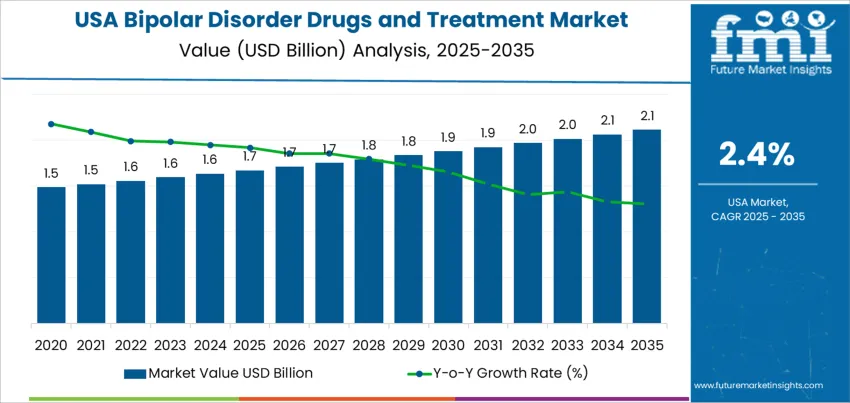
The demand for bipolar disorder drugs and treatments in the USA is expected to grow from USD 1.7 billion in 2025 to USD 2.1 billion by 2035, reflecting a compound annual growth rate (CAGR) of 2.4%. Bipolar disorder, characterized by significant mood swings between depression and mania, requires continuous medical management, including mood stabilizers, antipsychotics, and antidepressants. The market for these medications is growing as more individuals are diagnosed with the disorder, as awareness of mental health increases, and as treatment options become more refined and accessible. Alongside pharmacological treatments, various forms of therapy and psychosocial interventions continue to evolve, contributing to the steady expansion of the market for bipolar disorder management.
The market will experience steady growth, starting at USD 1.7 billion in 2025 and increasing to USD 1.7 billion in 2026, USD 1.7 billion in 2027, and USD 1.8 billion in 2028. By 2029, demand for bipolar disorder drugs and treatments will rise to USD 1.8 billion, continuing to increase over the next decade. By 2035, the demand is expected to reach USD 2.1 billion, fueled by ongoing innovations in drug development, growing adoption of targeted therapies, and a broader recognition of the importance of managing bipolar disorder effectively.
Quick Stats of the Demand for Bipolar Disorder Drugs and Treatment in USA
- Demand for Bipolar Disorder Drugs and Treatment in USA Value (2025): USD 1.7 billion
- Demand for Bipolar Disorder Drugs and Treatment in USA Forecast Value (2035): USD 2.1 billion
- Demand for Bipolar Disorder Drugs and Treatment in USA Forecast CAGR (2025-2035): 2.4%
- Demand for Bipolar Disorder Drugs and Treatment in USA Leading Bipolar Disorder Type: Bipolar I Disorder (47%)
- Demand for Bipolar Disorder Drugs and Treatment in USA Key Growth Regions: West USA, South USA, Northeast USA, Midwest USA
- Demand for Bipolar Disorder Drugs and Treatment in USA Key Players: Johnson & Johnson, Eli Lilly and Company, AstraZeneca PLC, GlaxoSmithKline plc, Otsuka Pharmaceutical Co., Ltd.
What is the Growth Forecast for Bipolar Disorder Drugs and Treatment Industry in USA through 2035?
The compound annual growth rate (CAGR) for the bipolar disorder drug and treatment market in the USA is expected to be 2.4% over the forecast period, from 2025 to 2035. This rate indicates consistent but moderate growth, reflecting the evolving nature of treatments for bipolar disorder. The low-to-moderate CAGR can be attributed to several factors. First, there is an increasing number of bipolar disorder diagnoses, thanks to better screening practices, heightened awareness of mental health, and improved healthcare access. Second, ongoing advancements in treatment options, including the introduction of newer medications with fewer side effects and more targeted approaches, are expected to drive steady growth in the market. Furthermore, the increasing acceptance of integrated treatment plans that combine medication with therapy or lifestyle management will contribute to the rising demand for these treatments.
While the market will grow at a steady pace, the relatively modest CAGR also suggests that the market is maturing, as bipolar disorder treatments become more widely available, and the focus shifts to maintaining and improving long-term management strategies. The demand for medications and therapies will continue to be driven by the aging population and the need for better mental health management, but the growth trajectory will remain gradual as the market reaches greater saturation and more patients find optimal long-term management strategies. Despite this, the CAGR indicates that bipolar disorder treatments will continue to be a growing segment in the healthcare market, albeit at a more moderate pace compared to the earlier, more dynamic growth phases in the healthcare industry.
USA Bipolar Disorder Drugs and Treatment Industry Key Takeaways
| Metric | Value |
|---|---|
| Industry Sales Value (2025) | USD 1.7 billion |
| Industry Forecast Value (2035) | USD 2.1 billion |
| Industry Forecast CAGR (2025-2035) | 2.4% |
Why is the Demand for Drugs and Treatments for Bipolar Disorder in USA Growing?
Demand for bipolar disorder treatments in the USA is rising because a sizeable share of the adult population lives with the condition, estimated around 2.8% in a given year. With growing recognition of mental health challenges, more individuals are seeking diagnosis and care. As awareness increases about the impact of bipolar disorder on quality of life, work, and relationships, more patients, including first time and recurrent cases, are turning to medical and psychiatric treatment. This trend is supported by enhanced screening, broader public conversation about mental health, and reduced stigma, leading to increased uptake of pharmacological and therapeutic interventions.
At the same time, developments in pharmacotherapy, mental health care delivery, and evolving treatment standards support expanding demand. Evidence based guidelines recommend use of mood stabilizers and antipsychotic medications to manage both manic and depressive episodes, and these remain the cornerstone of therapy. In addition, new research and greater availability of therapeutic options, including combination regimens and individualized treatment plans, encourage more patients and providers to pursue long term management rather than only episodic care. Studies show many people with bipolar disorder require multiple psychotropic medications to manage symptoms effectively, especially when comorbid conditions like anxiety, substance use, or depressive illness are present. As mental health services expand and access improves through clinics, telepsychiatry, and integrated care models, demand for bipolar disorder drugs and treatments is likely to continue rising in the coming years.
What Is the Current State of the Demand for Bipolar Disorder Drugs and Treatment in the USA in Terms of Drug Class and Bipolar Disorder Type?
The demand for bipolar disorder drugs and treatment in the USA is primarily driven by drug class and bipolar disorder type. The leading drug class is anti-psychotic drugs, which account for 34% of the market share, while bipolar I disorder is the dominant disorder type, capturing 47% of the demand. Bipolar disorder treatments aim to stabilize mood swings and manage symptoms associated with mania, depression, and mixed episodes. As the understanding and diagnosis of bipolar disorder improve, there is an increasing demand for effective medications and targeted therapies for individuals suffering from this condition.
How Are Anti-Psychotic Drugs Leading the Drug Class Demand for Bipolar Disorder Treatments in the USA?
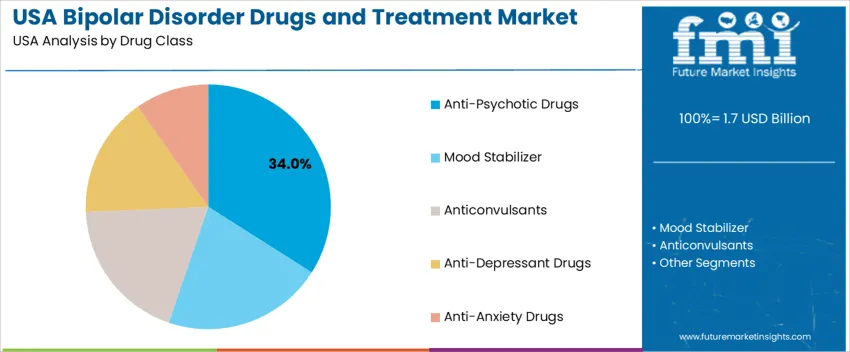
Anti-psychotic drugs lead the drug class demand for bipolar disorder treatments in the USA, holding 34% of the market share. These drugs are commonly used to treat the manic and mixed episodes of bipolar disorder by helping to control symptoms such as agitation, delusions, and hallucinations. Anti-psychotic drugs are often used in combination with other medications, such as mood stabilizers, to provide more comprehensive treatment for individuals with bipolar disorder.
The demand for anti-psychotic drugs is driven by their effectiveness in managing acute symptoms and preventing future mood episodes. With the growing recognition of bipolar disorder as a chronic condition that requires long-term management, anti-psychotic medications have become a cornerstone in the treatment regimen for many patients. Additionally, advancements in anti-psychotic drug formulations, including the development of medications with fewer side effects, continue to fuel the demand for these drugs in treating bipolar disorder. As the understanding of bipolar disorder evolves and more patients seek effective treatment options, the demand for anti-psychotic drugs is expected to remain strong.
How Is Bipolar I Disorder Leading the Demand for Bipolar Disorder Drugs in the USA?
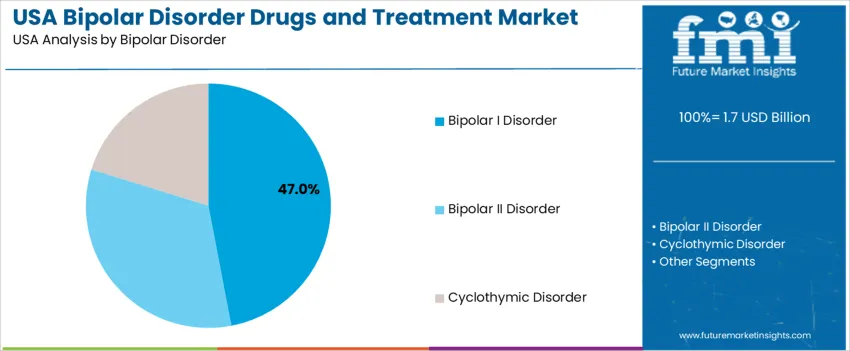
Bipolar I disorder leads the demand for bipolar disorder drugs in the USA, capturing 47% of the market share. Bipolar I disorder is characterized by manic episodes lasting at least seven days or by manic symptoms that are so severe they require immediate hospital care. Depressive episodes may also occur, typically lasting at least two weeks. Due to the severity of manic and depressive episodes, individuals with bipolar I disorder often require intensive treatment that includes a combination of medications such as anti-psychotics, mood stabilizers, and antidepressants.
The demand for bipolar disorder drugs for Bipolar I disorder is driven by the higher frequency and intensity of manic episodes compared to other forms of bipolar disorder. Given the significant impact of the condition on an individual's daily functioning, long-term management is crucial. As the understanding of the disorder deepens and treatment options improve, medications targeting both manic and depressive phases will continue to be essential for managing bipolar I disorder. With the ongoing push toward improving the quality of life for individuals with bipolar I disorder, the demand for effective, comprehensive treatments is expected to grow.
What is the Summary of Demand for Bipolar Disorder Drugs and Treatment in the USA?
Demand for drugs and treatments for Bipolar Disorder in the USA is growing. A significant portion of the adult population, approximately 2.8% annually, experiences bipolar disorder. Many of these individuals require long-term pharmacological treatment, including mood stabilizers, antipsychotics, and other psychiatric medications, to manage episodes of mania, depression, or mixed states. As mental health awareness rises and diagnosis improves, more patients seek professional help and enter treatment pathways, sustaining demand for bipolar disorder therapies. The market for bipolar disorder treatment continues to expand, driven by both existing patients and newly diagnosed cases, making treatment drugs a consistent necessity in the mental health ecosystem.
What are the Drivers of Demand for Bipolar Disorder Drugs and Treatment in the USA?
Prevalence of bipolar disorder among adults drives core demand as a baseline. Improved awareness of mental health conditions and reduced stigma, along with better diagnostic practices, lead more people to seek medical evaluation and treatment. Advances in psychiatric medication, including newer antipsychotics and mood stabilizers, provide patients and clinicians with more options, improving treatment acceptance and adherence. Chronic nature of bipolar disorder and high rates of relapse or recurrence compel long-term treatment and maintenance therapy rather than short-term fixes. Comorbid conditions, such as anxiety or substance-use disorders, common among people with bipolar disorder, further increase the need for comprehensive treatment plans. Overall growth in mental health service access, including through outpatient clinics, tele-psychiatry, and improved insurance coverage, makes treatment more reachable to a broader population.
What are the Restraints on Demand for Bipolar Disorder Drugs and Treatment in the USA?
One challenge is that a significant portion of patients either do not respond fully to existing treatments or experience sub-threshold symptoms even under therapy, limiting the effectiveness of available drugs for some. Side effects associated with long-term use, such as metabolic issues, organ toxicity, or general adverse reactions, deter some patients from continuing treatment or lower adherence rates. Misdiagnosis or underdiagnosis remains common, especially in cases with mixed or overlapping psychiatric symptoms, which reduces the treated population. Socioeconomic barriers, including lack of affordable mental health care, medication costs, and uneven insurance coverage, can make ongoing treatment inaccessible for some. Moreover, social stigma around mental illness may discourage individuals from seeking or continuing therapy, limiting market growth despite clinical need.
What are the Key Trends Influencing Demand for Bipolar Disorder Drugs and Treatment in the USA?
The treatment landscape is shifting from older mood stabilizers toward broader use of second-generation antipsychotics and more tailored medication regimens, reflecting evolving clinical practice and patient needs. There is growing use of long-term maintenance therapy as a standard care model, given the recurrent nature of bipolar disorder and high relapse risk. Diagnostic practices and mental health screening have improved, bringing more previously undiagnosed individuals into treatment. Interest in combined treatment modalities, such as pharmacotherapy plus psychotherapy or lifestyle management, is rising as awareness increases that medication alone may not suffice. Enhanced mental health infrastructure, increased availability of outpatient care and tele-medicine, and better insurance penetration are making treatment more accessible. As public awareness increases and social acceptance improves, more people are initiating therapy earlier, which supports steady growth in demand for bipolar disorder drugs and treatment.
What is the Regional Demand Outlook for Bipolar Disorder Drugs and Treatment in the USA?
The demand for bipolar disorder drugs and treatment in the USA is projected to grow steadily, with the West leading at a CAGR of 2.7%. The South follows at 2.4%, the Northeast at 2.2%, and the Midwest at 1.9%. These regional variations reflect differences in healthcare access, mental health awareness, and the prevalence of bipolar disorder across various populations. As awareness of mental health issues grows and treatment options expand, the demand for medications and therapies to treat bipolar disorder continues to rise.
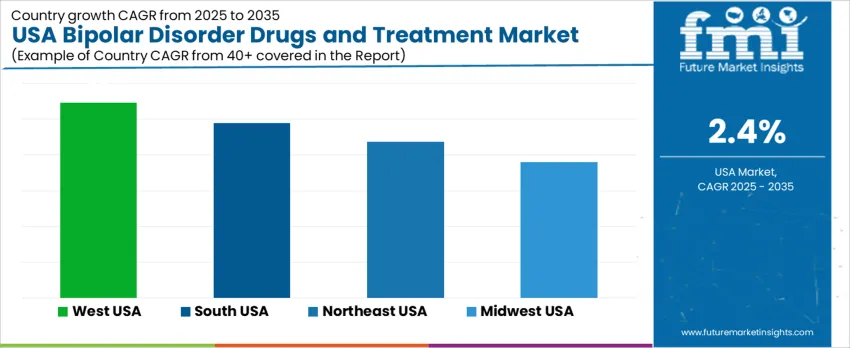
| Region | CAGR (%) |
|---|---|
| West USA | 2.7 |
| South USA | 2.4 |
| Northeast USA | 2.2 |
| Midwest USA | 1.9 |
What Drives Demand for Bipolar Disorder Drugs and Treatment in the West USA?
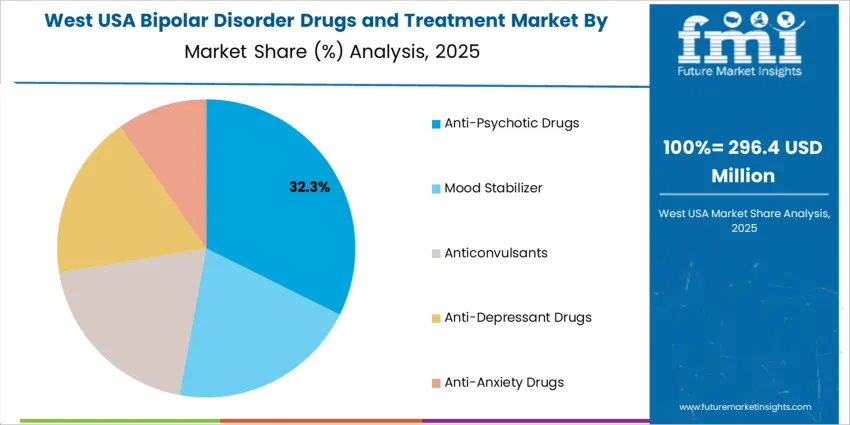
In the West USA, the demand for bipolar disorder drugs and treatment is expected to grow at a CAGR of 2.7%. The region's high focus on mental health awareness, access to healthcare, and a large population of individuals diagnosed with mental health conditions contribute significantly to this growth. California, in particular, has seen an increase in the diagnosis and treatment of bipolar disorder due to expanding mental health resources and greater acceptance of mental health care. As more individuals seek appropriate treatment for bipolar disorder, demand for pharmaceutical interventions, including mood stabilizers, antipsychotics, and antidepressants, rises. Additionally, the region's emphasis on integrated care, including therapy and medication, boosts the overall demand for comprehensive bipolar disorder treatment. Mental health advocacy and insurance coverage expansion further support this growing demand.
Why is Demand for Bipolar Disorder Drugs Growing in the South USA?
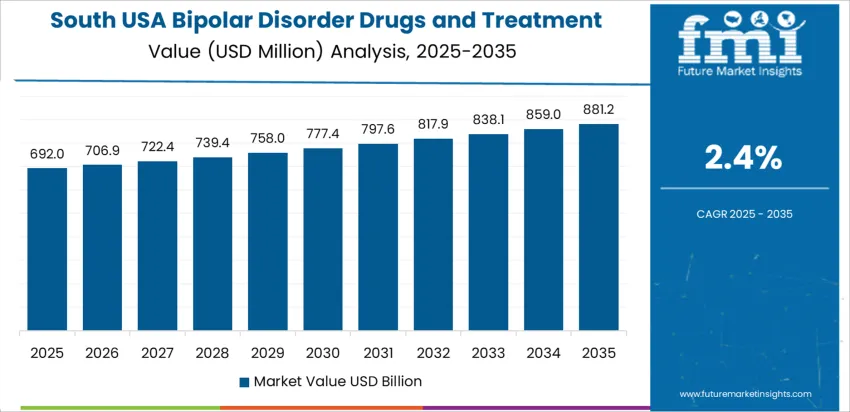
In the South USA, the demand for bipolar disorder drugs is projected to grow at a CAGR of 2.4%. The South has seen increasing recognition of the importance of mental health treatment, with more healthcare providers offering support for bipolar disorder. As access to mental health care improves and awareness of mental health conditions like bipolar disorder grows, more individuals in the South are seeking treatment. Many people in the region, particularly in urban and suburban areas, now have better access to medications and therapies designed to manage bipolar disorder symptoms. The expansion of telemedicine and mental health programs further encourages individuals to seek help, increasing the demand for bipolar disorder drugs. As awareness and treatment options increase, the overall market for bipolar disorder medications is expected to rise in the South.
What Supports the Growth of Bipolar Disorder Drugs in the Northeast USA?
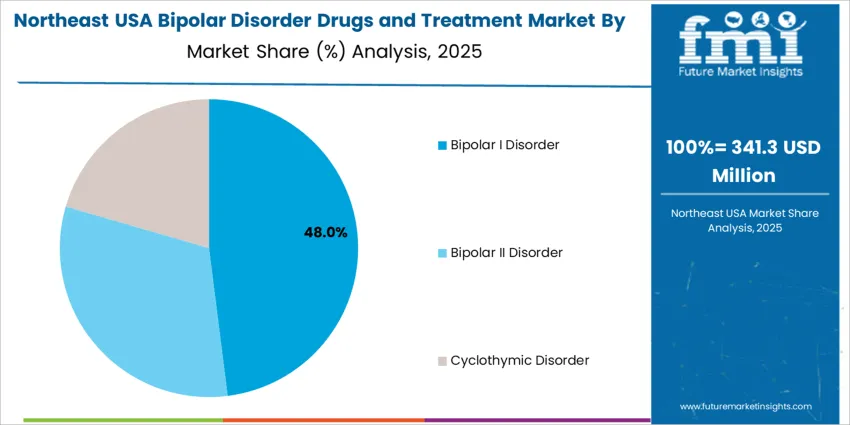
In the Northeast USA, the demand for bipolar disorder drugs is expected to grow at a CAGR of 2.2%. The region has a large concentration of mental health professionals, hospitals, and healthcare facilities specializing in psychiatric care, contributing to the availability of treatment options for individuals with bipolar disorder. As mental health care becomes more accessible and stigma around seeking psychiatric help continues to decrease, more individuals are being diagnosed and treated for bipolar disorder. The Northeast’s emphasis on holistic healthcare, which includes both medication and psychotherapy, further supports the demand for bipolar disorder drugs. Increased advocacy and insurance coverage for mental health also contribute to expanding access to treatment in the region. As the prevalence of mental health disorders increases and the focus on mental health care strengthens, the demand for bipolar disorder treatment continues to grow.
How is Demand for Bipolar Disorder Drugs Evolving in the Midwest USA?
In the Midwest USA, the demand for bipolar disorder drugs is projected to grow at a CAGR of 1.9%. Although growth is slower compared to other regions, steady demand persists due to the region’s large healthcare network and the increasing recognition of the need for mental health care. The Midwest has a significant number of individuals with bipolar disorder, and as access to treatment improves, more people are seeking help. The demand for bipolar disorder medications, such as mood stabilizers and antipsychotics, is supported by a growing awareness of mental health conditions and their impact on individuals and families. As insurance coverage for mental health expands and telehealth services grow, more individuals in the Midwest are able to access the care they need. While the growth rate may be more moderate in the Midwest, the steady demand for bipolar disorder drugs is expected to continue as more individuals are diagnosed and treated.
What is the Competitive Landscape for the Bipolar Disorder Drugs and Treatment Market in the USA?
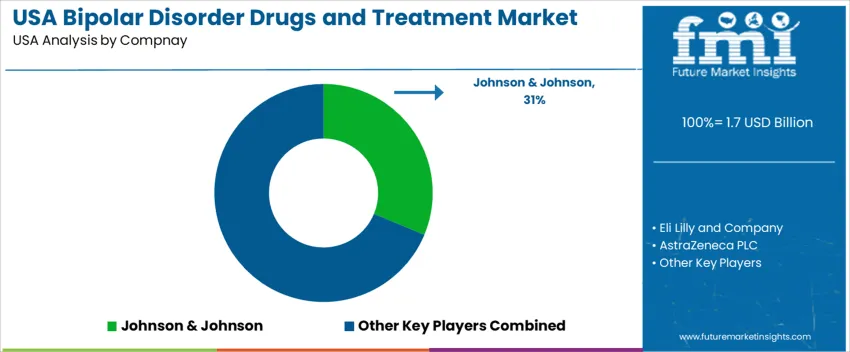
Demand for treatments for bipolar disorder in the USA is driven by growing recognition of mental health conditions, increased screening and diagnosis, and expansion of access to psychiatric care. Many patients receive a combination of medications, such as mood stabilizers, antipsychotics, and sometimes antidepressants, often paired with therapy or support services. The market for bipolar disorder treatment remains significant as healthcare providers and patients seek effective maintenance therapies and acute episode management.
Competition among major pharmaceutical firms defines the market structure. According to your data, Johnson & Johnson leads among the identified firms. Other established players include Eli Lilly and Company, AstraZeneca PLC, GlaxoSmithKline plc, and Otsuka Pharmaceutical Co., Ltd. These companies supply a range of approved treatments such as atypical antipsychotics, mood stabilizers, and combination therapies designed for manic, depressive, or maintenance phases of bipolar disorder. Their competitiveness rests on drug efficacy, tolerability, safety profile, range of treatment options, and relationships with clinicians and healthcare institutions.
Firms differentiate offerings based on therapeutic profile and patient needs. Some focus on long-acting or maintenance therapies to reduce relapse risk. Others emphasize medications effective for depressive or manic episodes with manageable side effects. Regulatory approvals for newer formulations and combination therapies influence prescribing behavior and market share. The result is a dynamic market where established drugs coexist with newer therapeutics, and companies continually invest in development and marketing to respond to evolving clinical needs and patient preferences.
Key Players of the Bipolar Disorder Drugs and Treatment Industry in USA
- Johnson & Johnson
- Eli Lilly and Company
- AstraZeneca PLC
- GlaxoSmithKline plc
- Otsuka Pharmaceutical Co., Ltd.
Scope of the Report
| Items | Details |
|---|---|
| Quantitative Units | USD Billion |
| Regions Covered | USA |
| Drug Class | Anti-Psychotic Drugs, Mood Stabilizer, Anticonvulsants, Anti-Depressant Drugs, Anti-Anxiety Drugs |
| Bipolar Disorder | Bipolar I Disorder, Bipolar II Disorder, Cyclothymic Disorder |
| Distribution Channel | Hospital Pharmacies, Retail Pharmacies, Online Pharmacies |
| Key Companies Profiled | Johnson & Johnson, Eli Lilly and Company, AstraZeneca PLC, GlaxoSmithKline plc, Otsuka Pharmaceutical Co., Ltd. |
| Additional Attributes | Dollar sales by drug class and bipolar disorder type show strong demand for anti-psychotic drugs, particularly for Bipolar I Disorder and Bipolar II Disorder. Hospital pharmacies lead in drug distribution, but retail and online pharmacies are increasingly significant. Companies like Johnson & Johnson and Eli Lilly dominate the market with innovative treatments for bipolar disorder. The market is expected to grow due to increasing diagnoses, greater awareness, and the availability of new treatment options. |
Key Segments in the Demand for Bipolar Disorder Drugs and Treatment in USA
Drug Class
- Anti-Psychotic Drugs
- Mood Stabilizer
- Anticonvulsants
- Anti-Depressant Drugs
- Anti-Anxiety Drugs
Bipolar Disorder
- Bipolar I Disorder
- Bipolar II Disorder
- Cyclothymic Disorder
Distribution Channel
- Hospital Pharmacies
- Retail Pharmacies
- Online Pharmacies
Region
- Northeast USA
- West USA
- Midwest USA
- South USA
Frequently Asked Questions
How big is the demand for bipolar disorder drugs and treatment in USA in 2025?
The demand for bipolar disorder drugs and treatment in USA is estimated to be valued at USD 1.7 billion in 2025.
What will be the size of bipolar disorder drugs and treatment in USA in 2035?
The market size for the bipolar disorder drugs and treatment in USA is projected to reach USD 2.1 billion by 2035.
How much will be the demand for bipolar disorder drugs and treatment in USA growth between 2025 and 2035?
The demand for bipolar disorder drugs and treatment in USA is expected to grow at a 2.4% CAGR between 2025 and 2035.
What are the key product types in the bipolar disorder drugs and treatment in USA?
The key product types in bipolar disorder drugs and treatment in USA are anti-psychotic drugs, mood stabilizer, anticonvulsants, anti-depressant drugs and anti-anxiety drugs.
Which bipolar disorder segment is expected to contribute significant share in the bipolar disorder drugs and treatment in USA in 2025?
In terms of bipolar disorder, bipolar i disorder segment is expected to command 47.0% share in the bipolar disorder drugs and treatment in USA in 2025.
Preview the report firsthand - request a free sample
Get SampleGet the brochure for pricing and purchase details.
Get PDFTable of Content
- Executive Summary
- USA Market Outlook
- Demand-side Trends
- Supply-side Trends
- Technology Roadmap Analysis
- Analysis and Recommendations
- Market Overview
- Market Coverage / Taxonomy
- Market Definition / Scope / Limitations
- Market Background
- Market Dynamics
- Drivers
- Restraints
- Opportunity
- Trends
- Scenario Forecast
- Demand in Optimistic Scenario
- Demand in Likely Scenario
- Demand in Conservative Scenario
- Opportunity Map Analysis
- Product Life Cycle Analysis
- Supply Chain Analysis
- Investment Feasibility Matrix
- Value Chain Analysis
- PESTLE and Porter’s Analysis
- Regulatory Landscape
- Regional Parent Market Outlook
- Production and Consumption Statistics
- Import and Export Statistics
- Market Dynamics
- USA Market Analysis 2020 to 2024 and Forecast, 2025 to 2035
- Historical Market Size Value (USD Million) Analysis, 2020 to 2024
- Current and Future Market Size Value (USD Million) Projections, 2025 to 2035
- Y-o-Y Growth Trend Analysis
- Absolute $ Opportunity Analysis
- USA Market Pricing Analysis 2020 to 2024 and Forecast 2025 to 2035
- USA Market Analysis 2020 to 2024 and Forecast 2025 to 2035, By Drug Class
- Introduction / Key Findings
- Historical Market Size Value (USD Million) Analysis By Drug Class , 2020 to 2024
- Current and Future Market Size Value (USD Million) Analysis and Forecast By Drug Class , 2025 to 2035
- Anti-Psychotic Drugs
- Mood Stabilizer
- Anticonvulsants
- Anti-Depressant Drugs
- Anti-Anxiety Drugs
- Y-o-Y Growth Trend Analysis By Drug Class , 2020 to 2024
- Absolute $ Opportunity Analysis By Drug Class , 2025 to 2035
- USA Market Analysis 2020 to 2024 and Forecast 2025 to 2035, By Bipolar Disorder
- Introduction / Key Findings
- Historical Market Size Value (USD Million) Analysis By Bipolar Disorder, 2020 to 2024
- Current and Future Market Size Value (USD Million) Analysis and Forecast By Bipolar Disorder, 2025 to 2035
- Bipolar I Disorder
- Bipolar II Disorder
- Cyclothymic Disorder
- Y-o-Y Growth Trend Analysis By Bipolar Disorder, 2020 to 2024
- Absolute $ Opportunity Analysis By Bipolar Disorder, 2025 to 2035
- USA Market Analysis 2020 to 2024 and Forecast 2025 to 2035, By Distribution Channel
- Introduction / Key Findings
- Historical Market Size Value (USD Million) Analysis By Distribution Channel, 2020 to 2024
- Current and Future Market Size Value (USD Million) Analysis and Forecast By Distribution Channel, 2025 to 2035
- Hospital Pharmacies
- Retail Pharmacies
- Online Pharmacies
- Y-o-Y Growth Trend Analysis By Distribution Channel, 2020 to 2024
- Absolute $ Opportunity Analysis By Distribution Channel, 2025 to 2035
- Market Structure Analysis
- Competition Dashboard
- Competition Benchmarking
- Market Share Analysis of Top Players
- By Regional
- By Drug Class
- By Bipolar Disorder
- By Distribution Channel
- Competition Analysis
- Competition Deep Dive
- Johnson & Johnson
- Overview
- Product Portfolio
- Profitability by Market Segments (Product/Age /Sales Channel/Region)
- Sales Footprint
- Strategy Overview
- Marketing Strategy
- Product Strategy
- Channel Strategy
- Eli Lilly and Company
- AstraZeneca PLC
- GlaxoSmithKline plc
- Otsuka Pharmaceutical Co., Ltd.
- Johnson & Johnson
- Competition Deep Dive
- Assumptions & Acronyms Used
- Research Methodology


