

- Industry Size (2025)
- USD 8.4 Bn
- Forecast (2035)
- USD 14.7 Bn
- CAGR (2025 to 2035)
- 5.2%
Demand for Electric Linear Actuator in USA Size and Share Forecast Outlook 2026 to 2036
The demand for electric linear actuators in the USA is projected to grow from USD 8.4 billion in 2026 to USD 14.7 billion in 2036, reflecting a 5.20% CAGR. A year-on-year analysis shows steady growth throughout the forecast period, with incremental increases each year. Starting at USD 6.8 billion in 2026, the demand rises gradually to USD 7.2 billion in 2027, reflecting a 5.88% growth. This trend continues, with demand reaching USD 7.6 billion in 2028 and USD 8.0 billion in 2029, marking consistent, moderate growth in the early years.
Quick Stats of the Demand for Electric Linear Actuators in USA
- Demand for Electric Linear Actuators in USA Value (2026): USD 8.4 billion
- Demand for Electric Linear Actuators in USA Forecast Value (2036): USD 14.7 billion
- Demand for Electric Linear Actuators in USA Forecast CAGR (2026-2036): 5.2%
- Demand for Electric Linear Actuators in USA Leading Type: DC Electric Actuators
- Demand for Electric Linear Actuators in USA Key Growth Regions: West USA, South USA, Northeast USA, Midwest USA
- Demand for Electric Linear Actuators in USA Top Players: SKF, Parker Hannifin, Linak, Moteck Electric, Tolomatic
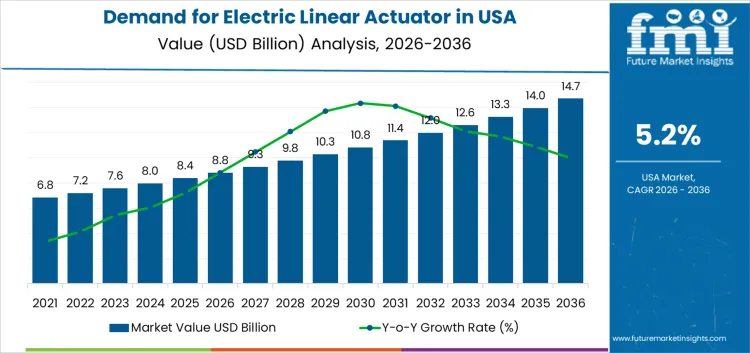
The demand continues to grow steadily from 2029 onward, reaching USD 8.8 billion in 2030 and USD 9.3 billion in 2031. As the demand for electric actuators increases across various industries, including manufacturing, healthcare, and automotive sectors, growth accelerates slightly. By 2033, demand reaches USD 12.6 billion, driven by advancements in automation and the increasing adoption of electric actuators for more energy-efficient solutions. The demand for electric linear actuators reaches its peak of USD 14.7 billion by 2036, reflecting the expanding need for reliable, precise motion control solutions. The steady rise in demand is a result of continued technological advancements and the growing emphasis on energy-efficient systems across industries.
Demand for Electric Linear Actuator in USA Key Takeaways
| Metric | Value |
|---|---|
| Demand for Electric Linear Actuator in USA Value (2026) | USD 8.4 billion |
| Demand for Electric Linear Actuator in USA Forecast Value (2036) | USD 14.7 billion |
| Demand for Electric Linear Actuator in USA Forecast CAGR (2026-2036) | 5.2% |
Why is the Demand for Electric Linear Actuator in USA Growing?
The demand for electric linear actuators in the USA is growing due to the increasing adoption of automation across various industries, including manufacturing, healthcare, robotics, and automotive. Electric linear actuators are used to convert rotational motion into linear motion, offering precision and efficiency in a wide range of applications, such as lifting, positioning, and adjusting mechanisms. Their ability to provide smooth and controlled movements without the need for compressed air or hydraulic fluids is driving their popularity, especially as industries look for more energy-efficient and environmentally friendly alternatives to traditional pneumatic and hydraulic actuators.
Key drivers for this growth include the increasing trend toward automation in industries such as automotive manufacturing, healthcare, and robotics, where linear actuators are used in applications like automated assembly lines, robotic arms, and medical devices. The growing demand for electric vehicles (EVs) and smart home technologies is also contributing to the rise in demand for electric linear actuators. Advancements in actuator technology, such as the development of compact, high-performance actuators with integrated controls, are making these systems more versatile and accessible for a broader range of applications.
The need for precision and reliability in sectors such as aerospace and medical equipment is also driving the demand for electric linear actuators, as these industries require actuators that can perform under stringent conditions. While challenges such as the high initial cost of electric actuators and their integration into existing systems may limit broader adoption, the ongoing trend toward automation, energy efficiency, and precision in industrial applications is expected to support continued growth in the demand for electric linear actuators in the USA through 2036.
What is the Segment-Wise Analysis of Demand for Electric Linear Actuators in USA?
Demand for electric linear actuators in the USA is segmented by type, application, and region. By type, DC electric actuators lead with 55% of the demand, followed by AC electric actuators. In terms of application, industrial uses account for 50% of the demand, with medical and commercial applications making up the remainder. Regionally, demand is distributed across West USA, South USA, Northeast USA, and Midwest USA.
How Do DC Electric Actuators Lead the Demand for Electric Linear Actuators in USA?
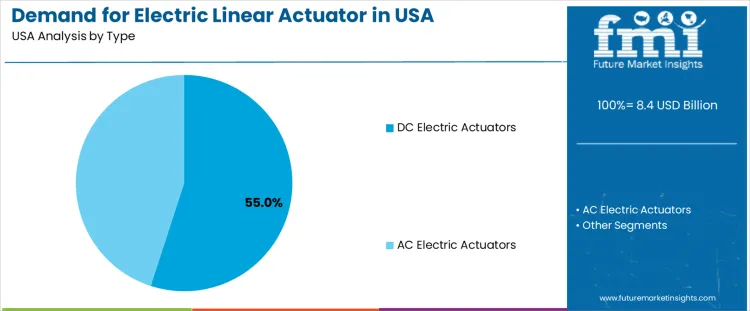
DC electric actuators account for 55% of the demand for electric linear actuators in the USA, driven by their ability to provide high precision, reliability, and efficiency in a wide range of applications. DC actuators are widely used in both low and high-load industrial applications, offering smooth operation and excellent control in automated systems.
Their ease of integration with electrical systems, along with their cost-effectiveness, makes them a preferred choice for various sectors, including manufacturing and automation. DC actuators are also well-suited for applications requiring adjustable speed and position control, such as in robotics and medical devices. As industries seek more energy-efficient, precise, and flexible automation solutions, the demand for DC electric actuators is expected to remain strong, solidifying their position as the dominant type in the electric linear actuator industry.
How Does Industrial Application Lead the Demand for Electric Linear Actuators in USA?
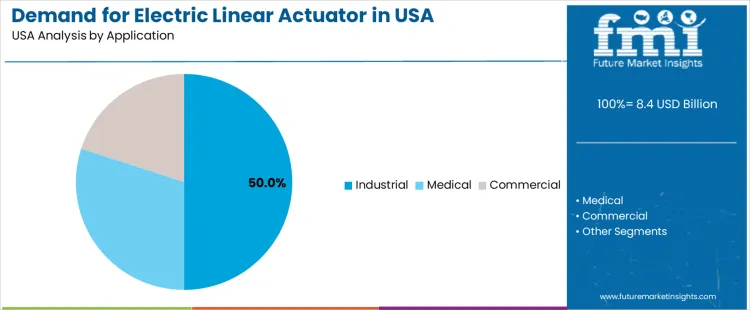
Industrial applications account for 50% of the demand for electric linear actuators in the USA, driven by the increasing use of automation and precision control systems in manufacturing processes. Electric linear actuators are essential in industrial settings for tasks such as material handling, positioning systems, and robotic automation.
Their ability to convert electrical energy into linear motion with high precision makes them ideal for applications that require accurate control and efficient operation. The shift towards more automated production lines, as well as the need for enhanced safety and operational efficiency, continues to drive the demand for electric actuators in the industrial sector. With the increasing adoption of automation technologies and smart systems across industries like manufacturing, automotive, and logistics, the demand for electric linear actuators in industrial applications is expected to grow steadily.
What are the Key Trends, Drivers and Restraints in Demand for Electric Passenger Car MRO in USA?
Demand for electric passenger car maintenance, repair, and overhaul (MRO) services is growing in the USA as electric vehicle (EV) adoption accelerates. Specialized EV service centers, mobile MRO services, and technician training focused on high‑voltage systems, battery diagnostics, and software updates are key trends. Drivers include rising EV sales, vehicle age, and the complexity of electric powertrains requiring specialized care. However, restraints exist, including a shortage of trained technicians, high costs of specialized tools, and the slow adaptation of traditional service shops to EV technology. Some regions lack quality EV MRO access due to these challenges.
Why is Demand for Electric Passenger Car MRO Growing in USA?
Demand for electric passenger car MRO is increasing as EV adoption rises, leading to a larger number of electric vehicles needing regular service. As electric cars age, they require maintenance for systems like batteries, brakes, and powertrains. Unlike traditional cars, EVs require specialized care for their electric systems, high‑voltage components, and battery management. Fleet operators, rideshare services, and private owners all seek reliable MRO services to maintain vehicle performance and extend lifespan. As EVs become more mainstream, including post-warranty service, demand for dedicated MRO providers continues to grow, especially as vehicles accumulate mileage.
How are Technological and Industry Innovations Driving Electric Passenger Car MRO Demand in USA?
Technological advancements are significantly impacting the demand for electric passenger car MRO in the USA. EV systems rely on complex power electronics, battery management systems, and software, requiring advanced diagnostics and specialized skills. The growth of connected vehicles, predictive maintenance, and remote diagnostics enhances service efficiency by allowing for early issue detection. Over‑the‑air software updates also help maintain vehicle performance. Innovations in battery technology and thermal management increase the need for expert care. Training programs, certifications, and evolving service standards are addressing these changes, ensuring that MRO providers are equipped to handle the specific needs of modern EVs.
What are the Key Challenges and Risks That Could Limit Electric Passenger Car MRO Demand in USA?
The shortage of trained technicians with specialized knowledge of EV systems, such as high‑voltage safety and battery diagnostics, is a significant barrier. The high upfront cost of specialized tools and equipment can deter many repair shops from entering the EV MRO industry. Moreover, varying levels of warranty coverage and inconsistent regulatory standards across states may create complications in service accessibility. Some consumers may also hesitate to seek independent MRO providers due to concerns over the quality or safety of non‑OEM services, further restricting growth.
What is the Regional Demand Outlook for Electric Linear Actuator in USA?
| Region | CAGR (%) |
|---|---|
| West USA | 6.0% |
| South USA | 5.4% |
| Northeast USA | 4.8% |
| Midwest USA | 4.2% |
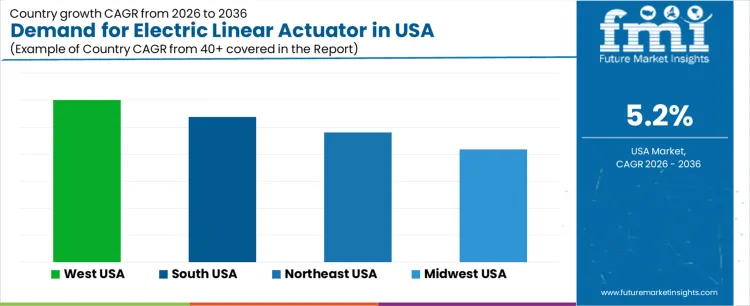
Demand for electric linear actuators in the USA is growing steadily, with West USA leading at a 6.0% CAGR, driven by technological innovation and a focus on energy efficiency. South USA follows with a 5.4% CAGR, supported by growing manufacturing, automation, and renewable energy sectors. Northeast USA shows a 4.8% CAGR, fueled by industrial growth and an emphasis on clean energy and automation. Midwest USA experiences a 4.2% CAGR, with steady growth driven by the region’s established manufacturing and robotics industries.
How is Demand for Electric Linear Actuators Growing in West USA?
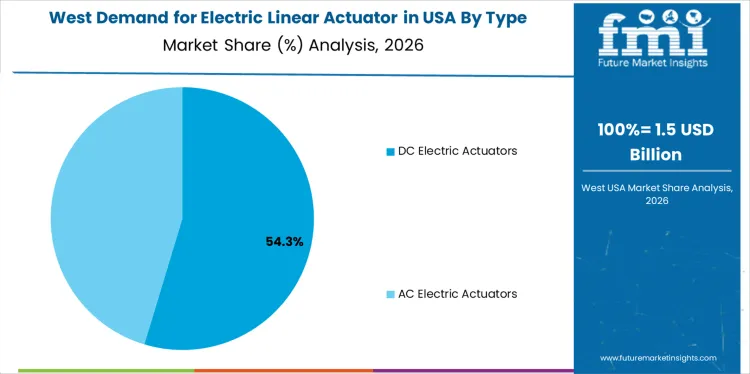
West USA leads the demand for electric linear actuators, growing at a 6.0% CAGR. The region’s strong focus on technological innovation, automation, and sustainable solutions is a significant driver behind this growth. States like California, Oregon, and Washington are seeing increased adoption of electric linear actuators in industries like robotics, manufacturing, and renewable energy, where precise motion control is crucial. The region’s emphasis on clean energy and reducing carbon footprints also encourages the use of electric actuators, which are energy-efficient alternatives to hydraulic and pneumatic systems. With the rise of automation in manufacturing, aerospace, and even in home automation systems, the demand for electric linear actuators is expected to continue expanding, especially in high-tech sectors that prioritize energy efficiency and precision.
Why is Demand for Electric Linear Actuators Rising in South USA?
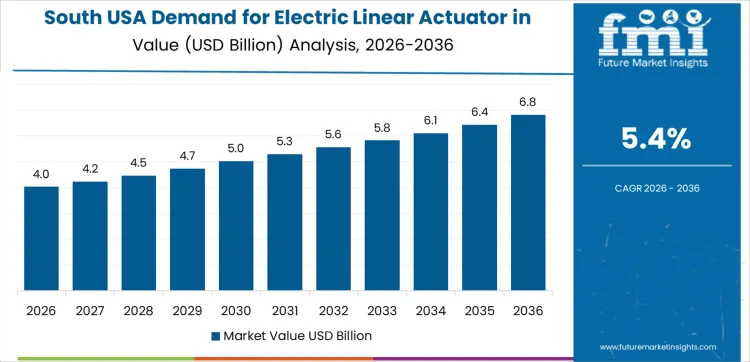
South USA is experiencing steady demand for electric linear actuators, with a 5.4% CAGR. The region’s growing manufacturing and automotive industries are major contributors to this demand, as electric actuators are increasingly used in automation systems and production lines. States like Texas and Florida are seeing an uptick in the use of electric actuators for various applications, including material handling, robotics, and HVAC systems. The South’s expanding focus on automation and energy efficiency further drives the need for electric linear actuators as a more sustainable alternative to traditional actuators. The region’s growing adoption of renewable energy solutions, such as solar panel tracking systems, is supporting the growth of electric linear actuators in these applications. As industries in the South continue to adopt more automated and energy-efficient systems, the demand for electric linear actuators is expected to remain strong.
How is Demand for Electric Linear Actuators Expanding in Northeast USA?
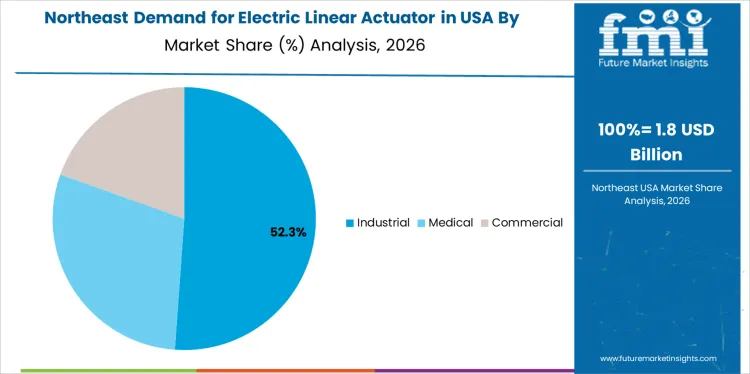
Northeast USA is seeing steady demand for electric linear actuators, with a 4.8% CAGR. The region’s robust industrial base, particularly in sectors like healthcare, manufacturing, and energy, is driving the growth of electric actuator applications. In cities like New York, Massachusetts, and Pennsylvania, the use of electric linear actuators in automation systems, medical devices, and robotics is becoming more widespread. The Northeast’s emphasis on advanced manufacturing and sustainable technologies is also contributing to the demand, as electric actuators offer energy efficiency and precise control. With the growing trend towards automation in industries such as packaging, robotics, and healthcare, electric linear actuators are increasingly seen as a reliable solution. As the region continues to focus on technological advancements and clean energy solutions, demand for electric linear actuators will continue to rise steadily, particularly in industries prioritizing energy efficiency and automation.
How is Demand for Electric Linear Actuators Growing in Midwest USA?
Midwest USA is experiencing moderate demand for electric linear actuators, with a 4.2% CAGR. The region’s established manufacturing and industrial sectors, especially in states like Michigan, Illinois, and Ohio, are driving the adoption of electric actuators in various applications such as automotive production, material handling, and automation systems. As more manufacturing plants in the Midwest focus on automation and energy-efficient solutions, the need for electric linear actuators is increasing. The region’s emphasis on advanced manufacturing technologies and robotics is contributing to the growth, with electric actuators offering benefits like precise motion control and reduced energy consumption compared to traditional systems. As industries in the Midwest adopt renewable energy solutions and automated systems, electric linear actuators are becoming a preferred choice. With continued investments in automation and energy-efficient technologies, the demand for electric linear actuators in the Midwest is expected to grow steadily.
What is the Competitive Landscape of Electric Linear Actuator Demand in USA?
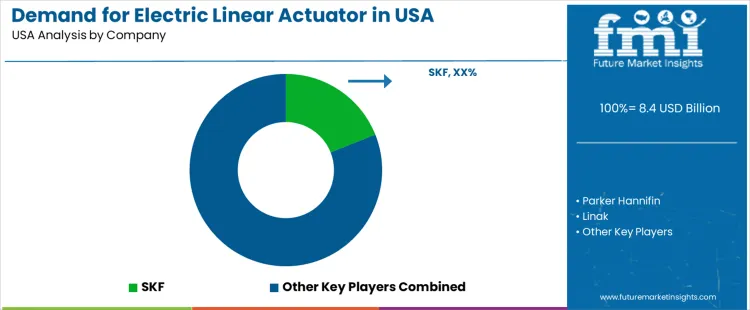
Demand for electric linear actuators in the USA is growing as industries seek more energy-efficient, precise, and sustainable solutions for automation and control. These actuators are used in a variety of applications, including industrial machinery, medical devices, automotive systems, and consumer electronics. As businesses push toward automation and energy-efficient systems, the demand for electric linear actuators continues to rise, particularly in sectors requiring precise movement control and minimal environmental impact.
SKF is a leading player in the electric linear actuator industry, offering high-performance solutions tailored for industrial and automotive applications. The company’s strategy focuses on providing reliable, energy-efficient actuators that meet the needs of a broad range of industries. SKF’s reputation for quality, innovation, and sustainability positions it as a dominant competitor in the USA industry.
Parker Hannifin provides a wide range of linear actuators designed for various industrial and commercial applications, emphasizing durability and performance. Linak specializes in actuators for both industrial and medical applications, offering high-quality solutions that focus on precision and reliability. Moteck Electric is known for its affordable, energy-efficient actuators that cater to a variety of industries, with a focus on easy integration and customization. Tolomatic offers advanced linear motion control solutions, providing actuators that are designed for high-speed and high-load applications. As competition in the industry intensifies, companies are innovating by offering more efficient, customizable, and compact electric linear actuators to meet the growing demand for automation solutions in the USA.
Key Players in USA Electric Linear Actuator Demand
- SKF
- Parker Hannifin
- Linak
- Moteck Electric
- Tolomatic
Scope of Report
| Items | Values |
|---|---|
| Quantitative Units (2026) | USD billion |
| Key Segments | DC Electric Actuators, AC Electric Actuators |
| Application | Industrial, Medical, Commercial |
| Key Country | USA |
| Region | West USA, South USA, Northeast USA, Midwest USA |
| Key Players Profiled | SKF, Parker Hannifin, Linak, Moteck Electric, Tolomatic |
| Additional Attributes | Dollar sales by type and application; regional CAGR and growth trends in electric linear actuators in the USA |
USA Electric Linear Actuator Demand by Key Segments
Type:
- DC Electric Actuators
- AC Electric Actuators
Application
- Industrial
- Medical
- Commercial
Region
- West USA
- South USA
- Northeast USA
- Midwest USA
Frequently Asked Questions
How big is the demand for electric linear actuator in USA in 2026?
The demand for electric linear actuator in USA is estimated to be valued at USD 8.4 billion in 2026.
What will be the size of electric linear actuator in USA in 2036?
The market size for the electric linear actuator in USA is projected to reach USD 14.7 billion by 2036.
How much will be the demand for electric linear actuator in USA growth between 2026 and 2036?
The demand for electric linear actuator in USA is expected to grow at a 5.2% CAGR between 2026 and 2036.
What are the key product types in the electric linear actuator in USA?
The key product types in electric linear actuator in USA are dc electric actuators and ac electric actuators.
Which application segment is expected to contribute significant share in the electric linear actuator in USA in 2026?
In terms of application, industrial segment is expected to command 50.0% share in the electric linear actuator in USA in 2026.
Preview the report firsthand - request a free sample
Get SampleGet the brochure for pricing and purchase details.
Get PDFTable of Content
- Executive Summary
- USA Market Outlook
- Demand-side Trends
- Supply-side Trends
- Technology Roadmap Analysis
- Analysis and Recommendations
- Market Overview
- Market Coverage / Taxonomy
- Market Definition / Scope / Limitations
- Market Background
- Market Dynamics
- Drivers
- Restraints
- Opportunity
- Trends
- Scenario Forecast
- Demand in Optimistic Scenario
- Demand in Likely Scenario
- Demand in Conservative Scenario
- Opportunity Map Analysis
- Product Life Cycle Analysis
- Supply Chain Analysis
- Investment Feasibility Matrix
- Value Chain Analysis
- PESTLE and Porter’s Analysis
- Regulatory Landscape
- Regional Parent Market Outlook
- Production and Consumption Statistics
- Import and Export Statistics
- Market Dynamics
- USA Market Analysis 2020 to 2024 and Forecast, 2025 to 2035
- Historical Market Size Value (USD Million) Analysis, 2020 to 2024
- Current and Future Market Size Value (USD Million) Projections, 2025 to 2035
- Y-o-Y Growth Trend Analysis
- Absolute $ Opportunity Analysis
- USA Market Pricing Analysis 2020 to 2024 and Forecast 2025 to 2035
- USA Market Analysis 2020 to 2024 and Forecast 2025 to 2035, By Type
- Introduction / Key Findings
- Historical Market Size Value (USD Million) Analysis By Type , 2020 to 2024
- Current and Future Market Size Value (USD Million) Analysis and Forecast By Type , 2025 to 2035
- DC Electric Actuators
- AC Electric Actuators
- Y-o-Y Growth Trend Analysis By Type , 2020 to 2024
- Absolute $ Opportunity Analysis By Type , 2025 to 2035
- USA Market Analysis 2020 to 2024 and Forecast 2025 to 2035, By Application
- Introduction / Key Findings
- Historical Market Size Value (USD Million) Analysis By Application, 2020 to 2024
- Current and Future Market Size Value (USD Million) Analysis and Forecast By Application, 2025 to 2035
- Industrial
- Medical
- Commercial
- Y-o-Y Growth Trend Analysis By Application, 2020 to 2024
- Absolute $ Opportunity Analysis By Application, 2025 to 2035
- Market Structure Analysis
- Competition Dashboard
- Competition Benchmarking
- Market Share Analysis of Top Players
- By Regional
- By Type
- By Application
- Competition Analysis
- Competition Deep Dive
- SKF
- Overview
- Product Portfolio
- Profitability by Market Segments (Product/Age /Sales Channel/Region)
- Sales Footprint
- Strategy Overview
- Marketing Strategy
- Product Strategy
- Channel Strategy
- Parker Hannifin
- Linak
- Moteck Electric
- Tolomatic
- SKF
- Competition Deep Dive
- Assumptions & Acronyms Used
- Research Methodology


