

- Industry Size (2025)
- USD 3.6 Bn
- Forecast (2035)
- USD 5.6 Bn
- CAGR (2025 to 2035)
- 4.6%
Demand for Medical Specialty Bags in USA Forecast and Outlook 2025 to 2035
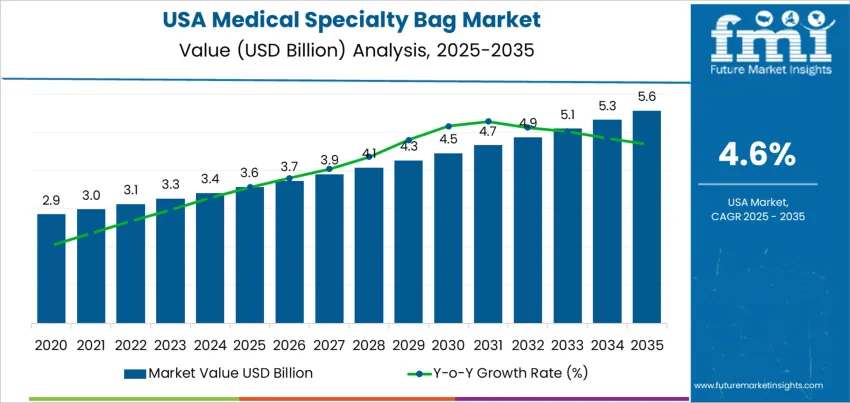
The demand for medical specialty bags in the USA is expected to grow from USD 3.6 billion in 2025 to USD 5.6 billion by 2035, driven by a compound annual growth rate (CAGR) of 4.6%. Medical specialty bags play a crucial role in healthcare settings, including hospitals, clinics, and long-term care facilities, for the safe storage, transportation, and disposal of medical materials, such as waste, fluids, and biohazardous materials. These bags are critical in ensuring proper medical waste management and infection control practices, both of which are becoming increasingly important as healthcare needs continue to rise. The growing number of medical procedures, hospital admissions, and healthcare services will drive the demand for these products.
The growth of medical specialty bags will also be supported by continued product innovations that enhance functionality and safety. As new healthcare challenges arise, there will be a demand for more specialized products, including bags designed to handle specific medical conditions or procedures. Advancements in patient care, such as personalized treatments and more complex procedures, will continue to elevate the need for specialized storage and disposal solutions in healthcare settings. With the continued focus on patient safety, infection prevention, and sustainable practices, the industry for medical specialty bags is expected to expand consistently, meeting the evolving needs of the healthcare industry throughout the forecast period.
Quick Stats of the Demand for Medical Specialty Bag in USA
- Demand for Medical Specialty Bag in USA Value (2025): USD 3.6 billion
- Demand for Medical Specialty Bag in USA Forecast Value (2035): USD 5.6 billion
- Demand for Medical Specialty Bag in USA Forecast CAGR (2025-2035): 4.6%
- Demand for Medical Specialty Bag in USA Leading Material Type: Polypropylene (PP)
- Demand for Medical Specialty Bag in USA Key Growth Regions: West USA, South USA, Northeast USA, Midwest USA
- Demand for Medical Specialty Bag in USA Top Players: Baxter International Inc., B. Braun SE, Coloplast A/S, Convatec Group PLC, Fresenius SE & Co. KGaA
What is the Growth Forecast for the Demand for Medical Specialty Bag in USA through 2035?
From 2025 to 2030, demand for medical specialty bags is projected to grow from USD 3.6 billion to USD 4.5 billion, adding USD 0.9 billion in value. This period will witness significant growth driven by increasing healthcare utilization, particularly in hospitals and outpatient clinics. As the aging population in the USA continues to grow, so too will the number of medical procedures, which in turn will elevate the need for medical specialty bags. The increasing focus on infection control and patient safety will lead to heightened demand for specialty bags that meet the highest safety and quality standards. Innovations in the materials used to manufacture medical bags, such as biodegradable and more environmentally friendly options, will stimulate industry growth.
From 2030 to 2035, demand will continue to rise from USD 4.5 billion to USD 5.6 billion, contributing USD 1.1 billion in value. As the healthcare sector continues to evolve, the demand for more advanced and specialized medical bags will persist. This phase will be marked by a steady growth trajectory as the number of medical facilities expands to meet the rising needs of an aging population. The increasing trend of healthcare facilities focusing on sustainability will drive the industry, as eco-friendlier medical specialty bags are developed and adopted. With growing regulatory pressure to reduce medical waste, the shift toward more sustainable and efficient waste management practices will contribute to demand.
Demand for Medical Specialty Bag in USA Key Takeaways
| Metric | Value |
|---|---|
| Demand for Medical Specialty Bag in USA Value (2025) | USD 3.6 billion |
| Demand for Medical Specialty Bag in USA Forecast Value (2035) | USD 5.6 billion |
| Demand for Medical Specialty Bag in USA Forecast CAGR (2025-2035) | 4.6% |
Why is the Demand for Medical Specialty Bag in USA Growing?
The demand for medical specialty bags in the USA is growing due to the increasing need for efficient, safe, and sterile solutions in healthcare settings. Medical specialty bags, which include a wide range of products such as IV bags, blood bags, urine bags, and wound care bags, are essential in hospitals, clinics, and long-term care facilities. As the healthcare sector continues to grow, driven by an aging population and advances in medical technology, the demand for specialized medical bags is rising.
A major driver of this growth is the increasing number of medical procedures and the growing need for critical care services, which require the use of medical bags for fluid storage, waste management, and patient monitoring. The aging population in the USA, which is more likely to suffer from chronic conditions and require frequent medical interventions, is contributing to a higher demand for medical specialty bags. The rise in outpatient care and home healthcare services is further increasing the need for portable and user-friendly medical bags for patient care.
Advancements in materials science and the growing emphasis on infection prevention and hygiene are contributing to the demand for high-quality, single-use medical specialty bags. These bags must meet stringent regulatory standards to ensure patient safety and avoid contamination. As the healthcare industry continues to focus on improving patient outcomes and care efficiency, the industry for medical specialty bags in the USA is expected to grow steadily through 2035.
What is the Segment-Wise Analysis of Demand for Medical Specialty Bags in USA?
Demand for medical specialty bags in the USA is segmented by material type, capacity, and region. By material type, demand is divided into polypropylene (PP), polyethylene (PE), polyvinyl chloride (PVC), ethylene-vinyl acetate (EVA), and others (such as aluminum and latex-free), with polypropylene (PP) leading at 35%. The demand is also segmented by capacity, including 501 - 1000 ml, 251 - 500 ml, up to 250 ml, and above 1000 ml, with the 501 - 1000 ml capacity leading at 42.7%. Regionally, demand is spread across West USA, South USA, Northeast USA, and Midwest USA.
Why Does Polypropylene (PP) Lead the Demand for Medical Specialty Bags in USA?
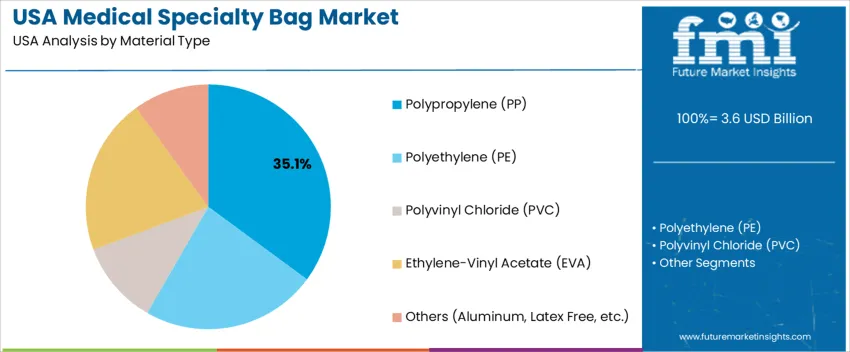
Polypropylene (PP) accounts for 35% of the demand for medical specialty bags in the USA due to its strength, flexibility, and cost-effectiveness. PP is favored in medical applications for its excellent chemical resistance and durability, which make it ideal for containing fluids and medications in products like IV bags and drug delivery systems. Its ability to withstand sterilization processes ensures its safety in medical settings. PP's non-reactive properties guarantee that the contents remain safe and uncontaminated, a critical factor in healthcare. The material’s lightweight nature also contributes to ease of handling and transportation, making it an optimal choice for healthcare providers. As medical facilities prioritize reliable, durable, and affordable packaging solutions, polypropylene continues to dominate the medical specialty bag industry, providing both efficiency and safety in patient care.
Why Does the 501 - 1000 ml Capacity Lead the Demand for Medical Specialty Bags in USA?
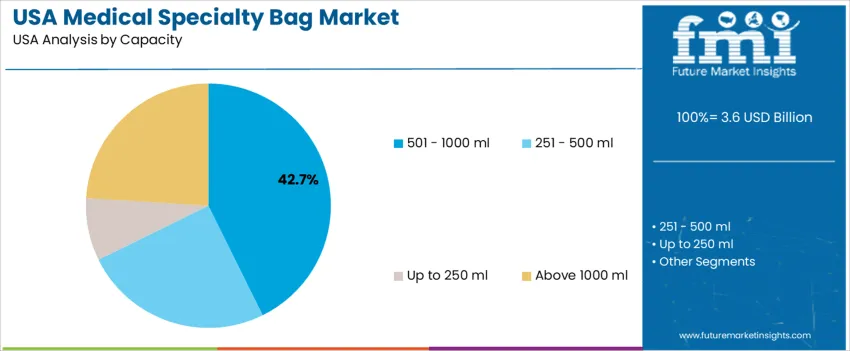
The 501 - 1000 ml capacity accounts for 42.7% of the demand for medical specialty bags in the USA, driven by its versatile applications in healthcare. This capacity is commonly used for intravenous (IV) fluids, nutrient infusions, and other medical treatments requiring medium to large volumes of liquid. It offers the ideal balance between providing sufficient fluid for various treatments while remaining manageable for both healthcare professionals and patients. The 501 - 1000 ml range is widely used in patient care for its ease of handling, which is crucial for timely medical interventions. As demand for intravenous therapies and fluid management solutions increases, this size continues to lead the industry due to its adaptability across different medical specialties. The 501 - 1000 ml capacity’s practical benefits and efficiency ensure it remains the preferred choice in the medical specialty bag segment.
What are the Key Trends, Drivers, and Restraints in Demand for Medical Specialty Bags in USA?
Demand for medical specialty bags in the U.S. is increasing due to a growing chronic disease burden, an aging population, and more surgeries, dialysis procedures, blood transfusions, and home‑care cases. These bags, such as IV fluid bags, ostomy bags, dialysis fluid bags, and sterile collection bags, are essential for fluid delivery, waste collection, nutrient delivery, and other critical care procedures. As hospitals, ambulatory surgical centers, and home healthcare services expand, the use of these specialty bags becomes more frequent. Regulatory compliance, the need for sterile manufacturing conditions, and the cost of materials and disposal may limit growth, particularly for smaller providers.
Why is Demand for Medical Specialty Bags Growing in the USA?
The demand for medical specialty bags is growing due to several factors. The increasing prevalence of chronic diseases, such as kidney disease and colorectal issues that require specialized bags, is driving demand. The trend toward home healthcare and outpatient treatments also contributes to the rise in demand for portable and user-friendly medical bags. As the population ages, long-term care needs, including home care and post-surgery maintenance, are growing, leading to higher demand for specialty medical bags to ensure safety, hygiene, and convenience for patients.
How are Technological & Industry Innovations Driving Medical Specialty Bag Demand in the USA?
Technological innovations are enhancing the safety, functionality, and convenience of medical specialty bags, further driving demand. Advances in materials, such as improved polymers and skin‑friendly materials, have led to safer, more durable bags. Single‑use sterile bags are becoming more popular, reducing infection risks. There are also innovations in multi‑chamber or multi‑port bags, better connectors, and packaging designed for home‑use or outpatient therapy, expanding the use of these bags outside hospitals. The increasing focus on infection control and patient safety has spurred demand for high-quality, disposable medical bags.
What are the Key Challenges and Risks That Could Limit Medical Specialty Bag Demand in the USA?
Several challenges could limit the growth of medical specialty bags. Strict regulatory standards for manufacturing and sterilization can increase production costs, slowing the industry’s growth. Environmental concerns about the disposal of single-use plastic bags may lead to increased pressure for alternative, sustainable materials. Price volatility for raw materials can also impact pricing and supply. In home-care settings, reimbursement policies and insurance coverage may influence the adoption of medical specialty bags, as limited coverage can slow demand. Shifts toward alternative therapies or drug‑delivery methods might reduce reliance on fluid and collection bags.
What is the Regional Demand Outlook for Medical Specialty Bag in USA?
| Region | CAGR (%) |
|---|---|
| West USA | 5.2% |
| South USA | 4.7% |
| Northeast USA | 4.2% |
| Midwest USA | 3.6% |
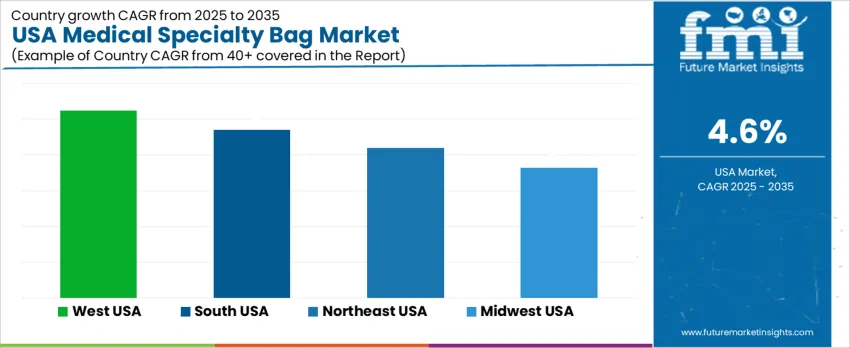
Demand for medical specialty bags in the USA is steadily growing, with West USA leading at a 5.2% CAGR, driven by advanced healthcare infrastructure and a focus on patient safety. South USA follows with a 4.7% CAGR, supported by the growing healthcare sector and expanding outpatient care centers. Northeast USA shows a 4.2% CAGR, fueled by its established healthcare facilities and increasing focus on operational efficiency. Midwest USA experiences a 3.6% CAGR, with steady growth driven by the aging population and expanding healthcare services. As the healthcare sector continues to expand, demand for medical specialty bags will continue to rise steadily across the country.
How is Demand for Medical Specialty Bags Growing in West USA?
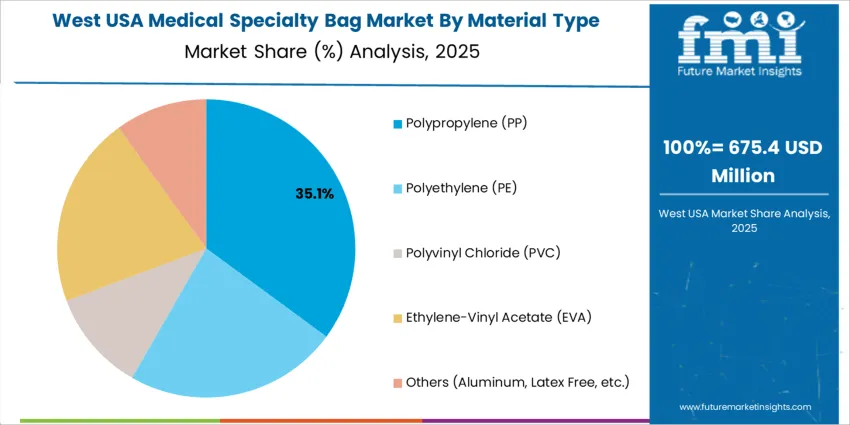
West USA leads the demand for medical specialty bags, growing at a 5.2% CAGR. The region’s robust healthcare infrastructure, particularly in states like California and Washington, contributes significantly to the rise in demand for specialized medical bags. As hospitals, clinics, and healthcare facilities continue to expand, there is a growing need for medical specialty bags used for storage, transportation, and collection of medical waste. West USA’s advanced healthcare systems and increasing focus on patient safety, along with the region’s commitment to sustainability, are further driving the demand for eco-friendly and high-quality medical bags. The region’s aging population and the rise of outpatient care centers have created new demand for various medical specialty bags tailored to specific healthcare needs. As medical facilities in West USA continue to modernize and expand, demand for these specialized products is expected to remain strong.
Why is Demand for Medical Specialty Bags Rising in South USA?
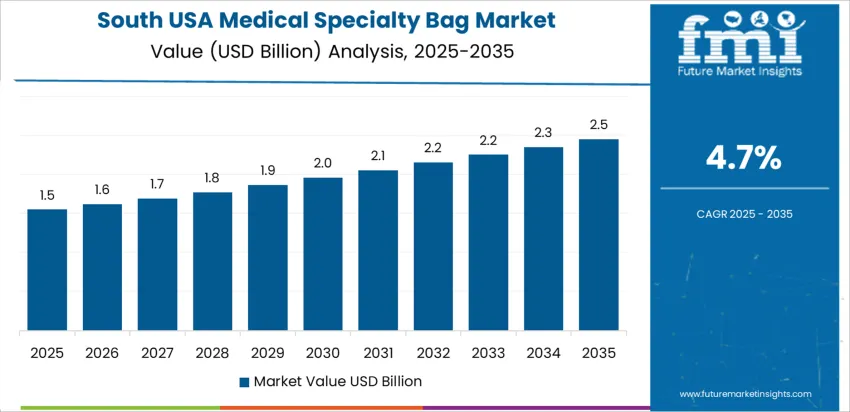
South USA is experiencing steady demand for medical specialty bags, with a 4.7% CAGR. The region’s growing healthcare sector, particularly in states like Texas, Florida, and Georgia, is contributing to the rising need for medical specialty bags. As the population continues to age and healthcare services expand, there is a higher demand for bags designed for specific medical applications, such as intravenous (IV) therapy, specimen collection, and waste disposal. The South USA’s increasing focus on patient care, coupled with the need for more efficient hospital logistics, is driving the adoption of medical specialty bags. With the region’s rising investment in healthcare infrastructure and a growing number of outpatient care centers, demand for medical bags is expected to rise. As hospitals and healthcare providers look to improve operational efficiency and patient safety, the need for reliable and purpose-built medical bags in South USA will continue to grow.
How is Demand for Medical Specialty Bags Expanding in Northeast USA?
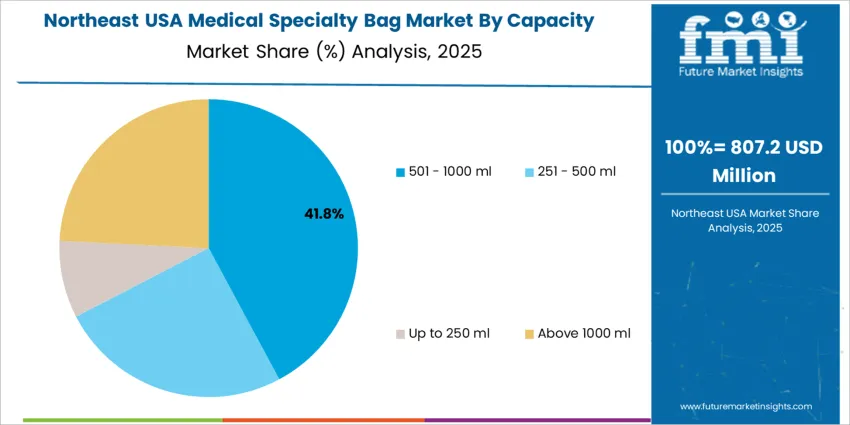
Northeast USA is seeing steady demand for medical specialty bags, with a 4.2% CAGR. The region’s established healthcare infrastructure, particularly in major cities like New York and Boston, is fueling the demand for high-quality, specialized medical bags. The region’s hospitals, research institutions, and healthcare facilities are major consumers of medical specialty bags for uses like transporting biological samples, IV administration, and waste management. The Northeast’s growing focus on improving healthcare operations, ensuring hygiene and safety standards, and complying with environmental regulations has led to increased demand for durable, eco-friendly medical bags. As more healthcare facilities implement advanced medical technologies and increase patient care capacity, the need for medical bags that meet specific medical and regulatory requirements continues to rise. With a steady focus on healthcare innovation and operational efficiency, demand for medical specialty bags in Northeast USA is expected to grow consistently.
How is Demand for Medical Specialty Bags Growing in Midwest USA?
Midwest USA is experiencing moderate growth in demand for medical specialty bags, with a 3.6% CAGR. The region’s strong healthcare sector, including hospitals, clinics, and long-term care facilities, is contributing to the growing need for medical specialty bags. As the population ages and healthcare services continue to evolve, the demand for specialty bags designed for medical waste, specimen transport, and patient care increases. Midwest USA’s focus on improving healthcare efficiency, alongside a rise in outpatient care facilities and mobile healthcare services, is further driving demand for specialized bags. The region’s growing emphasis on patient safety and infection control is spurring the use of high-quality medical bags that meet regulatory standards. While growth in the Midwest is slower than in coastal regions, the steady demand for medical specialty bags driven by expanding healthcare infrastructure ensures continued growth. As healthcare facilities evolve, demand for these products is expected to rise steadily.
What is the Competitive Landscape of Medical Specialty Bag Demand in USA?
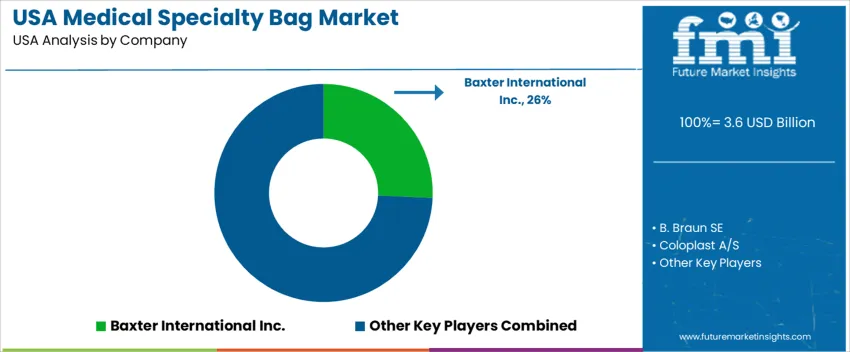
Demand for medical specialty bags in the USA is rising, driven by growing needs for safe, sterile delivery and storage of fluids, nutrients, and biological materials in hospitals, outpatient clinics, and home-care settings. Aging demographics and a higher prevalence of chronic diseases are increasing requirements for therapies like intravenous (IV) fluids, dialysis, ostomy care, and blood transfusions. Advances in material science, greater awareness of infection prevention, and expansion of home-healthcare services further boost the adoption of modern medical-grade bags.
Major suppliers in the U.S. medical specialty bag segment include Baxter International Inc., B. Braun SE, Coloplast A/S, Convatec Group PLC, and Fresenius SE & Co. KGaA. Baxter International Inc. holds a leading share of 25.7%, offering a broad portfolio of IV fluid bags, blood-storage bags, dialysis bags, and other specialty disposable systems. Other firms B. Braun, Coloplast, Convatec, and Fresenius compete by providing specialized solutions such as ostomy bags, enteral feeding bags, urinary collection systems, and other fluid-management products. Their offerings cover hospital settings, long-term care, and home-based therapies, reflecting diverse patient needs and care pathways in the U.S. industry.
Growth in this sector is driven by increasing surgical volumes, rising incidence of chronic and lifestyle-related conditions (requiring long-term fluid therapy, dialysis, or ostomy care), and expansion of ambulatory and home-care services. Demand is also fueled by stricter hygiene and infection-control standards, prompting healthcare providers to prefer single-use, sterile bags. Suppliers compete on reliability, material quality (e.g., PVC-free or biocompatible materials), bag design (portability, safety, ease of use), and regulatory compliance. As the healthcare landscape evolves toward more outpatient and home-based care, firms that deliver safe, efficient, and user-friendly bag solutions are best positioned to lead.
Key Players in USA Medical Specialty Bag Demand
- Baxter International Inc.
- B. Braun SE
- Coloplast A/S
- Convatec Group PLC
- Fresenius SE & Co. KGaA
Scope of Report
| Items | Values |
|---|---|
| Quantitative Units (2025) | USD billion |
| Material Type | Polypropylene (PP), Polyethylene (PE), Polyvinyl Chloride (PVC), Ethylene-Vinyl Acetate (EVA), Others (Aluminum, Latex Free, etc.) |
| Capacity | 501 - 1000 ml, 251 - 500 ml, Up to 250 ml, Above 1000 ml |
| Region | West USA, South USA, Northeast USA, Midwest USA |
| Countries Covered | USA |
| Key Companies Profiled | Baxter International Inc., B. Braun SE, Coloplast A/S, Convatec Group PLC, Fresenius SE & Co. KGaA |
| Additional Attributes | Dollar sales by material type and capacity; regional trends in medical specialty bag demand; increasing preference for flexible packaging solutions in healthcare; innovations in medical specialty bags for better patient care. |
USA Medical Specialty Bag Demand by Key Segments
Material Type:
- Polypropylene (PP)
- Polyethylene (PE)
- Polyvinyl Chloride (PVC)
- Ethylene-Vinyl Acetate (EVA)
- Others (Aluminum, Latex Free, etc.)
Capacity:
- 501 - 1000 ml
- 251 - 500 ml
- Up to 250 ml
- Above 1000 ml
Region:
- West USA
- South USA
- Northeast USA
- Midwest USA
Frequently Asked Questions
How big is the demand for medical specialty bag in USA in 2025?
The demand for medical specialty bag in USA is estimated to be valued at USD 3.6 billion in 2025.
What will be the size of medical specialty bag in USA in 2035?
The market size for the medical specialty bag in USA is projected to reach USD 5.6 billion by 2035.
How much will be the demand for medical specialty bag in USA growth between 2025 and 2035?
The demand for medical specialty bag in USA is expected to grow at a 4.6% CAGR between 2025 and 2035.
What are the key product types in the medical specialty bag in USA?
The key product types in medical specialty bag in USA are polypropylene (pp), polyethylene (pe), polyvinyl chloride (pvc), ethylene-vinyl acetate (eva) and others (aluminum, latex free, etc.).
Which capacity segment is expected to contribute significant share in the medical specialty bag in USA in 2025?
In terms of capacity, 501 - 1000 ml segment is expected to command 42.7% share in the medical specialty bag in USA in 2025.
Preview the report firsthand - request a free sample
Get SampleGet the brochure for pricing and purchase details.
Get PDFTable of Content
- Executive Summary
- USA Market Outlook
- Demand-side Trends
- Supply-side Trends
- Technology Roadmap Analysis
- Analysis and Recommendations
- Market Overview
- Market Coverage / Taxonomy
- Market Definition / Scope / Limitations
- Market Background
- Market Dynamics
- Drivers
- Restraints
- Opportunity
- Trends
- Scenario Forecast
- Demand in Optimistic Scenario
- Demand in Likely Scenario
- Demand in Conservative Scenario
- Opportunity Map Analysis
- Product Life Cycle Analysis
- Supply Chain Analysis
- Investment Feasibility Matrix
- Value Chain Analysis
- PESTLE and Porter’s Analysis
- Regulatory Landscape
- Regional Parent Market Outlook
- Production and Consumption Statistics
- Import and Export Statistics
- Market Dynamics
- USA Market Analysis 2020 to 2024 and Forecast, 2025 to 2035
- Historical Market Size Value (USD Million) Analysis, 2020 to 2024
- Current and Future Market Size Value (USD Million) Projections, 2025 to 2035
- Y-o-Y Growth Trend Analysis
- Absolute $ Opportunity Analysis
- USA Market Pricing Analysis 2020 to 2024 and Forecast 2025 to 2035
- USA Market Analysis 2020 to 2024 and Forecast 2025 to 2035, By Material Type
- Introduction / Key Findings
- Historical Market Size Value (USD Million) Analysis By Material Type , 2020 to 2024
- Current and Future Market Size Value (USD Million) Analysis and Forecast By Material Type , 2025 to 2035
- Polypropylene (PP)
- Polyethylene (PE)
- Polyvinyl Chloride (PVC)
- Ethylene-Vinyl Acetate (EVA)
- Others (Aluminum, Latex Free, etc.)
- Y-o-Y Growth Trend Analysis By Material Type , 2020 to 2024
- Absolute $ Opportunity Analysis By Material Type , 2025 to 2035
- USA Market Analysis 2020 to 2024 and Forecast 2025 to 2035, By Capacity
- Introduction / Key Findings
- Historical Market Size Value (USD Million) Analysis By Capacity, 2020 to 2024
- Current and Future Market Size Value (USD Million) Analysis and Forecast By Capacity, 2025 to 2035
- 501 - 1000 ml
- 251 - 500 ml
- Up to 250 ml
- Above 1000 ml
- Y-o-Y Growth Trend Analysis By Capacity, 2020 to 2024
- Absolute $ Opportunity Analysis By Capacity, 2025 to 2035
- Market Structure Analysis
- Competition Dashboard
- Competition Benchmarking
- Market Share Analysis of Top Players
- By Regional
- By Material Type
- By Capacity
- Competition Analysis
- Competition Deep Dive
- Baxter International Inc.
- Overview
- Product Portfolio
- Profitability by Market Segments (Product/Age /Sales Channel/Region)
- Sales Footprint
- Strategy Overview
- Marketing Strategy
- Product Strategy
- Channel Strategy
- B. Braun SE
- Coloplast A/S
- Convatec Group PLC
- Fresenius SE & Co. KGaA
- Baxter International Inc.
- Competition Deep Dive
- Assumptions & Acronyms Used
- Research Methodology


