

- Industry Size (2026)
- USD 784.8 Mn
- Forecast (2036)
- USD 973.1 Mn
- CAGR (2026 to 2036)
- 2.2%
Demand for Pulmonary Arterial Hypertension Treatment in USA 2026 to 2036
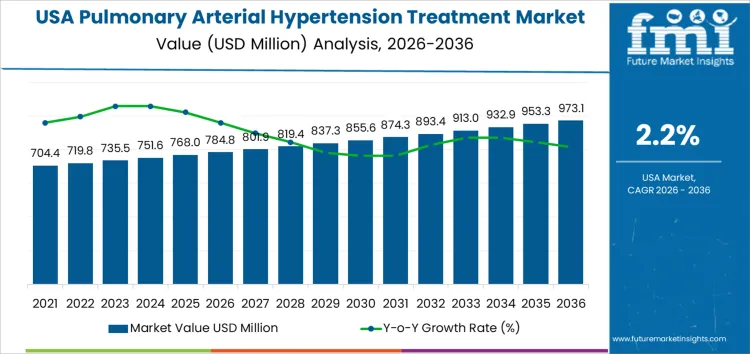
Demand for pulmonary arterial hypertension treatment in USA is valued at USD 784.8 million in 2026 and is projected to reach USD 973.1 million by 2036, reflecting a CAGR of 2.2%. Demand remains steady due to chronic disease management needs, improved diagnostic rates, and long-term therapy adherence among diagnosed patients. Treatment continuity, combination regimens, and specialist-led care models sustain utilization despite limited patient population growth.
Quick Stats for Demand for Pulmonary Arterial Hypertension Treatment in USA
- USA Pulmonary Arterial Hypertension Treatment Sales Value (2026): USD 784.8 million
- USA Pulmonary Arterial Hypertension Treatment Forecast Value (2036): USD 973.1 million
- USA Pulmonary Arterial Hypertension Treatment Forecast CAGR (2026 to 2036): 2.2%
- Leading Drug Class in USA: Endothelin Receptor Antagonists
- Key Growth Regions in USA: West USA, South USA, Northeast USA, Midwest USA
- Top Players in USA: Actelion (Janssen), United Therapeutics, Bayer HealthCare, Pfizer, Merck & Co.
Endothelin receptor antagonists lead drug-class usage because these therapies directly target vasoconstriction pathways central to pulmonary arterial hypertension progression. Clinicians rely on this class for proven efficacy in improving exercise capacity and delaying disease worsening. Established safety profiles and compatibility with combination therapy support continued prescribing preference.
West USA, South USA, Northeast USA, and Midwest USA represent key growth regions supported by concentration of specialty pulmonary centers, referral networks, and access to advanced therapies. Actelion (Janssen), United Therapeutics, Bayer HealthCare, Pfizer, and Merck & Co. anchor competitive activity through branded portfolios, clinical evidence generation, and distribution aligned with long-term disease management requirements across U.S. pulmonary care settings.
USA Pulmonary Arterial Hypertension Treatment Key Takeaways
| Metric | Value |
|---|---|
| USA Pulmonary Arterial Hypertension Treatment Sales Value (2026) | USD 784.8 million |
| USA Pulmonary Arterial Hypertension Treatment Forecast Value (2036) | USD 973.1 million |
| USA Pulmonary Arterial Hypertension Treatment Forecast CAGR (2026-2036) | 2.2% |
Why is the Demand for Pulmonary Arterial Hypertension Treatment in USA Growing?
Demand for pulmonary arterial hypertension treatment in the United States grows due to improved disease recognition, expanded screening, and longer patient survival. Greater awareness among cardiologists and pulmonologists increases diagnosis during earlier functional stages. Rising prevalence of connective tissue disorders, congenital heart disease, and chronic lung conditions contributes to a larger treated population. Aging demographics increase vulnerability to vascular and cardiopulmonary complications associated with elevated pulmonary pressure. Advances in diagnostic imaging, right heart catheterization, and biomarker assessment support more accurate classification and treatment initiation.
Clinical guidelines emphasize combination therapy and continuous disease monitoring, which increases treatment intensity and duration. Expansion of specialty pulmonary hypertension centers improves patient referral pathways and access to advanced therapies. Broader insurance coverage for rare disease management supports sustained treatment adherence. Development of targeted drug classes, including endothelin receptor antagonists, phosphodiesterase inhibitors, and prostacyclin pathway agents, increases therapeutic options. Improved survival outcomes result in longer treatment timelines requiring ongoing medication management. Patient support programs and structured follow up improve continuity of care across outpatient settings. Growth in clinical research strengthens physician confidence and reinforces standardized treatment adoption nationwide.
How Are the Segments Classified in the Demand for Pulmonary Arterial Hypertension Treatment in USA?
Demand for pulmonary arterial hypertension treatment in USA is shaped by rising diagnostic awareness, structured specialty care pathways, and long-term disease management requirements. Clinicians assess drug efficacy, mechanism specificity, tolerability, and compatibility with combination therapy protocols. Adoption patterns reflect centralized treatment within specialist centers, supported by hospital-based initiation, ongoing monitoring, and coordinated pharmaceutical distribution aligned with chronic therapy adherence needs.
Which Drug Class Accounts for the Largest Share of Pulmonary Arterial Hypertension Treatment Demand in USA?
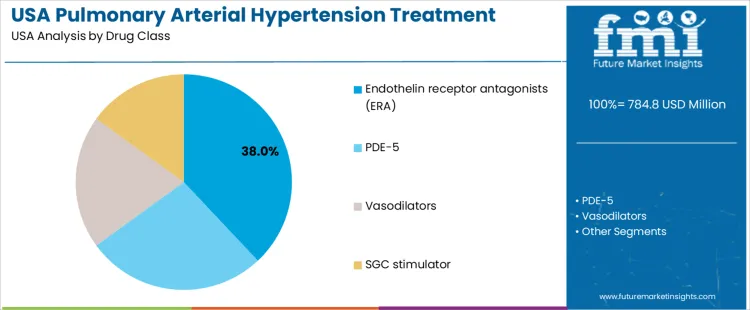
Endothelin receptor antagonists hold 38.0%, accounting for the largest drug class share in USA demand. These therapies target endothelin-mediated vasoconstriction, supporting pulmonary vascular dilation and symptom control. PDE-5 inhibitors hold 27.0%, improving nitric oxide signaling and exercise capacity in patients with moderate disease severity. Vasodilators account for 20.0%, used in advanced or acute management settings requiring direct vascular relaxation. Soluble guanylate cyclase stimulators hold 15.0%, supporting alternative pathway activation in selected patient populations. Drug class distribution reflects reliance on established receptor-targeted therapies within long-term management protocols.
Key Points
- Endothelin receptor antagonists lead due to targeted vascular action.
- PDE-5 inhibitors support nitric oxide pathway modulation.
- Vasodilators and SGC stimulators address advanced treatment needs.
Which Distribution Channel Drives Pulmonary Arterial Hypertension Treatment Access in USA?
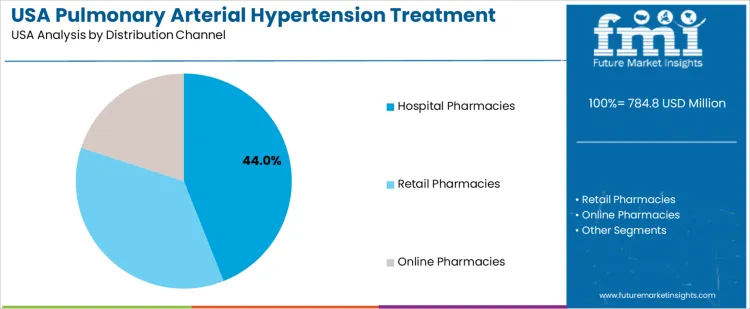
Hospital pharmacies hold 44.0%, driving distribution of pulmonary arterial hypertension treatments in USA. These pharmacies support initiation of therapy, dose titration, and monitoring under specialist supervision. Retail pharmacies account for 36.0%, enabling continued access for stable patients managing long-term therapy. Online pharmacies hold 20.0%, supporting refill convenience and home delivery for chronic treatment adherence. Distribution channel patterns reflect emphasis on hospital-based control during early treatment stages followed by decentralized access for maintenance therapy.
Key Points
- Hospital pharmacies dominate due to specialist-led initiation.
- Retail pharmacies support ongoing outpatient treatment.
- Online channels enhance access for chronic therapy management.
What are the Key Dynamics in the Pulmonary Arterial Hypertension Treatment Industry?
Demand rises as clinicians and healthcare systems in USA manage pulmonary arterial hypertension (PAH), a progressive vascular disorder requiring long-term therapy to improve functional capacity and survival. PAH treatment includes endothelin receptor antagonists, phosphodiesterase-5 inhibitors, prostacyclin analogs, and combination regimens tailored to disease severity. Adoption aligns with enhanced screening, specialist care networks, and structured long-term management programs across cardiology and pulmonary practices.
How do disease prevalence, clinical guidelines, and specialist treatment patterns drive demand in USA?
USA adopts comprehensive diagnostic pathways that integrate echocardiography, right heart catheterization, and risk stratification to identify PAH early and guide therapy. Specialty centers and pulmonary hypertension clinics focus on individualized treatment plans using targeted vasodilators to reduce pulmonary vascular resistance and improve exercise tolerance. Combination therapy protocols have become standard in moderate to high-risk cases, supported by evidence demonstrating improved outcomes. Referral to expert centers accelerates adoption of advanced agents and monitoring strategies. Multidisciplinary teams coordinate care across cardiology, pulmonology, pharmacy, and rehabilitation to address the complex nature of PAH and its comorbidities.
How do insurance coverage, drug pricing, and long-term management challenges influence demand stability in USA?
PAH therapies involve high acquisition costs, prompting careful navigation of insurance coverage, prior authorization, and specialty pharmacy distribution. Medicare, Medicaid, and private payers influence treatment access and regimen selection through formulary placement and cost-sharing structures. Patient adherence challenges arise due to side-effect profiles and complex dosing requirements, affecting long-term utilization patterns. Clinical monitoring, including six-minute walk tests and biomarker assessment, increases outpatient care needs. Competition from generics and emerging therapies shapes treatment sequencing. Demand remains robust in diagnosed patient populations, while growth depends on improved screening, payer alignment, and evidence supporting long-term benefits within USA healthcare delivery.
How Is Demand for Pulmonary Arterial Hypertension Treatment in the USA Evolving by Region?
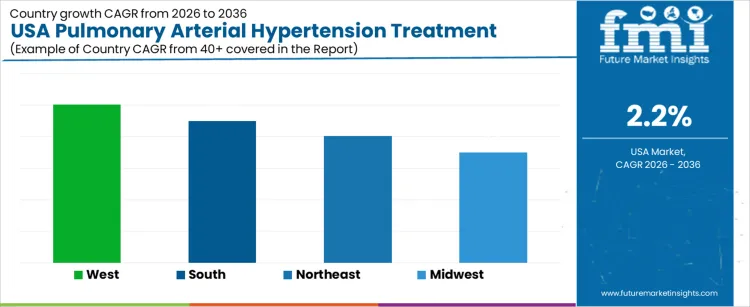
Demand for pulmonary arterial hypertension treatment in the USA is increasing at a measured pace due to improved diagnosis, longer patient survival, and protocol-driven specialty care. West USA leads with a 2.5% CAGR, supported by specialty cardiopulmonary centers and early diagnostic access. South USA follows at 2.3%, driven by population growth and expanded specialty referral networks. Northeast USA records a 2.0% CAGR, shaped by academic care models and guideline-based therapy optimization. Midwest USA posts 1.7%, reflecting integrated health systems and conservative treatment escalation. Regional variation reflects diagnostic access, specialist density, referral patterns, and long-term disease management practices across the USA.
| Region | CAGR (2026 to 2036) |
|---|---|
| West USA | 2.5% |
| South USA | 2.3% |
| Northeast USA | 2.0% |
| Midwest USA | 1.7% |
Which care delivery factors are influencing PAH treatment demand in West USA?
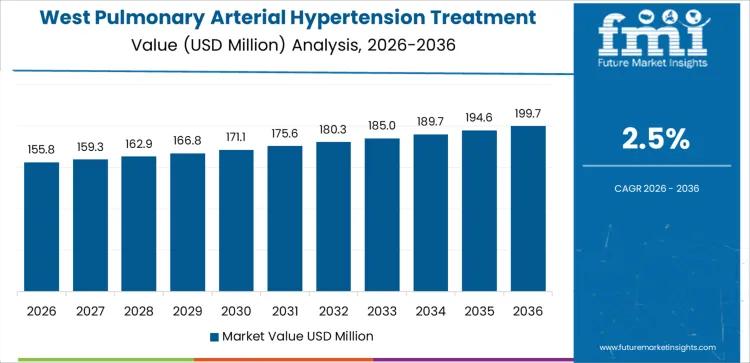
West USA drives demand through concentration of pulmonary hypertension centers, cardiology specialists, and early diagnostic infrastructure. Region’s CAGR of 2.5% reflects structured use of combination therapies, risk stratification protocols, and longitudinal patient monitoring. Health systems emphasize early initiation of targeted therapies to slow disease progression. Access to specialized imaging and right heart catheterization supports timely diagnosis. Multidisciplinary clinics manage complex cases with coordinated follow-up. Demand favors established drug classes with strong clinical evidence and predictable reimbursement. Growth remains outcomes-focused, aligned with early detection and sustained specialty care rather than expanding patient incidence.
- High density of pulmonary hypertension centers
- Early diagnostic and risk stratification access
- Multidisciplinary specialty clinic models
- Long-term disease management focus
Why does South USA show steady expansion in PAH treatment utilization?
South USA demand is shaped by population growth, improved referral access, and expanding specialty coverage. Region’s CAGR of 2.3% reflects rising identification of PAH cases through cardiology and pulmonology networks. Health systems invest in referral coordination to connect community providers with specialty centers. Treatment emphasizes oral and inhaled therapies suitable for outpatient management. Providers focus on adherence support and monitoring to reduce hospitalization risk. Demand growth remains volume-driven, supported by demographic expansion and broader access to specialty consultation rather than changes in treatment intensity.
- Population-driven increase in diagnosed cases
- Expanded specialty referral networks
- Outpatient-focused treatment approaches
- Adherence and monitoring emphasis
How do academic treatment pathways shape demand patterns in Northeast USA?
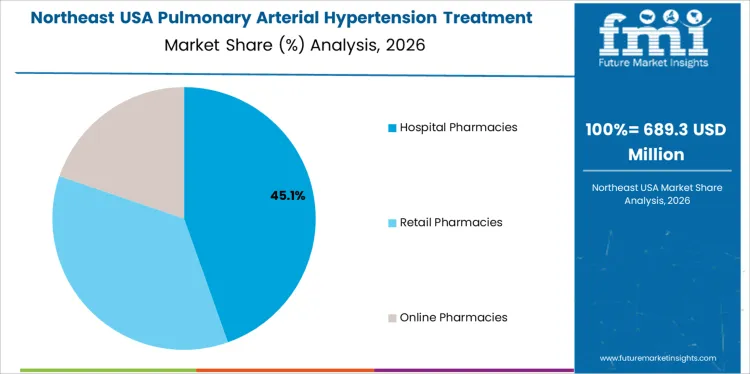
Northeast USA demand reflects academic medicine leadership, evidence-based practice, and structured care pathways. Region’s CAGR of 2.0% is supported by standardized treatment algorithms and cautious therapy escalation. Teaching hospitals emphasize guideline adherence, patient stratification, and safety monitoring. Multicenter collaboration supports consistent care delivery across affiliated hospitals. Access to specialty pharmacies facilitates continuity of therapy. Demand growth aligns with improved disease management and patient longevity rather than rising incidence. Adoption remains disciplined and protocol-led.
- Academic hospital-led PAH management
- Guideline-driven therapy selection
- Structured escalation and safety monitoring
- Stable patient survival-driven demand
What explains conservative PAH treatment growth across Midwest USA?
Midwest USA demand is anchored in integrated health systems, centralized specialty services, and conservative prescribing practices. Region’s CAGR of 1.7% reflects stable case volumes and disciplined treatment initiation. Providers prioritize cost management, formulary standardization, and patient adherence. Referral distances influence centralized care at regional hubs. Therapy selection emphasizes established medications with predictable outcomes. Demand growth remains modest, aligned with long-term disease management and stable diagnostic rates rather than expansion of specialty centers.
- Integrated regional healthcare delivery
- Centralized specialty treatment hubs
- Cost-managed and formulary-driven prescribing
- Stable and predictable case volumes
What is the competitive landscape of demand for pulmonary arterial hypertension treatment in the USA?
Demand for pulmonary arterial hypertension (PAH) treatment in the USA is driven by clinical prevalence, earlier diagnosis protocols, and expansion of therapeutic options that target vascular remodeling, vasoconstriction, and endothelial dysfunction. Treatment strategies include prostacyclin analogs, endothelin receptor antagonists, phosphodiesterase-5 inhibitors, and selective soluble guanylate cyclase stimulators used across specialist cardiology and pulmonary hypertension care centers. Buyers evaluate clinical efficacy, safety profiles, dosing convenience, and long-term functional outcomes under U.S. treatment guidelines. Procurement teams prioritize therapies with FDA approval, strong clinical evidence, and comprehensive patient-support programs that assist adherence and reimbursement. Trend in the USA market reflects growing emphasis on combination regimens, patient quality-of-life improvements, and integration with multidisciplinary care models.
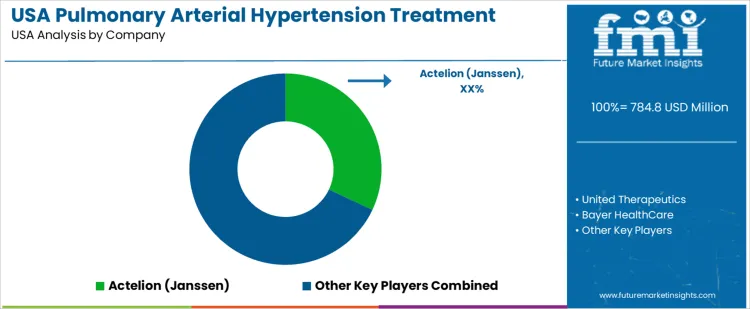
Actelion Pharmaceuticals US, part of Janssen (Johnson & Johnson), holds a leading position through endothelin receptor antagonists widely used in PAH management supported by extensive clinical data and U.S. specialist adoption. United Therapeutics participates with prostacyclin analogs and innovative delivery systems addressing advanced PAH cases and chronic therapy needs. Bayer HealthCare supports demand with soluble guanylate cyclase stimulators that offer alternative pathways for vasodilation and clinical benefit. Pfizer contributes through phosphodiesterase-5 inhibitors prescribed within national PAH treatment protocols. Merck & Co. maintains visibility with therapeutic options integrated into combination strategies and supportive patient programs. Competitive positioning in the USA reflects regulatory compliance, clinical evidence strength, physician familiarity, and comprehensive support services that enhance access and long-term treatment adherence.
Key Players in USA Pulmonary Arterial Hypertension Treatment Demand
- Actelion (Janssen)
- United Therapeutics
- Bayer HealthCare
- Pfizer
- Merck & Co.
Scope of the Report
| Items | Details |
|---|---|
| Quantitative Units | USD million |
| Drug Class | Endothelin Receptor Antagonists (ERA); PDE-5 Inhibitors; Vasodilators; Soluble Guanylate Cyclase (sGC) Stimulators |
| Distribution Channel | Hospital Pharmacies; Retail Pharmacies; Online Pharmacies |
| Regions Covered | West USA; South USA; Northeast USA; Midwest USA |
| Key Companies Profiled | Actelion (Janssen); United Therapeutics; Bayer HealthCare; Pfizer; Merck & Co. |
| Additional Attributes | Demand is driven by rising diagnosis rates, long-term therapy dependence, and guideline-based combination treatment adoption. Hospital pharmacies dominate initial dispensing, while retail channels support chronic management. Regional demand correlates with specialty pulmonary centers, insurance coverage patterns, and access to advanced cardiovascular care facilities. |
USA Pulmonary Arterial Hypertension Treatment Demand by Segments
Drug Class:
- Endothelin receptor antagonists (ERA)
- PDE-5 inhibitors
- Vasodilators
- SGC stimulator
Distribution Channel:
- Hospital Pharmacies
- Retail Pharmacies
- Online Pharmacies
Region:
- West USA
- South USA
- Northeast USA
- Midwest USA
Frequently Asked Questions
How big is the demand for pulmonary arterial hypertension treatment in USA in 2026?
The demand for pulmonary arterial hypertension treatment in USA is estimated to be valued at USD 784.8 million in 2026.
What will be the size of pulmonary arterial hypertension treatment in USA in 2036?
The market size for the pulmonary arterial hypertension treatment in USA is projected to reach USD 973.1 million by 2036.
How much will be the demand for pulmonary arterial hypertension treatment in USA growth between 2026 and 2036?
The demand for pulmonary arterial hypertension treatment in USA is expected to grow at a 2.2% CAGR between 2026 and 2036.
What are the key drug class types in the pulmonary arterial hypertension treatment in USA?
The key drug class types in pulmonary arterial hypertension treatment in USA are endothelin receptor antagonists (ERA), PDE-5, vasodilators and SGC stimulators.
Which distribution channel segment is expected to contribute significant share in the pulmonary arterial hypertension treatment in USA in 2026?
In terms of distribution channel, hospital pharmacies segment is expected to command 44.0% share in the pulmonary arterial hypertension treatment in USA in 2026.
Preview the report firsthand - request a free sample
Get SampleGet the brochure for pricing and purchase details.
Get PDFTable of Content
- Executive Summary
- USA Market Outlook
- Demand-side Trends
- Supply-side Trends
- Technology Roadmap Analysis
- Analysis and Recommendations
- Market Overview
- Market Coverage / Taxonomy
- Market Definition / Scope / Limitations
- Market Background
- Market Dynamics
- Drivers
- Restraints
- Opportunity
- Trends
- Scenario Forecast
- Demand in Optimistic Scenario
- Demand in Likely Scenario
- Demand in Conservative Scenario
- Opportunity Map Analysis
- Product Life Cycle Analysis
- Supply Chain Analysis
- Investment Feasibility Matrix
- Value Chain Analysis
- PESTLE and Porter’s Analysis
- Regulatory Landscape
- Regional Parent Market Outlook
- Production and Consumption Statistics
- Import and Export Statistics
- Market Dynamics
- USA Market Analysis 2021 to 2025 and Forecast, 2026 to 2036
- Historical Market Size Value (USD Million) Analysis, 2021 to 2025
- Current and Future Market Size Value (USD Million) Projections, 2026 to 2036
- Y-o-Y Growth Trend Analysis
- Absolute $ Opportunity Analysis
- USA Market Pricing Analysis 2021 to 2025 and Forecast 2026 to 2036
- USA Market Analysis 2021 to 2025 and Forecast 2026 to 2036, By Drug Class
- Introduction / Key Findings
- Historical Market Size Value (USD Million) Analysis By Drug Class , 2021 to 2025
- Current and Future Market Size Value (USD Million) Analysis and Forecast By Drug Class , 2026 to 2036
- Endothelin receptor antagonists (ERA)
- PDE-5
- Vasodilators
- SGC stimulator
- Endothelin receptor antagonists (ERA)
- Y-o-Y Growth Trend Analysis By Drug Class , 2021 to 2025
- Absolute $ Opportunity Analysis By Drug Class , 2026 to 2036
- USA Market Analysis 2021 to 2025 and Forecast 2026 to 2036, By Distribution Channel
- Introduction / Key Findings
- Historical Market Size Value (USD Million) Analysis By Distribution Channel, 2021 to 2025
- Current and Future Market Size Value (USD Million) Analysis and Forecast By Distribution Channel, 2026 to 2036
- Hospital Pharmacies
- Retail Pharmacies
- Online Pharmacies
- Hospital Pharmacies
- Y-o-Y Growth Trend Analysis By Distribution Channel, 2021 to 2025
- Absolute $ Opportunity Analysis By Distribution Channel, 2026 to 2036
- Market Structure Analysis
- Competition Dashboard
- Competition Benchmarking
- Market Share Analysis of Top Players
- By Regional
- By Drug Class
- By Distribution Channel
- Competition Analysis
- Competition Deep Dive
- Actelion (Janssen)
- Overview
- Product Portfolio
- Profitability by Market Segments (Product/Age /Sales Channel/Region)
- Sales Footprint
- Strategy Overview
- Marketing Strategy
- Product Strategy
- Channel Strategy
- Value (USD Million)ed Therapeutics
- Bayer HealthCare
- Pfizer
- Merck & Co.
- Actelion (Janssen)
- Competition Deep Dive
- Assumptions & Acronyms Used
- Research Methodology


