

- Industry Size (2025)
- USD 2.9 Bn
- Forecast (2035)
- USD 5.1 Bn
- CAGR (2025 to 2035)
- 5.7%
Demand for Wire to Board Connector in USA Forecast and Outlook 2025 to 2035
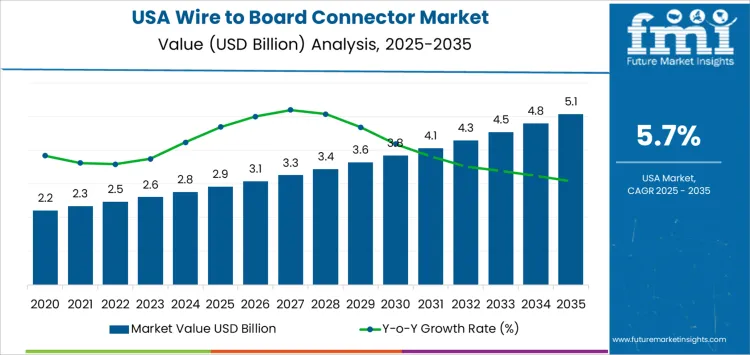
The demand for wire to board connectors in the USA is expected to grow from USD 2.9 billion in 2025 to USD 5.1 billion by 2035, reflecting a compound annual growth rate (CAGR) of 5.7%. Wire to board connectors are essential components in various industries, including consumer electronics, automotive, industrial automation, and telecommunications, enabling reliable electrical connections between wires and circuit boards. As the demand for compact and efficient electronic devices continues to rise and as industries adopt advanced connectivity solutions, the market for wire-to-board connectors is expected to grow steadily over the forecast period.
The market will experience gradual growth, starting at USD 2.9 billion in 2025 and increasing to USD 3.1 billion in 2026, USD 3.3 billion in 2027, and USD 3.4 billion in 2028. By 2029, demand for wire to board connectors will rise to USD 3.6 billion, continuing its upward trajectory through the 2030s. By 2035, the demand for wire to board connectors is projected to reach USD 5.1 billion, driven by the increasing adoption of advanced electronic devices, rising automation in industrial sectors, and the growing need for reliable connectivity solutions.
Quick Stats of the Demand for Wire to Board Connector in USA
- Demand for Wire to Board Connector in USA Value (2025): USD 2.9 billion
- Demand for Wire to Board Connector in USA Forecast Value (2035): USD 5.1 billion
- Demand for Wire to Board Connector in USA Forecast CAGR (2025 to 2035): 5.7%
- Demand for Wire to Board Connector in USA Leading Frequency: Crimp-style Connectors (33%)
- Demand for Wire to Board Connector in USA Key Growth Regions: West USA, South USA, Northeast USA, Midwest USA
- Demand for Wire to Board Connector in USA Key Players: Molex, TE Connectivity, Amphenol, Hirose Electric, JST Corporation
What is the Growth Forecast for the Wire to Board Connector Industry in USA through 2035?
The growth rate volatility index for the wire to board connector market shows relatively low volatility, indicating stable and predictable growth over the forecast period. In the early years (2025 to 2029), the market will experience consistent, incremental increases in demand, driven by steady adoption across various industries. The growth rate will remain stable as industries like consumer electronics, automotive, and industrial automation continue to incorporate wire to board connectors in their products.
While the market will experience steady growth, the volatility index indicates that there will be little fluctuation or disruption in the demand trajectory. The later years of the forecast (2029 to 2035) will see continued steady growth, with the pace of expansion likely to remain stable as the technology matures and becomes a standard component in electronics and industrial systems. The demand will be supported by the increasing adoption of miniaturized electronics, automation, and the ongoing need for reliable electrical connections across industries, but without major spikes or dips in growth rate. The relatively low volatility suggests a mature, stable market with consistent demand throughout the forecast period.
USA Wire to Board Connector Industry Key Takeaways
| Metric | Value |
|---|---|
| Industry Sales Value (2025) | USD 2.9 billion |
| Industry Forecast Value (2035) | USD 5.1 billion |
| Industry Forecast CAGR (2025 to 2035) | 5.7% |
Why is the Demand for Wire-to-Board Connectors in USA Growing?
Demand for wire-to-board connectors in the USA is increasing as electronics use expands across consumer devices, industrial equipment, transportation, and emerging technologies. Wire-to-board connectors provide a reliable way to link wires and power or signal lines to printed circuit boards (PCBs) in compact assemblies. As manufacturers build more compact, feature-rich devices, from smartphones and IoT gadgets to industrial controllers and vehicle electronics, the need for small, durable, and efficient connectors grows. The broader trend toward miniaturization, higher performance and higher wiring density in electronic products supports rising use of wire-to-board connectors.
At the same time growth in automotive electronics, electric vehicles, and industrial automation is boosting demand. Modern vehicles integrate many electrical and electronic modules, including infotainment, sensors, safety systems, battery management and control units. Wire-to-board connectors are essential for ensuring reliable power and signal transmission in these modules. As the USA auto industry shifts toward vehicles with more electronics and increasing electrification, demand for robust wire-to-board connectors rises. Meanwhile industrial automation and automation in manufacturing increasingly rely on electronic control units, sensors, and compact circuit boards, all requiring connectors. Given ongoing expansion of electronics across sectors and increasing complexity of wiring needs, demand for wire-to-board connectors in USA is likely to grow in coming years.
What Is the Current State of the Demand for Wire to Board Connectors in the USA in Terms of Connector Type and Industry?
The demand for wire to board connectors in the USA is primarily driven by connector type and industry. The leading connector type is crimp-style connectors, which account for 33% of the market share, while consumer electronics is the dominant industry segment, capturing 30% of the demand. Wire to board connectors are widely used for creating secure electrical connections between wires and circuit boards in various electronic devices and systems. As the demand for high-quality, durable, and cost-effective electrical connections grows, crimp-style connectors and consumer electronics continue to drive the market.
How Are Crimp-Style Connectors Leading the Connector Type Demand for Wire to Board Connectors in the USA?
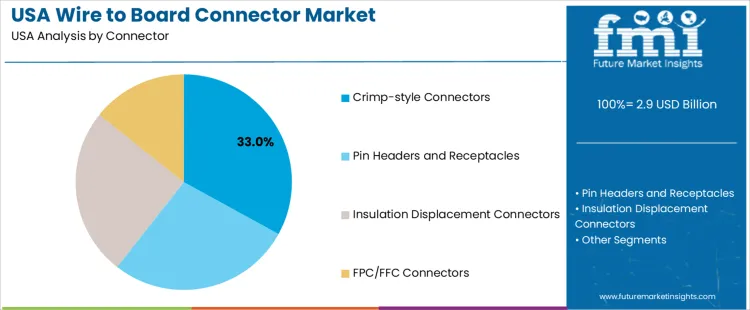
Crimp-style connectors lead the connector type demand for wire to board connectors in the USA, holding 33% of the market share. Crimp connectors are preferred for their ability to securely connect wires to circuit boards without the need for soldering, providing a reliable, cost-effective, and easy-to-assemble solution. These connectors are commonly used in a wide range of applications, including automotive wiring, consumer electronics, industrial control systems, and telecommunications.
The demand for crimp-style connectors is driven by their versatility, ease of use, and ability to handle a variety of wire gauges and materials. They offer strong mechanical and electrical connections that are resistant to vibration and corrosion, making them ideal for use in harsh environments. As industries continue to prioritize reliability and cost-effectiveness in their manufacturing processes, crimp-style connectors will remain a leading choice for wire to board connections in the USA.
How Is Consumer Electronics Leading the Industry Demand for Wire to Board Connectors in the USA?
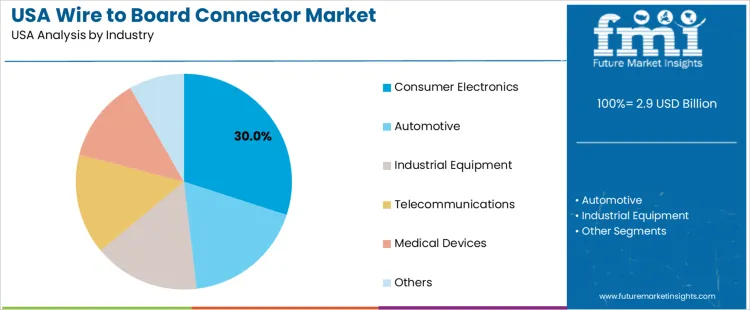
Consumer electronics leads the industry demand for wire to board connectors in the USA, capturing 30% of the market share. Wire to board connectors are essential in consumer electronic devices such as smartphones, laptops, televisions, gaming consoles, and home appliances, where secure and efficient electrical connections are critical for performance. As the demand for more compact, lightweight, and power-efficient consumer electronics continues to rise, the need for high-quality wire to board connectors grows in parallel.
The demand in the consumer electronics sector is driven by the increasing number of electronic devices and the need for more sophisticated and reliable internal components. As technology advances, wire to board connectors must support smaller, more complex designs while maintaining high performance. The shift towards smart devices, wearables, and IoT (Internet of Things) products further accelerates the demand for wire to board connectors in consumer electronics. With continued growth in the sector, wire to board connectors will remain a vital component of the consumer electronics industry in the USA.
What is the Demand Dynamics for Wire-to-Board Connectors in the USA?
Demand for wire-to-board connectors in the USA is growing as industries like consumer electronics, automotive, industrial automation, and medical devices expand. As electronic systems become more complex, there is an increasing need for reliable, compact interconnect solutions that connect wiring to printed circuit boards (PCBs). The trend towards miniaturization, electrification, and higher-speed data transmission further increases the adoption of wire-to-board connectors. As these sectors continue to develop, the USA market for wire-to-board connectors is expected to maintain strong growth.
What are the Drivers of Demand for Wire-to-Board Connectors in the USA?
Several factors drive the demand for wire-to-board connectors in the USA. First, the growth of consumer electronics such as smartphones, wearables, and connected devices increases the need for reliable internal wiring and PCB connections. Second, the rise of automotive electronics, especially electric vehicles and advanced driver-assistance systems (ADAS), creates demand for connectors capable of handling higher currents and environmental durability. Third, the expansion of industrial automation, IoT systems, and smart infrastructure boosts the need for connectors in manufacturing, logistics, and facility management applications. Finally, the trend toward miniaturization and higher-performance electronics in medical devices and telecommunications equipment also supports demand for compact, reliable wire-to-board connectors.
What are the Restraints on Demand for Wire-to-Board Connectors in the USA?
Despite growth, several restraints limit demand for wire-to-board connectors. First, not all products or industries require connectors; simpler or low-cost devices may not need the interconnects offered by wire-to-board connectors. Second, the cost of wire-to-board connectors can be higher than alternative methods, which may deter use in budget-sensitive applications. Third, the complexity and high performance needed for certain applications may limit the use of these connectors in more straightforward or lower-performance devices. Finally, supply chain disruptions and the volatility of raw material prices may affect the availability and cost of these connectors, potentially hindering demand.
What are the Key Trends Influencing Demand for Wire-to-Board Connectors in the USA?
A key trend influencing demand for wire-to-board connectors is the growth of electric vehicles and automotive electronics, which require high-performance connectors for battery systems, power distribution, and sensors. Another trend is the increasing miniaturization of electronic devices, which drives demand for smaller, more compact wire-to-board connectors. The rise of IoT devices and the continued expansion of industrial automation are also contributing to the demand for wire-to-board connectors, as these systems require reliable connections for data transmission and control. Additionally, there is an increasing focus on improving the quality and reliability of connectors in industries such as healthcare and telecommunications, where performance and safety are critical.
What is the Regional Demand Outlook for Wire to Board Connectors in the USA?
The demand for wire to board connectors in the USA is projected to grow across all major regions, with the West leading at a CAGR of 6.6%. The South follows at 5.9%, the Northeast at 5.2%, and the Midwest at 4.6%. These variations reflect differences in manufacturing activities, particularly in sectors like electronics, automotive, and industrial equipment, where wire to board connectors play a crucial role in ensuring electrical connectivity. As industries continue to embrace automation and electronic systems, the demand for wire to board connectors remains strong, driven by technological advancements and the need for efficient, reliable connections.
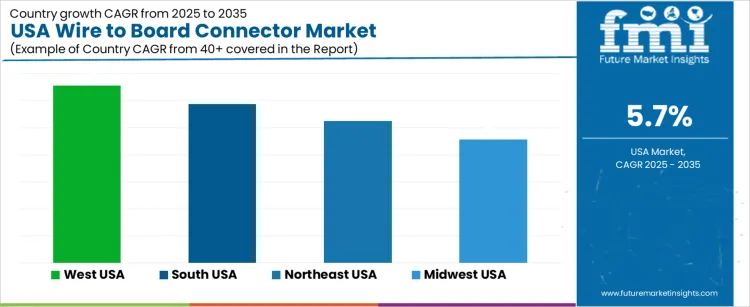
| Region | CAGR (%) |
|---|---|
| West USA | 6.6 |
| South USA | 5.9 |
| Northeast USA | 5.2 |
| Midwest USA | 4.6 |
What Drives Demand for Wire to Board Connectors in the West USA?
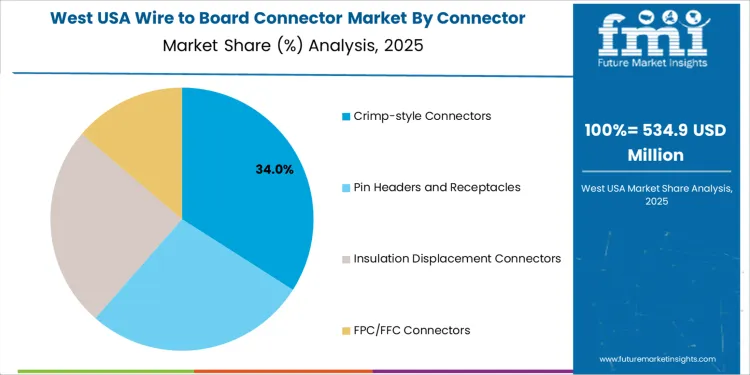
In the West USA, the projected 6.6% annual growth in demand for wire to board connectors is driven by the region's high concentration of technology, electronics, and automotive industries. The West is home to major tech companies and research institutions, which are key users of wire to board connectors in applications such as circuit boards, power systems, and communication devices. Additionally, the rise of electric vehicles (EVs) and the expansion of smart technologies contribute to the growing need for reliable connectors. As these industries increasingly require miniaturized, high-performance components, the demand for advanced wire to board connectors continues to grow. The region's focus on innovation and development in IoT, healthcare electronics, and industrial automation further accelerates the adoption of these connectors.
Why is Demand for Wire to Board Connectors Growing in the South USA?
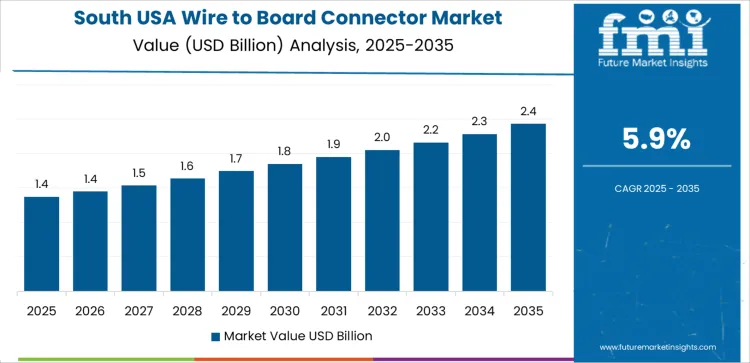
In the South USA, the demand for wire to board connectors is projected to grow at a CAGR of 5.9%. This growth is supported by the region's expanding manufacturing base, particularly in industries such as automotive, consumer electronics, and renewable energy. As electric vehicles (EVs) and battery storage systems gain traction, the demand for high-quality connectors to ensure safe and efficient power transmission increases. Furthermore, the South's growing focus on automation, robotics, and industrial equipment contributes to the rising need for reliable electrical connections. The region's favorable business climate, alongside increasing investments in technology-driven industries, supports the steady growth of wire to board connectors. As more companies look to streamline production processes and ensure efficient electrical connectivity, the demand for these connectors will continue to rise.
What Supports the Growth of Wire to Board Connectors in the Northeast USA?
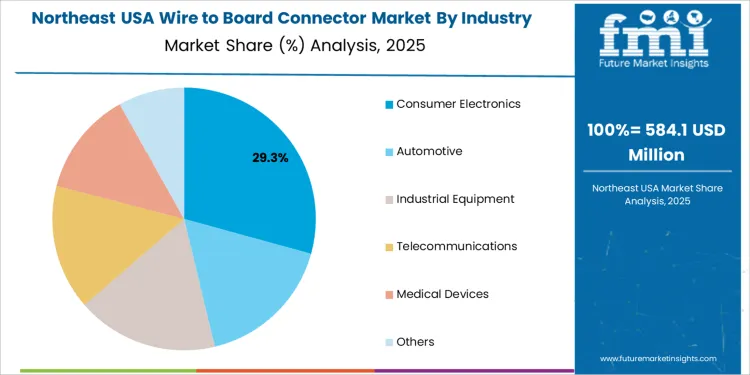
In the Northeast USA, the projected CAGR for wire to board connectors is 5.2%. The region’s strong industrial and electronics sectors, particularly in healthcare, telecommunications, and aerospace, are driving this growth. Wire to board connectors are essential components in medical devices, telecommunications equipment, and military electronics, which are key industries in the Northeast. As these sectors evolve and incorporate more advanced electronic systems, the need for efficient and reliable connectors increases. Additionally, the Northeast’s emphasis on innovation and the integration of automation and robotics in manufacturing further supports the demand for wire to board connectors. As industries in the region continue to adopt smarter, more interconnected systems, the demand for these connectors is expected to remain strong.
How is Demand for Wire to Board Connectors Evolving in the Midwest USA?
In the Midwest USA, the demand for wire to board connectors is projected to grow at a CAGR of 4.6%. This growth is driven by the region’s manufacturing base, particularly in industries such as automotive, industrial machinery, and agricultural equipment. As these industries continue to incorporate more electronic systems for automation, diagnostics, and safety, the need for reliable connectors is rising. The automotive sector, especially with the shift towards electric and autonomous vehicles, is a significant contributor to the demand for wire to board connectors. Additionally, the growing adoption of industrial IoT and smart factory technologies in the Midwest further boosts the need for these connectors. While the growth rate in the Midwest is slower compared to other regions, the steady demand from key manufacturing sectors ensures that wire to board connectors will continue to be an essential component in this region.
What is the Competitive Landscape for the Wire to Board Connector Market in the USA?
Demand for wire to board connectors in the USA is rising as electronics, automotive, medical devices, telecommunications, industrial automation and consumer electronics sectors expand. Wire to board connectors provide essential interfaces between loose wires and printed circuit boards (PCBs), enabling reliable power and signal transmission in many devices. The global market value for these connectors stands around USD 7,808.4 million in 2025 and is expected to more than double by 2035, reflecting a compound annual growth rate near 6 percent. Supply expansion, miniaturization of electronics, increasing adoption of IoT devices, EV electronics, 5G infrastructure and industrial automation drive demand for compact, durable, high performance connectors.
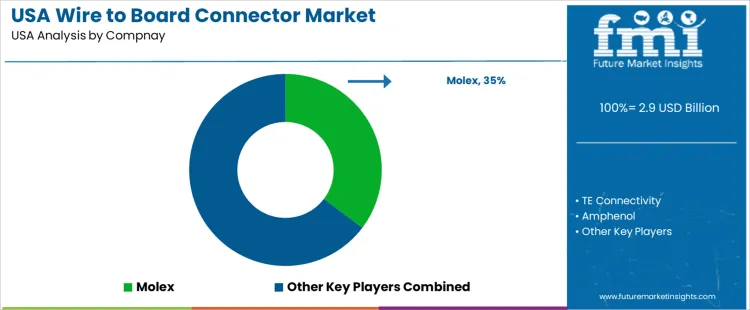
In this environment several firms compete for share in the USA and global markets. According to your data, Molex leads with about 35.3 percent share. Other major competitors are TE Connectivity, Amphenol, Hirose Electric and JST Corporation. These companies supply wire to board connectors for a variety of applications from consumer electronics and wearables to automotive electronics and industrial control systems. They differentiate on connector design (pitch size, current rating, sealing, miniaturization), reliability under mechanical or environmental stress, ease of assembly, industry compliance and supply chain strength. Some focus on high density, fine pitch connectors suited to compact devices. Others target rugged, sealed connectors for automotive or industrial uses. As electronics continue to evolve toward greater miniaturization, higher density, and broader application, competition remains strong. Firms emphasizing innovation, quality, and broad application support are better positioned to capture demand growth.
Key Players of the Wire to Board Connector Industry in USA
- Molex
- TE Connectivity
- Amphenol
- Hirose Electric
- JST Corporation
Scope of the Report
| Items | Details |
|---|---|
| Quantitative Units | USD Billion |
| Regions Covered | USA |
| Connector | Crimp-style Connectors, Pin Headers and Receptacles, Insulation Displacement Connectors, FPC/FFC Connectors |
| Industry | Consumer Electronics, Automotive, Industrial Equipment, Telecommunications, Medical Devices, Others |
| Key Companies Profiled | Molex, TE Connectivity, Amphenol, Hirose Electric, JST Corporation |
| Additional Attributes | Dollar sales by connector type and industry show strong demand for crimp-style connectors, especially in automotive, consumer electronics, and telecommunications. Pin headers and receptacles are also widely used across industrial and medical sectors. TE Connectivity, Molex, and Amphenol lead the market with a wide range of wire-to-board connectors. The market is expected to grow with the increasing need for reliable and high-performance connectors in electronics, automotive, and industrial equipment applications. |
Key Segments in the Demand for Wire to Board Connector in USA
Connector:
- Crimp-style Connectors
- Pin Headers and Receptacles
- Insulation Displacement Connectors
- FPC/FFC Connectors
Industry:
- Consumer Electronics
- Automotive
- Industrial Equipment
- Telecommunications
- Medical Devices
- Others
Region:
- Northeast USA
- West USA
- Midwest USA
- South USA
Frequently Asked Questions
How big is the demand for wire to board connector in USA in 2025?
The demand for wire to board connector in USA is estimated to be valued at USD 2.9 billion in 2025.
What will be the size of wire to board connector in USA in 2035?
The market size for the wire to board connector in USA is projected to reach USD 5.1 billion by 2035.
How much will be the demand for wire to board connector in USA growth between 2025 and 2035?
The demand for wire to board connector in USA is expected to grow at a 5.7% CAGR between 2025 and 2035.
What are the key product types in the wire to board connector in USA?
The key product types in wire to board connector in USA are crimp-style connectors, pin headers and receptacles, insulation displacement connectors and fpc/ffc connectors.
Which industry segment is expected to contribute significant share in the wire to board connector in USA in 2025?
In terms of industry, consumer electronics segment is expected to command 30.0% share in the wire to board connector in USA in 2025.
Preview the report firsthand - request a free sample
Get SampleGet the brochure for pricing and purchase details.
Get PDFTable of Content
- Executive Summary
- USA Market Outlook
- Demand-side Trends
- Supply-side Trends
- Technology Roadmap Analysis
- Analysis and Recommendations
- Market Overview
- Market Coverage / Taxonomy
- Market Definition / Scope / Limitations
- Market Background
- Market Dynamics
- Drivers
- Restraints
- Opportunity
- Trends
- Scenario Forecast
- Demand in Optimistic Scenario
- Demand in Likely Scenario
- Demand in Conservative Scenario
- Opportunity Map Analysis
- Product Life Cycle Analysis
- Supply Chain Analysis
- Investment Feasibility Matrix
- Value Chain Analysis
- PESTLE and Porter’s Analysis
- Regulatory Landscape
- Regional Parent Market Outlook
- Production and Consumption Statistics
- Import and Export Statistics
- Market Dynamics
- USA Market Analysis 2020 to 2024 and Forecast, 2025 to 2035
- Historical Market Size Value (USD Million) Analysis, 2020 to 2024
- Current and Future Market Size Value (USD Million) Projections, 2025 to 2035
- Y-o-Y Growth Trend Analysis
- Absolute $ Opportunity Analysis
- USA Market Pricing Analysis 2020 to 2024 and Forecast 2025 to 2035
- USA Market Analysis 2020 to 2024 and Forecast 2025 to 2035, By Connector
- Introduction / Key Findings
- Historical Market Size Value (USD Million) Analysis By Connector , 2020 to 2024
- Current and Future Market Size Value (USD Million) Analysis and Forecast By Connector , 2025 to 2035
- Crimp-style Connectors
- Pin Headers and Receptacles
- Insulation Displacement Connectors
- FPC/FFC Connectors
- Y-o-Y Growth Trend Analysis By Connector , 2020 to 2024
- Absolute $ Opportunity Analysis By Connector , 2025 to 2035
- USA Market Analysis 2020 to 2024 and Forecast 2025 to 2035, By Industry
- Introduction / Key Findings
- Historical Market Size Value (USD Million) Analysis By Industry, 2020 to 2024
- Current and Future Market Size Value (USD Million) Analysis and Forecast By Industry, 2025 to 2035
- Consumer Electronics
- Automotive
- Industrial Equipment
- Telecommunications
- Medical Devices
- Others
- Y-o-Y Growth Trend Analysis By Industry, 2020 to 2024
- Absolute $ Opportunity Analysis By Industry, 2025 to 2035
- Market Structure Analysis
- Competition Dashboard
- Competition Benchmarking
- Market Share Analysis of Top Players
- By Regional
- By Connector
- By Industry
- Competition Analysis
- Competition Deep Dive
- Molex
- Overview
- Product Portfolio
- Profitability by Market Segments (Product/Age /Sales Channel/Region)
- Sales Footprint
- Strategy Overview
- Marketing Strategy
- Product Strategy
- Channel Strategy
- TE Connectivity
- Amphenol
- Hirose Electric
- JST Corporation
- Molex
- Competition Deep Dive
- Assumptions & Acronyms Used
- Research Methodology


