


Key Takeaways
- Digital dental imaging pricing is dominated by sensor technology and processing complexity rather than basic housing components, with CMOS sensors achieving cost advantages over traditional CCD systems through reduced power consumption and simplified manufacturing processes.
- Manufacturing costs concentrate in three critical areas: sensor fabrication requiring semiconductor-grade facilities, software development for image processing and AI integration, and regulatory compliance with FDA CDRH standards that add substantial overhead to system development.
- The real margin capture happens in three distinct layers: proprietary sensor technology where established players control advanced CMOS and photostimulable phosphor innovations, software platforms that integrate with practice management systems, and service capabilities that justify premium pricing over commodity alternatives.
- Established manufacturers like Carestream Dental and Planmeca maintain structural advantages through vertical integration of hardware and software development, regulatory expertise, and distribution partnerships that smaller competitors cannot easily replicate.
- Supply chain disruptions have fundamentally altered imaging system cost structures, with semiconductor shortages creating pricing pressure while regulatory requirements for radiation safety and quality systems add permanent compliance overhead regardless of production volume.
Why do digital imaging systems cost more than their component bills suggest?
Digital dental imaging represents a convergence of semiconductor technology, medical device manufacturing, and software development, creating cost structures that extend far beyond visible hardware components. Unlike consumer cameras optimized for volume production, dental imaging systems must integrate medical-grade sensors, specialized software platforms, and regulatory compliance systems designed for clinical environments.
The sensor foundation reveals where costs actually accumulate beyond basic semiconductor manufacturing. According to research published in the National Center for Biotechnology Information, CMOS sensors have replaced CCD technology due to cost-effectiveness, improved image quality, and reduced power consumption. However, dental imaging sensors require specialized characteristics including radiation sensitivity optimization, enhanced dynamic range, and extended operational lifespan under sterilization protocols that consumer sensors cannot provide.
Regulatory compliance creates another substantial cost layer that pure hardware analysis misses. FDA Center for Devices and Radiological Health requirements mandate extensive documentation, quality system regulations, and premarket clearance processes that can extend development timelines and increase engineering costs substantially. These compliance requirements apply equally to all manufacturers regardless of production volume, creating natural barriers to entry that protect established players.
Software development represents the hidden multiplier in modern digital imaging costs. Advanced image processing algorithms, AI-enhanced diagnosis capabilities, and integration with electronic health records require substantial ongoing investment in software engineering. Academic research demonstrates that modern systems incorporate machine learning algorithms for automated caries detection and image quality enhancement, requiring continuous algorithm refinement and clinical validation.
Manufacturing integration complexity extends beyond sensor assembly. Digital imaging systems must coordinate sensor technology with specialized electronics, radiation shielding, patient positioning mechanisms, and communication interfaces designed for dental practice workflows. Each layer demands engineering expertise and quality control systems that smaller manufacturers struggle to justify economically.
Where do sensor technologies create competitive advantages and cost structures?
The evolution from film-based systems to digital sensors has fundamentally altered the competitive landscape in dental imaging. Charge-coupled device sensors dominated early digital systems but required complex charge transfer mechanisms and higher power consumption. The transition to complementary metal-oxide semiconductor technology has created new cost dynamics favoring manufacturers with semiconductor engineering capabilities.
CMOS sensor advantages extend beyond simple manufacturing economics. Research published by the National Center for Biotechnology Information indicates that CMOS technology reduces required system power by a factor of 100 and eliminates the need for charge transfer mechanisms. These efficiency improvements translate into smaller power supplies, reduced cooling requirements, and simplified system architectures that compound cost advantages throughout the manufacturing process.
Photostimulable phosphor systems represent an alternative sensor approach with distinct cost characteristics. PSP technology offers superior dynamic range compared to sensor-based systems but requires specialized scanner equipment and processing workflows. The infrastructure requirements for PSP systems create different total cost of ownership calculations that vary significantly based on practice volume and workflow optimization.
Direct digital sensors using solid-state technology face size and patient comfort constraints that influence manufacturing costs. Academic research reveals that sensor thickness, rigidity, and patient acceptance create design compromises that affect yield rates and manufacturing complexity. The need for sterilization-resistant packaging and biocompatible materials adds material costs and manufacturing constraints that consumer electronics avoid.
Image quality optimization requires sophisticated signal processing capabilities built into sensor systems. Modern dental sensors incorporate on-chip processing for noise reduction, contrast enhancement, and real-time image correction that demand specialized integrated circuits and embedded software development capabilities that extend far beyond basic sensor manufacturing.
How do established manufacturers maintain pricing power despite technology commoditization?
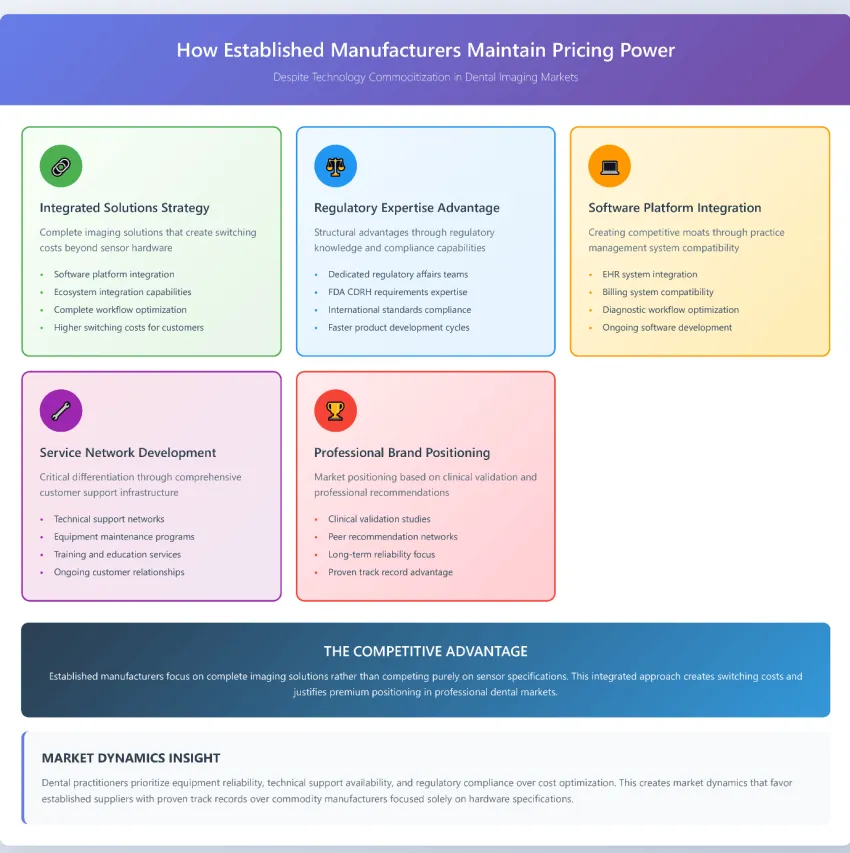
Major dental imaging manufacturers have developed integrated strategies that capture value beyond sensor hardware through software platforms, service capabilities, and ecosystem integration. Rather than competing purely on sensor specifications, companies like Carestream Dental and Planmeca focus on complete imaging solutions that create switching costs and justify premium positioning.
Regulatory expertise provides a structural advantage that pure technology companies cannot easily replicate. Established manufacturers maintain dedicated regulatory affairs teams familiar with FDA CDRH requirements, international standards compliance, and clinical validation protocols. This expertise enables faster product development cycles and reduces the risk of regulatory delays that can eliminate market timing advantages.
Software platform integration creates another competitive moat through practice management system compatibility and workflow optimization. Modern imaging systems must integrate with electronic health records, billing systems, and diagnostic workflows specific to dental practices. These integration capabilities require ongoing software development and customer support infrastructure that commodity manufacturers typically cannot justify.
Service network development represents a critical differentiator in professional dental markets. Established manufacturers invest in technical support, equipment maintenance, and training programs that create ongoing customer relationships beyond initial equipment sales. These service capabilities justify premium pricing while creating barriers for manufacturers focused solely on hardware competition.
Brand positioning in professional markets depends on clinical validation, peer recommendations, and long-term reliability rather than specification comparisons. Dental practitioners prioritize equipment reliability, technical support availability, and regulatory compliance over cost optimization, creating market dynamics that favor established suppliers with proven track records.

Sources
- National Center for Biotechnology Information. Digital Imaging in Dentistry: A Review. Comprehensive analysis of sensor technologies, manufacturing processes, and clinical applications in dental radiography.
- USA Food and Drug Administration Center for Devices and Radiological Health. Medical Device Regulation and Quality System Requirements. Regulatory framework and compliance requirements for dental imaging equipment manufacturers.
- International Electrotechnical Commission. Medical X-Ray Imaging Devices: Performance Standards and Testing Requirements. Technical specifications and safety standards for dental radiographic equipment.
- National Institute of Standards and Technology. Semiconductor Manufacturing and Medical Device Applications. Analysis of CMOS sensor technology and manufacturing cost structures for medical applications.
- USA Department of Health and Human Services. Medical Device Development and Regulatory Pathways. Guidelines for premarket clearance processes and post-market compliance requirements for imaging equipment manufacturers.
- Stanford University School of Medicine. Advances in Digital Dental Imaging Technology. Academic research on sensor development, image processing algorithms, and clinical applications in modern dental practice.

