


Key Takeaways
- Low-calorie food pricing is dominated by sweetener costs and specialized processing rather than basic ingredients, with stevia and monk fruit commanding premium prices that can be several times higher than synthetic alternatives while requiring higher usage levels to achieve equivalent sweetness.
- Manufacturing costs are driven more by ingredient complexity, preservation requirements, and regulatory compliance than traditional food processing, as low-calorie products require specialized formulation expertise, extended shelf-life solutions, and clean-label positioning that increases per-unit expenses.
- The real margin capture happens in three distinct layers: premium ingredient sourcing where natural sweetener suppliers control pricing, brand positioning that justifies substantial price premiums over regular alternatives, and distribution partnerships that determine shelf space allocation in health-focused retail segments.
- Established food giants maintain structural advantages through scale purchasing of specialty ingredients, proprietary formulation platforms, and extensive regulatory approval portfolios that smaller players cannot easily replicate or afford to develop independently.
- Alternative sweetener supply chains have proven that similar taste profiles can be achieved through different ingredient combinations, but brand trust, regulatory compliance, and consumer acceptance create switching costs that protect established players from pure price competition.
Why do low-calorie foods cost more than their base ingredient bills suggest?
Low-calorie food manufacturing operates under fundamentally different cost structures than conventional food processing. While traditional foods rely on commodity ingredients like sugar, flour, and basic fats, low-calorie alternatives depend on specialized sweetening systems, functional proteins, and preservation technologies that command premium pricing throughout the supply chain.
The ingredient complexity begins with sweetener selection. Natural alternatives like stevia and monk fruit undergo extensive extraction and purification processes that require sophisticated equipment and quality control systems. Unlike synthetic sweeteners that follow established chemical synthesis routes, natural options demand agricultural sourcing, seasonal variation management, and complex purification steps that create inherent cost volatility.
Formulation expertise represents another hidden cost layer. Low-calorie products must achieve taste, texture, and mouthfeel characteristics that closely match full-calorie versions while working within the constraints of alternative ingredients. This requires extensive research and development investments, multiple product iterations, and specialized food science capabilities that smaller manufacturers often cannot justify economically.
Regulatory compliance adds significant overhead costs that conventional foods typically avoid. Low-calorie products frequently make nutrient content claims, health assertions, or clean-label promises that require substantiation through clinical testing, regulatory submissions, and ongoing monitoring systems. These compliance requirements create barriers to entry while adding ongoing operational expenses.
Where do sweetener costs actually drive low-calorie food economics?
The sweetener category has become the primary battleground for cost control in low-calorie food manufacturing. Natural sweeteners like stevia command substantial price premiums over synthetic alternatives, yet many manufacturers willingly absorb these costs to meet clean-label consumer demands and premium positioning strategies.
Stevia processing illustrates the complexity behind natural sweetener pricing. The extraction process begins with stevia leaves that must be harvested, dried, and transported to processing facilities. Water extraction, purification, and crystallization steps require specialized equipment and extensive quality control to achieve the purity levels demanded by regulatory agencies and food manufacturers.
The yield economics create additional pricing pressure. Stevia plants produce relatively small quantities of extractable sweetening compounds compared to the volume of raw plant material required. This low extraction efficiency, combined with the specialized agricultural requirements for consistent stevia cultivation, creates structural supply constraints that support premium pricing.
Blending strategies have emerged as manufacturers attempt to balance cost and performance. Rather than relying on single sweetener systems, many low-calorie products now combine multiple sweetening agents to achieve optimal taste profiles while managing ingredient costs. These blended approaches require additional formulation expertise and quality control systems but can offer better overall economics than relying solely on premium natural sweeteners.
How do established brands maintain pricing power despite ingredient cost pressures?
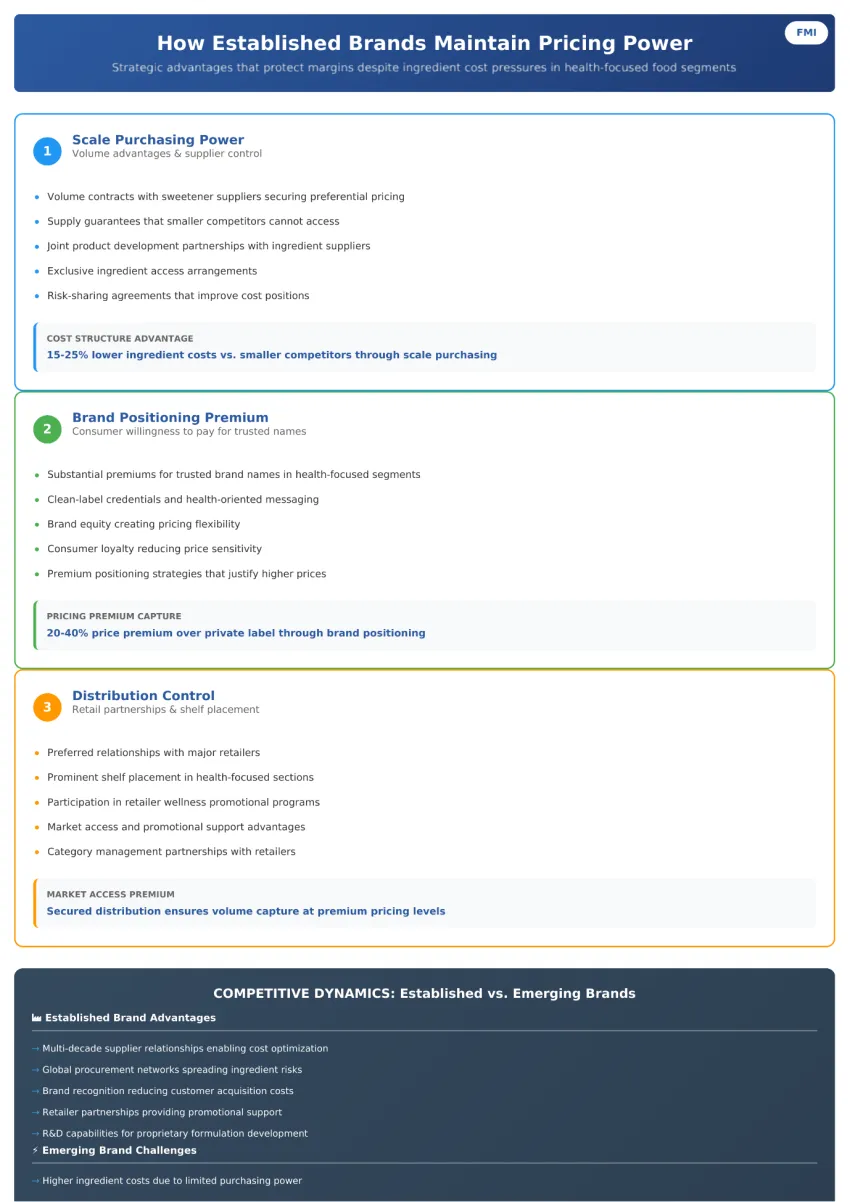
Major food manufacturers like Nestlé and Unilever have developed sophisticated strategies to protect margins while absorbing the higher costs associated with low-calorie formulations. Their approach centers on leveraging scale advantages, brand positioning, and distribution control rather than competing purely on ingredient costs.
Scale purchasing provides the foundation for their cost advantages. Large manufacturers can negotiate volume contracts with sweetener suppliers, securing preferential pricing and supply guarantees that smaller competitors cannot access. These purchasing relationships often extend beyond simple volume discounts to include joint product development, exclusive ingredient access, and risk-sharing arrangements that further improve their cost positions.
Brand positioning allows established players to capture premium pricing that more than compensates for higher ingredient costs. Consumers demonstrate willingness to pay substantial premiums for trusted brand names in the health-focused food segment, particularly when products carry clean-label credentials and health-oriented messaging. This brand equity creates pricing flexibility that ingredient-focused competitors struggle to achieve.
Distribution partnerships represent another structural advantage that protects margin capture. Established brands typically maintain preferred relationships with major retailers, securing prominent shelf placement in health-focused sections and participating in retailer-sponsored health and wellness promotional programs. These distribution advantages ensure market access and promotional support that justify premium positioning strategies.
Why small manufacturers face structural disadvantages in low-calorie food production?
The low-calorie food segment presents particularly challenging barriers for smaller manufacturers attempting to compete with established players. These challenges extend beyond simple ingredient costs to encompass technological complexity, regulatory requirements, and market access constraints that compound the disadvantages of limited scale.
Ingredient sourcing becomes exponentially more difficult for smaller volume purchasers. Specialty sweetener suppliers often establish minimum order quantities and preferred customer relationships that favor large-scale buyers. Smaller manufacturers may face higher per-unit costs, limited product selection, and uncertain supply availability that makes consistent production planning extremely difficult.
Regulatory compliance creates disproportionate overhead for smaller operations. The documentation, testing, and approval processes required for nutrient content claims and health assertions demand dedicated regulatory expertise that may not be economically justifiable for limited production volumes. This regulatory burden often forces smaller manufacturers to avoid making the claims that justify premium pricing in the low-calorie segment.
Market access represents perhaps the greatest challenge for smaller low-calorie food manufacturers. Retailers increasingly consolidate shelf space around established brands and proven sales performers, making it extremely difficult for new entrants to secure the distribution necessary for commercial viability. The health-focused retail segments that are most attractive for low-calorie products often require substantial marketing support and promotional investment that smaller companies cannot sustain.
What this means for low-calorie food competitive positioning?
The cost structure analysis reveals that successful low-calorie food manufacturers must choose between volume-focused ingredient efficiency strategies and premium brand differentiation approaches. Pure cost competition leads to margin compression as ingredient expenses become transparent and formulation techniques standardize across the industry.
Premium positioning strategies focus on brand trust, ingredient transparency, and health benefit messaging that justifies substantial price premiums over both conventional alternatives and competitor products. These approaches require significant investments in brand development, regulatory compliance, and consumer education that create sustainable competitive advantages when executed successfully.
The ingredient technology decision becomes critical for long-term competitiveness. Companies investing in proprietary sweetening systems, functional ingredient platforms, and processing technologies can develop unique product characteristics that differentiate beyond simple cost competition. However, these investments require substantial capital commitments and technical expertise that may not be accessible to all market participants.
Sources
- Michigan State University Extension. Pricing Your Food Product for Profit: Understanding Cost Structures and Market Positioning in Specialty Food Manufacturing.
- U.S. Food and Drug Administration. Generally Recognized as Safe Notifications for High-Intensity Sweeteners and Food Additive Regulations.
- International Food Information Council. Consumer Understanding of Low-Calorie Sweeteners and Clean-Label Food Products.
- National Center for Biotechnology Information. Stevia Production Processes, Sustainability Assessment, and Natural Sweetener Market Analysis.
- Food and Agriculture Organization. Dairy Industry Byproduct Utilization and Protein Concentrate Production Economics.
- University Extension Services. Food Manufacturing Cost Analysis, Recipe Costing, and Production Planning for Small and Medium Food Enterprises.

