


- Veterinary trust is becoming a key differentiator in postbiotic pet food because pet parents need proof before paying more for gut health, immunity, and microbiome claims.
- FMI identifies rising veterinary partnerships, clinical trials, premium formulations, and veterinarian-endorsed diets as important strategies in the postbiotic pet food market.
- The strongest opportunity sits in prescription-style dry kibble, digestive health diets, senior pet formulas, breed-specific nutrition, immune-support food, and clinically positioned treats and supplements.
- Veterinary credibility is more valuable when postbiotic claims address real pet concerns: diarrhea, bloating, digestive sensitivity, gut imbalance, immune weakness, food intolerance, skin issues, and chronic inflammation.
- The biggest risk is making medical-style claims without enough evidence. In postbiotic pet food, brands need clinical proof, transparent labeling, dosage clarity, and veterinarian support to defend premium positioning.
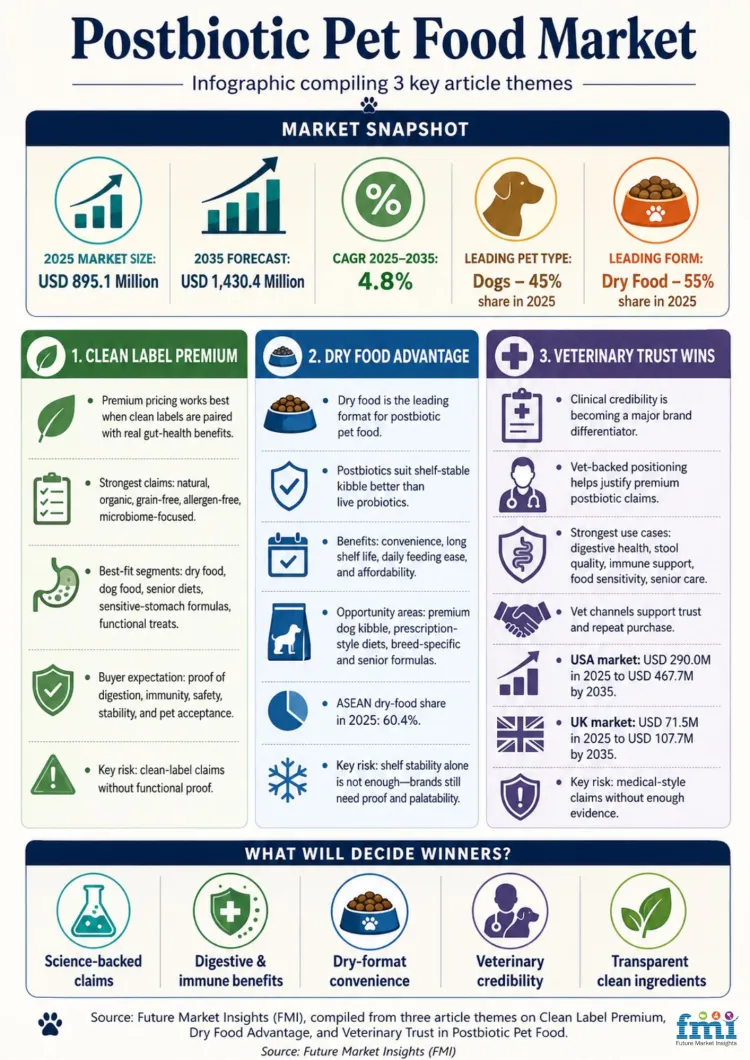
Veterinary trust is becoming one of the strongest growth levers in the postbiotic pet food market because postbiotics are still a technical concept for many pet parents. A buyer may understand clean label, natural ingredients, or grain-free claims quickly, but postbiotics require more explanation. Pet parents want to know what the ingredient does, whether it is safe, whether it supports digestion or immunity, and whether the claim is backed by science. This is why veterinary endorsement, clinical evidence, and prescription-style positioning are becoming more important in postbiotic pet food.
According to FMI, the global postbiotic pet food market is expected to grow from USD 895.1 million in 2025 to USD 1,430.4 million by 2035, registering a CAGR of 4.8%. FMI links this growth to rising awareness of pet gut health, pet humanization, and the expansion of functional pet nutrition options. The market is not growing only because pet food is becoming premium. It is growing because pet parents are looking for targeted solutions for gut, immune, and metabolic health.
This makes veterinary trust especially important. FMI notes that major industry players are carrying out clinical trials, developing heat-resistant formulations, combining postbiotics with functional ingredients, and building veterinary partnerships to strengthen market credibility. This shows that brand winners are not depending only on front-label marketing. They are using research, formulation stability, and professional validation to make postbiotic claims more believable.
The strongest veterinary opportunity sits in products that solve specific pet health problems. Postbiotic pet food can be positioned around digestive comfort, stool quality, immune function, nutrient absorption, metabolic support, and inflammatory balance. FMI states that manufacturers are developing products to address digestive distress, joint disorders, and dermatological conditions in the USA market. This gives postbiotic pet food a stronger role in functional and therapeutic nutrition rather than only everyday feeding.
Dogs are the clearest target segment for veterinary-backed postbiotic nutrition. FMI identifies dogs as the leading pet-type segment with 45% value share in 2025. Dogs are more likely to be associated with digestive sensitivities, gut health disorders, immune-related issues, bloating, diarrhea, and food sensitivity concerns. This creates a strong route for veterinarian-recommended postbiotic dog food, especially for sensitive-stomach diets, senior dog formulas, breed-specific food, and prescription-style kibble.
Prescription-style dry food is likely to be one of the strongest delivery formats. FMI identifies dry food as the leading form segment with 55% value share in 2025, supported by shelf stability, convenience, affordability, and functional integrity. FMI also notes that dry kibble and prescription-based veterinary diets with postbiotics are favored by pet parents looking for intestinal health solutions. This gives dry food brands a clear advantage when they combine postbiotic stability with veterinary credibility.
The USA market shows why veterinary trust matters commercially. FMI values the USA postbiotic pet food market at USD 290.0 million in 2025 and projects it to reach USD 467.7 million by 2035 at a CAGR of 4.9%. FMI also notes that veterinary clinics account for 15% of distribution, where veterinary recommendations help consumers seek higher-quality functional pet food. This means vet channels are not only credibility builders; they are also a route to premium purchase decisions.
Veterinary clinics can play an important role because postbiotic pet food sits between mainstream nutrition and therapeutic support. Many pet parents first look for digestive solutions after recurring issues such as loose stool, bloating, food sensitivity, skin irritation, or poor appetite. In these cases, veterinarian recommendation can reduce uncertainty. A pet parent may hesitate to pay more for a general gut health claim, but may accept a premium when the product is recommended as part of a digestive or immune support plan.
The UK market also supports the importance of scientific and veterinary positioning. FMI projects the UK postbiotic pet food market to grow from USD 71.5 million in 2025 to USD 107.7 million by 2035 at a CAGR of 4.2%. FMI states that major UK drivers include functional pet nutrition, dietary premiumization, scientifically formulated veterinarian-tested nutrition, and proprietary postbiotic blends used by major brands.
This shows that veterinary trust is not only useful in clinical channels. It also helps premium brands compete in retail and online channels. A product sold through e-commerce or specialty pet stores still benefits from clinical language, veterinarian testing, third-party validation, and transparent explanation of postbiotic function. FMI notes that UK manufacturers are focusing on high-quality ingredient sourcing, e-commerce expansion, and collaboration with veterinarians, while veterinary recommendations and scientific backing contribute to market growth.
Clinical claims are especially important because postbiotics are not the same as probiotics. Probiotic claims often focus on live beneficial bacteria. Postbiotics are non-living bioactive compounds associated with functional benefits. This gives brands an advantage in stability and shelf-life communication, but it also creates a need for education. The buyer must understand why a non-live ingredient can still support gut health. Veterinary support can bridge this knowledge gap.
Regulatory expectations will also push brands toward stronger evidence. FMI notes that regulatory bodies are working toward common standards for efficacy claims and labeling transparency, while the EU and Japan are demanding stricter labeling rules and scientific proof of health benefits. FMI also states that manufacturers are responding through clinical trials, partnerships with veterinary institutions, third-party certification, and quality assurance.
This is important because postbiotic pet food brands may be tempted to overuse claims such as immune boosting, anti-inflammatory support, gut-brain axis support, stress relief, or therapeutic digestive health. These claims can create premium value, but they also raise the burden of proof. Brands that cannot support claims with feeding trials, clinical validation, ingredient documentation, or veterinarian-backed communication may face trust issues.
The competitive landscape also favors companies with scientific resources. FMI identifies Cargill, ADM, Diamond V, DSM-Firmenich, and Bosch Tiernahrung among leading players in the global market and states that major companies are using clinical studies, regulatory approvals, and functional ingredient partnerships to gain credibility. Larger companies can use R&D capabilities, proprietary postbiotic strains, veterinary relationships, and global distribution to strengthen trust.
However, niche brands can still compete if they build focused credibility. Smaller postbiotic pet food brands may not match large-company clinical budgets, but they can differentiate through transparent ingredients, limited-ingredient recipes, clean-label positioning, veterinarian advisory boards, clear dosage explanation, visible customer education, and targeted products for sensitive pets. In the UK, FMI notes that local brands are growing through natural, organic, premium, and DTC strategies while larger companies dominate through R&D and supply chain strength.
The strongest brand winners will likely combine three trust layers. The first layer is ingredient trust: pet parents must believe the formula is safe, clean, and suitable for daily feeding. The second layer is scientific trust: the postbiotic ingredient must be explained with evidence, stability, dosage, and functional purpose. The third layer is professional trust: veterinarians, clinics, or clinical-style communication must support the claim. When these three layers work together, brands can defend premium pricing more effectively.
Veterinary trust also supports repeat purchase. Pet parents may try a product because of clean-label claims, but they repeat when they see digestive comfort, better stool quality, improved tolerance, or professional reassurance. In postbiotic pet food, repeat demand is especially important because gut health benefits are tied to consistent feeding. A veterinarian-recommended daily dry food or supplement can become part of the pet’s routine more easily than a one-time functional treat.
The biggest risk is treating veterinary language as a marketing shortcut. Terms such as clinical, prescription-style, veterinarian-endorsed, immune support, digestive health, or therapeutic nutrition must be used carefully. If the product does not have clear evidence or transparent labeling, the claim can backfire. Pet parents are becoming more informed, and functional pet food is moving closer to regulated health-positioned nutrition. Trust must be earned, not assumed.
The practical conclusion is clear: veterinary trust is becoming a deciding factor in postbiotic pet food because the category depends on science-backed credibility. Clean label may attract the buyer, dry food may make daily use easier, but veterinary proof helps convert technical postbiotic claims into believable health value. The brands that win will be those that connect postbiotic stability, digestive health, immune support, clinical evidence, and veterinarian-backed communication into one clear product story.

