

- Industry Size (2026)
- USD 310 Mn
- Forecast (2036)
- USD 880.2 Mn
- CAGR (2026 to 2036)
- 11%
Aero-Gel Insulated Pouches Market Forecast and Outlook 2026 to 2036
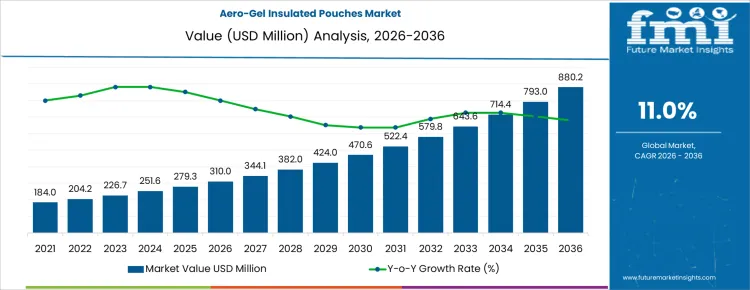
The aero-gel insulated pouches market is experiencing steady growth, with the industry forecasted to reach USD 880.2 million by 2036, up from USD 310 million in 2026, reflecting a CAGR of 11%. The pharma & biologics cold-chain segment leads with a 42% share, driven by the increasing need for temperature-sensitive packaging to maintain the efficacy of vaccines, biologics, and other pharmaceutical products during transit. In terms of packaging formats, insulated flexible pouches dominate with a 45% share, offering flexibility, ease of use, and excellent thermal insulation, which are essential for packaging a wide range of perishable goods, including pharmaceuticals and food products. This dominance is further supported by their lightweight nature, which helps reduce overall transportation costs while providing superior insulation performance.
Quick Stats for Aero-Gel Insulated Pouches Market
- Aero-Gel Insulated Pouches Market Value (2026): USD 310 million
- Aero-Gel Insulated Pouches Market Forecast Value (2036): USD 880.2 million
- Aero-Gel Insulated Pouches Market Forecast CAGR: 11%
- Top Packaging Format in Aero-Gel Insulated Pouches Market: Insulated flexible pouches
- Key Growth Regions in Aero-Gel Insulated Pouches Market: India, China, USA, Germany, Brazil
- Key Players in Aero-Gel Insulated Pouches Market: Aspen Aerogels, Cold Chain Technologies, va-Q-tec, Shenzhen Cold Chain OEMs, ColdStar, Mitsubishi Chemical Logistics
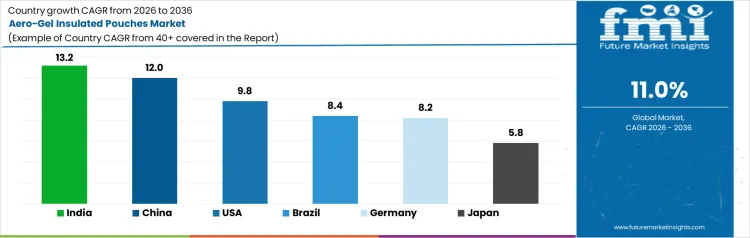
India leads the market with a 13.2% CAGR, reflecting the increasing demand for eco-friendly, energy-efficient packaging solutions in the rapidly growing pharmaceutical and food sectors. China follows with an 12% CAGR, bolstered by the country's expanding cold-chain logistics industry and focus on eco-friendly packaging. The USA market is growing at 9.8%, supported by rising consumer demand for eco-friendly packaging solutions. Germany and Brazil also show steady growth rates of 8.2% and 8.4%, respectively, driven by eco-consciousness mandates and the growing importance of maintaining product quality during transport. As eco-consciousness continues to be a priority, the adoption of aero-gel insulated pouches is expected to rise across these key regions.
Aero‑Gel Insulated Pouches Market Key Takeaways
| Metric | Value |
|---|---|
| Industry Value (2026) | USD 310 million |
| Forecast Value (2036) | USD 880.2 million |
| Forecast CAGR (2026 to 2036) | 11% |
How is the Global Aero-Gel Insulated Pouches Sector Advancing?
The global aero gel insulated pouches market is growing steadily as industries and consumers seek highly efficient thermal protection solutions for temperature sensitive goods. Aero gel insulation offers superior thermal resistance at low weight, making it ideal for packaging applications where maintaining a specific temperature range is critical. These pouches are used in pharmaceuticals, vaccines, food delivery, perishable logistics, and high value chemical transport. Traditional insulation materials often require bulkier designs or compromise on performance, whereas aero gel pouches provide a lightweight, thin profile alternative that delivers exceptional temperature control while reducing transportation weight and costs.
Demand for aero gel insulated pouches is being driven by the rapid expansion of cold chain logistics, particularly for biopharmaceuticals and perishable foods that require strict temperature maintenance through distribution channels. Advances in material science have further improved the durability, flexibility, and cost effectiveness of aero gel composites, broadening their adoption across diverse sectors. Growing consumer expectations for faster and safer delivery of temperature sensitive products are encouraging manufacturers to integrate high performance insulation solutions into packaging strategies.
Challenges such as higher material costs compared with traditional insulations and the need for standardized testing protocols may influence adoption rates. Nonetheless, the strong focus on reducing food waste, maintaining pharmaceutical efficacy, and improving thermal performance in logistics will continue to support demand for aero gel insulated pouches worldwide.
What is the Segment-Wise Analysis for the Global Aero-Gel Insulated Pouches Market?
The global aero-gel insulated pouches market is segmented by end-use and packaging format. Pharma & biologics cold-chain leads the market with a 42% share, followed by specialty food logistics, biopharma exports, vaccine distribution, and protein & seafood exports. In terms of packaging format, insulated flexible pouches dominate with a 45% share, followed by flat & gusseted pouches, thermal mailers, and insulated sachet packs.
How Do Pharma & Biologics Cold-Chain Lead the Global Aero-Gel Insulated Pouches Market?
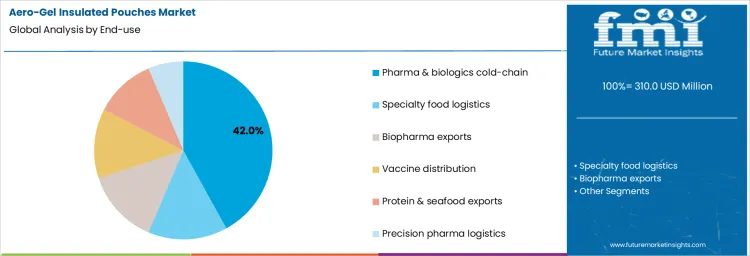
Pharma & biologics cold-chain leads the global aero-gel insulated pouches market with a 42% share due to the increasing need for safe and reliable temperature-sensitive packaging in the pharmaceutical and biologics industries. These industries require packaging that can maintain the stability of drugs, vaccines, and other temperature-sensitive products during transportation. Aero-gel insulated pouches, with their superior insulating properties, provide an ideal solution for this purpose. As the demand for biologics and vaccines grows globally, the use of advanced packaging like aero-gel insulated pouches continues to rise, ensuring the safe transport of these critical products.
Why Do Insulated Flexible Pouches Hold the Largest Market Share in the Global Aero-Gel Insulated Pouches Market?
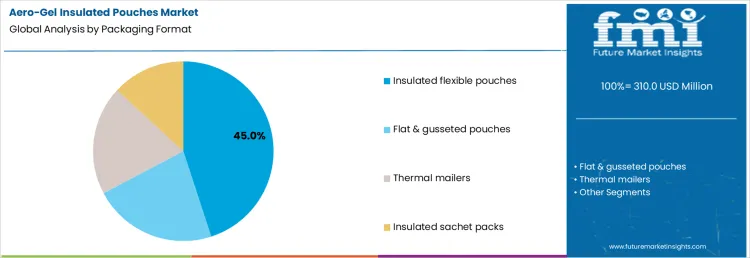
Insulated flexible pouches hold the largest share of 45% in the global aero-gel insulated pouches market due to their versatility, ease of use, and effective insulation properties. These pouches are widely used in industries like pharmaceuticals, food, and biopharma, where maintaining a stable temperature during transport is essential. Their flexibility allows for easy adaptation to various product shapes and sizes, making them ideal for a range of applications. The combination of efficient thermal insulation and lightweight design makes insulated flexible pouches a popular choice for temperature-sensitive goods, further solidifying their dominance in the market.
What are the Key Dynamics for Aero-Gel Insulated Pouches Market?
The aero-gel insulated pouches market is growing due to the increasing need for efficient temperature-sensitive packaging across industries like pharmaceuticals, biologics, and perishables. Aero-gel’s exceptional insulating properties, combined with its lightweight and minimalistic design, make it ideal for maintaining strict cold chain requirements. Eco-consciousness trends push demand for eco-friendly packaging solutions, driving the adoption of aerogel-based products that offer enhanced thermal performance while reducing environmental impact.
What Are the Key Drivers for the Aero‑Gel Insulated Pouches Market?
The aero‑gel insulated pouches market is driven by rapid growth in temperature‑sensitive shipping across pharmaceuticals, biologics, vaccines, perishable foods, and specialty chemicals. Aero‑gel delivers ultra‑low thermal conductivity with minimal weight and bulk, making it ideal for cold chain logistics where strict temperature windows are critical. Rising e‑commerce of perishable goods and the demand for same‑day/next‑day delivery further boost adoption. Eco-consciousness mandates and restrictions on non‑recyclable foam packaging encourage brands to choose aerogel pouches that can be lighter, more efficient, and, in many cases, more recyclable, aligning with corporate environmental goals.
What Key Trends Are Shaping the Aero‑Gel Insulated Pouches Market?
Key trends include integration of advanced aerogel composites that improve flexibility, moisture resistance, and durability for repeated use. Manufacturers are combining aerogel with eco-friendly liners and recyclable outerboard materials to enhance eco‑credentials. There is increasing use of smart monitoring-such as embedded temperature and humidity sensors that pairs with insulated pouches for real‑time cold chain visibility and compliance documentation. Demand for modular, reusable pouch systems is rising, particularly in high‑value pharmaceuticals and biologics, where reducing waste and overall lifecycle costs are priorities.
What is the Growth Outlook for the Aero-Gel Insulated Pouches Market by Country?
| Country | CAGR (%) |
|---|---|
| USA | 9.8% |
| Germany | 8.2% |
| China | 12% |
| India | 13.2% |
| Brazil | 8.4% |
| Japan | 5.8% |
The aero-gel insulated pouches market is experiencing steady growth, with India leading at a 13.2% CAGR, driven by the increasing demand for energy-efficient packaging solutions in the food, pharmaceuticals, and consumer goods sectors. China follows with 12%, supported by the growing need for eco-friendly packaging in its expanding cold-chain logistics industry. The USA’s market grows at 9.8%, fueled by the rising demand for biodegradable and eco-friendly packaging solutions. Germany’s market grows at 8.2%, driven by the demand for eco-conscious packaging solutions and regulatory support. Brazil’s market grows at 8.4%, supported by the increasing demand for long-lasting and high-performance packaging solutions. Japan’s market grows at 5.8%, driven by its focus on advanced packaging technologies and environmental concerns.
Why is India Leading in the Aero-Gel Insulated Pouches Market?
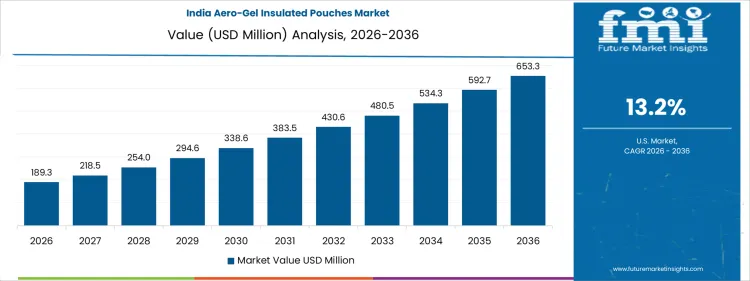
India’s aero-gel insulated pouches market is growing at 13.2%, driven by the rising demand for eco-friendly packaging solutions. As India’s economy grows, there is an increasing need for packaging that maintains the integrity of temperature-sensitive products, particularly in the food and pharmaceutical sectors. Aero-gel pouches, known for their superior insulation properties, are becoming the preferred choice due to their eco-friendly materials. Stricter regulations around packaging waste and environmental concerns are fueling demand. With a growing focus on reducing plastic use and improving logistics infrastructure, India is embracing these high-performance, energy-efficient packaging solutions, ensuring strong market growth.
What is Driving the Growth of the Aero-Gel Insulated Pouches Market in China?
China’s aero-gel insulated pouches market is growing at 12%, driven by its large-scale cold-chain logistics sector. The growing demand for packaging solutions that preserve perishable products like food and pharmaceuticals is increasing the adoption of aero-gel pouches. These pouches provide excellent thermal insulation and are more environmentally friendly compared to traditional materials. With China focusing on modernizing its agricultural supply chains and meeting regulatory standards for food safety, there is a strong push toward eco-friendly packaging. The country’s rapid industrialization, along with government support for green technologies, further accelerates the growth of this market.
How is the Aero-Gel Insulated Pouches Market Expanding in the USA?
The USA’s aero-gel insulated pouches market is growing at 9.8%, driven by the increasing need for energy-efficient and eco-friendly packaging solutions. With a strong focus on reducing environmental impact, particularly in cold-chain logistics, the USA is adopting high-performance packaging like aero-gel pouches to ensure product freshness and safety during transit. The rising demand for eco-friendly alternatives in sectors such as food, pharmaceuticals, and consumer goods is supporting the growth of these pouches. As consumers become more conscious of eco-consciousness and packaging waste, the market for aero-gel insulated pouches is expected to expand steadily in the USA.
What is Contributing to the Growth of the Aero-Gel Insulated Pouches Market in Germany?
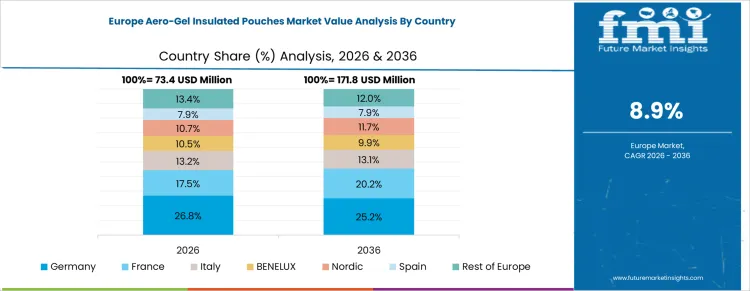
Germany’s aero-gel insulated pouches market is growing at 8.2%, driven by a commitment to eco-consciousness and reducing packaging waste. Germany has strict regulations around packaging waste and environmental impact, which is accelerating the demand for eco-friendly solutions like aero-gel pouches. These pouches provide superior thermal insulation, making them ideal for cold-chain logistics, particularly in the food and pharmaceutical sectors. The growing need for high-performance, energy-efficient packaging in an eco-friendly manner aligns with Germany’s environmental goals. With strong government support for green technologies and increasing consumer demand for eco-conscious products, the market for aero-gel pouches in Germany is expected to continue growing.
What is Driving the Growth of the Aero-Gel Insulated Pouches Market in Brazil?
Brazil’s aero-gel insulated pouches market is growing at 8.4%, supported by the country’s expanding cold-chain infrastructure and the growing demand for temperature-sensitive product packaging. With Brazil’s vast agricultural sector, there is a need for eco-friendly packaging solutions that ensure food safety and reduce spoilage. Aero-gel pouches are becoming increasingly popular due to their high insulation capabilities and eco-friendly materials. As Brazil focuses on improving logistics and reducing packaging waste, these pouches are gaining traction in industries like food exports and pharmaceuticals. The market is expected to continue growing as Brazil embraces eco-friendly packaging solutions and modernizes its cold-chain systems.
What is Contributing to the Growth of the Aero-Gel Insulated Pouches Market in Japan?
Japan’s aero-gel insulated pouches market is growing at 5.8%, driven by its focus on innovative and eco-friendly packaging solutions. Japan’s strong cold-chain logistics network, particularly in the food and pharmaceutical sectors, is increasingly adopting advanced packaging technologies. Aero-gel pouches are gaining popularity due to their excellent insulation properties and minimal environmental impact compared to conventional materials. With Japan’s focus on reducing waste and improving eco-consciousness, the demand for these high-performance pouches is rising, though at a slower rate compared to other regions. As Japan prioritizes eco-friendly packaging and technological innovation, the market for aero-gel insulated pouches is expected to grow steadily.
What’s Driving Competition in the Aero Gel Insulated Pouches Market?
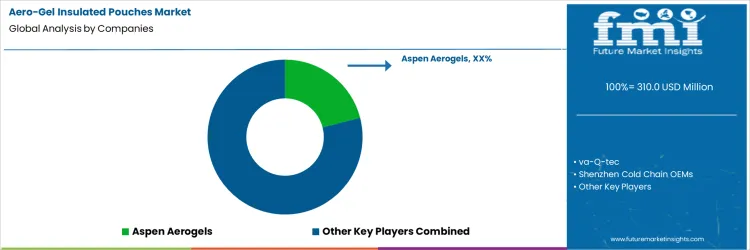
In the aero gel insulated pouches market Aspen Aerogels / Cold Chain Technologies, va Q tec, Shenzhen cold chain OEMs, ColdStar, local converters, and Mitsubishi Chemical Logistics are competing with product brochures that highlight thermal performance, lightweight design, and cold chain reliability. Aspen Aerogels / Cold Chain Technologies materials present aerogel enhanced pouches engineered for ultra low thermal conductivity. Brochures are crafted with temperature retention curves and pouch specifications that help logistics planners choose the right solution for long haul, sensitive shipments. Ease of packaging and pouch durability are emphasized to appeal to pharmaceutical and perishable goods shippers.
va Q tec collateral focuses on vacuum insulated aerogel systems combined with tailored pouch sizes. Performance summaries show extended hold times in compact formats, with clear guidance on usage for specific temperature ranges. At Shenzhen cold chain OEMs, product briefs showcase cost efficient aerogel pouch solutions with customizable dimensions and rapid OEM production options. Visuals and quick specs are used to support rapid selection and integration into packing lines. ColdStar brochures describe insulated pouches designed for rugged handling and consistent temperature control. Simple comparison charts and application notes help cold chain operators assess trade offs between weight, insulation level, and transport duration.
Local converters are featured with regionally tailored aerogel pouch designs and support services that resonate with smaller fulfillment centers and domestic logistics needs. Mitsubishi Chemical Logistics is positioned with aerogel infused insulated pouches that balance high thermal performance with material expertise. Brochures emphasize product robustness, reduced weight, and adaptability across cold chain segments.
Key Players in Aero-Gel Insulated Pouches Market
- Aspen Aerogels, Cold Chain Technologies
- va-Q-tec
- Shenzhen Cold Chain OEMs
- ColdStar
- Local converters
- Mitsubishi Chemical Logistics
Scope of Report
| Items | Values |
|---|---|
| Quantitative Units (2026) | USD million |
| End-use Application | Pharma & biologics cold-chain, Specialty food logistics, Biopharma exports, Vaccine distribution, Protein & seafood exports, Precision pharma logistics |
| Packaging Format | Insulated flexible pouches, Flat & gusseted pouches, Thermal mailers, Insulated sachet packs |
| Regions Covered | Asia Pacific, Europe, North America, Latin America, Middle East & Africa |
| Countries Covered | USA, China, Japan, South Korea, India, Australia & New Zealand, ASEAN, Germany, UK, France, Italy, Spain, Nordic, BENELUX, Brazil, Chile, Mexico, Saudi Arabia, Other GCC Countries, Turkey, South Africa, Other African Union |
| Key Companies Profiled | Aspen Aerogels, Cold Chain Technologies, va-Q-tec, Shenzhen Cold Chain OEMs, ColdStar, Local converters, Mitsubishi Chemical Logistics |
| Additional Attributes | Dollar sales by end-use, packaging format, and region; regional CAGR and growth outlook; distribution channels including pharma, biopharma, and food logistics; innovation trends in cold chain packaging; competitive positioning of global vs regional suppliers. |
Aero-Gel Insulated Pouches Market by Segments
By End-use:
- Pharma & biologics cold-chain
- Specialty food logistics
- Biopharma exports
- Vaccine distribution
- Protein & seafood exports
- Precision pharma logistics
By Packaging Format:
- Insulated flexible pouches
- Flat & gusseted pouches
- Thermal mailers
- Insulated sachet packs
By Region:
- Asia Pacific
- China
- Japan
- South Korea
- India
- Australia & New Zealand
- ASEAN
- Rest of Asia Pacific
- Europe
- Germany
- United Kingdom
- France
- Italy
- Spain
- Nordic
- BENELUX
- Rest of Europe
- North America
- United States
- Canada
- Mexico
- Latin America
- Brazil
- Chile
- Rest of Latin America
- Middle East & Africa
- Kingdom of Saudi Arabia
- Other GCC Countries
- Turkey
- South Africa
- Other African Union
- Rest of Middle East & Africa
Frequently Asked Questions
How big is the aero-gel insulated pouches market in 2026?
The global aero-gel insulated pouches market is estimated to be valued at USD 310.0 million in 2026.
What will be the size of aero-gel insulated pouches market in 2036?
The market size for the aero-gel insulated pouches market is projected to reach USD 880.2 million by 2036.
How much will be the aero-gel insulated pouches market growth between 2026 and 2036?
The aero-gel insulated pouches market is expected to grow at a 11.0% CAGR between 2026 and 2036.
What are the key product types in the aero-gel insulated pouches market?
The key product types in aero-gel insulated pouches market are pharma & biologics cold-chain, specialty food logistics, biopharma exports, vaccine distribution, protein & seafood exports and precision pharma logistics.
Which packaging format segment to contribute significant share in the aero-gel insulated pouches market in 2026?
In terms of packaging format, insulated flexible pouches segment to command 45.0% share in the aero-gel insulated pouches market in 2026.
Preview the report firsthand - request a free sample
Get SampleGet the brochure for pricing and purchase details.
Get PDFTable of Content
- Executive Summary
- Global Market Outlook
- Demand-side Trends
- Supply-side Trends
- Technology Roadmap Analysis
- Analysis and Recommendations
- Market Overview
- Market Coverage / Taxonomy
- Market Definition / Scope / Limitations
- Market Background
- Market Dynamics
- Drivers
- Restraints
- Opportunity
- Trends
- Scenario Forecast
- Demand in Optimistic Scenario
- Demand in Likely Scenario
- Demand in Conservative Scenario
- Opportunity Map Analysis
- Product Life Cycle Analysis
- Supply Chain Analysis
- Investment Feasibility Matrix
- Value Chain Analysis
- PESTLE and Porter’s Analysis
- Regulatory Landscape
- Regional Parent Market Outlook
- Production and Consumption Statistics
- Import and Export Statistics
- Market Dynamics
- Global Market Analysis 2021 to 2025 and Forecast, 2026 to 2036
- Historical Market Size Value (USD Million) Analysis, 2021 to 2025
- Current and Future Market Size Value (USD Million) Projections, 2026 to 2036
- Y-o-Y Growth Trend Analysis
- Absolute $ Opportunity Analysis
- Global Market Pricing Analysis 2021 to 2025 and Forecast 2026 to 2036
- Global Market Analysis 2021 to 2025 and Forecast 2026 to 2036, By End-use
- Introduction / Key Findings
- Historical Market Size Value (USD Million) Analysis By End-use , 2021 to 2025
- Current and Future Market Size Value (USD Million) Analysis and Forecast By End-use , 2026 to 2036
- Pharma & biologics cold-chain
- Specialty food logistics
- Biopharma exports
- Vaccine distribution
- Protein & seafood exports
- Precision pharma logistics
- Y-o-Y Growth Trend Analysis By End-use , 2021 to 2025
- Absolute $ Opportunity Analysis By End-use , 2026 to 2036
- Global Market Analysis 2021 to 2025 and Forecast 2026 to 2036, By Packaging Format
- Introduction / Key Findings
- Historical Market Size Value (USD Million) Analysis By Packaging Format, 2021 to 2025
- Current and Future Market Size Value (USD Million) Analysis and Forecast By Packaging Format, 2026 to 2036
- Insulated flexible pouches
- Flat & gusseted pouches
- Thermal mailers
- Insulated sachet packs
- Y-o-Y Growth Trend Analysis By Packaging Format, 2021 to 2025
- Absolute $ Opportunity Analysis By Packaging Format, 2026 to 2036
- Global Market Analysis 2021 to 2025 and Forecast 2026 to 2036, By Region
- Introduction
- Historical Market Size Value (USD Million) Analysis By Region, 2021 to 2025
- Current Market Size Value (USD Million) Analysis and Forecast By Region, 2026 to 2036
- North America
- Latin America
- Western Europe
- Eastern Europe
- East Asia
- South Asia and Pacific
- Middle East & Africa
- Market Attractiveness Analysis By Region
- North America Market Analysis 2021 to 2025 and Forecast 2026 to 2036, By Country
- Historical Market Size Value (USD Million) Trend Analysis By Market Taxonomy, 2021 to 2025
- Market Size Value (USD Million) Forecast By Market Taxonomy, 2026 to 2036
- By Country
- USA
- Canada
- Mexico
- By End-use
- By Packaging Format
- By Country
- Market Attractiveness Analysis
- By Country
- By End-use
- By Packaging Format
- Key Takeaways
- Latin America Market Analysis 2021 to 2025 and Forecast 2026 to 2036, By Country
- Historical Market Size Value (USD Million) Trend Analysis By Market Taxonomy, 2021 to 2025
- Market Size Value (USD Million) Forecast By Market Taxonomy, 2026 to 2036
- By Country
- Brazil
- Chile
- Rest of Latin America
- By End-use
- By Packaging Format
- By Country
- Market Attractiveness Analysis
- By Country
- By End-use
- By Packaging Format
- Key Takeaways
- Western Europe Market Analysis 2021 to 2025 and Forecast 2026 to 2036, By Country
- Historical Market Size Value (USD Million) Trend Analysis By Market Taxonomy, 2021 to 2025
- Market Size Value (USD Million) Forecast By Market Taxonomy, 2026 to 2036
- By Country
- Germany
- UK
- Italy
- Spain
- France
- Nordic
- BENELUX
- Rest of Western Europe
- By End-use
- By Packaging Format
- By Country
- Market Attractiveness Analysis
- By Country
- By End-use
- By Packaging Format
- Key Takeaways
- Eastern Europe Market Analysis 2021 to 2025 and Forecast 2026 to 2036, By Country
- Historical Market Size Value (USD Million) Trend Analysis By Market Taxonomy, 2021 to 2025
- Market Size Value (USD Million) Forecast By Market Taxonomy, 2026 to 2036
- By Country
- Russia
- Poland
- Hungary
- Balkan & Baltic
- Rest of Eastern Europe
- By End-use
- By Packaging Format
- By Country
- Market Attractiveness Analysis
- By Country
- By End-use
- By Packaging Format
- Key Takeaways
- East Asia Market Analysis 2021 to 2025 and Forecast 2026 to 2036, By Country
- Historical Market Size Value (USD Million) Trend Analysis By Market Taxonomy, 2021 to 2025
- Market Size Value (USD Million) Forecast By Market Taxonomy, 2026 to 2036
- By Country
- China
- Japan
- South Korea
- By End-use
- By Packaging Format
- By Country
- Market Attractiveness Analysis
- By Country
- By End-use
- By Packaging Format
- Key Takeaways
- South Asia and Pacific Market Analysis 2021 to 2025 and Forecast 2026 to 2036, By Country
- Historical Market Size Value (USD Million) Trend Analysis By Market Taxonomy, 2021 to 2025
- Market Size Value (USD Million) Forecast By Market Taxonomy, 2026 to 2036
- By Country
- India
- ASEAN
- Australia & New Zealand
- Rest of South Asia and Pacific
- By End-use
- By Packaging Format
- By Country
- Market Attractiveness Analysis
- By Country
- By End-use
- By Packaging Format
- Key Takeaways
- Middle East & Africa Market Analysis 2021 to 2025 and Forecast 2026 to 2036, By Country
- Historical Market Size Value (USD Million) Trend Analysis By Market Taxonomy, 2021 to 2025
- Market Size Value (USD Million) Forecast By Market Taxonomy, 2026 to 2036
- By Country
- Kingdom of Saudi Arabia
- Other GCC Countries
- Turkiye
- South Africa
- Other African Union
- Rest of Middle East & Africa
- By End-use
- By Packaging Format
- By Country
- Market Attractiveness Analysis
- By Country
- By End-use
- By Packaging Format
- Key Takeaways
- Key Countries Market Analysis
- USA
- Pricing Analysis
- Market Share Analysis, 2025
- By End-use
- By Packaging Format
- Canada
- Pricing Analysis
- Market Share Analysis, 2025
- By End-use
- By Packaging Format
- Mexico
- Pricing Analysis
- Market Share Analysis, 2025
- By End-use
- By Packaging Format
- Brazil
- Pricing Analysis
- Market Share Analysis, 2025
- By End-use
- By Packaging Format
- Chile
- Pricing Analysis
- Market Share Analysis, 2025
- By End-use
- By Packaging Format
- Germany
- Pricing Analysis
- Market Share Analysis, 2025
- By End-use
- By Packaging Format
- UK
- Pricing Analysis
- Market Share Analysis, 2025
- By End-use
- By Packaging Format
- Italy
- Pricing Analysis
- Market Share Analysis, 2025
- By End-use
- By Packaging Format
- Spain
- Pricing Analysis
- Market Share Analysis, 2025
- By End-use
- By Packaging Format
- France
- Pricing Analysis
- Market Share Analysis, 2025
- By End-use
- By Packaging Format
- India
- Pricing Analysis
- Market Share Analysis, 2025
- By End-use
- By Packaging Format
- ASEAN
- Pricing Analysis
- Market Share Analysis, 2025
- By End-use
- By Packaging Format
- Australia & New Zealand
- Pricing Analysis
- Market Share Analysis, 2025
- By End-use
- By Packaging Format
- China
- Pricing Analysis
- Market Share Analysis, 2025
- By End-use
- By Packaging Format
- Japan
- Pricing Analysis
- Market Share Analysis, 2025
- By End-use
- By Packaging Format
- South Korea
- Pricing Analysis
- Market Share Analysis, 2025
- By End-use
- By Packaging Format
- Russia
- Pricing Analysis
- Market Share Analysis, 2025
- By End-use
- By Packaging Format
- Poland
- Pricing Analysis
- Market Share Analysis, 2025
- By End-use
- By Packaging Format
- Hungary
- Pricing Analysis
- Market Share Analysis, 2025
- By End-use
- By Packaging Format
- Kingdom of Saudi Arabia
- Pricing Analysis
- Market Share Analysis, 2025
- By End-use
- By Packaging Format
- Turkiye
- Pricing Analysis
- Market Share Analysis, 2025
- By End-use
- By Packaging Format
- South Africa
- Pricing Analysis
- Market Share Analysis, 2025
- By End-use
- By Packaging Format
- USA
- Market Structure Analysis
- Competition Dashboard
- Competition Benchmarking
- Market Share Analysis of Top Players
- By Regional
- By End-use
- By Packaging Format
- Competition Analysis
- Competition Deep Dive
- Aspen Aerogels
- Overview
- Product Portfolio
- Profitability by Market Segments (Product/Age /Sales Channel/Region)
- Sales Footprint
- Strategy Overview
- Marketing Strategy
- Product Strategy
- Channel Strategy
- va-Q-tec
- Shenzhen Cold Chain OEMs
- ColdStar
- Local converters
- Mitsubishi Chemical Logistics
- Aspen Aerogels
- Competition Deep Dive
- Assumptions & Acronyms Used
- Research Methodology


