

- Market Size (2026)
- USD 420.7 Mn
- Forecast (2036)
- USD 753.4 Mn
- CAGR (2026 to 2036)
- 6.0%
How big isMexico’s growth relies on specialized dealers that efficiently serve off-road and recreational markets. in 2026?
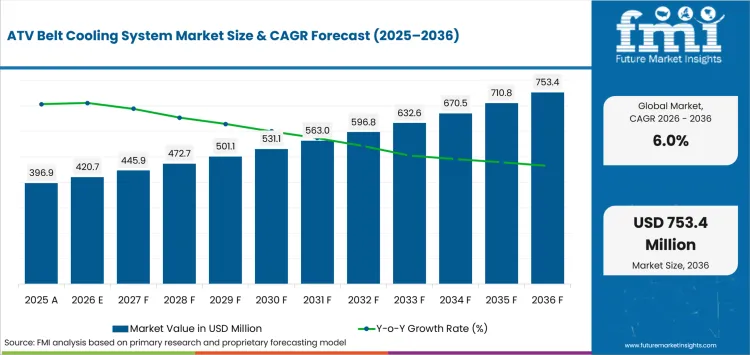
USD 420.7 million in 2026 and USD 753.4 million by 2036 at a 6.0% CAGR.
Demand for ATV belt cooling systems is projected to expand at 6.0% CAGR between 2026 and 2036, increasing valuation from USD 420.7 million to USD 753.4 million. Belt durability remains a priority in high-performance off-road vehicles because heat buildup can shorten service life and reduce drivetrain reliability under demanding operating conditions. Polaris introduced the RZR Pro R Boost in August 2026 with increased clutch airflow and cooling fins that reduce heat and extend belt life during demanding rides in the broader power sports category.
Country demand diverges because vehicle use intensity and dealer coverage differ even though CVT heat has the same physical cause. CPSC estimated 109,200 emergency-department-treated OHV injuries during 2024 in its May 2026 report, confirming a large USA all-terrain vehicle and ROV operating base for dealer service and aftermarket fitment. Japan's smaller domestic ATV channel makes model-specific inventory more selective, so similar thermal needs do not translate into the same accessory volume.
Key Takeaways of ATV Belt Cooling System Market
- Sustained low-speed load and repeated belt heating increase demand for controlled airflow on belt-driven ATV and UTV drivetrains.
- By system type, CVT intake vents are estimated to hold 27.0% in 2026 owing to direct control over fresh-air entry.
- UTVs are projected to account for 32.0% of vehicle type revenue in 2026 because utility loads extend belt exposure to elevated temperatures.
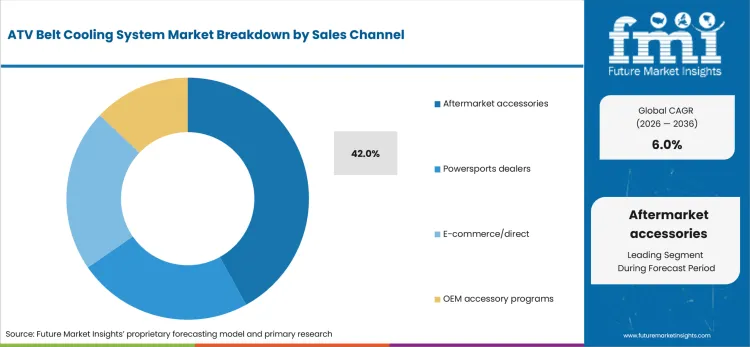
- In 2026, aftermarket accessories are expected to lead sales channel revenue with 42.0% share attributable to heat problems diagnosed after vehicle delivery.
- Cooling hardware loses value if belt damage originates from misalignment or incorrect clutch calibration instead of restricted airflow.
- Some of the key players in this market include Polaris Inc., BRP Inc., Yamaha Motor Co., Ltd., Kawasaki Motors Corp., U.S.A., CFMOTO, HISUN Motors USA, Arctic Cat Inc., and Suzuki Motor USA, LLC.
Analyst Perspective
"ATV belt cooling earns its keep after technicians separate restricted clutch airflow from belt damage or clutch faults. The strongest systems pair vehicle-specific intake routing with temperature evidence so dealers can confirm that added airflow addresses the diagnosed heat source."
- Nikhil Kaitwade, Principal Consultant, Future Market Insights
How is the Atv Belt Cooling System Market segmented?
The market is segmented by system type, vehicle type, sales channel, installation and end use.
System type covers CVT intake vents, CVT exhaust kits, electric blower kits, ducted belt cooling kits and heat shield systems. Vehicle type includes UTVs, ATVs, sport side-by-sides, utility side-by-sides and snow or adventure vehicles. Sales channel covers aftermarket accessories, powersports dealers, e-commerce or direct sales and OEM accessory programs. Installation includes bolt-on kits, replacement duct kits, custom fabrication kits and integrated OEM kits. End use covers mud riding, desert or sand riding, heavy towing, trail riding and racing.
Why do Aftermarket accessories lead demand within the Sales channel category?
Belt heat often appears after tire changes or towing loads alter the demand placed on the clutch setup. Suzuki Motor USA launched Fast Friends Rewards in November 2025 for KingQuad ATVs and allowed vouchers to be used for dealer parts or service. That route places thermal retrofits beside maintenance once a heat problem has been diagnosed.
- By sales channel, aftermarket accessories are forecast to represent 42.0% in 2026 driven by heat problems that usually appear after vehicle delivery.
- The power sports accessories channel shortens the route from diagnosis to retrofit because model-specific ducts and fans must match the clutch enclosure and service access.
Why do CVT intake vents lead demand within the System type category?
Fresh-air entry is the first controllable point in a belt-cooling circuit because intake routing sets the air available to the clutch enclosure. CFMOTO introduced the CFORCE 1000 MV in February 2025 with mud-specific intake and cooling changes that protect airflow during contaminated low-speed use near cooling fans.
- By system type, the CVT intake vents segment is estimated to hold 27.0% in 2026 owing to direct airflow control without the electrical load of an active blower.
- Mud-focused owners select protected intake routing because water or debris entering the duct can reduce cooling performance before an exhaust or fan upgrade is considered.
Why do UTVs lead demand within the Vehicle type category?
Utility terrain vehicles carry utility loads and performance upgrades that hold belt-driven drivetrains under sustained torque longer than lighter recreational use. Kawasaki documented in July 2025 that the 250-horsepower Teryx4/5 H2 doubles CVT cooling-air volume versus the KRX 1000 and includes a CVT temperature sensor on high-output off-road vehicles.
- UTVs are projected to hold 32.0% of vehicle type revenue in 2026 because towing loads and high-output drivetrains extend belt exposure to elevated temperatures.
- Direct temperature feedback gives dealers a practical way to separate sustained heat from visible belt damage before specifying more airflow or changing clutch setup during service.
Why do Bolt-on kits lead demand within the Installation category?
Model-specific mounting lowers fabrication work and makes a cooling retrofit easier to quote on conventional or electric off-road ATVs. GOES launched the TERROX family in September 2025 with tool-less side panels that provide quick access to the CVT compartment and shorten routine service work.
- In 2026, bolt-on kits are expected to lead the installation category with 41.0% share attributable to defined mounting points and lower fitment uncertainty than custom fabrication.
- Pre-engineered hardware gives technicians a clearer labor estimate because known mounting points preserve service access without rebuilding ducts for each vehicle configuration during routine dealer service work.
What are the drivers, restraints and opportunities in the ATV Belt Cooling System Market?
Sustained belt heat increases cooling demand while mechanical CVT faults restrain conversion and service-friendly fitment provides the clearest commercial opening.
- Driver: High-load operation raises belt temperature enough to make controlled clutch airflow a maintenance purchase.
- Restraint: Cooling hardware cannot correct damaged clutch components that generate heat before airflow becomes the limiting condition.
- Opportunity: Vehicle-specific kits shorten installation work by preserving known service access and using defined mounting points.
Repeatable thermal stress raises demand because belt life deteriorates faster under heavy load and elevated temperature. Polaris launched six purpose-built ATVs in January 2025 and gave its mud editions a sealed clutch intake that protects clutch components from water and mud intrusion. The design makes contaminated airflow a specific cooling condition instead of a general durability concern. The same heat diagnosis applies within electric power sports categories that retain belt-driven drivelines.
Heat does not always originate in the airflow path, so a cooling kit can leave the real CVT fault untouched. CPSC recalled about 3,585 Kawasaki Teryx4 H2 and Teryx5 H2 vehicles in June 2026 after a drive-converter sheave could break under certain conditions. Dealers therefore need clutch inspection before specifying additional airflow for a hot-belt complaint.
Installation economics improve when a kit preserves the service points already built into the vehicle. CFMOTO launched three new CFORCE models in March 2026 with tool-less removable side panels and a 25% increase in service intervals for the C4 and C5. Cooling brands can use similar access logic to reduce labor on conventional and electric UTV platforms without turning every retrofit into custom fabrication.
Which country CAGRs are profiled in the ATV Belt Cooling System Market?
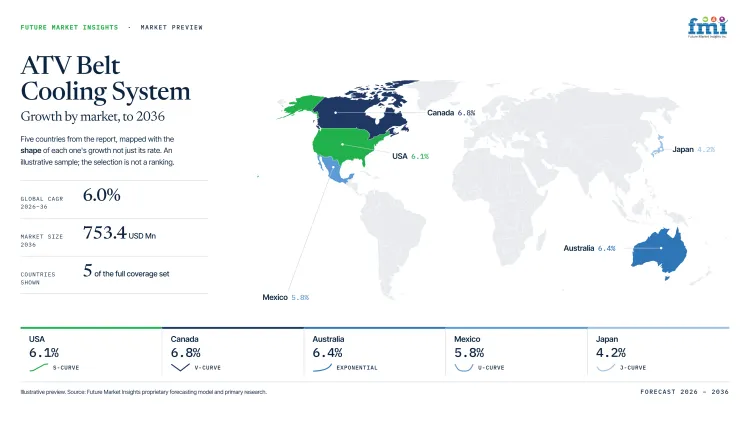
| Country | CAGR |
|---|---|
| Canada | 6.8% |
| Australia | 6.4% |
| USA | 6.1% |
| Mexico | 5.8% |
| Japan | 4.2% |
How do country-level CAGRs compare in the ATV Belt Cooling System Market?
The five profiled countries form two bands separated by Germany at 4.8% and Japan at 4.2%. Canada, Australia and USA all exceed 6.0% CAGR, but their accessory routes differ by service distance and operating severity. The 2.6-point spread therefore indicates channel timing more clearly than current market size.
- Canada's utility use makes rural parts stock and service distance commercially decisive.
- Australian farm duty favors protected components that dealers can service outside cities.
- USA modification channels expose belt heat quickly after tire or power changes.
- Mexico’s growth relies on specialized dealers that efficiently serve off-road and recreational markets.
- Japan's compact channel concentrates orders in utility models with documented dealer fitment.
Comparable growth rates therefore produce different order patterns because local service economics differ. The full report provides country-level CAGR analysis across North America, Latin America, Europe, East Asia, South Asia, Oceania and the Middle East and Africa.
Country-wise Analysis
- Remote utility use makes Canadian ATV and UTV owners dependent on dealer diagnosis because repeated belt service can involve long travel, seasonal downtime and limited rural parts availability. Canada's ATV belt cooling system outlook is anticipated to advance at 6.8% CAGR over the assessment period, tied to utility vehicle use and Can-Am service coverage that gives owners a formal repair route. Transport Canada ordered an April 2026 software correction for affected Can-Am Outlander Pro ATVs through dealerships, confirming current dealer-remedy capacity while service distance outside major population centers can delay accessory installation and favors brands with stocked components and clear fitting instructions.
- Dust/ heat and long regional routes make sealed airflow plus local repair access practical selection issues for Australian UTV operators working far from metropolitan dealerships. Product Safety Australia published a March 2025 recall for CFMOTO U10 PRO Highland models requiring free dealer replacement of cabin door latches, documenting a current national repair route for utility vehicles that also supports accessory service. Adoption of ATV belt cooling systems in Australia is estimated to expand at 6.4% CAGR through 2036, helped by farm and recreational UTV use but constrained by travel time to qualified technicians and replacement parts outside established dealer corridors.
- A modification and dealership channel lets USA owners address belt heat after tire changes or towing loads and power upgrades alter the original duty cycle, with independent installers widening access beyond franchised dealers. The USA ATV belt cooling system sector is projected to record 6.1% CAGR during the assessment period because aftermarket access is strong, though installers must separate airflow problems from clutch or belt faults before recommending hardware. The USA Consumer Product Safety Commission recalled about 910 Polaris RZR Pro R vehicles in April 2025 and directed owners to authorized dealers for inspection and repair, demonstrating a formal service network that can absorb model-specific retrofit work.
- Mexico’s ATV demand is supported by specialized dealers serving expanding off-road and recreational markets, with growing use of utility ATVs in agriculture, ranching, and leisure applications. A broad operating environment and rising recreational adoption support demand for ATV belt cooling systems, particularly solutions that improve CVT durability and heat management under demanding conditions. Mexico is estimated to post 5.8% CAGR over the forecast period, driven by increasing ATV usage and demand for reliable cooling solutions in hot, rugged operating environments.
- Japan has a compact ATV channel centered on controlled off-road use, so model availability and dealer ordering determine which belt-CVT platforms justify local cooling inventory. ATV belt cooling system sales in Japan are forecast to expand at 4.2% CAGR by 2036, given continued utility-platform availability and demand from recreational facilities or private-land users that need exact fitment. Yamaha announced the domestic GRIZZLY EPS XT-R in July 2026 with an Ultramatic CVT and built-to-order sales that exclude public-road registration, a channel condition that limits broad volume but gives specialist dealers clearer control over model matching and local pre-delivery service and parts preparation.
Who are the notable companies in the ATV Belt Cooling System Market?
Polaris Inc., BRP Inc., Yamaha Motor Co., Ltd., Kawasaki Motors Corp., U.S.A., CFMOTO, HISUN Motors USA, Arctic Cat Inc., and Suzuki Motor USA, LLC are the notable companies serving this market.
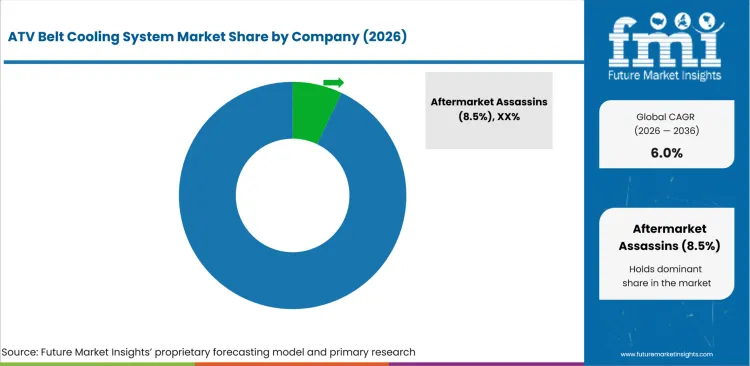
Vehicle manufacturers control CVT airflow architecture before sale, while accessory brands enter after heat appears under modified duty cycles. Entry therefore depends on model-level clutch knowledge and a service route that can distinguish airflow restriction from mechanical heat. Electric platforms that replace the continuously variable transmission narrow the addressable cooling base even when the vehicle serves similar off-road work.
- Polaris Inc., BRP Inc. and Kawasaki Motors Corp., U.S.A. field high-output ATV and side-by-side platforms with current drivetrain engineering and dealer service.
- Yamaha Motor Co., Ltd., CFMOTO and Suzuki Motor USA, LLC maintain utility ATV portfolios where belt-CVT service and replacement parts influence owner decisions.
- HISUN Motors USA and Arctic Cat Inc. serve work-oriented and recreational users through dealer or national-retail routes with current ATV and UTV lineups.
Competitive Benchmarking: ATV Belt Cooling System Market
| Company | Off-Road Drivetrain Relevance | Dealer-Service Evidence | ATV/UTV Platform Breadth | Geographic Reach |
|---|---|---|---|---|
| Polaris Inc. | Medium | High | High | Global with North American concentration |
| BRP Inc. | Medium | High | High | Global |
| Yamaha Motor Co., Ltd. | Medium | High | Medium | Japan, North America, Europe and Oceania |
| Kawasaki Motors Corp., U.S.A. | Medium | High | Medium | North America, Japan, Europe and Oceania |
| CFMOTO | Medium | Medium | High | Global |
| HISUN Motors USA | Medium | Medium | Medium | North America and selected export markets |
| Arctic Cat Inc. | High | High | High | North America |
| Suzuki Motor USA, LLC | Medium | High | Medium | North America and international ATV markets |
Scoring basis: High drivetrain relevance requires explicit current evidence of CVT airflow, belt temperature control or equivalent transmission engineering. Medium requires a current ATV or UTV drivetrain platform without direct thermal integration. High service evidence requires a formal dealer repair, warranty or service route while Medium requires a documented dealer or retail channel. High platform breadth requires current ATV and UTV or side-by-side families while Medium identifies a narrower current off-road range. Low is reserved for an officially documented limitation against the stated criterion.
Key Developments in the ATV Belt Cooling System Market
- In August 2026, Yamaha Motor Co., Ltd. announced restructuring of its outdoor land vehicle business and reallocated resources toward ATVs while moving USA ROV production to a partner-supply model.
- In September 2025, HISUN Motors USA introduced the Guardian ATV series and expanded its utility off-road portfolio from side-by-sides into the all-terrain vehicle category.
- In August 2025, Arctic Cat restarted vehicle production at its Thief River Falls plant after its ownership change and resumed the manufacturing path for off-road products.
Key Players in the ATV Belt Cooling System Market
Integrated High-Performance ATV and UTV Platforms
- Polaris Inc.
- BRP Inc.
- Kawasaki Motors Corp., U.S.A.
Utility and Multi-Market ATV Platforms
- Yamaha Motor Co., Ltd.
- CFMOTO
- Suzuki Motor USA, LLC
Work-Oriented and Regional Off-Road Platforms
- HISUN Motors USA
- Arctic Cat Inc.
ATV Belt Cooling System Market - Report Scope
| Coverage field | Report scope |
|---|---|
| Market breakdown | By system type, vehicle type, sales channel, installation, end use and region. |
| Quantitative Units | USD Million. |
| Market Definition | Commercial hardware and integrated provisions used to manage heat in belt-driven CVT systems on ATVs and side-by-side UTVs. |
| Regions Covered | North America, Latin America, Europe, East Asia, South Asia and Pacific, and Middle East and Africa. |
| Countries Covered | Canada, Australia, USA, Germany, Japan, and 20+ countries included in the full report. |
| Key Companies Profiled | Polaris Inc., BRP Inc., Yamaha Motor Co., Ltd., Kawasaki Motors Corp., U.S.A., CFMOTO, HISUN Motors USA, Arctic Cat Inc., and Suzuki Motor USA, LLC. |
| Forecast Period | 2026 to 2036. |
| Approach | Primary and secondary research with market triangulation. |
ATV Belt Cooling System Market - Research Methodology
| Method | Approach |
|---|---|
| Primary Research | FMI analysts gathered input from manufacturers, service providers, technology developers, distributors, end users, procurement teams, and subject-matter experts. Interviews examined purchasing decisions, product or service evaluation, adoption barriers, approval requirements, pricing considerations, and expectations for technical or commercial support. Respondents were also asked what evidence is required before a trial, pilot, or initial order develops into regular purchasing. |
| Desk Research | Desk research covered government statistics, regulatory publications, trade data, industry associations, technical literature, standards, company filings, product information, and official corporate announcements. Sources were reviewed for relevance, publication date, geographic coverage, and consistency with the defined market scope. Claims relating to performance, applications, approvals, capacity, investment, and commercial activity were retained only when supported by credible public evidence. |
| Market Sizing and Forecasting | The market model combined the baseline value with historical performance, segment structure, pricing and volume indicators, adoption levels, company participation, and country-level demand conditions. Forecast assumptions considered economic activity, investment trends, regulatory developments, technology adoption, purchasing cycles, supply availability, and barriers to wider market use. Segment and regional estimates were reconciled before the final market total was calculated. |
| Data Validation | Estimates were checked against multiple independent indicators, including public data, company activity, trade patterns, industry developments, and findings from primary interviews. Validation also tested whether products, services, applications, and company revenues fell within the defined market boundaries. Adjacent categories, unsupported claims, overlapping revenues, and activities without direct market relevance were excluded to reduce double counting and maintain consistency across segments and countries. |
ATV Belt Cooling System Market by Segments
System Type
- CVT intake vents
- CVT exhaust kits
- electric blower kits
- ducted belt cooling kits
- heat shield systems
Vehicle Type
- UTVs
- ATVs
- sport side-by-sides
- utility side-by-sides
- snow or adventure vehicles
Sales Channel
- aftermarket accessories
- powersports dealers
- e-commerce or direct sales
- OEM accessory programs
Installation
- bolt-on kits
- replacement duct kits
- custom fabrication kits
- integrated OEM kits
End Use
- mud riding
- desert or sand riding
- heavy towing
- trail riding
- racing
ATV Belt Cooling System Market by Region:
- North America
- United States
- Canada
- Latin America
- Brazil
- Mexico
- Chile
- Rest of Latin America
- Western Europe
- Germany
- United Kingdom
- Italy
- Spain
- France
- Nordics
- Benelux
- Rest of Western Europe
- Eastern Europe
- Russia
- Poland
- Hungary
- Balkan and Baltic States
- Rest of Eastern Europe
- East Asia
- China
- Japan
- South Korea
- South Asia and Pacific
- India
- ASEAN
- Australia and New Zealand
- Rest of South Asia and Pacific
- Middle East and Africa
- Kingdom of Saudi Arabia
- Other GCC Countries
- Türkiye
- South Africa
- Other African Union Countries
- Rest of Middle East and Africa
Research Sources and Bibliography
- Polaris Inc.. (2026, August 3). POLARIS INTRODUCES BREAKTHROUGH POWER, INNOVATION AND VALUE ACROSS 2027 OFF-ROAD LINEUP.
- USA Consumer Product Safety Commission. (2026, May 27). 2025 Report of Deaths and Injuries Involving Off-Highway Vehicles with More than Two Wheels.
- CFMOTO. (2025, February 19). CFMOTO sets the excitement level for 2025 with massive international launch in Portugal and new Motorcycle and ORV models.
- Kawasaki Motors Corp., U.S.A.. (2025, July 31). All-New 2026 Kawasaki Teryx4 H2, Teryx4 H2 Deluxe and Teryx5 H2 Deluxe Sport Side x Side Lineup.
- Suzuki Motor USA, LLC. (2025, November 4). Suzuki Launches Fast Friends Rewards Program to Celebrate Loyal Riders and Welcome New Ones.
- GOES / CFMOTO. (2025, September 16). TERROX breaks ground! GOES 2025 global product launch shifts the needle for the ATV market.
- Polaris Inc.. (2025, January 14). POLARIS RELEASES NEW PURPOSE-BUILT ADDITIONS TO THE 2025 ATV LINEUP.
- USA Consumer Product Safety Commission. (2026, June 11). Kawasaki Motors USA Recalls Model Year 2026 Teryx4 H2 and Teryx5 H2 Recreational Off-Road Vehicles Due to Impact and Injury Hazards.
- CFMOTO. (2026, March 18). CFMOTO rolls the wheels on 2026 with new CFORCE models unveiling in France.
- Transport Canada. (2026, April 7). Transport Canada Recall - 2026171 - BOMBARDIER RECREATIONAL PRODUCTS.
- Australian Competition and Consumer Commission. (2025, March 11). MOJO Motorcycles - CFMOTO U10 PRO Highland & CFMOTO U10 PRO Highland XL UTVs.
- USA Consumer Product Safety Commission. (2025, April 3). Polaris Industries Recalls RZR Pro R and Pro R 4 Recreational Off-Road Vehicles (ROVs) Due to Injury Hazard.
- Industrieverband Motorrad e.V.. (2026, July 7). Chaos auf der Zulassungsstelle.
- Yamaha Motor Co., Ltd.. (2026, July 24).
- Polaris Inc.. (2025, July 29). POLARIS OFF ROAD EXPANDS 2026 FAMILY LINEUP, WHILE CELEBRATING THE 40TH ANNIVERSARY OF POLARIS ATVS.
- BRP Inc.. (2026, August 17). Can-Am Unveils 2027 Side-by-Side and All-Terrain Vehicles: The Evolution of Off-Road Performance.
- Yamaha Motor Corporation, USA. (2025, September 10). Yamaha Announces 2026 ATV Lineup.
- Kawasaki Motors Corp., U.S.A.. (2025, June 10). 2026 Kawasaki Brute Force 750 SE and Brute Force 750 All-Terrain Vehicles.
- CFMOTO. (2025, November 5). FASTER TO THE FUTURE: CFMOTO unveils next generation products and innovations to a packed 2025 EICMA audience.
- HISUN Motors USA. (2026, January 12). HISUN Motors USA Expands AXIS Platform with Introduction of XS750 Crew Model.
- Arctic Cat Inc.. (2026, August 4). Arctic Cat Launches 2027 ATV & SXS Lineup Featuring New Models and Notable Upgrades.
- Suzuki Motor USA, LLC. (2025, August 1). Suzuki Doubles KingQuad ATV Warranty Coverage to Four Years for a Limited Time.
- Yamaha Motor Co., Ltd.. (2026, August 4). Yamaha Motor to Make Sweeping Structural Reforms to Outdoor Land Vehicle Business.
- HISUN Motors USA. (2025, September 4). HISUN Motors USA Expands Portfolio with Introduction of Guardian ATV Series.
- Arctic Cat Inc.. (2025, August 8). Arctic Cat Green Lights Production.
- Arctic Cat Inc.. (2025, May 8). Arctic Cat Restores Jobs in Minnesota.
- BRP Inc.. (2025, August 17). Can-Am Breaks New Ground: Introducing the Outlander Electric, Outlander MAX 6x6, Maverick R X rc, and the First ATV with Semi-Active Suspension.
- BRP Inc.. (2026, August 17). New Can-Am Off-Road Defender XU Puts Utility at Forefront while Can-Am Outlander Pro Gets to Work With Added Features.
- HISUN Motors USA. (2026, March 23). G3 MOTORSPORTS PARTNERS WITH HISUN.
- Yamaha Motor Co., Ltd.. (2026, August 4). Consolidated Business Results Summary - First Half of Fiscal Year Ending December 31, 2026 - Record-setting figures for revenue and operating profit lead to upward revisions to full-year business results forecast -.
This bibliography is provided for reader reference and is not exhaustive. The full report contains the complete reference list and detailed citations
This Report Answers
- How large is the atv belt cooling system market in 2026 and what valuation is projected for 2036?
- What operating conditions are increasing demand for belt and clutch-case thermal control?
- Why do CVT intake vents hold the leading system type share in 2026?
- Why do UTVs account for the largest vehicle type share within the assessed market?
- Why does the aftermarket accessories channel capture the highest sales channel share?
- Which installation approach leads and how does service access influence retrofit economics?
- How do the five profiled country CAGRs compare through the forecast period?
- Which companies are active in belt-CVT platforms and related thermal-control routes?
- What technical faults can reduce the commercial value of a cooling-system upgrade?
Frequently Asked Questions
How big is the ATV belt cooling system market in 2026?
The ATV belt cooling system market is valued at USD 420.7 million in 2026 and is projected to reach USD 753.4 million by 2036. Growth is tied to sustained CVT heat during high-load and low-speed operation.
What is the CAGR of the ATV belt cooling system market from 2026 to 2036?
The ATV belt cooling system market is projected to grow at a CAGR of 6.0% between 2026 and 2036. Expansion is supported by utility duty cycles and aftermarket cooling upgrades for belt-driven drivetrains.
Which system type leads the ATV belt cooling system market?
The CVT intake vents segment is expected to hold 27.0% of the ATV belt cooling system market in 2026, attributable to direct control over fresh-air entry. Protected routing also suits muddy or dusty operating conditions.
Which sales channel leads the ATV belt cooling system market?
The aftermarket accessories segment is expected to hold 42.0% of the ATV belt cooling system market in 2026, driven by heat problems diagnosed after vehicle delivery. Dealer and direct channels support model-specific retrofit selection.
How much value will the ATV belt cooling system market add between 2026 and 2036?
The ATV belt cooling system market is expected to add USD 332.7 million in value between 2026 and 2036. Growth comes from longer high-load duty cycles and greater attention to belt-temperature control.
Which countries are projected to record the highest growth in the ATV belt cooling system market?
Canada is projected to grow at 6.8% CAGR, followed by Australia at 6.4% and USA at 6.1% through 2036. Utility vehicle use and accessible modification channels support the upper growth group.
Which companies are active in the ATV belt cooling system market?
Key companies operating in the market include Polaris Inc., BRP Inc., Yamaha Motor Co., Ltd., Kawasaki Motors Corp., U.S.A., CFMOTO, HISUN Motors USA, Arctic Cat Inc., and Suzuki Motor USA, LLC. Their positions differ by drivetrain engineering and dealer-service reach.
Preview the report firsthand - request a free sample
Get SampleGet the brochure for pricing and purchase details.
Get PDFTable of Content
- Key Takeaways
- Market Size and CAGR
- Top Growth Driver
- Fastest Growing Segment
- Leading Region
- Key Companies
- Emerging Opportunities
- Executive Summary
- Global Market Outlook
- Demand-side Trends
- Supply-side Trends
- Technology Roadmap Analysis
- Analysis and Recommendations
- Analyst Perspective (What is happening? Why now? What should investors know?)
- Key Questions Answered
- How large is the market?
- What is the CAGR?
- What are key trends?
- Which region dominates?
- Who are the leaders?
- Market Overview
- Market Coverage / Taxonomy
- Market Definition / Scope / Limitations
- Research Methodology
- Chapter Orientation
- Analytical Lens and Working Hypotheses
- Market Structure, Signals, and Trend Drivers
- Benchmarking and Cross-market Comparability
- Market Sizing, Forecasting, and Opportunity Mapping
- Research Design and Evidence Framework
- Desk Research Programme (Secondary Evidence)
- Expert Input and Fieldwork (Primary Evidence)
- Tooling, Models, and Reference Databases
- Data Engineering and Model Build
- Quality Assurance and Audit Trail
- Market Background
- Market Dynamics (Drivers, Restraints, Opportunity, Trends)
- Scenario Forecast (Optimistic, Likely, Conservative)
- Impact Analysis
- AI Impact
- Sustainability Impact
- Regulatory Impact
- Technology Impact
- Consumer / Buyer Analysis
- Purchase Drivers
- Adoption Barriers
- Buyer Journey
- Opportunity Map Analysis
- Product Life Cycle Analysis
- Supply Chain Analysis
- Investment Feasibility Matrix
- Value Chain Analysis
- PESTLE and Porter's Analysis
- Regulatory Landscape
- Regional Parent Market Outlook
- Production and Consumption Statistics
- Import and Export Statistics
- Global Market Analysis and Forecast, 2021 to 2036
- Historical Market Size Value (USD Million) Analysis, 2021 to 2025
- Current and Future Market Size Value (USD Million) Projections, 2026 to 2036
- Y-o-Y Growth Trend Analysis
- Absolute $ Opportunity Analysis
- Global Market Pricing Analysis, 2021 to 2036
- Global Market Analysis and Forecast, By System Type, 2021 to 2036
- Introduction / Key Findings
- Historical Market Size Value (USD Million) Analysis By System Type, 2021 to 2025
- Current and Future Market Size Value (USD Million) Analysis and Forecast By System Type, 2026 to 2036
- CVT intake vents
- CVT exhaust kits
- Electric blower kits
- Ducted belt cooling kits
- Heat shield systems
- CVT intake vents
- Y-o-Y Growth Trend Analysis By System Type, 2021 to 2025
- Absolute $ Opportunity Analysis By System Type, 2026 to 2036
- Global Market Analysis and Forecast, By Vehicle Type, 2021 to 2036
- Introduction / Key Findings
- Historical Market Size Value (USD Million) Analysis By Vehicle Type, 2021 to 2025
- Current and Future Market Size Value (USD Million) Analysis and Forecast By Vehicle Type, 2026 to 2036
- UTVs
- ATVs
- Sport side-by-sides
- Utility side-by-sides
- Snow/adventure vehicles
- UTVs
- Y-o-Y Growth Trend Analysis By Vehicle Type, 2021 to 2025
- Absolute $ Opportunity Analysis By Vehicle Type, 2026 to 2036
- Global Market Analysis and Forecast, By Sales Channel, 2021 to 2036
- Introduction / Key Findings
- Historical Market Size Value (USD Million) Analysis By Sales Channel, 2021 to 2025
- Current and Future Market Size Value (USD Million) Analysis and Forecast By Sales Channel, 2026 to 2036
- Aftermarket accessories
- Powersports dealers
- E-commerce/direct
- OEM accessory programs
- Aftermarket accessories
- Y-o-Y Growth Trend Analysis By Sales Channel, 2021 to 2025
- Absolute $ Opportunity Analysis By Sales Channel, 2026 to 2036
- Global Market Analysis and Forecast, By Installation, 2021 to 2036
- Introduction / Key Findings
- Historical Market Size Value (USD Million) Analysis By Installation, 2021 to 2025
- Current and Future Market Size Value (USD Million) Analysis and Forecast By Installation, 2026 to 2036
- Bolt-on kits
- Replacement duct kits
- Custom fabrication kits
- Integrated OEM kits
- Bolt-on kits
- Y-o-Y Growth Trend Analysis By Installation, 2021 to 2025
- Absolute $ Opportunity Analysis By Installation, 2026 to 2036
- Global Market Analysis and Forecast, By End Use, 2021 to 2036
- Introduction / Key Findings
- Historical Market Size Value (USD Million) Analysis By End Use, 2021 to 2025
- Current and Future Market Size Value (USD Million) Analysis and Forecast By End Use, 2026 to 2036
- Mud riding
- Desert/sand riding
- Heavy towing
- Trail riding
- Racing
- Mud riding
- Y-o-Y Growth Trend Analysis By End Use, 2021 to 2025
- Absolute $ Opportunity Analysis By End Use, 2026 to 2036
- Global Market Analysis and Forecast, By Region, 2021 to 2036
- Introduction
- Historical Market Size Value (USD Million) Analysis By Region, 2021 to 2025
- Current Market Size Value (USD Million) Analysis and Forecast By Region, 2026 to 2036
- North America
- Latin America
- Western Europe
- Eastern Europe
- East Asia
- South Asia and Pacific
- Middle East & Africa
- Market Attractiveness Analysis By Region
- North America Market Analysis and Forecast, By Country, 2021 to 2036
- Historical Market Size Value (USD Million) Trend Analysis By Market Taxonomy, 2021 to 2025
- Market Size Value (USD Million) Forecast By Market Taxonomy, 2026 to 2036
- By Country
- USA
- Canada
- By System Type
- By Vehicle Type
- By Sales Channel
- By Installation
- By End Use
- By Country
- Market Attractiveness Analysis
- By Country
- By System Type
- By Vehicle Type
- By Sales Channel
- By Installation
- By End Use
- Key Takeaways
- Latin America Market Analysis and Forecast, By Country
- Historical Market Size Value (USD Million) Trend Analysis By Market Taxonomy, 2021 to 2025
- Market Size Value (USD Million) Forecast By Market Taxonomy, 2026 to 2036
- By Country
- Brazil
- Mexico
- Chile
- Rest of Latin America
- By System Type
- By Vehicle Type
- By Sales Channel
- By Installation
- By End Use
- By Country
- Market Attractiveness Analysis
- By Country
- By System Type
- By Vehicle Type
- By Sales Channel
- By Installation
- By End Use
- Key Takeaways
- Western Europe Market Analysis and Forecast, By Country
- Historical Market Size Value (USD Million) Trend Analysis By Market Taxonomy, 2021 to 2025
- Market Size Value (USD Million) Forecast By Market Taxonomy, 2026 to 2036
- By Country
- Germany
- UK
- Italy
- Spain
- France
- Nordic
- BENELUX
- Rest of Western Europe
- By System Type
- By Vehicle Type
- By Sales Channel
- By Installation
- By End Use
- By Country
- Market Attractiveness Analysis
- By Country
- By System Type
- By Vehicle Type
- By Sales Channel
- By Installation
- By End Use
- Key Takeaways
- Eastern Europe Market Analysis and Forecast, By Country
- Historical Market Size Value (USD Million) Trend Analysis By Market Taxonomy, 2021 to 2025
- Market Size Value (USD Million) Forecast By Market Taxonomy, 2026 to 2036
- By Country
- Russia
- Poland
- Hungary
- Balkan & Baltic
- Rest of Eastern Europe
- By System Type
- By Vehicle Type
- By Sales Channel
- By Installation
- By End Use
- By Country
- Market Attractiveness Analysis
- By Country
- By System Type
- By Vehicle Type
- By Sales Channel
- By Installation
- By End Use
- Key Takeaways
- East Asia Market Analysis and Forecast, By Country
- Historical Market Size Value (USD Million) Trend Analysis By Market Taxonomy, 2021 to 2025
- Market Size Value (USD Million) Forecast By Market Taxonomy, 2026 to 2036
- By Country
- China
- Japan
- South Korea
- By System Type
- By Vehicle Type
- By Sales Channel
- By Installation
- By End Use
- By Country
- Market Attractiveness Analysis
- By Country
- By System Type
- By Vehicle Type
- By Sales Channel
- By Installation
- By End Use
- Key Takeaways
- South Asia and Pacific Market Analysis and Forecast, By Country
- Historical Market Size Value (USD Million) Trend Analysis By Market Taxonomy, 2021 to 2025
- Market Size Value (USD Million) Forecast By Market Taxonomy, 2026 to 2036
- By Country
- India
- ASEAN
- Australia & New Zealand
- Rest of South Asia and Pacific
- By System Type
- By Vehicle Type
- By Sales Channel
- By Installation
- By End Use
- By Country
- Market Attractiveness Analysis
- By Country
- By System Type
- By Vehicle Type
- By Sales Channel
- By Installation
- By End Use
- Key Takeaways
- Middle East & Africa Market Analysis and Forecast, By Country
- Historical Market Size Value (USD Million) Trend Analysis By Market Taxonomy, 2021 to 2025
- Market Size Value (USD Million) Forecast By Market Taxonomy, 2026 to 2036
- By Country
- Kingdom of Saudi Arabia
- Other GCC Countries
- Türkiye
- South Africa
- Other African Union
- Rest of Middle East & Africa
- By System Type
- By Vehicle Type
- By Sales Channel
- By Installation
- By End Use
- By Country
- Market Attractiveness Analysis
- By Country
- By System Type
- By Vehicle Type
- By Sales Channel
- By Installation
- By End Use
- Key Takeaways
- Key Countries Market Analysis
- USA
- Pricing Analysis
- Market Share Analysis, 2025
- By System Type
- By Vehicle Type
- By Sales Channel
- By Installation
- By End Use
- Canada
- Pricing Analysis
- Market Share Analysis, 2025
- By System Type
- By Vehicle Type
- By Sales Channel
- By Installation
- By End Use
- Mexico
- Pricing Analysis
- Market Share Analysis, 2025
- By System Type
- By Vehicle Type
- By Sales Channel
- By Installation
- By End Use
- Brazil
- Pricing Analysis
- Market Share Analysis, 2025
- By System Type
- By Vehicle Type
- By Sales Channel
- By Installation
- By End Use
- Chile
- Pricing Analysis
- Market Share Analysis, 2025
- By System Type
- By Vehicle Type
- By Sales Channel
- By Installation
- By End Use
- Germany
- Pricing Analysis
- Market Share Analysis, 2025
- By System Type
- By Vehicle Type
- By Sales Channel
- By Installation
- By End Use
- UK
- Pricing Analysis
- Market Share Analysis, 2025
- By System Type
- By Vehicle Type
- By Sales Channel
- By Installation
- By End Use
- Italy
- Pricing Analysis
- Market Share Analysis, 2025
- By System Type
- By Vehicle Type
- By Sales Channel
- By Installation
- By End Use
- Spain
- Pricing Analysis
- Market Share Analysis, 2025
- By System Type
- By Vehicle Type
- By Sales Channel
- By Installation
- By End Use
- France
- Pricing Analysis
- Market Share Analysis, 2025
- By System Type
- By Vehicle Type
- By Sales Channel
- By Installation
- By End Use
- India
- Pricing Analysis
- Market Share Analysis, 2025
- By System Type
- By Vehicle Type
- By Sales Channel
- By Installation
- By End Use
- ASEAN
- Pricing Analysis
- Market Share Analysis, 2025
- By System Type
- By Vehicle Type
- By Sales Channel
- By Installation
- By End Use
- Australia & New Zealand
- Pricing Analysis
- Market Share Analysis, 2025
- By System Type
- By Vehicle Type
- By Sales Channel
- By Installation
- By End Use
- China
- Pricing Analysis
- Market Share Analysis, 2025
- By System Type
- By Vehicle Type
- By Sales Channel
- By Installation
- By End Use
- Japan
- Pricing Analysis
- Market Share Analysis, 2025
- By System Type
- By Vehicle Type
- By Sales Channel
- By Installation
- By End Use
- South Korea
- Pricing Analysis
- Market Share Analysis, 2025
- By System Type
- By Vehicle Type
- By Sales Channel
- By Installation
- By End Use
- Russia
- Pricing Analysis
- Market Share Analysis, 2025
- By System Type
- By Vehicle Type
- By Sales Channel
- By Installation
- By End Use
- Poland
- Pricing Analysis
- Market Share Analysis, 2025
- By System Type
- By Vehicle Type
- By Sales Channel
- By Installation
- By End Use
- Hungary
- Pricing Analysis
- Market Share Analysis, 2025
- By System Type
- By Vehicle Type
- By Sales Channel
- By Installation
- By End Use
- Kingdom of Saudi Arabia
- Pricing Analysis
- Market Share Analysis, 2025
- By System Type
- By Vehicle Type
- By Sales Channel
- By Installation
- By End Use
- Türkiye
- Pricing Analysis
- Market Share Analysis, 2025
- By System Type
- By Vehicle Type
- By Sales Channel
- By Installation
- By End Use
- South Africa
- Pricing Analysis
- Market Share Analysis, 2025
- By System Type
- By Vehicle Type
- By Sales Channel
- By Installation
- By End Use
- USA
- Market Structure Analysis
- Competition Dashboard
- Competition Benchmarking
- Market Share Analysis of Top Players
- By Regional
- By System Type
- By Vehicle Type
- By Sales Channel
- By Installation
- By End Use
- Emerging Startups
- Innovation Benchmarking
- Competition Analysis
- Competition Deep Dive
- Aftermarket Assassins (8.5%)
- Overview
- Product Portfolio
- Profitability by Market Segments
- Sales Footprint
- Strategy Overview
- Marketing Strategy
- Product Strategy
- Channel Strategy
- EPI Performance
- Gilomen Innovations
- Razorback Technology
- Force Turbos
- Agency Power
- SLP
- Dynojet
- Rugged Routes
- Moose Utility Division
- Aftermarket Assassins (8.5%)
- Case Studies
- Success Stories
- Recent Developments
- Competition Deep Dive
- Assumptions & Acronyms Used


