

- Industry Size (2026)
- USD 280 Mn
- Forecast (2036)
- USD 520.7 Mn
- CAGR (2026 to 2036)
- 6.4%
Bio-Based Effect Pigments for Color Cosmetics Market Forecast and Outlook 2026 to 2036
The bio-based effect pigments for color cosmetics market is valued at USD 280 million in 2026 and is expected to reach USD 520.7 million by 2036, growing at a compound annual growth rate (CAGR) of 6.4%. Procurement priorities will be shaped by the growing demand for sustainable and eco-friendly alternatives, as regulatory pressures and consumer preferences evolve. Buyers tend to exhibit risk aversion, preferring vendors with proven track records of consistency and compliance.
As a result, vendor lock-in becomes more likely, with long-term partnerships forming around reliable suppliers that can meet both performance and sustainability standards. Switching costs are a significant factor, as changing pigment suppliers often involves re-certification processes, adjustments to production lines, and potential delays in product launches. These considerations create a stable but highly competitive market, where suppliers who can offer cost-effective, sustainable, and high-quality solutions will gain long-term customer loyalty, while others may struggle to secure lasting relationships.
Quick Stats of the Bio-Based Effect Pigments for Color Cosmetics Market
- Bio-Based Effect Pigments for Color Cosmetics Market Value (2026): USD 280 million
- Bio-Based Effect Pigments for Color Cosmetics Market Forecast Value (2036): USD 520.7 million
- Bio-Based Effect Pigments for Color Cosmetics Market Global Forecast CAGR (2026 to 2036): 6.4%
- Bio-Based Effect Pigments for Color Cosmetics Market Leading Segment: Material Type (Plant-Derived Pigments) 42.5%
- Key Growth Regions in Bio-Based Effect Pigments for Color Cosmetics Market: USA
- Top Players in Bio-Based Effect Pigments for Color Cosmetics Market: BASF SE, Clariant AG, Sensient Technologies, Merck KGaA, DIC Corporation

What is the Growth Forecast for the Bio-Based Effect Pigments for Color Cosmetics Market through 2036?
The growth forecast for the bio-based effect pigments for color cosmetics market indicates steady expansion, with a projected CAGR of 6.4%. Starting at USD 280 million in 2026, the market will gradually increase, reaching USD 300 million in 2027, USD 320 million in 2028, and USD 340 million in 2029. By 2030, the market value is projected to rise to USD 360 million, continuing its upward trend throughout the forecast period.
From 2031 to 2036, the market will continue to expand, reaching USD 380 million in 2031, USD 400 million in 2032, and USD 420 million in 2033. The market will maintain steady growth, reaching USD 440 million in 2034, USD 470 million in 2035, and finally USD 520.7 million by 2036. The steady increase in market value reflects the growing adoption of bio-based effect pigments, driven by consumer demand for sustainable beauty products, regulatory changes, and innovations in the color cosmetics industry.
Bio-Based Effect Pigments for Color Cosmetics Market Key Takeaways
| Metric | Value |
|---|---|
| Industry Sales Value (2026) | USD 280 million |
| Industry Forecast Value (2036) | USD 520.7 million |
| Industry Forecast CAGR (2026 to 2036) | 6.4% |
What Is Driving the Demand for the Bio-Based Effect Pigments for Color Cosmetics Market Globally?
The global demand for bio-based effect pigments in color cosmetics is driven by increasing consumer interest in products that combine performance with environmental responsibility. Effect pigments provide shimmer, pearlescence, and color effects in products such as eyeshadows, highlighters, lip products, and body cosmetics. Traditional effect pigments are often derived from synthetic minerals or plastic-based materials that raise concerns about ecological impact, microplastic content, and sustainability. As awareness of ingredient origins and environmental consequences grows, both brands and consumers are seeking bio-based alternatives derived from renewable resources such as cellulose, mica coated with bio-sourced binders, and plant-derived luminescent materials. This shift is reinforced by clean beauty trends and the popularity of transparent, ethical product labeling. Regulatory scrutiny on microplastics and non-degradable particulates in cosmetics in regions including Europe, North America, and parts of Asia also encourages formulation with biodegradable, bio-based pigments that align with evolving compliance expectations.
Future demand for bio-based effect pigments is expected to grow as innovation in material science and formulation techniques enhances performance and expands application ranges. Advances are improving color intensity, light reflectance, and stability in diverse product formats while maintaining skin comfort and safety. The expanding reach of e-commerce and social media channels amplifies consumer exposure to sustainable beauty solutions and accelerates adoption of bio-based pigment products. Brands that integrate these pigments into collections can differentiate offerings and align with environmental and ethical commitments that increasingly influence purchase decisions. Growth in premium and mass market segments, along with rising disposable incomes in emerging markets, supports broader use of bio-based cosmetic materials. As sustainability goals become embedded in product development strategies, cosmetic manufacturers are likely to prioritise bio-based effect pigments to meet both performance and environmental criteria, supporting steady global market expansion.
What are the Leading Segments in the Global Bio-Based Effect Pigments for Color Cosmetics Market?
The global bio-based effect pigments for color cosmetics market is segmented by material type and application type. Among material types, plant-derived pigments lead the market, capturing 42.5% of the share, followed by mineral-based colorants, algae-extracted pigments, and microbial-sourced materials. Plant-derived pigments are highly favored for their natural origin, vibrant color range, and eco-friendly properties, aligning with the increasing demand for sustainable cosmetics. On the application type side, eye makeup dominates the market, holding 34.5% of the share, followed by facial cosmetics, lip products, and nail care products. Eye makeup is the largest segment due to the growing popularity of innovative, colorful eye products such as eyeshadows, eyeliners, and mascaras.
What Drives the Growth of Plant-Derived Pigments in the Bio-Based Effect Pigments for Color Cosmetics Market?

Plant-derived pigments are the leading material type in the bio-based effect pigments for color cosmetics market, holding 42.5% of the share. These pigments are increasingly popular in the cosmetics industry due to their natural, sustainable sourcing and lower environmental impact compared to synthetic pigments. Plant-derived pigments, such as those from fruits, vegetables, and flowers, offer a wide range of vibrant colors, making them ideal for cosmetics formulations. The growing consumer preference for natural, organic, and eco-friendly beauty products is a significant driver of this trend, as plant-based ingredients align with the demand for cleaner and safer cosmetics. Additionally, these pigments are non-toxic, making them suitable for sensitive skin, further boosting their adoption in the market. As the demand for sustainable and cruelty-free products continues to rise, plant-derived pigments are expected to maintain their dominant position in the bio-based effect pigments market.
What is Driving the Demand for Eye Makeup in the Bio-Based Effect Pigments for Color Cosmetics Market?

Eye makeup is the leading application type in the bio-based effect pigments for color cosmetics market, capturing 34.5% of the share. This demand is driven by the increasing popularity of bold and colorful eye makeup products, such as eyeshadows, eyeliners, and mascaras, which are a staple in daily beauty routines. Consumers are increasingly seeking vibrant, long-lasting eye makeup formulations that are made with natural and eco-friendly ingredients. Bio-based effect pigments, particularly those derived from plant sources, are gaining traction in this segment as they offer rich, sustainable color options that meet the growing consumer demand for clean beauty. As the beauty industry continues to prioritize sustainability and health-conscious formulations, the demand for bio-based pigments in eye makeup products is expected to remain strong, making it a key driver in the market for bio-based effect pigments.
What are the Key Dynamics in the Global Bio-Based Effect Pigments for Color Cosmetics Market?
The global bio-based effect pigments for color cosmetics market is expanding as brands and consumers seek visually striking makeup with reduced environmental impact. Bio-based effect pigments include pearlescent and shimmer pigments derived from plant, mineral or biotech sources that replace traditional synthetic or coated mica with more sustainable alternatives. Growth reflects rising demand for natural and clean beauty products that deliver high performance in eyeshadow, lipstick, highlighter and nail care. Regulatory pressure on petrochemical inputs, expanding premium beauty segments, and heightened awareness of ingredient sourcing influence adoption across regions.
What are the Key Drivers for the Bio-Based Effect Pigments for Color Cosmetics Market?
Consumer preference for sustainable and responsibly sourced beauty ingredients is a primary driver of the bio-based effect pigments market. Makeup buyers increasingly read labels and seek products that align with eco-friendly values while delivering vibrant color and shine. Regulatory initiatives that restrict certain synthetic colorants and coatings support formulation shifts toward natural alternatives. Growth in clean beauty and natural cosmetics segments encourages cosmetic manufacturers to adopt bio-based pigments to differentiate their offerings. Social media and influencer trends that spotlight sustainability further elevate interest and acceptance of bio-based effect pigments among beauty enthusiasts.
What are the Restraints for the Bio-Based Effect Pigments for Color Cosmetics Market?
One restraint is the challenge of matching the optical performance and stability of conventional effect pigments with bio-based alternatives. Some natural or biotech-derived pigments may vary in color intensity, reflectivity or dispersibility, requiring formulation expertise and testing. Higher raw material and production costs for bio-based inputs can affect pricing, particularly in mainstream cosmetics where cost sensitivity is high. Regulatory definitions of bio-based content and certification standards vary by region, complicating global product claims and positioning. Limited awareness among some consumers about bio-based pigment benefits may slow adoption without clear performance and sustainability communication.
What are the Key Trends in the Bio-Based Effect Pigments for Color Cosmetics Market?
A key trend is development of next-generation bio-based effect pigments with enhanced color payoff and durability that meet the performance expectations of premium cosmetics. Ingredient suppliers are focusing on plant-derived, biodegradable pearlescent materials that offer consistent particle size and dispersion. Collaboration between pigment developers and cosmetic brands accelerates innovation tailored to specific makeup categories and skin types. Transparency in sourcing, third-party certification and sustainability storytelling in marketing are helping build consumer trust. Interest in multifunctional formulations that combine visual effects with skin care benefits also supports expansion of bio-based effect pigment use across color cosmetic portfolios.
What is the Country-Wise Analysis of the Bio-Based Effect Pigments for Color Cosmetics Market?
The bio-based effect pigments for color cosmetics market is expected to grow steadily, driven by increasing demand for sustainable and eco-friendly products in the beauty industry. These bio-based pigments, derived from natural sources, offer a sustainable alternative to synthetic colorants, aligning with growing consumer preference for clean and green beauty products. Developed markets like the USA, Germany, and France are seeing strong demand for bio-based effect pigments due to the rising awareness of environmental sustainability, increasing regulations around cosmetic ingredients, and the demand for clean beauty solutions. Emerging markets like Japan and the UK are also witnessing steady growth, as consumer awareness of the environmental and health impacts of synthetic ingredients rises. As the beauty industry continues to embrace sustainability, the market for bio-based effect pigments is set to expand globally.
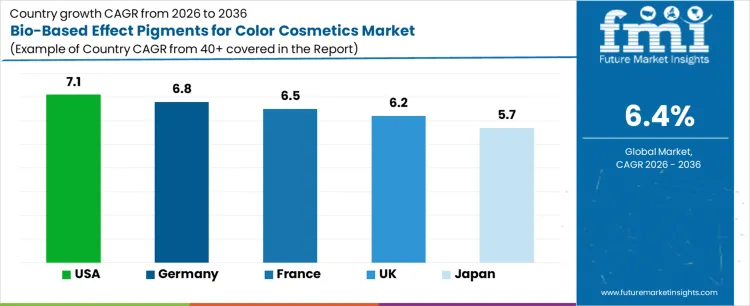
| Country | CAGR (2026 to 2036) |
|---|---|
| USA | 7.1% |
| Germany | 6.8% |
| France | 6.5% |
| UK | 6.2% |
| Japan | 5.7% |
What is the Growth Outlook for the Bio-Based Effect Pigments for Color Cosmetics Market in the USA?
The bio-based effect pigments for color cosmetics market in the USA is expected to grow steadily, with a projected CAGR of 7.1% from 2026 to 2036. The USA is a global leader in the cosmetics industry, and sustainability is becoming a key driver of growth in this market. Increasing consumer demand for eco-friendly and clean beauty products is leading to the adoption of bio-based alternatives to traditional synthetic colorants. With growing concerns over the environmental impact of synthetic ingredients, especially in relation to pollution and plastic waste, bio-based effect pigments are gaining popularity as a sustainable solution. The USA regulatory landscape, including stricter standards around cosmetic ingredients, is pushing brands to adopt greener formulations. As clean beauty trends continue to dominate consumer preferences, the USA market for bio-based effect pigments is expected to grow steadily, with brands increasingly innovating to meet the rising demand for natural, safe, and effective colorants.
What is the Market Outlook for the Bio-Based Effect Pigments for Color Cosmetics Market in Germany?
Germany is projected to experience steady growth in the bio-based effect pigments for color cosmetics market, with a projected CAGR of 6.8% from 2026 to 2036. As one of Europe’s leaders in environmental sustainability and green manufacturing, Germany is at the forefront of adopting eco-friendly ingredients in cosmetics. The demand for bio-based colorants is being driven by the increasing awareness of environmental issues, including the impact of synthetic chemicals on ecosystems and human health. The German cosmetics market is highly regulated, and consumers are becoming more conscious of the ingredients in their beauty products, with a strong preference for products that are both effective and sustainably sourced. With growing consumer interest in clean beauty and the increasing availability of bio-based ingredients, the market for bio-based effect pigments in Germany is set to grow steadily. Brands are investing more in developing natural and sustainable products to align with the rising demand for eco-conscious beauty solutions.
What is the Growth Forecast for the Bio-Based Effect Pigments for Color Cosmetics Market in France?
The bio-based effect pigments for color cosmetics market in France is projected to grow steadily, with a projected CAGR of 6.5% from 2026 to 2036. France is a key player in the global beauty industry, with a strong focus on sustainability and natural beauty products. French consumers are increasingly seeking cosmetics that use natural and eco-friendly ingredients, which is driving the adoption of bio-based pigments in the industry. The growing regulatory pressure to reduce the environmental impact of cosmetics and the rising awareness of the harmful effects of synthetic ingredients are prompting cosmetic brands in France to seek more sustainable alternatives. Additionally, France’s established clean beauty market is facilitating the growth of bio-based effect pigments, as more beauty brands align their offerings with sustainability trends. As demand for green beauty products continues to rise, the market for bio-based pigments in France is set to see steady expansion.
What is the Market Outlook for the Bio-Based Effect Pigments for Color Cosmetics Market in the UK?
The bio-based effect pigments for color cosmetics market in the UK is expected to grow steadily, with a projected CAGR of 6.2% from 2026 to 2036. The UK’s cosmetics market is increasingly shifting towards sustainability, with a growing preference for natural ingredients and eco-friendly formulations. As concerns about the environmental and health impacts of synthetic chemicals in beauty products rise, more consumers are opting for bio-based and organic alternatives. The UK government’s regulations around sustainability and the rising popularity of clean beauty are contributing to the growth of this market. UK-based cosmetic brands are actively incorporating bio-based ingredients into their product formulations to align with consumer preferences for cruelty-free, sustainable, and non-toxic beauty solutions. The increasing demand for clean, green, and safe beauty products will continue to drive the growth of the bio-based effect pigments market in the UK, as both brands and consumers prioritize sustainability.
What are the Growth Prospects for the Bio-Based Effect Pigments for Color Cosmetics Market in Japan?
Japan is expected to experience steady growth in the bio-based effect pigments for color cosmetics market, with a projected CAGR of 5.7% from 2026 to 2036. Japan has a long-standing tradition of using natural ingredients in cosmetics, and there is increasing consumer demand for products that are both effective and environmentally friendly. As awareness grows about the impact of synthetic chemicals on both human health and the environment, Japanese consumers are becoming more interested in bio-based and sustainable beauty products. The Japanese cosmetics industry is responding to this shift by increasingly adopting eco-friendly alternatives to traditional synthetic colorants. Japan’s regulatory environment is also evolving to encourage greener formulations in the beauty sector, which will continue to support the growth of the market for bio-based effect pigments. As sustainability becomes a larger focus for Japanese consumers and brands, the demand for bio-based color cosmetics will continue to rise steadily.
What is the Competitive Landscape for the Bio-Based Effect Pigments for Color Cosmetics Market?

The bio-based effect pigments for color cosmetics market is experiencing significant growth as consumers and manufacturers increasingly demand sustainable, eco-friendly alternatives to traditional synthetic pigments. BASF SE leads the market with its innovative bio-based effect pigments, offering a wide range of high-performance pigments made from renewable sources that enhance the color and appearance of cosmetic products. Their commitment to sustainability, product quality, and regulatory compliance has positioned them as a dominant player in this sector. Clariant AG, Sensient Technologies, and Merck KGaA are key competitors, each providing specialized bio-based pigments for the color cosmetics industry. Clariant AG offers innovative, sustainable solutions that provide vibrant colors while meeting environmental standards, while Sensient Technologies focuses on natural colorants and effect pigments that cater to clean beauty trends. Merck KGaA delivers advanced bio-based effect pigments designed to meet consumer demands for both aesthetic appeal and environmental responsibility.
DIC Corporation further contributes to the competitive landscape by offering eco-friendly effect pigments that enhance cosmetic formulations while ensuring sustainability. DIC Corporation specializes in providing high-quality, renewable-based pigments designed for various cosmetic applications. These companies compete by focusing on product innovation, sustainability, and the ability to meet the growing consumer preference for natural, bio-based ingredients in cosmetics. As the beauty industry continues to prioritize sustainability, the market for bio-based effect pigments in color cosmetics is expected to expand, driving further innovation and competition in the sector.
Key Players of the Bio-Based Effect Pigments for Color Cosmetics Market
- BASF SE
- Clariant AG
- Sensient Technologies
- Merck KGaA
- DIC Corporation
Scope of the Report
| Items | Values |
|---|---|
| Quantitative Units (2026) | USD Million |
| Material Type | Plant-Derived Pigments, Mineral-Based Colorants, Algae-Extracted Pigments, Microbial-Sourced Materials |
| Application Type | Eye Makeup, Facial Cosmetics, Lip Products, Nail Care Products |
| Companies | BASF SE, Clariant AG, Sensient Technologies, Merck KGaA, DIC Corporation |
| Regions Covered | North America, Latin America, Western Europe, Eastern Europe, South Asia and Pacific, East Asia, Middle East & Africa |
| Countries Covered | United States, Canada, Mexico, Brazil, Argentina, Germany, France, United Kingdom, Italy, Spain, Netherlands, China, India, Japan, South Korea, ANZ, GCC Countries, South Africa |
| Additional Attributes | Dollar by sales by material type, application type, and region. Includes market trends in bio-based effect pigments adoption in color cosmetics, performance in cosmetic formulations, cost factors, environmental and safety considerations, consumer preferences for natural and bio-based cosmetic ingredients, regulatory and compliance dynamics, market share and competitive positioning of key companies, innovation in bio-based color technologies, and influence on product quality and aesthetic outcomes. |
Bio-Based Effect Pigments for Color Cosmetics Market Segmentation
Material Type
- Plant-Derived Pigments
- Mineral-Based Colorants
- Algae-Extracted Pigments
- Microbial-Sourced Materials
Application Type
- Eye Makeup
- Facial Cosmetics
- Lip Products
- Nail Care Products
Region
- Asia Pacific
- China
- Japan
- South Korea
- India
- Australia & New Zealand
- ASEAN
- Rest of Asia Pacific
- Europe
- Germany
- United Kingdom
- France
- Italy
- Spain
- Nordic
- BENELUX
- Rest of Europe
- North America
- United States
- Canada
- Mexico
- Latin America
- Brazil
- Chile
- Rest of Latin America
- Middle East & Africa
- Kingdom of Saudi Arabia
- Other GCC Countries
- Turkey
- South Africa
- Other African Union
- Rest of Middle East & Africa
Frequently Asked Questions
How big is the bio-based effect pigments for color cosmetics market in 2026?
The global bio-based effect pigments for color cosmetics market is estimated to be valued at USD 280.0 million in 2026.
What will be the size of bio-based effect pigments for color cosmetics market in 2036?
The market size for the bio-based effect pigments for color cosmetics market is projected to reach USD 520.7 million by 2036.
How much will be the bio-based effect pigments for color cosmetics market growth between 2026 and 2036?
The bio-based effect pigments for color cosmetics market is expected to grow at a 6.4% CAGR between 2026 and 2036.
What are the key product types in the bio-based effect pigments for color cosmetics market?
The key product types in bio-based effect pigments for color cosmetics market are plant‑derived pigments, mineral‑based colorants, algae‑extracted pigments and microbial‑sourced materials.
Which application type segment to contribute significant share in the bio-based effect pigments for color cosmetics market in 2026?
In terms of application type, eye makeup segment to command 34.5% share in the bio-based effect pigments for color cosmetics market in 2026.
Preview the report firsthand - request a free sample
Get SampleGet the brochure for pricing and purchase details.
Get PDFTable of Content
- Executive Summary
- Global Market Outlook
- Demand-side Trends
- Supply-side Trends
- Technology Roadmap Analysis
- Analysis and Recommendations
- Market Overview
- Market Coverage / Taxonomy
- Market Definition / Scope / Limitations
- Market Background
- Market Dynamics
- Drivers
- Restraints
- Opportunity
- Trends
- Scenario Forecast
- Demand in Optimistic Scenario
- Demand in Likely Scenario
- Demand in Conservative Scenario
- Opportunity Map Analysis
- Product Life Cycle Analysis
- Supply Chain Analysis
- Investment Feasibility Matrix
- Value Chain Analysis
- PESTLE and Porter’s Analysis
- Regulatory Landscape
- Regional Parent Market Outlook
- Production and Consumption Statistics
- Import and Export Statistics
- Market Dynamics
- Global Market Analysis 2021 to 2025 and Forecast, 2026 to 2036
- Historical Market Size Value (USD Million) Analysis, 2021 to 2025
- Current and Future Market Size Value (USD Million) Projections, 2026 to 2036
- Y-o-Y Growth Trend Analysis
- Absolute $ Opportunity Analysis
- Global Market Pricing Analysis 2021 to 2025 and Forecast 2026 to 2036
- Global Market Analysis 2021 to 2025 and Forecast 2026 to 2036, By Material Type
- Introduction / Key Findings
- Historical Market Size Value (USD Million) Analysis By Material Type , 2021 to 2025
- Current and Future Market Size Value (USD Million) Analysis and Forecast By Material Type , 2026 to 2036
- Plant‑Derived Pigments
- Mineral‑Based Colorants
- Algae‑Extracted Pigments
- Microbial‑Sourced Materials
- Plant‑Derived Pigments
- Y-o-Y Growth Trend Analysis By Material Type , 2021 to 2025
- Absolute $ Opportunity Analysis By Material Type , 2026 to 2036
- Global Market Analysis 2021 to 2025 and Forecast 2026 to 2036, By Application Type
- Introduction / Key Findings
- Historical Market Size Value (USD Million) Analysis By Application Type, 2021 to 2025
- Current and Future Market Size Value (USD Million) Analysis and Forecast By Application Type, 2026 to 2036
- Eye Makeup
- Facial Cosmetics
- Lip Products
- Nail Care Products
- Eye Makeup
- Y-o-Y Growth Trend Analysis By Application Type, 2021 to 2025
- Absolute $ Opportunity Analysis By Application Type, 2026 to 2036
- Global Market Analysis 2021 to 2025 and Forecast 2026 to 2036, By Region
- Introduction
- Historical Market Size Value (USD Million) Analysis By Region, 2021 to 2025
- Current Market Size Value (USD Million) Analysis and Forecast By Region, 2026 to 2036
- North America
- Latin America
- Western Europe
- Eastern Europe
- East Asia
- South Asia and Pacific
- Middle East & Africa
- Market Attractiveness Analysis By Region
- North America Market Analysis 2021 to 2025 and Forecast 2026 to 2036, By Country
- Historical Market Size Value (USD Million) Trend Analysis By Market Taxonomy, 2021 to 2025
- Market Size Value (USD Million) Forecast By Market Taxonomy, 2026 to 2036
- By Country
- USA
- Canada
- Mexico
- By Material Type
- By Application Type
- By Country
- Market Attractiveness Analysis
- By Country
- By Material Type
- By Application Type
- Key Takeaways
- Latin America Market Analysis 2021 to 2025 and Forecast 2026 to 2036, By Country
- Historical Market Size Value (USD Million) Trend Analysis By Market Taxonomy, 2021 to 2025
- Market Size Value (USD Million) Forecast By Market Taxonomy, 2026 to 2036
- By Country
- Brazil
- Chile
- Rest of Latin America
- By Material Type
- By Application Type
- By Country
- Market Attractiveness Analysis
- By Country
- By Material Type
- By Application Type
- Key Takeaways
- Western Europe Market Analysis 2021 to 2025 and Forecast 2026 to 2036, By Country
- Historical Market Size Value (USD Million) Trend Analysis By Market Taxonomy, 2021 to 2025
- Market Size Value (USD Million) Forecast By Market Taxonomy, 2026 to 2036
- By Country
- Germany
- UK
- Italy
- Spain
- France
- Nordic
- BENELUX
- Rest of Western Europe
- By Material Type
- By Application Type
- By Country
- Market Attractiveness Analysis
- By Country
- By Material Type
- By Application Type
- Key Takeaways
- Eastern Europe Market Analysis 2021 to 2025 and Forecast 2026 to 2036, By Country
- Historical Market Size Value (USD Million) Trend Analysis By Market Taxonomy, 2021 to 2025
- Market Size Value (USD Million) Forecast By Market Taxonomy, 2026 to 2036
- By Country
- Russia
- Poland
- Hungary
- Balkan & Baltic
- Rest of Eastern Europe
- By Material Type
- By Application Type
- By Country
- Market Attractiveness Analysis
- By Country
- By Material Type
- By Application Type
- Key Takeaways
- East Asia Market Analysis 2021 to 2025 and Forecast 2026 to 2036, By Country
- Historical Market Size Value (USD Million) Trend Analysis By Market Taxonomy, 2021 to 2025
- Market Size Value (USD Million) Forecast By Market Taxonomy, 2026 to 2036
- By Country
- China
- Japan
- South Korea
- By Material Type
- By Application Type
- By Country
- Market Attractiveness Analysis
- By Country
- By Material Type
- By Application Type
- Key Takeaways
- South Asia and Pacific Market Analysis 2021 to 2025 and Forecast 2026 to 2036, By Country
- Historical Market Size Value (USD Million) Trend Analysis By Market Taxonomy, 2021 to 2025
- Market Size Value (USD Million) Forecast By Market Taxonomy, 2026 to 2036
- By Country
- India
- ASEAN
- Australia & New Zealand
- Rest of South Asia and Pacific
- By Material Type
- By Application Type
- By Country
- Market Attractiveness Analysis
- By Country
- By Material Type
- By Application Type
- Key Takeaways
- Middle East & Africa Market Analysis 2021 to 2025 and Forecast 2026 to 2036, By Country
- Historical Market Size Value (USD Million) Trend Analysis By Market Taxonomy, 2021 to 2025
- Market Size Value (USD Million) Forecast By Market Taxonomy, 2026 to 2036
- By Country
- Kingdom of Saudi Arabia
- Other GCC Countries
- Turkiye
- South Africa
- Other African Union
- Rest of Middle East & Africa
- By Material Type
- By Application Type
- By Country
- Market Attractiveness Analysis
- By Country
- By Material Type
- By Application Type
- Key Takeaways
- Key Countries Market Analysis
- USA
- Pricing Analysis
- Market Share Analysis, 2025
- By Material Type
- By Application Type
- Canada
- Pricing Analysis
- Market Share Analysis, 2025
- By Material Type
- By Application Type
- Mexico
- Pricing Analysis
- Market Share Analysis, 2025
- By Material Type
- By Application Type
- Brazil
- Pricing Analysis
- Market Share Analysis, 2025
- By Material Type
- By Application Type
- Chile
- Pricing Analysis
- Market Share Analysis, 2025
- By Material Type
- By Application Type
- Germany
- Pricing Analysis
- Market Share Analysis, 2025
- By Material Type
- By Application Type
- UK
- Pricing Analysis
- Market Share Analysis, 2025
- By Material Type
- By Application Type
- Italy
- Pricing Analysis
- Market Share Analysis, 2025
- By Material Type
- By Application Type
- Spain
- Pricing Analysis
- Market Share Analysis, 2025
- By Material Type
- By Application Type
- France
- Pricing Analysis
- Market Share Analysis, 2025
- By Material Type
- By Application Type
- India
- Pricing Analysis
- Market Share Analysis, 2025
- By Material Type
- By Application Type
- ASEAN
- Pricing Analysis
- Market Share Analysis, 2025
- By Material Type
- By Application Type
- Australia & New Zealand
- Pricing Analysis
- Market Share Analysis, 2025
- By Material Type
- By Application Type
- China
- Pricing Analysis
- Market Share Analysis, 2025
- By Material Type
- By Application Type
- Japan
- Pricing Analysis
- Market Share Analysis, 2025
- By Material Type
- By Application Type
- South Korea
- Pricing Analysis
- Market Share Analysis, 2025
- By Material Type
- By Application Type
- Russia
- Pricing Analysis
- Market Share Analysis, 2025
- By Material Type
- By Application Type
- Poland
- Pricing Analysis
- Market Share Analysis, 2025
- By Material Type
- By Application Type
- Hungary
- Pricing Analysis
- Market Share Analysis, 2025
- By Material Type
- By Application Type
- Kingdom of Saudi Arabia
- Pricing Analysis
- Market Share Analysis, 2025
- By Material Type
- By Application Type
- Turkiye
- Pricing Analysis
- Market Share Analysis, 2025
- By Material Type
- By Application Type
- South Africa
- Pricing Analysis
- Market Share Analysis, 2025
- By Material Type
- By Application Type
- USA
- Market Structure Analysis
- Competition Dashboard
- Competition Benchmarking
- Market Share Analysis of Top Players
- By Regional
- By Material Type
- By Application Type
- Competition Analysis
- Competition Deep Dive
- BASF SE
- Overview
- Product Portfolio
- Profitability by Market Segments (Product/Age /Sales Channel/Region)
- Sales Footprint
- Strategy Overview
- Marketing Strategy
- Product Strategy
- Channel Strategy
- Clariant AG
- Sensient Technologies
- Merck KGaA
- DIC Corporation
- BASF SE
- Competition Deep Dive
- Assumptions & Acronyms Used
- Research Methodology


