

- Industry Size (2026)
- USD 5 Bn
- Forecast (2036)
- USD 16.2 Bn
- CAGR (2026 to 2036)
- 12.5%
Bioplastic Building Blocks for Consumer Goods and Durable Applications Market Forecast and Outlook 2026 to 2036
The bioplastic building blocks for consumer goods and durable applications market is projected to grow from USD 5 billion in 2026 to USD 16.2 billion by 2036, with a compound annual growth rate (CAGR) of 12.5%. Capital intensity will be a key factor in shaping the market's expansion, as substantial investments are required to scale bioplastic production facilities and develop new technologies. Return timelines will be longer, as the adoption of bioplastics in durable goods takes time to scale, especially given the transition from traditional petroleum-based plastics. Investment selectivity will be influenced by the need for both high-volume production capabilities and the ability to meet stringent environmental regulations. Investors will need to balance the upfront capital required for innovation with the potential for long-term returns driven by growing demand for sustainable alternatives in consumer goods. Companies that can effectively manage this capital allocation, while maintaining flexibility to adapt to evolving market demands, will be best positioned for success in this growing sector.
Quick Stats of the Bioplastic Building Blocks for Consumer Goods and Durable Applications Market
- Bioplastic Building Blocks for Consumer Goods and Durable Applications Market Value (2026): USD 5 billion
- Bioplastic Building Blocks for Consumer Goods and Durable Applications Market Forecast Value (2036): USD 16.2 billion
- Bioplastic Building Blocks for Consumer Goods and Durable Applications Market Global Forecast CAGR (2026-2036): 12.5%
- Bioplastic Building Blocks for Consumer Goods and Durable Applications Market Leading Segment: End Use Sector (Consumer Goods & Electronics) 38%
- Key Growth Regions in Bioplastic Building Blocks for Consumer Goods and Durable Applications Market: USA
- Top Players in Bioplastic Building Blocks for Consumer Goods and Durable Applications Market: NatureWorks LLC, TotalEnergies Corbion, Braskem S.A., DuPont de Nemours, Inc., BASF SE, Corbion N.V., Mitsubishi Chemical Corporation, Arkema S.A., Genomatica, Inc., Danimer Scientific
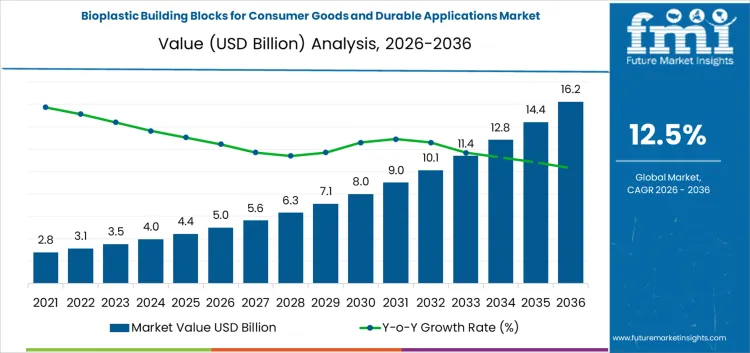
What is the Growth Forecast for the Bioplastic Building Blocks for Consumer Goods and Durable Applications Market through 2036?
The market growth curve shape analysis for the bioplastic building blocks for consumer goods and durable applications market reveals an accelerating growth phase followed by a more stable, mature growth trajectory. From 2026 to 2031, the market will grow from USD 5 billion to USD 10 billion, representing significant acceleration. This growth will be driven by rising consumer demand for sustainable alternatives to traditional plastics, as well as regulatory pressures to reduce plastic waste and increase the use of renewable materials in manufacturing. The early years will see a surge in adoption as more industries and consumers shift towards bioplastics, supported by technological advancements that improve performance and reduce costs.
From 2031 to 2036, the growth curve will become more stable, with the market increasing from USD 10 billion to USD 16.2 billion. This period will reflect the market’s maturation as bioplastic building blocks become a standard in consumer goods and durable applications. While the rate of growth will moderate, the market will continue to benefit from ongoing innovations, economies of scale, and broader industry acceptance. The steady increase in market value during this phase highlights the transition from rapid adoption to a more predictable, sustained growth pattern, driven by the continued demand for eco-friendly solutions across industries.
Bioplastic Building Blocks for Consumer Goods and Durable Applications Market Key Takeaways
| Metric | Value |
|---|---|
| Industry Sales Value (2026) | USD 5 billion |
| Industry Forecast Value (2036) | USD 16.2 billion |
| Industry Forecast CAGR (2026-2036) | 12.5% |
What Is Driving the Demand for Bioplastic Building Blocks for Consumer Goods and Durable Applications?
Historical demand for bioplastic building blocks has been shaped by the development and uptake of bio-based polymers that offer alternatives to fossil-derived plastics. Conventional plastics such as polyethylene, polypropylene, and polyester have historically dominated packaging, textiles, consumer electronics, and durable goods owing to established performance and production infrastructure. As environmental awareness grew over plastic pollution and carbon emissions, research and applications expanded for bioplastics derived from renewable feedstocks such as plant sugars, starches, and other biomass. Bioplastic polymers including polylactic acid (PLA), polyhydroxyalkanoates (PHA), and bio-based polyethylene terephthalate (bio-PET) emerged as materials that can be both bio-based and biodegradable or drop-in equivalents to traditional plastics. These materials began to find early adoption in packaging and single-use items, driven by efforts to lower life-cycle environmental impact and align with circular economy principles. The broader bioplastics field has tracked increases in production capacity and material diversity for applications beyond packaging, signalling interest in building blocks suitable for more demanding products.
Future demand for bioplastic building blocks for consumer goods and durable applications is expected to grow as sustainability mandates, performance enhancements, and market acceptance shape material choices. Consumer goods markets are under increasing pressure from regulatory frameworks and corporate commitments that target reduction in fossil-based plastics, supported by rising consumer preference for eco-friendly products. Bioplastic building blocks can be engineered into polymers that meet mechanical and thermal property requirements for durable applications, including consumer electronics housings, automotive parts, and furniture, where performance approaches or matches conventional materials. Market forecasts indicate robust expansion of bioplastic production capacity across a range of bio-based polymers, with segments such as PHA and PLA showing above-average growth in capacity through the late 2020s, reflecting broader industrial interest in renewable carbon materials. Growth factors include technological advances that improve properties and lower costs of bio-based monomers, corporate and regulatory drivers for reduced carbon footprint materials, and expanded feedstock availability. Challenges include ensuring performance parity with fossil-based counterparts and scaling production infrastructure to meet demand from durable goods sectors, yet ongoing research and policy support are expected to influence adoption.
What are the Leading Segments in the Global Bioplastic Building Blocks for Consumer Goods and Durable Applications Market?
The global bioplastic building blocks for consumer goods and durable applications market is segmented by building block type and end-use sector. Among building block types, PLA & lactic acid derivatives lead the market, capturing 32% of the share, followed by bio-PET & bio-polyester precursors, PHA & specialty biopolymers, bio-PA & bio-polyamide intermediates, and other renewable monomers. PLA and lactic acid derivatives dominate due to their versatility and established commercial presence in producing bioplastics for various durable applications. On the end-use sector side, consumer goods & electronics dominate the market, holding 38% of the share, followed by automotive & transportation components, durable textiles & fibers, housewares & appliances, and other durable applications. The consumer goods & electronics sector leads due to the increasing demand for eco-friendly materials in the production of durable consumer goods.
What Drives the Growth of PLA & Lactic Acid Derivatives in the Bioplastic Building Blocks for Consumer Goods and Durable Applications Market?
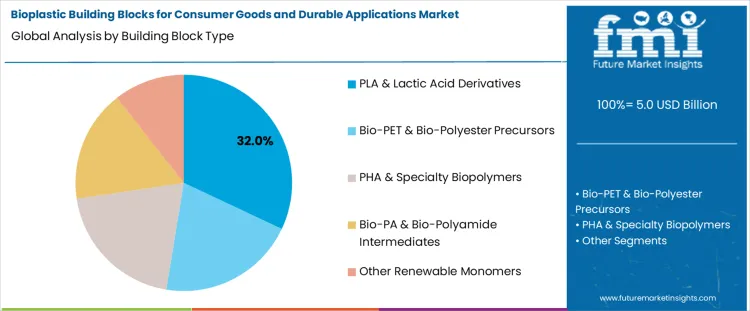
PLA & lactic acid derivatives are the leading building block type in the bioplastic building blocks for consumer goods and durable applications market, holding 32% of the share. This growth is primarily driven by the widespread use of PLA in producing bioplastics for various consumer goods applications, such as electronics, packaging, and household items. PLA is favored for its biodegradability, renewable sourcing from plant-based feedstocks like corn or sugarcane, and its ability to offer similar performance to conventional plastics. The increasing demand for sustainable alternatives to petroleum-based plastics is accelerating the adoption of PLA and lactic acid derivatives, especially in industries where environmental impact is a growing concern. Additionally, PLA's versatility in manufacturing a wide range of durable goods, from electronics casings to furniture components, makes it an ideal choice for industries looking to improve their sustainability profiles. As both consumer preferences and regulatory frameworks shift toward more sustainable materials, PLA and lactic acid derivatives are poised to remain a dominant component in the market for bioplastic building blocks in consumer goods and durable applications.
What is Driving the Demand for Consumer Goods & Electronics in the Bioplastic Building Blocks for Consumer Goods and Durable Applications Market?
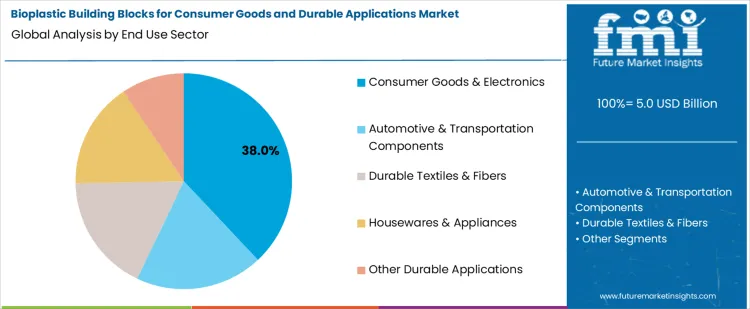
Consumer goods & electronics is the leading end-use sector in the bioplastic building blocks for consumer goods and durable applications market, holding 38% of the share. This demand is driven by the increasing consumer preference for environmentally friendly products and the growing shift among companies to meet sustainability goals. The electronics industry, in particular, is moving toward using bioplastics like PLA in the production of electronic device casings, accessories, and other components. This shift is influenced by both regulatory pressures to reduce the environmental footprint of consumer products and the rise in consumer awareness about the need for sustainable alternatives to conventional plastics. Bioplastics made from renewable feedstocks offer a viable solution to reduce plastic waste and carbon emissions, which is increasingly important in consumer goods manufacturing. As companies in the electronics sector seek to improve the sustainability of their products, the demand for bioplastics, especially those derived from PLA, will continue to rise. The growing emphasis on reducing the environmental impact of consumer goods and electronics will keep the sector a dominant force in the bioplastic building blocks market.
What are the Key Dynamics in the Bioplastic Building Blocks for Consumer Goods and Durable Applications Market?
The bioplastic building blocks for consumer goods and durable applications market involves renewable monomers and intermediates used to produce polymers for products such as electronics casings, automotive parts, and household goods. These building blocks are evaluated on performance criteria including strength, thermal stability, and processing compatibility with existing moulding and extrusion systems. Regulatory pressures to reduce reliance on fossil feedstocks and lower material carbon intensity influence industrial adoption. Supply chains for biomass feedstock, fermentation or catalytic conversion technology, and polymer manufacturers shape how building blocks are commercialised. End users balance sustainability goals with cost, performance, and lifecycle durability when selecting bio-based inputs.
What are the Main Drivers Supporting Growth in This Market?
Growth in this market is supported by policy frameworks that promote renewable content and reduce greenhouse gas emissions in manufacturing. Manufacturers of consumer goods and durable products are seeking alternatives to petrochemical-derived polymers to meet environmental criteria and corporate sustainability commitments. Advances in biotechnology, bioprocess engineering, and catalytic conversion improve yields and reduce production cost of bio-based building blocks. Increasing consumer demand for products with verified renewable material content reinforces interest in bioplastic solutions that can deliver mechanical performance comparable to conventional materials. Industrial partnerships and investment in bio-based material platforms further support market expansion.
What Restraints Are Limiting Market Expansion?
High production costs relative to conventional petrochemical building blocks remain a restraint for broader adoption of bioplastic intermediates. Variability in biomass feedstock quality and seasonal availability can affect cost predictability and supply chain stability. Technical challenges in scaling fermentation and chemical conversion processes to meet large-volume industrial demand can slow commercialisation. Integration of new bio-based precursors into existing polymerisation and manufacturing lines may require adjustments to processing conditions, adding complexity for producers. Divergent regional standards for bio-based content and product certification add compliance complexity for global suppliers and end users.
What Emerging Trends Are Shaping the Future of This Market?
Emerging trends include optimisation of metabolic pathways and strain engineering to increase production yields of key bio-based monomers and intermediates. Hybrid material strategies that combine bio-based building blocks with recyclable or recycled content are gaining traction to enhance circularity. Digital tools for lifecycle assessment and material performance modelling are being used to quantify environmental benefits and support procurement decisions. Collaboration between biotechnology developers, polymer producers, and brand owners is increasing to align material specifications with performance requirements for durable applications. Interest in localised feedstock supply networks and biorefinery concepts is influencing how building block production is scaled and integrated with broader manufacturing ecosystems.
What is the Country-Wise Analysis of the Bioplastic Building Blocks for Consumer Goods and Durable Applications Market?
The bioplastic building blocks for consumer goods and durable applications market is expanding due to the increasing demand for sustainable materials in various industries, including packaging, automotive, electronics, and consumer goods. These bioplastic building blocks are derived from renewable resources, offering an eco-friendly alternative to traditional petroleum-based plastics. Developed markets like the USA, Germany, and Japan are leading the adoption of bioplastics due to their focus on environmental sustainability and regulatory measures aimed at reducing plastic waste. Emerging markets like China and South Korea are also experiencing strong growth, driven by government incentives, growing consumer awareness of environmental issues, and the need for sustainable solutions in manufacturing. As industries worldwide move towards circular economies and reduce their reliance on fossil fuels, the market for bioplastic building blocks in consumer goods and durable applications is expected to grow significantly.
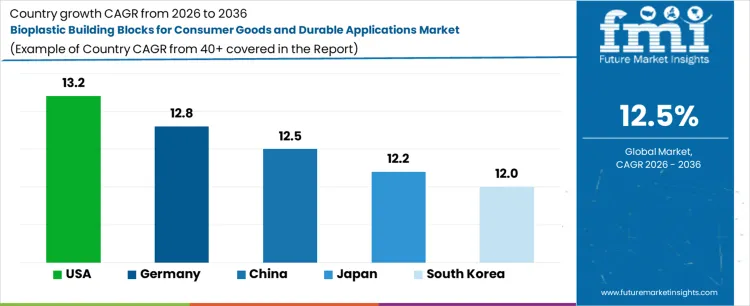
| Country | CAGR (2026 to 2036) |
|---|---|
| USA | 13.2% |
| Germany | 12.8% |
| China | 12.5% |
| Japan | 12.2% |
| South Korea | 12% |
What is the Growth Outlook for the Bioplastic Building Blocks for Consumer Goods and Durable Applications Market in the USA?
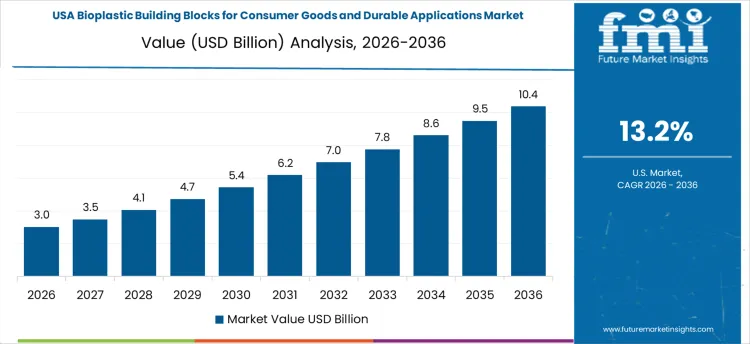
The bioplastic building blocks for consumer goods and durable applications market in the USA is projected to grow steadily, with a projected CAGR of 13.2% from 2026 to 2036. As a leader in innovation and sustainability, the USA is increasingly adopting bioplastics in various industries, particularly in packaging, automotive, and consumer goods. The U.S. government’s focus on reducing plastic pollution and encouraging the use of renewable materials is driving the demand for bioplastic building blocks. Consumers in the USA are becoming more environmentally conscious, which is further fueling the adoption of sustainable products. As industries such as food and beverage, electronics, and automotive continue to embrace eco-friendly materials, the market for bioplastic building blocks in the USA is expected to grow steadily in the coming years.
What is the Market Outlook for the Bioplastic Building Blocks for Consumer Goods and Durable Applications Market in Germany?
Germany is expected to see steady growth in the bioplastic building blocks for consumer goods and durable applications market, with a projected CAGR of 12.8% from 2026 to 2036. Germany is known for its commitment to sustainability and environmental innovation. The demand for bioplastics in consumer goods and durable applications is rising as businesses and consumers alike seek eco-friendly alternatives to traditional plastics. The German government’s regulatory framework, which promotes sustainability and circular economy practices, is driving the adoption of bioplastics. Industries such as packaging, automotive, and electronics are increasingly turning to bioplastic building blocks as a way to reduce their environmental impact and align with sustainability goals. The market for bioplastics in Germany is expected to continue to grow steadily due to these factors.
What is the Growth Forecast for the Bioplastic Building Blocks for Consumer Goods and Durable Applications Market in China?
China is projected to experience strong growth in the bioplastic building blocks for consumer goods and durable applications market, with a projected CAGR of 12.5% from 2026 to 2036. As the world’s largest producer and consumer of plastics, China is increasingly focused on reducing plastic pollution and improving the sustainability of its manufacturing sector. The demand for bioplastics is growing as the Chinese government promotes eco-friendly alternatives to traditional plastics and enforces regulations to reduce plastic waste. Bioplastics, derived from renewable resources, offer a viable solution for reducing the environmental impact of packaging, automotive, and electronics industries in China. With government support for green technologies and growing consumer demand for sustainable products, the market for bioplastic building blocks is expected to grow rapidly in China.
What is the Market Outlook for the Bioplastic Building Blocks for Consumer Goods and Durable Applications Market in Japan?
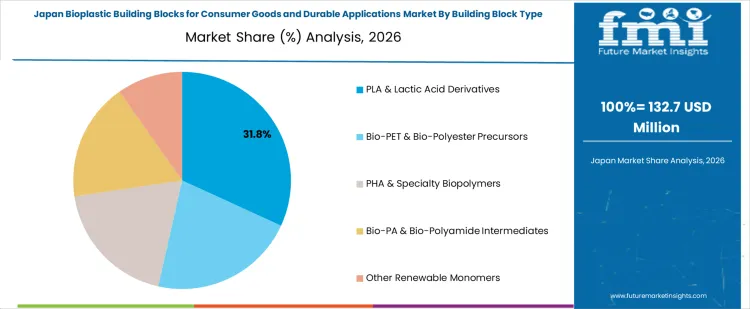
Japan is expected to see steady growth in the bioplastic building blocks for consumer goods and durable applications market, with a projected CAGR of 12.2% from 2026 to 2036. Japan has long been a leader in environmental sustainability and innovation, and the demand for bioplastics is rising as the country seeks alternatives to traditional petroleum-based plastics. The Japanese government’s policies supporting sustainable technologies and reducing plastic waste are driving the adoption of bioplastic building blocks across various industries. With growing consumer awareness of environmental issues, the demand for bioplastics in packaging, automotive, and consumer goods is expected to increase. As Japan continues to lead in sustainable manufacturing, the market for bioplastic building blocks is expected to grow steadily in the coming years.
What is the Growth Forecast for the Bioplastic Building Blocks for Consumer Goods and Durable Applications Market in South Korea?
South Korea is projected to experience steady growth in the bioplastic building blocks for consumer goods and durable applications market, with a projected CAGR of 12% from 2026 to 2036. South Korea’s commitment to sustainability and green technologies is driving the adoption of bioplastics, particularly in industries like packaging, automotive, and electronics. The demand for eco-friendly packaging and durable goods made from renewable materials is growing as consumers and businesses increasingly prioritize sustainability. South Korea’s government has introduced regulations that encourage the use of biodegradable and compostable materials, which is further driving the adoption of bioplastic building blocks. As South Korea continues to invest in sustainable production and reduce its plastic waste, the market for bioplastics is expected to grow steadily.
What is the Competitive Landscape for the Bioplastic Building Blocks for Consumer Goods and Durable Applications Market?
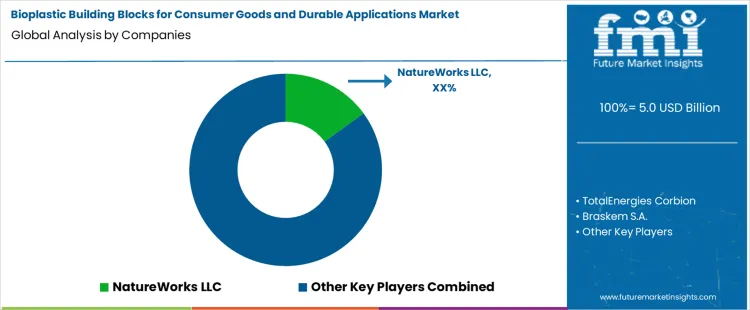
The bioplastic building blocks for consumer goods and durable applications market is growing as industries seek sustainable alternatives to traditional plastic materials, driven by environmental concerns and the need for circular economy solutions. NatureWorks LLC leads the market with its innovative bioplastic building blocks, offering high-performance, eco-friendly solutions for the production of consumer goods and durable products. Their commitment to sustainability, product innovation, and the use of renewable resources has positioned them as a dominant player in this market. TotalEnergies Corbion, Braskem S.A., and DuPont de Nemours, Inc. are significant competitors, each offering specialized bioplastic building blocks designed for durable applications. TotalEnergies Corbion focuses on creating bio-based polymers from renewable feedstocks, while Braskem S.A. provides high-quality bioplastics, including those made from sugarcane-based feedstocks. DuPont brings decades of expertise in polymer science, developing innovative solutions for durable bioplastic applications.
BASF SE, Corbion N.V., and Mitsubishi Chemical Corporation further contribute to the competitive landscape by offering bioplastic building blocks for consumer goods and durable applications. BASF SE focuses on developing sustainable solutions that meet the growing demand for eco-friendly consumer products, while Corbion N.V. delivers fermentation-derived bioplastics for a range of applications. Mitsubishi Chemical Corporation emphasizes the development of high-performance bioplastics derived from renewable resources for consumer goods. Arkema S.A., Genomatica, Inc., and Danimer Scientific also play a key role in this market by offering advanced bioplastics made from renewable feedstocks. These companies compete by focusing on product innovation, sustainability, and their ability to meet the growing demand for bioplastics in durable consumer goods applications. As the demand for sustainable and recyclable materials continues to rise, the market for bioplastic building blocks is expected to expand, driving further competition and innovation in the sector.
Key Players of the Bioplastic Building Blocks for Consumer Goods and Durable Applications Market
- NatureWorks LLC
- TotalEnergies Corbion
- Braskem S.A.
- DuPont de Nemours, Inc.
- BASF SE
- Corbion N.V.
- Mitsubishi Chemical Corporation
- Arkema S.A.
- Genomatica, Inc.
- Danimer Scientific
Scope of the Report
| Items | Values |
|---|---|
| Quantitative Units (2026) | USD Billion |
| Building Block Type | PLA & Lactic Acid Derivatives, Bio PET & Bio Polyester Precursors, PHA & Specialty Biopolymers, Bio PA & Bio Polyamide Intermediates, Other Renewable Monomers |
| End Use Sector | Consumer Goods & Electronics, Automotive & Transportation Components, Durable Textiles & Fibers, Housewares & Appliances, Other Durable Applications |
| Companies | NatureWorks LLC, TotalEnergies Corbion, Braskem S.A., DuPont de Nemours, Inc., BASF SE, Corbion N.V., Mitsubishi Chemical Corporation, Arkema S.A., Genomatica, Inc., Danimer Scientific |
| Regions Covered | North America, Latin America, Western Europe, Eastern Europe, South Asia & Pacific, East Asia, Middle East & Africa |
| Countries Covered | United States, Canada, Mexico, Brazil, Argentina, Germany, France, United Kingdom, Italy, Spain, Netherlands, China, India, Japan, South Korea, ANZ, GCC Countries, South Africa |
| Additional Attributes | Dollar by sales by building block type, end use sector, and region. Includes analysis of market trends in bioplastic building blocks for consumer goods and durable applications, performance in electronics, automotive, textile, and household products, cost structures and feedstock dynamics, regulatory and sustainability considerations influencing renewable monomer adoption, innovations in biobased intermediate technologies, competitive positioning and market share of key companies, and evaluation of impact on product performance, lifecycle environmental benefits, and adoption across durable goods value chains. |
Bioplastic Building Blocks for Consumer Goods and Durable Applications Market Segmentation
Building Block Type
- PLA & Lactic Acid Derivatives
- Bio-PET & Bio-Polyester Precursors
- PHA & Specialty Biopolymers
- Bio-PA & Bio-Polyamide Intermediates
- Other Renewable Monomers
End Use Sector
- Consumer Goods & Electronics
- Automotive & Transportation Components
- Durable Textiles & Fibers
- Housewares & Appliances
- Other Durable Applications
Region
- Asia Pacific
- China
- Japan
- South Korea
- India
- Australia & New Zealand
- ASEAN
- Rest of Asia Pacific
- Europe
- Germany
- United Kingdom
- France
- Italy
- Spain
- Nordic
- BENELUX
- Rest of Europe
- North America
- United States
- Canada
- Mexico
- Latin America
- Brazil
- Chile
- Rest of Latin America
- Middle East & Africa
- Kingdom of Saudi Arabia
- Other GCC Countries
- Turkey
- South Africa
- Other African Union
- Rest of Middle East & Africa
Frequently Asked Questions
How big is the bioplastic building blocks for consumer goods and durable applications market in 2026?
The global bioplastic building blocks for consumer goods and durable applications market is estimated to be valued at USD 5.0 billion in 2026.
What will be the size of bioplastic building blocks for consumer goods and durable applications market in 2036?
The market size for the bioplastic building blocks for consumer goods and durable applications market is projected to reach USD 16.2 billion by 2036.
How much will be the bioplastic building blocks for consumer goods and durable applications market growth between 2026 and 2036?
The bioplastic building blocks for consumer goods and durable applications market is expected to grow at a 12.5% CAGR between 2026 and 2036.
What are the key building block types in the bioplastic building blocks for consumer goods and durable applications market?
The key building block types in bioplastic building blocks for consumer goods and durable applications market are PLA & lactic acid derivatives, bio‑PET & bio‑polyester precursors, PHA & specialty biopolymers, bio‑PA & bio‑polyamide intermediates and other renewable monomers.
Which end use sector segment will contribute significant share in the bioplastic building blocks for consumer goods and durable applications market in 2026?
In terms of end use sector, consumer goods & electronics segment to command 38.0% share in the bioplastic building blocks for consumer goods and durable applications market in 2026.
Preview the report firsthand - request a free sample
Get SampleGet the brochure for pricing and purchase details.
Get PDFTable of Content
- Executive Summary
- Global Market Outlook
- Demand-side Trends
- Supply-side Trends
- Technology Roadmap Analysis
- Analysis and Recommendations
- Market Overview
- Market Coverage / Taxonomy
- Market Definition / Scope / Limitations
- Market Background
- Market Dynamics
- Drivers
- Restraints
- Opportunity
- Trends
- Scenario Forecast
- Demand in Optimistic Scenario
- Demand in Likely Scenario
- Demand in Conservative Scenario
- Opportunity Map Analysis
- Product Life Cycle Analysis
- Supply Chain Analysis
- Investment Feasibility Matrix
- Value Chain Analysis
- PESTLE and Porter’s Analysis
- Regulatory Landscape
- Regional Parent Market Outlook
- Production and Consumption Statistics
- Import and Export Statistics
- Market Dynamics
- Global Market Analysis 2021 to 2025 and Forecast, 2026 to 2036
- Historical Market Size Value (USD Million) Analysis, 2021 to 2025
- Current and Future Market Size Value (USD Million) Projections, 2026 to 2036
- Y-o-Y Growth Trend Analysis
- Absolute $ Opportunity Analysis
- Global Market Pricing Analysis 2021 to 2025 and Forecast 2026 to 2036
- Global Market Analysis 2021 to 2025 and Forecast 2026 to 2036, By Building Block Type
- Introduction / Key Findings
- Historical Market Size Value (USD Million) Analysis By Building Block Type , 2021 to 2025
- Current and Future Market Size Value (USD Million) Analysis and Forecast By Building Block Type , 2026 to 2036
- PLA & Lactic Acid Derivatives
- Bio‑PET & Bio‑Polyester Precursors
- PHA & Specialty Biopolymers
- Bio‑PA & Bio‑Polyamide Intermediates
- Other Renewable Monomers
- PLA & Lactic Acid Derivatives
- Y-o-Y Growth Trend Analysis By Building Block Type , 2021 to 2025
- Absolute $ Opportunity Analysis By Building Block Type , 2026 to 2036
- Global Market Analysis 2021 to 2025 and Forecast 2026 to 2036, By End Use Sector
- Introduction / Key Findings
- Historical Market Size Value (USD Million) Analysis By End Use Sector, 2021 to 2025
- Current and Future Market Size Value (USD Million) Analysis and Forecast By End Use Sector, 2026 to 2036
- Consumer Goods & Electronics
- Automotive & Transportation Components
- Durable Textiles & Fibers
- Housewares & Appliances
- Other Durable Applications
- Consumer Goods & Electronics
- Y-o-Y Growth Trend Analysis By End Use Sector, 2021 to 2025
- Absolute $ Opportunity Analysis By End Use Sector, 2026 to 2036
- Global Market Analysis 2021 to 2025 and Forecast 2026 to 2036, By Region
- Introduction
- Historical Market Size Value (USD Million) Analysis By Region, 2021 to 2025
- Current Market Size Value (USD Million) Analysis and Forecast By Region, 2026 to 2036
- North America
- Latin America
- Western Europe
- Eastern Europe
- East Asia
- South Asia and Pacific
- Middle East & Africa
- Market Attractiveness Analysis By Region
- North America Market Analysis 2021 to 2025 and Forecast 2026 to 2036, By Country
- Historical Market Size Value (USD Million) Trend Analysis By Market Taxonomy, 2021 to 2025
- Market Size Value (USD Million) Forecast By Market Taxonomy, 2026 to 2036
- By Country
- USA
- Canada
- Mexico
- By Building Block Type
- By End Use Sector
- By Country
- Market Attractiveness Analysis
- By Country
- By Building Block Type
- By End Use Sector
- Key Takeaways
- Latin America Market Analysis 2021 to 2025 and Forecast 2026 to 2036, By Country
- Historical Market Size Value (USD Million) Trend Analysis By Market Taxonomy, 2021 to 2025
- Market Size Value (USD Million) Forecast By Market Taxonomy, 2026 to 2036
- By Country
- Brazil
- Chile
- Rest of Latin America
- By Building Block Type
- By End Use Sector
- By Country
- Market Attractiveness Analysis
- By Country
- By Building Block Type
- By End Use Sector
- Key Takeaways
- Western Europe Market Analysis 2021 to 2025 and Forecast 2026 to 2036, By Country
- Historical Market Size Value (USD Million) Trend Analysis By Market Taxonomy, 2021 to 2025
- Market Size Value (USD Million) Forecast By Market Taxonomy, 2026 to 2036
- By Country
- Germany
- UK
- Italy
- Spain
- France
- Nordic
- BENELUX
- Rest of Western Europe
- By Building Block Type
- By End Use Sector
- By Country
- Market Attractiveness Analysis
- By Country
- By Building Block Type
- By End Use Sector
- Key Takeaways
- Eastern Europe Market Analysis 2021 to 2025 and Forecast 2026 to 2036, By Country
- Historical Market Size Value (USD Million) Trend Analysis By Market Taxonomy, 2021 to 2025
- Market Size Value (USD Million) Forecast By Market Taxonomy, 2026 to 2036
- By Country
- Russia
- Poland
- Hungary
- Balkan & Baltic
- Rest of Eastern Europe
- By Building Block Type
- By End Use Sector
- By Country
- Market Attractiveness Analysis
- By Country
- By Building Block Type
- By End Use Sector
- Key Takeaways
- East Asia Market Analysis 2021 to 2025 and Forecast 2026 to 2036, By Country
- Historical Market Size Value (USD Million) Trend Analysis By Market Taxonomy, 2021 to 2025
- Market Size Value (USD Million) Forecast By Market Taxonomy, 2026 to 2036
- By Country
- China
- Japan
- South Korea
- By Building Block Type
- By End Use Sector
- By Country
- Market Attractiveness Analysis
- By Country
- By Building Block Type
- By End Use Sector
- Key Takeaways
- South Asia and Pacific Market Analysis 2021 to 2025 and Forecast 2026 to 2036, By Country
- Historical Market Size Value (USD Million) Trend Analysis By Market Taxonomy, 2021 to 2025
- Market Size Value (USD Million) Forecast By Market Taxonomy, 2026 to 2036
- By Country
- India
- ASEAN
- Australia & New Zealand
- Rest of South Asia and Pacific
- By Building Block Type
- By End Use Sector
- By Country
- Market Attractiveness Analysis
- By Country
- By Building Block Type
- By End Use Sector
- Key Takeaways
- Middle East & Africa Market Analysis 2021 to 2025 and Forecast 2026 to 2036, By Country
- Historical Market Size Value (USD Million) Trend Analysis By Market Taxonomy, 2021 to 2025
- Market Size Value (USD Million) Forecast By Market Taxonomy, 2026 to 2036
- By Country
- Kingdom of Saudi Arabia
- Other GCC Countries
- Turkiye
- South Africa
- Other African Union
- Rest of Middle East & Africa
- By Building Block Type
- By End Use Sector
- By Country
- Market Attractiveness Analysis
- By Country
- By Building Block Type
- By End Use Sector
- Key Takeaways
- Key Countries Market Analysis
- USA
- Pricing Analysis
- Market Share Analysis, 2025
- By Building Block Type
- By End Use Sector
- Canada
- Pricing Analysis
- Market Share Analysis, 2025
- By Building Block Type
- By End Use Sector
- Mexico
- Pricing Analysis
- Market Share Analysis, 2025
- By Building Block Type
- By End Use Sector
- Brazil
- Pricing Analysis
- Market Share Analysis, 2025
- By Building Block Type
- By End Use Sector
- Chile
- Pricing Analysis
- Market Share Analysis, 2025
- By Building Block Type
- By End Use Sector
- Germany
- Pricing Analysis
- Market Share Analysis, 2025
- By Building Block Type
- By End Use Sector
- UK
- Pricing Analysis
- Market Share Analysis, 2025
- By Building Block Type
- By End Use Sector
- Italy
- Pricing Analysis
- Market Share Analysis, 2025
- By Building Block Type
- By End Use Sector
- Spain
- Pricing Analysis
- Market Share Analysis, 2025
- By Building Block Type
- By End Use Sector
- France
- Pricing Analysis
- Market Share Analysis, 2025
- By Building Block Type
- By End Use Sector
- India
- Pricing Analysis
- Market Share Analysis, 2025
- By Building Block Type
- By End Use Sector
- ASEAN
- Pricing Analysis
- Market Share Analysis, 2025
- By Building Block Type
- By End Use Sector
- Australia & New Zealand
- Pricing Analysis
- Market Share Analysis, 2025
- By Building Block Type
- By End Use Sector
- China
- Pricing Analysis
- Market Share Analysis, 2025
- By Building Block Type
- By End Use Sector
- Japan
- Pricing Analysis
- Market Share Analysis, 2025
- By Building Block Type
- By End Use Sector
- South Korea
- Pricing Analysis
- Market Share Analysis, 2025
- By Building Block Type
- By End Use Sector
- Russia
- Pricing Analysis
- Market Share Analysis, 2025
- By Building Block Type
- By End Use Sector
- Poland
- Pricing Analysis
- Market Share Analysis, 2025
- By Building Block Type
- By End Use Sector
- Hungary
- Pricing Analysis
- Market Share Analysis, 2025
- By Building Block Type
- By End Use Sector
- Kingdom of Saudi Arabia
- Pricing Analysis
- Market Share Analysis, 2025
- By Building Block Type
- By End Use Sector
- Turkiye
- Pricing Analysis
- Market Share Analysis, 2025
- By Building Block Type
- By End Use Sector
- South Africa
- Pricing Analysis
- Market Share Analysis, 2025
- By Building Block Type
- By End Use Sector
- USA
- Market Structure Analysis
- Competition Dashboard
- Competition Benchmarking
- Market Share Analysis of Top Players
- By Regional
- By Building Block Type
- By End Use Sector
- Competition Analysis
- Competition Deep Dive
- NatureWorks LLC
- Overview
- Product Portfolio
- Profitability by Market Segments (Product/Age /Sales Channel/Region)
- Sales Footprint
- Strategy Overview
- Marketing Strategy
- Product Strategy
- Channel Strategy
- TotalEnergies Corbion
- Braskem S.A.
- DuPont de Nemours, Inc.
- BASF SE
- Corbion N.V.
- Mitsubishi Chemical Corporation
- Arkema S.A.
- Genomatica, Inc.
- Danimer Scientific
- NatureWorks LLC
- Competition Deep Dive
- Assumptions & Acronyms Used
- Research Methodology


