

- Industry Size (2026)
- USD 352.8 Mn
- Forecast (2036)
- USD 931.8 Mn
- CAGR (2026 to 2036)
- 10.2%
Biosurfactants for Oil-Contaminated Soil Cleanup Market Forecast and Outlook 2026 to 2036
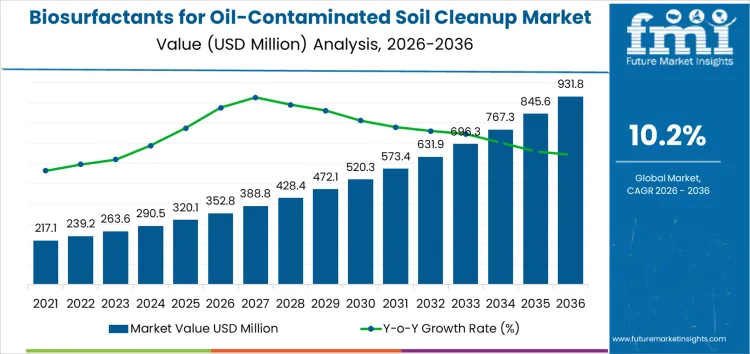
The biosurfactants for oil-contaminated soil cleanup market is projected to grow from USD 352.8 million in 2026 to USD 931.8 million by 2036, reflecting a compound annual growth rate (CAGR) of 10.2%. This industry is driven not by fluctuating demand volumes, but by the consistent, long-term need for effective soil remediation solutions. Buyers tend to show high levels of commitment, driven by the regulatory requirements and environmental responsibility that necessitate repeated application of biosurfactants. Once a vendor’s product proves its efficiency in addressing oil contamination, long-term relationships are typically formed.
Stability in demand arises from the ongoing nature of environmental monitoring and maintenance, with many buyers opting for reliable, consistent solutions rather than experimenting with new products. As the sector matures, buyer loyalty strengthens, reducing churn and encouraging repeat usage. Vendors able to demonstrate proven results and regulatory compliance are often retained, highlighting the importance of trust and sustained effectiveness in the market.
Quick Stats of the Biosurfactants for Oil-Contaminated Soil Cleanup Market
- Biosurfactants for Oil-Contaminated Soil Cleanup Market Value (2026): USD 352.8 million
- Biosurfactants for Oil-Contaminated Soil Cleanup Market Forecast Value (2036): USD 931.8 million
- Biosurfactants for Oil-Contaminated Soil Cleanup Market Global Forecast CAGR (2026 to 2036): 10.2%
- Biosurfactants for Oil-Contaminated Soil Cleanup Market Leading Segment: Application Type (Oil Spill Soil Remediation) 36%
- Key Growth Regions in Biosurfactants for Oil-Contaminated Soil Cleanup Market: India
- Top Players in Biosurfactants for Oil-Contaminated Soil Cleanup Market: Evonik (Biotech), Solvay, Kao Chemicals, Stepan Company, REGENESIS
What is the Growth Forecast for the Biosurfactants for Oil-Contaminated Soil Cleanup Market through 2036?
The 10-year growth comparison for the biosurfactants for oil-contaminated soil cleanup market reveals consistent and strong expansion over the forecast period. From 2026 to 2031, the market will increase from USD 352.8 million to USD 578.3 million, reflecting a steady adoption of biosurfactants. This growth is driven by the rising awareness of environmental issues and increasing investments in bioremediation technologies.
From 2031 to 2036, the market will continue to expand, reaching USD 931.8 million by 2036. The growth rate will be stronger in the latter half of the forecast period, reflecting the growing adoption of biosurfactants in oil spill and soil contamination management. The market will experience a significant increase in adoption during this phase, driven by innovations in biosurfactant production, improvements in performance, and further regulatory support for sustainable soil cleanup methods. The 10-year growth comparison shows a steady acceleration in market adoption, indicating that biosurfactants will become an increasingly important tool in environmental cleanup.
Biosurfactants for Oil-Contaminated Soil Cleanup Market Key Takeaways
| Metric | Value |
|---|---|
| Industry Sales Value (2026) | USD 352.8 million |
| Industry Forecast Value (2036) | USD 931.8 million |
| Industry Forecast CAGR (2026 to 2036) | 10.2% |
What Is Driving the Demand for the Biosurfactants for Oil-Contaminated Soil Cleanup Market Globally?
The global demand for biosurfactants in oil contaminated soil cleanup is driven by increasing regulatory emphasis on sustainable remediation and growing concern about the environmental and health impacts of petroleum pollution. Oil spills and leaks from drilling, storage, pipelines, and industrial operations can leave soils saturated with hydrocarbons that are difficult to remove using conventional physical or chemical methods. Biosurfactants-surface active compounds produced by microorganisms-enhance the mobilisation and bioavailability of hydrophobic pollutants, enabling microbes to degrade contaminants more effectively.
Unlike many synthetic surfactants, biosurfactants are biodegradable, less toxic, and effective across a range of temperatures and pH conditions, making them attractive for use in sensitive ecosystems. Environmental agencies and site owners increasingly prefer green remediation techniques that reduce long term ecological risk and support compliance with soil and groundwater protection standards in regions such as North America, Europe, and Asia Pacific. Public and corporate sustainability commitments also reinforce adoption of remediation technologies with lower environmental footprints.
Future demand for biosurfactants for oil contaminated soil cleanup is expected to grow as formulation science advances and the need for cost effective, eco friendly remediation solutions increases. Improvements in microbial production processes and strain engineering are enhancing yields, reducing costs, and expanding the range of effective biosurfactants. Integration of biosurfactants with biostimulation, bioaugmentation, and in situ remediation strategies will broaden their applicability across diverse contaminated sites, from industrial brownfields to coastal spill zones.
Regulatory frameworks that prioritise green remediation and incorporate lifecycle impact assessments may accelerate adoption by aligning cleanup standards with environmental performance metrics. Growth in industrial activity and aging infrastructure in emerging markets will also sustain demand for efficient cleanup solutions. As environmental liability concerns and sustainability targets rise, biosurfactants that balance effectiveness with ecological safety are poised for steady expansion across global remediation applications.
What are the Leading Segments in the Global Biosurfactants for Oil-Contaminated Soil Cleanup Market?
The global biosurfactants for oil-contaminated soil cleanup market is segmented by biosurfactant type and application type. Among biosurfactant types, rhamnolipids lead the market, capturing 30% of the share, followed by sophorolipids, lipopeptides (surfactin, iturin, etc.), glycolipids (mannosylerythritol, trehalolipids), and other bio-based surfactants.
Rhamnolipids are preferred for their high efficiency in emulsifying hydrocarbons, making them ideal for soil cleanup applications. On the application type side, oil spill soil remediation dominates the market, holding 36% of the share, followed by industrial hydrocarbon contaminated sites, refinery & petrochemical waste sites, oil storage & pipeline leak sites, and marine shoreline & coastal soil cleanup. Oil spill soil remediation is a key focus due to the large-scale impact of oil spills on the environment and the growing demand for effective, sustainable cleanup solutions.
What Drives the Growth of Rhamnolipids in the Biosurfactants for Oil-Contaminated Soil Cleanup Market?
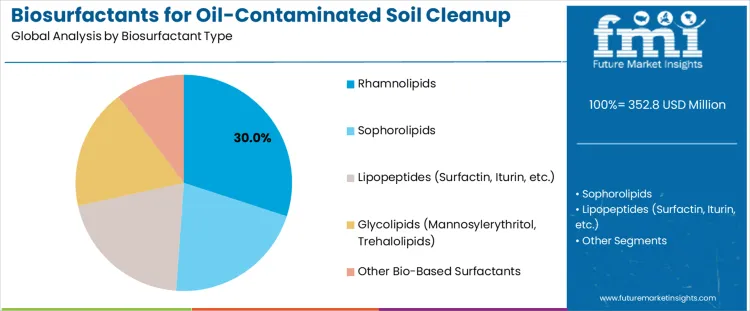
Rhamnolipids are the leading biosurfactant type in the oil-contaminated soil cleanup market, capturing 30% of the share. These biosurfactants are highly effective in emulsifying and mobilizing hydrophobic pollutants, particularly hydrocarbons, which makes them ideal for the bioremediation of oil-contaminated soils. Rhamnolipids are produced naturally by certain bacteria and are considered environmentally friendly due to their biodegradability and low toxicity. Their ability to break down and solvate complex hydrocarbons, such as those found in oil spills, has made them a preferred choice for oil spill remediation projects. As concerns over environmental pollution and the impact of chemical-based remediation methods grow, rhamnolipids are gaining popularity as a sustainable and efficient solution.
The rising number of oil spill incidents, coupled with stricter environmental regulations, has significantly boosted the demand for biosurfactants like rhamnolipids. Their cost-effectiveness and performance in promoting the degradation of oil make them a dominant player in the market, ensuring their continued growth in the coming years.
What is Driving the Demand for Oil Spill Soil Remediation in the Biosurfactants for Oil-Contaminated Soil Cleanup Market?
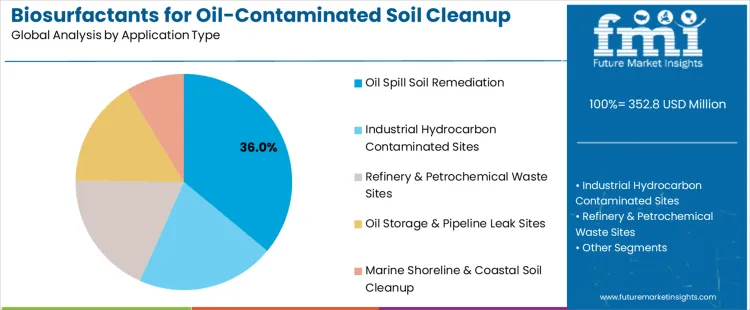
Oil spill soil remediation is the leading application type in the biosurfactants for oil-contaminated soil cleanup market, holding 36% of the share. This high demand is driven by the frequent occurrence of oil spills, which have significant environmental impacts, particularly on soil and water ecosystems. Oil spills, whether they occur on land, in water, or along coastlines, lead to severe contamination of the soil, affecting plant life, wildlife, and human health. Biosurfactants like rhamnolipids, sophorolipids, and other bio-based surfactants are highly effective in emulsifying the oil, breaking it down into smaller, biodegradable molecules that can be naturally degraded by microorganisms.
The increasing emphasis on environmentally friendly and sustainable remediation methods, along with the rising awareness of the dangers posed by oil spills, has driven the adoption of biosurfactants for oil spill cleanup. As oil spills continue to pose a major environmental risk, the demand for efficient and eco-friendly cleanup solutions like biosurfactants is expected to grow, ensuring that oil spill soil remediation remains a dominant application in the market.
What are the Key Dynamics in the Global Biosurfactants for Oil Contaminated Soil Cleanup Market?
The global biosurfactants for oil-contaminated soil cleanup market is growing as remediation professionals and environmental agencies adopt biodegradable, low toxicity surfactants to enhance removal of hydrocarbons and petroleum residues from soils. Biosurfactants support increased contaminant mobilization and uptake by microbes while reducing reliance on harsh chemicals. Demand is driven by expansion of brownfield redevelopment, stricter soil quality regulations, and a focus on sustainable cleanup solutions that minimize secondary environmental impact. Adoption spans industrial sites, pipelines, refineries, and marine shorelines where effective, eco safe remediation is essential.
What are the Key Drivers for the Biosurfactants for Oil-Contaminated Soil Cleanup Market?
Regulatory emphasis on reducing hazardous chemical use and protecting soil and groundwater quality is a major driver. Biosurfactants, produced from microbial or plant sources, offer low toxicity and high biodegradability, aligning with environmental standards and sustainability goals. Growth in petrochemical, transportation and manufacturing sectors increases contaminated site inventories that require safe remediation approaches. Advances in production scalability and formulation technology improve field performance. Rising investment in brownfield and infrastructure development promotes use of green remediation to reduce risk and support reuse of impacted land in urban and rural regions.
What are the Restraints for the Biosurfactants for Oil-Contaminated Soil Cleanup Market?
One restraint is the technical challenge of ensuring consistent efficacy across diverse soil types, contaminant profiles, and environmental conditions. Biosurfactant performance can vary with temperature, pH and indigenous microbial communities, requiring site characterization and optimization before full scale application. Higher production and formulation costs compared with conventional synthetic surfactants can limit adoption in budget sensitive projects. Some stakeholders may hesitate due to limited long term field data for certain biosurfactant systems. Variability in regional certification and acceptance pathways for green remediation technologies adds complexity for multinational deployments.
What are the Key Trends in the Biosurfactants for Oil-Contaminated Soil Cleanup Market?
A key trend is development of tailored biosurfactant blends engineered for specific hydrocarbon classes and soil conditions to improve contaminant desorption and biodegradation rates. Producers are focusing on cost effective fermentation and feedstock strategies to enhance production economics and broaden commercial availability. Integration of biosurfactants with bioaugmentation and nutrient stimulation supports synergistic remediation, enhancing microbial breakdown of oil constituents. Real time monitoring and data analytics help optimize dosing and progress tracking. Collaboration among remediation firms, researchers and regulators accelerates validation and field adoption while supporting sustainable cleanup best practices.
What is the Country-Wise Analysis of the Biosurfactants for Oil-Contaminated Soil Cleanup Market?
The biosurfactants for oil-contaminated soil cleanup market is expected to grow significantly, driven by increasing environmental concerns, the need for sustainable solutions, and the growing adoption of bioremediation technologies in industrial sectors. Biosurfactants, derived from natural sources, are used to break down oils and other hydrophobic contaminants in soil, providing an eco-friendly alternative to traditional chemical cleanup methods. High-growth markets such as India and China are experiencing strong demand due to industrial growth, increasing oil contamination, and rising environmental regulations. Developed markets such as the United States, Canada, and Germany are also witnessing steady growth, supported by stricter environmental regulations, technological advancements, and the increasing need for sustainable soil remediation solutions.
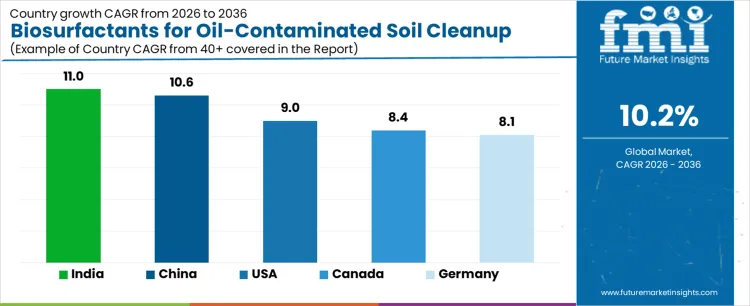
| Country | CAGR (2026 to 2036) |
|---|---|
| India | 11% |
| China | 10.6% |
| USA | 9% |
| Canada | 8.4% |
| Germany | 8.1% |
What is the Growth Outlook for the Biosurfactants for Oil-Contaminated Soil Cleanup Market in India?
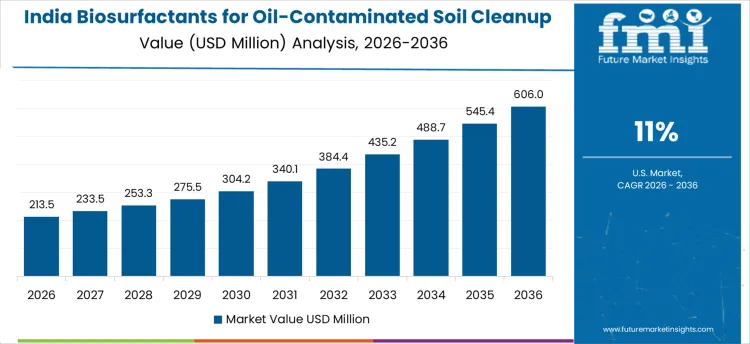
The biosurfactants for oil-contaminated soil cleanup market in India is expected to grow at the highest rate, with a projected CAGR of 11%. India’s expanding industrial sector, particularly in oil and gas, manufacturing, and agriculture, is driving the demand for effective soil cleanup solutions. With growing concerns about soil contamination from oil spills and industrial waste, India is increasingly adopting eco-friendly bioremediation methods, including biosurfactants, to address these challenges. The government’s support for sustainable practices and growing awareness about environmental protection further contribute to market growth. As India continues to industrialize and develop its infrastructure, the need for effective and environmentally safe soil remediation solutions will continue to rise, positioning the biosurfactants market for strong growth.
What is the Market Outlook for the Biosurfactants for Oil-Contaminated Soil Cleanup Market in China?
The biosurfactants for oil-contaminated soil cleanup market in China is projected to grow steadily, with a projected CAGR of 10.6%. China’s industrial growth, combined with rising environmental concerns related to soil and water contamination, is driving the adoption of bioremediation technologies, including biosurfactants. As the country continues to expand its oil and gas, manufacturing, and agricultural industries, there is an increasing need to address oil contamination in soil. China’s government is also implementing stricter environmental regulations to mitigate pollution, which is encouraging industries to adopt more sustainable solutions like biosurfactants. With growing demand for eco-friendly technologies in both industrial and agricultural applications, China’s market for biosurfactants in soil cleanup is expected to experience steady growth.
What is the Growth Forecast for the Biosurfactants for Oil-Contaminated Soil Cleanup Market in the United States?
The biosurfactants for oil-contaminated soil cleanup market in the United States is expected to grow steadily, with a projected CAGR of 9%. The USA market is driven by increasing regulatory pressure on industries to reduce environmental pollution, particularly from oil contamination. The USA Environmental Protection Agency (EPA) and other regulatory bodies are encouraging the adoption of sustainable and eco-friendly soil remediation methods, such as biosurfactants, to treat oil-contaminated sites. The growing demand for environmentally safe alternatives to traditional chemical remediation methods is fueling market growth, particularly in sectors such as oil and gas, agriculture, and manufacturing. Additionally, the focus on cleaner technologies and improved waste management practices will continue to support the market for biosurfactants in the USA
What is the Market Outlook for the Biosurfactants for Oil-Contaminated Soil Cleanup Market in Canada?
The biosurfactants for oil-contaminated soil cleanup market in Canada is projected to grow steadily, with a projected CAGR of 8.4%. Canada’s oil and gas industry, along with its focus on environmental protection and sustainable resource management, is driving the demand for bioremediation solutions, including biosurfactants. The Canadian government’s stringent environmental regulations and increasing investments in green technologies are further encouraging the use of biosurfactants for soil remediation. As environmental concerns related to soil and water contamination rise, industries in Canada are increasingly adopting eco-friendly and cost-effective methods for cleaning up oil-contaminated sites. With the country’s focus on sustainability and reducing pollution, the demand for biosurfactants in soil cleanup is expected to continue growing.
What are the Growth Prospects for the Biosurfactants for Oil-Contaminated Soil Cleanup Market in Germany?
The biosurfactants for oil-contaminated soil cleanup market in Germany is expected to grow at a moderate pace, with a projected CAGR of 8.1%. Germany’s strong commitment to sustainability, along with its well-established industrial base, particularly in automotive, chemicals, and manufacturing, is driving the demand for environmentally safe soil remediation technologies. As the country faces increasing challenges related to soil contamination from industrial activities, the adoption of biosurfactants as an eco-friendly solution for oil cleanup is gaining momentum. Germany’s focus on compliance with European Union environmental regulations, which prioritize sustainable practices and pollution reduction, is expected to support the growth of the biosurfactants market. With continued investments in environmental technologies and growing awareness about pollution control, the market for biosurfactants in Germany is set to expand steadily.
What is the Competitive Landscape for the Biosurfactants for Oil-Contaminated Soil Cleanup Market?
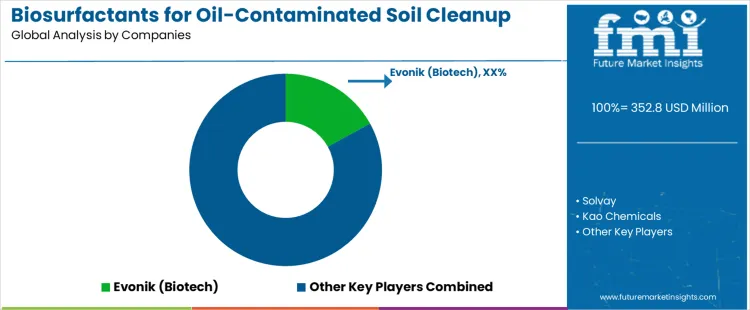
The biosurfactants for oil-contaminated soil cleanup market is expanding rapidly as industries and governments seek sustainable, effective solutions for remediating oil-polluted environments. Evonik (Biotech) leads the market with its innovative biosurfactants, offering high-performance solutions that effectively break down oil contamination in soil while being environmentally friendly.
Their commitment to sustainability, eco-friendly formulations, and performance-driven solutions has positioned them as a dominant player in the market. Solvay, Kao Chemicals, and Stepan Company are significant competitors, each offering specialized biosurfactants designed to enhance soil cleanup in oil-contaminated areas. Solvay provides innovative solutions that promote oil degradation while ensuring minimal environmental impact, while Kao Chemicals and Stepan Company focus on delivering high-quality biosurfactants for efficient oil removal from contaminated soils.
REGENESIS further contributes to the competitive landscape with its sustainable, effective biosurfactant solutions for soil bioremediation. REGENESIS focuses on providing products that accelerate the natural breakdown of oil contaminants, supporting eco-friendly soil restoration. These companies compete by focusing on product innovation, regulatory compliance, and their ability to provide safe, cost-effective, and environmentally responsible solutions for cleaning up oil-contaminated soils. As environmental concerns around oil spills and contamination continue to rise, the demand for biosurfactants is expected to increase, driving further innovation and competition in the market.
Key Players of the Biosurfactants for Oil-Contaminated Soil Cleanup Market
- Evonik (Biotech)
- Solvay
- Kao Chemicals
- Stepan Company
- REGENESIS
Scope of the Report
| Items | Values |
|---|---|
| Quantitative Units (2026) | USD Million |
| Biosurfactant Type | Rhamnolipids, Sophorolipids, Lipopeptides (Surfactin, Iturin, etc.), Glycolipids (Mannosylerythritol, Trehalolipids), Other Bio-Based Surfactants |
| Application Type | Oil Spill Soil Remediation, Industrial Hydrocarbon Contaminated Sites, Refinery & Petrochemical Waste Sites, Oil Storage & Pipeline Leak Sites, Marine Shoreline & Coastal Soil Cleanup |
| End-Use Sector | Environmental Remediation Firms, Oil & Gas / Petrochemical Companies, Government & Municipal Cleanup Projects, Mining & Industrial Contaminated Sites, Research & Pilot Remediation Programs |
| Companies | Evonik (Biotech), Solvay, Kao Chemicals, Stepan Company, REGENESIS |
| Regions Covered | North America, Latin America, Western Europe, Eastern Europe, South Asia and Pacific, East Asia, Middle East & Africa |
| Countries Covered | United States, Canada, Mexico, Brazil, Argentina, Germany, France, United Kingdom, Italy, Spain, Netherlands, China, India, Japan, South Korea, ANZ, GCC Countries, South Africa |
| Additional Attributes | Dollar by sales by biosurfactant type, application type, end-use sector, and region. Includes market trends in biosurfactants for oil-contaminated soil cleanup, performance in oil spill and industrial site remediation, demand for bio-based surfactants, cost-effectiveness, sustainability practices, regulatory compliance, market share and competitive positioning of key companies, and the role of biosurfactants in enhancing soil cleanup, reducing environmental impact, and supporting sustainable remediation efforts across various industries. |
Biosurfactants for Oil-Contaminated Soil Cleanup Market Segmentation
By Biosurfactant Type:
- Rhamnolipids
- Sophorolipids
- Lipopeptides (Surfactin, Iturin, etc.)
- Glycolipids (Mannosylerythritol, Trehalolipids)
- Other Bio-Based Surfactants
By Application Type:
- Oil Spill Soil Remediation
- Industrial Hydrocarbon Contaminated Sites
- Refinery & Petrochemical Waste Sites
- Oil Storage & Pipeline Leak Sites
- Marine Shoreline & Coastal Soil Cleanup
By End-Use Sector:
- Environmental Remediation Firms
- Oil & Gas / Petrochemical Companies
- Government & Municipal Cleanup Projects
- Mining & Industrial Contaminated Sites
- Research & Pilot Remediation Programs
By Region:
- Asia Pacific
- China
- Japan
- South Korea
- India
- Australia & New Zealand
- ASEAN
- Rest of Asia Pacific
- Europe
- Germany
- United Kingdom
- France
- Italy
- Spain
- Nordic
- BENELUX
- Rest of Europe
- North America
- United States
- Canada
- Mexico
- Latin America
- Brazil
- Chile
- Rest of Latin America
- Middle East & Africa
- Kingdom of Saudi Arabia
- Other GCC Countries
- Turkey
- South Africa
- Other African Union
- Rest of Middle East & Africa
Bibliography
- Evonik (Biotech). (n.d.). Biosurfactants for environmental cleanup.
- Solvay. (n.d.). Innovative biosurfactants for oil spill and soil remediation.
Frequently Asked Questions
How big is the biosurfactants for oil-contaminated soil cleanup market in 2026?
The global biosurfactants for oil-contaminated soil cleanup market is estimated to be valued at USD 352.8 million in 2026.
What will be the size of biosurfactants for oil-contaminated soil cleanup market in 2036?
The market size for the biosurfactants for oil-contaminated soil cleanup market is projected to reach USD 931.8 million by 2036.
How much will be the biosurfactants for oil-contaminated soil cleanup market growth between 2026 and 2036?
The biosurfactants for oil-contaminated soil cleanup market is expected to grow at a 10.2% CAGR between 2026 and 2036.
What are the key product types in the biosurfactants for oil-contaminated soil cleanup market?
The key product types in biosurfactants for oil-contaminated soil cleanup market are rhamnolipids, sophorolipids, lipopeptides (surfactin, iturin, etc.), glycolipids (mannosylerythritol, trehalolipids) and other bio-based surfactants.
Which application type segment to contribute significant share in the biosurfactants for oil-contaminated soil cleanup market in 2026?
In terms of application type, oil spill soil remediation segment to command 36.0% share in the biosurfactants for oil-contaminated soil cleanup market in 2026.
Preview the report firsthand - request a free sample
Get SampleGet the brochure for pricing and purchase details.
Get PDFTable of Content
- Executive Summary
- Global Market Outlook
- Demand-side Trends
- Supply-side Trends
- Technology Roadmap Analysis
- Analysis and Recommendations
- Market Overview
- Market Coverage / Taxonomy
- Market Definition / Scope / Limitations
- Market Background
- Market Dynamics
- Drivers
- Restraints
- Opportunity
- Trends
- Scenario Forecast
- Demand in Optimistic Scenario
- Demand in Likely Scenario
- Demand in Conservative Scenario
- Opportunity Map Analysis
- Product Life Cycle Analysis
- Supply Chain Analysis
- Investment Feasibility Matrix
- Value Chain Analysis
- PESTLE and Porter’s Analysis
- Regulatory Landscape
- Regional Parent Market Outlook
- Production and Consumption Statistics
- Import and Export Statistics
- Market Dynamics
- Global Market Analysis 2021 to 2025 and Forecast, 2026 to 2036
- Historical Market Size Value (USD Million) Analysis, 2021 to 2025
- Current and Future Market Size Value (USD Million) Projections, 2026 to 2036
- Y-o-Y Growth Trend Analysis
- Absolute $ Opportunity Analysis
- Global Market Pricing Analysis 2021 to 2025 and Forecast 2026 to 2036
- Global Market Analysis 2021 to 2025 and Forecast 2026 to 2036, By Biosurfactant Type
- Introduction / Key Findings
- Historical Market Size Value (USD Million) Analysis By Biosurfactant Type , 2021 to 2025
- Current and Future Market Size Value (USD Million) Analysis and Forecast By Biosurfactant Type , 2026 to 2036
- Rhamnolipids
- Sophorolipids
- Lipopeptides (Surfactin, Iturin, etc.)
- Glycolipids (Mannosylerythritol, Trehalolipids)
- Other Bio-Based Surfactants
- Rhamnolipids
- Y-o-Y Growth Trend Analysis By Biosurfactant Type , 2021 to 2025
- Absolute $ Opportunity Analysis By Biosurfactant Type , 2026 to 2036
- Global Market Analysis 2021 to 2025 and Forecast 2026 to 2036, By Application Type
- Introduction / Key Findings
- Historical Market Size Value (USD Million) Analysis By Application Type, 2021 to 2025
- Current and Future Market Size Value (USD Million) Analysis and Forecast By Application Type, 2026 to 2036
- Oil Spill Soil Remediation
- Industrial Hydrocarbon Contaminated Sites
- Refinery & Petrochemical Waste Sites
- Oil Storage & Pipeline Leak Sites
- Marine Shoreline & Coastal Soil Cleanup
- Oil Spill Soil Remediation
- Y-o-Y Growth Trend Analysis By Application Type, 2021 to 2025
- Absolute $ Opportunity Analysis By Application Type, 2026 to 2036
- Global Market Analysis 2021 to 2025 and Forecast 2026 to 2036, By End-Use Sector
- Introduction / Key Findings
- Historical Market Size Value (USD Million) Analysis By End-Use Sector, 2021 to 2025
- Current and Future Market Size Value (USD Million) Analysis and Forecast By End-Use Sector, 2026 to 2036
- Environmental Remediation Firms
- Oil & Gas / Petrochemical Companies
- Government & Municipal Cleanup Projects
- Mining & Industrial Contaminated Sites
- Research & Pilot Remediation Programs
- Environmental Remediation Firms
- Y-o-Y Growth Trend Analysis By End-Use Sector, 2021 to 2025
- Absolute $ Opportunity Analysis By End-Use Sector, 2026 to 2036
- Global Market Analysis 2021 to 2025 and Forecast 2026 to 2036, By Region
- Introduction
- Historical Market Size Value (USD Million) Analysis By Region, 2021 to 2025
- Current Market Size Value (USD Million) Analysis and Forecast By Region, 2026 to 2036
- North America
- Latin America
- Western Europe
- Eastern Europe
- East Asia
- South Asia and Pacific
- Middle East & Africa
- Market Attractiveness Analysis By Region
- North America Market Analysis 2021 to 2025 and Forecast 2026 to 2036, By Country
- Historical Market Size Value (USD Million) Trend Analysis By Market Taxonomy, 2021 to 2025
- Market Size Value (USD Million) Forecast By Market Taxonomy, 2026 to 2036
- By Country
- USA
- Canada
- Mexico
- By Biosurfactant Type
- By Application Type
- By End-Use Sector
- By Country
- Market Attractiveness Analysis
- By Country
- By Biosurfactant Type
- By Application Type
- By End-Use Sector
- Key Takeaways
- Latin America Market Analysis 2021 to 2025 and Forecast 2026 to 2036, By Country
- Historical Market Size Value (USD Million) Trend Analysis By Market Taxonomy, 2021 to 2025
- Market Size Value (USD Million) Forecast By Market Taxonomy, 2026 to 2036
- By Country
- Brazil
- Chile
- Rest of Latin America
- By Biosurfactant Type
- By Application Type
- By End-Use Sector
- By Country
- Market Attractiveness Analysis
- By Country
- By Biosurfactant Type
- By Application Type
- By End-Use Sector
- Key Takeaways
- Western Europe Market Analysis 2021 to 2025 and Forecast 2026 to 2036, By Country
- Historical Market Size Value (USD Million) Trend Analysis By Market Taxonomy, 2021 to 2025
- Market Size Value (USD Million) Forecast By Market Taxonomy, 2026 to 2036
- By Country
- Germany
- UK
- Italy
- Spain
- France
- Nordic
- BENELUX
- Rest of Western Europe
- By Biosurfactant Type
- By Application Type
- By End-Use Sector
- By Country
- Market Attractiveness Analysis
- By Country
- By Biosurfactant Type
- By Application Type
- By End-Use Sector
- Key Takeaways
- Eastern Europe Market Analysis 2021 to 2025 and Forecast 2026 to 2036, By Country
- Historical Market Size Value (USD Million) Trend Analysis By Market Taxonomy, 2021 to 2025
- Market Size Value (USD Million) Forecast By Market Taxonomy, 2026 to 2036
- By Country
- Russia
- Poland
- Hungary
- Balkan & Baltic
- Rest of Eastern Europe
- By Biosurfactant Type
- By Application Type
- By End-Use Sector
- By Country
- Market Attractiveness Analysis
- By Country
- By Biosurfactant Type
- By Application Type
- By End-Use Sector
- Key Takeaways
- East Asia Market Analysis 2021 to 2025 and Forecast 2026 to 2036, By Country
- Historical Market Size Value (USD Million) Trend Analysis By Market Taxonomy, 2021 to 2025
- Market Size Value (USD Million) Forecast By Market Taxonomy, 2026 to 2036
- By Country
- China
- Japan
- South Korea
- By Biosurfactant Type
- By Application Type
- By End-Use Sector
- By Country
- Market Attractiveness Analysis
- By Country
- By Biosurfactant Type
- By Application Type
- By End-Use Sector
- Key Takeaways
- South Asia and Pacific Market Analysis 2021 to 2025 and Forecast 2026 to 2036, By Country
- Historical Market Size Value (USD Million) Trend Analysis By Market Taxonomy, 2021 to 2025
- Market Size Value (USD Million) Forecast By Market Taxonomy, 2026 to 2036
- By Country
- India
- ASEAN
- Australia & New Zealand
- Rest of South Asia and Pacific
- By Biosurfactant Type
- By Application Type
- By End-Use Sector
- By Country
- Market Attractiveness Analysis
- By Country
- By Biosurfactant Type
- By Application Type
- By End-Use Sector
- Key Takeaways
- Middle East & Africa Market Analysis 2021 to 2025 and Forecast 2026 to 2036, By Country
- Historical Market Size Value (USD Million) Trend Analysis By Market Taxonomy, 2021 to 2025
- Market Size Value (USD Million) Forecast By Market Taxonomy, 2026 to 2036
- By Country
- Kingdom of Saudi Arabia
- Other GCC Countries
- Turkiye
- South Africa
- Other African Union
- Rest of Middle East & Africa
- By Biosurfactant Type
- By Application Type
- By End-Use Sector
- By Country
- Market Attractiveness Analysis
- By Country
- By Biosurfactant Type
- By Application Type
- By End-Use Sector
- Key Takeaways
- Key Countries Market Analysis
- USA
- Pricing Analysis
- Market Share Analysis, 2025
- By Biosurfactant Type
- By Application Type
- By End-Use Sector
- Canada
- Pricing Analysis
- Market Share Analysis, 2025
- By Biosurfactant Type
- By Application Type
- By End-Use Sector
- Mexico
- Pricing Analysis
- Market Share Analysis, 2025
- By Biosurfactant Type
- By Application Type
- By End-Use Sector
- Brazil
- Pricing Analysis
- Market Share Analysis, 2025
- By Biosurfactant Type
- By Application Type
- By End-Use Sector
- Chile
- Pricing Analysis
- Market Share Analysis, 2025
- By Biosurfactant Type
- By Application Type
- By End-Use Sector
- Germany
- Pricing Analysis
- Market Share Analysis, 2025
- By Biosurfactant Type
- By Application Type
- By End-Use Sector
- UK
- Pricing Analysis
- Market Share Analysis, 2025
- By Biosurfactant Type
- By Application Type
- By End-Use Sector
- Italy
- Pricing Analysis
- Market Share Analysis, 2025
- By Biosurfactant Type
- By Application Type
- By End-Use Sector
- Spain
- Pricing Analysis
- Market Share Analysis, 2025
- By Biosurfactant Type
- By Application Type
- By End-Use Sector
- France
- Pricing Analysis
- Market Share Analysis, 2025
- By Biosurfactant Type
- By Application Type
- By End-Use Sector
- India
- Pricing Analysis
- Market Share Analysis, 2025
- By Biosurfactant Type
- By Application Type
- By End-Use Sector
- ASEAN
- Pricing Analysis
- Market Share Analysis, 2025
- By Biosurfactant Type
- By Application Type
- By End-Use Sector
- Australia & New Zealand
- Pricing Analysis
- Market Share Analysis, 2025
- By Biosurfactant Type
- By Application Type
- By End-Use Sector
- China
- Pricing Analysis
- Market Share Analysis, 2025
- By Biosurfactant Type
- By Application Type
- By End-Use Sector
- Japan
- Pricing Analysis
- Market Share Analysis, 2025
- By Biosurfactant Type
- By Application Type
- By End-Use Sector
- South Korea
- Pricing Analysis
- Market Share Analysis, 2025
- By Biosurfactant Type
- By Application Type
- By End-Use Sector
- Russia
- Pricing Analysis
- Market Share Analysis, 2025
- By Biosurfactant Type
- By Application Type
- By End-Use Sector
- Poland
- Pricing Analysis
- Market Share Analysis, 2025
- By Biosurfactant Type
- By Application Type
- By End-Use Sector
- Hungary
- Pricing Analysis
- Market Share Analysis, 2025
- By Biosurfactant Type
- By Application Type
- By End-Use Sector
- Kingdom of Saudi Arabia
- Pricing Analysis
- Market Share Analysis, 2025
- By Biosurfactant Type
- By Application Type
- By End-Use Sector
- Turkiye
- Pricing Analysis
- Market Share Analysis, 2025
- By Biosurfactant Type
- By Application Type
- By End-Use Sector
- South Africa
- Pricing Analysis
- Market Share Analysis, 2025
- By Biosurfactant Type
- By Application Type
- By End-Use Sector
- USA
- Market Structure Analysis
- Competition Dashboard
- Competition Benchmarking
- Market Share Analysis of Top Players
- By Regional
- By Biosurfactant Type
- By Application Type
- By End-Use Sector
- Competition Analysis
- Competition Deep Dive
- Evonik (Biotech)
- Overview
- Product Portfolio
- Profitability by Market Segments (Product/Age /Sales Channel/Region)
- Sales Footprint
- Strategy Overview
- Marketing Strategy
- Product Strategy
- Channel Strategy
- Solvay
- Kao Chemicals
- Stepan Company
- REGENESIS
- Evonik (Biotech)
- Competition Deep Dive
- Assumptions & Acronyms Used
- Research Methodology


