

- Market Size (2026)
- USD 775.2 Mn
- Forecast (2036)
- USD 1311.7 Mn
- CAGR (2026 to 2036)
- 5.4%
Soil-Release Functional Polymers for Performance Apparel Care Market Size, Market Forecast and Outlook By FMI
Summary of the Soil-Release Functional Polymers for Performance Apparel Care Market
- Demand and Growth Drivers
- Performance apparel washing supports polymer use as oil stains bind strongly to polyester fibers.
- Concentrated liquids and capsules push suppliers to prove stability in smaller detergent doses.
- Cold wash habits increase the need for polymers that help stains release at lower temperatures.
- Sustainability claims favor grades with bio-based content and improved wash efficiency.
- Product and Segment View
- Household laundry accounts for 54.0% share in 2026. Home detergent use creates the main repeat volume base.
- Direct supply holds 52.0% share in 2026 because major formulators need consistent polymer grade control.
- Liquid detergents represent 49.0% share in 2026, with concentrates needing soluble and stable additive systems.
- In detergent additives, at 46.0% share in 2026, suit brands looking for simple consumer use.
- Geography and Competitive Outlook
- China record 6.6% CAGR through 2036 as activewear output and urban laundry routines support high use.
- The United States is set to expand at 5.1% CAGR through 2036 as sportswear care and premium detergents support regular uptake.
- Dow, BASF, Clariant and Nouryon use polymer depth and detergent formulation access to strengthen their positions.
- Japanese and German demand is selective as performance proof and material safety checks influence grade approval.
- Analyst Opinion
- Nikhil Kaitwade, Principal Consultant at FMI says, "I view soil-release functional polymers as a small ingredient with a large role in performance apparel care. The winning grades will be those that help oily soil lift from polyester in cool water and stay stable inside concentrated detergent liquids. Cost pressure comes from detergent brands that need clear wash benefits at low dosage. Regulation and brand claims add pressure for safer and bio-based options."
- Soil-Release Functional Polymers for Performance Apparel Care Market Value Analysis
- The soil-release functional polymers market is moving from specialty detergent additives into defined apparel care ingredients.
- Polyester rich activewear supports demand because oily stains and body residue need improved wash support.
- Liquid detergents and detergent pods increase demand for stable polymers working in compact formulas.
- Cold wash habits and premium garment care claims support growth.
Key Takeaways
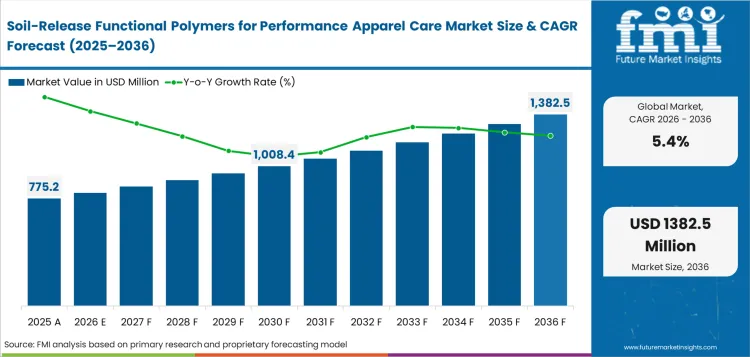
- The soil-release functional polymers for performance apparel care market is valued at USD 735.5 million in 2025 using a back-calculation from 2026 sales.
- By 2036, the market is projected to reach USD 1,311.7 million as performance apparel wash care needs shift toward stain release and fabric life.
- From 2026 to 2036, the market is forecast to expand at 5.4% CAGR across detergent and textile finishing uses.
- The market is expected to create an incremental opportunity of USD 536.5 million between 2026 and 2036.
- Household laundry is projected to hold 54.0% share in 2026 as home detergent brands use these polymers in repeat wash products.
- China is projected to record a 6.6% CAGR through 2036 as activewear production and premium laundry use support faster uptake.
Soil-Release Functional Polymers for Performance Apparel Care Market Definition
The soil-release functional polymers for performance apparel care market includes specialty polymers used in laundry detergents and textile finishes. These polymers help oily soil detach from polyester-rich apparel during washing. The scope covers in-detergent polymers, boosters, softener-compatible grades, and textile finishing chemicals. The scope excludes stain remover sprays without polymeric soil-release action and generic surfactants sold without fabric soil-release claims.
Soil-Release Functional Polymers for Performance Apparel Care Market Inclusions
Market scope includes polyester-based soil-release polymers, polyether-modified polymers, acrylic copolymers, silicone-free repellent polymers, liquid detergent additives, laundry boosters, fabric softener-compatible polymers, textile finishing grades, household laundry, institutional laundry, textile mills, and private label brands.
Soil-Release Functional Polymers for Performance Apparel Care Market Exclusions
Market scope excludes bleach actives, enzymes sold alone, fragrance capsules, optical brighteners, generic surfactants, fabric softeners without soil-release polymers, and textile coatings used only for industrial barrier protection.
Soil-Release Functional Polymers for Performance Apparel Care Market Research Methodology
- Primary Research: FMI assessed input from detergent formulators, textile finishers, polymer suppliers and fabric care specialists. Interviews reviewed grade selection, wash-test proof, dosage limits and channel use across household and institutional laundry.
- Desk Research: Desk research reviewed official company product updates, detergent chemistry references and textile care literature. The study used public material on soil-release polymers, anti-redeposition additives and related laundry performance ingredients.
- Market Sizing and Forecasting: The model combined detergent formulation rates, polymer dosing ranges, sportswear care growth and country-level laundry product use. Forecasts were checked against adjacent additives including anti-redeposition additives and cold-wash laundry enzyme stabilizers.
-
Data Validation: FMI cross-checked the outlook against company portfolios, formulation route shares and country growth signals. Segment shares were reviewed against the known use of soil-release polymers in liquids, textile finishes and premium laundry formats.
Why is the Demand for Soil-Release Functional Polymers for Performance Apparel Care Market Growing?
- Polyester-rich activewear holds oily soil more strongly than cotton and needs wash aids that work over repeated cycles.
- Cooler wash settings create a role for polymers that can help stain removal without hotter water.
- Concentrated detergents need stable multifunctional additives that can work at lower dosage.
- Premium apparel care claims need polymer proof across odor, stain and appearance retention.
Performance apparel creates a distinct cleaning challenge for detergent formulators. Polyester yarns can attract oily soil and body residue after sports or daily commuter use. Soil release polymers coat the fiber surface during washing and help the next wash lift residue easily. The segment connects with fabric stain remover products because both focus on keeping garments in active use. Suppliers showing repeat cycle test proof can improve access to premium detergent projects.
Cold wash use is changing how polymer grades are judged. A grade working only in warm water offers limited value in concentrated liquid detergents. Clariant presented TexCare Terra data at SEPAWA 2024 showing low temperature performance and lower surfactant load. This data pushes formulators to ask for polymer grades improving cleaning with controlled formula weight.
Market Segmentation Analysis
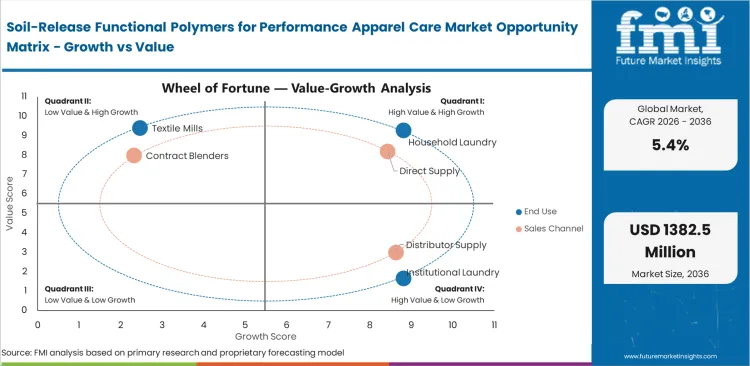
- Household laundry is projected to lead End Use demand with a 54.0% share in 2026 as repeat home washing creates the largest use base.
- Direct supply is estimated to lead Sales Channel demand with a 52.0% share in 2026 as large formulators need close grade control.
- Liquid detergents are expected to lead Formulation Type demand with a 49.0% share in 2026 as concentrates need soluble polymer systems.
- In-detergent additives are projected to lead Application Route demand with a 46.0% share in 2026 as one-step dosing suits household use.
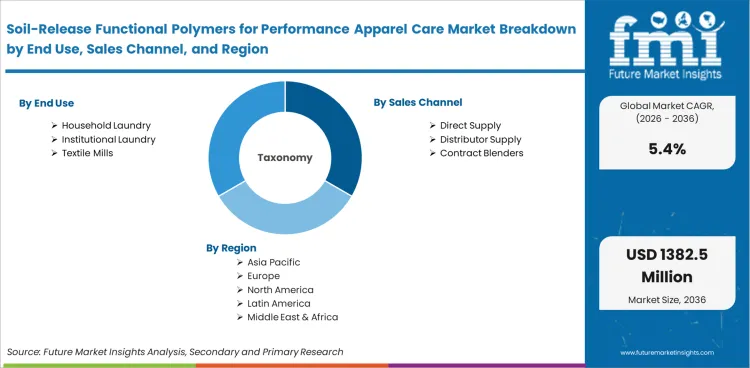
The market for soil-release functional polymers for performance apparel care is divided into groups based on polymer type, application route, fabric type, end use, formulation type, and sales channel. There are Polyester-Based Polymers, Polyether-Modified Polymers, Acrylic Copolymers, Silicone-Free Repellents, and Other polymer types. By application route, such as In-Detergent Additives, Laundry Boosters, Fabric Softeners, and Textile Finishing Chemicals.
Insights into the Household Laundry End Use Segment
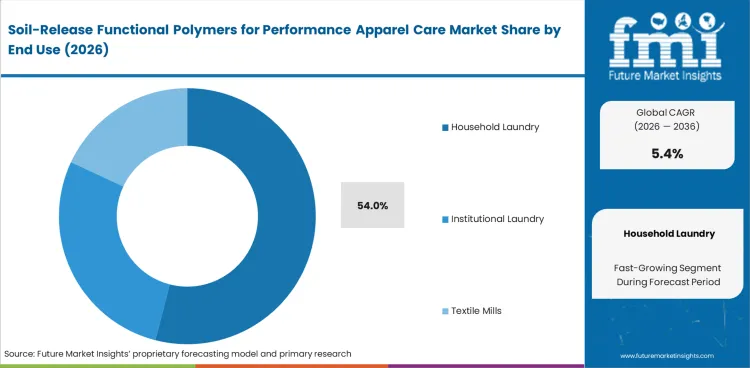
- Household laundry accounts for 54.0% in 2026. Home detergents create repeat polymer consumption across activewear and everyday garments.
- Institutional laundry needs limited grades with precise dosage control because hotel linen and uniform laundries value wash cost per load over fragrance claims.
Insights into the Direct Supply Sales Channel Segment
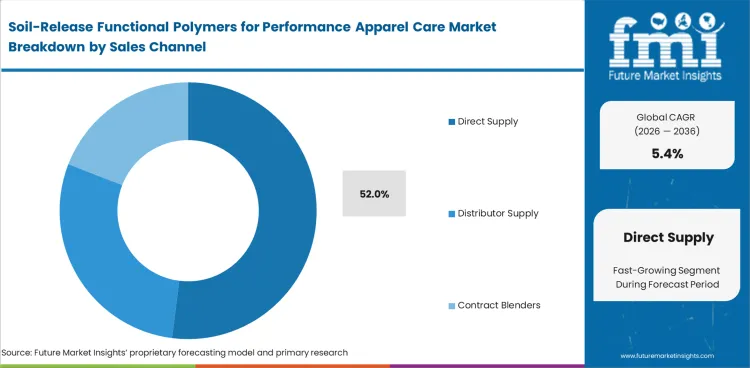
- Direct supply holds 52.0% in 2026 because major detergent formulators prefer direct technical contact and secure grade supply.
- Distributor supply serves small detergent blenders needing flexible pack sizes and local stock access in India and Brazil.
Insights into the Liquid Detergents Formulation Type Segment
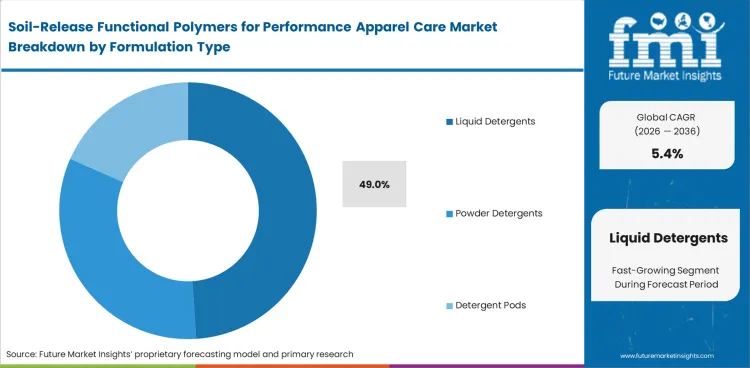
- Liquid detergents represent 49.0% in 2026. Soluble polymers suit concentrates and capsule liquids.
- Powder detergents need hard water tolerance and improved granule handling. Detergent hard water tolerance builders influence polymer selection in this route.
Insights into the In-Detergent Additives Application Route Segment
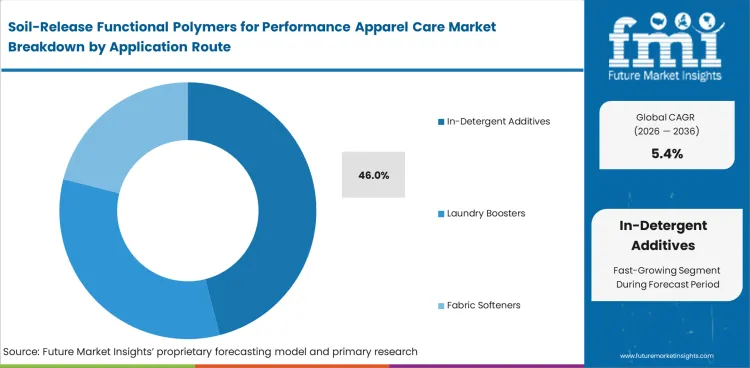
- In detergent additives account for 46.0% in 2026. Brands prefer soil release action inside the main wash product.
- Laundry boosters serve consumers who treat sportswear separately and need added cleaning support beyond a base detergent.
Insights into the Performance Apparel Fabric Type Segment
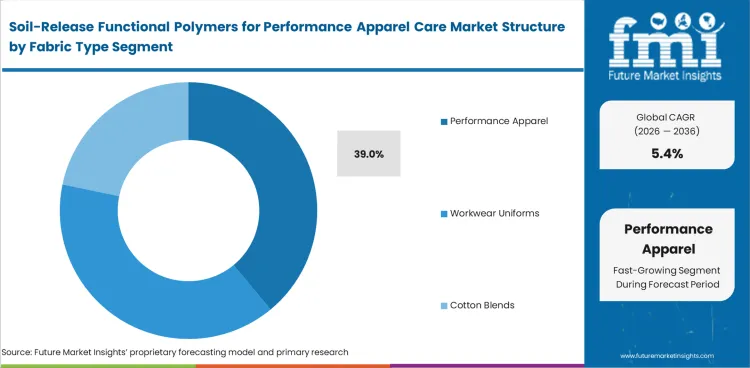
- Performance apparel holds 39.0% in 2026 because polyester sportswear needs improved oily soil release across repeated washes.
- Workwear uniforms need durable cleaning proof because grease and outdoor soil exposure can push formulators toward increased polymer dose levels.
Insights into the Polyester-Based Polymer Type Segment
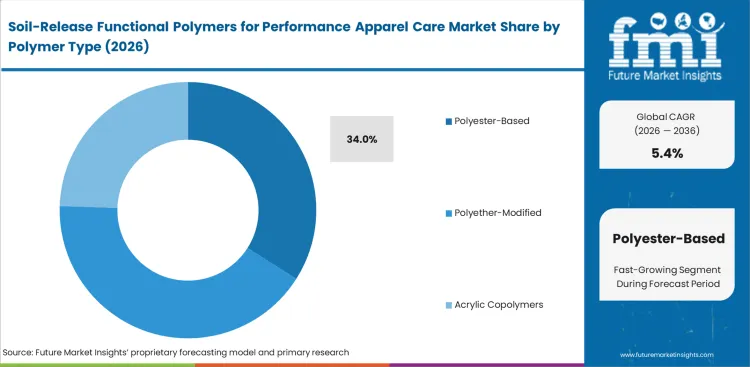
- Polyester based polymers account for 34.0% in 2026. Polyester apparel needs surface treatment for improved stain release.
- Polyether modified polymers are used in premium liquids as formulators balance low temperature cleaning with stable clarity in concentrated products.
Soil-Release Functional Polymers for Performance Apparel Care Market Drivers, Restraints, and Opportunities
- Polyester activewear washing drives demand for polymers that help oily residue release in repeated home wash cycles.
- Cold wash detergent development creates space for soil-release grades that work at lower wash temperatures.
- Concentrated liquids need polymers that stay stable in small-dose formulas and capsule systems.
- Cost pressure limits use in economy powders as low-cost builders compete for formula space.
- Bio-based polymers create opportunity for suppliers that can prove stain release and biodegradability together.
Polyester Soil Release Need
Sportswear and performance apparel make soil-release chemistry more valuable than in basic cotton care. Oil and sweat residue can cling to polyester fibers after one wash cycle. Biosourced soil-release polymer research published in 2025 focused on polyester surface treatment for fabric care formulations. This keeps the technical case close to apparel chemistry and beyond household cleaning. Suppliers with polyester wash proof can defend premium grades across detergent and textile finishing accounts.
Concentrate Stability Pressure
Laundry liquids and capsules create a harder formulation test for polymer suppliers. A polymer must clean well and stay stable in a compact liquid system. Clariant launched TexCare One Terra in October 2025 for high-concentrate laundry liquids and capsules. The launch shows why multifunctional soil-release polymers are moving into compact detergent design. It supports suppliers that can reduce extra thickeners and simplify formula handling.
Bio-Based Grade Opportunity
Sustainability pressure is moving from package claims into ingredient selection. Nouryon launched a 100% biobased and biodegradable carboxymethylcellulose for laundry detergents in February 2026. Although this grade targets anti-redeposition, the same shift affects soil-release polymer decisions. Brands want lower-impact additives that protect fabric appearance and rinse-away soil. This creates space for bio-based polymers that can pass wash tests and cost review together.
Analysis of Soil-Release Functional Polymers for Performance Apparel Care Market By Key Countries
.webp "Top Country Growth Comparison Soil Release Functional Polymers For Performance Apparel Care Market Cagr (2026 2036)")
| Country | CAGR |
|---|---|
| China | 6.6% |
| India | 6.2% |
| Brazil | 5.5% |
| United States | 5.1% |
| United Kingdom | 4.9% |
| Germany | 4.8% |
| Japan | 4.2% |
Source: FMI analysis based on primary research and proprietary forecasting model.
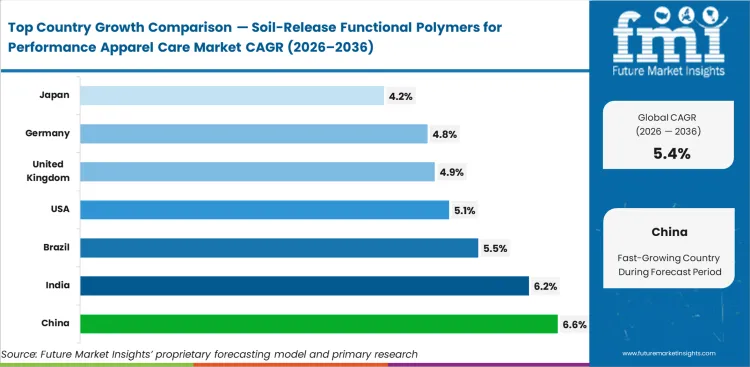
Soil-Release Functional Polymers for Performance Apparel Care Market CAGR Analysis By Country
- China is projected to record a 6.6% CAGR through 2036 as domestic activewear output and urban laundry habits support faster polymer use.
- India is expected to expand at 6.2% CAGR through 2036 as textile processing clusters and premium detergent growth increase grade trials.
- Brazil is forecast to grow at 5.5% CAGR through 2036 as sportswear use and warm-climate laundry frequency support fabric care additives.
- The United States is expected to advance at 5.1% CAGR through 2036 as activewear care and premium liquid detergent use support steady demand.
- The United Kingdom is projected to rise at 4.9% CAGR through 2036 as sustainable detergent claims and activewear washing sustain measured uptake.
- Germany is forecast at 4.8% CAGR through 2036 as chemical safety review and premium care products support selective grade approval.
- Japan is expected to post 4.2% CAGR through 2036 as compact laundry formats and conservative garment care habits create gradual adoption.
Country variation reflects textile manufacturing depth, premium detergent use and consumer care habits. China, India and Brazil track above the global 5.4% CAGR as apparel output and household wash frequency support faster use. The United States and Europe grow closer to the global rate through premium formulations. Japan expands more slowly as approval cycles are cautious.
Demand Outlook for Soil-Release Functional Polymers for Performance Apparel Care Market in China
China can record 6.6% CAGR from 2026 to 2036. Zhejiang and Guangdong apparel clusters connect polymer use with activewear finishing and detergent formulation. Domestic brands need easy care claims for polyester sportswear and commuter clothing. Shanghai retail channels support premium liquid detergent launches carrying soil release claims. A small shift toward concentrated liquids would increase polymer volumes quickly across coastal detergent plants.
- Zhejiang textile mills support polymer trials for polyester knits used in sportswear and commuter apparel.
- Guangdong detergent plants create nearby blending access for liquid formats and laundry boosters.
- Shanghai retail demand favors premium wash products tied to easy-care clothing and odor control.
Sales Analysis of Soil-Release Functional Polymers for Performance Apparel Care Market in India
India is set to expand at 6.2% CAGR during 2026 to 2036. Tiruppur, Surat and Bengaluru support performance apparel production and premium laundry products. Detergent brands are moving liquid formats into urban stores and ecommerce channels. Textile mills seek finishing aids protecting garment appearance after many washes. Growth will favor suppliers offering reliable local stock and simple technical trials.
- Tiruppur knitwear production creates a clear testing base for polyester and blended activewear.
- Surat processing units support textile finishing trials for easy-care fabric claims.
- Bengaluru sportswear brands create a route for premium apparel care messaging.
Demand Analysis of Soil-Release Functional Polymers for Performance Apparel Care Market in Brazil
Brazil is forecast to grow at 5.5% CAGR through 2036 as São Paulo and Santa Catarina combine apparel production with warm-weather laundry frequency. Sportswear and uniforms create repeat cleaning needs in urban households. Local detergent producers often balance price and performance. Polymer dosage must stay cost efficient. Suppliers with distributor stock in São Paulo can serve midsize blenders with quick lead times.
- São Paulo supports detergent blending and organized retail access for premium laundry products.
- Santa Catarina apparel activity creates demand for washable performance fabrics and textile finishing aids.
- Brazilian warm-weather use patterns raise wash frequency for sportswear and workwear uniforms.
Opportunity Analysis of Soil-Release Functional Polymers for Performance Apparel Care Market in the United States
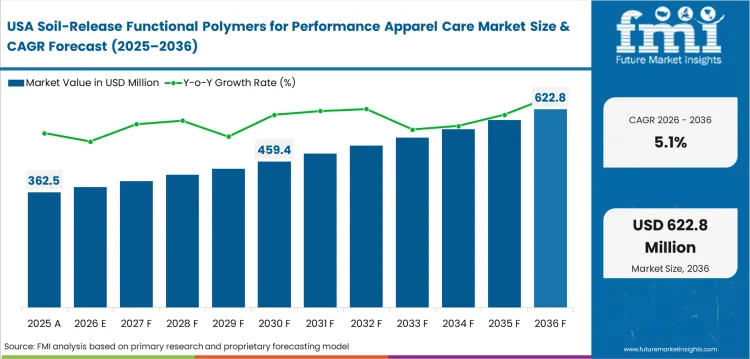
The United States is expected to advance at 5.1% CAGR through 2036 as activewear ownership and premium liquid detergents support soil-release polymer use. North Carolina and Georgia provide textile and nonwoven chemistry links. Major consumer brands use repeat wash proof to defend premium care claims. Polymer suppliers can improve account access through low temperature wash data and compatibility with dissolvable PVOH detergent pods.
- North Carolina retains textile chemistry know-how that supports fabric care trials and mill qualification.
- Georgia logistics hubs help suppliers serve southeastern detergent and home care plants.
- California consumers favor premium and lower-impact laundry products across sportswear-heavy households.
Future Outlook for Soil-Release Functional Polymers for Performance Apparel Care Market in the United Kingdom
The United Kingdom is projected to rise at 4.9% CAGR through 2036 as premium activewear washing and sustainability claims shape detergent launches. London and Manchester support dense retail channels for concentrated liquids. UK brands seek ingredient stories matching garment care and low temperature washing. Polymer suppliers need clear data for stain release, rinse out behavior and consumer claim wording.
- London retail channels support concentrated detergent launches and premium apparel care claims.
- Manchester’s textile heritage supports fabric testing conversations with apparel and care brands.
- UK sustainability claims increase interest in lower-dose detergent additives and odor-neutralizing agents.
Sales Outlook for Soil-Release Functional Polymers for Performance Apparel Care Market in Germany
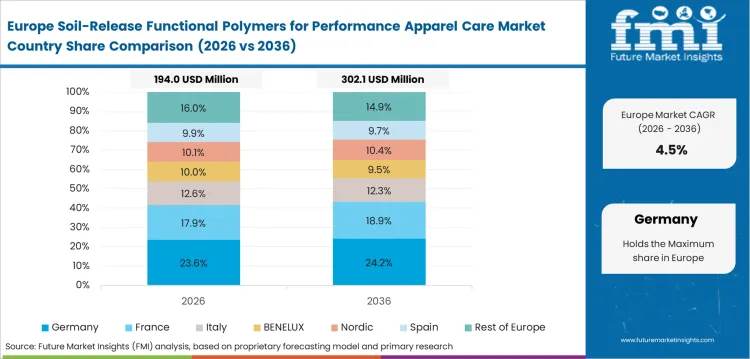
Germany is forecast at 4.8% CAGR through 2036 as Düsseldorf, Hamburg and Baden-Württemberg support strict detergent and textile care review. German formulators often require biodegradability data and wash cycle proof before grade approval. Premium liquid detergent brands are a clear route for soil release polymer use. Suppliers pairing test data with local technical service can improve account access.
- Düsseldorf supports home care ingredient review through chemical and consumer goods activity.
- Hamburg logistics routes aid import and storage of specialty polymers for detergent formulators.
- Baden-Württemberg textile and technical fabric users create selective interest in textile auxiliaries.
In-depth Analysis of Soil-Release Functional Polymers for Performance Apparel Care Market in Japan
Japan is expected to post 4.2% CAGR from 2026 to 2036 as Tokyo and Osaka favor compact laundry formats and careful garment care. Consumers often use compact wash loads and concentrated liquids. This supports low dose polymer grades. Apparel care claims must be simple to prove through fabric feel and stain release. Suppliers will need patient account work and clear documentation to secure approvals.
- Tokyo retailers support compact liquid detergents with premium apparel care claims.
- Osaka home care producers review additive stability closely before new formula approval.
- Japanese sportswear and uniform users value gentle cleaning that protects fabric appearance after repeated washing.
Competitive Landscape and Strategic Positioning
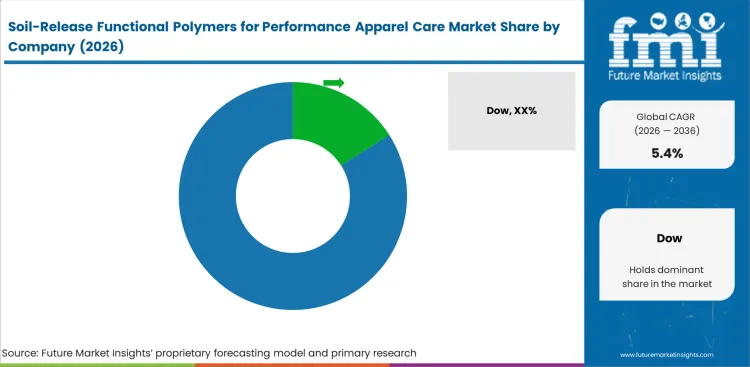
- The competitive structure is led by multinational specialty chemical suppliers with detergent polymer portfolios.
- Leading suppliers compete on polyester wash proof, low-temperature performance and compatibility with concentrated liquids.
- Regional suppliers can win smaller accounts through local stock and faster sampling.
- Entry barriers include wash-test data, regulatory files and long qualification work with detergent brands.
Competition is based on proof over ingredient claims. Detergent formulators need soil-release action across oily stains, hard water and low-temperature washing. Dow and BASF hold advantages through deep detergent chemistry portfolios. Clariant has a strong soil-release polymer story through TexCare grades. Nouryon adds weight through bio-based anti-redeposition chemistry and hydrotrope tools that help compact formulas.
Supplier choice is tied to how easily the polymer can enter an existing formula. A grade that improves stain release but disrupts viscosity may be rejected by a liquid detergent brand. This keeps formulation aid and technical service central to account wins. Related textile coatings activity shows how surface performance claims must match durability and material safety checks.
Key Companies in the Soil-Release Functional Polymers for Performance Apparel Care Market
Key global companies active in the soil-release functional polymers for performance apparel care market include Dow, BASF, Lubrizol, Archroma, Clariant, Solvay, Evonik, Wacker Chemie, Ashland and Croda International.
- Detergent Polymer Leaders: Dow, BASF, Clariant and Nouryon depend on soil-release and anti-redeposition chemistry for laundry formulas.
- Textile Finish Specialists: Archroma, Solvay and Wacker Chemie serve textile finishing and fabric surface treatment needs.
- Formulation Additive Suppliers: Lubrizol, Evonik, Ashland and Croda International support specialty additives for home care and apparel care products.
Competitive Benchmarking: Soil-Release Functional Polymers for Performance Apparel Care Market
| Company | Polyester SRP Depth | Low Wash Proof | Concentrate Formula Aid | Footprint |
|---|---|---|---|---|
| Dow | High | High | High | Global |
| BASF | High | High | High | Global |
| Clariant | High | High | High | Global |
| Nouryon | Medium | High | High | Global |
| Lubrizol | Medium | Medium | High | Global |
| Archroma | Medium | Medium | Medium | Global |
| Solvay | Medium | Medium | Medium | Global |
| Evonik | Medium | Medium | Medium | Global |
| Ashland | Medium | Medium | Medium | Global |
| Croda International | Medium | Medium | Medium | Global |
Source: Future Market Insights competitive analysis, 2026. Ratings reflect relative positioning based on polymer depth, low-temperature wash proof and concentrated formula support.
Key Developments in Soil-Release Functional Polymers for Performance Apparel Care Market
- In July 2025, BASF expanded its liquid enzyme portfolio for stain removal, care and whiteness. The move supports multi-ingredient premium laundry formulas.
- In January 2024, Nouryon launched Berol Nexus as a multifunctional hydrotrope for the North American cleaning sector. The product supports compact formula design.
Key Players in the Soil-Release Functional Polymers for Performance Apparel Care Market
Detergent Polymer Leaders
- Dow
- BASF
- Clariant
- Nouryon
Textile Finish Specialists
- Archroma
- Solvay
- Wacker Chemie
Formulation Additive Suppliers
- Lubrizol
- Evonik
- Ashland
- Croda International
Report Scope and Coverage
| Parameter | Details |
|---|---|
| Quantitative Units | USD 775.2 million to USD 1,311.7 million, at a CAGR of 5.4% from 2026 to 2036 |
| Market Definition | Soil-release polymers used in laundry detergents and textile finishes for performance apparel care. |
| Regions Covered | North America; Latin America; Europe; East Asia; South Asia and Pacific; Middle East and Africa |
| Countries Covered | China; India; Brazil; United States; United Kingdom; Germany; Japan; 30+ countries |
| Key Companies Profiled | Dow; BASF; Lubrizol; Archroma; Clariant; Solvay; Evonik; Wacker Chemie; Ashland; Croda International |
| Forecast Period | 2026 to 2036 |
| Approach | Hybrid bottom-up and top-down methodology using detergent formula use rates, polymer pricing, textile finishing adoption and regional laundry demand checks |
Soil-Release Functional Polymers for Performance Apparel Care Market by Segments
Soil-Release Functional Polymers for Performance Apparel Care Market Segmented by Polymer Type:
- Polyester-Based Polymers
- Polyether-Modified Polymers
- Acrylic Copolymers
- Silicone-Free Repellents
Soil-Release Functional Polymers for Performance Apparel Care Market Segmented by Application Route:
- In-Detergent Additives
- Laundry Boosters
- Fabric Softeners
- Textile Finishing Chemicals
Soil-Release Functional Polymers for Performance Apparel Care Market Segmented by Fabric Type:
- Performance Apparel
- Workwear Uniforms
- Cotton Blends
- Home Textiles
Soil-Release Functional Polymers for Performance Apparel Care Market Segmented by End Use:
- Household Laundry
- Institutional Laundry
- Textile Mills
- Private Label Brands
Soil-Release Functional Polymers for Performance Apparel Care Market Segmented by Formulation Type:
- Liquid Detergents
- Powder Detergents
- Detergent Pods
- Laundry Sheets
Soil-Release Functional Polymers for Performance Apparel Care Market Segmented by Sales Channel:
- Direct Supply
- Distributor Supply
- Contract Blenders
- Online B2B
Soil-Release Functional Polymers for Performance Apparel Care Market by Region:
- North America
- ◦ United States
- ◦ Canada
- ◦ Mexico
- Latin America
- ◦ Brazil
- ◦ Chile
- ◦ Rest of Latin America
- Europe
- ◦ United Kingdom
- ◦ Germany
- ◦ France
- ◦ Italy
- ◦ Spain
- East Asia
- ◦ China
- ◦ Japan
- ◦ South Korea
- South Asia and Pacific
- ◦ India
- ◦ ASEAN
- ◦ Australia and New Zealand
- Middle East and Africa
- ◦ GCC Countries
- ◦ South Africa
- ◦ Rest of Middle East and Africa
Research Sources and Bibliography
- Clariant. (2024, October 16). Embrace novel sustainable detergent formulations with Clariant at SEPAWA 2024. Clariant.
- Nouryon. (2024, January 31). Nouryon introduces Berol® Nexus surfactant, a next-generation multifunctional hydrotrope, at the 2024 ACI Annual Meeting and Industry Convention.
- Nouryon. (2026, February 2). Nouryon launches industry’s first 100% biobased, biodegradable carboxymethylcellulose for laundry detergents.
- BASF. (2025, July 10). BASF strengthens liquid enzyme portfolio for the laundry and cleaning industry.
- Starck, M., Tonin, F., Méndez-Ardoy, A., Llevot, A., Jeanmaire, T., Berthet, J., & Guégan, P. (2025). Surface modification of polyesters using biosourced soil-release polymers.
- The bibliography is provided for reader reference and uses official company, scientific and product sources connected to laundry formulation and soil-release polymer use.
This Report Answers
- What is the expected 2026 value of soil-release functional polymers for performance apparel care?
- What value is projected for the market by 2036 across detergent and textile finishing use?
- What CAGR is forecast for soil-release functional polymers from 2026 to 2036?
- Which end-use segment is projected to hold the largest 2026 share?
- Which application route is expected to account for the largest share in 2026?
- Why do performance apparel detergents need soil-release polymers for repeated washing?
- Which countries are forecast to grow faster through 2036?
- Which companies are active in soil-release and related detergent polymers?
- How does FMI size and validate this specialty polymer market?
Frequently Asked Questions
What is the global market demand for soil-release functional polymers for performance apparel care in 2026?
In 2026, the market is expected to be worth USD 775.2 million across detergent and textile finishing use.
How big will the soil-release functional polymers for performance apparel care market be in 2036?
By 2036, the market is projected to reach USD 1,311.7 million as performance apparel wash care grows.
What CAGR is projected for soil-release functional polymers from 2026 to 2036?
What CAGR is projected for soil-release functional polymers from 2026 to 2036?
Which end-use segment is projected to lead in 2026?
Household laundry is projected to account for 54.0% share in 2026 as home detergents create repeat use.
Which application route is expected to lead in 2026?
In-detergent additives are projected to hold 46.0% share in 2026 as one-step dosing suits consumer laundry.
Why is China the fastest-growing country?
China is projected to record 6.6% CAGR through 2036 as activewear production and premium laundry use support adoption
What is included in this market?
The market includes specialty polymers used in laundry detergents and textile finishes to improve stain release on performance apparel.
How does FMI validate the forecast?
FMI checks detergent formula use rates, polymer pricing, country growth patterns and company portfolios before final forecast approval.
Preview the report firsthand - request a free sample
Get SampleGet the brochure for pricing and purchase details.
Get PDFTable of Content
- Executive Summary
- Global Market Outlook
- Demand-side Trends
- Supply-side Trends
- Technology Roadmap Analysis
- Analysis and Recommendations
- Market Overview
- Market Coverage / Taxonomy
- Market Definition / Scope / Limitations
- Research Methodology
- Chapter Orientation
- Analytical Lens and Working Hypotheses
- Market Structure, Signals, and Trend Drivers
- Benchmarking and Cross-market Comparability
- Market Sizing, Forecasting, and Opportunity Mapping
- Research Design and Evidence Framework
- Desk Research Programme (Secondary Evidence)
- Company Annual and Sustainability Reports
- Peer-reviewed Journals and Academic Literature
- Corporate Websites, Product Literature, and Technical Notes
- Earnings Decks and Investor Briefings
- Statutory Filings and Regulatory Disclosures
- Technical White Papers and Standards Notes
- Trade Journals, Industry Magazines, and Analyst Briefs
- Conference Proceedings, Webinars, and Seminar Materials
- Government Statistics Portals and Public Data Releases
- Press Releases and Reputable Media Coverage
- Specialist Newsletters and Curated Briefings
- Sector Databases and Reference Repositories
- FMI Internal Proprietary Databases and Historical Market Datasets
- Subscription Datasets and Paid Sources
- Social Channels, Communities, and Digital Listening Inputs
- Additional Desk Sources
- Expert Input and Fieldwork (Primary Evidence)
- Primary Modes
- Qualitative Interviews and Expert Elicitation
- Quantitative Surveys and Structured Data Capture
- Blended Approach
- Why Primary Evidence is Used
- Field Techniques
- Interviews
- Surveys
- Focus Groups
- Observational and In-context Research
- Social and Community Interactions
- Stakeholder Universe Engaged
- C-suite Leaders
- Board Members
- Presidents and Vice Presidents
- R&D and Innovation Heads
- Technical Specialists
- Domain Subject-matter Experts
- Scientists
- Physicians and Other Healthcare Professionals
- Governance, Ethics, and Data Stewardship
- Research Ethics
- Data Integrity and Handling
- Primary Modes
- Tooling, Models, and Reference Databases
- Desk Research Programme (Secondary Evidence)
- Data Engineering and Model Build
- Data Acquisition and Ingestion
- Cleaning, Normalisation, and Verification
- Synthesis, Triangulation, and Analysis
- Quality Assurance and Audit Trail
- Market Background
- Market Dynamics
- Drivers
- Restraints
- Opportunity
- Trends
- Scenario Forecast
- Demand in Optimistic Scenario
- Demand in Likely Scenario
- Demand in Conservative Scenario
- Opportunity Map Analysis
- Product Life Cycle Analysis
- Supply Chain Analysis
- Investment Feasibility Matrix
- Value Chain Analysis
- PESTLE and Porter’s Analysis
- Regulatory Landscape
- Regional Parent Market Outlook
- Production and Consumption Statistics
- Import and Export Statistics
- Market Dynamics
- Global Market Analysis 2021 to 2025 and Forecast, 2026 to 2036
- Historical Market Size Value (USD Million) Analysis, 2021 to 2025
- Current and Future Market Size Value (USD Million) Projections, 2026 to 2036
- Y-o-Y Growth Trend Analysis
- Absolute $ Opportunity Analysis
- Global Market Pricing Analysis 2021 to 2025 and Forecast 2026 to 2036
- Global Market Analysis 2021 to 2025 and Forecast 2026 to 2036, By End Use
- Introduction / Key Findings
- Historical Market Size Value (USD Million) Analysis By End Use , 2021 to 2025
- Current and Future Market Size Value (USD Million) Analysis and Forecast By End Use , 2026 to 2036
- Household Laundry
- Institutional Laundry
- Textile Mills
- Household Laundry
- Y-o-Y Growth Trend Analysis By End Use , 2021 to 2025
- Absolute $ Opportunity Analysis By End Use , 2026 to 2036
- Global Market Analysis 2021 to 2025 and Forecast 2026 to 2036, By Sales Channel
- Introduction / Key Findings
- Historical Market Size Value (USD Million) Analysis By Sales Channel, 2021 to 2025
- Current and Future Market Size Value (USD Million) Analysis and Forecast By Sales Channel, 2026 to 2036
- Direct Supply
- Distributor Supply
- Contract Blenders
- Direct Supply
- Y-o-Y Growth Trend Analysis By Sales Channel, 2021 to 2025
- Absolute $ Opportunity Analysis By Sales Channel, 2026 to 2036
- Global Market Analysis 2021 to 2025 and Forecast 2026 to 2036, By Formulation Type
- Introduction / Key Findings
- Historical Market Size Value (USD Million) Analysis By Formulation Type, 2021 to 2025
- Current and Future Market Size Value (USD Million) Analysis and Forecast By Formulation Type, 2026 to 2036
- Liquid Detergents
- Powder Detergents
- Detergent Pods
- Liquid Detergents
- Y-o-Y Growth Trend Analysis By Formulation Type, 2021 to 2025
- Absolute $ Opportunity Analysis By Formulation Type, 2026 to 2036
- Global Market Analysis 2021 to 2025 and Forecast 2026 to 2036, By Application Route
- Introduction / Key Findings
- Historical Market Size Value (USD Million) Analysis By Application Route, 2021 to 2025
- Current and Future Market Size Value (USD Million) Analysis and Forecast By Application Route, 2026 to 2036
- In-Detergent Additives
- Laundry Boosters
- Fabric Softeners
- In-Detergent Additives
- Y-o-Y Growth Trend Analysis By Application Route, 2021 to 2025
- Absolute $ Opportunity Analysis By Application Route, 2026 to 2036
- Global Market Analysis 2021 to 2025 and Forecast 2026 to 2036, By Fabric Type
- Introduction / Key Findings
- Historical Market Size Value (USD Million) Analysis By Fabric Type, 2021 to 2025
- Current and Future Market Size Value (USD Million) Analysis and Forecast By Fabric Type, 2026 to 2036
- Performance Apparel
- Workwear Uniforms
- Cotton Blends
- Performance Apparel
- Y-o-Y Growth Trend Analysis By Fabric Type, 2021 to 2025
- Absolute $ Opportunity Analysis By Fabric Type, 2026 to 2036
- Global Market Analysis 2021 to 2025 and Forecast 2026 to 2036, By Polymer Type
- Introduction / Key Findings
- Historical Market Size Value (USD Million) Analysis By Polymer Type, 2021 to 2025
- Current and Future Market Size Value (USD Million) Analysis and Forecast By Polymer Type, 2026 to 2036
- Polyester-Based
- Polyether-Modified
- Acrylic Copolymers
- Polyester-Based
- Y-o-Y Growth Trend Analysis By Polymer Type, 2021 to 2025
- Absolute $ Opportunity Analysis By Polymer Type, 2026 to 2036
- Global Market Analysis 2021 to 2025 and Forecast 2026 to 2036, By Region
- Introduction
- Historical Market Size Value (USD Million) Analysis By Region, 2021 to 2025
- Current Market Size Value (USD Million) Analysis and Forecast By Region, 2026 to 2036
- North America
- Latin America
- Western Europe
- Eastern Europe
- East Asia
- South Asia and Pacific
- Middle East & Africa
- Market Attractiveness Analysis By Region
- North America Market Analysis 2021 to 2025 and Forecast 2026 to 2036, By Country
- Historical Market Size Value (USD Million) Trend Analysis By Market Taxonomy, 2021 to 2025
- Market Size Value (USD Million) Forecast By Market Taxonomy, 2026 to 2036
- By Country
- USA
- Canada
- Mexico
- By End Use
- By Sales Channel
- By Formulation Type
- By Application Route
- By Fabric Type
- By Polymer Type
- By Country
- Market Attractiveness Analysis
- By Country
- By End Use
- By Sales Channel
- By Formulation Type
- By Application Route
- By Fabric Type
- By Polymer Type
- Key Takeaways
- Latin America Market Analysis 2021 to 2025 and Forecast 2026 to 2036, By Country
- Historical Market Size Value (USD Million) Trend Analysis By Market Taxonomy, 2021 to 2025
- Market Size Value (USD Million) Forecast By Market Taxonomy, 2026 to 2036
- By Country
- Brazil
- Chile
- Rest of Latin America
- By End Use
- By Sales Channel
- By Formulation Type
- By Application Route
- By Fabric Type
- By Polymer Type
- By Country
- Market Attractiveness Analysis
- By Country
- By End Use
- By Sales Channel
- By Formulation Type
- By Application Route
- By Fabric Type
- By Polymer Type
- Key Takeaways
- Western Europe Market Analysis 2021 to 2025 and Forecast 2026 to 2036, By Country
- Historical Market Size Value (USD Million) Trend Analysis By Market Taxonomy, 2021 to 2025
- Market Size Value (USD Million) Forecast By Market Taxonomy, 2026 to 2036
- By Country
- Germany
- UK
- Italy
- Spain
- France
- Nordic
- BENELUX
- Rest of Western Europe
- By End Use
- By Sales Channel
- By Formulation Type
- By Application Route
- By Fabric Type
- By Polymer Type
- By Country
- Market Attractiveness Analysis
- By Country
- By End Use
- By Sales Channel
- By Formulation Type
- By Application Route
- By Fabric Type
- By Polymer Type
- Key Takeaways
- Eastern Europe Market Analysis 2021 to 2025 and Forecast 2026 to 2036, By Country
- Historical Market Size Value (USD Million) Trend Analysis By Market Taxonomy, 2021 to 2025
- Market Size Value (USD Million) Forecast By Market Taxonomy, 2026 to 2036
- By Country
- Russia
- Poland
- Hungary
- Balkan & Baltic
- Rest of Eastern Europe
- By End Use
- By Sales Channel
- By Formulation Type
- By Application Route
- By Fabric Type
- By Polymer Type
- By Country
- Market Attractiveness Analysis
- By Country
- By End Use
- By Sales Channel
- By Formulation Type
- By Application Route
- By Fabric Type
- By Polymer Type
- Key Takeaways
- East Asia Market Analysis 2021 to 2025 and Forecast 2026 to 2036, By Country
- Historical Market Size Value (USD Million) Trend Analysis By Market Taxonomy, 2021 to 2025
- Market Size Value (USD Million) Forecast By Market Taxonomy, 2026 to 2036
- By Country
- China
- Japan
- South Korea
- By End Use
- By Sales Channel
- By Formulation Type
- By Application Route
- By Fabric Type
- By Polymer Type
- By Country
- Market Attractiveness Analysis
- By Country
- By End Use
- By Sales Channel
- By Formulation Type
- By Application Route
- By Fabric Type
- By Polymer Type
- Key Takeaways
- South Asia and Pacific Market Analysis 2021 to 2025 and Forecast 2026 to 2036, By Country
- Historical Market Size Value (USD Million) Trend Analysis By Market Taxonomy, 2021 to 2025
- Market Size Value (USD Million) Forecast By Market Taxonomy, 2026 to 2036
- By Country
- India
- ASEAN
- Australia & New Zealand
- Rest of South Asia and Pacific
- By End Use
- By Sales Channel
- By Formulation Type
- By Application Route
- By Fabric Type
- By Polymer Type
- By Country
- Market Attractiveness Analysis
- By Country
- By End Use
- By Sales Channel
- By Formulation Type
- By Application Route
- By Fabric Type
- By Polymer Type
- Key Takeaways
- Middle East & Africa Market Analysis 2021 to 2025 and Forecast 2026 to 2036, By Country
- Historical Market Size Value (USD Million) Trend Analysis By Market Taxonomy, 2021 to 2025
- Market Size Value (USD Million) Forecast By Market Taxonomy, 2026 to 2036
- By Country
- Kingdom of Saudi Arabia
- Other GCC Countries
- Turkiye
- South Africa
- Other African Union
- Rest of Middle East & Africa
- By End Use
- By Sales Channel
- By Formulation Type
- By Application Route
- By Fabric Type
- By Polymer Type
- By Country
- Market Attractiveness Analysis
- By Country
- By End Use
- By Sales Channel
- By Formulation Type
- By Application Route
- By Fabric Type
- By Polymer Type
- Key Takeaways
- Key Countries Market Analysis
- USA
- Pricing Analysis
- Market Share Analysis, 2025
- By End Use
- By Sales Channel
- By Formulation Type
- By Application Route
- By Fabric Type
- By Polymer Type
- Canada
- Pricing Analysis
- Market Share Analysis, 2025
- By End Use
- By Sales Channel
- By Formulation Type
- By Application Route
- By Fabric Type
- By Polymer Type
- Mexico
- Pricing Analysis
- Market Share Analysis, 2025
- By End Use
- By Sales Channel
- By Formulation Type
- By Application Route
- By Fabric Type
- By Polymer Type
- Brazil
- Pricing Analysis
- Market Share Analysis, 2025
- By End Use
- By Sales Channel
- By Formulation Type
- By Application Route
- By Fabric Type
- By Polymer Type
- Chile
- Pricing Analysis
- Market Share Analysis, 2025
- By End Use
- By Sales Channel
- By Formulation Type
- By Application Route
- By Fabric Type
- By Polymer Type
- Germany
- Pricing Analysis
- Market Share Analysis, 2025
- By End Use
- By Sales Channel
- By Formulation Type
- By Application Route
- By Fabric Type
- By Polymer Type
- UK
- Pricing Analysis
- Market Share Analysis, 2025
- By End Use
- By Sales Channel
- By Formulation Type
- By Application Route
- By Fabric Type
- By Polymer Type
- Italy
- Pricing Analysis
- Market Share Analysis, 2025
- By End Use
- By Sales Channel
- By Formulation Type
- By Application Route
- By Fabric Type
- By Polymer Type
- Spain
- Pricing Analysis
- Market Share Analysis, 2025
- By End Use
- By Sales Channel
- By Formulation Type
- By Application Route
- By Fabric Type
- By Polymer Type
- France
- Pricing Analysis
- Market Share Analysis, 2025
- By End Use
- By Sales Channel
- By Formulation Type
- By Application Route
- By Fabric Type
- By Polymer Type
- India
- Pricing Analysis
- Market Share Analysis, 2025
- By End Use
- By Sales Channel
- By Formulation Type
- By Application Route
- By Fabric Type
- By Polymer Type
- ASEAN
- Pricing Analysis
- Market Share Analysis, 2025
- By End Use
- By Sales Channel
- By Formulation Type
- By Application Route
- By Fabric Type
- By Polymer Type
- Australia & New Zealand
- Pricing Analysis
- Market Share Analysis, 2025
- By End Use
- By Sales Channel
- By Formulation Type
- By Application Route
- By Fabric Type
- By Polymer Type
- China
- Pricing Analysis
- Market Share Analysis, 2025
- By End Use
- By Sales Channel
- By Formulation Type
- By Application Route
- By Fabric Type
- By Polymer Type
- Japan
- Pricing Analysis
- Market Share Analysis, 2025
- By End Use
- By Sales Channel
- By Formulation Type
- By Application Route
- By Fabric Type
- By Polymer Type
- South Korea
- Pricing Analysis
- Market Share Analysis, 2025
- By End Use
- By Sales Channel
- By Formulation Type
- By Application Route
- By Fabric Type
- By Polymer Type
- Russia
- Pricing Analysis
- Market Share Analysis, 2025
- By End Use
- By Sales Channel
- By Formulation Type
- By Application Route
- By Fabric Type
- By Polymer Type
- Poland
- Pricing Analysis
- Market Share Analysis, 2025
- By End Use
- By Sales Channel
- By Formulation Type
- By Application Route
- By Fabric Type
- By Polymer Type
- Hungary
- Pricing Analysis
- Market Share Analysis, 2025
- By End Use
- By Sales Channel
- By Formulation Type
- By Application Route
- By Fabric Type
- By Polymer Type
- Kingdom of Saudi Arabia
- Pricing Analysis
- Market Share Analysis, 2025
- By End Use
- By Sales Channel
- By Formulation Type
- By Application Route
- By Fabric Type
- By Polymer Type
- Turkiye
- Pricing Analysis
- Market Share Analysis, 2025
- By End Use
- By Sales Channel
- By Formulation Type
- By Application Route
- By Fabric Type
- By Polymer Type
- South Africa
- Pricing Analysis
- Market Share Analysis, 2025
- By End Use
- By Sales Channel
- By Formulation Type
- By Application Route
- By Fabric Type
- By Polymer Type
- USA
- Market Structure Analysis
- Competition Dashboard
- Competition Benchmarking
- Market Share Analysis of Top Players
- By Regional
- By End Use
- By Sales Channel
- By Formulation Type
- By Application Route
- By Fabric Type
- By Polymer Type
- Competition Analysis
- Competition Deep Dive
- Dow
- Overview
- Product Portfolio
- Profitability by Market Segments (Product/Age /Sales Channel/Region)
- Sales Footprint
- Strategy Overview
- Marketing Strategy
- Product Strategy
- Channel Strategy
- BASF
- Clariant
- Nouryon
- Archroma
- Solvay
- Dow
- Competition Deep Dive
- Assumptions & Acronyms Used


