

- Industry Size (2026)
- USD 775.2 Mn
- Forecast (2036)
- USD 1311.7 Mn
- CAGR (2026 to 2036)
- 5.4%
Apparel Soil-Release Polymers Market Forecast and Outlook 2026 to 2036
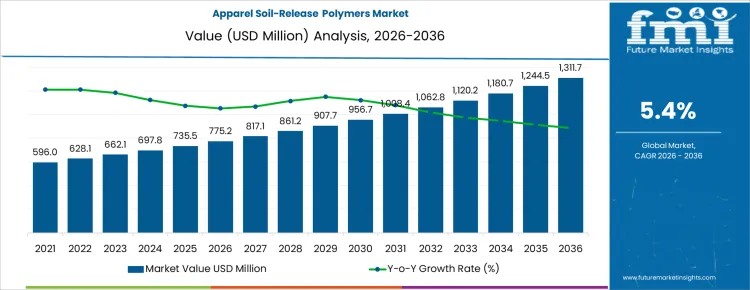
The apparel soil-release polymers market is projected to grow from USD 775.2 million in 2026 to USD 1,311.7 million by 2036, reflecting a compound annual growth rate (CAGR) of 5.4%. These polymers are primarily used in fabric care products, such as laundry detergents, to enhance the removal of soil and stains from clothing. As consumers increasingly demand garments that maintain their appearance and cleanliness over multiple washes, the adoption of apparel soil-release polymers is expected to rise. These additives help fabrics resist staining, improving the long-term look and feel of clothing, which is becoming more important with growing consumer concerns about product longevity and fabric care.
The market growth is also driven by the continued trend toward premium and high-performance laundry detergents, as well as the rising consumer interest in environmentally friendly and sustainable cleaning solutions. As manufacturers develop more efficient and eco-friendly soil-release polymers, the demand for these products in both residential and commercial applications is expected to grow, especially as the apparel industry increasingly focuses on fabric care innovation and sustainability.
Quick Stats of the Apparel Soil-Release Polymers Market
- Apparel Soil-Release Polymers Market Value (2026): USD 775.2 million
- Apparel Soil-Release Polymers Market Forecast Value (2036): USD 1,311.7 million
- Apparel Soil-Release Polymers Market Global Forecast CAGR (2026 to 2036): 5.4%
- Apparel Soil-Release Polymers Market Leading Segment: End-Use (Household/Consumer Laundry) 54%
- Key Growth Regions in Apparel Soil-Release Polymers Market: China
- Top Players in Apparel Soil-Release Polymers Market: Dow, BASF, Lubrizol, Archroma, Clariant, Solvay, Evonik, Wacker Chemie, Ashland, Croda International
What is the Growth Forecast for the Apparel Soil-Release Polymers Market through 2036?
The saturation point analysis for the apparel soil-release polymers market highlights a steady and consistent growth trajectory, with gradual acceleration in the later years. Starting at USD 775.2 million in 2026, the market grows to USD 816.4 million in 2027 and USD 860 million in 2028, indicating moderate expansion as the demand for soil-release technology in fabric care products continues to rise. The early years reflect stable adoption of these polymers, driven by the growing demand for laundry detergents that offer superior cleaning power and fabric protection.
From 2028 to 2030, the market sees incremental growth, reaching USD 906.1 million in 2029 and USD 954.8 million in 2030. This period reflects the stage of gradual market maturation, as consumers increasingly choose detergent products with advanced soil-release technologies. Between 2030 and 2035, the market accelerates, reaching USD 1,006.3 million in 2031, USD 1,060.7 million in 2032, and USD 1,118.2 million in 2033. By 2035, the market is projected to reach USD 1,179 million, with the final projected market value of USD 1,311.7 million expected in 2036. The saturation point analysis indicates that while the market grows steadily, demand for more effective and sustainable apparel care solutions will drive continued expansion, reaching its peak as fabric care technologies evolve.
Apparel Soil-Release Polymers Market Key Takeaways
| Metric | Value |
|---|---|
| Industry Sales Value (2026) | USD 775.2 million |
| Industry Forecast Value (2036) | USD 1,311.7 million |
| Industry Forecast CAGR (2026 to 2036) | 5.4% |
What Is Driving the Demand for the Apparel Soil-Release Polymers Market Globally?
The global demand for apparel soil-release polymers is driven by rising consumer expectations for clothing that stays cleaner longer and resists visible stains through everyday wear and laundering. Soil-release polymers are functional additives used in textile finishes and laundry detergents to improve the ability of fabrics-especially synthetics such as polyester and blends-to release oily and particulate soils during wash cycles. As active lifestyles, work from home routines, and varied daily activities increase the frequency of laundering, consumers seek fabrics and care systems that maintain appearance and longevity with fewer washes, helping save water, energy, and time.
Growth in performance and athleisure apparel, which is often made from hydrophobic fibers that attract body oils and environmental soils, has reinforced the need for effective soil-release technologies. In addition, the expansion of premium, sustainable, and value added clothing segments in markets across Asia Pacific, Europe, Latin America, and the Middle East supports uptake of soil-release polymers, as brands differentiate through enhanced fabric performance. Retailers and manufacturers increasingly specify formulations that integrate soil-release chemistries to deliver visible benefits such as reduced staining, easier wash out, and improved color retention over multiple laundering cycles.
Future demand for apparel soil-release polymers is expected to grow as both textile innovation and sustainability priorities continue to evolve globally. Advances in polymer science and green chemistry are enabling development of more efficient and environmentally compatible soil-release systems that align with regulatory frameworks restricting persistent or ecotoxic substances. Bio based and biodegradable polymer options are gaining appeal as consumers and regulators alike prioritise reduced ecological impact in both textile treatment and detergent formulations.
Growth in e commerce and direct to consumer apparel brands will further raise expectations for garment durability and care convenience, reinforcing the value proposition of soil-release technologies. Expansion of textile care infrastructure and educational outreach on garment maintenance will also support adoption, enabling consumers to extend garment life and reduce overall consumption.
As clothing producers and textile finishers seek to meet both performance benchmarks and sustainability commitments, soil-release polymers are poised to play a central role in next generation fabric functionality. Continued innovation that balances performance, safety, and environmental profile will shape how broadly these technologies are adopted, underpinning steady market expansion across regions worldwide.
What are the Leading Segments in the Global Apparel Soil-Release Polymers Market?
The global apparel soil-release polymers market is segmented by polymer type and application route. Among polymer types, polyester-based soil-release polymers hold the largest share at 34%, followed by polyether-modified polymers, acrylic copolymers, and silicone/non-fluorinated repellents. Polyester-based polymers are preferred for their effectiveness in enhancing the soil-release properties of fabrics, particularly in clothing and textiles. In terms of application route, in-detergent additives lead the market with 46% of the share, followed by laundry boosters, fabric softeners, and textile finishing chemicals. The demand for these polymers is driven by their ability to maintain the cleanliness and durability of apparel, especially in detergent formulations.
What Drives the Growth of Polyester-Based Soil-Release Polymers in the Apparel Soil-Release Polymers Market?
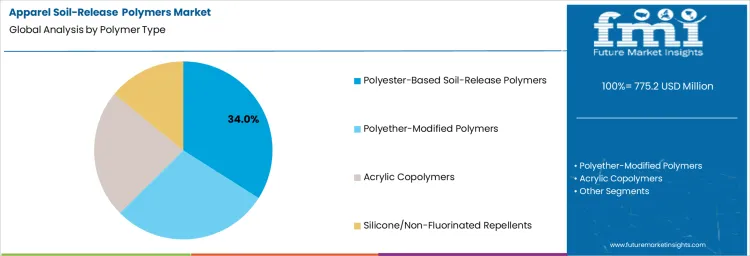
Polyester-based soil-release polymers are the leading polymer type in the apparel soil-release polymers market, accounting for 34% of the market share. These polymers are highly effective at improving the soil-release properties of fabrics, particularly polyester and polyester-blend textiles, which are commonly used in apparel. Polyester fabrics tend to attract oils and other stains that are difficult to remove, making the inclusion of soil-release polymers essential for achieving better cleaning results. Polyester-based polymers work by modifying the surface of the fabric to facilitate the removal of soils and stains during washing, ensuring garments remain clean and vibrant after multiple washes.
As consumers increasingly prioritize long-lasting, stain-resistant clothing, the demand for polyester-based soil-release polymers continues to rise, especially in applications such as sportswear, workwear, and everyday apparel. The continued innovation in detergent formulations and the rising popularity of advanced laundry products that enhance fabric performance further supports the growth of this segment. As the demand for high-performance apparel that maintains its appearance over time increases, polyester-based soil-release polymers are expected to remain a key driver in the market.
What is Driving the Demand for In-Detergent Additives in the Apparel Soil-Release Polymers Market?
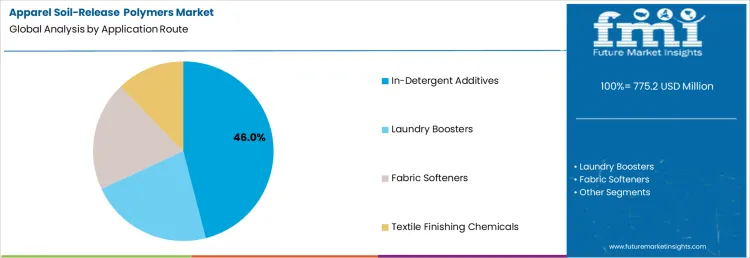
In-detergent additives represent the leading application route in the apparel soil-release polymers market, capturing 46% of the share. The demand for in-detergent additives is driven by their ability to enhance the performance of detergents in breaking down and removing soil from fabrics during the washing process. These additives are incorporated directly into detergent formulations, where they improve the soil-release capabilities of the detergent, ensuring that stains and dirt are efficiently lifted from the fabric and suspended in the wash water. The convenience of in-detergent additives, which do not require additional steps from the consumer, makes them highly popular in household and industrial laundry products.
As the focus on fabric care and maintaining the appearance of apparel intensifies, in-detergent additives are increasingly being included in high-performance detergents to meet consumer expectations. The growth of the in-detergent additives segment is also supported by the increasing demand for laundry products that offer multi-functional benefits, such as enhanced soil removal, stain prevention, and fabric protection. As consumer preferences shift toward more effective, all-in-one cleaning solutions, the demand for in-detergent additives containing apparel soil-release polymers is expected to continue growing, securing its dominant position in the market.
What are the Key Dynamics of the Global Apparel Soil Release Polymers Market?
The global apparel soil-release polymers market is expanding as clothing manufacturers and detergent brands integrate advanced polymers that enhance fabric cleanliness and stain management. These polymers are added to textile finishes and laundry formulations to help loosen and remove oily soils, food stains and everyday grime during wash cycles. Growth reflects demand for durable, easy care apparel, increased apparel washing frequency, and consumer preference for products that maintain item appearance over time. Adoption spans activewear, casual garments and premium fabrics where performance and fabric longevity influence purchase decisions.
What are the Key Drivers for the Global Apparel Soil-Release Polymers Market?
One key driver is rising consumer focus on garment care and longevity, especially for performance, athleisure and premium apparel that can attract difficult stains. Brands invest in soil release polymers that help fabrics shed contaminants and reduce rewash frequency, supporting convenience and cost value for users. Expansion of textile finishing services and laundry product innovation pushes formulators to adopt functional polymers that deliver consistent soil release benefit. Growth of e commerce and online apparel segments increases garment turnover and washing cycles, amplifying need for durable performance across regions. Emphasis on fabric aesthetics and easy care claims encourages integration of advanced polymer systems.
What are the Restraints for the Global Apparel Soil-Release Polymers Market?
One restraint is formulation complexity, as soil-release polymers must balance performance with fabric feel, breathability and compatibility with detergents and conditioners. Some advanced polymer systems may add cost or require specialised application processes in textile finishing or laundry products, affecting price sensitivity in broader market segments. Variability in fabric types and blends challenges universal solutions, which can increase development and testing needs for suppliers. Regulatory considerations around polymer safety and environmental impact influence material selection. Limited awareness among some consumer groups about soil release benefits may slow uptake in markets where basic wash performance remains a priority.
What is the Key Trends in the Global Apparel Soil-Release Polymers Market?
A key trend is development of bio based and environmentally friendly soil-release polymers that align with sustainability preferences without compromising performance. Ingredient suppliers are creating next generation systems with enhanced wash durability and lower ecological impact. Integration of polymers with multifunctional properties-such as anti odor, wrinkle control or moisture management-is gaining traction to provide broader garment benefits. Collaboration between fabric mills, detergent brands and polymer developers accelerates tailored solutions for specific textile types and consumer needs. Use of predictive formulation tools and advanced testing methods supports efficient design of soil release performance for emerging garment categories.
What is the Country-Wise Analysis of the Apparel Soil-Release Polymers Market?
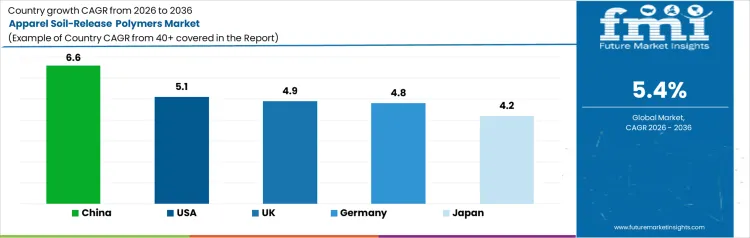
The apparel soil-release polymers market is projected to experience steady growth, driven by the increasing demand for advanced fabrics that are resistant to soil and stains. These polymers help enhance the cleaning and maintenance of clothing by preventing soil from adhering to fabrics, making them easier to clean and maintain. As consumer interest in high-performance fabrics grows, especially in areas like activewear and premium apparel, the demand for soil-release polymers is rising. High-growth markets like China are leading the way due to rapid industrialization, urbanization, and a growing middle class, while developed markets such as the USA, UK, and Germany are experiencing steady growth driven by the desire for high-quality, durable clothing with improved performance and ease of care.
Country-Wise CAGR Forecast for Apparel Soil-Release Polymers Market
| Country | CAGR (2026-2036) |
|---|---|
| China | 6.6% |
| United States | 5.1% |
| United Kingdom | 4.9% |
| Germany | 4.8% |
| Japan | 4.2% |
What is the Growth Outlook for the Apparel Soil-Release Polymers Market in China?
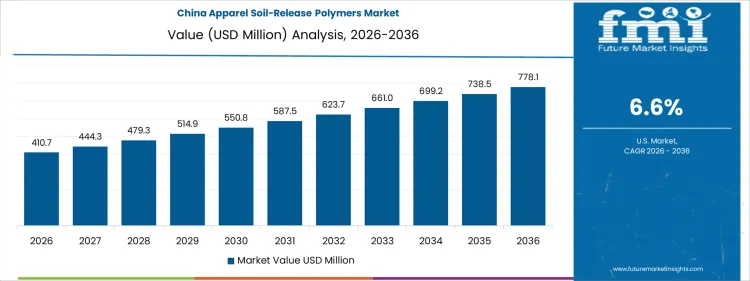
The apparel soil-release polymers market in China is expected to grow at the highest rate, with a projected CAGR of 6.6%. China’s expanding middle class, coupled with growing demand for high-performance apparel, is driving the adoption of advanced fabric treatments like soil-release polymers. As consumer awareness of clothing quality and performance increases, particularly in the activewear and premium apparel segments, the demand for apparel that is easier to clean and maintain is rising. China’s manufacturing sector is also supporting this growth, with companies seeking ways to improve the quality of textiles and clothing while reducing maintenance requirements. The rapid urbanization, increasing disposable incomes, and interest in functional, easy-care clothing products are expected to continue driving growth in China’s market for apparel soil-release polymers.
What is the Market Outlook for the Apparel Soil-Release Polymers Market in the United States?
The apparel soil-release polymers market in the United States is projected to grow steadily, with a projected CAGR of 5.1%. The USA market is driven by the increasing demand for high-performance apparel, especially in activewear and workwear segments, where soil and stain resistance is a key factor. As consumers continue to prioritize both durability and ease of care in clothing, the adoption of soil-release polymers is expected to rise. Additionally, the growing awareness of sustainability and eco-friendly products is pushing manufacturers to develop advanced, environmentally responsible fabric treatments. With the increasing preference for multifunctional, easy-care clothing products, the USA market for apparel soil-release polymers is expected to experience steady growth in the coming years.
What is the Growth Forecast for the Apparel Soil-Release Polymers Market in the United Kingdom?
The apparel soil-release polymers market in the United Kingdom is expected to grow at a steady pace, with a projected CAGR of 4.9%. The UK’s growing consumer demand for premium and high-performance fabrics, particularly in the activewear and leisurewear sectors, is driving the adoption of soil-release polymers. As consumers in the UK prioritize clothing that is not only stylish but also durable and easy to care for, the demand for apparel treatments that prevent soil buildup is increasing. Additionally, the UK market is seeing a shift toward eco-conscious products, with a growing emphasis on sustainable fabric treatments. This trend is expected to support steady growth in the UK market for apparel soil-release polymers.
What is the Market Outlook for the Apparel Soil-Release Polymers Market in Germany?
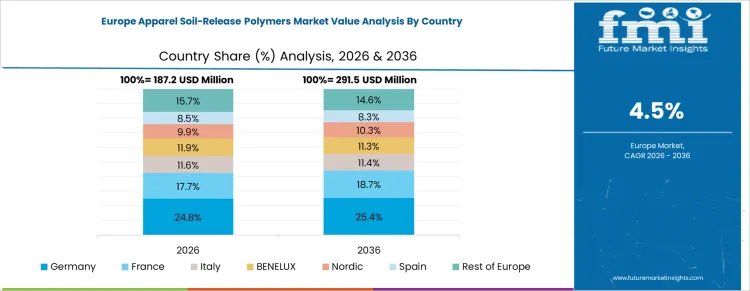
The apparel soil-release polymers market in Germany is projected to grow at a steady pace, with a projected CAGR of 4.8%. Germany’s strong emphasis on sustainability and high-quality consumer goods is driving the adoption of advanced fabric treatments, including soil-release polymers. The demand for functional, easy-care clothing, particularly in the premium and activewear segments, is rising as consumers prioritize both performance and durability. Additionally, as the global focus on sustainable manufacturing grows, German consumers are increasingly seeking environmentally responsible fabric treatments. With the continued demand for clothing that is both easy to maintain and long-lasting, Germany’s market for apparel soil-release polymers is expected to see steady growth in the coming years.
What are the Growth Prospects for the Apparel Soil-Release Polymers Market in Japan?
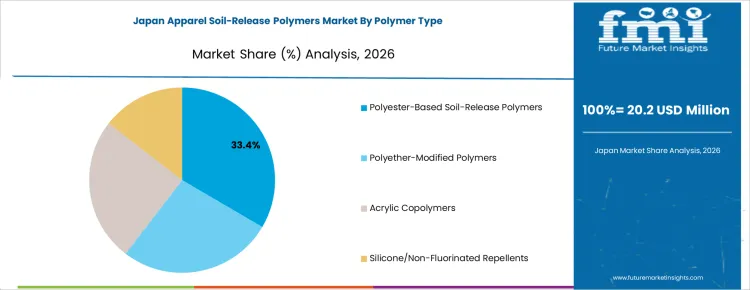
The apparel soil-release polymers market in Japan is expected to grow at a moderate pace, with a projected CAGR of 4.2%. Japan’s well-established textile and apparel market is increasingly focusing on high-performance, easy-care fabrics, especially in the workwear and activewear sectors, where soil resistance is important. As Japanese consumers continue to demand clothing that is not only functional but also easy to maintain, the adoption of soil-release polymers is expected to rise. However, the growth rate in Japan is expected to be slower compared to other regions, as consumer preferences are more conservative and heavily influenced by traditional garment care practices. Despite this, the market for advanced fabric treatments, including soil-release polymers, is expected to continue growing steadily in Japan as demand for durable and low-maintenance apparel increases.
What is the Competitive Landscape for the Apparel Soil-Release Polymers Market?
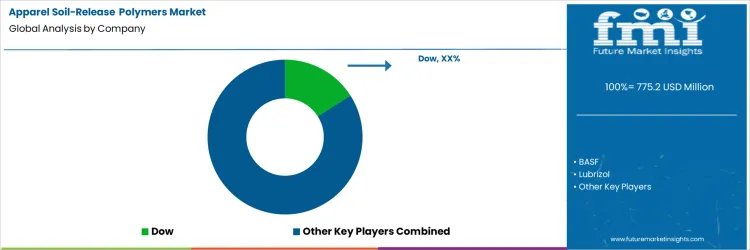
The apparel soil-release polymers market is growing as consumers seek fabrics that remain cleaner for longer periods, requiring innovative solutions for stain resistance and soil release in washing. Dow leads the market with its advanced soil-release polymers, offering high-performance solutions that enhance fabric care and maintain the appearance of clothing by improving soil removal during washing. Their focus on innovation and sustainability has positioned them as a dominant player. BASF, Lubrizol, and Archroma are major competitors, each providing specialized polymers designed to improve soil release properties in textiles. BASF focuses on developing sustainable solutions for fabric care, while Lubrizol and Archroma offer performance-driven polymers that improve soil release and extend the longevity of apparel.
Clariant, Solvay, Evonik, Wacker Chemie, Ashland, and Croda International further contribute to the competitive landscape by offering a range of soil-release polymers tailored for the textile industry. Clariant focuses on eco-friendly, high-performance polymers, while Solvay and Evonik develop innovative solutions that enhance fabric care through better stain resistance. Wacker Chemie and Ashland offer durable and effective soil-release solutions, while Croda International provides specialized polymers that maintain fabric cleanliness. These companies compete by focusing on product performance, sustainability, and the ability to meet the growing demand for innovative, effective soil-release solutions in the apparel industry.
Key Players of the Apparel Soil-Release Polymers Market
- Dow
- BASF
- Lubrizol
- Archroma
- Clariant
- Solvay
- Evonik
- Wacker Chemie
- Ashland
- Croda International
Scope of the Report
| Items | Values |
|---|---|
| Quantitative Units (2026) | USD Million |
| Polymer Type | Polyester-Based Soil-Release Polymers, Polyether-Modified Polymers, Acrylic Copolymers, Silicone/Non-Fluorinated Repellents |
| Application Route | In-Detergent Additives, Laundry Boosters, Fabric Softeners, Textile Finishing Chemicals |
| Fabric/Application | Sports & Performance Apparel, Workwear/Uniforms, Casual Cotton Blends, Home Textiles |
| End-Use | Household/Consumer Laundry, Institutional Laundry, Textile Mills/Finishers, Brands/Private Label |
| Companies | Dow, BASF, Lubrizol, Archroma, Clariant, Solvay, Evonik, Wacker Chemie, Ashland, Croda International |
| Regions Covered | North America, Latin America, Western Europe, Eastern Europe, South Asia and Pacific, East Asia, Middle East & Africa |
| Countries Covered | United States, Canada, Mexico, Brazil, Argentina, Germany, France, United Kingdom, Italy, Spain, Netherlands, China, India, Japan, South Korea, ANZ, GCC Countries, South Africa |
| Additional Attributes | Dollar by sales by polymer type, application route, fabric/application, end-use, and region. Includes market trends in apparel soil-release polymers, focusing on polyester, polyether-modified, and acrylic copolymers. Highlights the role of in-detergent additives, laundry boosters, fabric softeners, and textile finishing chemicals in various applications like sportswear, workwear, cotton blends, and home textiles. Focus on sustainability, cost-effectiveness, regulatory compliance, market share, and competitive positioning of key companies in the textile and laundry additives market. |
Apparel Soil-Release Polymers Market Segmentation
By Polymer Type:
- Polyester-Based Soil-Release Polymers
- Polyether-Modified Polymers
- Acrylic Copolymers
- Silicone/Non-Fluorinated Repellents
By Application Route:
- In-Detergent Additives
- Laundry Boosters
- Fabric Softeners
- Textile Finishing Chemicals
By Fabric/Application:
- Sports & Performance Apparel
- Workwear/Uniforms
- Casual Cotton Blends
- Home Textiles
By End-Use:
- Household/Consumer Laundry
- Institutional Laundry
- Textile Mills/Finishers
- Brands/Private Label
By Region:
- Asia Pacific
- China
- Japan
- South Korea
- India
- Australia & New Zealand
- ASEAN
- Rest of Asia Pacific
- Europe
- Germany
- United Kingdom
- France
- Italy
- Spain
- Nordic
- BENELUX
- Rest of Europe
- North America
- United States
- Canada
- Mexico
- Latin America
- Brazil
- Chile
- Rest of Latin America
- Middle East & Africa
- Kingdom of Saudi Arabia
- Other GCC Countries
- Turkey
- South Africa
- Other African Union
- Rest of Middle East & Africa
Frequently Asked Questions
How big is the apparel soil-release polymers market in 2026?
The global apparel soil-release polymers market is estimated to be valued at USD 775.2 million in 2026.
What will be the size of apparel soil-release polymers market in 2036?
The market size for the apparel soil-release polymers market is projected to reach USD 1,311.7 million by 2036.
How much will be the apparel soil-release polymers market growth between 2026 and 2036?
The apparel soil-release polymers market is expected to grow at a 5.4% CAGR between 2026 and 2036.
What are the key product types in the apparel soil-release polymers market?
The key product types in apparel soil-release polymers market are polyester-based soil-release polymers, polyether-modified polymers, acrylic copolymers and silicone/non-fluorinated repellents.
Which application route segment to contribute significant share in the apparel soil-release polymers market in 2026?
In terms of application route, in-detergent additives segment to command 46.0% share in the apparel soil-release polymers market in 2026.
Preview the report firsthand - request a free sample
Get SampleGet the brochure for pricing and purchase details.
Get PDFTable of Content
- Executive Summary
- Global Market Outlook
- Demand-side Trends
- Supply-side Trends
- Technology Roadmap Analysis
- Analysis and Recommendations
- Market Overview
- Market Coverage / Taxonomy
- Market Definition / Scope / Limitations
- Market Background
- Market Dynamics
- Drivers
- Restraints
- Opportunity
- Trends
- Scenario Forecast
- Demand in Optimistic Scenario
- Demand in Likely Scenario
- Demand in Conservative Scenario
- Opportunity Map Analysis
- Product Life Cycle Analysis
- Supply Chain Analysis
- Investment Feasibility Matrix
- Value Chain Analysis
- PESTLE and Porter’s Analysis
- Regulatory Landscape
- Regional Parent Market Outlook
- Production and Consumption Statistics
- Import and Export Statistics
- Market Dynamics
- Global Market Analysis 2021 to 2025 and Forecast, 2026 to 2036
- Historical Market Size Value (USD Million) Analysis, 2021 to 2025
- Current and Future Market Size Value (USD Million) Projections, 2026 to 2036
- Y-o-Y Growth Trend Analysis
- Absolute $ Opportunity Analysis
- Global Market Pricing Analysis 2021 to 2025 and Forecast 2026 to 2036
- Global Market Analysis 2021 to 2025 and Forecast 2026 to 2036, By Polymer Type
- Introduction / Key Findings
- Historical Market Size Value (USD Million) Analysis By Polymer Type , 2021 to 2025
- Current and Future Market Size Value (USD Million) Analysis and Forecast By Polymer Type , 2026 to 2036
- Polyester-Based Soil-Release Polymers
- Polyether-Modified Polymers
- Acrylic Copolymers
- Silicone/Non-Fluorinated Repellents
- Y-o-Y Growth Trend Analysis By Polymer Type , 2021 to 2025
- Absolute $ Opportunity Analysis By Polymer Type , 2026 to 2036
- Global Market Analysis 2021 to 2025 and Forecast 2026 to 2036, By Application Route
- Introduction / Key Findings
- Historical Market Size Value (USD Million) Analysis By Application Route, 2021 to 2025
- Current and Future Market Size Value (USD Million) Analysis and Forecast By Application Route, 2026 to 2036
- In-Detergent Additives
- Laundry Boosters
- Fabric Softeners
- Textile Finishing Chemicals
- Y-o-Y Growth Trend Analysis By Application Route, 2021 to 2025
- Absolute $ Opportunity Analysis By Application Route, 2026 to 2036
- Global Market Analysis 2021 to 2025 and Forecast 2026 to 2036, By FabricorApplication
- Introduction / Key Findings
- Historical Market Size Value (USD Million) Analysis By FabricorApplication, 2021 to 2025
- Current and Future Market Size Value (USD Million) Analysis and Forecast By FabricorApplication, 2026 to 2036
- Sports & Performance Apparel
- Workwear/Uniforms
- Casual Cotton Blends
- Home Textiles
- Y-o-Y Growth Trend Analysis By FabricorApplication, 2021 to 2025
- Absolute $ Opportunity Analysis By FabricorApplication, 2026 to 2036
- Global Market Analysis 2021 to 2025 and Forecast 2026 to 2036, By End-Use
- Introduction / Key Findings
- Historical Market Size Value (USD Million) Analysis By End-Use, 2021 to 2025
- Current and Future Market Size Value (USD Million) Analysis and Forecast By End-Use, 2026 to 2036
- Household/Consumer Laundry
- Institutional Laundry
- Textile Mills/Finishers
- Brands/Private Label
- Y-o-Y Growth Trend Analysis By End-Use, 2021 to 2025
- Absolute $ Opportunity Analysis By End-Use, 2026 to 2036
- Global Market Analysis 2021 to 2025 and Forecast 2026 to 2036, By Region
- Introduction
- Historical Market Size Value (USD Million) Analysis By Region, 2021 to 2025
- Current Market Size Value (USD Million) Analysis and Forecast By Region, 2026 to 2036
- North America
- Latin America
- Western Europe
- Eastern Europe
- East Asia
- South Asia and Pacific
- Middle East & Africa
- Market Attractiveness Analysis By Region
- North America Market Analysis 2021 to 2025 and Forecast 2026 to 2036, By Country
- Historical Market Size Value (USD Million) Trend Analysis By Market Taxonomy, 2021 to 2025
- Market Size Value (USD Million) Forecast By Market Taxonomy, 2026 to 2036
- By Country
- USA
- Canada
- Mexico
- By Polymer Type
- By Application Route
- By FabricorApplication
- By End-Use
- By Country
- Market Attractiveness Analysis
- By Country
- By Polymer Type
- By Application Route
- By FabricorApplication
- By End-Use
- Key Takeaways
- Latin America Market Analysis 2021 to 2025 and Forecast 2026 to 2036, By Country
- Historical Market Size Value (USD Million) Trend Analysis By Market Taxonomy, 2021 to 2025
- Market Size Value (USD Million) Forecast By Market Taxonomy, 2026 to 2036
- By Country
- Brazil
- Chile
- Rest of Latin America
- By Polymer Type
- By Application Route
- By FabricorApplication
- By End-Use
- By Country
- Market Attractiveness Analysis
- By Country
- By Polymer Type
- By Application Route
- By FabricorApplication
- By End-Use
- Key Takeaways
- Western Europe Market Analysis 2021 to 2025 and Forecast 2026 to 2036, By Country
- Historical Market Size Value (USD Million) Trend Analysis By Market Taxonomy, 2021 to 2025
- Market Size Value (USD Million) Forecast By Market Taxonomy, 2026 to 2036
- By Country
- Germany
- UK
- Italy
- Spain
- France
- Nordic
- BENELUX
- Rest of Western Europe
- By Polymer Type
- By Application Route
- By FabricorApplication
- By End-Use
- By Country
- Market Attractiveness Analysis
- By Country
- By Polymer Type
- By Application Route
- By FabricorApplication
- By End-Use
- Key Takeaways
- Eastern Europe Market Analysis 2021 to 2025 and Forecast 2026 to 2036, By Country
- Historical Market Size Value (USD Million) Trend Analysis By Market Taxonomy, 2021 to 2025
- Market Size Value (USD Million) Forecast By Market Taxonomy, 2026 to 2036
- By Country
- Russia
- Poland
- Hungary
- Balkan & Baltic
- Rest of Eastern Europe
- By Polymer Type
- By Application Route
- By FabricorApplication
- By End-Use
- By Country
- Market Attractiveness Analysis
- By Country
- By Polymer Type
- By Application Route
- By FabricorApplication
- By End-Use
- Key Takeaways
- East Asia Market Analysis 2021 to 2025 and Forecast 2026 to 2036, By Country
- Historical Market Size Value (USD Million) Trend Analysis By Market Taxonomy, 2021 to 2025
- Market Size Value (USD Million) Forecast By Market Taxonomy, 2026 to 2036
- By Country
- China
- Japan
- South Korea
- By Polymer Type
- By Application Route
- By FabricorApplication
- By End-Use
- By Country
- Market Attractiveness Analysis
- By Country
- By Polymer Type
- By Application Route
- By FabricorApplication
- By End-Use
- Key Takeaways
- South Asia and Pacific Market Analysis 2021 to 2025 and Forecast 2026 to 2036, By Country
- Historical Market Size Value (USD Million) Trend Analysis By Market Taxonomy, 2021 to 2025
- Market Size Value (USD Million) Forecast By Market Taxonomy, 2026 to 2036
- By Country
- India
- ASEAN
- Australia & New Zealand
- Rest of South Asia and Pacific
- By Polymer Type
- By Application Route
- By FabricorApplication
- By End-Use
- By Country
- Market Attractiveness Analysis
- By Country
- By Polymer Type
- By Application Route
- By FabricorApplication
- By End-Use
- Key Takeaways
- Middle East & Africa Market Analysis 2021 to 2025 and Forecast 2026 to 2036, By Country
- Historical Market Size Value (USD Million) Trend Analysis By Market Taxonomy, 2021 to 2025
- Market Size Value (USD Million) Forecast By Market Taxonomy, 2026 to 2036
- By Country
- Kingdom of Saudi Arabia
- Other GCC Countries
- Turkiye
- South Africa
- Other African Union
- Rest of Middle East & Africa
- By Polymer Type
- By Application Route
- By FabricorApplication
- By End-Use
- By Country
- Market Attractiveness Analysis
- By Country
- By Polymer Type
- By Application Route
- By FabricorApplication
- By End-Use
- Key Takeaways
- Key Countries Market Analysis
- USA
- Pricing Analysis
- Market Share Analysis, 2025
- By Polymer Type
- By Application Route
- By FabricorApplication
- By End-Use
- Canada
- Pricing Analysis
- Market Share Analysis, 2025
- By Polymer Type
- By Application Route
- By FabricorApplication
- By End-Use
- Mexico
- Pricing Analysis
- Market Share Analysis, 2025
- By Polymer Type
- By Application Route
- By FabricorApplication
- By End-Use
- Brazil
- Pricing Analysis
- Market Share Analysis, 2025
- By Polymer Type
- By Application Route
- By FabricorApplication
- By End-Use
- Chile
- Pricing Analysis
- Market Share Analysis, 2025
- By Polymer Type
- By Application Route
- By FabricorApplication
- By End-Use
- Germany
- Pricing Analysis
- Market Share Analysis, 2025
- By Polymer Type
- By Application Route
- By FabricorApplication
- By End-Use
- UK
- Pricing Analysis
- Market Share Analysis, 2025
- By Polymer Type
- By Application Route
- By FabricorApplication
- By End-Use
- Italy
- Pricing Analysis
- Market Share Analysis, 2025
- By Polymer Type
- By Application Route
- By FabricorApplication
- By End-Use
- Spain
- Pricing Analysis
- Market Share Analysis, 2025
- By Polymer Type
- By Application Route
- By FabricorApplication
- By End-Use
- France
- Pricing Analysis
- Market Share Analysis, 2025
- By Polymer Type
- By Application Route
- By FabricorApplication
- By End-Use
- India
- Pricing Analysis
- Market Share Analysis, 2025
- By Polymer Type
- By Application Route
- By FabricorApplication
- By End-Use
- ASEAN
- Pricing Analysis
- Market Share Analysis, 2025
- By Polymer Type
- By Application Route
- By FabricorApplication
- By End-Use
- Australia & New Zealand
- Pricing Analysis
- Market Share Analysis, 2025
- By Polymer Type
- By Application Route
- By FabricorApplication
- By End-Use
- China
- Pricing Analysis
- Market Share Analysis, 2025
- By Polymer Type
- By Application Route
- By FabricorApplication
- By End-Use
- Japan
- Pricing Analysis
- Market Share Analysis, 2025
- By Polymer Type
- By Application Route
- By FabricorApplication
- By End-Use
- South Korea
- Pricing Analysis
- Market Share Analysis, 2025
- By Polymer Type
- By Application Route
- By FabricorApplication
- By End-Use
- Russia
- Pricing Analysis
- Market Share Analysis, 2025
- By Polymer Type
- By Application Route
- By FabricorApplication
- By End-Use
- Poland
- Pricing Analysis
- Market Share Analysis, 2025
- By Polymer Type
- By Application Route
- By FabricorApplication
- By End-Use
- Hungary
- Pricing Analysis
- Market Share Analysis, 2025
- By Polymer Type
- By Application Route
- By FabricorApplication
- By End-Use
- Kingdom of Saudi Arabia
- Pricing Analysis
- Market Share Analysis, 2025
- By Polymer Type
- By Application Route
- By FabricorApplication
- By End-Use
- Turkiye
- Pricing Analysis
- Market Share Analysis, 2025
- By Polymer Type
- By Application Route
- By FabricorApplication
- By End-Use
- South Africa
- Pricing Analysis
- Market Share Analysis, 2025
- By Polymer Type
- By Application Route
- By FabricorApplication
- By End-Use
- USA
- Market Structure Analysis
- Competition Dashboard
- Competition Benchmarking
- Market Share Analysis of Top Players
- By Regional
- By Polymer Type
- By Application Route
- By FabricorApplication
- By End-Use
- Competition Analysis
- Competition Deep Dive
- Dow
- Overview
- Product Portfolio
- Profitability by Market Segments (Product/Age /Sales Channel/Region)
- Sales Footprint
- Strategy Overview
- Marketing Strategy
- Product Strategy
- Channel Strategy
- BASF
- Lubrizol
- Archroma
- Clariant
- Solvay
- Evonik
- Wacker Chemie
- Ashland
- Croda International
- Dow
- Competition Deep Dive
- Assumptions & Acronyms Used
- Research Methodology


