

- Industry Size (2026)
- USD 1.1 Bn
- Forecast (2036)
- USD 4.3 Bn
- CAGR (2026 to 2036)
- 14.6%
Functional Shots Market Size, Market Forecast and Outlook By FMI
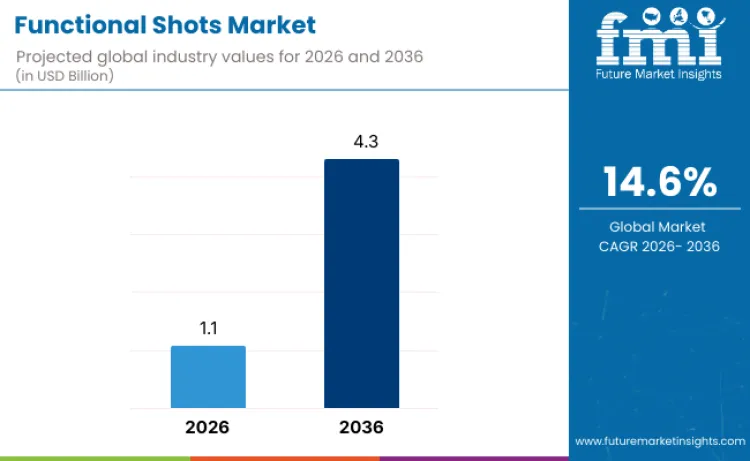
Functional shots industry valuation is set to reach USD 1.1 billion in 2026, driven by an accelerating consumer shift toward concentrated nutrition delivery systems and time-efficient wellness solutions. Revenue from the sales of functional shots is projected to expand at a robust CAGR of 14.6% through 2036, pushing total sector worth beyond USD 4.3 billion by the conclusion of this assessment period. Rising demand for portable health solutions and instant bioactive compounds acts as a primary catalyst for this financial trajectory.
Manufacturers are channeling significant capital into developing concentrated formulations, aiming to deliver maximum nutritional impact through minimal volume consumption without compromising bioavailability and taste acceptance. Product developers are shifting focus from traditional supplement formats to liquid concentrate delivery systems, redefining how consumers access targeted nutrition across urban demographics and busy lifestyle segments. Such behavioral changes encourage beverage companies to introduce scientifically-backed shot formulations utilizing advanced extraction technologies and synergistic ingredient combinations.
Quick Stats for Functional Shots Market
- Functional Shots Industry Value (2026): USD 1.1 Billion
- Functional Shots Industry Forecast Value (2036): USD 4.3 Billion
- Functional Shots Industry Forecast CAGR: 14.6%
- Functional Shots Industry Leading Product: Energy (39%)
- Functional Shots Industry Key Growth Regions: China, India, Germany
- Functional Shots Industry Key Players: Living Essentials Marketing LLC, For Goodness Shakes Ltd, Unrooted Drinks, Beet It Sport, PepsiCo (KeVita)
Functional Shots Market Key Takeaways
| Metric | Value |
|---|---|
| Industry Size (2026) | USD 1.1 Billion |
| Industry Value (2036) | USD 4.3 Billion |
| CAGR (2026-2036) | 14.6% |
Source: Future Market Insights - analysis driven by proprietary forecasting models and primary research
What Drivers Are Accelerating Energy Formulation Adoption?
Shift toward immediate energy solutions is serving as a significant catalyst for broader acceptance of concentrated caffeine and adaptogen combinations among time-pressed consumers. Recent breakthroughs in natural energy compound extraction have complemented formulation protocols by preserving stimulant effectiveness while minimizing jittery side effects. This balanced approach appeals to consumers seeking sustained energy without compromising sleep patterns or causing afternoon crashes, and FMI is of the opinion that controlled energy release is becoming a decisive adoption factor. Clinical validation of plant-based energy compounds has expanded application possibilities beyond traditional caffeine sources. Education programs highlighting the advantages of precise dosing over traditional energy beverages are driving consumer preference shifts. Fitness professionals are capitalizing on these trends by recommending targeted pre-workout shots for optimal performance timing. Integrating adaptogenic herbs with traditional energy compounds is becoming standard, ensuring energy delivery systems support overall wellness while providing immediate benefits.
How Is the Functional Shots Market Segmented Across Key Categories?
Global landscape is intricately segmented to address diverse requirements of the wellness beverage industry, categorizing sector by product formulation and distribution channel preferences. Structural division allows stakeholders to identify specific consumer needs, such as rising demand for energy concentrates in fitness environments or preference for immunity boosters during seasonal transitions. By analyzing these segments, manufacturers can tailor production strategies to meet distinct requirements of health-focused consumers versus convenience-seeking purchasers. Segmentation also highlights shift from general wellness approaches to targeted functional solutions addressing specific health concerns. As industry matures, granular segmentation becomes essential for understanding consumption timing and purchase motivations, ensuring product development aligns with evolving consumer health priorities.
Why Do Energy Formulations Maintain Dominance?
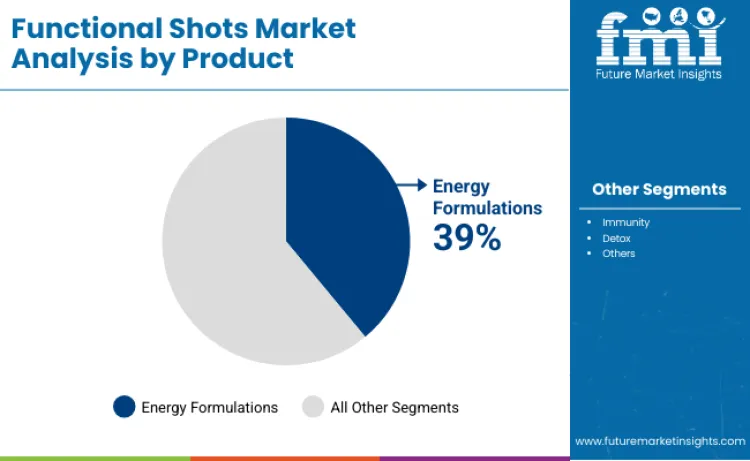
Energy formulations account for 39% of market share in 2026, driven by widespread consumer need for immediate alertness enhancement in fast-paced lifestyles. Leadership position is underpinned by versatility in application across workout routines, workplace productivity needs, and social occasions requiring sustained focus. Segment benefits from continuous ingredient innovation, such as plant-based caffeine alternatives and nootropic compound integration. Research focused on sustained energy delivery demonstrates consumer preference for gradual release formulations over quick-spike alternatives. Critical role in supporting active lifestyles and cognitive performance further solidifies standing, as these benefits address multiple daily challenges. As work-life balance pressures intensify, demand for reliable energy solutions without negative side effects is expected to remain robust.
Why Do Convenience Stores Lead Distribution Channels?
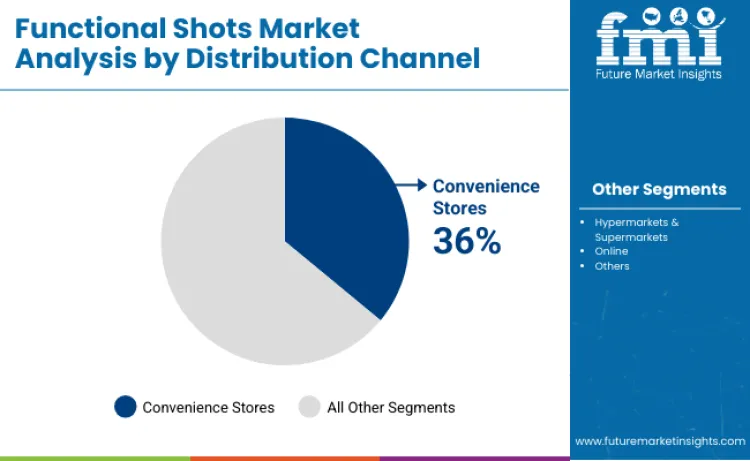
Convenience stores command 36% of market share in 2026, reflecting consumer preference for impulse purchasing and immediate consumption opportunities. Dominance is linked to strategic placement near checkout counters and strategic visibility in high-traffic locations. Retailers rely on refrigerated display cases to maintain product quality and enhance premium positioning at point of sale. These venues are essential for reaching consumers during daily routines and spontaneous wellness decisions, driving priority status in distribution strategies. Emphasis on grab-and-go consumption ensures products designed for immediate use remain primary focus. High turnover requirements necessitate efficient cold chain management, bolstering sustained partnerships between manufacturers and convenience retail operators.
Functional Shots Market Dynamics
How Will Personalized Nutrition Impact Product Development?
Customized wellness approaches are reshaping product development by demanding tailored formulations addressing individual health profiles and lifestyle requirements. Consumer interest in DNA-based nutrition recommendations is creating opportunities for personalized shot blends targeting genetic predispositions and metabolic variations. Advanced understanding of micronutrient deficiencies enables manufacturers to create targeted correction formulations for specific population segments. Wearable technology integration provides data insights for developing shots that complement individual activity levels and stress patterns. Companies positioning products as personalized wellness solutions gain competitive advantages among health-conscious consumers seeking individualized approaches to nutrition optimization, as per FMI’s estimates.
What Role Does Clean Label Demand Play in Formulation Strategies?
Transparency expectations are driving formulation strategies toward recognizable ingredient lists and elimination of synthetic additives. Consumer research demonstrates preference for shots containing whole food extracts over isolated synthetic compounds, creating opportunities for natural ingredient suppliers. Organic certification and non-GMO positioning become competitive necessities rather than premium features. Simplified ingredient panels enable clear communication of functional benefits without overwhelming technical complexity. Manufacturers investing in clean extraction technologies and natural preservation methods secure long-term consumer trust and brand loyalty.
How Are Seasonal Consumption Patterns Shaping Production Planning?
Predictable wellness trends throughout the calendar year influence production scheduling and inventory management strategies. Immunity-focused formulations experience peak demand during cold seasons, requiring manufacturing capacity adjustments and ingredient procurement timing. Energy shots show increased consumption during back-to-school periods and fitness resolution seasons. Detox formulations align with post-holiday wellness initiatives and spring cleaning mentalities. Understanding these cyclical patterns enables efficient resource allocation and targeted marketing campaigns that align with natural consumer behavior patterns.
How Will the Functional Shots Industry Evolve in Major Nations?
Global landscape for functional shots consumption is characterized by diverse wellness priorities and regulatory environments, influenced by local health traditions and lifestyle demands. Established markets prioritize convenience and scientifically-backed formulations, whereas developing economies focus on affordable wellness solutions and traditional ingredient integration. Asia-Pacific regions emerge as rapid growth centers due to increasing health consciousness and adoption of Western wellness trends. Conversely, European markets emphasize organic certification and regulatory compliance. Government initiatives supporting functional food development and wellness program integration ensure sustained demand for targeted nutrition solutions across all geographic regions.
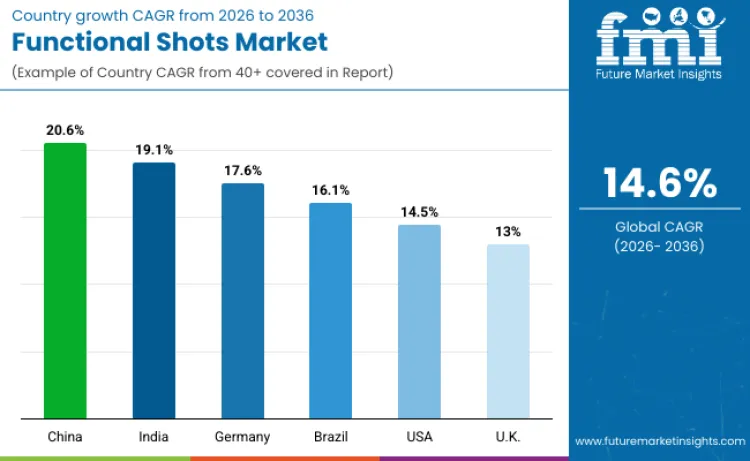
| Country | CAGR (2026 to 2036) |
|---|---|
| China | 20.6% |
| India | 19.1% |
| Germany | 17.6% |
| Brazil | 16.1% |
| USA | 14.5% |
| UK | 13.0% |
Source: FMI analysis based on primary research and proprietary forecasting model
What Is Driving Explosive Demand for Functional Shots in China?
Sales of functional shots in China are set to grow at 20.6% CAGR through 2036. Expansion is underpinned by rapid urbanization and increasing health awareness among younger demographics seeking convenient wellness solutions. Growth is fueled by widespread adoption of preventive health measures and integration of traditional Chinese medicine principles with modern nutrition science. Rising disposable incomes drive consumer willingness to pay premiums for scientifically-backed health products, and FMI is of the opinion that formulation credibility is becoming central to purchase decisions.
Presence of expanding fitness culture and workplace wellness programs creates consistent demand for energy and recovery formulations. Emphasis on combining ancient herbal wisdom with modern extraction technologies continues to be primary driver, maintaining China's position as fastest-growing market for functional beverage innovations.
How Are Nutrition Gaps and Urban Lifestyles Shaping India’s Functional Shot Uptake?
Demand for functional shots in India is projected to rise at 19.1% CAGR during assessment period. Initiatives emphasizing wellness tourism and traditional medicine integration foster favorable environment for functional beverage acceptance. Increasing awareness of micronutrient deficiencies creates demand for targeted supplementation through convenient delivery formats. Rising urban stress levels prompt consumers to seek immediate wellness solutions for energy and cognitive support. Shift is supported by growing middle-class purchasing power and exposure to international wellness trends, accelerating uptake of premium functional products across metropolitan areas and fueling sector expansion.
Why Does Germany Offer a Strong Foundation for Functional Shot Expansion?
Functional shots industry in Germany is poised to expand at 17.6% CAGR. Growth is largely attributed to stringent quality standards and consumer preference for scientifically-validated wellness products. Government focus on preventive healthcare encourages facilities to offer evidence-based nutrition solutions. Increasing partnerships between German research institutions and functional beverage developers ensure product efficacy validation. Strong regulatory framework combined with consumer demand for organic and natural formulations attracts significant investment. Emphasis on sustainable sourcing and ethical manufacturing practices further drives adoption of premium functional shot categories.
What Makes Brazil a Natural Fit for Functional Shot Innovation?
Sales of functional shots in Brazil are set to grow at 16.1% CAGR. Expansion is underpinned by abundant tropical fruit resources providing unique functional ingredient opportunities. Growth is fueled by increasing fitness culture adoption and beach lifestyle health consciousness. Rising awareness of Amazon rainforest superfoods drives revenue generation in exotic functional formulations. Presence of established juice and beverage manufacturing infrastructure ensures efficient production capabilities. Emphasis on natural ingredients and traditional botanical knowledge continues to be primary driver, maintaining Brazil's position as innovative market for tropical functional wellness products.
How Are Convenience and Personalization Fueling Functional Shots in the USA?
Demand for targeted functional shots in USA is projected to rise at 14.5% CAGR. Initiatives emphasizing workplace wellness programs foster favorable environment for convenient health solution adoption. Increasing investment in personalized nutrition research creates demand for customized formulation approaches. High consumer awareness regarding supplement quality standards prompts preference for liquid concentrate delivery systems. Shift is supported by busy lifestyle demands requiring immediate wellness benefits, accelerating uptake of scientifically-backed functional products across diverse demographic segments and fueling sector expansion.
Why Is the UK Emerging as a Quality-Focused Functional Shot Market?
Revenue from functional shots in UK is set to grow at 13.0% CAGR. Expansion is underpinned by increasing health consciousness following public wellness campaigns. Growth is fueled by rising demand for natural energy alternatives to traditional stimulant beverages. Consumer preference for premium wellness products drives revenue generation in specialized functional formulations. Presence of established health food retail networks ensures widespread distribution capabilities. Emphasis on clean label formulations and sustainable packaging continues to be primary driver, maintaining UK position as quality-focused market for functional beverage innovations.
What is the Competitive Outlook for the Functional Shots Market?
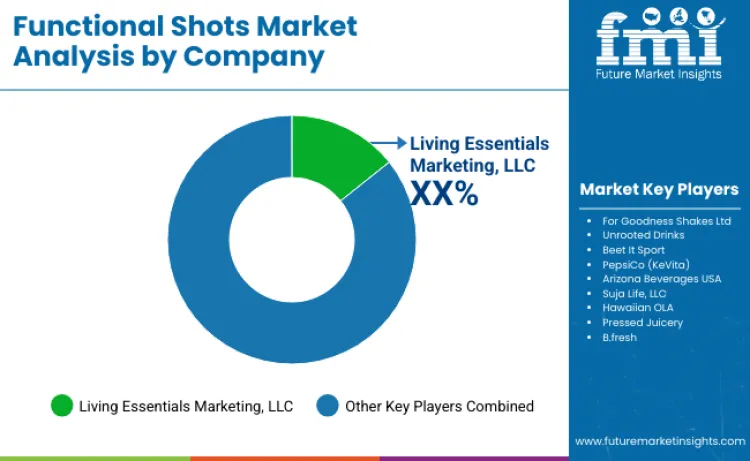
Market participants are increasingly focusing on scientific validation to differentiate their formulations while building consumer trust through clinical research and efficacy studies. Leading players like Living Essentials Marketing and PepsiCo are directing investment toward advanced extraction technologies and personalized nutrition platforms. Significant trend involves developing proprietary ingredient blends that combine traditional botanicals with cutting-edge nutritional compounds. Companies actively engage in partnerships with research institutions to validate health claims and optimize bioavailability.
Innovation emerges as critical competitive frontier, with providers exploring novel delivery systems and flavor masking technologies to improve consumer acceptance. Consolidation activities increase as established beverage companies acquire specialized wellness brands to expand functional portfolios. Strategic alliances with fitness centers and wellness clinics create exclusive distribution channels and build credibility among health-conscious consumers. Living Essentials Marketing maintains significant presence through consistent product innovation and strategic retail partnerships.
Key Players in Functional Shots Market
- Living Essentials Marketing, LLC
- For Goodness Shakes Ltd
- Unrooted Drinks
- Beet It Sport
- PepsiCo (KeVita)
- Arizona Beverages USA
- Suja Life, LLC
- Hawaiian OLA
- Pressed Juicery
- B.fresh
Scope of Report
| Items | Values |
|---|---|
| Quantitative Units | USD Billion |
| Product Category Segments | Energy; Immunity; Detox; Others |
| Distribution Channel Categories | Convenience Stores; Hypermarkets & Supermarkets; Online; Others |
| Regions Covered | North America, Europe, East Asia, South Asia, Latin America, Middle East & Africa |
| Key Countries | China, India, Germany, Brazil, USA, UK. |
| Key Companies Profiled | Living Essentials Marketing, LLC; For Goodness Shakes Ltd; Unrooted Drinks; Beet It Sport; PepsiCo (KeVita); Arizona Beverages USA; Suja Life, LLC; Hawaiian OLA; Pressed Juicery; B.fresh |
| Additional Attributes | Dollar sales measured for functional shot beverages formulated for rapid wellness delivery, specified by product category (energy, immunity, detox, and other targeted benefits), distribution format (convenience-led impulse retail, modern trade, and e-commerce), consumption timing (grab-and-go, fitness/pre-workout, workplace routines), clean label positioning, shelf-stable vs. chilled availability, and regulatory alignment for functional ingredient claims and dosage communication. |
Functional Shots Market by Segments
Product:
- Energy
- Immunity
- Detox
- Others
Distribution Channel:
- Convenience Stores
- Hypermarkets & Supermarkets
- Online
- Others
Bibliography
- Council for Responsible Nutrition. (2024). Functional beverages and concentrated nutrition formats: Consumer usage trends and formulation considerations.
- International Food Information Council. (2024). Consumer perceptions of functional beverages, energy delivery formats, and convenience‑driven nutrition.
- Global Organization for EPA and DHA Omega-3s. (2024). Liquid delivery systems and bioavailability considerations for functional nutrition products.
- International Society of Sports Nutrition. (2025). Position stand on rapid‑delivery nutrition formats, energy compounds, and liquid supplementation.
Frequently Asked Questions
How large is the demand for Functional Shots in the global market in 2026?
Functional shots industry is estimated to be valued at USD 1.1 billion in 2026.
What will be the market size of functional shots in the global market by 2036?
The market size for Functional Shots is projected to reach USD 4.3 billion by 2036.
What is the expected demand growth for Functional Shots between 2026 and 2036?
Demand for Functional Shots is expected to grow at a CAGR of 14.6% between 2026 and 2036.
Which Product segment is poised to lead global sales by 2026?
Energy formulations are expected to be the dominant product segment, capturing approximately 39% of the global market share in 2026.
How significant is the role of Convenience Stores in driving Functional Shots adoption in 2026?
Convenience Stores represent a critical distribution segment, projected to hold a substantial 36% share of the total market in 2026.
Preview the report firsthand - request a free sample
Get SampleGet the brochure for pricing and purchase details.
Get PDFTable of Content
- Executive Summary
- Global Market Outlook
- Demand-side Trends
- Supply-side Trends
- Technology Roadmap Analysis
- Analysis and Recommendations
- Market Overview
- Market Coverage / Taxonomy
- Market Definition / Scope / Limitations
- Market Background
- Market Dynamics
- Drivers
- Restraints
- Opportunity
- Trends
- Scenario Forecast
- Demand in Optimistic Scenario
- Demand in Likely Scenario
- Demand in Conservative Scenario
- Opportunity Map Analysis
- Product Life Cycle Analysis
- Supply Chain Analysis
- Investment Feasibility Matrix
- Value Chain Analysis
- PESTLE and Porter’s Analysis
- Regulatory Landscape
- Regional Parent Market Outlook
- Production and Consumption Statistics
- Import and Export Statistics
- Market Dynamics
- Global Market Analysis 2020 to 2025 and Forecast, 2026 to 2036
- Historical Market Size Value (USD Million) Analysis, 2020 to 2025
- Current and Future Market Size Value (USD Million) Projections, 2026 to 2036
- Y-o-Y Growth Trend Analysis
- Absolute $ Opportunity Analysis
- Global Market Pricing Analysis 2020 to 2025 and Forecast 2026 to 2036
- Global Market Analysis 2020 to 2025 and Forecast 2026 to 2036, By Product
- Introduction / Key Findings
- Historical Market Size Value (USD Million) Analysis By Product, 2020 to 2025
- Current and Future Market Size Value (USD Million) Analysis and Forecast By Product, 2026 to 2036
- Energy
- Immunity
- Detox
- Others
- Y-o-Y Growth Trend Analysis By Product, 2020 to 2025
- Absolute $ Opportunity Analysis By Product, 2026 to 2036
- Global Market Analysis 2020 to 2025 and Forecast 2026 to 2036, By Distribution Channel
- Introduction / Key Findings
- Historical Market Size Value (USD Million) Analysis By Distribution Channel, 2020 to 2025
- Current and Future Market Size Value (USD Million) Analysis and Forecast By Distribution Channel, 2026 to 2036
- Convenience Stores
- Hypermarkets & Supermarkets
- Online
- Others
- Y-o-Y Growth Trend Analysis By Distribution Channel, 2020 to 2025
- Absolute $ Opportunity Analysis By Distribution Channel, 2026 to 2036
- Market Structure Analysis
- Competition Dashboard
- Competition Benchmarking
- Market Share Analysis of Top Players
- By Regional
- By Product
- By Distribution Channel
- Competition Analysis
- Competition Deep Dive
- Living Essentials Marketing, LLC
- Overview
- Product Portfolio
- Profitability by Market Segments (Product/Age /Sales Channel/Region)
- Sales Footprint
- Strategy Overview
- Marketing Strategy
- Product Strategy
- Channel Strategy
- For Goodness Shakes Ltd
- Unrooted Drinks
- Beet It Sport
- PepsiCo (KeVita)
- Living Essentials Marketing, LLC
- Competition Deep Dive
- Assumptions & Acronyms Used
- Research Methodology


