

- Industry Size (2026)
- USD 9.26 Bn
- Forecast (2036)
- USD 12.81 Bn
- CAGR (2026 to 2036)
- 3.3%
Adaptogens Market size, market forecast and outlook by FMI
The adaptogens market was worth USD 8.96 billion in 2025, and it is expected to grow to USD 9.26 billion in 2026 and USD 12.81 billion by 2036 at a 3.3% CAGR.
Summary of Adaptogens Market
- From 2026 to 2036, the market is expected to grow at a rate of 3.3% per year.
- In 2025, the market was thought to be worth USD 8.96 billion.
- The forecast period is a chance to make an extra USD 3.55 billion.
- Ashwagandha is in the lead with 26.0%, which shows that people know about it and that there is clinical evidence that it can help with stress and cortisol.
- Capsules make up 32.0% of the form, which is the most common way to take them because they are easy for consumers to use.
- 48.0% of B2C leads come from retail and e-commerce channels that deal directly with customers.
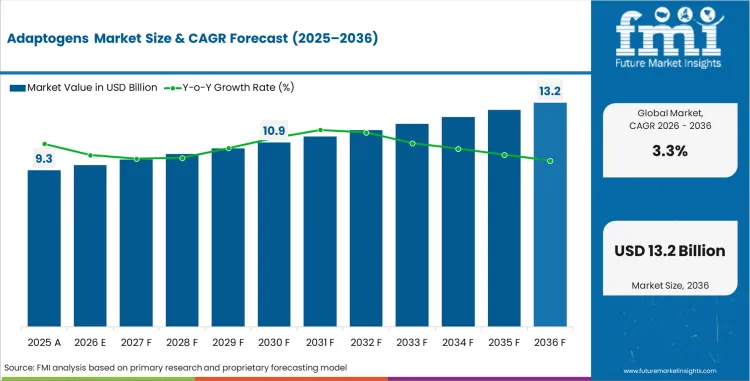
Adaptogens Market key Takeaways
| Parameter | Details |
|---|---|
| Market value (2026) | USD 9.26 billion |
| Forecast value (2036) | USD 12.81 billion |
| CAGR (2026 to 2036) | 3.3% |
| Estimated market value (2025) | USD 8.96 billion |
| Incremental opportunity | USD 3.55 billion |
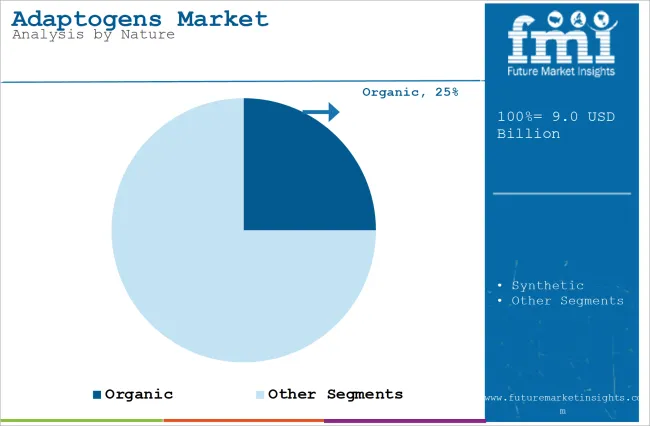
| Leading nature | Organic (25.0%) |
| Leading adaptogen type | Ashwagandha (26.0%) |
| Leading form | Capsules (32.0%) |
| Key players | Nutraceutical International Corporation, Organic India Private Limited, Himalaya Global Holdings Ltd., Rejuvenating Herbs & Nutrition, Inc., REBBL, Embria Health Sciences, LLC |
Source: Future Market Insights, 2026
According to Future Market Insights, the market will add an extra USD 3.55 billion in opportunities over the forecast period. FMI says that demand is changing because of the rise of stress-management supplements, more clinical evidence, and the integration of functional foods and drinks.
The adaptogens market is shaped by three things. First, the mainstreaming of stress-management supplements puts adaptogens on the same level as vitamins and minerals as important parts of a healthy diet. Second, more clinical research on ashwagandha, rhodiola, and mushroom extracts is making doctors more likely to recommend them and regulators more likely to accept them. Third, adding it to functional foods, drinks, and cosmetics is expanding the market beyond just supplements.
France is the fastest-growing country, with a CAGR of 4.5%. Italy comes next at 4.1%. Next is Spain, which has 3.8%. Next is Germany, which has 2.8%. The USA comes next with 2.5%.
Adaptogens Market Definition
The adaptogens market includes plants and fungi that are said to help with stress, boost cognitive function, and maintain homeostasis. Some examples are ashwagandha, rhodiola, reishi, lion's mane, holy basil, ginseng, and maca. These products can be found in capsule, powder, liquid, tablet, and gummy forms and are sold directly to consumers, businesses, and through B2C and B2B channels for use in dietary supplements, food and drinks, personal care, and pharmaceuticals.
Adaptogens Market Inclusions
The market scope includes all commercially traded adaptogens divided by type (organic, conventional), form, distribution channel, application, and end user. The size of the revenue range is from 2026 to 2036.
Adaptogens Market Exclusions
Does not include pharmaceutical drugs with adaptogenic mechanisms undergoing clinical trials, recreational psychoactive botanicals, and non-adaptogenic herbal supplements.
Adaptogens Market Research Methodology
- Primary Research: FMI analysts talked to adaptogen ingredient suppliers, supplement brand managers, and functional food formulators in important markets.
- Desk Research: Data collection included statistics on the supplement industry, clinical research databases, trade data on adaptogen ingredients, and disclosures from manufacturers.
- Market Sizing and Forecasting: Baseline values come from adding up the transaction volumes of adaptogens used in supplements, food, drinks, and cosmetics from the bottom up.
- Data validation and update cycle: Every three months, projections are checked against data from the dietary supplement market, trade statistics for herbal ingredients, and manufacturer disclosures.
Why is the Adaptogens Market Growing?
- The main reason for the rise of stress-management supplements is that adaptogens are now seen as daily wellness essentials, along with vitamins and minerals.
- There is more and more clinical evidence that ashwagandha can lower cortisol levels and rhodiola can help with cognitive function. This is leading to more doctors recommending it and regulators accepting it, which means more people can use it.
- France has the highest CAGR at 4.5%. This is because there is a strong culture of herbal supplements in Europe and consumers want botanicals that have been clinically proven to work.
The adaptogens market is growing steadily, thanks to the demand for supplements that help with stress, more clinical evidence, and more ways to use them. Adaptogens have gone from being rare Ayurvedic and traditional Chinese medicine ingredients to common wellness supplements that can be found in most stores.
Ashwagandha has the most clinical evidence to support its use, especially for lowering cortisol levels and managing stress. Rhodiola and ginseng help with cognitive function and give you more energy. Reishi and lion's mane are two types of mushroom adaptogens that are growing the fastest.
The total addressable market is growing as applications move beyond supplements to include functional foods, drinks, and cosmetics. Adaptogen-infused coffee, sparkling water, chocolate, and skincare products create new ways to use supplements that go beyond the usual ones.
Segmental Analysis
- Organic at 25.0% leads the way in nature preference, showing that people want clean-label, certified organic adaptogen products.
- Ashwagandha is the most common type of adaptogen, making up 26.0% of the total. It has the most clinical evidence for helping with stress and regulating cortisol levels.
- Capsules are the most popular form of medication at 32.0%. They are easy to dose, convenient, and last a long time on the shelf.
Adaptogens can be divided into groups based on their nature, type, form, distribution channel, application, and end user. Ashwagandha, Rhodiola, Reishi, Lion's Mane, Holy Basil, Ginseng, Maca, and other adaptogens are examples.
Insights into the Ashwagandha Adaptogens Type Segment
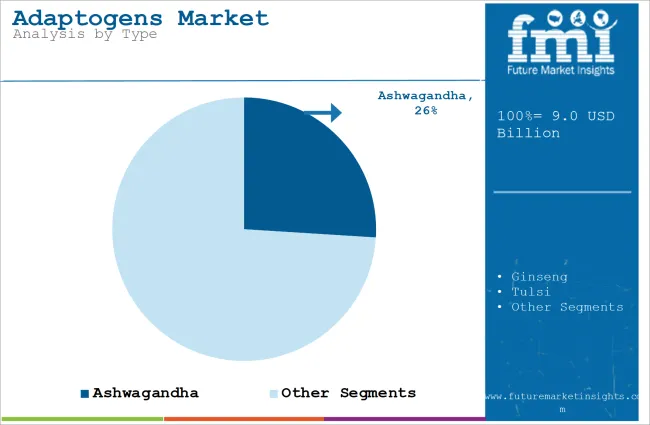
Ashwagandha has the biggest market share at 26.0%. This is because it is well-known in Ayurvedic tradition and has the most clinical evidence among adaptogens.
The fastest-growing sub-segment is mushroom adaptogens (reishi, lion's mane, chaga), which is driven by new functional coffee and drink products.
Insights into the Capsules Form Segment
Capsules have a 32.0% market share because they are easy to use and make it easier for people to take their daily supplements.
Powder and liquid forms are useful in functional foods and drinks where flexibility in how they are used is important.
What are the Drivers, Restraints, and Key Trends of the Adaptogens Market?
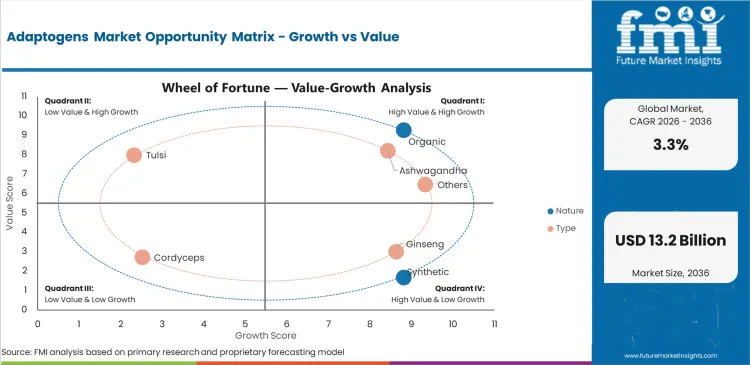
- The main drivers are the mainstreaming of stress-management supplements and the growth of clinical evidence.
- Different rules in different places and inconsistent product quality make people less confident in what they buy.
- Functional food and beverage integration expands the market to include more than just supplements.
Wellness trends and clinical validation are slowly but surely making the market bigger. Even though the rules are complicated and the quality is inconsistent, there are many chances for growth in the areas of supplements, functional foods, and cosmetics.
Stress-Management Mainstreaming
Adaptogens are now seen as important health ingredients, along with vitamins and minerals. Stress management is becoming a major health issue that is driving the global use of supplements.
Regulatory Fragmentation
Adaptogens are classified differently in different places, which makes it hard to follow the rules and limits health claims that are the same across the board.
Clinical Evidence Expansion
Published clinical trials, especially for ashwagandha and rhodiola, are adding to the body of evidence that supports doctors' recommendations and health claims that have been approved by the government.
Application Diversification
Including them in functional foods, drinks, cosmetics, and personal care products makes them more useful and creates more demand outside of supplement channels.
Analysis of Adaptogens Market By Key Countries
.webp "Top Country Growth Comparison Adaptogens Market Cagr (2026 2036)")
| Country | CAGR |
|---|---|
| France | 4.5% |
| Italy | 4.1% |
| Spain | 3.8% |
| Germany | 2.8% |
| USA | 2.5% |
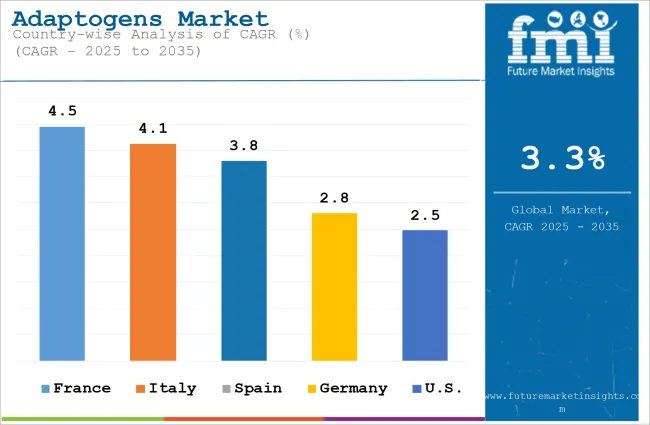
- France has the highest CAGR at 4.5%, which is due to a strong European herbal supplement culture and a need for clinically proven plant-based ingredients.
- Italy (4.1%) and Spain (3.8%) keep Southern European growth going with their herbal medicine traditions and the growing use of wellness supplements.
- Germany's 2.8% reflects the size of the supplement market and the established culture of naturopathy.
- The United States is expected to grow at a CAGR of 2.5% through 2036 and remains a major market due to mainstream retail distribution.
From 2026 to 2036, the global adaptogens market is expected to grow at a CAGR of 3.3%. The study looks at more than 30 countries, and the main markets are listed below.
Demand Outlook for Adaptogens Market in the United States
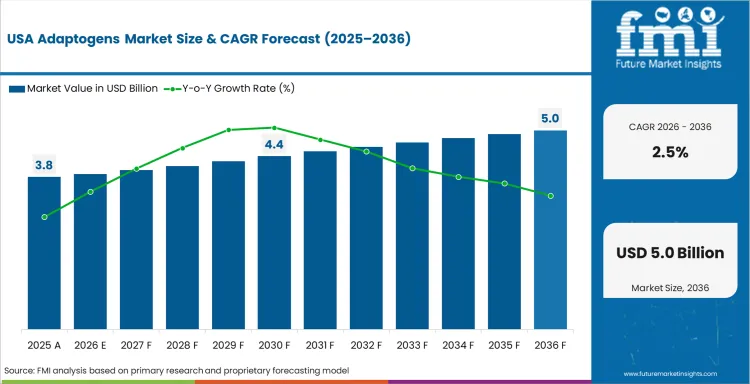
The United States is expected to grow at a CAGR of 2.5% through 2036. This is because of the growth of mainstream supplement distribution, the integration of functional foods, and more clinical evidence that doctors are using to recommend supplements.
- Mainstream supplement distribution keeps demand high.
- Functional food integration increases consumption.
- Clinical evidence bolsters physician endorsement.
Future Outlook for Adaptogens Market in the United Kingdom
The United Kingdom will keep growing until 2036, thanks to the wellness supplement culture, the growing awareness of adaptogens, and the creation of new product categories through functional food innovation.
- The culture of wellness supplements creates a base for demand.
- People are becoming more aware of adaptogens.
- New types of functional foods are being created.
Opportunity Analysis of Adaptogens Market in Germany
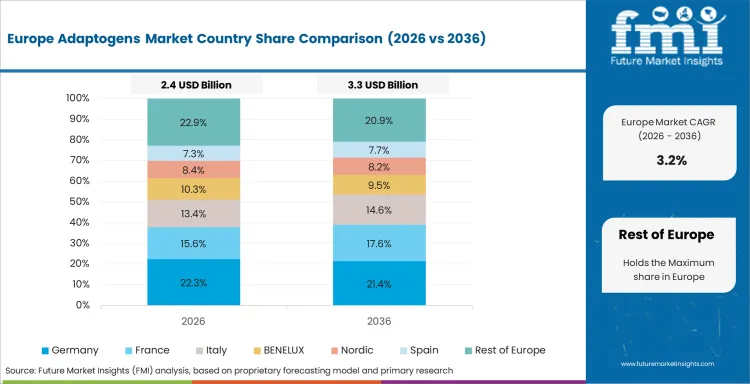
Germany's growth rate of 2.8% through 2036 is due to its long history of naturopathy, the size of its supplement market, and strong rules that help standardize herbal ingredients.
- The culture of naturopathy keeps the demand for herbal supplements high.
- The size of the supplement market makes distribution possible.
- Regulatory frameworks help with standardization.
In-depth Analysis of Adaptogens Market in Japan
Japan will grow until 2036 because of the popularity of traditional kampo medicine, the culture of mushroom supplements, and the demand for high-quality wellness products among health-conscious consumers.
- Adaptogens and kampo medicine go together.
- The culture of mushroom supplements drives their use.
- High-end wellness demand keeps prices high.
Sales Analysis of Adaptogens Market in China
China's economy will keep growing until 2036 thanks to the alignment of traditional Chinese medicine, the growing use of wellness supplements, and government support for modernizing herbal medicine.
- Aligning TCM helps with positioning adaptogens.
- More people are using wellness supplements.
- Modernizing herbal medicine opens up new possibilities.
In-depth Analysis of Adaptogens Market in India
India has a lot of room to grow until 2036. This is because Ayurvedic tradition gives people the basic knowledge they need to use adaptogens, grow ashwagandha and holy basil at home, and the organized supplement market is growing.
- Ayurvedic tradition gives us the basic knowledge we need.
- Growing plants at home helps with supply.
- The market for organized supplements is growing.
Competitive Landscape of Adaptogens Market
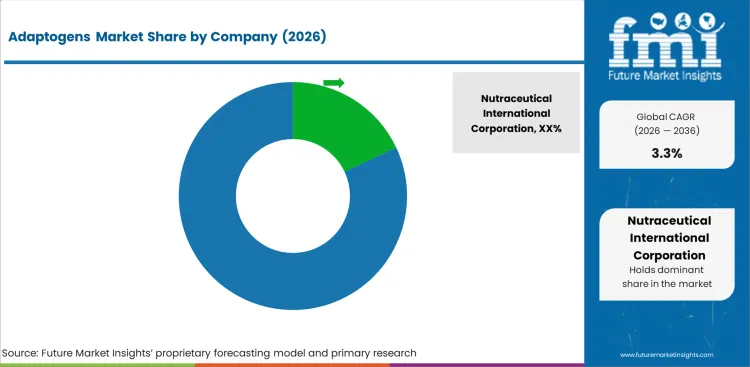
- Nutraceutical International Corporation and Organic India are the leaders in the adaptogen supplement market because they have a lot of them.
- Himalaya Global Holdings uses its Ayurvedic heritage and its ability to ship goods all over the world.
- New functional food and drink brands are making new ways for people to use adaptogens.
Nutraceutical International Corporation sells a wide range of adaptogen supplements. Ayurvedic positioning has made Organic India Private Limited the leader in organic ashwagandha and holy basil products.
Himalaya Global Holdings Ltd. uses India's Ayurvedic heritage and its established global distribution network. REBBL and Embria Health Sciences both work in the functional beverage and ingredient markets.
Natreon, Inc. is an expert in standardized adaptogen extracts that come with clinical documentation. Some of the problems are finding ingredients, getting clinical evidence, and following the rules in different places.
Major Industry Players
Key global companies leading the adaptogens market include:
- Nutraceutical International Corporation (USA), Organic India Private Limited (India), Himalaya Global Holdings Ltd. (India), and REBBL (USA) were named as some of the best companies because they have strong sourcing of adaptogen ingredients, established supplement distribution, and a wide range of products, including capsules, powders, and functional drinks.
- Natreon, Inc. (USA) is known for standardized botanical extracts, while Embria Health Sciences, LLC is better known for EpiCor and other wellness ingredients rather than standardized adaptogen extracts.
- New adaptogen brands in functional food, drink, and cosmetic uses have set themselves apart by getting a foothold in high-end wellness channels.
Competitive Benchmarking: Adaptogens Market
| Company | Adaptogen Portfolio | Clinical Evidence | Distribution Reach | Geographic Footprint |
|---|---|---|---|---|
| Nutraceutical International | High | Medium | Strong | N. America |
| Organic India | High | Medium | Strong | India, Global |
| Himalaya Global | High | High | Strong | Global |
| REBBL | Medium | Medium | Moderate | N. America |
| Embria Health Sciences | Medium | High | Moderate | N. America |
| Natreon, Inc. | High | High | Moderate | Global |
Source: Future Market Insights competitive analysis, 2026.
Key Developments in Adaptogens Market
- In 2025, Organic India did not increase production of organic ashwagandha. It earned Regenerative Organic Certified status for ashwagandha and other supplements (with ROC products rolling out throughout 2025) and continued its Fairtrade-certified ashwagandha co-op.
- Himalaya Global Holdings did not start a new line of adaptogen supplements in 2025 for pharmacies and health stores in Europe. It continued offering its existing ashwagandha and herbal supplements across Europe
Key Players in the Adaptogens Market
Major Global Players:
- Nutraceutical International Corporation
- Organic India Private Limited
- Himalaya Global Holdings Ltd.
- REBBL
- Embria Health Sciences, LLC
- Natreon, Inc.
Emerging Players/Startups
- Emerging functional food and cosmetic adaptogen brands
Scope of the report
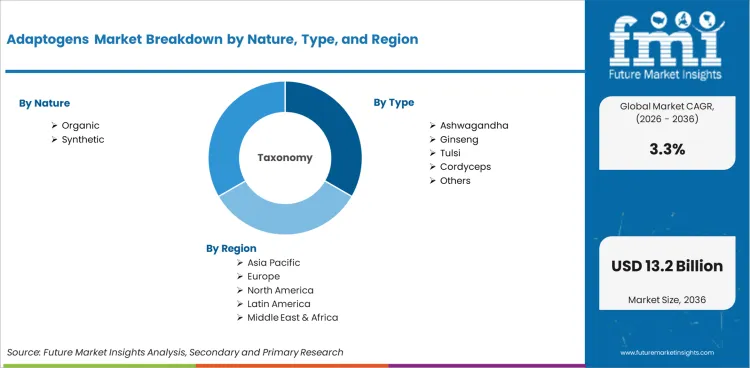
| Parameter | Details |
|---|---|
| Quantitative Units | USD 9.26 billion to USD 12.81 billion, at a CAGR of 3.3% |
| Market Definition | The adaptogens market encompasses botanical and fungal ingredients with stress-modulation and cognitive-enhancement properties for supplement, food, beverage, and cosmetic applications. |
| Regions Covered | North America, Latin America, Europe, East Asia, South Asia and Pacific, Middle East and Africa |
| Countries Covered | France, Italy, Spain, Germany, USA, UK, Japan, China, India, 30 plus countries |
| Key Companies Profiled | Nutraceutical International Corporation, Organic India Private Limited, Himalaya Global Holdings Ltd., Rejuvenating Herbs & Nutrition, Inc., REBBL, Embria Health Sciences, LLC, Natreon, Inc., Amax NutraSource, Inc., PLT Health Solutions, Inc., Xiamen Kingdomway Group Company, Ixoreal Biomed Inc. |
| Forecast Period | 2026 to 2036 |
| Approach | Hybrid bottom-up and top-down methodology starting with verified transaction data, projecting adoption velocity across segments and regions. |
Adaptogens Market by Segments
Adaptogens Market Market Segmented by Nature:
- Organic
- Synthetic
Adaptogens Market Market Segmented by Type:
- Ashwagandha
- Ginseng
- Tulsi
- Cordyceps
- Others
Adaptogens Market Market Segmented by Form:
- Capsules
- Powder
- Tea and Beverages
- Others
Adaptogens Market Market Segmented by Distribution Channel:
- B2C
- B2B
Adaptogens Market Market by Region:
- North America
- USA
- Canada
- Mexico
- Latin America
- Brazil
- Chile
- Rest of Latin America
- Western Europe
- Germany
- UK
- Italy
- Spain
- France
- Nordic
- BENELUX
- Rest of Western Europe
- Eastern Europe
- Russia
- Poland
- Hungary
- Balkan & Baltic
- Rest of Eastern Europe
- East Asia
- China
- Japan
- South Korea
- South Asia and Pacific
- India
- ASEAN
- Australia & New Zealand
- Rest of South Asia and Pacific
- Middle East & Africa
- Kingdom of Saudi Arabia
- Other GCC Countries
- Turkiye
- South Africa
- Other African Union
- Rest of Middle East & Africa
Bibliography
- 1. European Medicines Agency. (2024). EMA Herbal Medicinal Products: Adaptogen Assessment Reports. EMA.
- 2. National Institutes of Health. (2024). NIH Office of Dietary Supplements: Adaptogen Fact Sheets. NIH.
- 3. World Health Organization. (2024). WHO Monographs on Selected Medicinal Plants: Adaptogens. WHO.
- 4. European Food Safety Authority. (2024). EFSA Botanical Supplement Assessment Reports. EFSA.
- 5. American Botanical Council. (2025). ABC Herbal Supplement Sales Report. ABC.
This bibliography is provided for reader reference. The full FMI report contains the complete reference list with primary research documentation.
Frequently Asked Questions
What is the global market demand for Adaptogens in 2026?
In 2026, the global market for adaptogens is expected to be worth $9.26 billion.
By 2036, how big will the Adaptogens market be?
By 2036, the market for adaptogens is expected to be worth $12.81 billion.
How much more demand is expected for These substances between 2026 and 2036?
Between 2026 and 2036, the demand for adaptogens is expected to grow at a rate of 3.3% per year.
What type of adaptogen is likely to be the best-selling in the world by 2026?
Ashwagandha makes up 26.0% of the market in 2026. This shows that people know about it and that there is a lot of scientific proof that it can help with stress and cortisol levels.
How is the capsule form helping Adaptogens become more popular?
32.0% of the form segment is made up of capsules. This is because standardized dosing and ease of use make this delivery method more popular with consumers.
What is causing demand in France?
France will grow at a rate of 4.5% per year until 2036. This is due to a strong European herbal supplement culture and a demand from consumers for clinically proven plant-based ingredients.
What does this report mean by "Adaptogens Market definition"?
The adaptogens market includes plants and fungi that can help with stress and improve cognitive function. These ingredients can be found in supplements, food, drinks, and cosmetics.
How does FMI make the Adaptogens forecast and check it?
Forecasting models use a mix of bottom-up and top-down methods, starting with verified transaction data and checking it against dietary supplement market statistics and herbal ingredient trade data.
Preview the report firsthand - request a free sample
Get SampleGet the brochure for pricing and purchase details.
Get PDFTable of Content
- Executive Summary
- Global Market Outlook
- Demand-side Trends
- Supply-side Trends
- Technology Roadmap Analysis
- Analysis and Recommendations
- Market Overview
- Market Coverage / Taxonomy
- Market Definition / Scope / Limitations
- Research Methodology
- Chapter Orientation
- Analytical Lens and Working Hypotheses
- Market Structure, Signals, and Trend Drivers
- Benchmarking and Cross-market Comparability
- Market Sizing, Forecasting, and Opportunity Mapping
- Research Design and Evidence Framework
- Desk Research Programme (Secondary Evidence)
- Company Annual and Sustainability Reports
- Peer-reviewed Journals and Academic Literature
- Corporate Websites, Product Literature, and Technical Notes
- Earnings Decks and Investor Briefings
- Statutory Filings and Regulatory Disclosures
- Technical White Papers and Standards Notes
- Trade Journals, Industry Magazines, and Analyst Briefs
- Conference Proceedings, Webinars, and Seminar Materials
- Government Statistics Portals and Public Data Releases
- Press Releases and Reputable Media Coverage
- Specialist Newsletters and Curated Briefings
- Sector Databases and Reference Repositories
- FMI Internal Proprietary Databases and Historical Market Datasets
- Subscription Datasets and Paid Sources
- Social Channels, Communities, and Digital Listening Inputs
- Additional Desk Sources
- Expert Input and Fieldwork (Primary Evidence)
- Primary Modes
- Qualitative Interviews and Expert Elicitation
- Quantitative Surveys and Structured Data Capture
- Blended Approach
- Why Primary Evidence is Used
- Field Techniques
- Interviews
- Surveys
- Focus Groups
- Observational and In-context Research
- Social and Community Interactions
- Stakeholder Universe Engaged
- C-suite Leaders
- Board Members
- Presidents and Vice Presidents
- R&D and Innovation Heads
- Technical Specialists
- Domain Subject-matter Experts
- Scientists
- Physicians and Other Healthcare Professionals
- Governance, Ethics, and Data Stewardship
- Research Ethics
- Data Integrity and Handling
- Primary Modes
- Tooling, Models, and Reference Databases
- Desk Research Programme (Secondary Evidence)
- Data Engineering and Model Build
- Data Acquisition and Ingestion
- Cleaning, Normalisation, and Verification
- Synthesis, Triangulation, and Analysis
- Quality Assurance and Audit Trail
- Market Background
- Market Dynamics
- Drivers
- Restraints
- Opportunity
- Trends
- Scenario Forecast
- Demand in Optimistic Scenario
- Demand in Likely Scenario
- Demand in Conservative Scenario
- Opportunity Map Analysis
- Product Life Cycle Analysis
- Supply Chain Analysis
- Investment Feasibility Matrix
- Value Chain Analysis
- PESTLE and Porter’s Analysis
- Regulatory Landscape
- Regional Parent Market Outlook
- Production and Consumption Statistics
- Import and Export Statistics
- Market Dynamics
- Global Market Analysis 2021 to 2025 and Forecast, 2026 to 2036
- Historical Market Size Value (USD Million) Analysis, 2021 to 2025
- Current and Future Market Size Value (USD Million) Projections, 2026 to 2036
- Y-o-Y Growth Trend Analysis
- Absolute $ Opportunity Analysis
- Global Market Pricing Analysis 2021 to 2025 and Forecast 2026 to 2036
- Global Market Analysis 2021 to 2025 and Forecast 2026 to 2036, By Nature
- Introduction / Key Findings
- Historical Market Size Value (USD Million) Analysis By Nature , 2021 to 2025
- Current and Future Market Size Value (USD Million) Analysis and Forecast By Nature , 2026 to 2036
- Organic
- Synthetic
- Organic
- Y-o-Y Growth Trend Analysis By Nature , 2021 to 2025
- Absolute $ Opportunity Analysis By Nature , 2026 to 2036
- Global Market Analysis 2021 to 2025 and Forecast 2026 to 2036, By Type
- Introduction / Key Findings
- Historical Market Size Value (USD Million) Analysis By Type, 2021 to 2025
- Current and Future Market Size Value (USD Million) Analysis and Forecast By Type, 2026 to 2036
- Ashwagandha
- Ginseng
- Tulsi
- Cordyceps
- Others
- Ashwagandha
- Y-o-Y Growth Trend Analysis By Type, 2021 to 2025
- Absolute $ Opportunity Analysis By Type, 2026 to 2036
- Global Market Analysis 2021 to 2025 and Forecast 2026 to 2036, By Form
- Introduction / Key Findings
- Historical Market Size Value (USD Million) Analysis By Form, 2021 to 2025
- Current and Future Market Size Value (USD Million) Analysis and Forecast By Form, 2026 to 2036
- Capsules
- Powder
- Tea and Beverages
- Others
- Capsules
- Y-o-Y Growth Trend Analysis By Form, 2021 to 2025
- Absolute $ Opportunity Analysis By Form, 2026 to 2036
- Global Market Analysis 2021 to 2025 and Forecast 2026 to 2036, By Distribution Channel
- Introduction / Key Findings
- Historical Market Size Value (USD Million) Analysis By Distribution Channel, 2021 to 2025
- Current and Future Market Size Value (USD Million) Analysis and Forecast By Distribution Channel, 2026 to 2036
- B2C
- B2B
- B2C
- Y-o-Y Growth Trend Analysis By Distribution Channel, 2021 to 2025
- Absolute $ Opportunity Analysis By Distribution Channel, 2026 to 2036
- Global Market Analysis 2021 to 2025 and Forecast 2026 to 2036, By Region
- Introduction
- Historical Market Size Value (USD Million) Analysis By Region, 2021 to 2025
- Current Market Size Value (USD Million) Analysis and Forecast By Region, 2026 to 2036
- North America
- Latin America
- Western Europe
- Eastern Europe
- East Asia
- South Asia and Pacific
- Middle East & Africa
- Market Attractiveness Analysis By Region
- North America Market Analysis 2021 to 2025 and Forecast 2026 to 2036, By Country
- Historical Market Size Value (USD Million) Trend Analysis By Market Taxonomy, 2021 to 2025
- Market Size Value (USD Million) Forecast By Market Taxonomy, 2026 to 2036
- By Country
- USA
- Canada
- Mexico
- By Nature
- By Type
- By Form
- By Distribution Channel
- By Country
- Market Attractiveness Analysis
- By Country
- By Nature
- By Type
- By Form
- By Distribution Channel
- Key Takeaways
- Latin America Market Analysis 2021 to 2025 and Forecast 2026 to 2036, By Country
- Historical Market Size Value (USD Million) Trend Analysis By Market Taxonomy, 2021 to 2025
- Market Size Value (USD Million) Forecast By Market Taxonomy, 2026 to 2036
- By Country
- Brazil
- Chile
- Rest of Latin America
- By Nature
- By Type
- By Form
- By Distribution Channel
- By Country
- Market Attractiveness Analysis
- By Country
- By Nature
- By Type
- By Form
- By Distribution Channel
- Key Takeaways
- Western Europe Market Analysis 2021 to 2025 and Forecast 2026 to 2036, By Country
- Historical Market Size Value (USD Million) Trend Analysis By Market Taxonomy, 2021 to 2025
- Market Size Value (USD Million) Forecast By Market Taxonomy, 2026 to 2036
- By Country
- Germany
- UK
- Italy
- Spain
- France
- Nordic
- BENELUX
- Rest of Western Europe
- By Nature
- By Type
- By Form
- By Distribution Channel
- By Country
- Market Attractiveness Analysis
- By Country
- By Nature
- By Type
- By Form
- By Distribution Channel
- Key Takeaways
- Eastern Europe Market Analysis 2021 to 2025 and Forecast 2026 to 2036, By Country
- Historical Market Size Value (USD Million) Trend Analysis By Market Taxonomy, 2021 to 2025
- Market Size Value (USD Million) Forecast By Market Taxonomy, 2026 to 2036
- By Country
- Russia
- Poland
- Hungary
- Balkan & Baltic
- Rest of Eastern Europe
- By Nature
- By Type
- By Form
- By Distribution Channel
- By Country
- Market Attractiveness Analysis
- By Country
- By Nature
- By Type
- By Form
- By Distribution Channel
- Key Takeaways
- East Asia Market Analysis 2021 to 2025 and Forecast 2026 to 2036, By Country
- Historical Market Size Value (USD Million) Trend Analysis By Market Taxonomy, 2021 to 2025
- Market Size Value (USD Million) Forecast By Market Taxonomy, 2026 to 2036
- By Country
- China
- Japan
- South Korea
- By Nature
- By Type
- By Form
- By Distribution Channel
- By Country
- Market Attractiveness Analysis
- By Country
- By Nature
- By Type
- By Form
- By Distribution Channel
- Key Takeaways
- South Asia and Pacific Market Analysis 2021 to 2025 and Forecast 2026 to 2036, By Country
- Historical Market Size Value (USD Million) Trend Analysis By Market Taxonomy, 2021 to 2025
- Market Size Value (USD Million) Forecast By Market Taxonomy, 2026 to 2036
- By Country
- India
- ASEAN
- Australia & New Zealand
- Rest of South Asia and Pacific
- By Nature
- By Type
- By Form
- By Distribution Channel
- By Country
- Market Attractiveness Analysis
- By Country
- By Nature
- By Type
- By Form
- By Distribution Channel
- Key Takeaways
- Middle East & Africa Market Analysis 2021 to 2025 and Forecast 2026 to 2036, By Country
- Historical Market Size Value (USD Million) Trend Analysis By Market Taxonomy, 2021 to 2025
- Market Size Value (USD Million) Forecast By Market Taxonomy, 2026 to 2036
- By Country
- Kingdom of Saudi Arabia
- Other GCC Countries
- Turkiye
- South Africa
- Other African Union
- Rest of Middle East & Africa
- By Nature
- By Type
- By Form
- By Distribution Channel
- By Country
- Market Attractiveness Analysis
- By Country
- By Nature
- By Type
- By Form
- By Distribution Channel
- Key Takeaways
- Key Countries Market Analysis
- USA
- Pricing Analysis
- Market Share Analysis, 2025
- By Nature
- By Type
- By Form
- By Distribution Channel
- Canada
- Pricing Analysis
- Market Share Analysis, 2025
- By Nature
- By Type
- By Form
- By Distribution Channel
- Mexico
- Pricing Analysis
- Market Share Analysis, 2025
- By Nature
- By Type
- By Form
- By Distribution Channel
- Brazil
- Pricing Analysis
- Market Share Analysis, 2025
- By Nature
- By Type
- By Form
- By Distribution Channel
- Chile
- Pricing Analysis
- Market Share Analysis, 2025
- By Nature
- By Type
- By Form
- By Distribution Channel
- Germany
- Pricing Analysis
- Market Share Analysis, 2025
- By Nature
- By Type
- By Form
- By Distribution Channel
- UK
- Pricing Analysis
- Market Share Analysis, 2025
- By Nature
- By Type
- By Form
- By Distribution Channel
- Italy
- Pricing Analysis
- Market Share Analysis, 2025
- By Nature
- By Type
- By Form
- By Distribution Channel
- Spain
- Pricing Analysis
- Market Share Analysis, 2025
- By Nature
- By Type
- By Form
- By Distribution Channel
- France
- Pricing Analysis
- Market Share Analysis, 2025
- By Nature
- By Type
- By Form
- By Distribution Channel
- India
- Pricing Analysis
- Market Share Analysis, 2025
- By Nature
- By Type
- By Form
- By Distribution Channel
- ASEAN
- Pricing Analysis
- Market Share Analysis, 2025
- By Nature
- By Type
- By Form
- By Distribution Channel
- Australia & New Zealand
- Pricing Analysis
- Market Share Analysis, 2025
- By Nature
- By Type
- By Form
- By Distribution Channel
- China
- Pricing Analysis
- Market Share Analysis, 2025
- By Nature
- By Type
- By Form
- By Distribution Channel
- Japan
- Pricing Analysis
- Market Share Analysis, 2025
- By Nature
- By Type
- By Form
- By Distribution Channel
- South Korea
- Pricing Analysis
- Market Share Analysis, 2025
- By Nature
- By Type
- By Form
- By Distribution Channel
- Russia
- Pricing Analysis
- Market Share Analysis, 2025
- By Nature
- By Type
- By Form
- By Distribution Channel
- Poland
- Pricing Analysis
- Market Share Analysis, 2025
- By Nature
- By Type
- By Form
- By Distribution Channel
- Hungary
- Pricing Analysis
- Market Share Analysis, 2025
- By Nature
- By Type
- By Form
- By Distribution Channel
- Kingdom of Saudi Arabia
- Pricing Analysis
- Market Share Analysis, 2025
- By Nature
- By Type
- By Form
- By Distribution Channel
- Turkiye
- Pricing Analysis
- Market Share Analysis, 2025
- By Nature
- By Type
- By Form
- By Distribution Channel
- South Africa
- Pricing Analysis
- Market Share Analysis, 2025
- By Nature
- By Type
- By Form
- By Distribution Channel
- USA
- Market Structure Analysis
- Competition Dashboard
- Competition Benchmarking
- Market Share Analysis of Top Players
- By Regional
- By Nature
- By Type
- By Form
- By Distribution Channel
- Competition Analysis
- Competition Deep Dive
- Nutraceutical International Corporation
- Overview
- Product Portfolio
- Profitability by Market Segments (Product/Age /Sales Channel/Region)
- Sales Footprint
- Strategy Overview
- Marketing Strategy
- Product Strategy
- Channel Strategy
- Organic India Private Limited
- Himalaya Global Holdings Ltd.
- Rejuvenating Herbs & Nutrition, Inc. (REBBL)
- Embria Health Sciences, LLC
- Natreon, Inc.
- Amax NutraSource, Inc.
- PLT Health Solutions, Inc.
- Xiamen Kingdomway Group Company
- KSM-66 Ashwagandha (Ixoreal Biomed Inc.)
- Nutraceutical International Corporation
- Competition Deep Dive
- Assumptions & Acronyms Used


