

- Industry Size (2026)
- USD 72.3 Bn
- Forecast (2036)
- USD 191.0 Bn
- CAGR (2026 to 2036)
- 10%
Mushroom Market Size, Market Forecast and Outlook By FMI
Mushroom industry valuation is set to reach USD 72.3 billion in 2026, driven by escalating consumer demand for plant-based protein sources and growing awareness of nutritional benefits. Revenue from the sales of mushrooms is projected to expand at a robust CAGR of 10% through 2036, pushing total sector worth beyond USD 191.0 billion by the conclusion of this assessment period. Rising health consciousness and expanding culinary applications act as primary catalysts for this financial trajectory.
Producers are channeling substantial investment into cultivation technology, aiming to enhance yield efficiency through controlled environment agriculture without compromising product quality. Growers are shifting focus from traditional farming methods to sophisticated substrate formulations, redefining production patterns across developed economies. Such operational changes encourage agricultural companies to introduce comprehensive mushroom cultivation portfolios utilizing advanced climate control technologies.
Increasing focus on sustainable agriculture continues to fuel demand for mushroom farming operations, creating sustained opportunities for precision farming companies. Government agricultural initiatives targeting food security are facilitating wider adoption of mushroom cultivation in rural populations. Companies are witnessing robust growth potential in emerging markets, where urbanization and dietary changes align with increased protein diversification among working populations.
Quick Stats for Mushroom Market
- Mushroom Industry Value (2026): USD 72.3 Billion
- Mushroom Industry Forecast Value (2036): USD 191.0 Billion
- Mushroom Industry Forecast CAGR: 10%
- Mushroom Industry Leading Product: Button (40%)
- Mushroom Industry Key Growth Regions: China, India, Germany
- Mushroom Industry Key Players: Monterey Mushroom Inc., Bonduelle Group, Costa Group, CMP Mushroom, Drinkwater Mushrooms
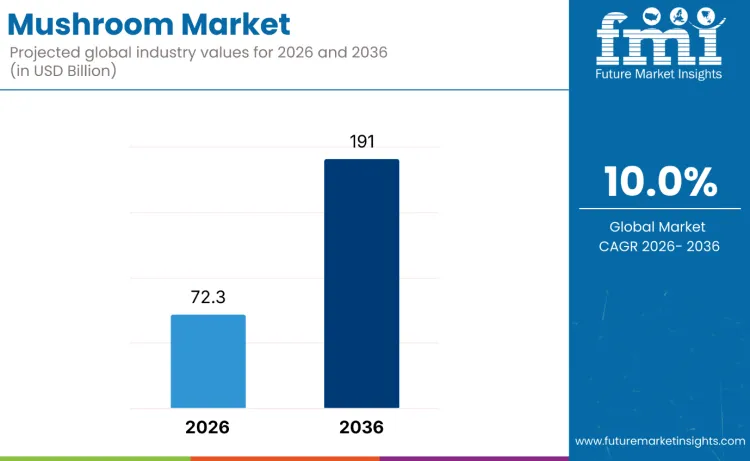
Researchers are combining substrate science insights with biotechnology solutions to enhance production efficiency. Development of automated harvesting systems is gaining momentum, addressing labor challenges in commercial cultivation. Focus is shifting toward comprehensive growing facility strategies that optimize environmental controls. Advancements in mycological research enable producers to develop premium varieties precisely, enhancing consumer appeal while reducing production risks. These innovations are pivotal in shaping a future where mushroom cultivation is both sustainable and scalable.
Mushroom Market Key Takeaways
| Metric | Value |
|---|---|
| Industry Size (2026) | USD 72.3 Billion |
| Industry Value (2036) | USD 191.0 Billion |
| CAGR (2026 to 2036) | 10% |
Source: Future Market Insights’ proprietary forecasting model and primary research
What Drivers Are Accelerating Button Mushroom Adoption?
Shift toward accessible protein sources is serving as a significant catalyst for broader acceptance of cultivated fungi varieties. Recent breakthroughs in growing medium optimization have complemented production protocols by maintaining consistent texture and flavor profiles effectively. This agricultural approach appeals to consumers seeking familiar taste experiences with enhanced nutritional value. Research success of hybrid cultivation techniques in commercial operations has expanded production possibilities among diverse farming systems. Education programs highlighting the versatility of white button varieties in culinary applications are driving restaurant adoption. Food service operators are capitalizing on these trends by introducing button mushroom variants in menu development for mainstream appeal. Integrating standardized growing procedures into large-scale production facilities is becoming standard practice, ensuring consistent quality without compromising harvest efficiency.
How Is the Mushroom Market Segmented Across Key Categories?
Global landscape is intricately segmented to address diverse requirements of the food and agriculture industry, categorizing sector by product type, form, application, and distribution channel. Structural division allows stakeholders to identify specific market targets, such as rising demand for fresh formats in retail environments or preference for processed forms in industrial applications. By analyzing these segments, producers can tailor cultivation operations to meet distinct needs of food manufacturers versus direct-to-consumer brands. Segmentation also highlights shift from basic commodity approaches to specialized variety production. As industry matures, granular segmentation becomes essential for understanding supply chain dynamics and quality standards, ensuring production development aligns with evolving consumer preferences.
Why Do Button Mushrooms Maintain Dominance?
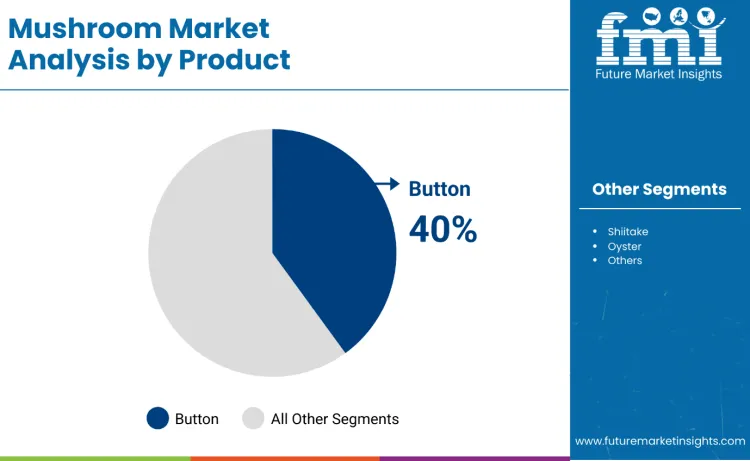
Button mushrooms account for 40% of product share in 2026, driven by widespread consumer familiarity and culinary versatility. Leadership position is underpinned by established cultivation methods yielding consistent harvests year-round. Segment benefits from continuous growing technique improvements, such as substrate sterilization technology eliminating contamination risks. Research focused on button mushroom shelf life is renewing interest among retail distributors. Critical role in food service applications further solidifies standing, as these varieties integrate seamlessly into diverse menu categories. As culinary guidelines prioritize ingredient accessibility, demand for standardized button mushroom supplies is expected to remain robust.
Why Are Fresh Forms the Preferred Format?
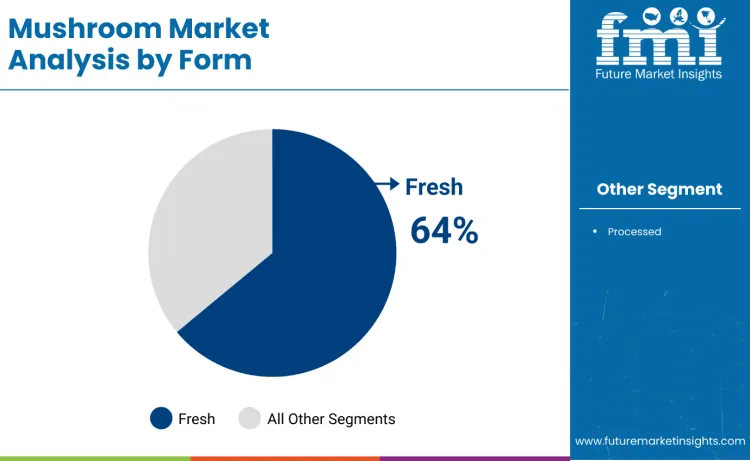
Fresh form commands 64% share of sector in 2026, reflecting consumer preference for immediate culinary use and maximum nutritional retention. Dominance is linked to superior texture characteristics and flavor intensity compared to processed alternatives. Producers rely on specialized cold chain technology to ensure optimal freshness during transportation. These formats are essential for delivering restaurant-quality ingredients to retail channels, driving priority status among commercial growers. Relentless pursuit of packaging innovation ensures products designed for extended shelf life remain primary choice. High consumer acceptance necessitates dynamic distribution capacity, bolstering sustained revenue streams for logistics providers.
Why Does Food Application Lead Usage Categories?
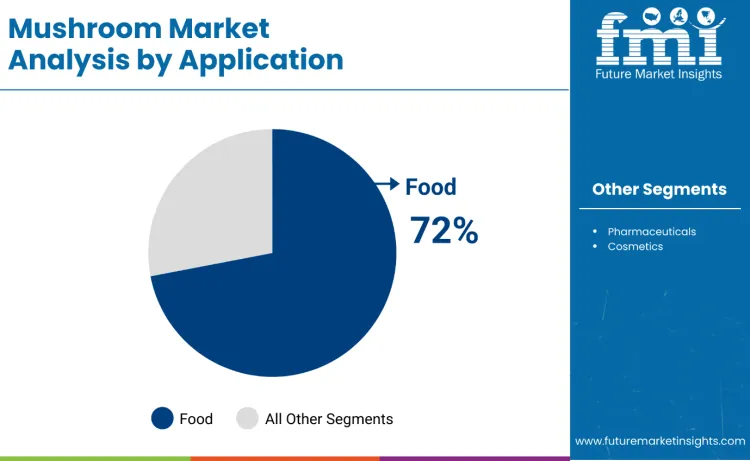
Food applications capture 72% of market share in 2026, owing to widespread culinary integration requiring diverse mushroom varieties. Dominance stems from cooking guidelines recommending mushroom incorporation across multiple cuisine types for flavor enhancement. Consumers prefer these applications for their nutritional benefits and cooking versatility. Usage in restaurant menu development drives continuous volume growth among food service establishments. Compatibility with various cooking methods allows for application diversity across different preparation techniques. Manufacturers focusing on food-grade cultivation and processing protocols for these high-volume applications secure significant partnerships with culinary operations.
How Will Urban Agriculture Impact Production?
Urban farming transition is set to reshape production landscapes by demanding space-efficient cultivation methods. As vertical farming trends evolve, producers access growing systems with enhanced yield per square foot for limited urban spaces. Shift toward indoor cultivation creates demand for climate-controlled facilities addressing multiple environmental factors simultaneously. Manufacturers failing to position operations as urban-compatible risk losing visibility among city-based consumers. Availability of controlled environment agriculture options for year-round production drives complementary technology adoption patterns. Rise of precision agriculture usage stimulates innovation, with companies differentiating operations through automated monitoring integration.
How Will Plant-Based Nutrition Transform Demand?
Plant-based diet adoption is revolutionizing mushroom consumption by positioning fungi as primary protein alternatives. Integration with meat substitution applications allows mushrooms to replace animal proteins in traditional dishes. Nutritional awareness campaigns are driving specialized mushroom protocols, with health advocates recommending specific varieties through dietary platforms. Food processing channels are expanding rapidly, offering innovative mushroom-based products compared to conventional protein sources. Health applications featuring mushroom nutrition tracking and meal planning create sustained engagement with plant-based eating programs.
How Will Technology Advancement Affect Production Growth?
Evolving cultivation technologies are creating both opportunities and challenges for mushroom producers. Advanced growing systems demand higher equipment investments while improving harvest consistency and quality control. Automation approvals from agricultural authorities enable companies to implement mechanized harvesting, differentiating operations in competitive markets. International standardization of cultivation practices facilitates global market expansion for established producers. Research requirements are increasing, forcing growers to invest in facility upgrades validating production claims.
How Will the Mushroom Industry Evolve in Major Nations?
Global landscape for mushroom production is characterized by diverse agricultural practices, influenced by climate conditions and consumption patterns. Established markets prioritize technology-driven cultivation and premium variety development, whereas emerging economies focus on accessible pricing and basic mushroom varieties. Asia-Pacific is emerging as rapid growth hub due to increasing dietary diversification and expanding agricultural innovation. Conversely, North American sectors pivot towards organic production and specialty variety protocols. Government initiatives in developing nations supporting agricultural diversification ensure sustained demand for mushroom cultivation across all farming demographics.
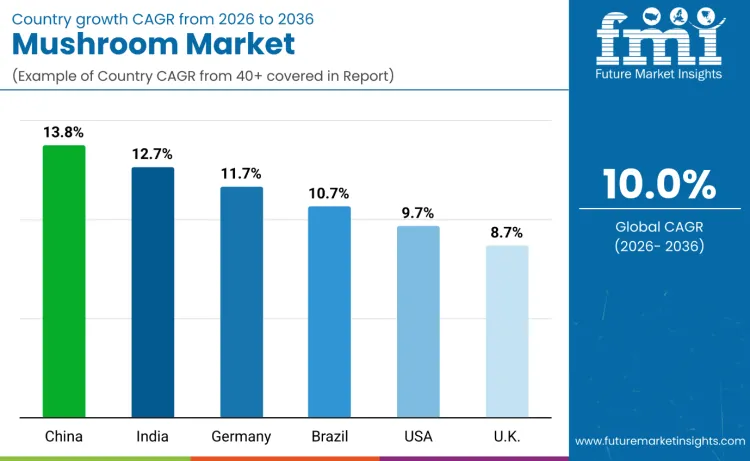
| Country | CAGR (2026 to 2036) |
|---|---|
| China | 13.8% |
| India | 12.7% |
| Germany | 11.7% |
| Brazil | 10.7% |
| USA | 9.7% |
| U.K. | 8.7% |
Source: Future Market Insights analysis, supported by a proprietary forecasting model and primary research
Why is the Mushroom Industry in China Growing?
Sales of mushroom products in China are set to grow at 13.8% CAGR through 2036. Expansion is underpinned by rapid urbanization and increasing dietary protein diversification among working populations. Growth is fueled by government agricultural reforms emphasizing sustainable farming and food security management. Rising disposable incomes drive premium variety adoption per capita among health-conscious consumers. Presence of major cultivation facilities establishing automated production capabilities streamlines supply chains and reduces operational costs. Emphasis on traditional cuisine integration with modern cultivation techniques continues to be primary driver, maintaining China's position as critical growth engine for mushroom production.
Why is the Mushroom Sector in India Expanding?
Demand for mushroom varieties in India is projected to rise at 12.7% CAGR during assessment period. Initiatives emphasizing agricultural diversification and nutrition security foster favorable environment for mushroom farming adoption. Increasing investment in rural infrastructure creates distribution channels for specialty agricultural products. Rising middle-class population requiring affordable protein options prompts domestic growers to develop cost-effective cultivation methods. Shift is supported by government policies encouraging sustainable farming practices, accelerating uptake of mushroom production across rural centers and fueling sector expansion through improved market access.
Why is the Mushroom Industry in Germany Showing Potential?
Mushroom industry in Germany is poised to expand at 11.7% CAGR. Growth is largely attributed to increasing awareness of sustainable agriculture among urban populations. Government focus on organic farming initiatives addressing environmental concerns encourages producers to adopt eco-friendly cultivation methods. Increasing partnerships between local growers and food processing companies ensure availability of high-quality mushroom supplies. Economic stability combined with growing organic food demand attracts significant investment in premium cultivation facilities. Strong agricultural framework ensuring product quality and traceability further drives consumer confidence in mushroom consumption.
Why is the Mushroom Industry in Brazil Growing?
Sales of mushroom products in Brazil are set to grow at 10.7% CAGR. Expansion is underpinned by agricultural diversification supporting alternative crop cultivation. Growth is fueled by increasing protein demand driving consumers toward plant-based alternatives. Widespread adoption of modern farming techniques creates steady demand for specialty crop production. High standards of agricultural research and export quality prompt brands to invest in cultivation infrastructure. Emphasis on food security and agricultural innovation continues to be primary driver, maintaining Brazil's position as emerging leader in mushroom cultivation.
Why is the Mushroom Sector in USA Expanding?
Revenue from mushroom production in USA is set to grow at 9.7% CAGR. Expansion is underpinned by mature food industry recognizing mushroom ingredient benefits. Growth is fueled by increasing health consciousness driving consumers toward nutritious food choices. Moderate adoption of organic farming and sustainable agriculture drives revenue generation in premium food segments. Presence of established agricultural companies ensures high-quality production standards and distribution networks. Emphasis on food safety regulations and traceability continues to be primary driver, maintaining USA position as quality-focused market for mushroom products.
What is the Competitive Outlook for the Mushroom Market?
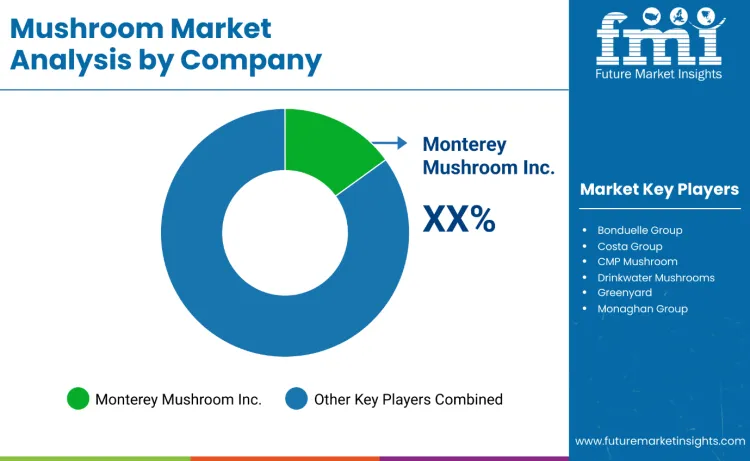
Market participants are increasingly prioritizing cultivation-focused innovation to differentiate mushroom varieties and strengthen competitive positioning. Major companies such as Monterey Mushroom and Bonduelle Group are investing in research collaborations with agricultural institutions to improve production efficiency and optimize growing practices. A key industry trend is the development of automated cultivation systems that regulate growing conditions based on environmental parameters, enabling higher consistency in yield and quality. Players are also forming strategic alliances with food distributors to improve retail penetration and streamline supply chain integration.
Innovation continues to act as a primary competitive lever, with companies experimenting with advanced substrates and improved nutrient formulations to enhance productivity. Consolidation remains moderate, although select specialty growers are acquiring processing facilities to gain greater control over quality, distribution, and value-added operations. Monterey Mushroom retains a strong industry presence, supported by its deep cultivation expertise and continued investments in distribution infrastructure.
Key Players in Mushroom Market
- Monterey Mushroom, Inc.
- Bonduelle Group
- Costa Group
- CMP Mushroom
- Drinkwater Mushrooms
- Greenyard
- Monaghan Group
- OKECHAMP S.A
- Highline Mushrooms
- Shanghai Finc Bio-Tech
Scope of Report
| Items | Values |
|---|---|
| Quantitative Units | USD Billion |
| Product Segments | Button; Shiitake; Oyster; Matsutake; Truffles; Others |
| Form Categories | Fresh; Processed |
| Application Categories | Food; Pharmaceuticals; Cosmetics |
| Distribution Channel Types | Supermarkets & Hypermarkets; Direct to Customer; Grocery Stores; Convenience Stores; Online Stores |
| Regions Covered | North America, Europe, East Asia, South Asia, Latin America, Middle East & Africa |
| Key Countries | China, India, Germany, Brazil, USA, UK |
| Key Companies Profiled | Monterey Mushroom Inc.; Bonduelle Group; Costa Group; CMP Mushroom; Drinkwater Mushrooms; Greenyard; Monaghan Group; OKECHAMP S.A; Highline Mushrooms; Shanghai Finc Bio-Tech |
| Additional Attributes | Dollar sales measured for mushrooms used in food processing and direct consumption applications, specified by variety type (button, shiitake, oyster, specialty), product form, cultivation method preference, application focus (culinary, pharmaceutical, cosmetic), retail model (traditional vs. online), and compliance alignment with evolving organic standards and food safety regulations. |
Mushroom Market by Segments
Product:
- Button
- Shiitake
- Oyster
- Matsutake
- Truffles
- Others
Form:
- Fresh
- Processed
Application:
- Food
- Pharmaceuticals
- Cosmetics
Distribution Channel:
- Supermarkets & Hypermarkets
- Direct to Customer
- Grocery Stores
- Convenience Stores
- Online Stores
Bibliography
- International Mycological Association. (2024). Industry guidelines on commercial mushroom cultivation practices and substrate optimization.
- European Mushroom Growers Group. (2024). Best practices in fresh and processed mushroom production for food applications.
- Mushroom Council. (2024). Mushroom production standards, culinary applications, and consumer usage trends.
- International Society for Mushroom Science. (2024). Advancements in controlled environment mushroom cultivation and yield efficiency.
Frequently Asked Questions
How big is the mushroom market in 2026?
The mushroom industry is valued at USD 72.3 billion in 2026.
What will be the size of the mushroom market in 2036?
The mushroom market is projected to reach USD 191.0 billion by 2036.
How much will the mushroom market grow between 2026 and 2036?
The market is expected to expand at a CAGR of 10% during the 2026 to 2036 forecast period.
Which product segment leads the mushroom market?
Button mushrooms lead the product category, accounting for 40% share in 2026.
Which application segment holds the dominant share in the mushroom market?
Food applications dominate the market landscape with a 72% share in 2026.
Preview the report firsthand - request a free sample
Get SampleGet the brochure for pricing and purchase details.
Get PDFTable of Content
- Executive Summary
- Global Market Outlook
- Demand-side Trends
- Supply-side Trends
- Technology Roadmap Analysis
- Analysis and Recommendations
- Market Overview
- Market Coverage / Taxonomy
- Market Definition / Scope / Limitations
- Market Background
- Market Dynamics
- Drivers
- Restraints
- Opportunity
- Trends
- Scenario Forecast
- Demand in Optimistic Scenario
- Demand in Likely Scenario
- Demand in Conservative Scenario
- Opportunity Map Analysis
- Product Life Cycle Analysis
- Supply Chain Analysis
- Investment Feasibility Matrix
- Value Chain Analysis
- PESTLE and Porter’s Analysis
- Regulatory Landscape
- Regional Parent Market Outlook
- Production and Consumption Statistics
- Import and Export Statistics
- Market Dynamics
- Global Market Analysis 2020 to 2025 and Forecast, 2026 to 2036
- Historical Market Size Value (USD Million) Analysis, 2020 to 2025
- Current and Future Market Size Value (USD Million) Projections, 2026 to 2036
- Y-o-Y Growth Trend Analysis
- Absolute $ Opportunity Analysis
- Global Market Pricing Analysis 2020 to 2025 and Forecast 2026 to 2036
- Global Market Analysis 2020 to 2025 and Forecast 2026 to 2036, By Product Type
- Introduction / Key Findings
- Historical Market Size Value (USD Million) Analysis By Product Type, 2020 to 2025
- Current and Future Market Size Value (USD Million) Analysis and Forecast By Product Type, 2026 to 2036
- Button
- Shiitake
- Oyster
- Matsutake
- Truffles
- Others
- Y-o-Y Growth Trend Analysis By Product Type, 2020 to 2025
- Absolute $ Opportunity Analysis By Product Type, 2026 to 2036
- Global Market Analysis 2020 to 2025 and Forecast 2026 to 2036, By Form
- Introduction / Key Findings
- Historical Market Size Value (USD Million) Analysis By Form, 2020 to 2025
- Current and Future Market Size Value (USD Million) Analysis and Forecast By Form, 2026 to 2036
- Fresh
- Processed
- Y-o-Y Growth Trend Analysis By Form, 2020 to 2025
- Absolute $ Opportunity Analysis By Form, 2026 to 2036
- Global Market Analysis 2020 to 2025 and Forecast 2026 to 2036, By Application
- Introduction / Key Findings
- Historical Market Size Value (USD Million) Analysis By Application, 2020 to 2025
- Current and Future Market Size Value (USD Million) Analysis and Forecast By Application, 2026 to 2036
- Food
- Pharmaceuticals
- Cosmetics
- Y-o-Y Growth Trend Analysis By Application, 2020 to 2025
- Absolute $ Opportunity Analysis By Application, 2026 to 2036
- Global Market Analysis 2020 to 2025 and Forecast 2026 to 2036, By Distribution Channel
- Introduction / Key Findings
- Historical Market Size Value (USD Million) Analysis By Distribution Channel, 2020 to 2025
- Current and Future Market Size Value (USD Million) Analysis and Forecast By Distribution Channel, 2026 to 2036
- Supermarkets & Hypermarkets
- Direct to Customer
- Grocery Stores
- Convenience Stores
- Online Stores
- Y-o-Y Growth Trend Analysis By Distribution Channel, 2020 to 2025
- Absolute $ Opportunity Analysis By Distribution Channel, 2026 to 2036
- Market Structure Analysis
- Competition Dashboard
- Competition Benchmarking
- Market Share Analysis of Top Players
- By Regional
- By Product Type
- By Form
- By Application
- By Distribution Channel
- Competition Analysis
- Competition Deep Dive
- Monterey Mushroom, Inc.
- Overview
- Product Portfolio
- Profitability by Market Segments (Product/Age /Sales Channel/Region)
- Sales Footprint
- Strategy Overview
- Marketing Strategy
- Product Strategy
- Channel Strategy
- Bonduelle Group
- Costa Group
- CMP Mushroom
- Drinkwater Mushrooms
- Monterey Mushroom, Inc.
- Competition Deep Dive
- Assumptions & Acronyms Used
- Research Methodology


