

- Market Size (2026)
- USD 39.0 Bn
- Forecast (2036)
- USD 110.6 Bn
- CAGR (2026 to 2036)
- 11.0%
Chaga Mushroom-Based Products Market Size, Market Forecast and Outlook By FMI
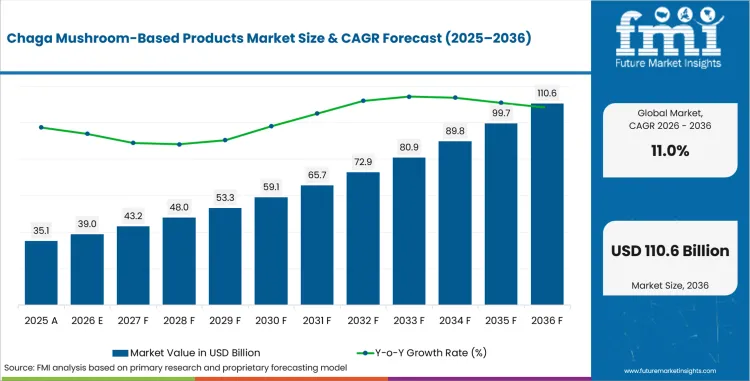
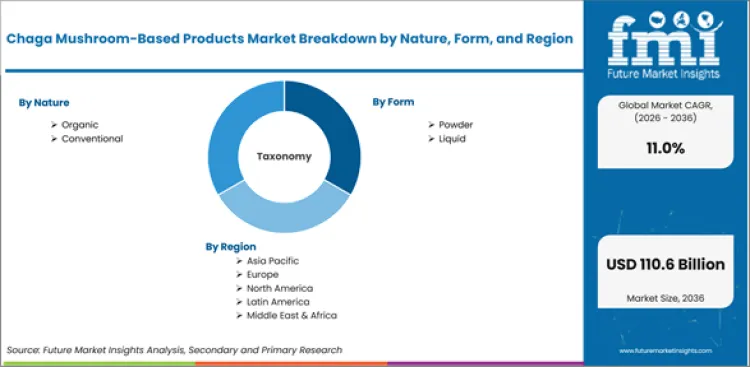
The chaga mushroom-based products market was valued at USD 35.1 billion in 2025. The market is set to reach USD 39.0 billion by 2026-end and grow at a CAGR of 11.0% between 2026-2036 to reach USD 110.6 billion by 2036. Organic will dominate with a 57.8% share, while Powder will lead with a 55.0% share.
Key Takeaways, Market Size, and Forecast
- 2026 Market Size: USD 39.0 Billion
- 2036 Market Size: USD 110.6 Billion
- Compound Annual Growth Rate (CAGR): 11.0% from 2026 to 2036
- Absolute $ Opportunity: USD 71.6 Billion between 2026 and 2036
- Leading Nature Segment: Organic
- Organic Share in 2026: 57.8%
- Fastest-growing Country: India
- India CAGR: 11.7% through 2036
| Parameter | Details |
|---|---|
| Market Size in 2026 (Value) | USD 39.0 Billion |
| Market Forecast in 2036 (Value) | USD 110.6 Billion |
| CAGR (2026 to 2036) | 11.0% |
| Years Considered | 2021 to 2036 |
| Base Year | 2025 |
| Forecast Period | 2026 to 2036 |
| Units Considered | Value (USD Bn) |
| Leading Sub-Region | India |
Summary of the Chaga Mushroom-Based Products Market
- Demand and Growth Drivers
- Chaga Mushroom-Based Products demand is shaped by evolving food safety standards and clean-label requirements across antioxidant applications, with end users prioritizing traceable and certified organic inputs during the forecast period.
- Adoption is increasing due to premiumization trends in antioxidant segments, where powder formulations offer functional and processing advantages over conventional alternatives.
- Growth reflects the expansion of organized retail and institutional procurement channels that broaden addressable demand for standardized chaga mushroom-based products products across key consuming markets.
- Product and Segment View
- Organic is expected to lead the nature segment at 57.8% share in 2026, supported by established demand across commercial and institutional end users.
- Antioxidant is likely to remain a leading application category, reflecting concentrated procurement volumes and stable downstream demand patterns.
- Powder is expected to account for 0.0% of the form segment, supported by processing compatibility and cost efficiency across manufacturing systems.
- Geography and Competitive Outlook
- India is expected to lead growth at 11.7% through 2036, supported by production capacity expansion and increasing investment in product quality.
- Germany at 11.2% reflects steady demand from established processing and institutional channels with a focus on compliance and traceability.
- Companies with integrated supply chains, multi-regional distribution, and regulatory compliance expertise are likely to strengthen competitive positioning during the forecast period.
- Analyst Opinion
- Nandini Roy Choudhury, Principal Consultant at FMI says, 'Companies that can scale organic supply while maintaining quality certification across antioxidant applications are likely to capture disproportionate share in high-growth markets such as India during the forecast period.'
- The chaga mushroom-based products market is transitioning from commodity-driven procurement to specification-led sourcing as end users prioritize traceability and functional performance.
- Adoption is supported by regulatory tightening in key markets that favors certified and standardized ingredient inputs over unverified supply sources.
- Cost competitiveness remains a key differentiator, with producers that achieve scale while maintaining quality certifications positioned to gain procurement preference.
Chaga Mushroom-Based Products Market Definition
The chaga mushroom-based products market encompasses commercially traded products categorized by nature, form, application, distribution channel. Core product categories include organic , conventional, powder , liquid, antioxidant, anti-inflammatory, alkalizing, e-commerce, and related formulations used across food processing, industrial, pharmaceutical, and consumer applications. The market covers revenue generated from 2026 to 2036 across all distribution and end-use channels.
Chaga Mushroom-Based Products Market Inclusions
Market scope encompasses all commercially traded chaga mushroom-based products products categorized by nature (organic , conventional), form (powder , liquid), application (antioxidant, anti-inflammatory, alkalizing, immune booster), distribution channel (e-commerce, direct, indirect). Revenue coverage spans from 2026 to 2036 across all regions and distribution channels.
Chaga Mushroom-Based Products Market Exclusions
The scope does not include raw, unprocessed, or non-commercial-grade chaga mushroom-based products products sold outside organized trade channels. Products intended exclusively for non-commercial research or laboratory use without commercial intent are excluded. Synthetic substitutes that do not contain chaga mushroom-based products as a primary functional ingredient are also outside the scope.
Chaga Mushroom-Based Products Market Research Methodology
- Primary Research: FMI analysts conducted interviews with chaga mushroom-based products producers, food processing companies, ingredient distributors, and end-use application specialists in key markets.
- Desk Research: Combined data from industry trade associations, regulatory compliance databases, sustainability certification bodies, and manufacturer disclosures.
- Market Sizing and Forecasting: Bottom-up aggregation of demand across nature, form, application, distribution channel segments, with regional adoption curves triangulated against trade and production data.
- Data Validation: Cross-checked quarterly against global production data, import and export statistics, and manufacturer-reported capacity utilization.
Why is the Chaga Mushroom-Based Products Market Growing?
- Regulatory tightening in food safety and ingredient traceability is creating structured demand for certified chaga mushroom-based products products across antioxidant and institutional procurement channels in major consuming markets.
- Expansion of organized retail and e-commerce distribution is broadening the addressable market for premium and specialty-grade organic formulations across both developed and emerging economies.
- India leads growth at 11.7%, supported by a large production and consumption base, increasing processing capacity, and rising quality certification requirements.
The chaga mushroom-based products market is expanding as food manufacturers, institutional buyers, and industrial processors shift procurement toward standardized and certified ingredient inputs. Demand is shaped by regulatory requirements for ingredient traceability, clean-label compliance, and food safety certification across major consuming markets. Organic products account for the leading share of demand, reflecting established processing infrastructure and broad compatibility with downstream manufacturing systems. End users are increasingly specifying quality parameters tied to functional performance, shelf stability, and regulatory compliance, which favors suppliers with documented quality management systems and consistent output.
Growth is further supported by the premiumization of consumer-facing products that incorporate specialty and functional chaga mushroom-based products ingredients. Health and wellness trends are influencing formulation strategies in antioxidant and nutraceutical applications, creating demand for higher-specification inputs. Distribution channel evolution, including B2B digital procurement platforms, is reducing transaction costs and improving supplier visibility. India and Germany represent the strongest growth corridors, combining production capacity expansion, domestic consumption growth, and regulatory modernization that supports quality-driven procurement.
Market Segmentation Analysis
- Organic accounts for 57.8% of the nature segment in 2026, reflecting established demand across primary commercial applications.
- Antioxidant leads the application segment at 0.0% share, supported by concentrated end-use demand.
- E-Commerce accounts for 48.3% of the distribution channel segment, reflecting institutional procurement and bulk sourcing preferences.
The chaga mushroom-based products market is segmented by nature, form, application, distribution channel. By nature, segments include Organic , Conventional. By form, segments include Powder, Liquid. By application, segments include Antioxidant, Anti-inflammatory, Alkalizing, Immune Booster. By distribution channel, segments include E-Commerce, Direct, Indirect.
Insights into the Organic Nature Segment
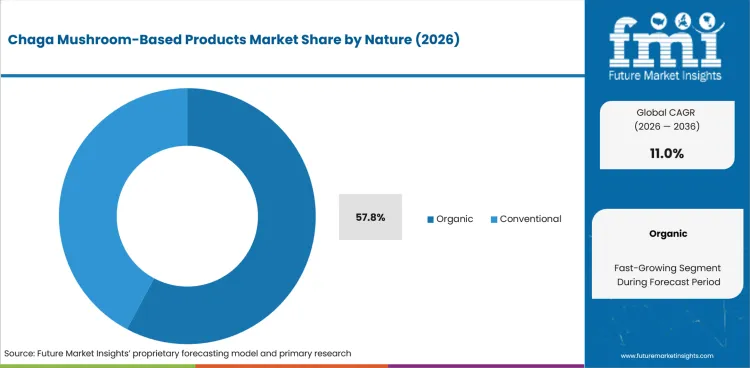
Organic is expected to account for 57.8% of the nature segment in 2026. Demand is concentrated in commercial food manufacturing, industrial processing, and institutional procurement channels where product consistency and regulatory compliance are primary sourcing criteria.
Procurement patterns for organic products are shaped by downstream formulation requirements, shelf-stability targets, and compatibility with existing production systems. Suppliers that maintain certified quality management and offer consistent batch-to-batch performance are gaining preference among large-scale processors and contract manufacturers.
Insights into the Powder Form Segment
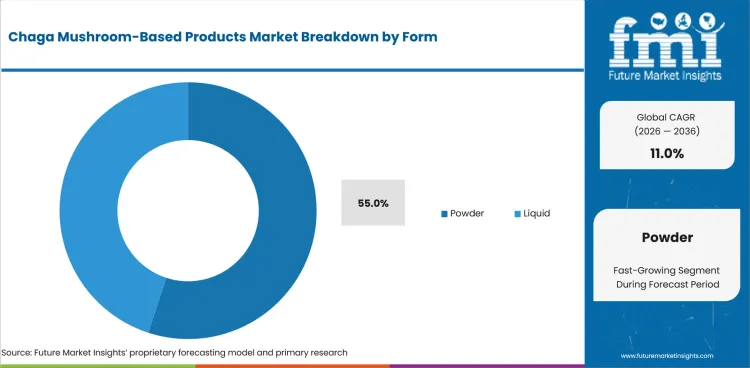
Powder is expected to account for 0.0% of the form segment in 2026. Demand is concentrated in commercial food manufacturing, industrial processing, and institutional procurement channels where product consistency and regulatory compliance are primary sourcing criteria.
Procurement patterns for powder products are shaped by downstream formulation requirements, shelf-stability targets, and compatibility with existing production systems. Suppliers that maintain certified quality management and offer consistent batch-to-batch performance are gaining preference among large-scale processors and contract manufacturers.
Chaga Mushroom-Based Products Market Drivers, Restraints, and Opportunities
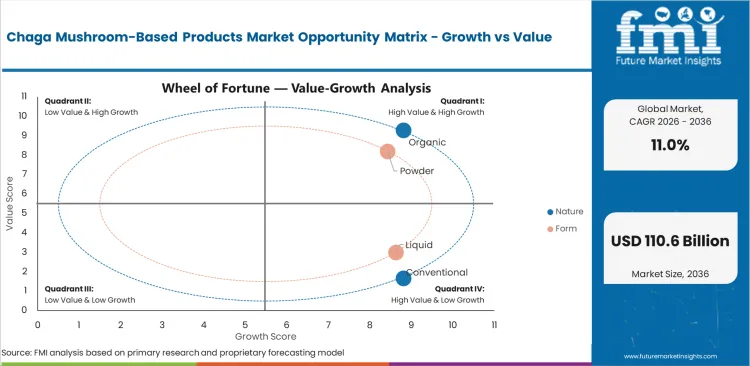
- Regulatory compliance and traceability requirements are creating structured demand for certified chaga mushroom-based products products across food manufacturing and institutional channels.
- Cost pressure from raw material volatility and supply chain complexity constrains margin growth for mid-tier producers, concentrating procurement among established suppliers.
- Premiumization and functional product development are expanding higher-value application segments across health, wellness, and specialty food categories.
The chaga mushroom-based products market is expanding on the basis of regulatory compliance requirements, functional product demand, and distribution modernization. Cost pressure from raw material volatility constrains margin growth in commodity segments, while opportunities in premium and health-oriented applications support value growth across the forecast period.
Regulatory Compliance and Traceability Requirements
Demand is shaped by regulatory tightening across major markets that requires ingredient traceability, quality certification, and documented sourcing practices. Food safety mandates in the EU, the USA, and East Asia are raising specification thresholds for chaga mushroom-based products products, favoring suppliers with certified quality systems and auditable supply chains.
Cost Pressure and Supply Chain Complexity
Adoption is constrained by cost sensitivity in commodity segments where chaga mushroom-based products products compete with lower-cost alternatives. Raw material price volatility, logistics costs, and multi-tier distribution create margin pressure for mid-tier producers without scale advantages.
Premiumization and Functional Product Development
Growth reflects the expansion of premium and functional product segments where chaga mushroom-based products ingredients deliver performance advantages in formulation, shelf stability, or nutritional profile. Health and wellness trends in consumer-facing categories support higher-value applications.
Distribution Channel Modernization
Procurement is shifting toward digital B2B platforms and direct supply arrangements that reduce intermediary costs and improve sourcing transparency, enabling mid-tier buyers to access specification-grade products previously limited to large-scale industrial purchasers.
Analysis of Chaga Mushroom-Based Products Market By Key Countries
.webp "Top Country Growth Comparison Chaga Mushroom Based Products Market Cagr (2026 2036)")
| Country | CAGR |
|---|---|
| India | 11.7% |
| Germany | 11.2% |
| China | 10.8% |
| USA | 10.5% |
| Japan | 10.3% |
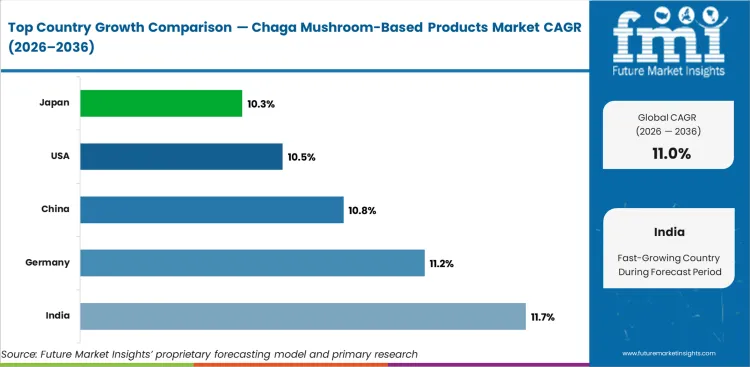
- India leads with a CAGR of 11.7%, supported by a large production and consumption base and increasing investment in organic quality standards.
- Germany at 11.2% reflects steady demand shaped by institutional procurement and regulatory compliance requirements for organic products.
- China (10.8%) shows growth driven by antioxidant sector expansion and specification-led sourcing for organic ingredients.
- USA at 10.5% indicates demand supported by retail modernization and premiumization trends in antioxidant applications.
The global chaga mushroom-based products market is projected to expand at a CAGR of 11.0% from 2026 to 2036. The analysis covers more than 30 countries, with key markets listed below.
Growth Analysis of Chaga Mushroom-Based Products Market in India
The mature antioxidant landscape in India is generating replacement and specification-upgrade demand for organic products, projected to grow at 11.7% through 2036. Tier-2 and tier-3 city distribution and domestic manufacturing scaling are the primary demand drivers.
- Urbanization is supporting adoption of certified and standardized organic formulations.
- Demand for specification-grade organic is reinforced by organized retail expansion in domestic and export-facing channels.
- E-commerce channels is expanding procurement pipelines for organic products in antioxidant applications.
Demand Outlook for Chaga Mushroom-Based Products Market in Germany
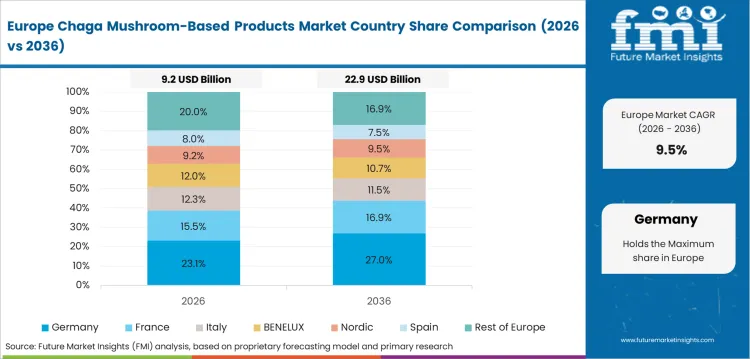
Demand for organic in Germany is shaped by EU packaging regulations and extended producer responsibility (EPR). The market is projected to expand at 11.2% through 2036, with antioxidant applications accounting for a significant share of procurement volume across organized trade channels.
- Demand for specification-grade organic is reinforced by extended producer responsibility (EPR) in domestic and export-facing channels.
- Retailer sustainability commitments is expanding procurement pipelines for organic products in antioxidant applications.
- Sourcing decisions for organic inputs are shaped by retailer consolidation across commercial and institutional end uses.
Future Outlook for Chaga Mushroom-Based Products Market in China
China is projected to grow at 10.8% through 2036, supported by food delivery infrastructure that strengthens domestic processing capacity for organic products. Cost advantage of local manufacturers is creating additional procurement channels across antioxidant end uses.
- Food delivery infrastructure is expanding procurement pipelines for organic products in antioxidant applications.
- Sourcing decisions for organic inputs are shaped by cost advantage of local manufacturers across commercial and institutional end uses.
- Growth in antioxidant channels reflects the influence of export-oriented processing channels on specification and volume requirements for organic .
Opportunity Analysis of Chaga Mushroom-Based Products Market in USA
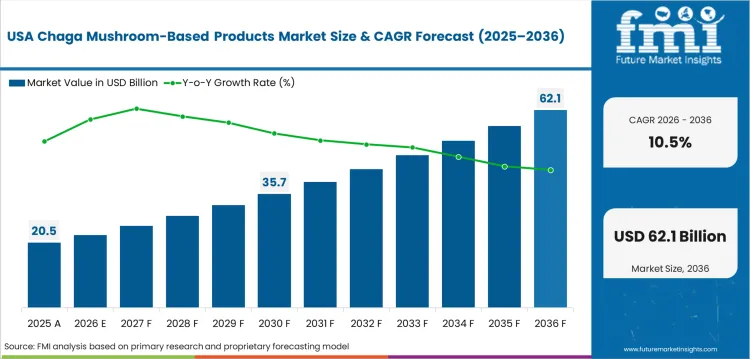
Regulatory standards shaped by clean-label consumer preferences are influencing procurement for organic in USA, projected to grow at 10.5% through 2036. Compliance requirements linked to sustainability mandates are supporting specification-grade sourcing across antioxidant segments.
- Sourcing decisions for organic inputs are shaped by brand differentiation strategies across commercial and institutional end uses.
- Growth in antioxidant channels reflects the influence of clean-label consumer preferences on specification and volume requirements for organic .
- Sustainability mandates is supporting adoption of certified and standardized organic formulations.
In-depth Analysis of Chaga Mushroom-Based Products Market in Japan
The scale of Japan's antioxidant sector is supporting growth at 10.3% through 2036. Strict quality and safety requirements and long qualification cycles are expanding the addressable market for organic products across commercial and institutional channels.
- Growth in antioxidant channels reflects the influence of aging population demographics on specification and volume requirements for organic .
- JIS compliance standards is supporting adoption of certified and standardized organic formulations.
- Demand for specification-grade organic is reinforced by strict quality and safety requirements in domestic and export-facing channels.
Competitive Landscape and Strategic Positioning
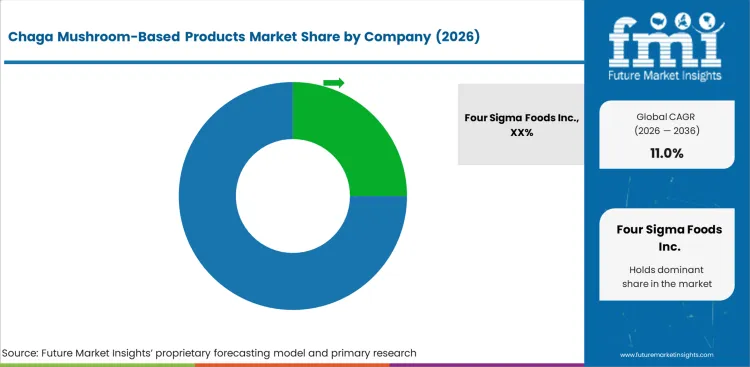
- Four Sigma Foods Inc. leads through integrated manufacturing, global distribution, and established procurement relationships across antioxidant and institutional channels.
- Annanda Chaga Mushrooms and Baikal Herbs Ltd. compete on product breadth, regional coverage, and organic formulation expertise.
- Emerging players are targeting niche segments including functional formulations, clean-label products, and regional specialty organic applications.
Four Sigma Foods Inc. maintains a strong position in the chaga mushroom-based products market through integrated supply chain capabilities, multi-regional manufacturing, and established relationships with large-scale antioxidant processors and institutional buyers. Annanda Chaga Mushrooms offers a diversified ingredient portfolio that includes organic products alongside complementary formulations.
Baikal Herbs Ltd. competes on the basis of product quality, certification compliance, and regional distribution strength. Mid-tier players focus on niche segments, regional markets, or specific application expertise to differentiate from larger integrated competitors.
Barriers to entry include processing infrastructure capital cost, quality certification timelines, established supplier relationships in institutional procurement, and multi-jurisdictional regulatory compliance costs. Strategic priorities include cost reduction through scale, high-growth regional market expansion, and specialty product line development.
Key Companies in the Chaga Mushroom-Based Products Market
Key global companies leading the chaga mushroom-based products market include:
- Four Sigma Foods Inc., Annanda Chaga Mushrooms, Baikal Herbs Ltd., Laboratoire Saeve maintain leading positions through manufacturing scale, regulatory compliance infrastructure, and established procurement relationships with large-scale antioxidant processors and institutional buyers.
- My Berry Organics LLC, Nutra Green Biotechnology Co. Ltd., Sayan Health Inc. have established regional leadership through focused distribution, application-specific organic formulations, and localized customer support.
- Organic Ingredients Co. Ltd., Eartherbs’ L.L.C., NordicNordic, Other Prominent Market Player are emerging through specialty product development, clean-label positioning, and targeted entry into high-growth organic application segments.
Competitive Benchmarking: Chaga Mushroom-Based Products Market
| Company | Nature Breadth | Processing Technology | Antioxidant Access | Geographic Footprint |
|---|---|---|---|---|
| Four Sigma Foods Inc. | High | Medium | Strong | Global |
| Annanda Chaga Mushrooms | High | Medium | Strong | Global |
| Baikal Herbs Ltd. | High | Medium | Strong | Global |
| Laboratoire Saeve | Medium | Medium | Moderate | Multi-regional |
| My Berry Organics LLC | Medium | High | Moderate | Multi-regional |
| Nutra Green Biotechnology Co. Ltd. | Medium | High | Moderate | Multi-regional |
| Sayan Health Inc. | Low | High | Low | Regional |
| Organic Ingredients Co. Ltd. | Low | High | Low | Regional |
| Eartherbs’ L.L.C. | Low | High | Low | Regional |
| NordicNordic | Low | High | Low | Regional |
Source: Future Market Insights competitive analysis, 2026.
Key Developments in Chaga Mushroom-Based Products Market
- In 2025, Four Sigma Foods Inc. expanded its organic product portfolio with new specification-grade formulations targeting antioxidant and institutional procurement channels.
- In 2025, Annanda Chaga Mushrooms invested in processing capacity expansion to support growing demand for certified and traceable organic ingredients across key regional markets.
Key Players in the Chaga Mushroom-Based Products Market
Major Global Players
- Four Sigma Foods Inc.
- Annanda Chaga Mushrooms
- Baikal Herbs Ltd.
- Laboratoire Saeve
- My Berry Organics LLC
- Nutra Green Biotechnology Co. Ltd.
- Sayan Health Inc.
Emerging Players/Startups
- Eartherbs’ L.L.C.
- NordicNordic
Report Scope and Coverage
| Parameter | Details |
|---|---|
| Market size by 2036 | USD 110.6 Billion |
| Growth rate | 11.0% CAGR (2026 to 2036) |
| Forecast period | 2026 to 2036 |
| Base year value (2025) | USD 35.1 Billion |
| Key Segment Covered | Nature, Form, Application, Distribution Channel |
| Regions covered | North America, Latin America, Western Europe, Eastern Europe, East Asia, South Asia and Pacific, Middle East and Africa |
| Countries covered | USA, India, Germany, China, Japan, 30 plus countries |
| Key companies profiled | Four Sigma Foods Inc., Annanda Chaga Mushrooms, Baikal Herbs Ltd., Laboratoire Saeve, My Berry Organics LLC, Nutra Green Biotechnology Co. Ltd., Sayan Health Inc., Organic Ingredients Co. Ltd., Eartherbs’ L.L.C., NordicNordic |
| Approach | Hybrid bottom-up and top-down methodology starting with verified transaction data, projecting adoption velocity across segments and regions. |
Market Segmentation Analysis
Chaga Mushroom-Based Products Market Segmented by Nature:
- Organic
- Conventional
Chaga Mushroom-Based Products Market Segmented by Form:
- Powder
- Liquid
Chaga Mushroom-Based Products Market Segmented by Application:
- Antioxidant
- Anti-inflammatory
- Alkalizing
- Immune Booster
Chaga Mushroom-Based Products Market Segmented by Distribution Channel:
- E-Commerce
- Direct
- Indirect
Chaga Mushroom-Based Products Market by Region:
- North America
- USA
- Canada
- Mexico
- Latin America
- Brazil
- Chile
- Rest of Latin America
- Western Europe
- Germany
- UK
- Italy
- Spain
- France
- Nordic
- BENELUX
- Rest of Western Europe
- Eastern Europe
- Russia
- Poland
- Hungary
- Balkan & Baltic
- Rest of Eastern Europe
- East Asia
- China
- Japan
- South Korea
- South Asia and Pacific
- India
- ASEAN
- Australia & New Zealand
- Rest of South Asia and Pacific
- Middle East & Africa
- Kingdom of Saudi Arabia
- Other GCC Countries
- Türkiye
- South Africa
- Other African Union
- Rest of Middle East & Africa
Research Sources and Bibliography
- 1. Food and Agriculture Organization. (2025). FAO Global Food and Agriculture Statistics. FAO.
- 2. World Health Organization. (2025). WHO Global Health Observatory Data Repository. WHO.
- 3. International Organization for Standardization. (2025). ISO Food Safety Management Standards. ISO.
- 4. USA Food and Drug Administration. (2025). FDA Food Safety Modernization Act Compliance Guide. FDA.
- 5. European Commission. (2025). EU Food Safety and Quality Standards Framework. EC.
This bibliography is provided for reader reference.
This Report Answers
- Estimating the size of the market and how much revenue it will generate from 2026 to 2036.
- Segmenting by nature, form, application, distribution channel.
- Insights about more than 30 markets in the region.
- Analysis of demand drivers, restraints, and growth opportunities.
- Assessment of the competitive landscape.
- Finding investment opportunities across key application and end-use segments.
- Tracking supply chain and distribution channel developments.
- Delivery of data in PDF and Excel formats.
Frequently Asked Questions
How big is the chaga mushroom-based products market in 2026?
The global chaga mushroom-based products market is estimated to be valued at USD 39.0 billion in 2026.
What will be the size of the chaga mushroom-based products market in 2036?
The market size for the chaga mushroom-based products market is projected to reach USD 110.6 billion by 2036.
How much will the chaga mushroom-based products market growth be between 2026 and 2036?
The chaga mushroom-based products market is expected to grow at a 11.0% CAGR between 2026 and 2036.
What are the key natures in the chaga mushroom-based products market?
The key natures in the chaga mushroom-based products market are Organic and Conventional.
Which form segment is expected to contribute a significant share in the chaga mushroom-based products market in 2026?
In terms of form, the powder segment is expected to command 55.0% share in the chaga mushroom-based products market in 2026.
Preview the report firsthand - request a free sample
Get SampleGet the brochure for pricing and purchase details.
Get PDFTable of Content
- Key Takeaways
- Market Size and CAGR
- Top Growth Driver
- Fastest Growing Segment
- Leading Region
- Key Companies
- Emerging Opportunities
- Executive Summary
- Global Market Outlook
- Demand-side Trends
- Supply-side Trends
- Technology Roadmap Analysis
- Analysis and Recommendations
- Analyst Perspective (What is happening? Why now? What should investors know?)
- Key Questions Answered
- How large is the market?
- What is the CAGR?
- What are key trends?
- Which region dominates?
- Who are the leaders?
- Market Overview
- Market Coverage / Taxonomy
- Market Definition / Scope / Limitations
- Research Methodology
- Chapter Orientation
- Analytical Lens and Working Hypotheses
- Market Structure, Signals, and Trend Drivers
- Benchmarking and Cross-market Comparability
- Market Sizing, Forecasting, and Opportunity Mapping
- Research Design and Evidence Framework
- Desk Research Programme (Secondary Evidence)
- Expert Input and Fieldwork (Primary Evidence)
- Tooling, Models, and Reference Databases
- Data Engineering and Model Build
- Quality Assurance and Audit Trail
- Market Background
- Market Dynamics (Drivers, Restraints, Opportunity, Trends)
- Scenario Forecast (Optimistic, Likely, Conservative)
- Impact Analysis
- AI Impact
- Sustainability Impact
- Regulatory Impact
- Technology Impact
- Consumer / Buyer Analysis
- Purchase Drivers
- Adoption Barriers
- Buyer Journey
- Opportunity Map Analysis
- Product Life Cycle Analysis
- Supply Chain Analysis
- Investment Feasibility Matrix
- Value Chain Analysis
- PESTLE and Porter's Analysis
- Regulatory Landscape
- Regional Parent Market Outlook
- Production and Consumption Statistics
- Import and Export Statistics
- Global Market Analysis and Forecast, 2021 to 2036
- Historical Market Size Value (USD Million) Analysis, 2021 to 2025
- Current and Future Market Size Value (USD Million) Projections, 2026 to 2036
- Y-o-Y Growth Trend Analysis
- Absolute $ Opportunity Analysis
- Global Market Pricing Analysis, 2021 to 2036
- Global Market Analysis and Forecast, By Nature, 2021 to 2036
- Introduction / Key Findings
- Historical Market Size Value (USD Million) Analysis By Nature, 2021 to 2025
- Current and Future Market Size Value (USD Million) Analysis and Forecast By Nature, 2026 to 2036
- Organic
- Conventional
- Organic
- Y-o-Y Growth Trend Analysis By Nature, 2021 to 2025
- Absolute $ Opportunity Analysis By Nature, 2026 to 2036
- Global Market Analysis and Forecast, By Form, 2021 to 2036
- Introduction / Key Findings
- Historical Market Size Value (USD Million) Analysis By Form, 2021 to 2025
- Current and Future Market Size Value (USD Million) Analysis and Forecast By Form, 2026 to 2036
- Powder
- Liquid
- Powder
- Y-o-Y Growth Trend Analysis By Form, 2021 to 2025
- Absolute $ Opportunity Analysis By Form, 2026 to 2036
- Global Market Analysis and Forecast, By Application, 2021 to 2036
- Introduction / Key Findings
- Historical Market Size Value (USD Million) Analysis By Application, 2021 to 2025
- Current and Future Market Size Value (USD Million) Analysis and Forecast By Application, 2026 to 2036
- Antioxidant
- Anti-inflammatory
- Alkalizing
- Immune Booster
- Antioxidant
- Y-o-Y Growth Trend Analysis By Application, 2021 to 2025
- Absolute $ Opportunity Analysis By Application, 2026 to 2036
- Global Market Analysis and Forecast, By Distribution Channel, 2021 to 2036
- Introduction / Key Findings
- Historical Market Size Value (USD Million) Analysis By Distribution Channel, 2021 to 2025
- Current and Future Market Size Value (USD Million) Analysis and Forecast By Distribution Channel, 2026 to 2036
- E-Commerce
- Direct
- Indirect
- E-Commerce
- Y-o-Y Growth Trend Analysis By Distribution Channel, 2021 to 2025
- Absolute $ Opportunity Analysis By Distribution Channel, 2026 to 2036
- Global Market Analysis and Forecast, By Region, 2021 to 2036
- Introduction
- Historical Market Size Value (USD Million) Analysis By Region, 2021 to 2025
- Current Market Size Value (USD Million) Analysis and Forecast By Region, 2026 to 2036
- North America
- Latin America
- Western Europe
- Eastern Europe
- East Asia
- South Asia and Pacific
- Middle East & Africa
- Market Attractiveness Analysis By Region
- North America Market Analysis and Forecast, By Country, 2021 to 2036
- Historical Market Size Value (USD Million) Trend Analysis By Market Taxonomy, 2021 to 2025
- Market Size Value (USD Million) Forecast By Market Taxonomy, 2026 to 2036
- By Country
- USA
- Canada
- Mexico
- By Nature
- By Form
- By Application
- By Distribution Channel
- By Country
- Market Attractiveness Analysis
- By Country
- By Nature
- By Form
- By Application
- By Distribution Channel
- Key Takeaways
- Latin America Market Analysis and Forecast, By Country
- Historical Market Size Value (USD Million) Trend Analysis By Market Taxonomy, 2021 to 2025
- Market Size Value (USD Million) Forecast By Market Taxonomy, 2026 to 2036
- By Country
- Brazil
- Chile
- Rest of Latin America
- By Nature
- By Form
- By Application
- By Distribution Channel
- By Country
- Market Attractiveness Analysis
- By Country
- By Nature
- By Form
- By Application
- By Distribution Channel
- Key Takeaways
- Western Europe Market Analysis and Forecast, By Country
- Historical Market Size Value (USD Million) Trend Analysis By Market Taxonomy, 2021 to 2025
- Market Size Value (USD Million) Forecast By Market Taxonomy, 2026 to 2036
- By Country
- Germany
- UK
- Italy
- Spain
- France
- Nordic
- BENELUX
- Rest of Western Europe
- By Nature
- By Form
- By Application
- By Distribution Channel
- By Country
- Market Attractiveness Analysis
- By Country
- By Nature
- By Form
- By Application
- By Distribution Channel
- Key Takeaways
- Eastern Europe Market Analysis and Forecast, By Country
- Historical Market Size Value (USD Million) Trend Analysis By Market Taxonomy, 2021 to 2025
- Market Size Value (USD Million) Forecast By Market Taxonomy, 2026 to 2036
- By Country
- Russia
- Poland
- Hungary
- Balkan & Baltic
- Rest of Eastern Europe
- By Nature
- By Form
- By Application
- By Distribution Channel
- By Country
- Market Attractiveness Analysis
- By Country
- By Nature
- By Form
- By Application
- By Distribution Channel
- Key Takeaways
- East Asia Market Analysis and Forecast, By Country
- Historical Market Size Value (USD Million) Trend Analysis By Market Taxonomy, 2021 to 2025
- Market Size Value (USD Million) Forecast By Market Taxonomy, 2026 to 2036
- By Country
- China
- Japan
- South Korea
- By Nature
- By Form
- By Application
- By Distribution Channel
- By Country
- Market Attractiveness Analysis
- By Country
- By Nature
- By Form
- By Application
- By Distribution Channel
- Key Takeaways
- South Asia and Pacific Market Analysis and Forecast, By Country
- Historical Market Size Value (USD Million) Trend Analysis By Market Taxonomy, 2021 to 2025
- Market Size Value (USD Million) Forecast By Market Taxonomy, 2026 to 2036
- By Country
- India
- ASEAN
- Australia & New Zealand
- Rest of South Asia and Pacific
- By Nature
- By Form
- By Application
- By Distribution Channel
- By Country
- Market Attractiveness Analysis
- By Country
- By Nature
- By Form
- By Application
- By Distribution Channel
- Key Takeaways
- Middle East & Africa Market Analysis and Forecast, By Country
- Historical Market Size Value (USD Million) Trend Analysis By Market Taxonomy, 2021 to 2025
- Market Size Value (USD Million) Forecast By Market Taxonomy, 2026 to 2036
- By Country
- Kingdom of Saudi Arabia
- Other GCC Countries
- Türkiye
- South Africa
- Other African Union
- Rest of Middle East & Africa
- By Nature
- By Form
- By Application
- By Distribution Channel
- By Country
- Market Attractiveness Analysis
- By Country
- By Nature
- By Form
- By Application
- By Distribution Channel
- Key Takeaways
- Key Countries Market Analysis
- USA
- Pricing Analysis
- Market Share Analysis, 2025
- By Nature
- By Form
- By Application
- By Distribution Channel
- Canada
- Pricing Analysis
- Market Share Analysis, 2025
- By Nature
- By Form
- By Application
- By Distribution Channel
- Mexico
- Pricing Analysis
- Market Share Analysis, 2025
- By Nature
- By Form
- By Application
- By Distribution Channel
- Brazil
- Pricing Analysis
- Market Share Analysis, 2025
- By Nature
- By Form
- By Application
- By Distribution Channel
- Chile
- Pricing Analysis
- Market Share Analysis, 2025
- By Nature
- By Form
- By Application
- By Distribution Channel
- Germany
- Pricing Analysis
- Market Share Analysis, 2025
- By Nature
- By Form
- By Application
- By Distribution Channel
- UK
- Pricing Analysis
- Market Share Analysis, 2025
- By Nature
- By Form
- By Application
- By Distribution Channel
- Italy
- Pricing Analysis
- Market Share Analysis, 2025
- By Nature
- By Form
- By Application
- By Distribution Channel
- Spain
- Pricing Analysis
- Market Share Analysis, 2025
- By Nature
- By Form
- By Application
- By Distribution Channel
- France
- Pricing Analysis
- Market Share Analysis, 2025
- By Nature
- By Form
- By Application
- By Distribution Channel
- India
- Pricing Analysis
- Market Share Analysis, 2025
- By Nature
- By Form
- By Application
- By Distribution Channel
- ASEAN
- Pricing Analysis
- Market Share Analysis, 2025
- By Nature
- By Form
- By Application
- By Distribution Channel
- Australia & New Zealand
- Pricing Analysis
- Market Share Analysis, 2025
- By Nature
- By Form
- By Application
- By Distribution Channel
- China
- Pricing Analysis
- Market Share Analysis, 2025
- By Nature
- By Form
- By Application
- By Distribution Channel
- Japan
- Pricing Analysis
- Market Share Analysis, 2025
- By Nature
- By Form
- By Application
- By Distribution Channel
- South Korea
- Pricing Analysis
- Market Share Analysis, 2025
- By Nature
- By Form
- By Application
- By Distribution Channel
- Russia
- Pricing Analysis
- Market Share Analysis, 2025
- By Nature
- By Form
- By Application
- By Distribution Channel
- Poland
- Pricing Analysis
- Market Share Analysis, 2025
- By Nature
- By Form
- By Application
- By Distribution Channel
- Hungary
- Pricing Analysis
- Market Share Analysis, 2025
- By Nature
- By Form
- By Application
- By Distribution Channel
- Kingdom of Saudi Arabia
- Pricing Analysis
- Market Share Analysis, 2025
- By Nature
- By Form
- By Application
- By Distribution Channel
- Türkiye
- Pricing Analysis
- Market Share Analysis, 2025
- By Nature
- By Form
- By Application
- By Distribution Channel
- South Africa
- Pricing Analysis
- Market Share Analysis, 2025
- By Nature
- By Form
- By Application
- By Distribution Channel
- USA
- Market Structure Analysis
- Competition Dashboard
- Competition Benchmarking
- Market Share Analysis of Top Players
- By Regional
- By Nature
- By Form
- By Application
- By Distribution Channel
- Emerging Startups
- Innovation Benchmarking
- Competition Analysis
- Competition Deep Dive
- Four Sigma Foods Inc.
- Overview
- Product Portfolio
- Profitability by Market Segments (Product/Region/Sales Channel)
- Sales Footprint
- Strategy Overview
- Marketing Strategy
- Product Strategy
- Channel Strategy
- Annanda Chaga Mushrooms
- Baikal Herbs Ltd.
- Laboratoire Saeve
- My Berry Organics LLC
- Nutra Green Biotechnology Co. Ltd.
- Sayan Health Inc.
- Organic Ingredients Co. Ltd.
- Eartherbs’ L.L.C.
- NordicNordic
- Other Prominent Market Player
- Four Sigma Foods Inc.
- Case Studies
- Success Stories
- Recent Developments
- Competition Deep Dive
- Assumptions & Acronyms Used


