

- Market Size (2026)
- USD 1.09 Bn
- Forecast (2036)
- USD 3.70 Bn
- CAGR (2026 to 2036)
- 13.0%
Sparkling Coffee Market Size, Market Forecast and Outlook by FMI
Summary of the Sparkling Coffee Market
- Demand and Growth Drivers
- Cold coffee consumption supports sparkling coffee as younger consumers shift from hot morning routines to chilled daypart drinks.
- Carbonation gives coffee brands a refreshment cue that works better in afternoon and summer occasions.
- Low-sugar positioning supports canned sparkling coffee because many products avoid dairy and heavy syrup.
- Ready-to-drink coffee behavior supports retail entry as NCA-linked specialty coffee data showed RTD became the third most popular preparation method among past-day specialty coffee drinkers in 2024.
- Product and Segment View
- Sparkling cold brew is projected to account for 52.0% share in 2026 as cold brew gives the product a clear coffee base.
- Citrus flavors are estimated to represent 38.0% share in 2026 as grapefruit, orange and lemon profiles manage bitterness.
- Cans are expected to hold 71.0% share in 2026 since carbonation needs sealed packaging and chilled retail visibility.
- Geography and Competitive Outlook
- China is projected to record 16.2% CAGR by 2036 as flavored cold coffee and tea-refreshment formats already have strong café traction.
- South Korea is expected to expand at 15.4% CAGR by 2036 as convenience-store coffee and functional beverage habits support experimentation.
- Starbucks, Peet’s Coffee and ZUS Coffee hold visible positions through recent sparkling coffee launches.
- Slingshot Coffee and smaller coffee-soda brands compete through specialty cold brew quality and fruit-forward recipes.
- Analyst Opinion
- Nandini Roy Choudhury, Principal Consultant at FMI, observes, sparkling coffee is a taste-architecture problem before it is a scale problem. Carbonation exposes bitterness faster than milk-based coffee does. Winners will control acidity and sweetness with more care than a normal RTD coffee brand.
- Sparkling Coffee Market Value Analysis
- Repeat summer launches support value growth as brands test carbonation through limited café menus before retail expansion.
- Canned formats improve scalability because carbonation and shelf stability need tighter packaging control.
- Café chains lower trial risk by selling sparkling coffee as a seasonal refresher before committing to grocery distribution.
- Specialty brands can hold premium pricing if they prove flavor balance without high sugar loads.
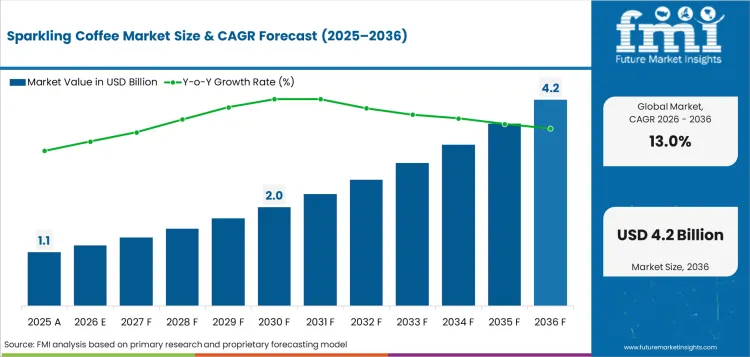
Key Takeaways, Market Size, and Forecast
- The sparkling coffee market value is estimated at USD 960.0 million in 2025.
- Global sparkling coffee market is projected to reach USD 3.70 billion by 2036 as cold coffee and low-sugar refreshment formats overlap.
- The market is expected to expand at 13.0% CAGR from 2026 to 2036 across canned coffee soda and flavored coffee refreshers.
- The market is projected to create an incremental opportunity of USD 2.61 billion between 2026 and 2036.
- Sparkling cold brew is expected to account for 52.0% share in 2026 due to stronger coffee identity and café-menu transferability.
- Citrus flavors are estimated to represent 38.0% share in 2026 as acidity offsets coffee bitterness in carbonated formats.
- China at 16.2% CAGR and South Korea at 15.4% CAGR are expected to record the fastest country-level pace by 2036.
Sparkling coffee is moving out of novelty status as coffee brands search for lighter cold formats. Starbucks highlighted China’s non-alcoholic Sparkling Wine Flavored Cold Brew in July 2024 as part of its global summer beverage lineup. Peet’s Coffee launched Sparkling Grapefruit Cold Brew in June 2024 as a coffee-forward carbonated summer beverage. ZUS Coffee launched COFFIZZ in January 2024 as Malaysia’s first halal sparkling coffee in canned RTD format. These launches show that the category is being tested through cafés, cans and limited seasonal menus rather than a single retail route.
Sparkling Coffee Market Definition
The sector covers carbonated coffee beverages made with brewed coffee coffee extract or espresso concentrate. Included products cover sparkling cold brew, coffee soda, canned sparkling coffee and café-made sparkling coffee refreshers. The scope includes still coffee concentrates only when they are sold for carbonated preparation or used in sparkling coffee service.
Traditional RTD coffee, nitro cold brew, coffee energy drinks without carbonation and alcoholic espresso cocktails fall outside this study. Coffee-flavored cola is excluded unless coffee is positioned as the primary ingredient.
Sparkling Coffee Market Inclusions
The study includes sparkling cold brew, coffee soda, citrus coffee, botanical coffee, canned sparkling coffee, café sparkling coffee, direct-to-consumer sales, grocery retail, convenience stores, cafés, online channels and global geography.
Market scope covers commercially traded sparkling coffee products by product type, including sparkling cold brew and coffee soda; flavor type, including citrus and botanical flavors; packaging format, including cans and café-dispensed cups; and distribution channel, including grocery retail, convenience stores, cafés and online channels.
Revenue scope covers 2026 to 2036. The key stakeholders include coffee roasters, RTD beverage companies, café chains, convenience retailers, canning partners, flavor houses, carbonation equipment suppliers, distributors and chilled beverage merchandisers.
Sparkling Coffee Market Exclusions
The study excludes still RTD coffee, bottled frappes, nitro cold brew, instant coffee, coffee concentrates not sold for sparkling use, alcoholic coffee cocktails and coffee-flavored carbonated soft drinks where cola is the primary product.
Sparkling Coffee Market Research Methodology
- Primary Research: FMI analysts reviewed coffee roasters, RTD beverage developers, café operators and specialty beverage distributors. Interviews focused on repeat purchase, flavor balance, carbonation stability and chilled shelf placement.
- Desk Research: The desk review used coffee consumption data, company product launches, café menu evidence and beverage packaging references. RTD coffee and cold brew trends were used to test the category boundary.
- Market Sizing and Forecasting: The forecast combined RTD coffee penetration, sparkling beverage overlap, average selling price and product launch activity. Segment shares were checked against café menus, canned product listings and supplier positioning.
- Data Validation: Final values were checked against cold coffee adoption, specialty coffee behavior, convenience-store beverage patterns and brand launch evidence in key countries.
Why is the Sparkling Coffee Market Growing?
- Cold brew gives sparkling coffee a less bitter base than hot-brewed coffee poured over carbonation.
- Citrus flavors make carbonated coffee easier to drink by balancing roast bitterness with acidity.
- Café chains use sparkling coffee to extend coffee consumption into afternoon refreshment occasions.
- Canned RTD formats support trial because shoppers already understand sparkling water and energy drink packaging.
- Smaller brands use coffee soda to differentiate from crowded latte and cold brew shelves.
Market Segmentation Analysis
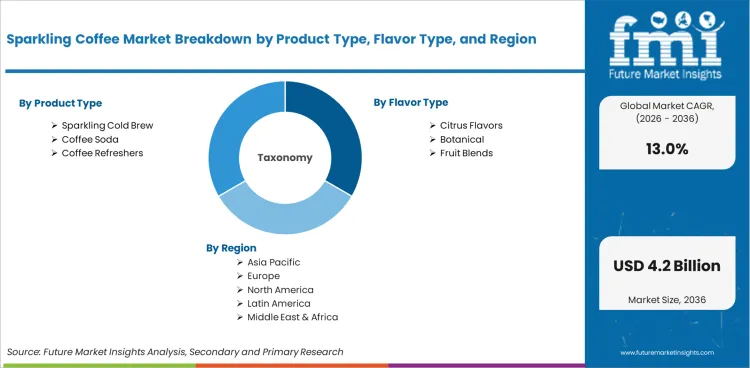
The sparkling coffee market is segmented by product type into sparkling cold brew, coffee soda and coffee refreshers. By flavor type, the market is divided into citrus, botanical, fruit blends and plain coffee.
Based on packaging format, the market is segmented into cans, café cups and glass bottles. By distribution channel, the market is categorized into cafés, grocery retail, convenience stores and online channels.
The category grows when coffee brands solve a basic sensory conflict. Coffee carries bitterness and roast notes, while carbonation sharpens acidity and aroma release. Slingshot Coffee says its Coffee Sodas are built with cold brew, fruit juice and natural cane sugar to keep the drink coffee-driven and flavor-forward. This explains why many early products use citrus or fruit instead of plain coffee carbonation. The product works best when it tastes like a designed beverage and not like diluted cold brew with bubbles.
Sparkling Coffee Market Analysis by Product Type
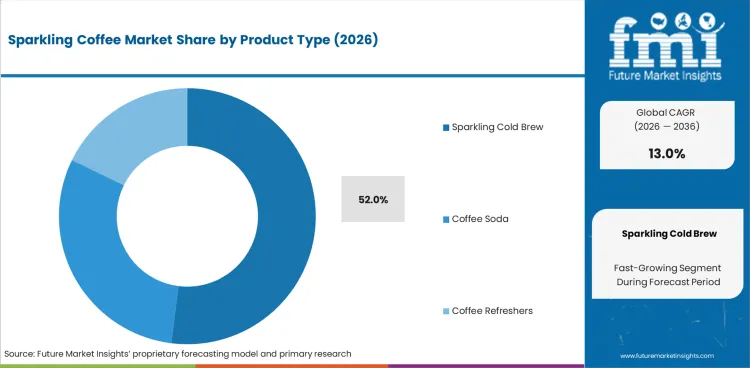
- Sparkling cold brew is expected to account for 52.0% share in 2026 as cold brew gives carbonated coffee a smoother base and cleaner café transfer.
- Coffee soda gains use where brands want a lighter refreshment format with fruit juice, cane sugar or botanical flavoring.
Insights into Coffee Soda Segment
- Coffee soda is expected to gain share among specialty brands that want stronger differentiation than canned latte products provide.
- Slingshot Coffee positions its Coffee Sodas around cold brew, fruit juice and classic soda inspiration with a coffee-forward profile.
Sparkling Coffee Market Analysis by Flavor Type
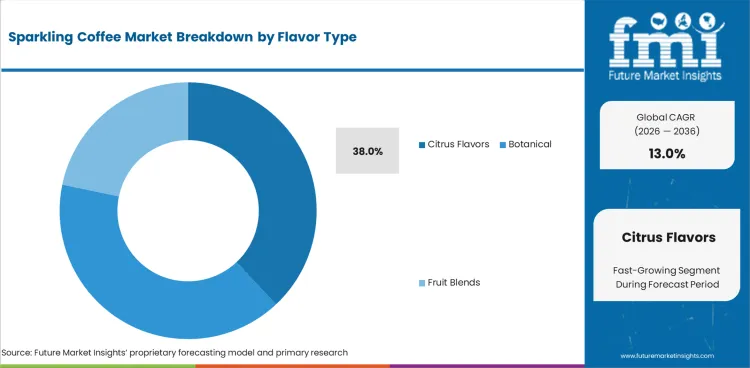
- Citrus flavors are estimated to represent 38.0% share in 2026 as orange, grapefruit and lemon help balance bitterness.
- Botanical flavors serve premium buyers who want a less sweet drink with tea-like or cocktail-style cues.
Insights into Botanical Flavor Segment
- Botanical sparkling coffee fits cafés and specialty shelves where shoppers accept herbal notes in kombucha and sparkling tea.
- Starbucks Reserve used cold brew, Italian spirits, bitters and sparkling water in its Siciliano cocktail for Marriott Bonvoy members in June 2024.
Sparkling Coffee Market Analysis by Packaging Format
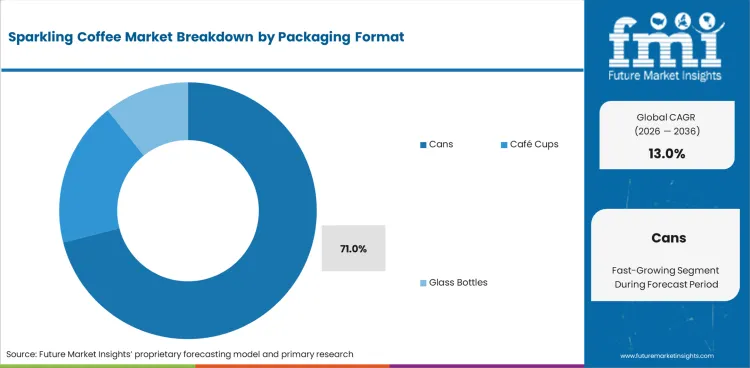
- Cans are expected to hold 71.0% share in 2026 because carbonation, portability and retail display work best in sealed formats.
- Café cups remain important for seasonal testing before brands commit to canned retail production.
Insights into Café Cups Segment
- Café-made sparkling coffee lets operators test recipes without a full canning run or national retail launch.
- Peet’s Coffee used café availability for Sparkling Grapefruit Cold Brew in June 2024 before treating it as a summer beverage platform.
Sparkling Coffee Market Analysis by Distribution Channel
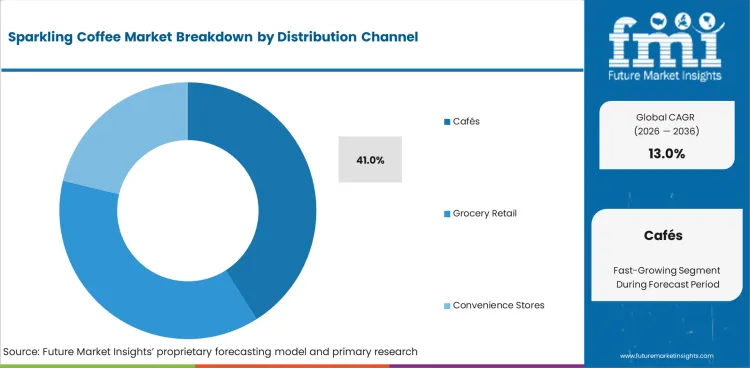
- Cafés are projected to hold 41.0% share in 2026 as baristas can explain unusual coffee soda formats at the point of sale.
- Grocery retail becomes stronger once a product proves repeat purchase and packaging stability.
Insights into Grocery Retail Segment
- Grocery entry needs clearer labeling because shoppers compare sparkling coffee with cold brew, energy drinks and carbonated soft drinks.
- Starbucks RTD Iced Energy reached grocery stores and convenience channels in March 2025 with 160mg caffeine and zero sugar.
Sparkling Coffee Market Drivers, Restraints, and Opportunities
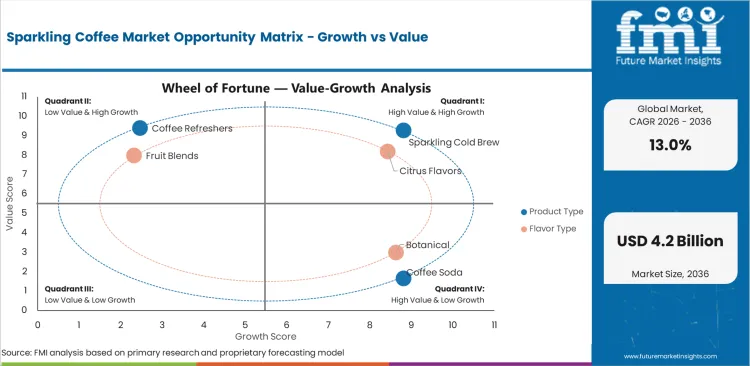
- Cold coffee daypart expansion supports sparkling coffee because the product works outside the morning hot-coffee occasion.
- Citrus flavor systems reduce bitterness and make the first trial easier for non-specialist coffee drinkers.
- RTD canning supports retail reach as carbonation needs sealed packaging and visible chilled placement.
- Repeat purchase remains a challenge because many shoppers treat coffee soda as a curiosity.
- Low-sugar refreshment creates opportunity for brands positioned between cold brew and sparkling water.
Cold Brew Carbonation Fit
Cold brew is the practical base for most sparkling coffee recipes. It has lower perceived bitterness than many hot-brewed concentrates, which makes carbonation easier to manage. Starbucks’ at-home Sparkling Cold Brew recipe uses cold brew concentrate and sparkling water with a citrus twist. This simple recipe shows how the format can be built from existing cold brew infrastructure. For manufacturers, that lowers development risk. For cafés, it allows a seasonal beverage without new brewing equipment. The main commercial requirement is taste balance after carbonation.
Citrus Flavor Masking
Citrus gives sparkling coffee a working flavor bridge. Grapefruit, orange and lemon add acidity that can make coffee bitterness feel more intentional. Peet’s Coffee launched Sparkling Grapefruit Cold Brew in June 2024 as a coffee-forward summer drink. ZUS Coffee launched COFFIZZ in January 2024 in a halal canned RTD format. These launches show why citrus and carbonated coffee often appear together. The flavor system makes the product more approachable for consumers who do not want a heavy milk coffee.
Repeat Purchase Risk
Repeat Purchase Risk. Sparkling coffee is easy to sample and hard to scale. The first purchase often comes from curiosity, but the second purchase depends on flavor clarity and stomach feel. Carbonation can make roast bitterness sharper if the coffee base is not well chosen. Sugar reduction raises the difficulty because sweetness often covers that bitterness. Brands that over-index on novelty risk losing repeat buyers after the first can. Suppliers need sensory discipline before they spend heavily on grocery distribution.
Regional Analysis
.webp "Top Country Growth Comparison Sparkling Coffee Market Cagr (2026 2036)")
| Country | CAGR 2026 to 2036 |
|---|---|
| China | 16.2% |
| South Korea | 15.4% |
| United States | 14.6% |
| United Kingdom | 13.2% |
| Japan | 12.6% |
| Australia | 12.1% |
| Germany | 11.4% |
Source: Future Market Insights analysis based on cold coffee demand, RTD beverage adoption and public product launch evidence in 2026.
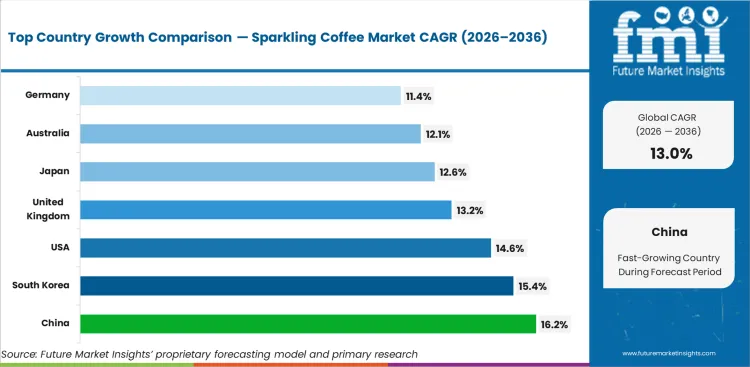
Analysis of Sparkling Coffee Market by Key Countries
- China is expected to grow at 16.2% CAGR by 2036, led by café experimentation and flavored cold coffee demand.
- South Korea is projected to follow at 15.4% CAGR by 2036 as convenience-store coffee and sparkling refreshment habits overlap.
- The United States demand is expected to advance at 14.6% CAGR by 2036 as specialty coffee brands test coffee soda and RTD caffeine formats.
- The United Kingdom is forecast at 13.2% CAGR by 2036 through specialty coffee cafés and low-sugar beverage retail.
- Japan is expected to expand at 12.6% CAGR by 2036 as canned coffee culture gives RTD products a strong base.
- Australia at 12.1% CAGR expands through café culture and cold coffee uptake in metro retail.
- Germany at 11.4% CAGR grows through premium grocery and low-sugar carbonated beverage adoption.
Country growth differs with coffee format maturity and retail experimentation. China and South Korea lead because flavored beverages and convenience formats create faster trial conditions. The United States follows with specialty coffee brands and larger RTD shelves. Germany and Japan grow from mature beverage systems but remain more controlled in product acceptance and shelf rotation.
Demand Outlook for Sparkling Coffee Market in China
Demand for sparkling coffee in China is projected to rise at 16.2% CAGR by 2036, supported by flavored cold coffee and seasonal café menus. Starbucks named China’s Sparkling Wine Flavored Cold Brew among its global winning drinks in July 2024. This matters because China is already comfortable with hybrid café beverages that combine coffee with fruit, tea and dessert cues. The strongest early demand will sit in tier-one city cafés before broader retail distribution. Adoption depends on whether canned products can match the sensory appeal of café-served drinks.
- Shanghai and Beijing support early demand through café chains that rotate seasonal cold beverage menus.
- Starbucks China gives the category a visible reference through Sparkling Wine Flavored Cold Brew.
- Guangzhou and Shenzhen retail channels can support canned versions if brands prove repeat purchase.
Demand Outlook for Sparkling Coffee Market in South Korea
The sector in South Korea is expected to expand at 15.4% CAGR by 2036, supported by convenience-store coffee and fast beverage experimentation. Seoul shoppers already buy canned coffee, cold brew and sparkling drinks through dense retail networks. Sparkling coffee fits that environment when packaging is portable and flavor is less bitter. The category is likely to start through imported specialty brands and local café trials. Wider adoption will depend on how fast convenience-store chains give shelf space to coffee soda.
- Seoul convenience stores are likely first-test locations due to dense beverage shelves and fast product rotation.
- Korean café districts in Hongdae and Gangnam support novelty cold coffee formats with younger consumers.
- Local RTD coffee makers can reduce trial risk by using familiar can sizes and lighter citrus profiles.
Demand Outlook for Sparkling Coffee Market in the United States
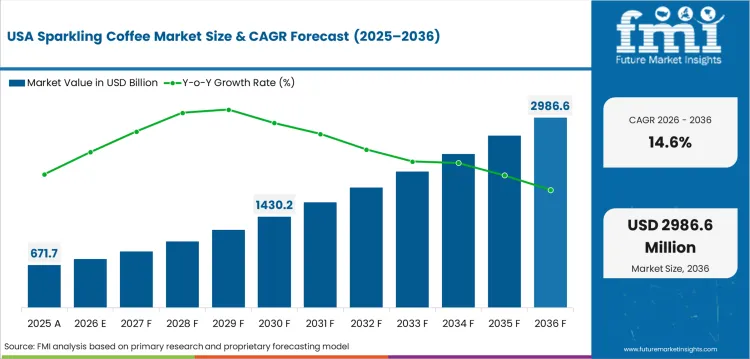
Sales of sparkling coffee in the United States are projected to increase at 14.6% CAGR by 2036 as cold coffee and RTD formats keep expanding. NCA’s Spring 2024 National Coffee Data Trends report said 67% of American adults had coffee in the past day. The same release said 75% had coffee in the past week. These statistics give sparkling coffee a large coffee-drinking base, though not automatic repeat demand. The market will grow where brands create a clear occasion between cold brew and energy drinks.
- Peet’s Coffee gives the United States a mainstream café-chain example through Sparkling Grapefruit Cold Brew.
- Slingshot Coffee supports specialty adoption from Raleigh with cold brew-based Coffee Sodas.
- Starbucks RTD Iced Energy shows how sparkling caffeine formats can enter grocery and convenience channels.
Demand Outlook for Sparkling Coffee Market in the United Kingdom
The sector in the United Kingdom is expected to grow at 13.2% CAGR by 2036 as specialty cafés test lighter cold coffee formats. British shoppers already understand canned cold brew and flavored sparkling drinks. Sparkling coffee can enter through cafés first and grocery later. The category will need clear labeling because many consumers will compare it with energy drinks and sparkling water. London is expected to lead early sales as specialty coffee and premium grocery overlap there.
- London specialty cafés give brands a practical testbed for citrus cold brew and coffee tonic recipes.
- Premium retailers such as Waitrose can support trial if packaging explains caffeine and sweetness clearly.
- Manchester and Bristol coffee scenes can support small-batch sparkling coffee before national grocery listings.
Demand Outlook for Sparkling Coffee Market in Japan
Sparkling coffee demand in Japan is projected to record 12.6% CAGR by 2036 as canned coffee culture supports RTD experimentation. Japan has long accepted coffee in vending and convenience-store formats. Sparkling coffee still faces a taste barrier because traditional canned coffee buyers expect either milk sweetness or black coffee clarity. The strongest use case is likely seasonal citrus coffee in convenience retail. Suppliers will need disciplined flavor design and smaller can formats to fit Japanese portion habits.
- Tokyo convenience stores provide the clearest route for small-can sparkling coffee trials.
- Osaka café chains can test seasonal citrus coffee before retail canning decisions.
- Vending channels may support adoption only after products prove stable carbonation and repeat purchase.
Demand Outlook for Sparkling Coffee Market in Australia
The sector in Australia is expected to expand at 12.1% CAGR by 2036 due to strong café culture and cold beverage demand. Australian consumers are familiar with espresso-based drinks and premium bottled beverages. Sparkling coffee will need to pass a high taste bar because café standards are strong. Early adoption is expected in Melbourne and Sydney cafés before retail shelves widen. The product fits summer refreshment but may remain niche if flavor execution feels too far from coffee norms.
- Melbourne cafés provide a natural test area for coffee tonic and sparkling cold brew formats.
- Sydney premium grocers can support RTD trial through chilled functional beverage shelves.
- Brisbane’s warmer climate improves seasonal fit for lighter carbonated coffee drinks.
Demand Outlook for Sparkling Coffee Market in Germany
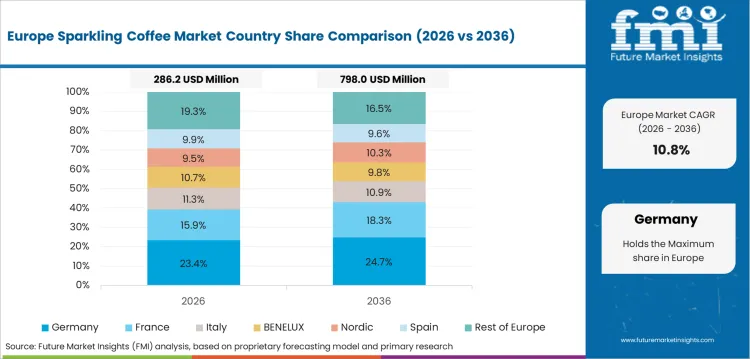
The sector in Germany is expected to expand at 11.4% CAGR by 2036 through premium retail and low-sugar beverage adoption. German shoppers are open to functional and reduced-sugar drinks, but taste expectations remain strict. Sparkling coffee must show clear ingredient quality and moderate sweetness. The product is likely to stay premium before it reaches mainstream discount shelves. Growth will depend on whether brands can position it closer to cold brew refreshment than sweet carbonated soft drinks.
- Berlin specialty cafés are likely early adopters due to cold brew and craft beverage culture.
- Hamburg premium grocers can support trial through chilled beverage shelves and organic positioning.
- German discount retail may wait until unit pricing and repeat sales are proven.
Competitive Landscape
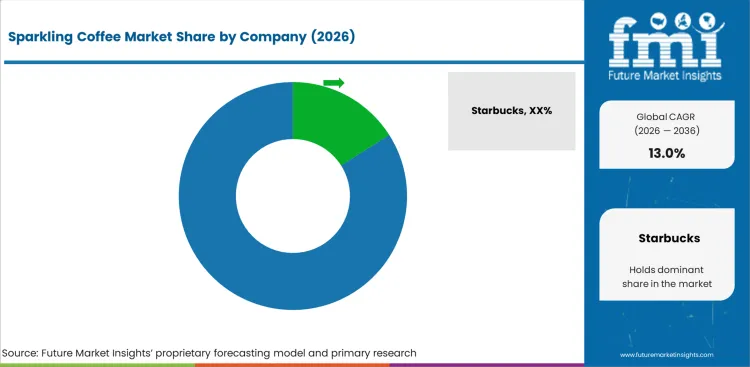
- The market is fragmented with café chains, RTD coffee firms and specialty soda brands testing different formats.
- Starbucks and Peet’s Coffee hold stronger menu reach through large café networks and seasonal product launches.
- ZUS Coffee shows how Southeast Asian brands can enter through canned halal RTD formats.
- Slingshot Coffee competes through craft cold brew quality and fruit-forward coffee soda positioning.
- Entry barriers include flavor balance, carbonation stability, canning access and repeat-purchase proof.
Competition in sparkling coffee is shaped by route to trial. Café chains have an advantage because baristas can explain the drink and adjust the serve. Peet’s Coffee used that route with Sparkling Grapefruit Cold Brew in June 2024. Starbucks used regional menu storytelling for China’s Sparkling Wine Flavored Cold Brew in July 2024. These moves reduce launch risk because the format can be tested as a seasonal drink. If repeat rates are weak, the product can exit without leaving large retail inventory.
Packaged brands face a harder test because the can must explain the product alone. ZUS Coffee launched COFFIZZ in January 2024 as a halal canned sparkling coffee in Malaysia. That launch matters because canned RTD puts sparkling coffee directly beside energy drinks, sodas and cold coffee. The benefit is reach. The risk is unclear shelf identity. Brands need packaging that tells shoppers whether the drink is coffee, soda or energy-style refreshment.
Specialty brands win when they make the flavor feel intentional. Slingshot Coffee says its Coffee Sodas use cold brew, fruit juice and natural cane sugar. That is a different buyer promise from standard canned latte. Smaller players can build loyal demand if the drink has clean acidity and clear coffee character. Their constraint is distribution. National grocery expansion requires stable canning partners, strong margins and enough velocity per store to avoid being delisted.
Competitive Benchmarking: Sparkling Coffee Market
| Company | Cold Brew Base Strength | Carbonated Flavor Design | Retail Channel Reach | Geographic Footprint |
|---|---|---|---|---|
| Starbucks | High | High | High | Global |
| Peet’s Coffee | High | Medium | Strong | United States |
| ZUS Coffee | Medium | Medium | Strong | Malaysia and Southeast Asia |
| Slingshot Coffee | High | High | Medium | United States |
| Upruit | Medium | High | Low to Medium | United States |
| Keepers Sparkling Coffee | Medium | High | Low | United States |
| Pop & Bottle | Medium | Low | Medium | United States |
Source: Future Market Insights competitive analysis, 2026. Ratings reflect relative positioning based on cold brew base strength, carbonated flavor design and retail channel reach.
Key Developments in Sparkling Coffee Market
- In January 2024, ZUS Coffee launched COFFIZZ as Malaysia’s first halal canned sparkling coffee. The product showed how Southeast Asian coffee chains can test RTD carbonation.
- In June 2024, Peet’s Coffee launched Sparkling Grapefruit Cold Brew as part of its summer beverage lineup. The drink used a café route for consumer trial.
- In July 2024, Starbucks highlighted China’s Sparkling Wine Flavored Cold Brew in its global summer beverage feature. The drink showed regional demand for celebratory cold coffee formats.
- In March 2025, Starbucks launched RTD Iced Energy with 160mg plant-based caffeine and sparkling refreshment cues. The launch supports broader retail acceptance for sparkling caffeinated beverages.
- In June 2024, Starbucks and Marriott Bonvoy introduced a Reserve Siciliano cocktail using cold brew, sparkling water and orange bitters. It showed coffee’s fit in sparkling adult refreshment formats.
Key Companies in the Sparkling Coffee Market
- Starbucks
- Peet’s Coffee
- ZUS Coffee
- Slingshot Coffee
- Upruit
- Keepers Sparkling Coffee
- Pop & Bottle
Specialty Coffee Soda Producers
- Slingshot Coffee
- Upruit
- Keepers Sparkling Coffee
Report Scope and Coverage
| Parameter | Details |
|---|---|
| Quantitative Units | USD 1.09 billion in 2026 to USD 3.70 billion in 2036, at a CAGR of 13.0% |
| Market Definition | Carbonated coffee beverages made with brewed coffee, cold brew, coffee extract or espresso concentrate. |
| Regions Covered | North America, Latin America, Europe, East Asia, South Asia and Pacific, Middle East and Africa |
| Countries Covered | China, South Korea, United States, United Kingdom, Japan, Australia, Germany and 30+ countries |
| Key Companies Profiled | Starbucks, Peet’s Coffee, ZUS Coffee, Slingshot Coffee, Upruit, Keepers Sparkling Coffee and Pop & Bottle |
| Forecast Period | 2026 to 2036 |
| Approach | Hybrid bottom-up and top-down methodology based on RTD coffee demand, carbonated beverage overlap, launch activity and country-level cold coffee adoption |
Sparkling Coffee Market by Segments
Sparkling Coffee Market Segmented by Product Type:
- Sparkling Cold Brew
- Coffee Soda
- Coffee Refreshers
Sparkling Coffee Market Segmented by Flavor Type:
- Citrus
- Botanical
- Fruit Blends
- Plain Coffee
Sparkling Coffee Market Segmented by Packaging Format:
- Cans
- Café Cups
- Glass Bottles
Sparkling Coffee Market Segmented by Distribution Channel:
- Cafés
- Grocery Retail
- Convenience Stores
- Online Channels
Sparkling Coffee Market by Region:
- North America
- United States
- Canada
- Mexico
- Latin America
- Brazil
- Chile
- Rest of Latin America
- Western Europe
- Germany
- UK
- France
- Italy
- Spain
- BENELUX
- Nordic
- Rest of Western Europe
- Eastern Europe
- Russia
- Poland
- Hungary
- Balkan and Baltic
- Rest of Eastern Europe
- East Asia
- China
- Japan
- South Korea
- South Asia and Pacific
- India
- ASEAN
- Australia and New Zealand
- Rest of South Asia and Pacific
- Middle East and Africa
- Kingdom of Saudi Arabia
- Other GCC Countries
- Turkiye
- South Africa
- Other African Union
- Rest of Middle East and Africa
Research Sources and Bibliography
- National Coffee Association. 2024. Daily coffee consumption at 20-year high, up nearly 40%.
- Specialty Coffee Association. 2024. 2024 National Coffee Data Trends Specialty Coffee Breakout Report now available.
- Starbucks. 2024. Winning Starbucks drinks around the world.
- Starbucks. 2025. New ready-to-drink Starbucks Iced Energy and Frappuccino Lite now available.
- Peet’s Coffee. 2024. Peet’s Coffee is set to make your summer sparkle with new bubbly beverage sensations.
- ZUS Coffee. 2024. ZUS Coffee launched COFFIZZ, Malaysia’s first canned sparkling coffee.
- Slingshot Coffee. Our Beverages.
- Associated Press. 2024. Amazon is removing Just Walk Out technology from its Fresh grocery stores in the US.
This Report Answers
- How large is the sparkling coffee market in 2026 and how much incremental value is expected by 2036?
- What factors are shaping demand for sparkling cold brew, coffee soda and café coffee refreshers?
- Which flavor formats are expected to lead adoption across citrus, botanical and fruit-blend sparkling coffee?
- How are café launches and canned RTD formats changing the commercial route for sparkling coffee brands?
- Which countries are forecast to grow faster than the global average and why?
- How are cold coffee consumption, low-sugar preferences and carbonation trends affecting category growth?
- Which companies are best positioned across café menus, RTD cans and specialty coffee soda production?
Frequently Asked Questions
What is the current value of the sparkling coffee market?
The sparkling coffee market is estimated at USD 1.09 billion in 2026.
What is the projected value of the sparkling coffee market by 2036?
The market is forecast to reach USD 3.70 billion by 2036.
What CAGR is expected for the sparkling coffee market?
The market is projected to expand at 13.0% CAGR from 2026 to 2036.
Which product type is expected to lead the sparkling coffee market?
Sparkling cold brew is expected to lead with 52.0% share in 2026.
Which flavor type is expected to lead the market?
Citrus flavors are projected to lead with 38.0% share in 2026.
Which country is expected to grow fastest?
China is projected to grow fastest at 16.2% CAGR by 2036.
What is the main competitive shift in this market?
The main competitive shift is the move from café novelty drinks to canned RTD formats that can enter grocery and convenience shelves.
What is sparkling coffee?
Sparkling coffee is carbonated coffee made with cold brew, brewed coffee, coffee extract or espresso concentrate.
Is sparkling coffee the same as cold brew?
No. Cold brew is still coffee. Sparkling coffee usually uses cold brew as a base and adds carbonation, fruit flavor or soda-style refreshment.
What does sparkling coffee taste like?
Sparkling coffee usually tastes lighter than milk coffee. Citrus versions taste like cold brew mixed with grapefruit, orange or lemon soda.
What are the disadvantages of sparkling coffee?
The main disadvantages are bitterness, unusual taste expectations, carbonation stability and weak repeat purchase if the first flavor experience feels unbalanced.
Preview the report firsthand - request a free sample
Get SampleGet the brochure for pricing and purchase details.
Get PDFTable of Content
- Executive Summary
- Global Market Outlook
- Demand-side Trends
- Supply-side Trends
- Technology Roadmap Analysis
- Analysis and Recommendations
- Market Overview
- Market Coverage / Taxonomy
- Market Definition / Scope / Limitations
- Research Methodology
- Chapter Orientation
- Analytical Lens and Working Hypotheses
- Market Structure, Signals, and Trend Drivers
- Benchmarking and Cross-market Comparability
- Market Sizing, Forecasting, and Opportunity Mapping
- Research Design and Evidence Framework
- Desk Research Programme (Secondary Evidence)
- Company Annual and Sustainability Reports
- Peer-reviewed Journals and Academic Literature
- Corporate Websites, Product Literature, and Technical Notes
- Earnings Decks and Investor Briefings
- Statutory Filings and Regulatory Disclosures
- Technical White Papers and Standards Notes
- Trade Journals, Industry Magazines, and Analyst Briefs
- Conference Proceedings, Webinars, and Seminar Materials
- Government Statistics Portals and Public Data Releases
- Press Releases and Reputable Media Coverage
- Specialist Newsletters and Curated Briefings
- Sector Databases and Reference Repositories
- FMI Internal Proprietary Databases and Historical Market Datasets
- Subscription Datasets and Paid Sources
- Social Channels, Communities, and Digital Listening Inputs
- Additional Desk Sources
- Expert Input and Fieldwork (Primary Evidence)
- Primary Modes
- Qualitative Interviews and Expert Elicitation
- Quantitative Surveys and Structured Data Capture
- Blended Approach
- Why Primary Evidence is Used
- Focus Groups
- Observational and In-context Research
- Social and Community Interactions
- Primary Modes
- Stakeholder Universe Engaged
- C-suite Leaders
- Board Members
- Presidents and Vice Presidents
- R&D and Innovation Heads
- Technical Specialists
- Domain Subject-matter Experts
- Scientists
- Physicians and Other Healthcare Professionals
- Governance, Ethics, and Data Stewardship
- Research Ethics
- Data Integrity and Handling
- Desk Research Programme (Secondary Evidence)
- Tooling, Models, and Reference Databases
- Data Engineering and Model Build
- Data Acquisition and Ingestion
- Cleaning, Normalisation, and Verification
- Synthesis, Triangulation, and Analysis
- Quality Assurance and Audit Trail
- Market Background
- Market Dynamics
- Drivers
- Restraints
- Opportunity
- Trends
- Scenario Forecast
- Demand in Optimistic Scenario
- Demand in Likely Scenario
- Demand in Conservative Scenario
- Opportunity Map Analysis
- Product Life Cycle Analysis
- Supply Chain Analysis
- Investment Feasibility Matrix
- Value Chain Analysis
- PESTLE and Porter’s Analysis
- Regulatory Landscape
- Regional Parent Market Outlook
- Production and Consumption Statistics
- Import and Export Statistics
- Market Dynamics
- Global Market Analysis 2021 to 2025 and Forecast, 2026 to 2036
- Historical Market Size Value (USD Million) Analysis, 2021 to 2025
- Current and Future Market Size Value (USD Million) Projections, 2026 to 2036
- Y-o-Y Growth Trend Analysis
- Absolute $ Opportunity Analysis
- Global Market Pricing Analysis 2021 to 2025 and Forecast 2026 to 2036
- Global Market Analysis 2021 to 2025 and Forecast 2026 to 2036, By Product Type
- Introduction / Key Findings
- Historical Market Size Value (USD Million) Analysis By Product Type , 2021 to 2025
- Current and Future Market Size Value (USD Million) Analysis and Forecast By Product Type , 2026 to 2036
- Sparkling Cold Brew
- Coffee Soda
- Coffee Refreshers
- Sparkling Cold Brew
- Y-o-Y Growth Trend Analysis By Product Type , 2021 to 2025
- Absolute $ Opportunity Analysis By Product Type , 2026 to 2036
- Global Market Analysis 2021 to 2025 and Forecast 2026 to 2036, By Flavor Type
- Introduction / Key Findings
- Historical Market Size Value (USD Million) Analysis By Flavor Type, 2021 to 2025
- Current and Future Market Size Value (USD Million) Analysis and Forecast By Flavor Type, 2026 to 2036
- Citrus Flavors
- Botanical
- Fruit Blends
- Citrus Flavors
- Y-o-Y Growth Trend Analysis By Flavor Type, 2021 to 2025
- Absolute $ Opportunity Analysis By Flavor Type, 2026 to 2036
- Global Market Analysis 2021 to 2025 and Forecast 2026 to 2036, By Packaging Format
- Introduction / Key Findings
- Historical Market Size Value (USD Million) Analysis By Packaging Format, 2021 to 2025
- Current and Future Market Size Value (USD Million) Analysis and Forecast By Packaging Format, 2026 to 2036
- Cans
- Café Cups
- Glass Bottles
- Cans
- Y-o-Y Growth Trend Analysis By Packaging Format, 2021 to 2025
- Absolute $ Opportunity Analysis By Packaging Format, 2026 to 2036
- Global Market Analysis 2021 to 2025 and Forecast 2026 to 2036, By Distribution Channel
- Introduction / Key Findings
- Historical Market Size Value (USD Million) Analysis By Distribution Channel, 2021 to 2025
- Current and Future Market Size Value (USD Million) Analysis and Forecast By Distribution Channel, 2026 to 2036
- Cafés
- Grocery Retail
- Convenience Stores
- Cafés
- Y-o-Y Growth Trend Analysis By Distribution Channel, 2021 to 2025
- Absolute $ Opportunity Analysis By Distribution Channel, 2026 to 2036
- Global Market Analysis 2021 to 2025 and Forecast 2026 to 2036, By Region
- Introduction
- Historical Market Size Value (USD Million) Analysis By Region, 2021 to 2025
- Current Market Size Value (USD Million) Analysis and Forecast By Region, 2026 to 2036
- North America
- Latin America
- Western Europe
- Eastern Europe
- East Asia
- South Asia and Pacific
- Middle East & Africa
- Market Attractiveness Analysis By Region
- North America Market Analysis 2021 to 2025 and Forecast 2026 to 2036, By Country
- Historical Market Size Value (USD Million) Trend Analysis By Market Taxonomy, 2021 to 2025
- Market Size Value (USD Million) Forecast By Market Taxonomy, 2026 to 2036
- By Country
- USA
- Canada
- Mexico
- By Product Type
- By Flavor Type
- By Packaging Format
- By Distribution Channel
- By Country
- Market Attractiveness Analysis
- By Country
- By Product Type
- By Flavor Type
- By Packaging Format
- By Distribution Channel
- Key Takeaways
- Latin America Market Analysis 2021 to 2025 and Forecast 2026 to 2036, By Country
- Historical Market Size Value (USD Million) Trend Analysis By Market Taxonomy, 2021 to 2025
- Market Size Value (USD Million) Forecast By Market Taxonomy, 2026 to 2036
- By Country
- Brazil
- Chile
- Rest of Latin America
- By Product Type
- By Flavor Type
- By Packaging Format
- By Distribution Channel
- By Country
- Market Attractiveness Analysis
- By Country
- By Product Type
- By Flavor Type
- By Packaging Format
- By Distribution Channel
- Key Takeaways
- Western Europe Market Analysis 2021 to 2025 and Forecast 2026 to 2036, By Country
- Historical Market Size Value (USD Million) Trend Analysis By Market Taxonomy, 2021 to 2025
- Market Size Value (USD Million) Forecast By Market Taxonomy, 2026 to 2036
- By Country
- Germany
- UK
- Italy
- Spain
- France
- Nordic
- BENELUX
- Rest of Western Europe
- By Product Type
- By Flavor Type
- By Packaging Format
- By Distribution Channel
- By Country
- Market Attractiveness Analysis
- By Country
- By Product Type
- By Flavor Type
- By Packaging Format
- By Distribution Channel
- Key Takeaways
- Eastern Europe Market Analysis 2021 to 2025 and Forecast 2026 to 2036, By Country
- Historical Market Size Value (USD Million) Trend Analysis By Market Taxonomy, 2021 to 2025
- Market Size Value (USD Million) Forecast By Market Taxonomy, 2026 to 2036
- By Country
- Russia
- Poland
- Hungary
- Balkan & Baltic
- Rest of Eastern Europe
- By Product Type
- By Flavor Type
- By Packaging Format
- By Distribution Channel
- By Country
- Market Attractiveness Analysis
- By Country
- By Product Type
- By Flavor Type
- By Packaging Format
- By Distribution Channel
- Key Takeaways
- East Asia Market Analysis 2021 to 2025 and Forecast 2026 to 2036, By Country
- Historical Market Size Value (USD Million) Trend Analysis By Market Taxonomy, 2021 to 2025
- Market Size Value (USD Million) Forecast By Market Taxonomy, 2026 to 2036
- By Country
- China
- Japan
- South Korea
- By Product Type
- By Flavor Type
- By Packaging Format
- By Distribution Channel
- By Country
- Market Attractiveness Analysis
- By Country
- By Product Type
- By Flavor Type
- By Packaging Format
- By Distribution Channel
- Key Takeaways
- South Asia and Pacific Market Analysis 2021 to 2025 and Forecast 2026 to 2036, By Country
- Historical Market Size Value (USD Million) Trend Analysis By Market Taxonomy, 2021 to 2025
- Market Size Value (USD Million) Forecast By Market Taxonomy, 2026 to 2036
- By Country
- India
- ASEAN
- Australia & New Zealand
- Rest of South Asia and Pacific
- By Product Type
- By Flavor Type
- By Packaging Format
- By Distribution Channel
- By Country
- Market Attractiveness Analysis
- By Country
- By Product Type
- By Flavor Type
- By Packaging Format
- By Distribution Channel
- Key Takeaways
- Middle East & Africa Market Analysis 2021 to 2025 and Forecast 2026 to 2036, By Country
- Historical Market Size Value (USD Million) Trend Analysis By Market Taxonomy, 2021 to 2025
- Market Size Value (USD Million) Forecast By Market Taxonomy, 2026 to 2036
- By Country
- Kingdom of Saudi Arabia
- Other GCC Countries
- Turkiye
- South Africa
- Other African Union
- Rest of Middle East & Africa
- By Product Type
- By Flavor Type
- By Packaging Format
- By Distribution Channel
- By Country
- Market Attractiveness Analysis
- By Country
- By Product Type
- By Flavor Type
- By Packaging Format
- By Distribution Channel
- Key Takeaways
- Key Countries Market Analysis
- USA
- Pricing Analysis
- Market Share Analysis, 2025
- By Product Type
- By Flavor Type
- By Packaging Format
- By Distribution Channel
- Canada
- Pricing Analysis
- Market Share Analysis, 2025
- By Product Type
- By Flavor Type
- By Packaging Format
- By Distribution Channel
- Mexico
- Pricing Analysis
- Market Share Analysis, 2025
- By Product Type
- By Flavor Type
- By Packaging Format
- By Distribution Channel
- Brazil
- Pricing Analysis
- Market Share Analysis, 2025
- By Product Type
- By Flavor Type
- By Packaging Format
- By Distribution Channel
- Chile
- Pricing Analysis
- Market Share Analysis, 2025
- By Product Type
- By Flavor Type
- By Packaging Format
- By Distribution Channel
- Germany
- Pricing Analysis
- Market Share Analysis, 2025
- By Product Type
- By Flavor Type
- By Packaging Format
- By Distribution Channel
- UK
- Pricing Analysis
- Market Share Analysis, 2025
- By Product Type
- By Flavor Type
- By Packaging Format
- By Distribution Channel
- Italy
- Pricing Analysis
- Market Share Analysis, 2025
- By Product Type
- By Flavor Type
- By Packaging Format
- By Distribution Channel
- Spain
- Pricing Analysis
- Market Share Analysis, 2025
- By Product Type
- By Flavor Type
- By Packaging Format
- By Distribution Channel
- France
- Pricing Analysis
- Market Share Analysis, 2025
- By Product Type
- By Flavor Type
- By Packaging Format
- By Distribution Channel
- India
- Pricing Analysis
- Market Share Analysis, 2025
- By Product Type
- By Flavor Type
- By Packaging Format
- By Distribution Channel
- ASEAN
- Pricing Analysis
- Market Share Analysis, 2025
- By Product Type
- By Flavor Type
- By Packaging Format
- By Distribution Channel
- Australia & New Zealand
- Pricing Analysis
- Market Share Analysis, 2025
- By Product Type
- By Flavor Type
- By Packaging Format
- By Distribution Channel
- China
- Pricing Analysis
- Market Share Analysis, 2025
- By Product Type
- By Flavor Type
- By Packaging Format
- By Distribution Channel
- Japan
- Pricing Analysis
- Market Share Analysis, 2025
- By Product Type
- By Flavor Type
- By Packaging Format
- By Distribution Channel
- South Korea
- Pricing Analysis
- Market Share Analysis, 2025
- By Product Type
- By Flavor Type
- By Packaging Format
- By Distribution Channel
- Russia
- Pricing Analysis
- Market Share Analysis, 2025
- By Product Type
- By Flavor Type
- By Packaging Format
- By Distribution Channel
- Poland
- Pricing Analysis
- Market Share Analysis, 2025
- By Product Type
- By Flavor Type
- By Packaging Format
- By Distribution Channel
- Hungary
- Pricing Analysis
- Market Share Analysis, 2025
- By Product Type
- By Flavor Type
- By Packaging Format
- By Distribution Channel
- Kingdom of Saudi Arabia
- Pricing Analysis
- Market Share Analysis, 2025
- By Product Type
- By Flavor Type
- By Packaging Format
- By Distribution Channel
- Turkiye
- Pricing Analysis
- Market Share Analysis, 2025
- By Product Type
- By Flavor Type
- By Packaging Format
- By Distribution Channel
- South Africa
- Pricing Analysis
- Market Share Analysis, 2025
- By Product Type
- By Flavor Type
- By Packaging Format
- By Distribution Channel
- USA
- Market Structure Analysis
- Competition Dashboard
- Competition Benchmarking
- Market Share Analysis of Top Players
- By Regional
- By Product Type
- By Flavor Type
- By Packaging Format
- By Distribution Channel
- Competition Analysis
- Competition Deep Dive
- Starbucks
- Overview
- Product Portfolio
- Profitability by Market Segments (Product/Age /Sales Channel/Region)
- Sales Footprint
- Strategy Overview
- Marketing Strategy
- Product Strategy
- Channel Strategy
- Peet’s Coffee
- ZUS Coffee
- Slingshot Coffee
- Upruit
- Keepers Sparkling Coffee
- Pop & Bottle
- Starbucks
- Competition Deep Dive
- Assumptions & Acronyms Used


