

- Industry Size (2026)
- USD 866.2 Mn
- Forecast (2036)
- USD 1471 Mn
- CAGR (2026 to 2036)
- 5.5%
Odor-Neutralizing Agents for Fabrics Market Forecast and Outlook 2026 to 2036
The odor-neutralizing agents for fabrics market is expected to grow from USD 866.2 million in 2026 to USD 1,471 million by 2036, reflecting a compound annual growth rate (CAGR) of 5.50%. These agents are used in a wide range of fabric care products, including laundry detergents, fabric softeners, and sprays, to eliminate unwanted odors and provide long-lasting freshness. The odor-neutralizing agents for fabrics market is driven by rising consumer demand for fabric care solutions that not only clean but also neutralize odors, particularly amid growing focus on hygiene and cleanliness in households, public spaces, and commercial settings. As consumers become more conscious of product performance and personal hygiene, the demand for effective odor-neutralizing solutions is expected to rise.
The growth of this market is also supported by the rise in health-consciousness and the increasing focus on eco-friendly products that eliminate odors without relying on harsh chemicals. Innovations in odor-neutralizing technologies, such as the development of natural or biodegradable ingredients, are expected to drive further demand in the coming years. Additionally, as lifestyle changes such as more active lifestyles and the rise in pet ownership lead to an increase in odor-related concerns, the market for odor-neutralizing agents for fabrics is poised for continued expansion.
Quick Stats of the Odor-Neutralizing Agents for Fabrics Market
- Odor-Neutralizing Agents for Fabrics Market Value (2026): USD 866.2 million
- Odor-Neutralizing Agents for Fabrics Market Forecast Value (2036): USD 1,471 million
- Odor-Neutralizing Agents for Fabrics Market Global Forecast CAGR (2026-2036): 5.5%
- Odor-Neutralizing Agents for Fabrics Market Leading Segment: End-Use (Household/Consumer Products) 58%
- Key Growth Regions in Odor-Neutralizing Agents for Fabrics Market: China
- Top Players in Odor-Neutralizing Agents for Fabrics Market: IFF (International Flavors & Fragrances), DSM-Firmenich, Givaudan, Symrise, BASF, Dow, Evonik, Ashland, Wacker Chemie, Roquette
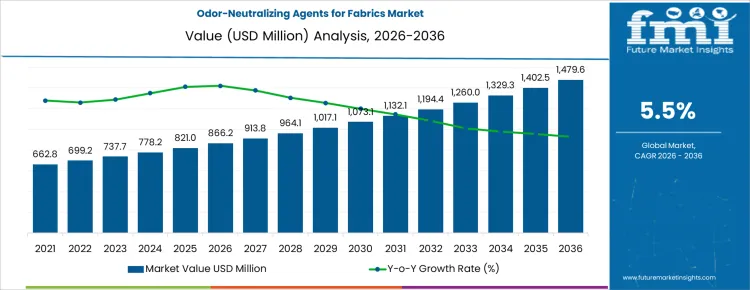
What is the Growth Forecast for the Odor-Neutralizing Agents for Fabrics Market through 2036?
The growth rate volatility index for the odor-neutralizing agents for fabrics market shows steady growth with moderate fluctuations in the rate of expansion over the forecast period. Starting at USD 866.2 million in 2026, the market grows to USD 913.9 million in 2027 and USD 963.8 million in 2028, reflecting gradual, steady adoption of odor-neutralizing solutions in fabric care products. These early years indicate a relatively stable growth pattern, driven by the continued consumer interest in hygiene and freshness.
From 2028 to 2030, the market continues to expand, reaching USD 1,016.1 million in 2029 and USD 1,071 million in 2030, showing moderate acceleration as the demand for more effective and sustainable odor-neutralizing agents increases. Between 2030 and 2035, the market experiences further growth, reaching USD 1,128.8 million in 2031, USD 1,190 million in 2032, and USD 1,254.9 million in 2033. By 2035, the market is projected to reach USD 1,323.9 million, with the final market value of USD 1,471 million expected in 2036. The volatility index suggests that while growth remains steady overall, there will be periods of increased demand driven by innovations in odor-neutralizing technology and heightened consumer awareness of fabric care solutions.
Odor-Neutralizing Agents for Fabrics Market Key Takeaways
| Metric | Value |
|---|---|
| Industry Sales Value (2026) | USD 866.2 million |
| Industry Forecast Value (2036) | USD 1,471 million |
| Industry Forecast CAGR (2026-2036) | 5.5% |
What Is Driving the Demand for the Odor-Neutralizing Agents for Fabrics Market Globally?
The global demand for odor-neutralizing agents for fabrics is being driven by rising consumer expectations for long-lasting freshness in apparel, home textiles, and technical fabrics. Fabrics used in activewear, intimate apparel, workwear, upholstery, and linens are frequently exposed to perspiration, cooking, environmental pollutants, and microbial activity that generate persistent odors. Traditional scent masking approaches often rely on fragrances that temporarily cover smells but do not address underlying odor-causing molecules. Odor-neutralizing agents, including cyclodextrins, enzyme-based systems, metallic ion complexes, and polymeric absorbers, act by binding or chemically deactivating odorants to reduce perceptible odors over time. Formulators incorporate these agents into laundry detergents, fabric sprays, and textile treatments to enhance performance outcomes and meet consumer demand for products that sustain freshness through wear and storage. Growth in active lifestyles, increased participation in sports and fitness activities, and heightened awareness of hygiene contribute to broader use of odor control technologies in personal and home care segments. Retailers, apparel brands, and textile manufacturers prioritise odor-control features as differentiators in competitive markets, reinforcing the use of specialized neutralizing agents in new and existing product lines.
Future demand for odor-neutralizing agents for fabrics is expected to expand as innovation in material science and consumer behavior continue to evolve. Advances in delivery systems and encapsulation technologies will enhance durability and controlled release of neutralizing effects during wear, laundering, or prolonged storage. Expansion of performance and functional textile applications such as antimicrobial and anti-odor treatments integrated into fabrics during manufacturing will support deeper uptake across segments that include outdoor gear, technical uniforms, and home textiles. Sustainability considerations will influence formulation trends, with bio-based and biodegradable neutralizing agents gaining appeal as environmental criteria become more central to purchasing decisions and regulatory frameworks. E-commerce growth and direct-to-consumer channels will broaden access to differentiated laundry products and fabric care solutions that prioritise both odor control and gentle fabric treatment. As consumers increasingly expect dual benefits of comfort and performance, demand for advanced odor-neutralizing technologies that deliver measurable improvement without compromising textile integrity is expected to grow steadily across regions worldwide.
What are the Leading Segments in the Global Odor-Neutralizing Agents for Fabrics Market?
The global odor-neutralizing agents for fabrics market is segmented by application and end-use. In terms of application, laundry detergents are the largest segment, followed by fabric refresh sprays, fabric softeners/conditioners, and institutional laundering. Laundry detergents, due to their widespread use and effectiveness in neutralizing odors during the washing process, hold the dominant share in the market. On the end-use side, household/consumer products lead the market, driven by growing consumer awareness of the importance of odor control in everyday fabric care. Commercial laundry, hospitality, and healthcare also represent significant end-user segments where the demand for fabric odor neutralization remains strong due to hygiene and cleanliness standards.
What Drives the Growth of Laundry Detergents in the Odor-Neutralizing Agents for Fabrics Market?
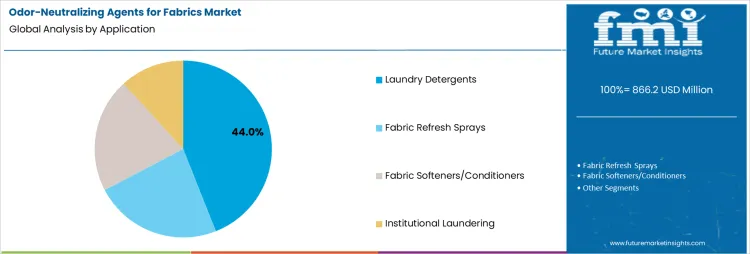
Laundry detergents are the leading application for odor-neutralizing agents in the fabrics market, primarily due to their widespread use in both household and commercial laundry routines. These detergents play a crucial role in effectively eliminating odors, particularly in fabrics that are exposed to a variety of contaminants, including sweat, food, and environmental pollutants. The increasing consumer demand for laundry products that provide both cleaning and odor-neutralizing benefits is a major driver of growth in this segment. Consumers are increasingly seeking detergents that not only clean fabrics but also enhance freshness, especially as more people are becoming aware of the long-lasting effects of odors on clothing. Additionally, innovations in enzyme and fragrance technology are helping to improve the efficacy of laundry detergents in neutralizing odors, thus making them more appealing. The rise in consumer preferences for eco-friendly and long-lasting solutions is further propelling the demand for laundry detergents that incorporate natural or sustainable odor-neutralizing agents. As the demand for higher-performance laundry products continues to grow, laundry detergents with enhanced odor control features are expected to maintain their dominant position in the market.
What is Driving the Demand for Household/Consumer Products in the Odor-Neutralizing Agents for Fabrics Market?
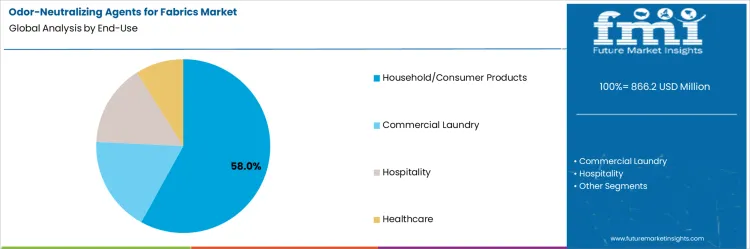
Household/consumer products are the largest end-use segment in the odor-neutralizing agents for fabrics market, driven by the increasing demand for effective, convenient solutions to maintain fresh-smelling fabrics in everyday life. Products such as fabric refresh sprays, fabric softeners, and conditioners that neutralize odors are essential in household care routines. As consumers become more conscious of the need for fabric care that eliminates odors while maintaining fabric quality, the demand for these products has surged. Odor-neutralizing agents in these products help to combat odors that accumulate from daily wear, cooking, pets, and environmental exposure. Additionally, the growing preference for multi-functional, time-saving products has led to a rise in fabric refresh sprays and softeners that provide both fragrance and odor elimination. The shift toward more eco-conscious consumer behavior, including the preference for natural ingredients and sustainable formulations, is further driving innovation in the market, leading to the development of odor-neutralizing agents that are both effective and environmentally friendly. As households continue to prioritize freshness and cleanliness, the demand for odor-neutralizing agents in consumer products is expected to remain strong, solidifying the household/consumer segment’s dominance in the global market.
What are the Key Dynamics of the Global Odor-Neutralizing Agents for Fabrics Market?
The global odor-neutralizing agents for fabrics market is expanding as consumers and commercial users demand lasting freshness in textiles without harsh masking fragrances. These agents are added to laundry detergents, fabric sprays, dryer sheets and textile care products to neutralize malodors caused by sweat, smoke, food and environmental sources. Growth reflects rising interest in active lifestyles, athleisure apparel and hygiene-oriented fabric care solutions. Uptake spans household, hospitality, healthcare and sports sectors where fabric freshness influences comfort and perception. Innovation in material science supports performance and compatibility with diverse textile types worldwide.
What are the Key Drivers for the Global Odor-Neutralizing Agents for Fabrics Market?
A key driver is increasing consumer focus on personal hygiene and fabric care, which motivates use of products that deliver effective malodor elimination between washes. Busy lifestyles and frequent use of performance wear and home textiles intensify demand for solutions that address persistent odors while preserving fabric quality. Brands are responding with advanced neutralizing agents that target odor molecules rather than just masking scents. Growth in shared laundry services, gyms, hotels and healthcare environments supports broader application of odor-neutralizing technologies. Expansion of premium detergent and fabric care segments, along with online retail growth, increases visibility and availability of enhanced fabric odor control offerings.
What are the Restraints for the Global Odor-Neutralizing Agents for Fabrics Market?
One restraint is formulation complexity, as integrating odor-neutralizing agents without affecting fabric feel, colorfastness or long-term durability requires careful selection and testing. Some agents may interact with fragrance systems or textile finishes, necessitating additional R&D and validation. Price sensitivity in cost-conscious segments may limit adoption of premium odor-neutralizing solutions over basic fabric care products. Regulatory scrutiny varies by region for certain active ingredients, requiring compliance work that can slow product rollout. Consumer perception that traditional detergents or repeated washing adequately manage odors may reduce urgency to adopt specialized neutralizers in some markets.
What is the Key Trends in the Global Odor-Neutralizing Agents for Fabrics Market?
A key trend is development of bio-based and enzyme-driven odor neutralizers that target specific malodor pathways while aligning with sustainability and clean-label preferences. Ingredient suppliers are innovating systems that bind, transform or inhibit volatile compounds responsible for persistent smells without heavy fragrances. Encapsulation and controlled-release technologies help deliver freshness over extended wear and use cycles. Collaboration between fabric care brands and textile manufacturers supports compatibility with performance fabrics and sensitive materials. Growth in personalized fabric care regimens, supported by digital content and targeted product offerings, influences consumer selection and encourages continued innovation in odor-neutralizing performance.
What is the Country-Wise Analysis of the Odor-Neutralizing Agents for Fabrics Market?
The odor-neutralizing agents for fabrics market is expected to experience steady growth, driven by increasing consumer demand for fresh and long-lasting scents in fabrics, particularly in the textiles and laundry care sectors. These agents help neutralize unpleasant odors while maintaining fabric quality and freshness. As consumers become more conscious of hygiene, fabric care, and the use of eco-friendly products, the market for odor-neutralizing agents is gaining traction. High-growth regions like China are seeing significant demand driven by rapid urbanization and growing consumer awareness, while developed markets such as the USA, UK, and Germany are experiencing steady growth due to the rising preference for high-performance, eco-friendly fabric care solutions.
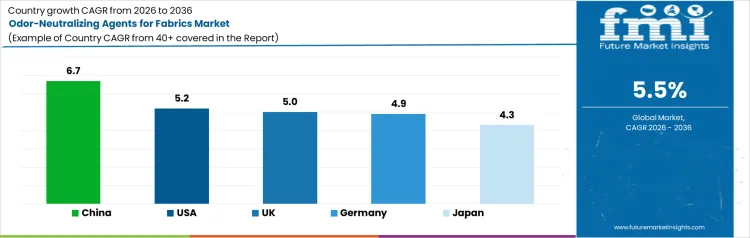
| Country | CAGR (2026-2036) |
|---|---|
| China | 6.7% |
| United States | 5.2% |
| United Kingdom | 5% |
| Germany | 4.9% |
| Japan | 4.3% |
What is the Growth Outlook for the Odor-Neutralizing Agents for Fabrics Market in China?
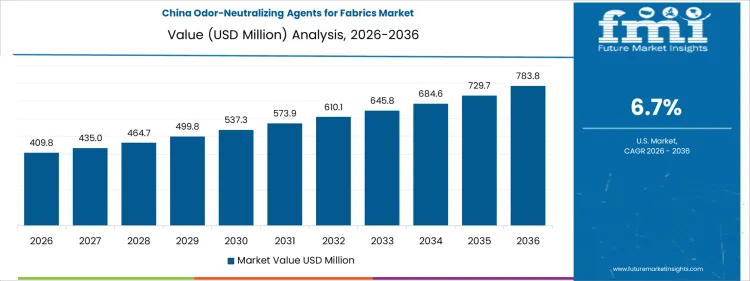
The odor-neutralizing agents for fabrics market in China is expected to grow at the highest rate, with a projected CAGR of 6.7%. China’s rapidly expanding consumer goods and home care market, coupled with increasing demand for advanced fabric care solutions, is driving this growth. As urbanization and disposable incomes rise, Chinese consumers are increasingly seeking high-quality and effective laundry products that provide not only cleanliness but also long-lasting freshness. The growing interest in hygiene and the use of eco-friendly solutions in home care is expected to further boost the demand for odor-neutralizing agents. With these trends, China is poised to lead the global market for odor-neutralizing agents for fabrics.
What is the Market Outlook for the Odor-Neutralizing Agents for Fabrics Market in the United States?
The odor-neutralizing agents for fabrics market in the United States is projected to grow steadily, with a projected CAGR of 5.2%. The U.S. market is driven by strong consumer demand for high-quality fabric care products that effectively eliminate odors while ensuring fabric longevity. As consumers continue to prioritize hygiene, especially in household cleaning and laundry care, the demand for odor-neutralizing agents is expected to rise. The increasing preference for eco-friendly and natural products in the U.S. is also influencing the market, with consumers seeking non-toxic, effective solutions. As these trends continue, the U.S. market is set to experience steady growth in odor-neutralizing agents for fabrics.
What is the Growth Forecast for the Odor-Neutralizing Agents for Fabrics Market in the United Kingdom?
The odor-neutralizing agents for fabrics market in the United Kingdom is expected to grow at a steady pace, with a projected CAGR of 5%. The UK’s growing demand for premium, eco-friendly fabric care products is contributing to the rise in adoption of odor-neutralizing agents. Consumers are increasingly seeking laundry solutions that provide long-lasting freshness, effective odor removal, and environmentally responsible ingredients. Additionally, the UK’s focus on sustainability and reducing the environmental impact of household products supports the growth of eco-friendly odor-neutralizing agents. As consumers in the UK prioritize performance and environmental consciousness, the market for odor-neutralizing agents for fabrics is expected to experience steady growth.
What is the Market Outlook for the Odor-Neutralizing Agents for Fabrics Market in Germany?
The odor-neutralizing agents for fabrics market in Germany is projected to grow moderately, with a projected CAGR of 4.9%. Germany’s well-established personal care and home care markets are seeing increasing consumer interest in products that provide effective, long-lasting odor neutralization while being environmentally friendly. The rising demand for sustainable and eco-conscious laundry solutions is driving the adoption of odor-neutralizing agents. Consumers in Germany are becoming more aware of the need for safe, natural ingredients in home care products, leading to a preference for eco-friendly and effective odor-neutralizing solutions. As Germany continues to prioritize sustainability, the market for odor-neutralizing agents for fabrics is expected to grow steadily.
What are the Growth Prospects for the Odor-Neutralizing Agents for Fabrics Market in Japan?
The odor-neutralizing agents for fabrics market in Japan is expected to grow at a moderate pace, with a projected CAGR of 4.3%. Japan’s personal care and home care markets are increasingly focused on hygiene, convenience, and high-performance products. The growing demand for odor-neutralizing agents in fabric care products is being driven by consumer interest in long-lasting freshness, effective odor control, and premium quality solutions. Japan’s commitment to innovation and sustainable living, combined with the country’s focus on cleanliness and personal care, is expected to contribute to steady growth in the market. As demand for eco-friendly and effective products rises, Japan’s market for odor-neutralizing agents is expected to grow steadily in the coming years.
What is the Competitive Landscape for the Odor-Neutralizing Agents for Fabrics Market?
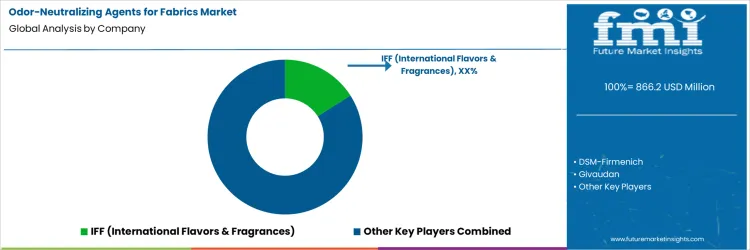
The odor-neutralizing agents for fabrics market is growing as consumers increasingly seek effective and sustainable solutions for fabric care that eliminate odors while maintaining fabric freshness. IFF (International Flavors & Fragrances) leads the market with its advanced odor-neutralizing technologies, offering innovative agents that effectively neutralize odors and enhance fabric freshness. Their strong focus on performance and sustainability has positioned them as a dominant player in the market. DSM-Firmenich, Givaudan, and Symrise are significant competitors, each providing high-quality odor-neutralizing agents tailored for fabric care. DSM-Firmenich focuses on delivering sustainable and efficient odor control solutions, while Givaudan and Symrise offer advanced technologies that neutralize odors while enhancing the sensory experience of fabrics.
BASF, Dow, Evonik, Ashland, Wacker Chemie, and Roquette further intensify the competition by offering specialized odor-neutralizing agents for fabrics. BASF provides highly effective, eco-friendly odor neutralizers, while Dow focuses on delivering performance-driven solutions for fabric care. Evonik and Ashland offer sustainable and efficient solutions, ensuring long-lasting freshness and odor control. Wacker Chemie brings innovative technologies to improve fabric freshness, while Roquette focuses on sustainable ingredients for fabric odor neutralization. These companies compete based on innovation, sustainability, and the ability to meet the growing demand for effective odor-neutralizing solutions that enhance fabric care products.
Key Players of the Odor-Neutralizing Agents for Fabrics Market
- IFF (International Flavors & Fragrances)
- DSM-Firmenich
- Givaudan
- Symrise
- BASF
- Dow
- Evonik
- Ashland
- Wacker Chemie
- Roquette
Scope of the Report
| Items | Values |
|---|---|
| Quantitative Units (2026) | USD Million |
| Odor Control Chemistry | Cyclodextrin-Based Complexers, Zinc Salts & Fatty Acid Derivatives, Amine/Polymer Odor-Trapping Agents, Enzyme & Bio-Oxidative Neutralizers |
| Product Format | Liquid Additives (Detergent/Softener), Fabric Refresher Sprays, Encapsulated Powders/Granules, Dryer Sheet/Coating Systems |
| Application | Laundry Detergents, Fabric Refresh Sprays, Fabric Softeners/Conditioners, Institutional Laundering |
| End-Use | Household/Consumer Products, Commercial Laundry, Hospitality, Healthcare |
| Companies | IFF (International Flavors & Fragrances), DSM-Firmenich, Givaudan, Symrise, BASF, Dow, Evonik, Ashland, Wacker Chemie, Roquette |
| Regions Covered | North America, Latin America, Western Europe, Eastern Europe, South Asia and Pacific, East Asia, Middle East & Africa |
| Countries Covered | United States, Canada, Mexico, Brazil, Argentina, Germany, France, United Kingdom, Italy, Spain, Netherlands, China, India, Japan, South Korea, ANZ, GCC Countries, South Africa |
| Additional Attributes | Dollar by sales by odor control chemistry, product format, application, end-use, and region. Includes market trends in odor-neutralizing agents for fabrics, focusing on cyclodextrin-based complexers, zinc salts, amine/polymer agents, and enzyme-based neutralizers. Highlights the role of liquid additives, fabric refresher sprays, and dryer sheets in household, commercial, hospitality, and healthcare applications. Focus on sustainability, performance, regulatory compliance, and market share of key companies in the fabric care market. |
Odor-Neutralizing Agents for Fabrics Market Segmentation
Odor Control Chemistry
- Cyclodextrin-Based Complexers
- Zinc Salts & Fatty Acid Derivatives
- Amine/Polymer Odor-Trapping Agents
- Enzyme & Bio-Oxidative Neutralizers
Product Format
- Liquid Additives (Detergent/Softener)
- Fabric Refresher Sprays
- Encapsulated Powders/Granules
- Dryer Sheet/Coating Systems
Application
- Laundry Detergents
- Fabric Refresh Sprays
- Fabric Softeners/Conditioners
- Institutional Laundering
End-Use
- Household/Consumer Products
- Commercial Laundry
- Hospitality
- Healthcare
Region
- Asia Pacific
- China
- Japan
- South Korea
- India
- Australia & New Zealand
- ASEAN
- Rest of Asia Pacific
- Europe
- Germany
- United Kingdom
- France
- Italy
- Spain
- Nordic
- BENELUX
- Rest of Europe
- North America
- United States
- Canada
- Mexico
- Latin America
- Brazil
- Chile
- Rest of Latin America
- Middle East & Africa
- Kingdom of Saudi Arabia
- Other GCC Countries
- Turkey
- South Africa
- Other African Union
- Rest of Middle East & Africa
Frequently Asked Questions
How big is the odor-neutralizing agents for fabrics market in 2026?
The global odor-neutralizing agents for fabrics market is estimated to be valued at USD 866.2 million in 2026.
What will be the size of odor-neutralizing agents for fabrics market in 2036?
The market size for the odor-neutralizing agents for fabrics market is projected to reach USD 1,479.6 million by 2036.
How much will be the odor-neutralizing agents for fabrics market growth between 2026 and 2036?
The odor-neutralizing agents for fabrics market is expected to grow at a 5.5% CAGR between 2026 and 2036.
What are the key product types in the odor-neutralizing agents for fabrics market?
The key product types in odor-neutralizing agents for fabrics market are cyclodextrin-based complexers, zinc salts & fatty acid derivatives, amine/polymer odor-trapping agents and enzyme & bio-oxidative neutralizers.
Which product format segment to contribute significant share in the odor-neutralizing agents for fabrics market in 2026?
In terms of product format, liquid additives (detergent/softener) segment to command 42.0% share in the odor-neutralizing agents for fabrics market in 2026.
Preview the report firsthand - request a free sample
Get SampleGet the brochure for pricing and purchase details.
Get PDFTable of Content
- Executive Summary
- Global Market Outlook
- Demand-side Trends
- Supply-side Trends
- Technology Roadmap Analysis
- Analysis and Recommendations
- Market Overview
- Market Coverage / Taxonomy
- Market Definition / Scope / Limitations
- Market Background
- Market Dynamics
- Drivers
- Restraints
- Opportunity
- Trends
- Scenario Forecast
- Demand in Optimistic Scenario
- Demand in Likely Scenario
- Demand in Conservative Scenario
- Opportunity Map Analysis
- Product Life Cycle Analysis
- Supply Chain Analysis
- Investment Feasibility Matrix
- Value Chain Analysis
- PESTLE and Porter’s Analysis
- Regulatory Landscape
- Regional Parent Market Outlook
- Production and Consumption Statistics
- Import and Export Statistics
- Market Dynamics
- Global Market Analysis 2021 to 2025 and Forecast, 2026 to 2036
- Historical Market Size Value (USD Million) Analysis, 2021 to 2025
- Current and Future Market Size Value (USD Million) Projections, 2026 to 2036
- Y-o-Y Growth Trend Analysis
- Absolute $ Opportunity Analysis
- Global Market Pricing Analysis 2021 to 2025 and Forecast 2026 to 2036
- Global Market Analysis 2021 to 2025 and Forecast 2026 to 2036, By Odor Control Chemistry
- Introduction / Key Findings
- Historical Market Size Value (USD Million) Analysis By Odor Control Chemistry , 2021 to 2025
- Current and Future Market Size Value (USD Million) Analysis and Forecast By Odor Control Chemistry , 2026 to 2036
- Cyclodextrin-Based Complexers
- Zinc Salts & Fatty Acid Derivatives
- Amine/Polymer Odor-Trapping Agents
- Enzyme & Bio-Oxidative Neutralizers
- Y-o-Y Growth Trend Analysis By Odor Control Chemistry , 2021 to 2025
- Absolute $ Opportunity Analysis By Odor Control Chemistry , 2026 to 2036
- Global Market Analysis 2021 to 2025 and Forecast 2026 to 2036, By Product Format
- Introduction / Key Findings
- Historical Market Size Value (USD Million) Analysis By Product Format, 2021 to 2025
- Current and Future Market Size Value (USD Million) Analysis and Forecast By Product Format, 2026 to 2036
- Liquid Additives (Detergent/Softener)
- Fabric Refresher Sprays
- Encapsulated Powders/Granules
- Dryer Sheet/Coating Systems
- Y-o-Y Growth Trend Analysis By Product Format, 2021 to 2025
- Absolute $ Opportunity Analysis By Product Format, 2026 to 2036
- Global Market Analysis 2021 to 2025 and Forecast 2026 to 2036, By Application
- Introduction / Key Findings
- Historical Market Size Value (USD Million) Analysis By Application, 2021 to 2025
- Current and Future Market Size Value (USD Million) Analysis and Forecast By Application, 2026 to 2036
- Laundry Detergents
- Fabric Refresh Sprays
- Fabric Softeners/Conditioners
- Institutional Laundering
- Y-o-Y Growth Trend Analysis By Application, 2021 to 2025
- Absolute $ Opportunity Analysis By Application, 2026 to 2036
- Global Market Analysis 2021 to 2025 and Forecast 2026 to 2036, By End-Use
- Introduction / Key Findings
- Historical Market Size Value (USD Million) Analysis By End-Use, 2021 to 2025
- Current and Future Market Size Value (USD Million) Analysis and Forecast By End-Use, 2026 to 2036
- Household/Consumer Products
- Commercial Laundry
- Hospitality
- Healthcare
- Y-o-Y Growth Trend Analysis By End-Use, 2021 to 2025
- Absolute $ Opportunity Analysis By End-Use, 2026 to 2036
- Global Market Analysis 2021 to 2025 and Forecast 2026 to 2036, By Region
- Introduction
- Historical Market Size Value (USD Million) Analysis By Region, 2021 to 2025
- Current Market Size Value (USD Million) Analysis and Forecast By Region, 2026 to 2036
- North America
- Latin America
- Western Europe
- Eastern Europe
- East Asia
- South Asia and Pacific
- Middle East & Africa
- Market Attractiveness Analysis By Region
- North America Market Analysis 2021 to 2025 and Forecast 2026 to 2036, By Country
- Historical Market Size Value (USD Million) Trend Analysis By Market Taxonomy, 2021 to 2025
- Market Size Value (USD Million) Forecast By Market Taxonomy, 2026 to 2036
- By Country
- USA
- Canada
- Mexico
- By Odor Control Chemistry
- By Product Format
- By Application
- By End-Use
- By Country
- Market Attractiveness Analysis
- By Country
- By Odor Control Chemistry
- By Product Format
- By Application
- By End-Use
- Key Takeaways
- Latin America Market Analysis 2021 to 2025 and Forecast 2026 to 2036, By Country
- Historical Market Size Value (USD Million) Trend Analysis By Market Taxonomy, 2021 to 2025
- Market Size Value (USD Million) Forecast By Market Taxonomy, 2026 to 2036
- By Country
- Brazil
- Chile
- Rest of Latin America
- By Odor Control Chemistry
- By Product Format
- By Application
- By End-Use
- By Country
- Market Attractiveness Analysis
- By Country
- By Odor Control Chemistry
- By Product Format
- By Application
- By End-Use
- Key Takeaways
- Western Europe Market Analysis 2021 to 2025 and Forecast 2026 to 2036, By Country
- Historical Market Size Value (USD Million) Trend Analysis By Market Taxonomy, 2021 to 2025
- Market Size Value (USD Million) Forecast By Market Taxonomy, 2026 to 2036
- By Country
- Germany
- UK
- Italy
- Spain
- France
- Nordic
- BENELUX
- Rest of Western Europe
- By Odor Control Chemistry
- By Product Format
- By Application
- By End-Use
- By Country
- Market Attractiveness Analysis
- By Country
- By Odor Control Chemistry
- By Product Format
- By Application
- By End-Use
- Key Takeaways
- Eastern Europe Market Analysis 2021 to 2025 and Forecast 2026 to 2036, By Country
- Historical Market Size Value (USD Million) Trend Analysis By Market Taxonomy, 2021 to 2025
- Market Size Value (USD Million) Forecast By Market Taxonomy, 2026 to 2036
- By Country
- Russia
- Poland
- Hungary
- Balkan & Baltic
- Rest of Eastern Europe
- By Odor Control Chemistry
- By Product Format
- By Application
- By End-Use
- By Country
- Market Attractiveness Analysis
- By Country
- By Odor Control Chemistry
- By Product Format
- By Application
- By End-Use
- Key Takeaways
- East Asia Market Analysis 2021 to 2025 and Forecast 2026 to 2036, By Country
- Historical Market Size Value (USD Million) Trend Analysis By Market Taxonomy, 2021 to 2025
- Market Size Value (USD Million) Forecast By Market Taxonomy, 2026 to 2036
- By Country
- China
- Japan
- South Korea
- By Odor Control Chemistry
- By Product Format
- By Application
- By End-Use
- By Country
- Market Attractiveness Analysis
- By Country
- By Odor Control Chemistry
- By Product Format
- By Application
- By End-Use
- Key Takeaways
- South Asia and Pacific Market Analysis 2021 to 2025 and Forecast 2026 to 2036, By Country
- Historical Market Size Value (USD Million) Trend Analysis By Market Taxonomy, 2021 to 2025
- Market Size Value (USD Million) Forecast By Market Taxonomy, 2026 to 2036
- By Country
- India
- ASEAN
- Australia & New Zealand
- Rest of South Asia and Pacific
- By Odor Control Chemistry
- By Product Format
- By Application
- By End-Use
- By Country
- Market Attractiveness Analysis
- By Country
- By Odor Control Chemistry
- By Product Format
- By Application
- By End-Use
- Key Takeaways
- Middle East & Africa Market Analysis 2021 to 2025 and Forecast 2026 to 2036, By Country
- Historical Market Size Value (USD Million) Trend Analysis By Market Taxonomy, 2021 to 2025
- Market Size Value (USD Million) Forecast By Market Taxonomy, 2026 to 2036
- By Country
- Kingdom of Saudi Arabia
- Other GCC Countries
- Turkiye
- South Africa
- Other African Union
- Rest of Middle East & Africa
- By Odor Control Chemistry
- By Product Format
- By Application
- By End-Use
- By Country
- Market Attractiveness Analysis
- By Country
- By Odor Control Chemistry
- By Product Format
- By Application
- By End-Use
- Key Takeaways
- Key Countries Market Analysis
- USA
- Pricing Analysis
- Market Share Analysis, 2025
- By Odor Control Chemistry
- By Product Format
- By Application
- By End-Use
- Canada
- Pricing Analysis
- Market Share Analysis, 2025
- By Odor Control Chemistry
- By Product Format
- By Application
- By End-Use
- Mexico
- Pricing Analysis
- Market Share Analysis, 2025
- By Odor Control Chemistry
- By Product Format
- By Application
- By End-Use
- Brazil
- Pricing Analysis
- Market Share Analysis, 2025
- By Odor Control Chemistry
- By Product Format
- By Application
- By End-Use
- Chile
- Pricing Analysis
- Market Share Analysis, 2025
- By Odor Control Chemistry
- By Product Format
- By Application
- By End-Use
- Germany
- Pricing Analysis
- Market Share Analysis, 2025
- By Odor Control Chemistry
- By Product Format
- By Application
- By End-Use
- UK
- Pricing Analysis
- Market Share Analysis, 2025
- By Odor Control Chemistry
- By Product Format
- By Application
- By End-Use
- Italy
- Pricing Analysis
- Market Share Analysis, 2025
- By Odor Control Chemistry
- By Product Format
- By Application
- By End-Use
- Spain
- Pricing Analysis
- Market Share Analysis, 2025
- By Odor Control Chemistry
- By Product Format
- By Application
- By End-Use
- France
- Pricing Analysis
- Market Share Analysis, 2025
- By Odor Control Chemistry
- By Product Format
- By Application
- By End-Use
- India
- Pricing Analysis
- Market Share Analysis, 2025
- By Odor Control Chemistry
- By Product Format
- By Application
- By End-Use
- ASEAN
- Pricing Analysis
- Market Share Analysis, 2025
- By Odor Control Chemistry
- By Product Format
- By Application
- By End-Use
- Australia & New Zealand
- Pricing Analysis
- Market Share Analysis, 2025
- By Odor Control Chemistry
- By Product Format
- By Application
- By End-Use
- China
- Pricing Analysis
- Market Share Analysis, 2025
- By Odor Control Chemistry
- By Product Format
- By Application
- By End-Use
- Japan
- Pricing Analysis
- Market Share Analysis, 2025
- By Odor Control Chemistry
- By Product Format
- By Application
- By End-Use
- South Korea
- Pricing Analysis
- Market Share Analysis, 2025
- By Odor Control Chemistry
- By Product Format
- By Application
- By End-Use
- Russia
- Pricing Analysis
- Market Share Analysis, 2025
- By Odor Control Chemistry
- By Product Format
- By Application
- By End-Use
- Poland
- Pricing Analysis
- Market Share Analysis, 2025
- By Odor Control Chemistry
- By Product Format
- By Application
- By End-Use
- Hungary
- Pricing Analysis
- Market Share Analysis, 2025
- By Odor Control Chemistry
- By Product Format
- By Application
- By End-Use
- Kingdom of Saudi Arabia
- Pricing Analysis
- Market Share Analysis, 2025
- By Odor Control Chemistry
- By Product Format
- By Application
- By End-Use
- Turkiye
- Pricing Analysis
- Market Share Analysis, 2025
- By Odor Control Chemistry
- By Product Format
- By Application
- By End-Use
- South Africa
- Pricing Analysis
- Market Share Analysis, 2025
- By Odor Control Chemistry
- By Product Format
- By Application
- By End-Use
- USA
- Market Structure Analysis
- Competition Dashboard
- Competition Benchmarking
- Market Share Analysis of Top Players
- By Regional
- By Odor Control Chemistry
- By Product Format
- By Application
- By End-Use
- Competition Analysis
- Competition Deep Dive
- IFF (International Flavors & Fragrances)
- Overview
- Product Portfolio
- Profitability by Market Segments (Product/Age /Sales Channel/Region)
- Sales Footprint
- Strategy Overview
- Marketing Strategy
- Product Strategy
- Channel Strategy
- DSM-Firmenich
- Givaudan
- Symrise
- BASF
- Dow
- Evonik
- Ashland
- Wacker Chemie
- Roquette
- IFF (International Flavors & Fragrances)
- Competition Deep Dive
- Assumptions & Acronyms Used
- Research Methodology


