

- Industry Size (2026)
- USD 319.4 Mn
- Forecast (2036)
- USD 1002.1 Mn
- CAGR (2026 to 2036)
- 12.10%
Functional Inks for Flexible Hybrid Electronics in Automotive Interiors Market Forecast and Outlook 2026 to 2036
The global functional inks for flexible hybrid electronics in automotive interiors market is projected to grow from USD 319.4 million in 2026 to USD 1,002.1 million by 2036, marking a robust CAGR of 12.10%. This growth is largely driven by the automotive industry's increasing adoption of advanced electronics for in-vehicle applications, such as touch sensors, flexible displays, and heating elements. Functional inks are crucial in creating flexible and lightweight electronic components that enable innovative and interactive in-cabin experiences, providing both functionality and aesthetics.
Quick Stats for Functional Inks for Flexible Hybrid Electronics in Automotive Interiors Market
- Functional Inks for Flexible Hybrid Electronics in Automotive Interiors Market Value (2026): USD 319.4 Million
- Functional Inks for Flexible Hybrid Electronics in Automotive Interiors Market Forecast Value (2036): USD 1,002.1 Million
- Functional Inks for Flexible Hybrid Electronics in Automotive Interiors Market Forecast CAGR (2026 to 2036): 12.10%
- Leading Ink Type in Functional Inks for Flexible Hybrid Electronics in Automotive Interiors Market: Conductive Silver Inks
- Key Growth Regions in Functional Inks for Flexible Hybrid Electronics in Automotive Interiors Market: Asia Pacific, North America
- Top Key Players in Functional Inks for Flexible Hybrid Electronics in Automotive Interiors Market: DuPont, Henkel AG & Co. KGaA, Heraeus Holding GmbH, Sun Chemical Corporation, NovaCentrix
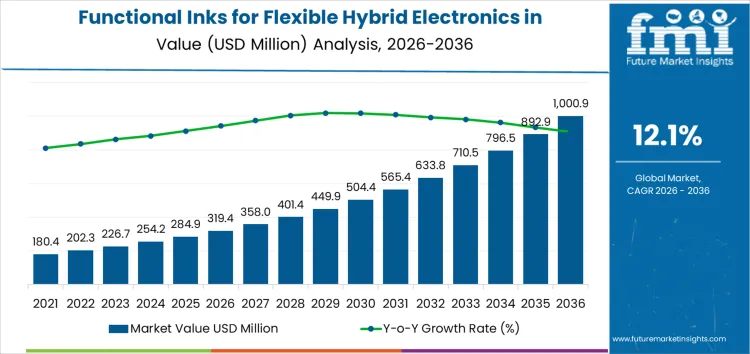
As automakers strive for more advanced, tech-driven interiors, the demand for these inks is intensifying. Consumer expectations for smart, sustainable, and comfortable cabins are pushing OEMs to integrate more electronics into vehicle interiors, which rely on printed electronics. In particular, conductive silver inks, which offer superior conductivity and durability, are leading the market. Technological advancements in printing technologies and ink materials are enhancing the performance and functionality of these inks, further fueling growth. With regions such as China, the USA, and South Korea at the forefront of adoption, the market for functional inks in automotive interiors is poised for significant expansion, aligning with broader trends in electric vehicles and connected mobility solutions.
Functional Inks for Flexible Hybrid Electronics in Automotive Interiors Market Key Takeaways
| Metric | Value |
|---|---|
| Industry Value (2026) | USD 319.4 Million |
| Forecast Value (2036) | USD 1002.1 Million |
| Forecast CAGR (2026–2036) | 12.10% |
How Is the Global Functional Inks for Flexible Hybrid Electronics in Automotive Interiors Market Advancing?
The global functional inks for flexible hybrid electronics in automotive interiors market is growing at a robust pace, driven by the increasing integration of advanced electronics in vehicles' interior designs. Functional inks enable the creation of flexible, lightweight, and durable electronic components, such as sensors, displays, and heating elements, which are increasingly embedded into automotive interiors for enhancing comfort, connectivity, and safety. These inks are essential for producing flexible hybrid electronics, which combine printed and conventional electronics, offering innovative solutions for the automotive industry.
The growth is attributed to the rising demand for smart interiors in modern vehicles. As automakers push for more sophisticated, interactive, and tech-driven in-cabin experiences, the role of flexible electronics becomes more prominent. Functional inks are used to manufacture components that are not only space-efficient but also energy-efficient and cost-effective. The automotive industry’s shift towards EVs (electric vehicles) further drives this trend, as these vehicles often require advanced, integrated electronics for various in-car features like touch-sensitive surfaces, energy-efficient displays, and smart materials.
Technological advancements in printing technologies and material science are enabling better performance and functionality of these inks. As automotive interiors evolve into high-tech environments, functional inks for flexible hybrid electronics are expected to play a key role, fueling market growth and opening new opportunities in the next decade.
What Is the Segment-Wise Analysis for the Functional Inks for Flexible Hybrid Electronics in Automotive Interiors Market?
The functional inks for flexible hybrid electronics in automotive interiors market is segmented by ink type and application. Conductive silver inks lead the market with a 38% share, followed by conductive copper inks, carbon-based inks, and dielectric inks. These inks are essential for creating flexible and efficient electronic components used in automotive interiors. In terms of application, touch sensors & controls dominate the market with a 42% share, followed by flexible displays, ambient lighting systems, and heating elements.
Why Do Conductive Silver Inks Lead the Functional Inks for Flexible Hybrid Electronics in Automotive Interiors Market?
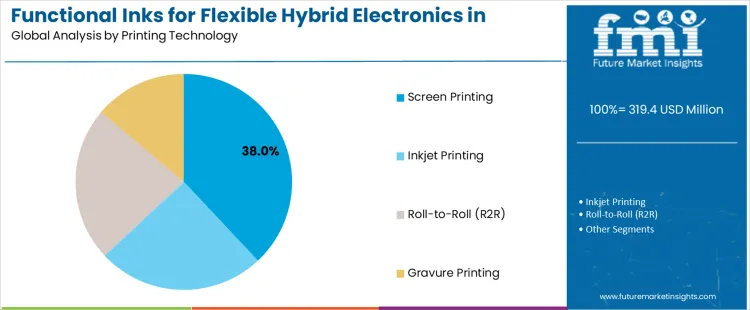
Conductive silver inks account for 38% of the functional inks market share due to their superior conductivity and reliability in flexible electronic applications. These inks are essential in creating circuits and conductive patterns for automotive interior components such as touch sensors, controls, and flexible displays. Silver-based inks offer high electrical performance, durability, and excellent adhesion to flexible substrates, making them ideal for automotive interiors that demand both flexibility and performance. As the automotive industry increasingly adopts flexible hybrid electronics for more advanced and interactive in-car features, conductive silver inks continue to be the preferred choice for many applications, reinforcing their market leadership.
How Do Touch Sensors & Controls Contribute to the Functional Inks for Flexible Hybrid Electronics in Automotive Interiors Market?
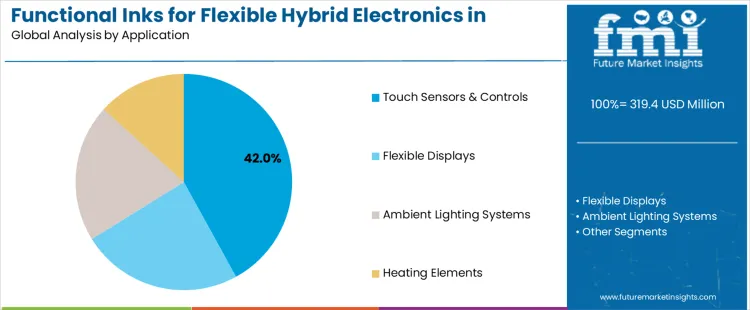
Touch sensors & controls represent 42% of the application segment in the functional inks for flexible hybrid electronics in automotive interiors market. The growing demand for touch-sensitive interfaces in vehicle interiors, such as dashboards, infotainment systems, and steering wheel controls, drives the need for functional inks in these applications. Flexible touch sensors enable sleek, intuitive designs while maintaining the durability required for automotive environments. Functional inks, particularly conductive silver inks, are used to create the circuits that allow these touch-sensitive systems to operate effectively. As the automotive industry moves towards more interactive and user-friendly cabin designs, touch sensors and controls continue to be a major contributor to the growth of the functional inks market.
What Are the Key Dynamics for the Functional Inks for Flexible Hybrid Electronics in Automotive Interiors Market?
The market is shaped by rapid adoption of flexible hybrid electronics (FHE) in automotive interiors for displays, touch panels, lighting, and sensor integration. Functional inks enable printed electronic circuits, conductive traces, and interactive elements on flexible substrates used in dashboards, seat controls, and ambient lighting. Rising demand for enhanced vehicle interior aesthetics, user comfort, and smart functions drives growth. OEMs increasingly use FHE to reduce weight, improve design flexibility, and integrate electronics seamlessly into interior surfaces.
How Are the Key Drivers Shaping the Functional Inks for Flexible Hybrid Electronics in Automotive Interiors Market?
Key drivers include the push for lightweight, flexible, and multifunctional electronic components in automotive interiors. Functional inks facilitate printing of conductive, dielectric, and sensing layers directly onto plastics, films, and fabrics, enabling cost‑effective, scalable production. Growth of connected and interactive cockpit systems increases reliance on printed electronics for buttons, sliders, and embedded sensors. Advances in ink chemistries and printing technologies enhance performance and durability under automotive conditions. Automakers’ focus on customization, comfort, and user experience fuels adoption of FHE solutions.
What Are the Key Trends Shaping the Functional Inks for Flexible Hybrid Electronics in Automotive Interiors Market?
Key trends include increasing adoption of silver‑free and eco‑friendly ink formulations to reduce cost and environmental impact. There is also a shift toward multi‑functional inks that combine conductivity with sensing or energy storage capabilities. Integration of FHE with smart surfaces, haptic feedback, and ambient lighting systems is gaining traction. Digital printing advancements such as inkjet, aerosol jet, and screen hybrid processes are enhancing precision and throughput. Collaborative innovation between ink suppliers, OEMs, and print equipment manufacturers is driving faster commercialization of flexible printed electronics for automotive interiors.
What is the Growth Outlook for the Functional Inks Market in Automotive Interiors by Country?
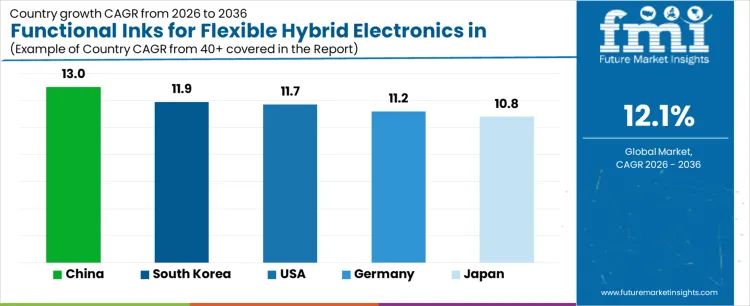
| Country | CAGR (%) |
|---|---|
| China | 13% |
| USA | 11.7% |
| Germany | 11.2% |
| Japan | 10.8% |
| South Korea | 11.9% |
The functional inks for flexible hybrid electronics in automotive interiors market is growing steadily, with China leading at a 13% CAGR, driven by its leadership in electric vehicle (EV) production, government support for green technologies, and the growing demand for innovative vehicle interiors. Brazil follows with 9.4%, fueled by increased adoption of electric mobility and the growing emphasis on sustainable, connected vehicle technologies. The USA’s market grows at 11.7%, supported by advancements in connected and electric vehicles and the push for high-quality, flexible vehicle technologies. South Korea’s market grows at 11.9%, driven by its automotive industry’s focus on smart mobility and eco-friendly solutions. Germany’s market grows at 11.2%, backed by its strong automotive industry and focus on sustainability.
Why is China Leading the Functional Inks for Automotive Interiors Market?
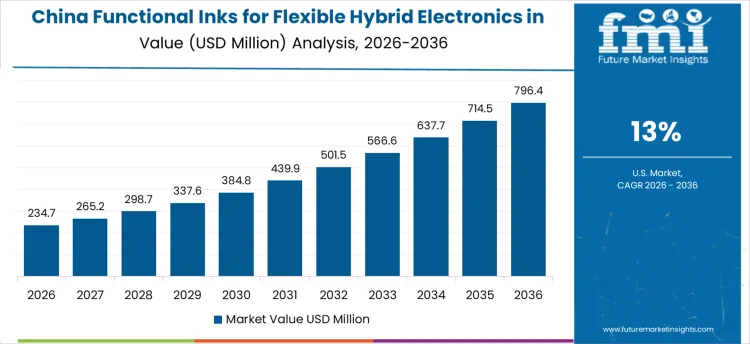
China’s functional inks for flexible hybrid electronics in automotive interiors market is growing at 13%, driven by the rapid rise of electric and autonomous vehicles. The demand for flexible, lightweight, and durable solutions in vehicle interiors, such as touch-sensitive displays and integrated sensors, is growing rapidly. With strong government support for EV adoption and green technologies, the market for functional inks is accelerating. China’s automotive manufacturers are leading the way in creating smart vehicle interiors, further increasing the demand for innovative, reliable, and durable in-vehicle technologies. With a focus on sustainable, future-ready transportation, China continues to be a key market for functional inks in automotive interiors.
What is Driving the Growth of the Functional Inks Market in the USA?
The functional inks for flexible hybrid electronics in automotive interiors market in the USA is growing at 11.7%, supported by advancements in electric and connected vehicle technologies. As the demand for connected, smart vehicles increases, automakers in the USA are adopting flexible hybrid electronics for applications like infotainment systems, touch-sensitive surfaces, and embedded sensors. These components require high-performance, durable functional inks to ensure reliable and efficient operation. Government initiatives for clean energy and sustainable transportation further contribute to the market’s growth, as well as the push for innovation in automotive design. As the USA continues to lead in vehicle electrification, the demand for these advanced materials is expected to grow.
How is Germany Driving the Functional Inks Market for Automotive Interiors?
Germany’s functional inks for flexible hybrid electronics in automotive interiors market is growing at 11.2%, driven by the country’s automotive industry, which continues to lead in innovation and sustainability. With a focus on electric mobility, automakers like Volkswagen, BMW, and Mercedes-Benz are increasingly incorporating flexible electronics and functional inks in their vehicles to develop advanced infotainment systems, touch interfaces, and display panels. The country’s commitment to reducing emissions and supporting green technologies further accelerates the demand for these materials. As Germany continues to innovate in electric vehicle design and smart interiors, the market for functional inks in automotive applications is set to grow.
What is Contributing to the Growth of the Functional Inks Market in Japan?
Japan’s functional inks for flexible hybrid electronics in automotive interiors market is growing at 10.8%, supported by the country’s leadership in automotive manufacturing and electronics. As Japan’s automakers embrace electric and autonomous vehicle technologies, the demand for advanced infotainment and in-cabin technologies increases. Functional inks are crucial for enabling flexible, durable, and high-performance systems for in-vehicle applications, such as touch screens and interactive displays. Japan’s focus on smart mobility, green technologies, and connected vehicles accelerates the adoption of these materials. With growing consumer demand for high-tech, user-friendly vehicle interiors, Japan continues to be a key market for functional inks in the automotive sector.
Why is South Korea’s Functional Inks Market for Automotive Interiors Expanding?
South Korea’s functional inks for flexible hybrid electronics in automotive interiors market is growing at 11.9%, driven by its strong automotive industry and innovation in electric and connected vehicle technologies. As South Korean automakers, such as Hyundai and Kia, incorporate more advanced vehicle features, including digital dashboards and touch-sensitive controls, the need for functional inks to support these systems increases. South Korea’s commitment to sustainability and the development of eco-friendly electric vehicles further supports the growth of this market. The rise of smart mobility and connected technologies in the automotive sector ensures that functional inks will continue to play a key role in future vehicle interior innovations.
How Are Companies Competing in the Functional Inks for Flexible Hybrid Electronics in Automotive Interiors Market?
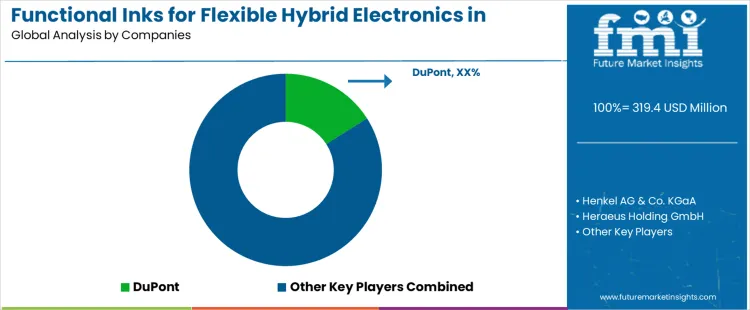
Competition in the functional inks for flexible hybrid electronics (FHE) in automotive interiors market is shaped by material performance, reliability, process compatibility, and end-use customization. DuPont leverages decades of materials science to offer conductive, dielectric, and sensor inks that balance flexibility with electrical performance. Its product materials highlight formulations optimized for roll-to-roll printing and robust adhesion to flexible substrates, helping OEMs achieve durable human-machine interface (HMI) and embedded sensor features.
Henkel AG & Co. KGaA competes with a broad portfolio of silver, carbon, and dielectric inks designed for printed electronics applications. Henkel’s brochures emphasize process versatility and thermal stability, with formulations tailored to meet automotive quality and lifecycle demands. Heraeus Holding GmbH differentiates through specialty ink systems that support high-resolution printing and miniaturization, marketed for FHE applications such as touch controls, lighting elements, and capacitive sensors. Its collateral underscores consistent print quality and electrical reliability under automotive stress profiles.
Sun Chemical Corporation and NovaCentrix position themselves with application-focused functional ink solutions that simplify integration into flexible circuits and printed interconnects. Sun Chemical’s product literature highlights customizable pigment and conductive compositions that support aesthetic as well as functional roles in interiors. NovaCentrix focuses on high-performance, low-temperature sintering inks that enable rapid production cycles and reduced energy consumption. Across vendors, product documentation is crafted to showcase material robustness, compatibility with emerging print processes, and alignment with automotive interior design and durability requirements, helping manufacturers accelerate development of next-generation infotainment, sensing, and comfort systems.
Key Players in Functional Inks for Flexible Hybrid Electronics in Automotive Interiors Market
- DuPont
- Henkel AG & Co. KGaA
- Heraeus Holding GmbH
- Sun Chemical Corporation
- NovaCentrix
Scope of Report
| Items | Values |
|---|---|
| Quantitative Unit (2026) | USD million |
| Ink Type | Conductive Silver Inks, Conductive Copper Inks, Carbon-Based Inks, Dielectric Inks |
| Application | Touch Sensors & Controls, Flexible Displays, Ambient Lighting Systems, Heating Elements |
| Printing Technology | Screen Printing, Inkjet Printing, Roll-to-Roll (R2R), Gravure Printing |
| Regions Covered | Asia Pacific, Europe, North America, Latin America, Middle East & Africa |
| Countries Covered | USA, China, Japan, South Korea, India, Australia & New Zealand, ASEAN, Germany, UK, France, Italy, Spain, Nordic, BENELUX, Brazil, Chile, Mexico, Saudi Arabia, Other GCC Countries, Turkey, South Africa, Other African Union |
| Key Companies Profiled | DuPont, Henkel AG & Co. KGaA, Heraeus Holding GmbH, Sun Chemical Corporation, NovaCentrix |
| Additional Attributes | Dollar sales segmented by ink type, application, printing technology, and region. The report includes regional CAGR and growth outlook, providing detailed forecasts and insights into trends and growth dynamics across key market segments and regions. |
Functional Inks for Flexible Hybrid Electronics in Automotive Interiors Market by Key Segments
Ink Type
- Conductive Silver Inks
- Conductive Copper Inks
- Carbon-Based Inks
- Dielectric Inks
Application
- Touch Sensors & Controls
- Flexible Displays
- Ambient Lighting Systems
- Heating Elements
Printing Technology
- Screen Printing
- Inkjet Printing
- Roll-to-Roll (R2R)
- Gravure Printing
Region:
- Asia Pacific
- China
- Japan
- South Korea
- India
- Australia & New Zealand
- ASEAN
- Rest of Asia Pacific
- Europe
- Germany
- United Kingdom
- France
- Italy
- Spain
- Nordic
- BENELUX
- Rest of Europe
- North America
- United States
- Canada
- Mexico
- Latin America
- Brazil
- Chile
- Rest of Latin America
- Middle East & Africa
- Kingdom of Saudi Arabia
- Other GCC Countries
- Turkey
- South Africa
- Other African Union
- Rest of Middle East & Africa
Frequently Asked Questions
How big is the functional inks for flexible hybrid electronics in automotive interiors market in 2026?
The global functional inks for flexible hybrid electronics in automotive interiors market is estimated to be valued at USD 319.4 million in 2026.
What will be the size of functional inks for flexible hybrid electronics in automotive interiors market in 2036?
The market size for the functional inks for flexible hybrid electronics in automotive interiors market is projected to reach USD 1,000.9 million by 2036.
How much will be the functional inks for flexible hybrid electronics in automotive interiors market growth between 2026 and 2036?
The functional inks for flexible hybrid electronics in automotive interiors market is expected to grow at a 12.1% CAGR between 2026 and 2036.
What are the key product types in the functional inks for flexible hybrid electronics in automotive interiors market?
The key product types in functional inks for flexible hybrid electronics in automotive interiors market are conductive silver inks, conductive coPPEr inks, carbon-based inks and dielectric inks.
Which application segment to contribute significant share in the functional inks for flexible hybrid electronics in automotive interiors market in 2026?
In terms of application, touch sensors & controls segment to command 42.0% share in the functional inks for flexible hybrid electronics in automotive interiors market in 2026.
Preview the report firsthand - request a free sample
Get SampleGet the brochure for pricing and purchase details.
Get PDFTable of Content
- Executive Summary
- Global Market Outlook
- Demand-side Trends
- Supply-side Trends
- Technology Roadmap Analysis
- Analysis and Recommendations
- Market Overview
- Market Coverage / Taxonomy
- Market Definition / Scope / Limitations
- Market Background
- Market Dynamics
- Drivers
- Restraints
- Opportunity
- Trends
- Scenario Forecast
- Demand in Optimistic Scenario
- Demand in Likely Scenario
- Demand in Conservative Scenario
- Opportunity Map Analysis
- Product Life Cycle Analysis
- Supply Chain Analysis
- Investment Feasibility Matrix
- Value Chain Analysis
- PESTLE and Porter’s Analysis
- Regulatory Landscape
- Regional Parent Market Outlook
- Production and Consumption Statistics
- Import and Export Statistics
- Market Dynamics
- Global Market Analysis 2021 to 2025 and Forecast, 2026 to 2036
- Historical Market Size Value (USD Million) Analysis, 2021 to 2025
- Current and Future Market Size Value (USD Million) Projections, 2026 to 2036
- Y-o-Y Growth Trend Analysis
- Absolute $ Opportunity Analysis
- Global Market Pricing Analysis 2021 to 2025 and Forecast 2026 to 2036
- Global Market Analysis 2021 to 2025 and Forecast 2026 to 2036, By Ink Type
- Introduction / Key Findings
- Historical Market Size Value (USD Million) Analysis By Ink Type , 2021 to 2025
- Current and Future Market Size Value (USD Million) Analysis and Forecast By Ink Type , 2026 to 2036
- Conductive Silver Inks
- Conductive Copper Inks
- Carbon-Based Inks
- Dielectric Inks
- Conductive Silver Inks
- Y-o-Y Growth Trend Analysis By Ink Type , 2021 to 2025
- Absolute $ Opportunity Analysis By Ink Type , 2026 to 2036
- Global Market Analysis 2021 to 2025 and Forecast 2026 to 2036, By Application
- Introduction / Key Findings
- Historical Market Size Value (USD Million) Analysis By Application, 2021 to 2025
- Current and Future Market Size Value (USD Million) Analysis and Forecast By Application, 2026 to 2036
- Touch Sensors & Controls
- Flexible Displays
- Ambient Lighting Systems
- Heating Elements
- Touch Sensors & Controls
- Y-o-Y Growth Trend Analysis By Application, 2021 to 2025
- Absolute $ Opportunity Analysis By Application, 2026 to 2036
- Global Market Analysis 2021 to 2025 and Forecast 2026 to 2036, By Printing Technology
- Introduction / Key Findings
- Historical Market Size Value (USD Million) Analysis By Printing Technology, 2021 to 2025
- Current and Future Market Size Value (USD Million) Analysis and Forecast By Printing Technology, 2026 to 2036
- Screen Printing
- Inkjet Printing
- Roll-to-Roll (R2R)
- Gravure Printing
- Screen Printing
- Y-o-Y Growth Trend Analysis By Printing Technology, 2021 to 2025
- Absolute $ Opportunity Analysis By Printing Technology, 2026 to 2036
- Global Market Analysis 2021 to 2025 and Forecast 2026 to 2036, By Region
- Introduction
- Historical Market Size Value (USD Million) Analysis By Region, 2021 to 2025
- Current Market Size Value (USD Million) Analysis and Forecast By Region, 2026 to 2036
- North America
- Latin America
- Western Europe
- Eastern Europe
- East Asia
- South Asia and Pacific
- Middle East & Africa
- Market Attractiveness Analysis By Region
- North America Market Analysis 2021 to 2025 and Forecast 2026 to 2036, By Country
- Historical Market Size Value (USD Million) Trend Analysis By Market Taxonomy, 2021 to 2025
- Market Size Value (USD Million) Forecast By Market Taxonomy, 2026 to 2036
- By Country
- USA
- Canada
- Mexico
- By Ink Type
- By Application
- By Printing Technology
- By Country
- Market Attractiveness Analysis
- By Country
- By Ink Type
- By Application
- By Printing Technology
- Key Takeaways
- Latin America Market Analysis 2021 to 2025 and Forecast 2026 to 2036, By Country
- Historical Market Size Value (USD Million) Trend Analysis By Market Taxonomy, 2021 to 2025
- Market Size Value (USD Million) Forecast By Market Taxonomy, 2026 to 2036
- By Country
- Brazil
- Chile
- Rest of Latin America
- By Ink Type
- By Application
- By Printing Technology
- By Country
- Market Attractiveness Analysis
- By Country
- By Ink Type
- By Application
- By Printing Technology
- Key Takeaways
- Western Europe Market Analysis 2021 to 2025 and Forecast 2026 to 2036, By Country
- Historical Market Size Value (USD Million) Trend Analysis By Market Taxonomy, 2021 to 2025
- Market Size Value (USD Million) Forecast By Market Taxonomy, 2026 to 2036
- By Country
- Germany
- UK
- Italy
- Spain
- France
- Nordic
- BENELUX
- Rest of Western Europe
- By Ink Type
- By Application
- By Printing Technology
- By Country
- Market Attractiveness Analysis
- By Country
- By Ink Type
- By Application
- By Printing Technology
- Key Takeaways
- Eastern Europe Market Analysis 2021 to 2025 and Forecast 2026 to 2036, By Country
- Historical Market Size Value (USD Million) Trend Analysis By Market Taxonomy, 2021 to 2025
- Market Size Value (USD Million) Forecast By Market Taxonomy, 2026 to 2036
- By Country
- Russia
- Poland
- Hungary
- Balkan & Baltic
- Rest of Eastern Europe
- By Ink Type
- By Application
- By Printing Technology
- By Country
- Market Attractiveness Analysis
- By Country
- By Ink Type
- By Application
- By Printing Technology
- Key Takeaways
- East Asia Market Analysis 2021 to 2025 and Forecast 2026 to 2036, By Country
- Historical Market Size Value (USD Million) Trend Analysis By Market Taxonomy, 2021 to 2025
- Market Size Value (USD Million) Forecast By Market Taxonomy, 2026 to 2036
- By Country
- China
- Japan
- South Korea
- By Ink Type
- By Application
- By Printing Technology
- By Country
- Market Attractiveness Analysis
- By Country
- By Ink Type
- By Application
- By Printing Technology
- Key Takeaways
- South Asia and Pacific Market Analysis 2021 to 2025 and Forecast 2026 to 2036, By Country
- Historical Market Size Value (USD Million) Trend Analysis By Market Taxonomy, 2021 to 2025
- Market Size Value (USD Million) Forecast By Market Taxonomy, 2026 to 2036
- By Country
- India
- ASEAN
- Australia & New Zealand
- Rest of South Asia and Pacific
- By Ink Type
- By Application
- By Printing Technology
- By Country
- Market Attractiveness Analysis
- By Country
- By Ink Type
- By Application
- By Printing Technology
- Key Takeaways
- Middle East & Africa Market Analysis 2021 to 2025 and Forecast 2026 to 2036, By Country
- Historical Market Size Value (USD Million) Trend Analysis By Market Taxonomy, 2021 to 2025
- Market Size Value (USD Million) Forecast By Market Taxonomy, 2026 to 2036
- By Country
- Kingdom of Saudi Arabia
- Other GCC Countries
- Turkiye
- South Africa
- Other African Union
- Rest of Middle East & Africa
- By Ink Type
- By Application
- By Printing Technology
- By Country
- Market Attractiveness Analysis
- By Country
- By Ink Type
- By Application
- By Printing Technology
- Key Takeaways
- Key Countries Market Analysis
- USA
- Pricing Analysis
- Market Share Analysis, 2025
- By Ink Type
- By Application
- By Printing Technology
- Canada
- Pricing Analysis
- Market Share Analysis, 2025
- By Ink Type
- By Application
- By Printing Technology
- Mexico
- Pricing Analysis
- Market Share Analysis, 2025
- By Ink Type
- By Application
- By Printing Technology
- Brazil
- Pricing Analysis
- Market Share Analysis, 2025
- By Ink Type
- By Application
- By Printing Technology
- Chile
- Pricing Analysis
- Market Share Analysis, 2025
- By Ink Type
- By Application
- By Printing Technology
- Germany
- Pricing Analysis
- Market Share Analysis, 2025
- By Ink Type
- By Application
- By Printing Technology
- UK
- Pricing Analysis
- Market Share Analysis, 2025
- By Ink Type
- By Application
- By Printing Technology
- Italy
- Pricing Analysis
- Market Share Analysis, 2025
- By Ink Type
- By Application
- By Printing Technology
- Spain
- Pricing Analysis
- Market Share Analysis, 2025
- By Ink Type
- By Application
- By Printing Technology
- France
- Pricing Analysis
- Market Share Analysis, 2025
- By Ink Type
- By Application
- By Printing Technology
- India
- Pricing Analysis
- Market Share Analysis, 2025
- By Ink Type
- By Application
- By Printing Technology
- ASEAN
- Pricing Analysis
- Market Share Analysis, 2025
- By Ink Type
- By Application
- By Printing Technology
- Australia & New Zealand
- Pricing Analysis
- Market Share Analysis, 2025
- By Ink Type
- By Application
- By Printing Technology
- China
- Pricing Analysis
- Market Share Analysis, 2025
- By Ink Type
- By Application
- By Printing Technology
- Japan
- Pricing Analysis
- Market Share Analysis, 2025
- By Ink Type
- By Application
- By Printing Technology
- South Korea
- Pricing Analysis
- Market Share Analysis, 2025
- By Ink Type
- By Application
- By Printing Technology
- Russia
- Pricing Analysis
- Market Share Analysis, 2025
- By Ink Type
- By Application
- By Printing Technology
- Poland
- Pricing Analysis
- Market Share Analysis, 2025
- By Ink Type
- By Application
- By Printing Technology
- Hungary
- Pricing Analysis
- Market Share Analysis, 2025
- By Ink Type
- By Application
- By Printing Technology
- Kingdom of Saudi Arabia
- Pricing Analysis
- Market Share Analysis, 2025
- By Ink Type
- By Application
- By Printing Technology
- Turkiye
- Pricing Analysis
- Market Share Analysis, 2025
- By Ink Type
- By Application
- By Printing Technology
- South Africa
- Pricing Analysis
- Market Share Analysis, 2025
- By Ink Type
- By Application
- By Printing Technology
- USA
- Market Structure Analysis
- Competition Dashboard
- Competition Benchmarking
- Market Share Analysis of Top Players
- By Regional
- By Ink Type
- By Application
- By Printing Technology
- Competition Analysis
- Competition Deep Dive
- DuPont
- Overview
- Product Portfolio
- Profitability by Market Segments (Product/Age /Sales Channel/Region)
- Sales Footprint
- Strategy Overview
- Marketing Strategy
- Product Strategy
- Channel Strategy
- Henkel AG & Co. KGaA
- Heraeus Holding GmbH
- Sun Chemical Corporation
- NovaCentrix
- DuPont
- Competition Deep Dive
- Assumptions & Acronyms Used
- Research Methodology


